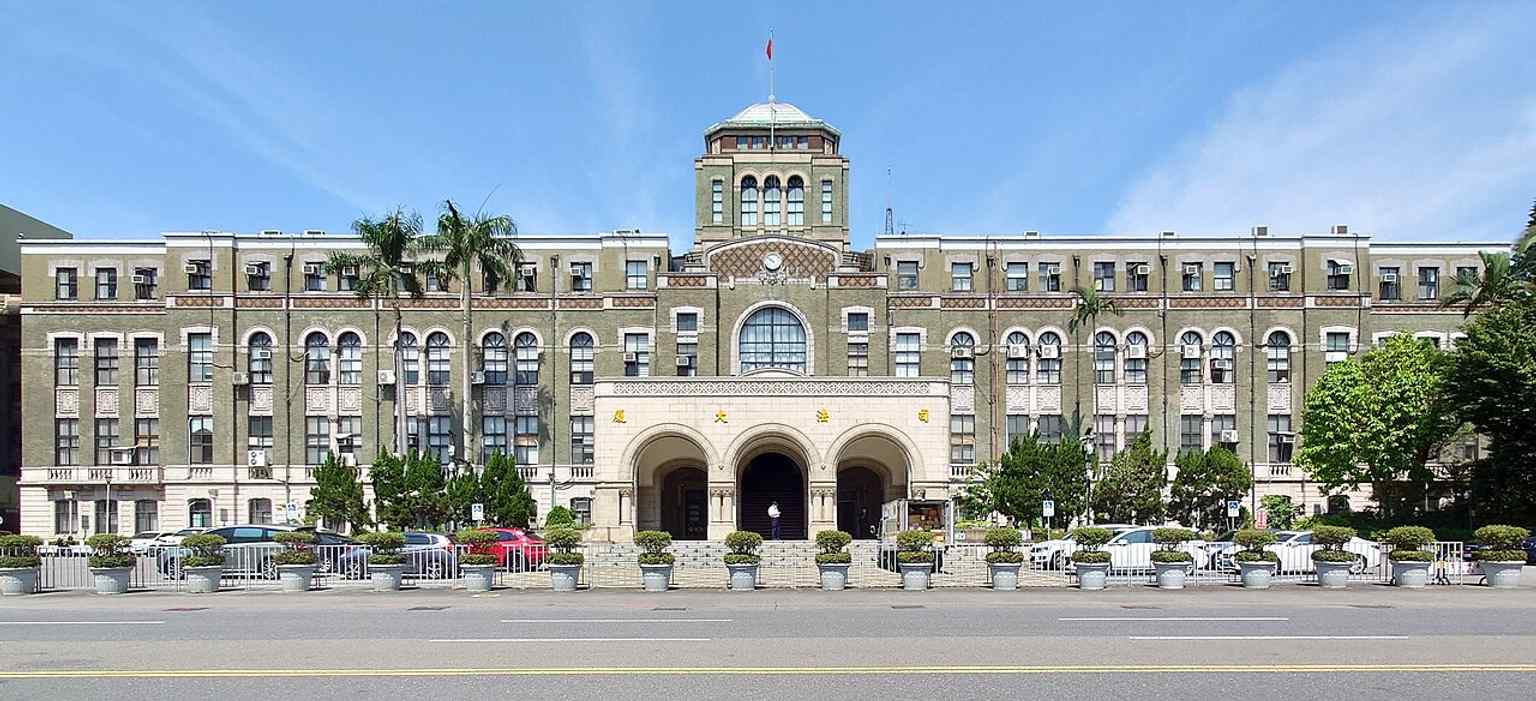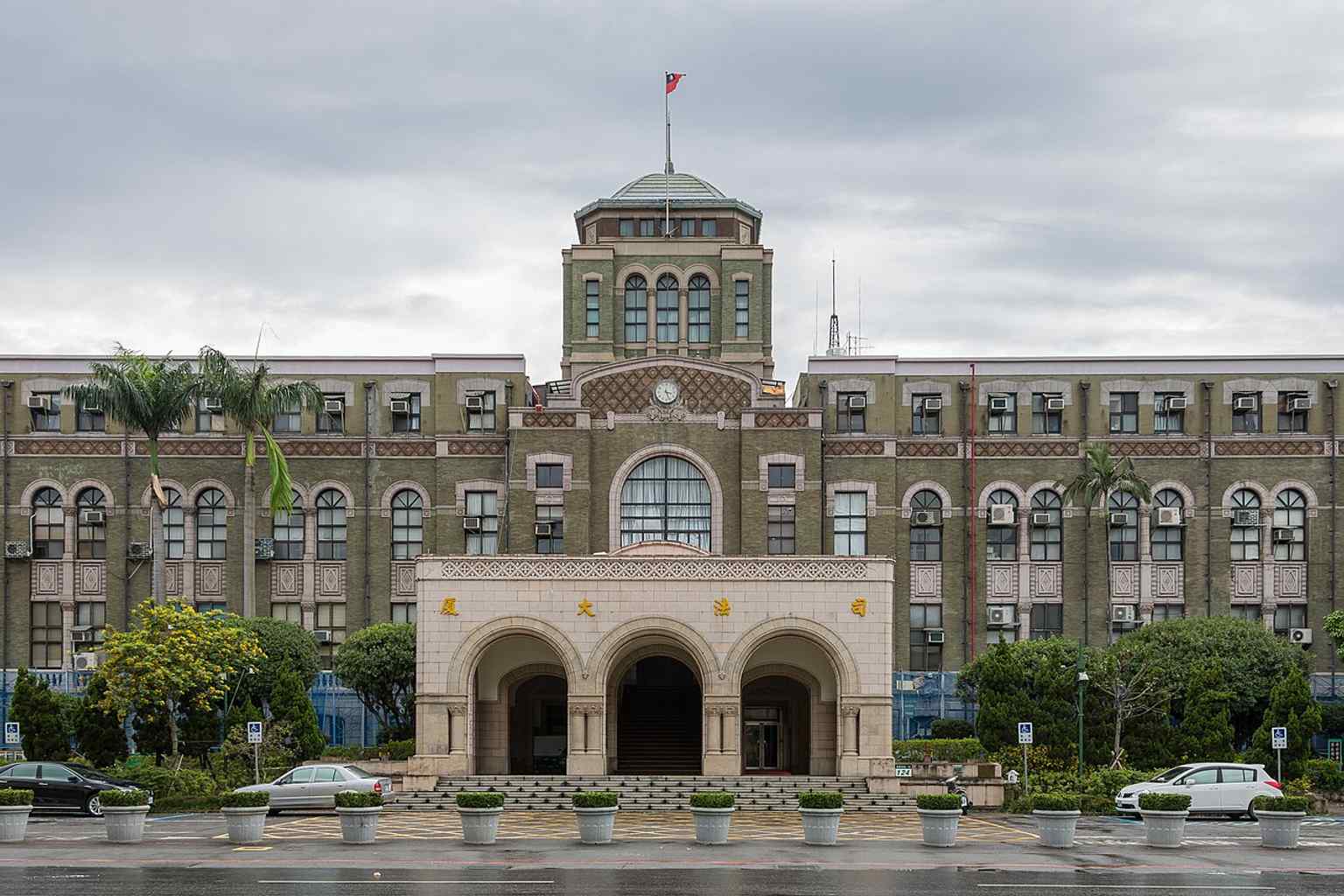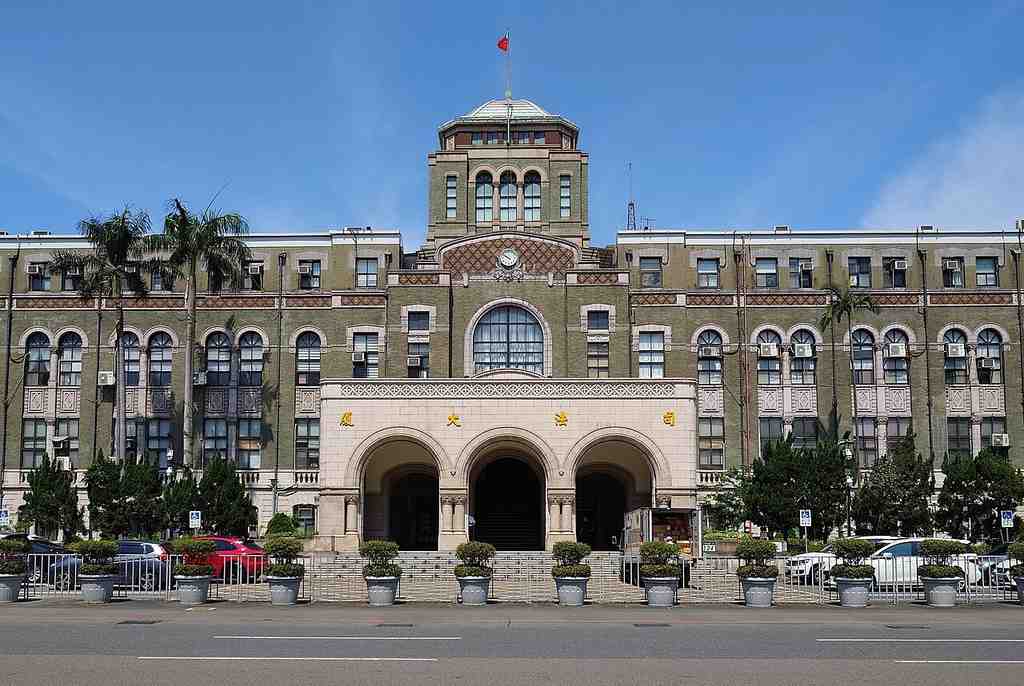
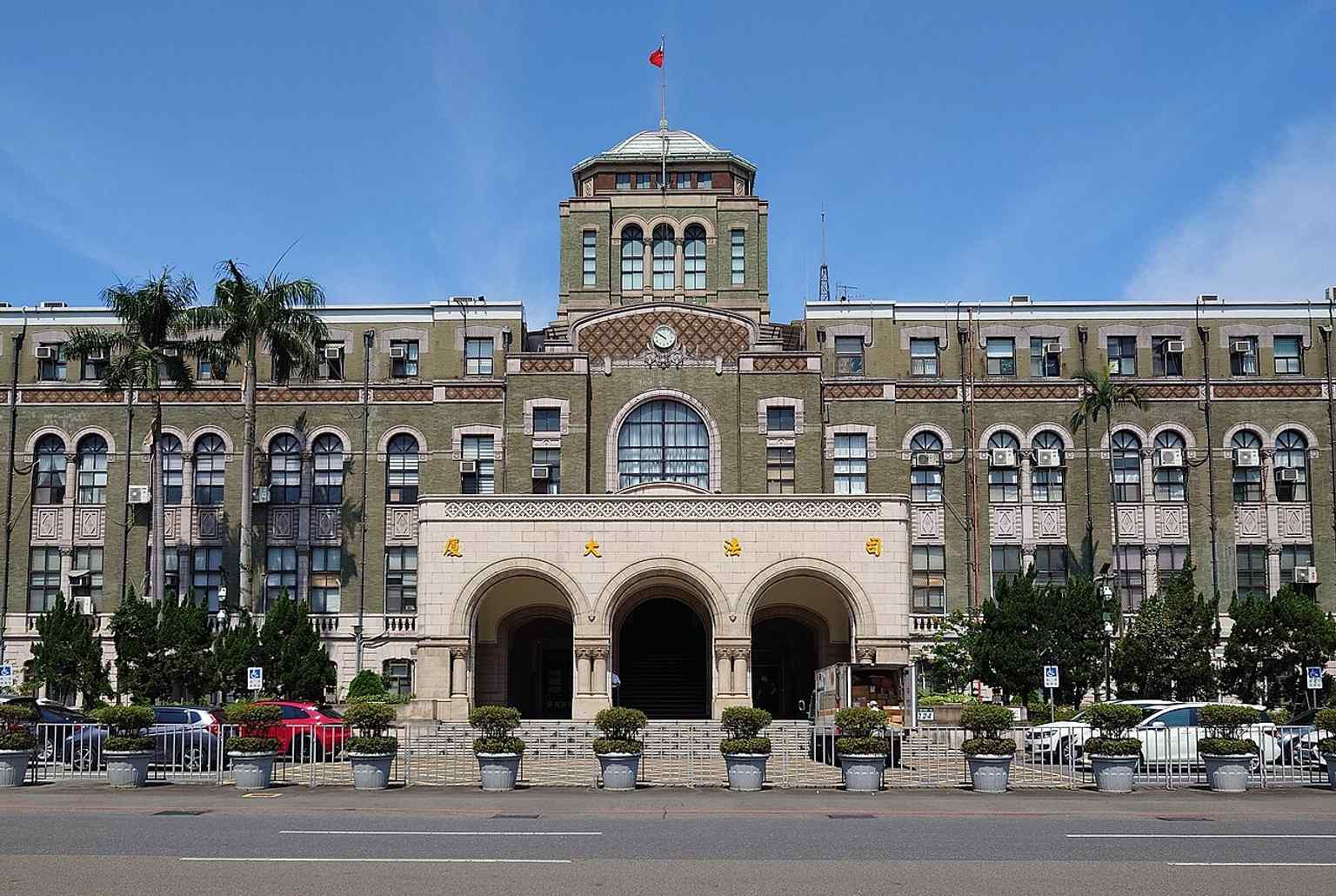
On your right is a long, pale green brick building with a symmetrical facade, a deep arched entrance, and a tall central octagonal roof that rises like a very stern crown.
This is the Judicial Building, first called the Taipei High Court and now the home of Taiwan’s Judicial Yuan. It opened in nineteen thirty-four after five years of construction, and it was designed by Ide Kaoru, one of the major hands shaping official Taipei. He spent more than three decades in Taiwan and pushed for reinforced concrete and local adaptation, arguing that public buildings here should suit the island rather than copy Europe like a bad costume drama.
You can see that thinking in the details. The structure uses reinforced concrete, but the outer walls wear rough, light green tiles that helped reduce glare and even served air-raid concerns. The entrance porch uses broad three-centered arches - a curve borrowed from Islamic architecture - while the facade mixes Romanesque weight, a hint of Renaissance order, and Japanese imperial taste. If you check the image on your screen, that central tower really says it all... formal, elegant, and just a little intimidating, which, to be fair, is not the worst quality for a courthouse.
But the deeper story is the ground it stands on. Before judges and clerks took over, this site held a Wu Temple, dedicated to Guan Yu, the martial deity. Across the way stood a civil temple near today’s First Girls High School site. Together they formed a kind of spiritual pairing for the old city: civil and martial, learning and force. Then the colonial government cleared the temple in nineteen twenty-nine and planted a court here instead. That shift matters. A place where people once sought moral protection from a god became a place where the state declared what justice meant.
That idea of repurposed ground is going to follow us through Taipei. Again and again, land keeps its old memory even after the building changes uniforms.
Ide Kaoru is the human thread here. He did not just draw a courthouse; he helped turn authority into architecture. This building originally housed the high court, prosecutor’s office, and Taipei district court under Japanese rule. After nineteen forty-five, the Republic of China government took it over, renamed it in the nineteen fifties, and kept using it for the judiciary. One regime leaves, another arrives, and the building simply keeps judging everyone.
There is even a local ghost story about the tall chimney inside the courtyard, but the court later clarified it only burned waste paper and heated water. Slightly less dramatic than rumor, though probably better for everyone involved.
If a temple becomes a courthouse, should that feel like progress, erasure, or both? Hold onto that question as we head to Taipei Guest House, about an eight-minute walk away. If you want to come back inside another time, the building is generally open daily from nine to five.