Look for the fenced park with broad stone paths, heavy tree cover, and a tall pale memorial shaft rising from the lawns near its center.
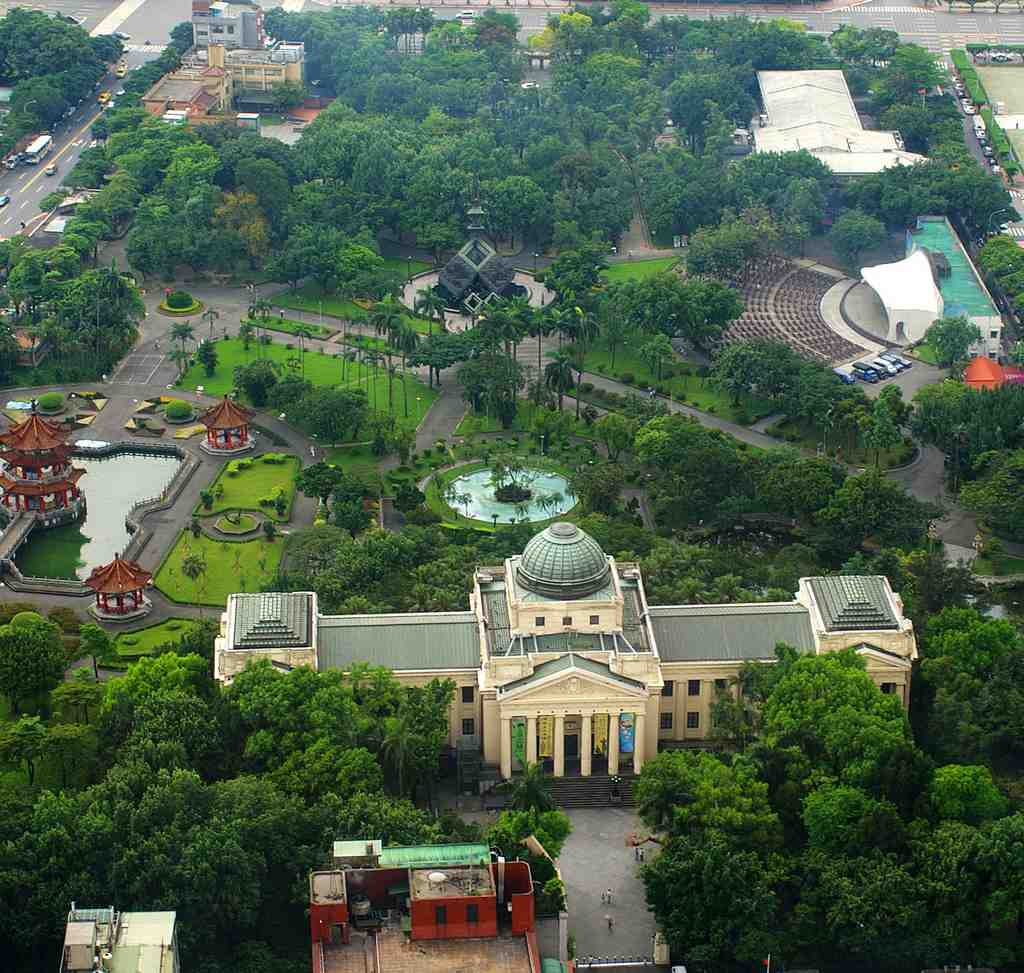
This ground began as Taipei Park, later New Park, planned in the early nineteen hundreds as a modern colonial park in mixed Western and Japanese styles, with Chinese garden features added later. It sat right in the middle of official Taipei, close to government offices, residences, and institutions, so it was never just a patch of greenery. Public parks like to pretend they’re neutral. This one never really had that luxury.
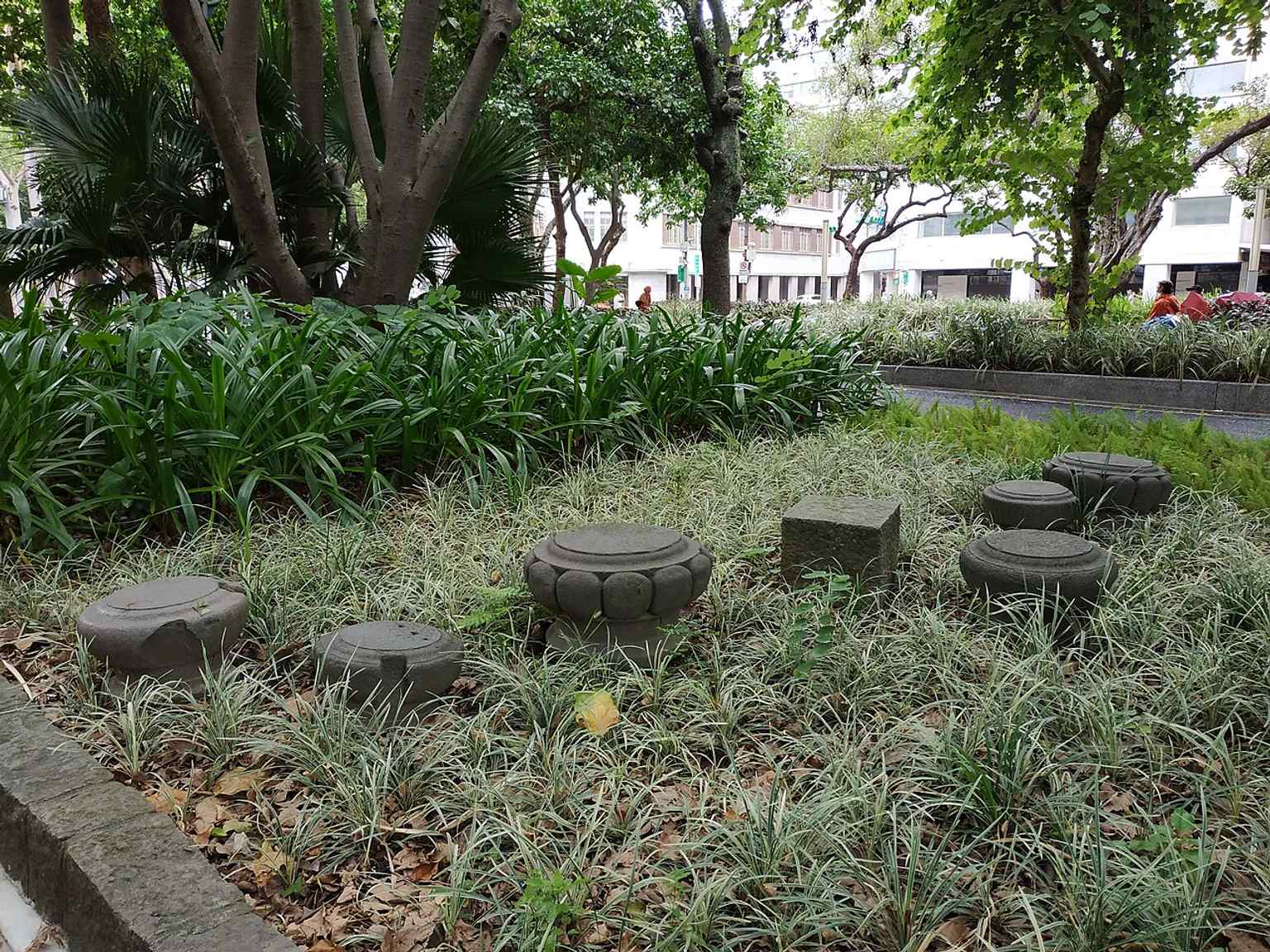
Before the lawns and memorials, Qing official Liu Mingchuan had a Mazu temple, the Taipei Tianhou Temple, established here in eighteen eighty-eight. Japanese planners later cleared it, expanded the park northward, and fixed the layout that still shapes the space now. Some of the temple’s stone remnants still survive in the park, which is history’s way of refusing a clean edit.
One early figure here was the museum’s first director, a trained botanist and plant disease specialist. He arrived in nineteen hundred and three, worked himself into exhaustion preparing the museum and its research, and died the day after it opened. Even before this park became a place of political mourning, it already carried a very human kind of loss.
Pause for a second and take in the calm paths, the trees, the open lawns behind the railings... then ask yourself how much a landscape can hold without spelling any of it out.
In late February of nineteen forty-seven, anger against the new Nationalist administration boiled over into what we now call the Two-Two-Eight Incident. Crowds stormed the park’s radio station and broadcast their accusations to the island; that building later became the Taipei Two-Two-Eight Memorial Museum. If you want a visual, the old broadcast station is in the app image on your screen. What followed was a violent crackdown, and this carefully landscaped civic park took on a second life as ground for grief.
If you like, have a quick look at the before-and-after image in the app; it makes the park’s change of purpose very plain.
In nineteen ninety-six, Mayor Chen Shui-bian officially renamed New Park as Two-Two-Eight Peace Memorial Park, and the memorial museum followed soon after. But even the name is contested. For some, “peace” offers healing; for others, it smooths over bloodshed with language a little too polite. That tension matters, because memory here does not always line up neatly with the state’s preferred wording.
The park also holds older memorial arches, relics, a music pavilion, and scattered monuments from different regimes, all sharing the same ground like awkward dinner guests who can’t leave the table. Beauty and trauma sit here together, without settling the argument.
When you’re ready, continue to the National Taiwan Museum, about a four-minute walk from here. And fittingly for a place that never quite stops speaking, the park stays open twenty-four hours.