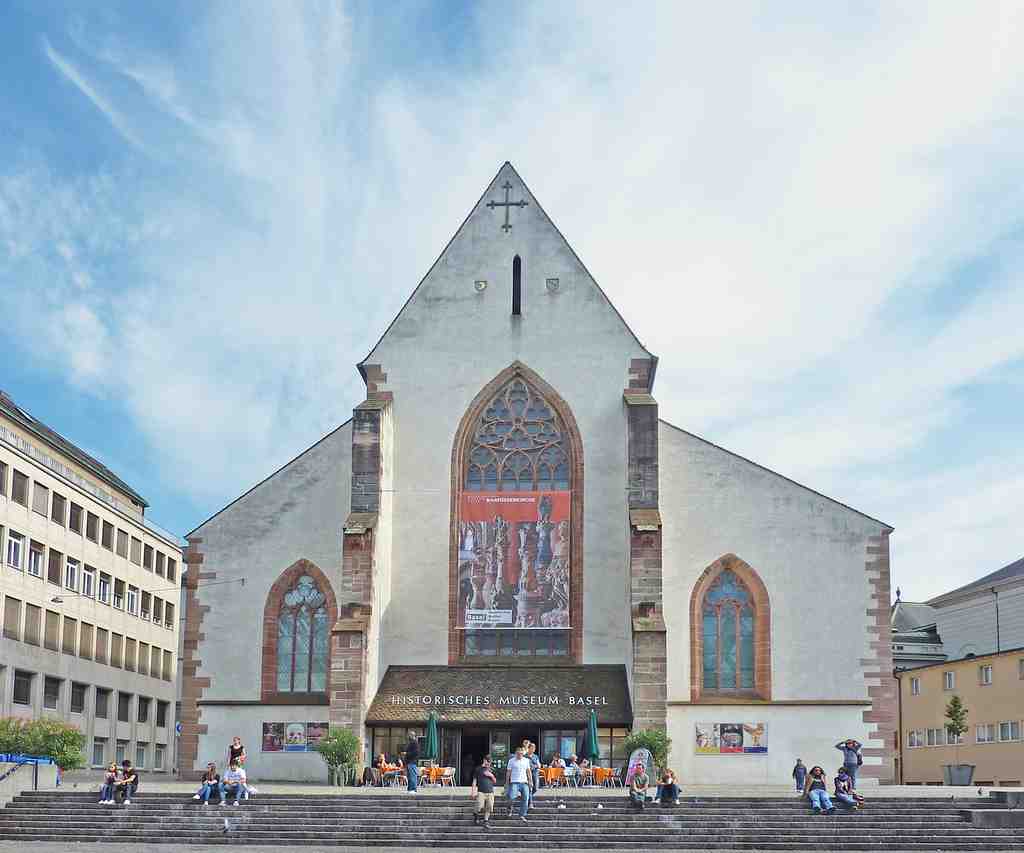
On your right, look for the pale sandstone church with its steep roof, tall pointed Gothic windows, and the narrow tower that marks the old Barfüsserkirche.
This is the main home of the Basel Historical Museum, and it makes Basel’s character plain as day without ever saying a word: the city often saves a place by giving it a new job. The fountain behind us already hinted at that, because Basel does not let vanished things disappear without a second life. Basel dislikes clean erasures; when something ends, the city tends to fold it into the next chapter.
This church began in the thirteenth century as a Franciscan church. “Barfüsser” means “barefoot,” a nod to the friars’ simple life. After the Reformation in fifteen twenty-nine, the city took the complex over. Worship continued here until seventeen ninety-four, but the building then drifted through a string of practical lives: hospital, school, warehouse... and, in the version locals never forget, a salt store from seventeen ninety-nine to eighteen fifteen. Salt is wonderful on dinner and murder on old stone. By nineteen sixty-four, the damage had become serious enough to threaten the structure itself.
So the museum you see here is not just a collection of old things. It is also a rescue mission that succeeded. Between eighteen ninety and eighteen ninety-four, Basel renovated the former church to house a new Historical Museum. That opening crowned decades of civic effort: the Medieval Collection started in eighteen fifty-six, an association formed in eighteen seventy-two to support it, and in eighteen ninety-two the Medieval Collection, the Antiquarian Collection, and the Basel Armoury merged under one name.
But the roots go deeper still, into Basel humanism. In the sixteenth century, the Amerbach family, especially Basilius and Bonifacius Amerbach, built a Wunderkammer, a “cabinet of curiosities” filled with art, books, and remarkable objects. They belonged to Basel’s humanist circle, Renaissance scholars who believed careful study of language, history, and art could improve public life. When the city bought their holdings in sixteen sixty-one, including Erasmus of Rotterdam’s estate and works by Hans Holbein, and opened them to the public in sixteen seventy-one, Basel created one of the earliest civic public collections in the German-speaking world.
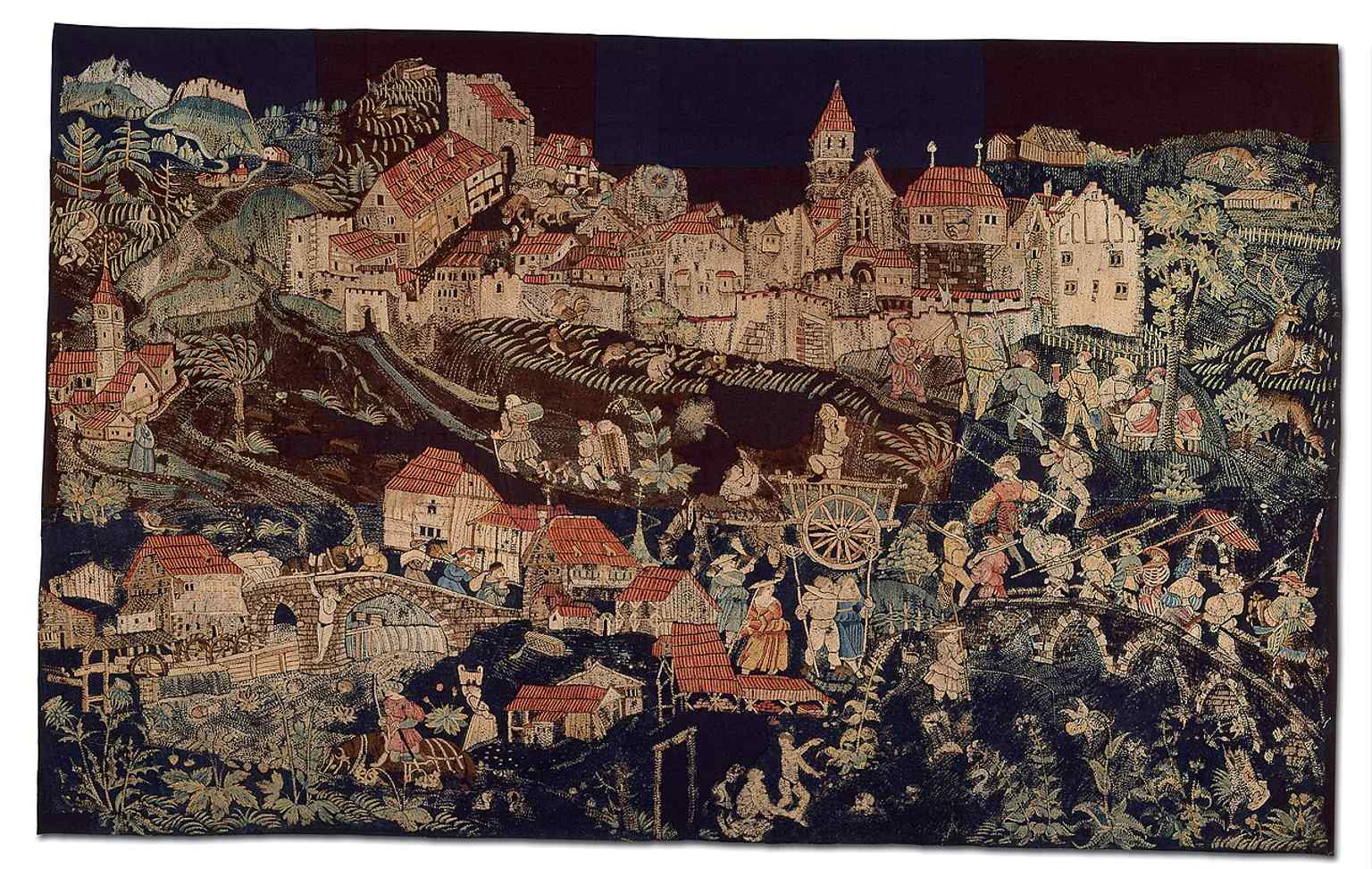
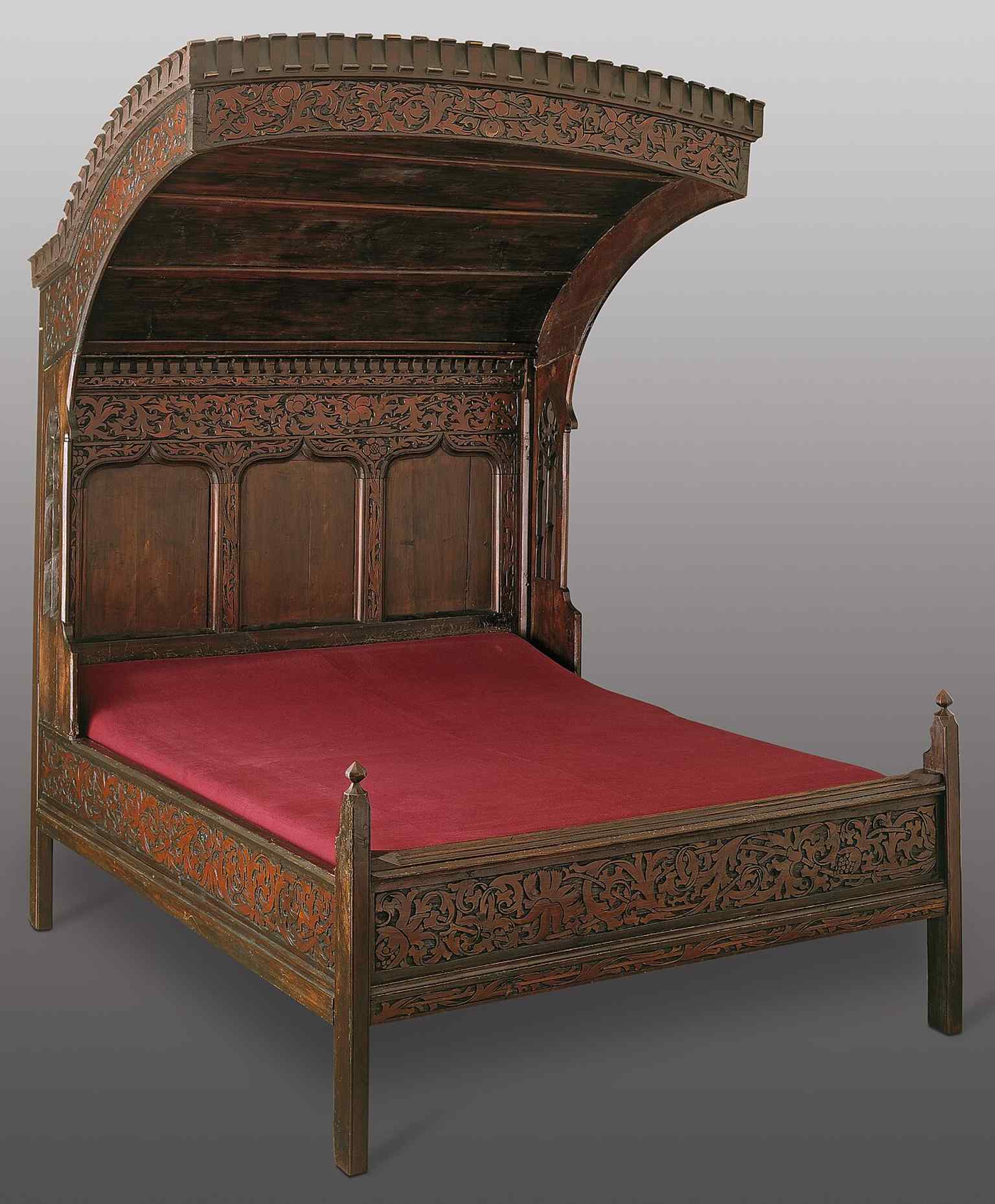
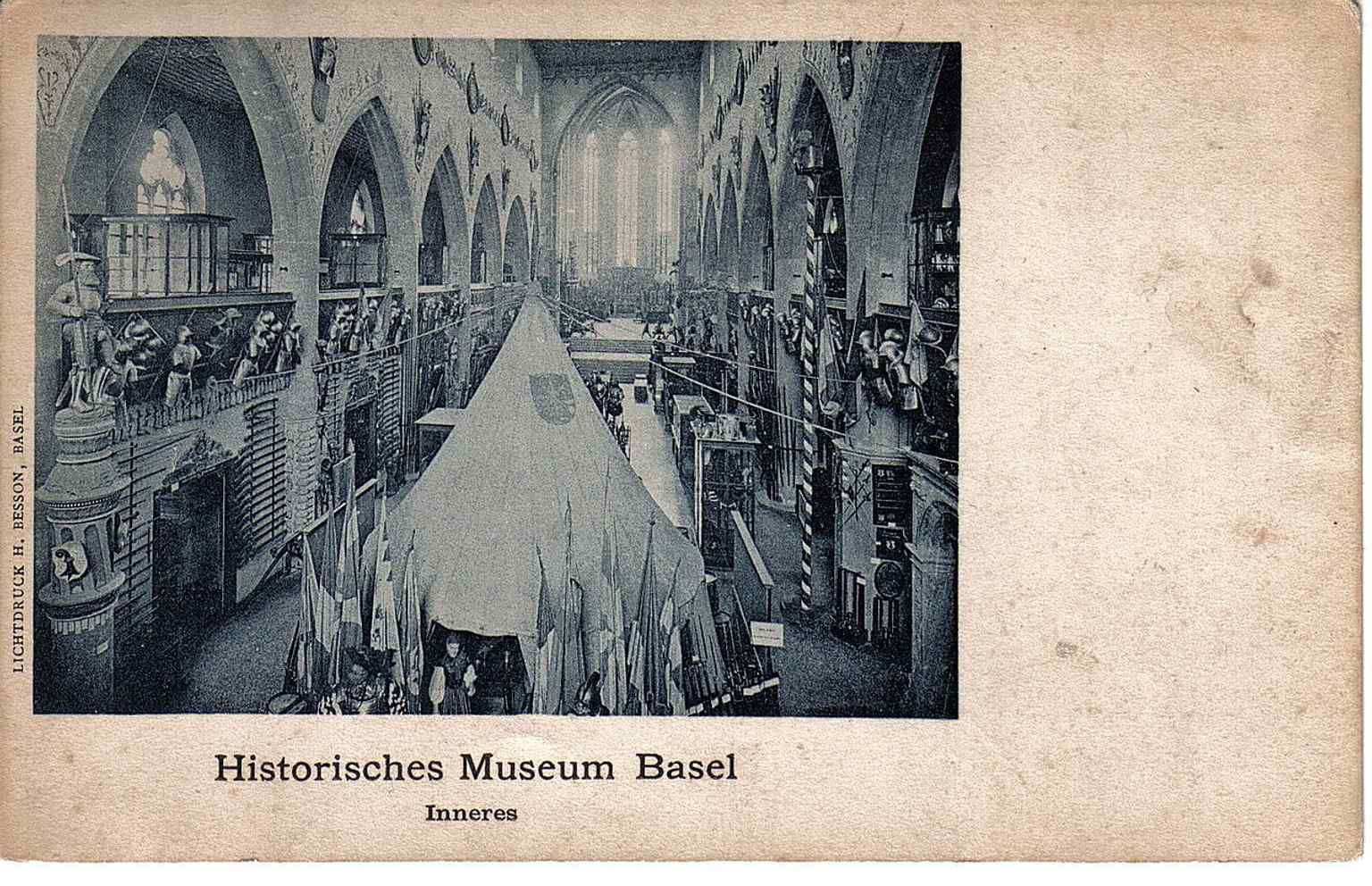
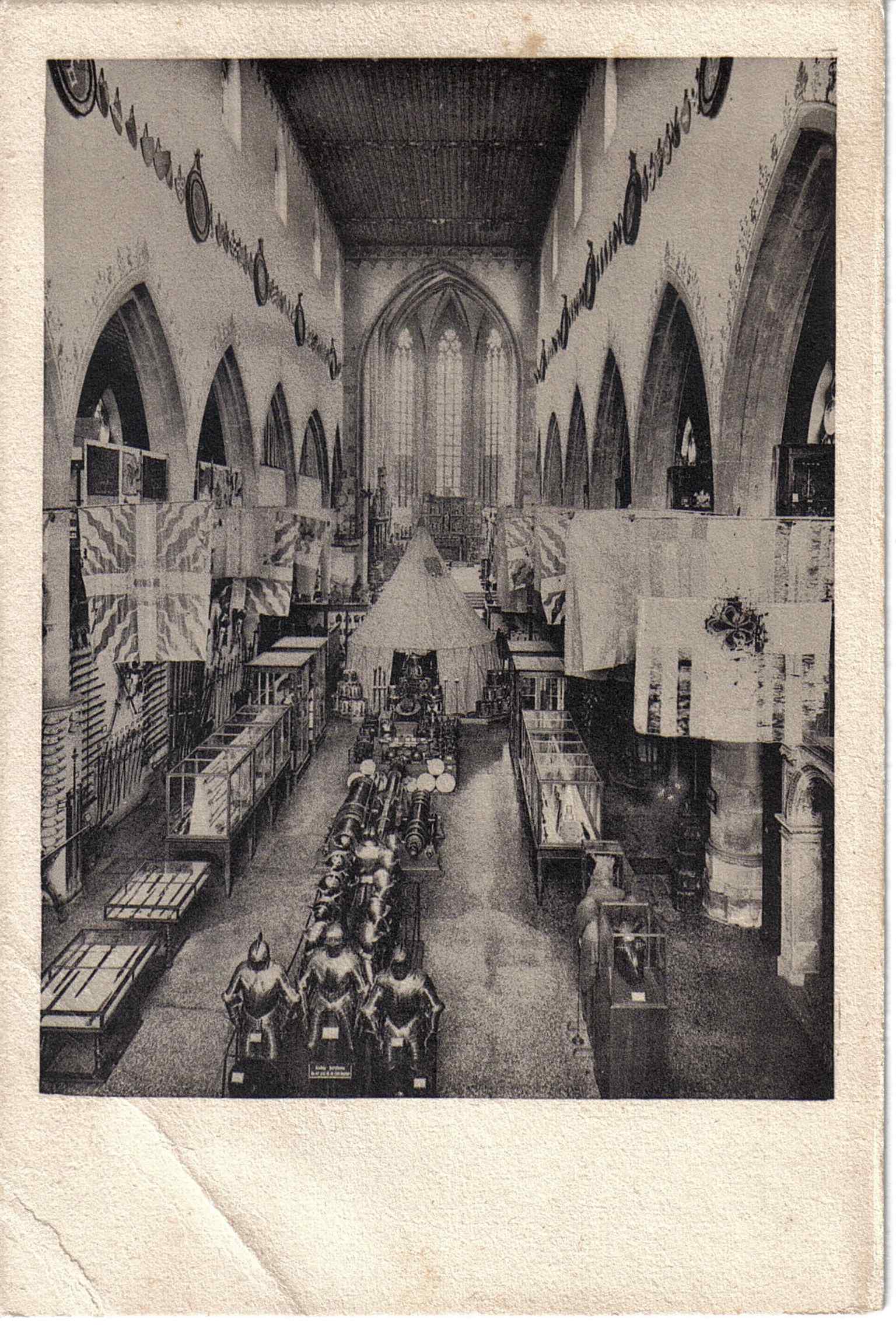
If you look at the image on your screen, you can see an early interior view of the nave, the long central hall of the church, after it became museum space. That huge hall now holds the Upper Rhine’s broad sweep of cultural history: cathedral treasure, tapestries from Basel and Strasbourg, fragments of Basel’s Dance of Death, coins, glass painting, altars, and the plain everyday objects that tell you how people actually lived.
During the major renovation from nineteen seventy-five to nineteen eighty-one, workers found a brick grave chamber in front of the choir, the area near the altar. Inside lay Anna Catharina Bischoff, mummified and astonishingly preserved. Later research identified her, adding one more thread to Basel’s buried stories. Basel can be wonderfully serious, then suddenly hand you a detail like that with a straight face.
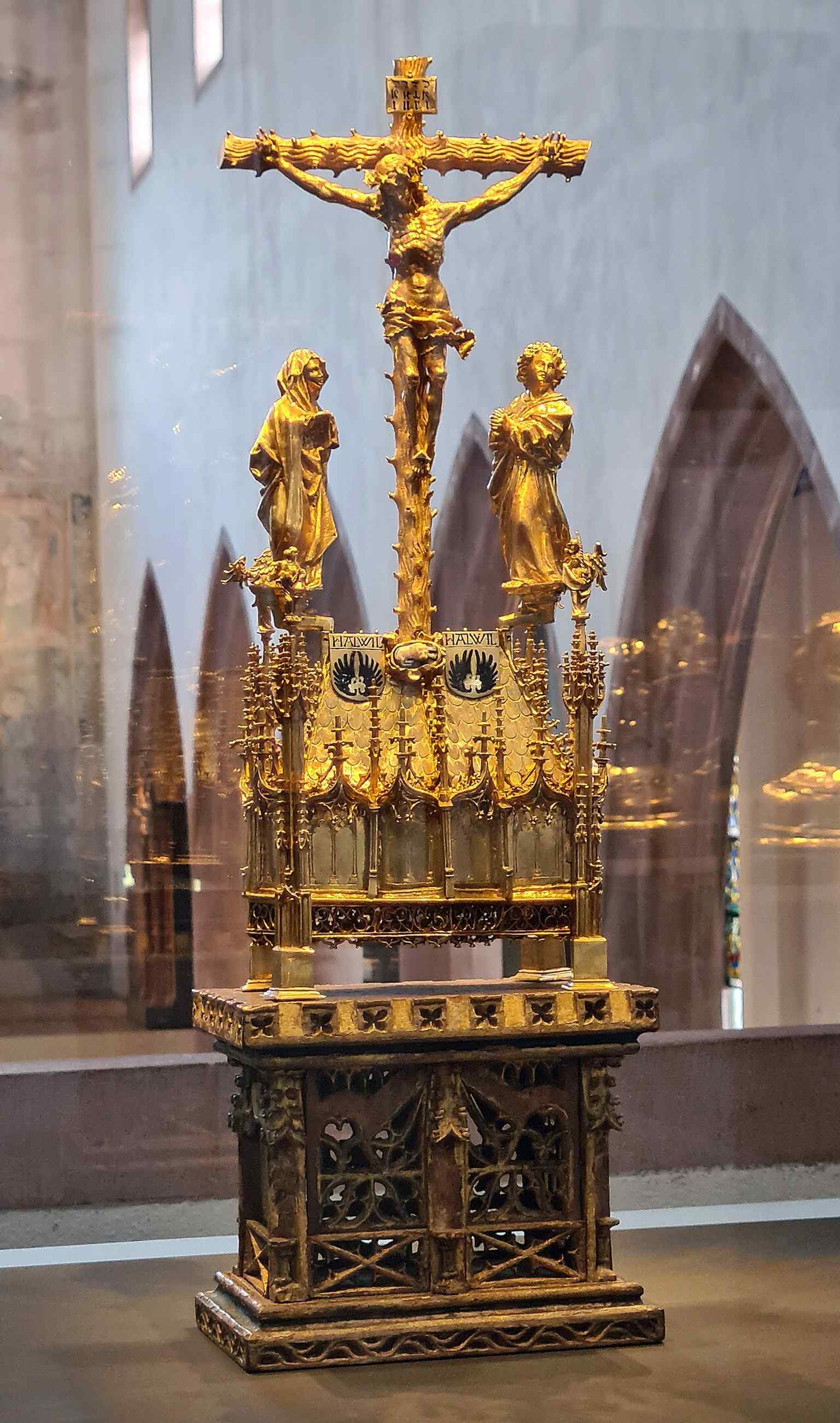
Another image in the app shows one of the museum’s glittering reliquaries, containers for saints’ relics, a reminder that craft here was never merely decorative; it carried belief, status, and memory all at once. That confidence in preserving, reframing, and showing off old things will appear again very soon, especially at the art institutions nearby. Kunsthalle Basel is about a one-minute walk from here. If you want to visit later, this museum is closed on Monday and otherwise open from ten to five.