
Look for the pale stone palace with its long rectangular facade, tall evenly spaced windows, and a broad central staircase leading up to a formal entrance.
This is where nobility, status, and political violence met in the open street. Axel von Fersen stood near the very top of Swedish society... and that made him visible, ceremonial, and terribly exposed.
By the summer of eighteen ten, Sweden had already been shaken hard. Gustav the Fourth Adolf had fallen in the coup of eighteen oh nine. Karl the Thirteenth took the throne, but he was old and had no direct heir, so the Danish prince Karl August became crown prince. Then, during a military exercise at Kvidinge, Karl August collapsed and died of a stroke. But rumor moved faster than medicine. Many in Stockholm decided he had been poisoned.
Fersen and his sister Sophie von Fersen became the perfect targets. They were Gustavians, supporters of the old royal line, and Axel was already famous across Europe for his closeness to Marie Antoinette and his role in the French court’s failed escape. So suspicion clung to him easily. It did not matter that he was innocent.
On the twentieth of June, eighteen ten, the crown prince’s funeral procession entered Stockholm. Protocol required Fersen, as riksmarskalk, the highest court officer for ceremonial state occasions, to appear in full dignity. He sat alone in a glittering gala carriage with seven glass windows and a golden count’s crown on the roof. Six white horses pulled it. He wore the white dress and black cloak of the Order of the Seraphim, Sweden’s highest chivalric order. The image on your screen catches how this later looked in memory: not a mourning city, but a city turning on one man.
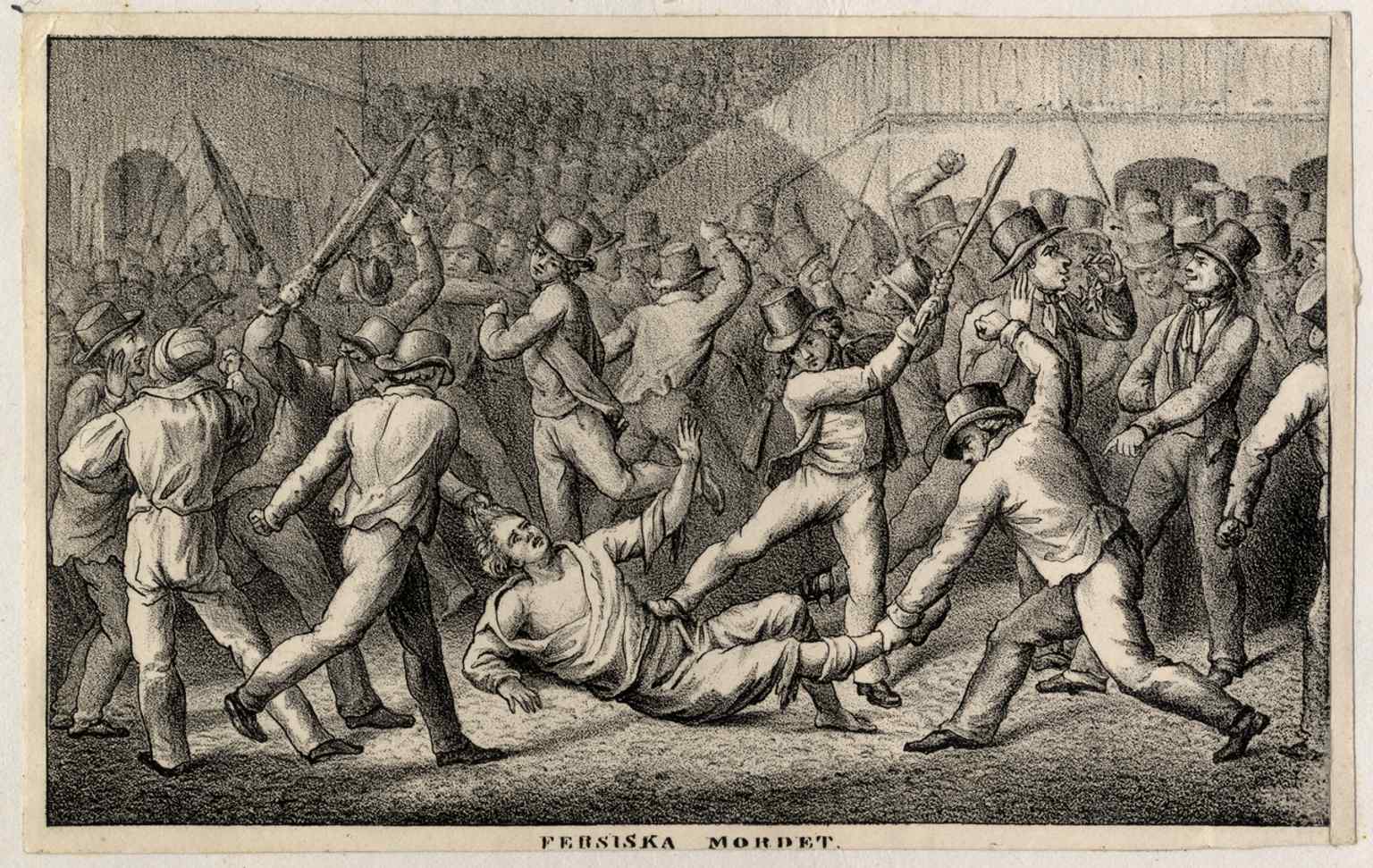
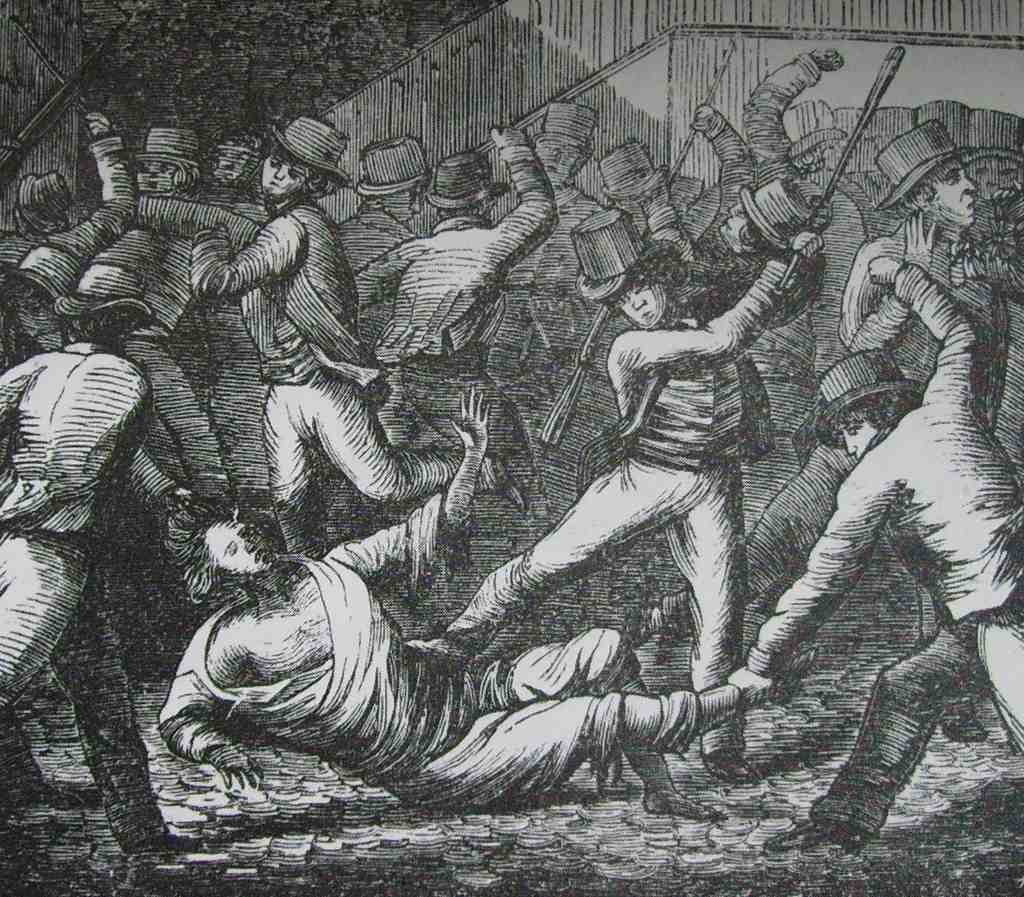
The crowd began with stones and insults on Södermalm. By Hornsgatan and Kornhamnstorg, the shouting had grown: “murderer.” By Stora Nygatan, every window of his carriage had shattered. Men with clubs rushed in. At the Hultgrenska house, the porter Bartholin managed to pull Fersen inside. In one account, Fersen wiped sweat and blood from his face, drank a glass of water, and tried to gather himself while the noise outside swelled. If you want to picture that desperate pause, glance at the app image of him fleeing into the house.
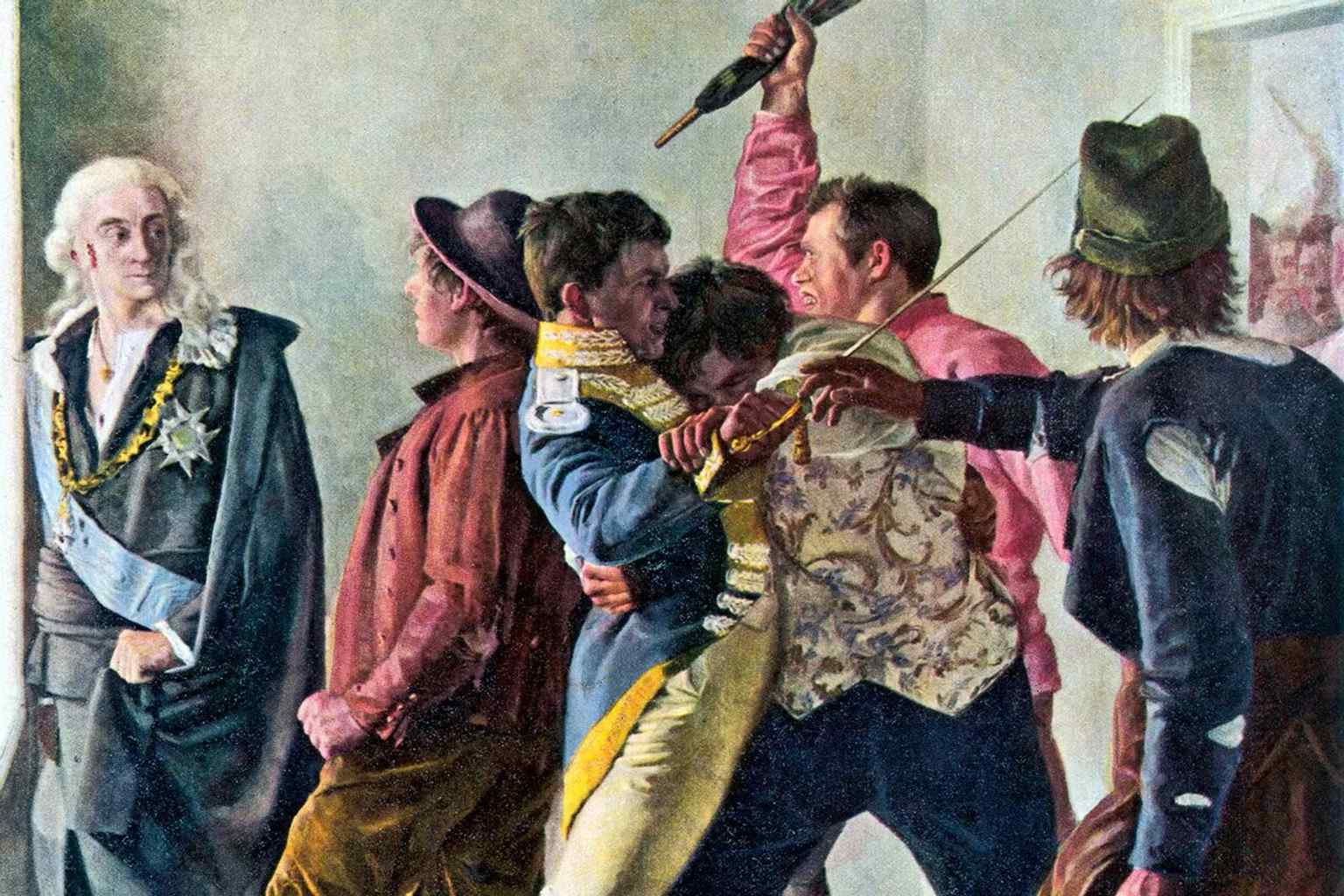
Then Isaac Lars Silfversparre tried to lead him here, toward safety at Bondeska palatset. Instead, the mob closed again. Fersen reached the soldiers drawn up on this square and cried, “Boys, save me.” For a moment, some lowered bayonets toward the crowd. Then Major Nils Djurklou ordered them back into line. The king had forbidden live fire during the funeral. No one acted in time. The mob beat Axel von Fersen to death here.
Earlier on this tour, the Stockholm Bloodbath showed power killing in public with official theater. This was different, but no less revealing. Here the state did not strike cleanly from above. Here rumor, succession panic, and class hatred turned the street itself into an execution ground.
More than nine hundred people were questioned afterward. Only a handful were punished. Later, the court confirmed what doctors had said: Karl August died of a stroke. Fersen had not poisoned him. His innocence came too late.
So remember this square when you look at the grand facades around it. Elite architecture in Stockholm never meant safety. It carried honor, rivalry, and danger in equal measure. Next, we walk to the House of Nobility, where that world gave itself a palace.






