AudaTours logoAudaTours

Stop 8 of 16

Plaza de Oriente

headphones 03:52 Buy tour to unlock all 18 tracks
Plaza de Oriente
Plaza de Oriente
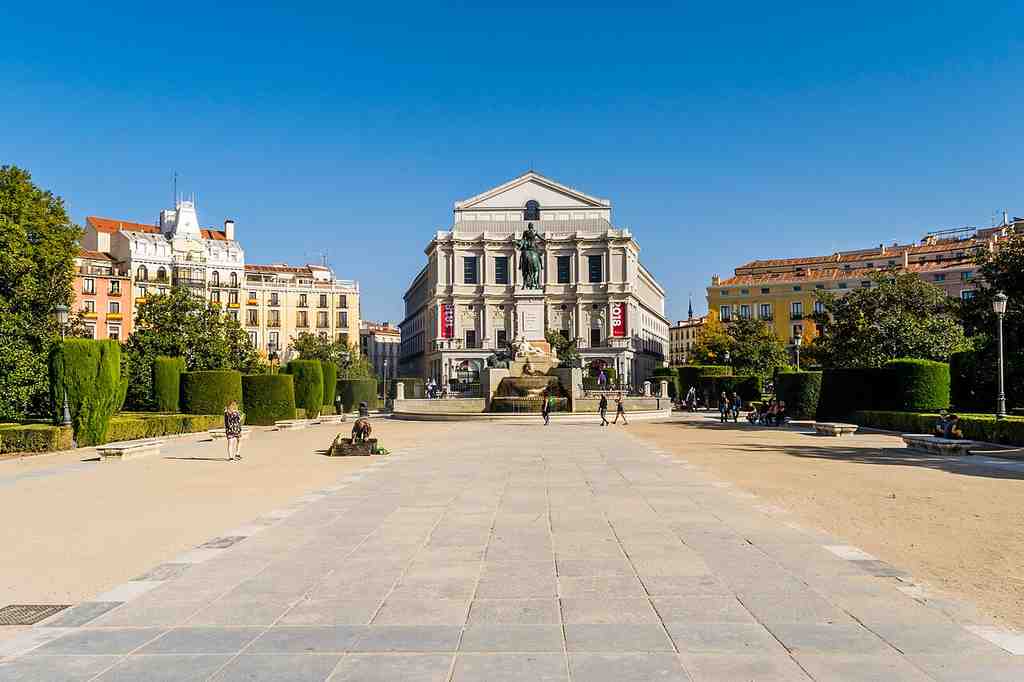
Plaza de OrientePhoto: Oliver Gargan, Wikimedia Commons, CC BY-SA 4.0. Cropped & resized.

Look for a broad rectangular stone plaza with a curved far end, formal hedge-cut gardens, and, right in the middle, a bronze king on a horse rearing up on its back legs alone.

This is Plaza de Oriente... and it’s one of Madrid’s clearest lessons in how power likes its elbow room. What seems like an elegant civic salon began, in part, as a clearing. José the First - Napoleon’s brother, the king Madrileños mocked as Pepe Botella, and sometimes Pepe Plazuelas - ordered old medieval houses around the palace torn down in the early eighteen hundreds so the royal seat could breathe. Breathe for the palace, that is... not so much for the people who lost the neighborhood.

The final shape you see came later, in eighteen forty-four, when architect Narciso Pascual Colomer fixed the plan: a monumental rectangle, closed with that curved eastern end toward the theater. It’s a carefully staged space. The Royal Palace forms the western backdrop, the Royal Theatre closes the east, and the Monastery of the Encarnación watches from the north. Palace, monastery, theater, gardens... it’s practically a set design for monarchy.

At the center stands the plaza’s star turn: Philip the Fourth on horseback. The sculptor Pietro Tacca cast it in bronze in the seventeenth century using portraits by Velázquez as models. What made it famous is the engineering trick. The story goes that Galileo Galilei advised how to balance the horse on only its hind legs: make the rear solid and the front hollow. Art and physics... a fine partnership when you don’t want your king tipping over. If you want a closer look at that balancing act, there’s a detail image on your screen.
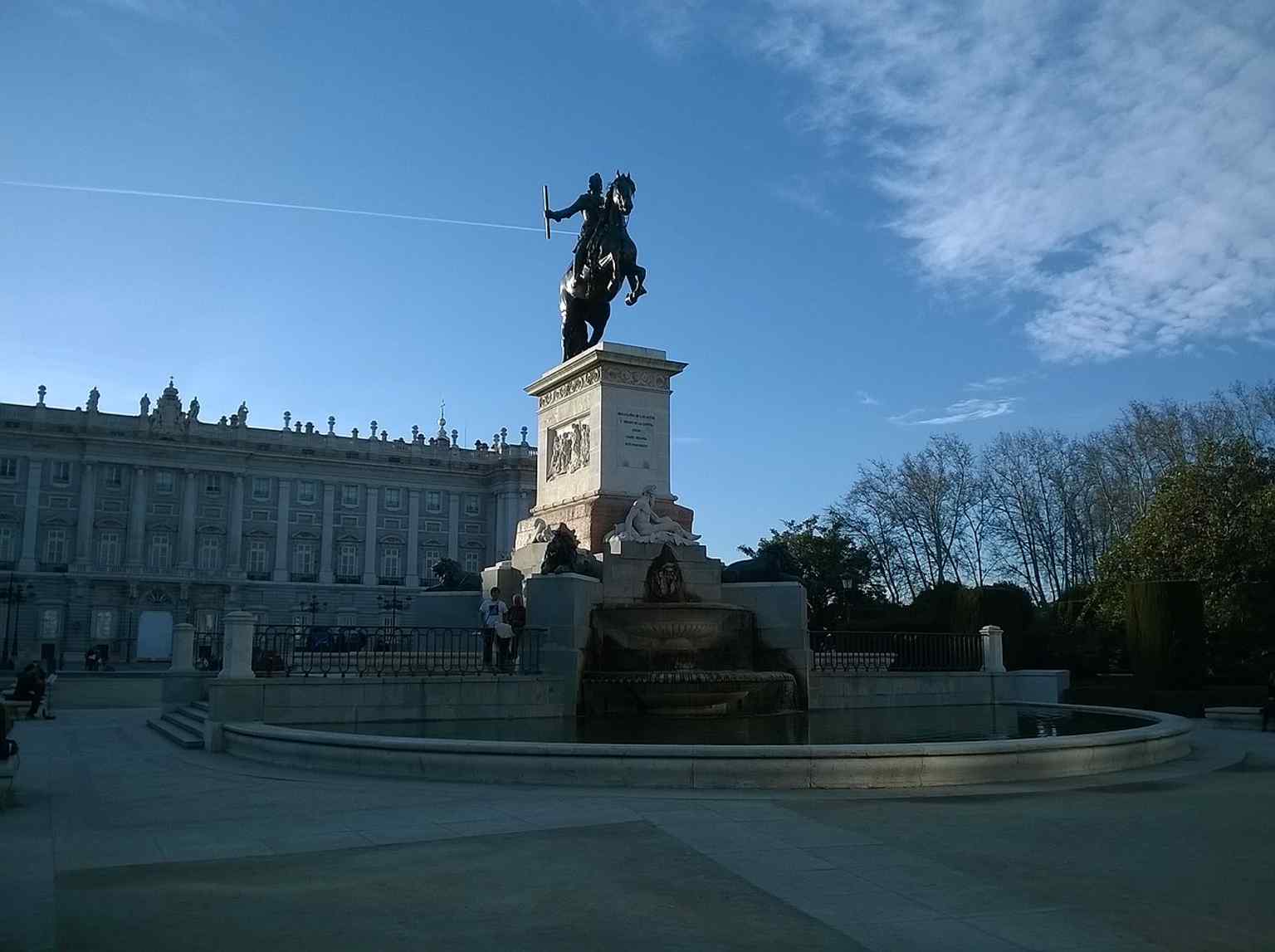
A closer look at the Philip IV monument, famous for the horse balanced on its hind legs alone — a breakthrough in equestrian sculpture.
A closer look at the Philip IV monument, famous for the horse balanced on its hind legs alone — a breakthrough in equestrian sculpture.Photo: rene boulay, Wikimedia Commons, CC BY-SA 3.0. Cropped & resized.

Around the central gardens, notice the long rows of stone monarchs, popularly called the “Gothic kings.” They were carved for the top cornice of the Royal Palace in the seventeen fifties, then removed when people worried the structure might not enjoy carrying a whole stone dynasty on its shoulders. Legend improved the story, of course: Queen Isabel Farnese supposedly dreamed the statues crashed down and killed the royal family. Madrid does love a practical concern dressed in a dramatic coat.

The plaza kept changing. In the nineteenth century the gardens circled the Philip statue; in nineteen forty-one they were rearranged into the formal grid you see now. And in the nineteen nineties the city buried the traffic of Calle de Bailén, turning this into a fully pedestrian space and stitching the plaza directly to the palace frontage. There was a price to that makeover too: archaeologists found older remains here, including traces tied to Madrid’s Islamic and Christian fortifications. Some vanished during the works, though an eleventh-century watchtower base survived inside the underground parking area. If you’re curious, the before-and-after image in the app shows just how much the theater side and the plaza’s framing changed over time.

Before we move on, let your gaze travel along the edges of the square. See how the open space steers your eyes from palace to theater, then back again, as neatly as a stage manager hitting his marks. And that building opposite, the one closing the curve... that’s where royal display turned into performance proper. Head toward the Royal Theatre, about a minute away.
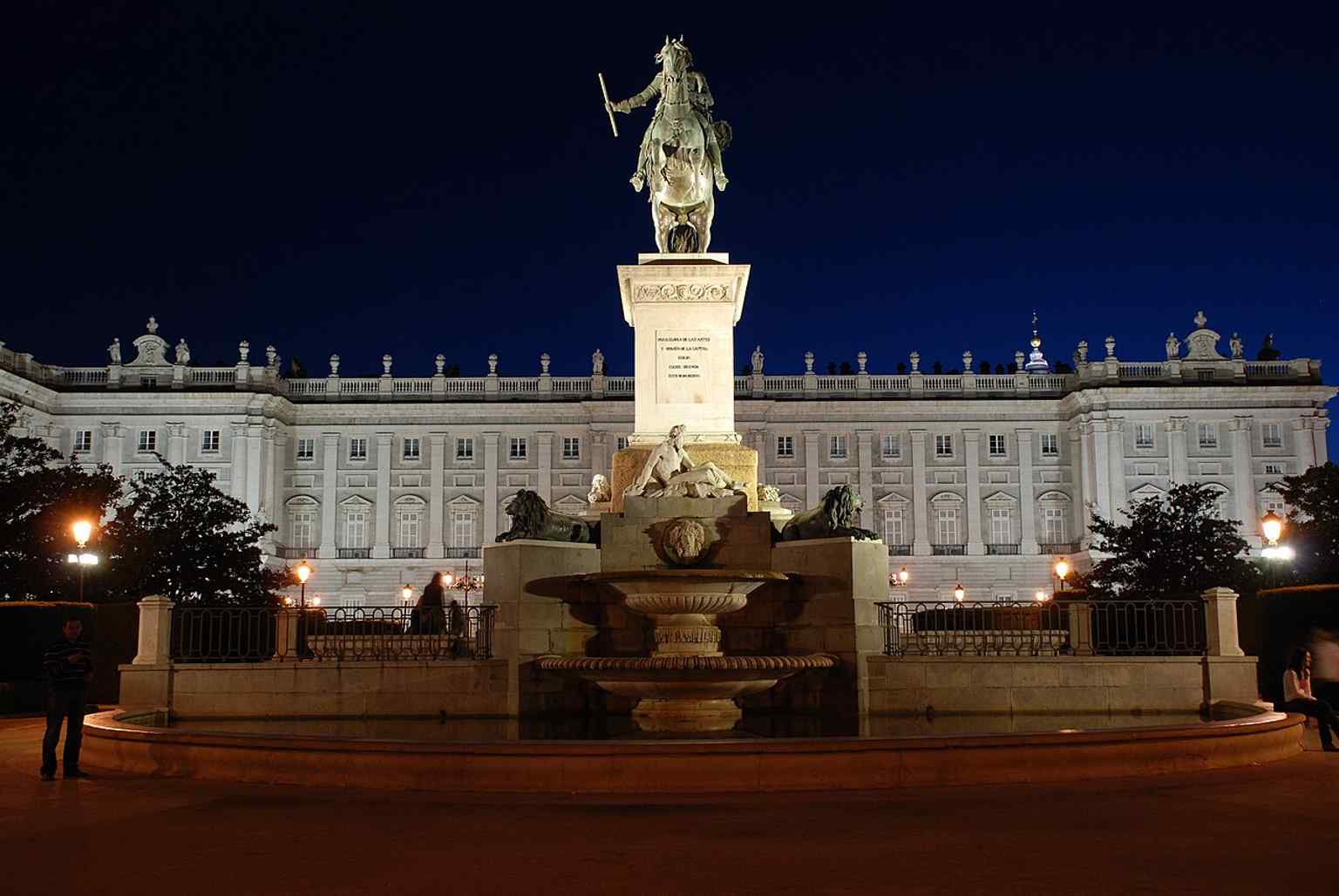
A night view of the Royal Palace shows how Plaza de Oriente opens directly onto Madrid’s royal residence after the Bailén underpass was added.
A night view of the Royal Palace shows how Plaza de Oriente opens directly onto Madrid’s royal residence after the Bailén underpass was added.Photo: MarcusObal, Wikimedia Commons, CC BY-SA 3.0. Cropped & resized.
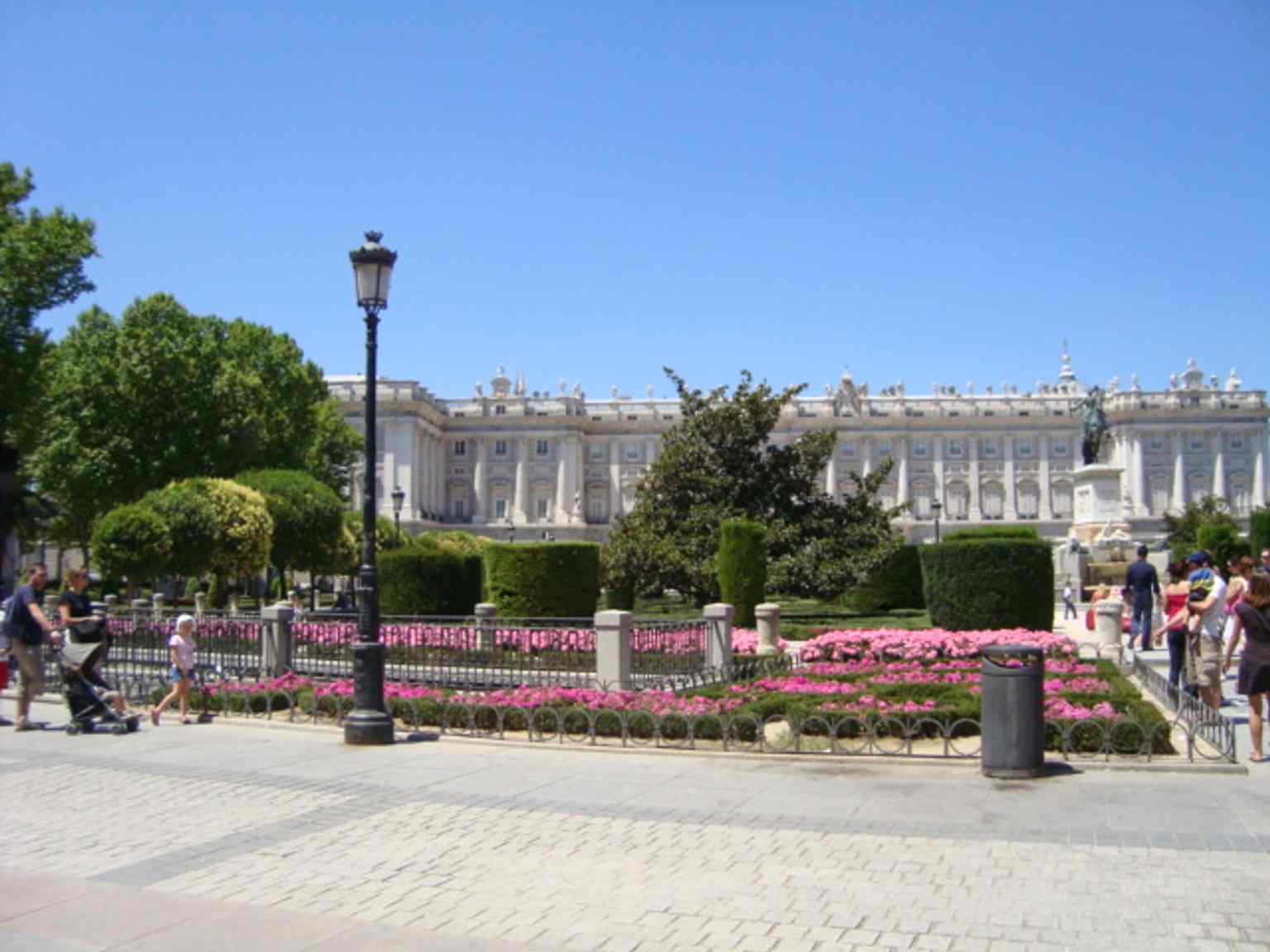
The monument to Philip IV in front of the Royal Palace — the central landmark that structures the square’s gardens and sculpture layout.
The monument to Philip IV in front of the Royal Palace — the central landmark that structures the square’s gardens and sculpture layout.Photo: Tiberio Claudio Augusto, Wikimedia Commons, Public domain. Cropped & resized.
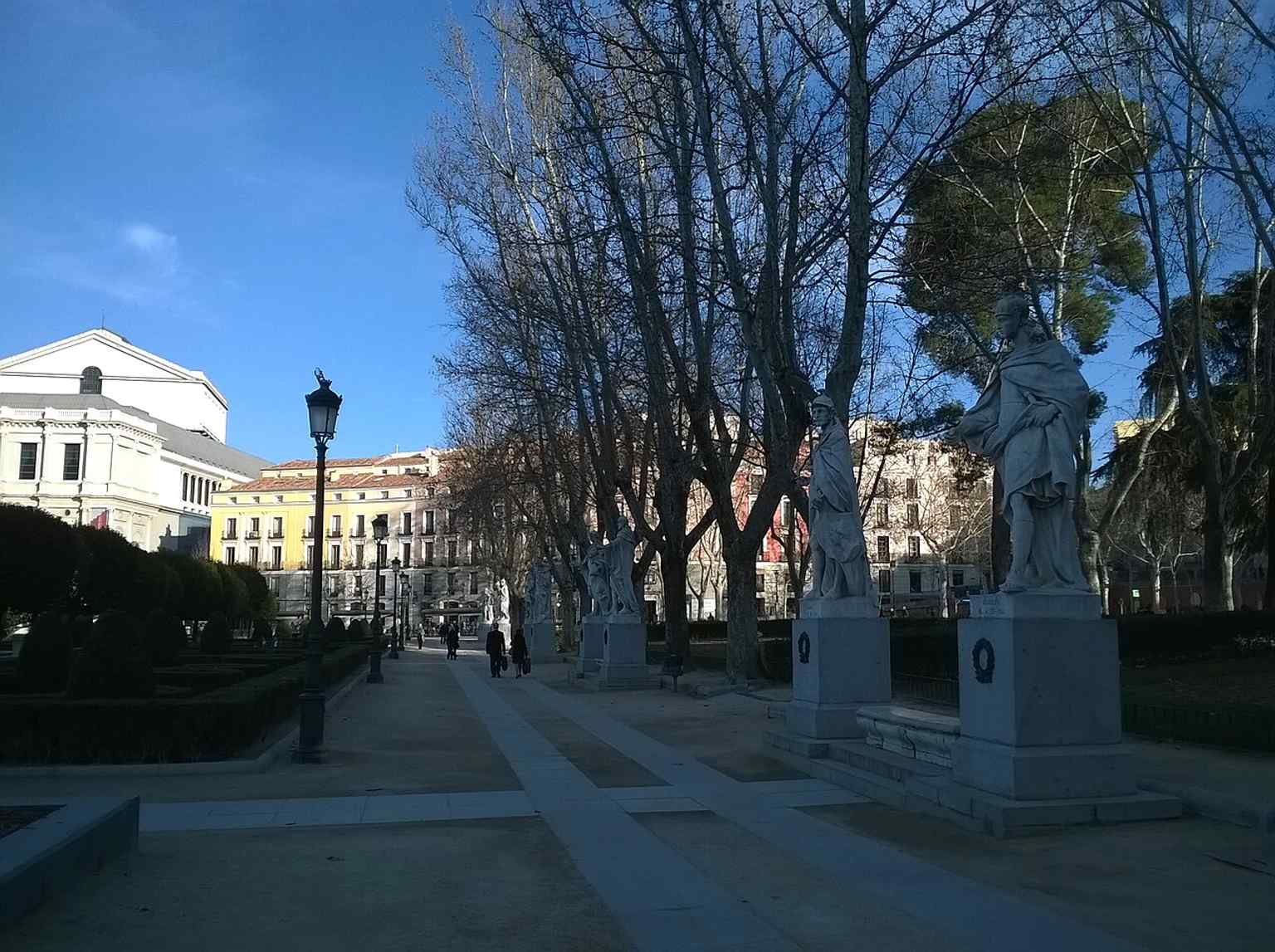
One of the plaza’s “Gothic kings” statues, part of the long sculptural sequence that divides the central gardens from the side lawns.
One of the plaza’s “Gothic kings” statues, part of the long sculptural sequence that divides the central gardens from the side lawns.Photo: rene boulay, Wikimedia Commons, CC BY-SA 3.0. Cropped & resized.
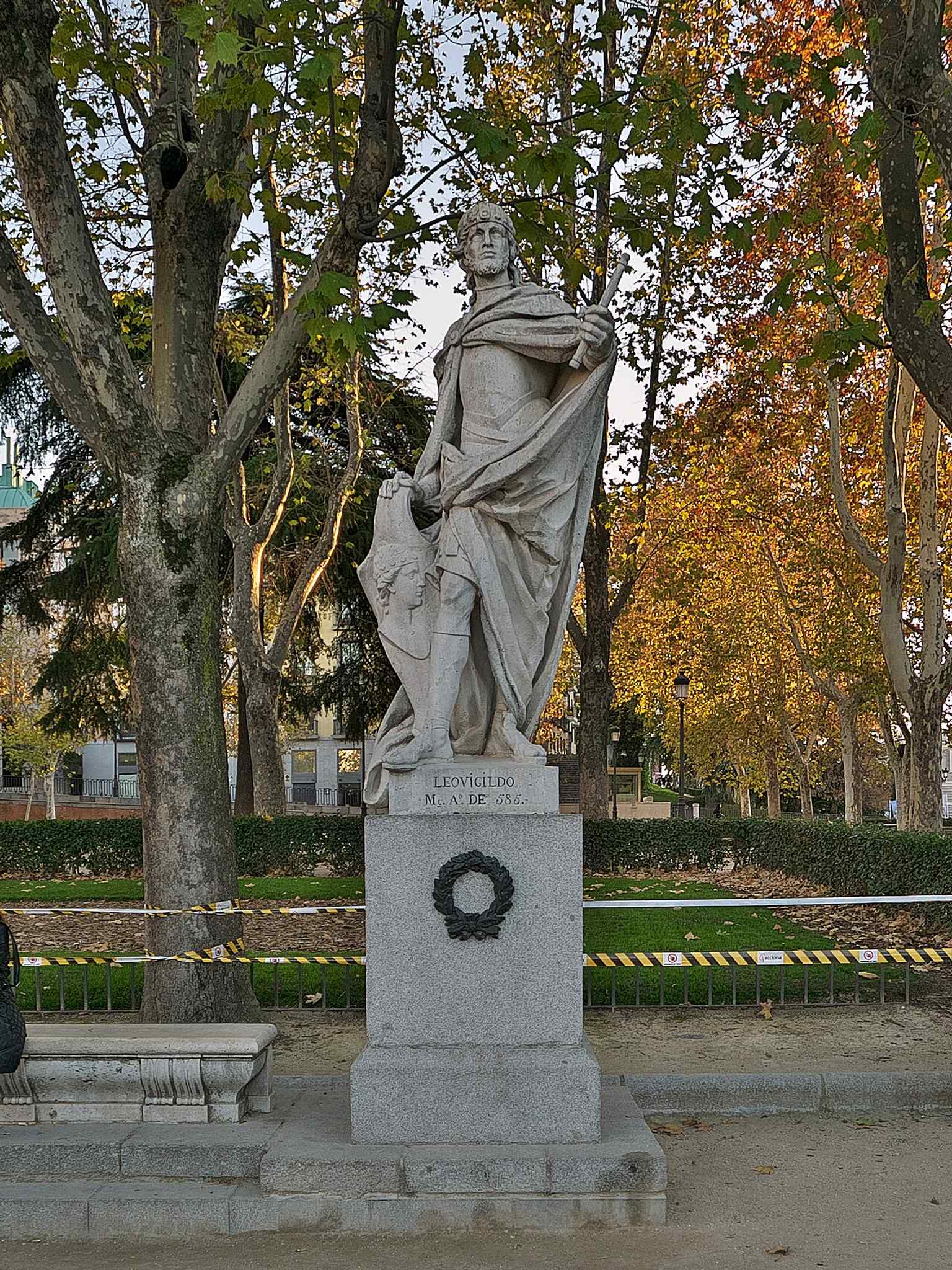
The statue of Leovigild, one of the twentieth-century placements of the kings series that once decorated the Royal Palace cornice.
The statue of Leovigild, one of the twentieth-century placements of the kings series that once decorated the Royal Palace cornice.Photo: Jl FilpoC, Wikimedia Commons, CC BY-SA 4.0. Cropped & resized.
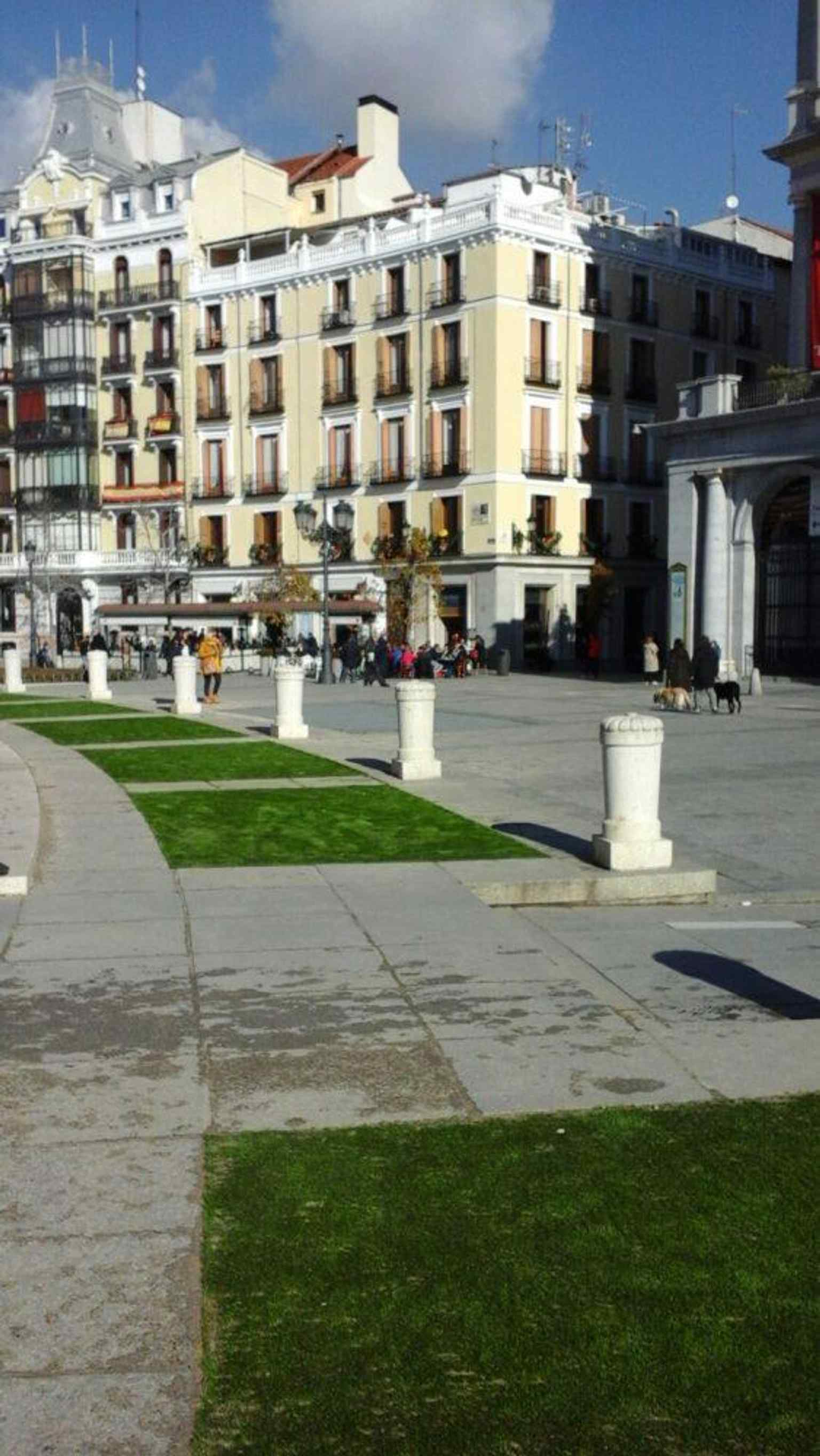
Modern artificial turf in the parterres shows how the plaza’s gardens have been adapted to stay green in low light.
Modern artificial turf in the parterres shows how the plaza’s gardens have been adapted to stay green in low light.Photo: Diario de Madrid, Wikimedia Commons, CC BY 4.0. Cropped & resized.
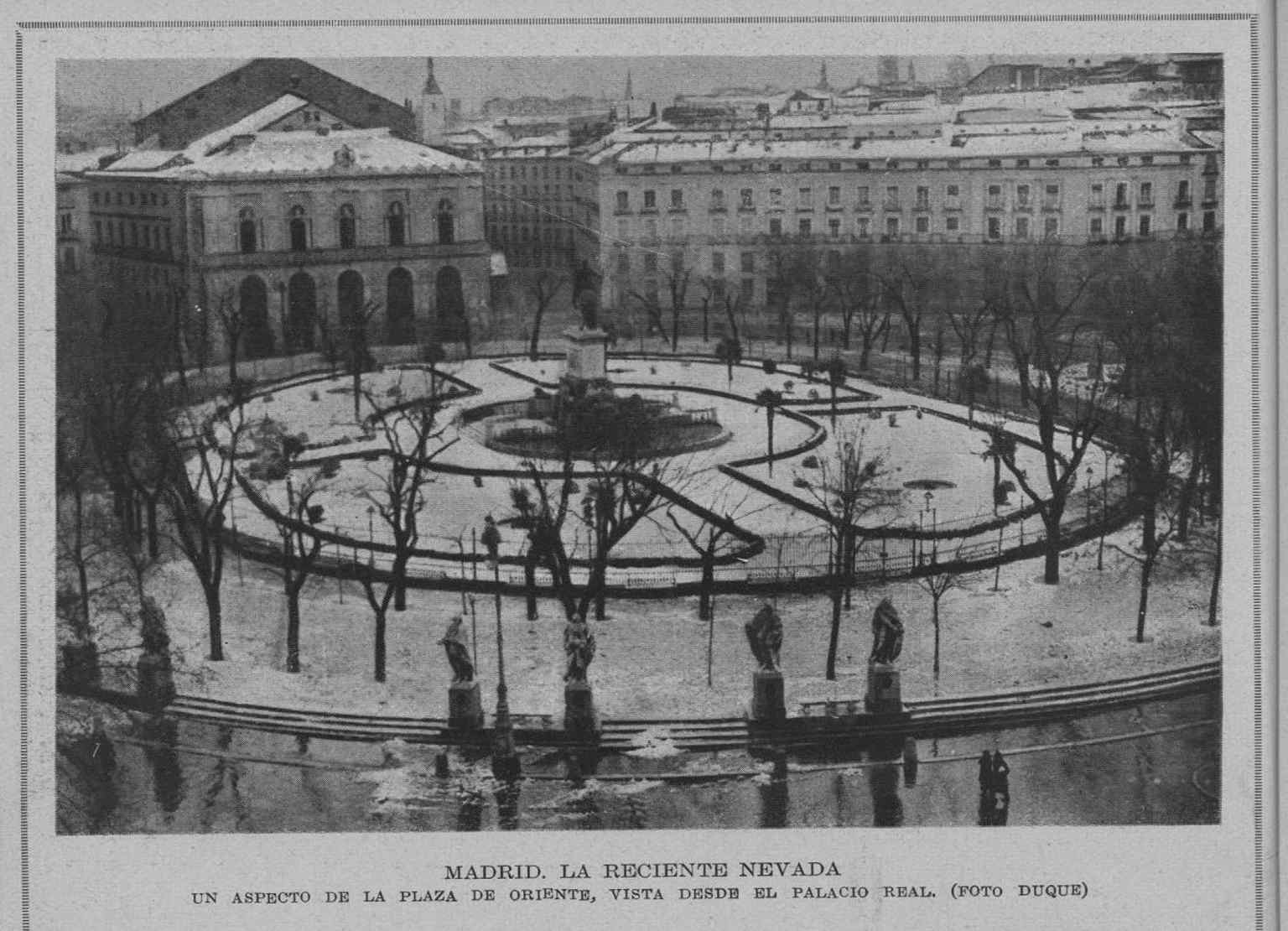
A 1913 snowy view of Plaza de Oriente from the Royal Palace side, capturing the square before its later 1990s peatonalization.
A 1913 snowy view of Plaza de Oriente from the Royal Palace side, capturing the square before its later 1990s peatonalization.Photo: Julio Duque, Wikimedia Commons, Public domain. Cropped & resized.
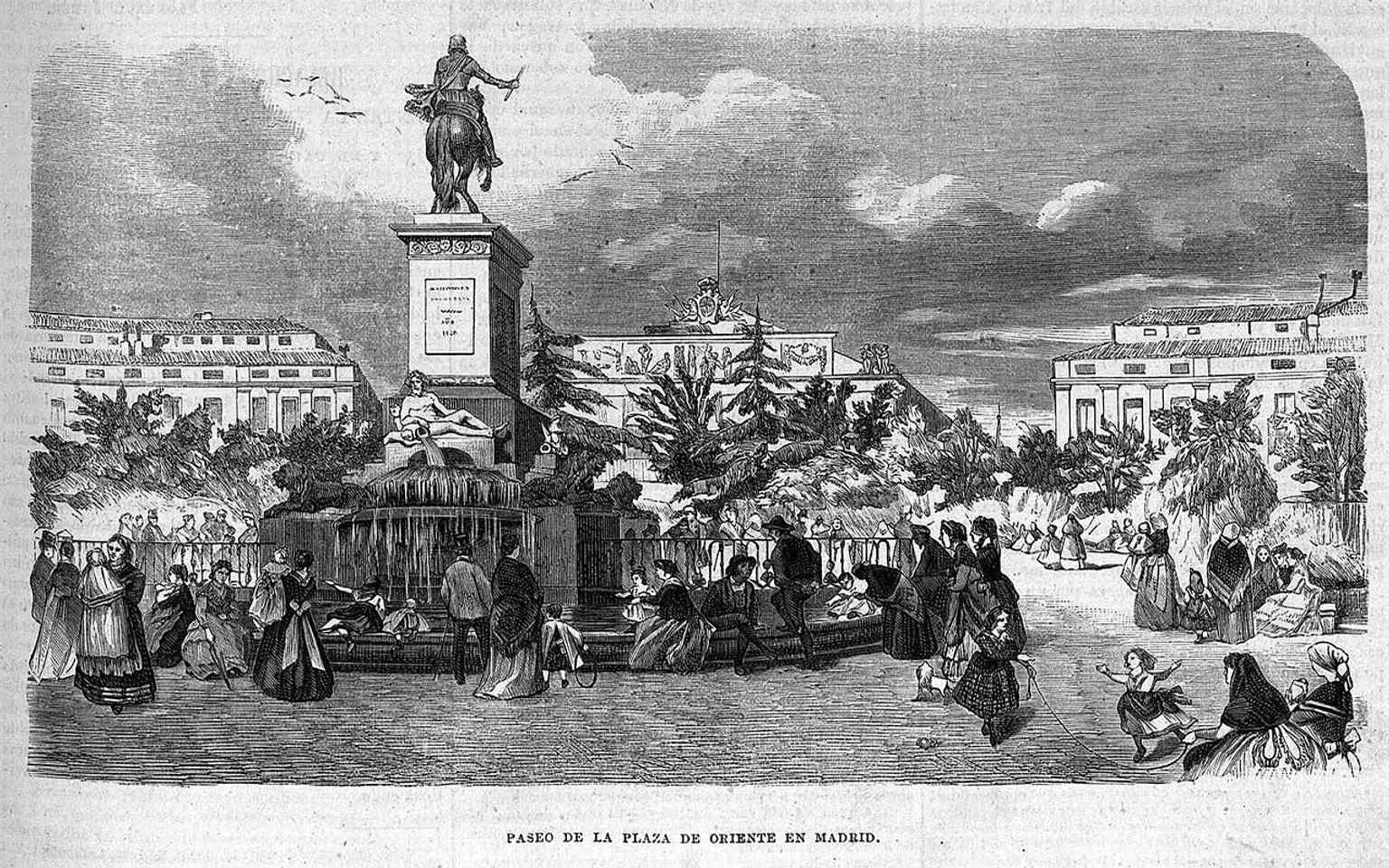
An 1870 engraving of the Paseo de la Plaza de Oriente, useful for showing how the area looked in the 19th century.
An 1870 engraving of the Paseo de la Plaza de Oriente, useful for showing how the area looked in the 19th century.Photo: Francisco Pradilla y Ortiz, Wikimedia Commons, Public domain. Cropped & resized.
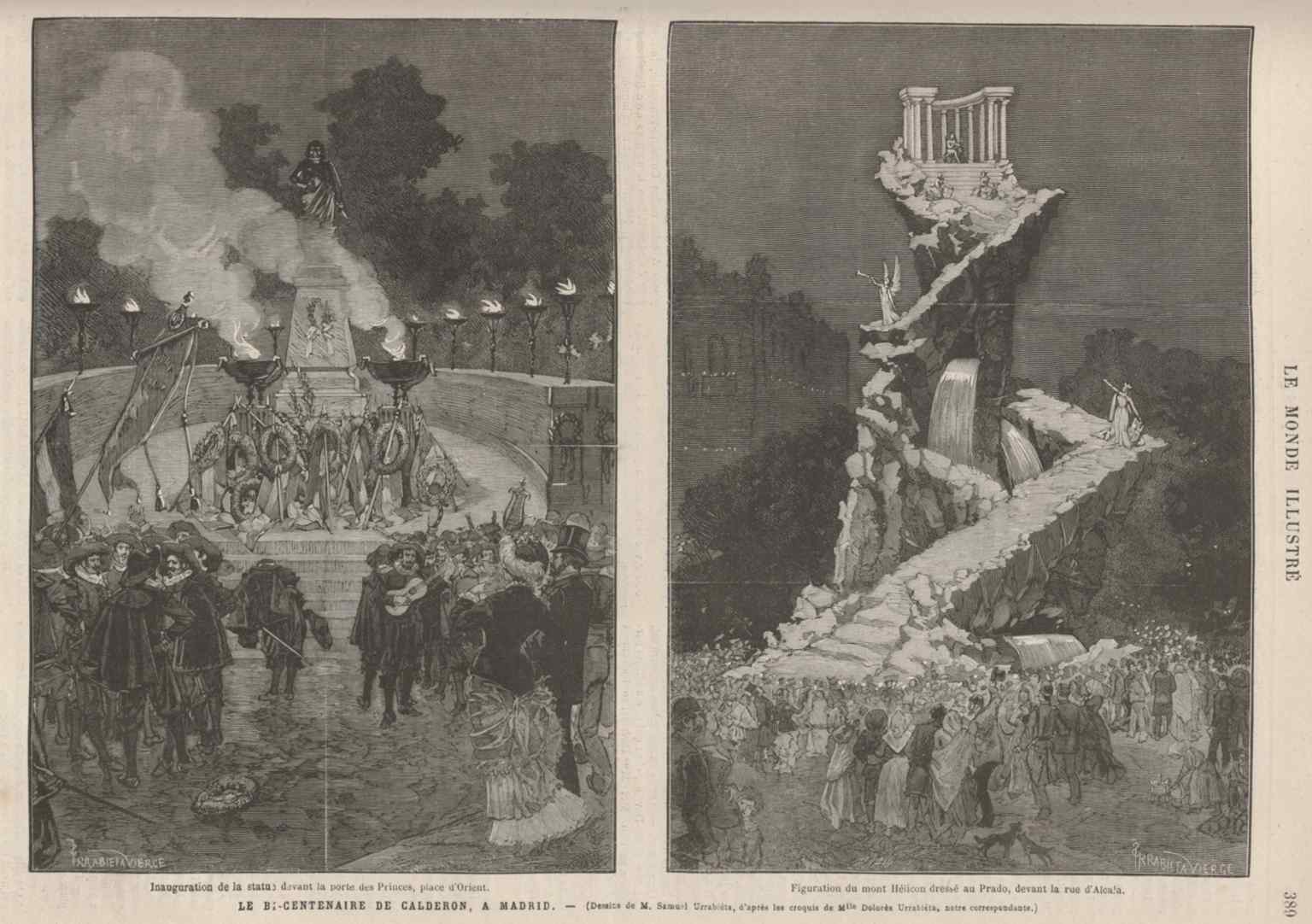
A period illustration of the statue inauguration, reflecting the square’s long tradition of royal sculpture and public ceremony.
A period illustration of the statue inauguration, reflecting the square’s long tradition of royal sculpture and public ceremony.Photo: Dolorès Urrabieta / Samuel Urrabieta, Wikimedia Commons, CC BY-SA 4.0. Cropped & resized.
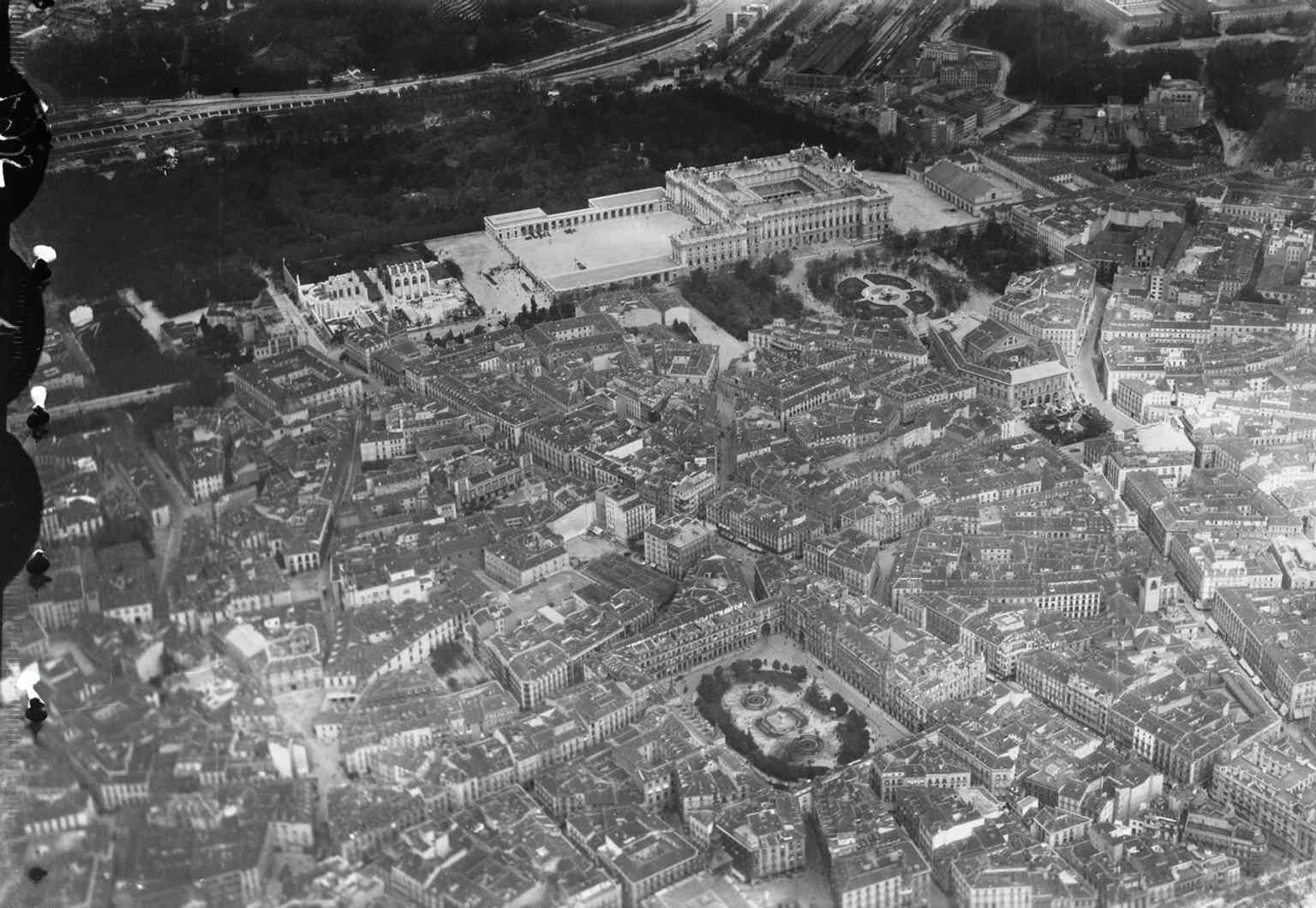
An early aerial view over the Royal Palace and its surroundings helps place Plaza de Oriente within Madrid’s historic center.
An early aerial view over the Royal Palace and its surroundings helps place Plaza de Oriente within Madrid’s historic center.Photo: Walter Mittelholzer, Wikimedia Commons, Public domain. Cropped & resized.
arrow_back Back to Madrid Audio Tour: Historic Center Gems
Loved by travellers

Thousands of tours started.
Plenty of opinions.

4.8 across the App Store and Google Play. Here's a few we keep coming back to.

starstarstarstarstar
This was a solid way to get to know Brighton without feeling like a tourist. The narration had depth and context, but didn't overdo it.
Christoph
Christoph
Brighton Tour
starstarstarstarstar
Started this tour with a croissant in one hand and zero expectations. The app just vibes with you, no pressure, just you, your headphones, and some cool stories.
download Get the app

Pop your headphones in.
Step outside.

Free to download. Tours in every city. Start in 60 seconds — no account, no card.

Download on the App StoreGet it on Google Play
starstarstarstarstar_half
4.8
AudaTours app icon
headphones
~ 4 min until your first tour starts
public
1,000+ cities worldwide
all_inclusive
AudaTours
Unlimited

Every tour. Every city. One subscription.

3097 tours2273 cities138 countries50+ languages