
Madrid Audio Tour: Hidden Legends of Sol’s Timeless Treasures
Beneath the relentless buzz of Madrid’s Puerta del Sol lies a city layered with secrets, silent rebellions, and hidden sanctuaries. This self-guided audio tour peels back the centuries, inviting you to trace winding alleys, forgotten cloisters, and shadowy corners most travelers overlook. What royal scandal once shook the peaceful halls of the Monastery of the Descalzas Reales? Which forbidden book smuggler slipped through the centuries-old doors of the Church of San Ginés de Arles? And why did a single clocktower become the pulse of political uprisings? Move beyond postcard scenes and stride into stories of intrigue and wonder. Feel Madrid’s heartbeat as you uncover coups whispered behind chapel walls and ancient plazas where destinies changed at midnight. Every step brings a new revelation and every street hides its own legend. The city’s hidden layers are waiting. Step forward and listen—Madrid holds its breath for your discovery.
Tour preview
About this tour
- scheduleDuration 70–90 minsGo at your own pace
- straighten1.9 km walking routeFollow the guided path
- location_on
- wifi_offWorks offlineDownload once, use anywhere
- all_inclusiveLifetime accessReplay anytime, forever
- location_onStarts at Church of Buen Suceso
Stops on this tour
lock_open 3 free previews · 12 unlock with purchase
To spot the Church of Carmen, look for a broad, imposing building on the corner, with two grand stone entrances framed by tall columns and topped with statues-all set in a mix of…Read moreShow less
To spot the Church of Carmen, look for a broad, imposing building on the corner, with two grand stone entrances framed by tall columns and topped with statues-all set in a mix of weathered brick and smooth stone, and watch for its pointed spire rising above the simple but elegant facade. Ah, the Church of Nuestra Señora del Carmen y San Luis Obispo! Let’s stand here for a second and imagine this quiet edge of the street in another era-full of the drama, change, and more than a few miracles Madrid’s old town is famous for. Believe it or not, the very ground beneath your feet once held a house with a rather, let’s say, “lively” reputation before it became a sacred space. In 1575, the city of Madrid and the Order of the Carmelites took over, and poof!-a convent appeared, rising up on the site of that notorious former residence. Those monks really knew how to recycle real estate. Back then, this was all part of the grand Convent of the Carmen Calzado. The church is the only piece still standing, like the last guest at a very long party. Originally, it was dedicated to Saint Damasus, but people always remembered it by the name of the Carmelite order who lived here. Described in the 19th century as one of the grandest churches in Madrid, it once boasted magnificent chapels and statues. But the story wasn’t all calm hymns and whispered prayers. In 1836, the winds of change swept through and the convent was shut down; the monks had to pack up and leave, though the church itself was preserved. Fast forward to 1910: the building was given a new lease on life as a parish, and over time, a few tweaks and changes crept in-like any good old Madrid landmark! Now let's spice things up a bit: During the chaos of the Spanish Civil War, this church faced destruction. It was set on fire, its tombs desecrated, and almost all the holy images destroyed-except one, the image of the Virgin, who hung so high no flames or chaos could reach her. You could say she had the best seat in the house. After the war, when the neighboring church of San Luis Obispo was demolished, its grand stone entrance was moved here-Madrid keeps its treasures moving, apparently! So when you look at the stone portal on the side facing Calle de la Salud, know that it used to belong to another church entirely. You’ll spot classic, no-nonsense lines on the outside, with rounded arches and Corinthian columns, and a facade straight out of the textbook of Spanish sobriety. It was likely designed by a monk-architect, fray Alberto de la Madre de Dios, with a dash of inspiration from the mazes and brickwork of Toledo. Inside, imagine the glow of iron balconies, side chapels locked with old railings, and a huge classicist altarpiece. Marvel for a moment: The painting crowning the altar is by Antonio de Pereda, and the delicate sculpture of the Virgin of Carmen-the survivor of the fires-was carved by Juan Sánchez Barba. Years have trimmed the church’s once rich store of treasures, but the faithful still come for the statue of Our Lady of Carmen, created by Francisco Palma Burgos, which has its own special procession every July 16th. And today, the church is home to the Hermandad de Los Gitanos-an energetic congregation adding even more color and music to the ongoing story of this extraordinary landmark. So, next time you see a grand doorway or a high balcony, remember: it might just be on a long, historic journey of its own. And never underestimate what a determined Virgin can survive!
Open dedicated page →
Show 12 more stopsShow fewer stopsexpand_moreexpand_less
Straight ahead, you’ll spot an impressive 16th-century building with a sturdy stone façade, central church entrance, and simple, broad windows-it stretches across the plaza with a…Read moreShow less
Straight ahead, you’ll spot an impressive 16th-century building with a sturdy stone façade, central church entrance, and simple, broad windows-it stretches across the plaza with a sense of calm authority, crowned by belltowers and crosses. Welcome to the Monastery of the Descalzas Reales, or as the locals might say, the Royal Barefoot Nuns! Let me tell you, this place is no ordinary monastery-it’s a palace with a twist of convent and a sprinkle of royal drama. Picture yourself in Madrid around 1559: this spot was once a grand palace, hospitality central for noble families and even emperors! Juana of Austria, sister of Spain’s mighty King Philip II and a woman who had more titles than a Netflix series, decided to swap her crown for a wimple and founded this convent for the humble Franciscan barefoot nuns. Now, don’t worry-barefoot nuns don’t just wander the Plaza shoeless. It’s more a symbol of their vow of simplicity, but I bet they appreciated slippers in Madrid’s winters. Imagine the square here throbbing with anticipation as members of the royal family arrive for grand celebrations and ceremonies. There was once a royal proclamation stage right in front of these walls, trumpets blaring and crowds gathered in excitement. The convent quickly became a retirement home for queens, princesses, and noblewomen. If Spanish royal life got too much-you know, the endless formal dinners, the never-ending need to dodge political intrigue-you could escape right here and join your cousins for morning prayers and, perhaps, some medieval sisterly chat. The list of illustrious nuns could fill a soap opera: Juana herself, Empress Maria of Austria (she hosted a three-day party to persuade King Philip III to keep the court in Madrid-she failed, but at least the snacks were great), archduchesses, illegitimate princesses-it’s royal drama at every turn. The inside holds more treasures than the Spanish crown jewels-works of art, marble tombs, baroque sculptures, and even a set of tapestries designed by Rubens. Yes, Rubens! They used to hang them outdoors for Holy Week, so forget Netflix-this was prime cultural entertainment back then. This building itself once covered a huge area, overflowing with gardens and fields now lost to the city’s expansion-although, scandalously, part of it was nibbled away by a 20th-century underground car park. The monastery has weathered wars, fires, and even a bomb or two during the Spanish Civil War. It’s seen ceilings collapse and priceless art whisked away for safekeeping, yet it always rose again, a little like your favorite character who always survives to the next season. And you know those classic faintly stern Spanish facades, all red brick and tan-colored stone? That was the look for the whole neighborhood once, a far cry from the skyscrapers peeking above the old roofs now. Inside, a cool, echoing cloister fills with sacred music every Easter-there’s even a haunting Good Friday procession with ancient choral music, centuries-old robes, and a sculpture Christ so lifelike it almost makes you want to behave for good. Not only is this holy house packed with history, but it’s also a real resting place for a who’s who of Spanish and Austrian royalty-and a reminder that behind every royal spin-off series, there’s a story of faith, family, and maybe, just maybe, the occasional royal gossip swapped over prayer. So as you gaze at those strong, quiet walls, imagine this plaza buzzing with royal carriages and the soft steps of enveloped nuns, proof that no matter how much Madrid changes, this corner still holds the whispers of queens and the secrets of history. For a more comprehensive understanding of the plaza de las descalzas, notable burials at the royal barefoot nuns or the community, engage with me in the chat section below.
Open dedicated page →You’re looking for a large, elegant brick-and-stone building with tall windows, metal railings, and sturdy stone corners-just look across the plaza and you’ll spot its solid,…Read moreShow less
You’re looking for a large, elegant brick-and-stone building with tall windows, metal railings, and sturdy stone corners-just look across the plaza and you’ll spot its solid, angular facade and decorative entryway with the words “Sala de Ventas” above the door. Welcome to the House of Jewels, or as the locals call it, La Casa de las Alhajas! Just imagine yourself in this very spot over a century ago, when this block-sized beauty was the stronghold of Madrid’s most precious treasures-not jewels you’d wear to a royal ball, but the ones pawned for a slice of hope and a handful of coins. The House of Jewels sits in the historic San Martín square, where you can practically hear the echoes of bustling passersby and horse-drawn carts from the days when this neighborhood was the old arrabal, or suburb, of San Martín. Now, get ready for a twisty tale! This area once held the ancient Convent of San Martín, dating all the way back to 1126-the very first convent in Madrid! It survived centuries and changes, from a spiritual haven to a vital parish church, until one day, King Joseph Bonaparte (Napoleon’s brother, no less) came along with a sledgehammer’s dream and ordered its demolition. Poof! Up went a bigger plaza and a suitcase full of drama-because almost instantly, these hallowed grounds became everything from government offices to a guardhouse, even housing a provincial courthouse for a spell. Then came the real surprise: buried under revolutions, reforms, and the constant shuffle of history, a charitable spirit was born. In 1702, a kind-hearted priest named Francisco Piquer had an idea-why not help Madrid’s poor with small, low-interest loans, taken against the jewels and belongings they held dearest? So the Monte de Piedad was founded. Over time, this little operation grew big, moved around a bit, then merged with the city’s newly formed Savings Bank-kind of like Madrid’s financial Batman and Robin, looking out for everyday people. And so, in 1870, after the site’s tangled past and a competitive design contest (think: 19th-century “Madrid’s Got Talent”), construction began on this new headquarters. The building you see today is the result: a marvel of brickwork and limestone, with a layout wrapped around a bright, square patio, crowned by a glass skylight and ringed by slender iron columns. Imagine sunlight pouring into the central hall, illuminating crowds who gathered to redeem their keepsakes or bid in lively auctions. The architecture combined Italianate medieval details and bold modern technology-check out those iron beams and stylish balconies! Arbós and Aguilar, the architects, wanted every detail to serve a function. Rumor has it they even designed the furniture! Inside, there were once grand murals and a cleverly ventilated strongroom where people’s precious items could breathe easy and stay safe, and a chapel for prayers-a full-service “lost-and-found” for both property and the soul. To make things even quirkier, the building housed not only staff but also the director and the chaplain. Imagine Sunday mornings: a cup of coffee, a quick blessing, and maybe inventorying a few watches and tiaras! Through the decades, La Casa de las Alhajas stubbornly resisted demolition-sometimes by little more than luck-and instead found new life as a cultural space. Today, you might stumble on an art exhibit where fortunes were once stashed and auctioned. All the while, the old bones of the place remain: the grand stairs, the ironwork, and even the tombstone of the very priest who started it all, quietly tucked inside. So, as you stand outside those thick, patterned doors, pause and listen-can you hear it? The quiet clink of coins hitting a tin bank, the quiet hope of someone’s treasure, waiting for a new beginning. And don’t worry, you don’t have to pawn your headphones to keep enjoying this tour! For a more comprehensive understanding of the identification and location, property description or the use, engage with me in the chat section below.
Open dedicated page →Look for a stately brick church with sturdy stonework and a tall, pointed spire rising above the square-just opposite you on Calle del Arenal, its square tower topped by a slate…Read moreShow less
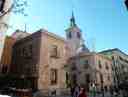
Look for a stately brick church with sturdy stonework and a tall, pointed spire rising above the square-just opposite you on Calle del Arenal, its square tower topped by a slate roof marks the heart of San Ginés. Now, let’s travel through centuries of Madrid’s drama, devotion, and even a pinch of disaster, all right here where you’re standing. The Church of San Ginés de Arles isn’t just a building-it’s a survivor, a patchwork of centuries, fires, and secret stories. This spot has been sacred ground since at least the 1100s, tied to the legendary days when knights under Raimundo of Burgundy camped here after the conquest of Madrid. Just imagine tents, armor clanking, and horses neighing as foreign soldiers gathered by the old church-probably grumbling about Spanish breakfasts already! The oldest document about San Ginés comes from 1156, when Alfonso VII granted it lordship over not one, but three villages. But the city’s own lawbook didn’t list it - why? Because back then, this place was basically Madrid’s outer suburbs! For a long time, even into the 1400s, San Ginés was outside the city walls - no quick pop into the city for churros here. When the population boomed after Madrid became the royal capital, the church saw so many new faces it had to grow too-unfortunately, on sand. Bad for sandcastles, worse for churches. In 1641, part of the church collapsed. Oops! Hope wasn’t lost, though. Enter Fray Lorenzo de San Nicolás, who drew up plans for a stronger new building, and the bricklayer Juan Ruiz made it happen. By 1645, a new church rose, but construction went on for decades, with King Philip IV pitching in for a lavish chapel. The building has had more facelifts than a celebrity-fires in 1724, 1756, and 1824 tore through it, leading to fresh decorations and repairs each time. Its current neoclassical glow comes from an 18th-century renovation, with the famous architect Juan de Villanueva involved-as if having a “royal architect” wasn’t enough for church bragging rights! You’ll notice the north side, facing Calle del Arenal, looks a bit different. In the 1870s, the city decided this street needed some flair, so windows became balconies and they topped it with a grand triangular pediment. The result? The church looks both solidly 1600s and a bit like it’s showing off its new hat. But inside, things get even juicier. There’s art everywhere, from neoclassical altarpieces to masterpieces rescued from disaster. One chapel still displays the last version of “The Expulsion of the Merchants from the Temple” ever painted by El Greco-served fresh every Saturday morning. Want drama? There’s a legend that a giant stuffed alligator once lived under an altar, donated as thanks for a miraculous rescue in the Americas in 1499. If you think your souvenir from Spain is weird, imagine lugging a crocodile back for the Virgin Mary! Walk among the side chapels and you’ll find marble, golden angels, dazzling frescoes, and-if your timing’s right-a parade of paintings featuring everyone from the archangels to Christ himself. On record in the church archive: births, marriages, and deaths of everyone from the royal family to literary giants. Fancy walking where Goya’s family, Lope de Vega, or Francisco de Quevedo were baptized or wed? You’re in the right place! Wars, wildfires, and even proposed wild renovations couldn’t put San Ginés down. The latest makeover, in the mid-20th century, carefully made sure the brick and stone you see today proudly recall their 17th-century heyday-less plastic surgery, more skillful restoration. So imagine the crowds, the drama, the art, and the whispers of Madrid’s centuries, all rooted right here in San Ginés’ sturdy walls. And next time you see a crocodile in church, you’ll know just what miracle to thank!
Open dedicated page →Just ahead of you is a four-story cream and white corner building, with elegant wrought-iron details and tall windows with burgundy shutters; look for the ornate sign reading…Read moreShow less
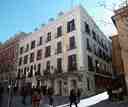
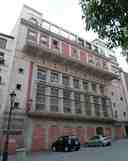
Just ahead of you is a four-story cream and white corner building, with elegant wrought-iron details and tall windows with burgundy shutters; look for the ornate sign reading “Eslava” just above the entrance to spot the Slavic Theatre. Now, let’s imagine you’re back in the bustling Madrid of 1871. Picture carriages rumbling down the narrow street and the air filled with anticipation as a crowd begins to gather outside this very building. In those days, fresh from the mind of Bonifacio Eslava, nephew of a celebrated composer, the place wasn’t even a theatre-it was a humble piano storage and assembly hall! That’s right, the first tunes here were the clinks and clangs of craftsmen piecing together Spain’s very first locally made pianos. But Bonifacio had a dream, and soon this simple space, designed by architect Bruno Fernández de los Ronderos, became the Salón Eslava-a 1,000-seat theatre café where Madrid’s people piled in for a laugh, a tune, or a scandal. Local legends performed here, from famous comedians like Ricardo Zamacois to starlets with sparkling eyes and sharper wits. The theatre was, and still is, famous for its “chicas del Eslava”-a lineup of actresses and dancers who set the stage on fire and Madrid’s imagination alight. The place was never short on drama. In the early 1900s, the air would fill with the sounds of lively zarzuelas (Spanish operettas), comic revues, and yes-even the occasional scandal. One night in 1922, a playwright’s quarrel escalated above the orchestra pit, ending in gunfire! The tension! The theatre, it’s fair to say, has more dramatic stories offstage than on. Yet, out of every twist, the Eslava transformed-at times a home to magicians of the stage like the maestro Vicente Lleó, at others, a den of musical revolutionaries led by Gregorio Martínez Sierra and his muse Catalina Bárcena. Even Federico García Lorca, Spain’s most famous poet, had one of his plays flop here before the theatre embraced new generations of artists and scandal-seekers alike. The Eslava was nearly as famous for its offstage queens as its onstage ones: Celia Gámez, the dazzling Argentine, made this her headquarters, dazzling Madrid with sequins and song. Through the decades, the building’s ownership and fortunes changed hands with thrilling frequency. Sometimes it burned, sometimes it closed to avoid being sold cheaply, but it never lost its spirit-sometimes stubborn, sometimes wild, always alive. By the late 20th century, as Madrid changed, so did the theatre: becoming the wild nightclub “Joy Eslava.” Imagine thumping music, disco lights bouncing off the old romantic balconies, and a crowd grooving where genteel ladies once swooned over operettas-not even a dramatic fire in 1998 could stop the party for long. Fast forward, and now the theatre is reborn again as Teatro Eslava, thanks to a new renovation led by the French designer Philippe Starck. Today, the old arches and 18th-century boxes mingle with state-of-the-art lights, sound, and energy. Concerts, plays, parties-you name it, they do it! Madrid’s beating heart runs right through these doors, and standing here, just for a second, you can almost hear the lingering echoes of hundreds of opening nights: crowds laughing, glasses clinking, a distant star belting out a tune. So, whether it’s a ghostly waltz from its piano-making past or the pulse of today’s music, the Teatro Eslava’s story is Madrid’s story-full of reinventions, surprises, and a few good laughs. Ready for the next adventure? Interested in knowing more about the the girls of eslava, the joy era or the the return of teatro eslava
Open dedicated page →To spot the Palace of the Marquis of Gaviria, just look for the grand, red-brick building with classical stone details and rows of elegant windows right in front of you on Calle…Read moreShow less
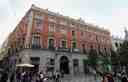
To spot the Palace of the Marquis of Gaviria, just look for the grand, red-brick building with classical stone details and rows of elegant windows right in front of you on Calle Arenal, above the busy entrance that now says “Centro Comercial Arenal 9.” Alright, close your eyes for just a second-imagine the year is 1851, and you’re outside a glittering palace, just as it was when it was brand new. Back then, this was one of Madrid’s most luxurious buildings, designed for the wealthy banker Manuel Gaviria-now, imagine strolling through parties so grand that even Queen Isabella II herself came to the opening night! Through those windows above, curious onlookers would try to catch glimpses of ballroom dances and fancy gatherings, dazzled by the frescoes on the ceilings, painted by the famous Joaquín Espalter y Rull. Those walls saw champagne flowing, laughter echoing, and music swirling through Roman-inspired halls decorated with gorgeous ceramics. The palace has worn many hats since: from a disco with wild nights (imagine that-palace raves!) to hosting exhibitions and events, and now even a shopping mall. Behind these walls, the air is thick with stories of Madrid’s high society, secrets traded in whispers, and perhaps even a stray glass slipper from a night of royal dancing-so while today’s crowd is chasing discounts, once upon a time, they’d be chasing gossip and a bit of royal glamour!
Open dedicated page →Right in front of you, you'll spot a graceful, pale marble statue of a woman draped in classical robes, standing atop a pedestal with a small cherub by her side-it's smaller than…Read moreShow less
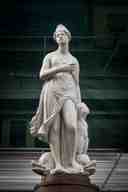
Right in front of you, you'll spot a graceful, pale marble statue of a woman draped in classical robes, standing atop a pedestal with a small cherub by her side-it's smaller than you might expect, but her bright white surface and serene presence set her apart from the bustle of the square. Let me paint you a picture-the year is 1630, horse-drawn carts clatter over cobblestone as Madrid is about to meet its newest resident: La Mariblanca. Now, legend says this marble lady (fresh from Italy!) arrived in quite dramatic fashion: she survived the journey to Spain only for everyone to discover, rather inconveniently, that her head had separated from her body during the bumpy ride. Picture a stressed-out carter named Domingo Núñez having to explain to the city how the statue arrived "slightly" shorter than expected. Not the best first impression, but don’t worry-they fixed her right up! Once mended, Mariblanca took pride of place atop the grand Fountain of Faith right here in Puerta del Sol, the heart of Madrid. That magnificent fountain, with its gushing spouts and mythological harpías circling the pedestal, quickly became the talk of the town. People filled their buckets, children splashed around her base, and poets left verses inspired by her quiet beauty. The statue has inspired great historical debates-some say she’s Diana, the goddess of the hunt, others are convinced she’s Venus, while the earliest records call her an allegory of Faith. Locals just call her Mariblanca thanks to her dazzlingly white marble, which-you guessed it-means "White Mary." Her glowing marble in the Spanish sunshine was so striking, the nickname simply stuck! But life wasn’t exactly easy for Mariblanca. Over the centuries, she became Madrid’s great wanderer. First, she reigned over not one, but two grand fountains in Puerta del Sol. By the 1700s, the city got creative and replaced her original fountain with a more extravagant one by architect Pedro de Ribera, so packed with flourishes and ornaments it could give today’s wedding cakes a run for their money. Yet, by 1838, that fountain too was crumbling, so Mariblanca was unceremoniously removed-and Madrid’s water supply moved to the nearby Plaza de las Descalzas, along with our resilient marble lady. There, she quietly watched over yet another simple but much-loved fountain. Her luck had not yet run out, though. After a round of criticism and city upgrades in 1892, the Plaza de las Descalzas fountain was abolished, and Mariblanca was packed into storage. Talk about being left on the shelf! She languished in a dark warehouse for decades, forgotten like a lonely sock behind the dryer, until she was rescued in 1914 and put out to enjoy the sunlight in the Retiro Gardens. Picture Madrid’s families promenading beneath her on Sundays, sandwiches in hand, the scent of orange blossoms all around. But fate had more adventures in store: By the late 1960s, she was moved again, this time to Paseo de Recoletos, under a classical canopy near a tinkling fountain. The 1980s turned rough, as acts of vandalism left her in pieces once more-honestly, this lady needs better security! But Madrid’s restorers pieced her back together, and nowadays the original Mariblanca lives safely inside the old City Hall. The Mariblanca you see right here is a faithful copy, her elegant features and marble glow lovingly recreated. Since 1986, she’s marked out her spot at different corners of Puerta del Sol-so don’t be surprised if she seems to move every few city renovations! Another copy lives quietly in the Museum of Madrid’s History, just in case she gets homesick for company. So, as you stand before Mariblanca today, imagine the laughter, splashes, and city chatter she has witnessed. From sunlit squares to silent storerooms, she has become a silent witness to Madrid’s ever-whirling changes. Who knows-maybe she’s picked up some good stories to tell the next statue that rolls into town, as long as its head stays on tight!
Open dedicated page →To spot the General Directorate of Security, look straight ahead for a grand, rectangular building with a pale stone façade and rows of arched windows, anchored on one end by a…Read moreShow less
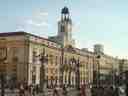
To spot the General Directorate of Security, look straight ahead for a grand, rectangular building with a pale stone façade and rows of arched windows, anchored on one end by a tall clock tower capped with a dark green dome. All right, take a deep breath-because you’re about to step into one of the most dramatic and mysterious corners of Madrid’s past! As you stand in front of this impressive building, try to imagine it not just as blocks of stone, but as the old headquarters of the General Directorate of Security-the legendary DGS. If these walls could talk, they’d probably need a good lawyer! Let’s begin in the year 1886, when Madrid was full of horse-drawn carts, top hats, and newspapers shouting out the day’s headlines-a perfect backdrop for intrigue. That’s when the DGS started operating here, right under the Ministry of Governance and centralizing all things “orderly” (or, depending on whom you asked, “controlling”). Now, this wasn’t the first time the government tried to bring some discipline to the wobbly streets of Spain; they’d actually given it a whirl back in 1858, but that experiment barely lasted a year. The DGS was born and reborn, renamed, and reimagined almost as often as a magician pulls scarves out of his sleeve-but with a lot more paperwork. In the early 20th century, locals called it the Directorate of Public Order for a couple of years, but the old name soon returned, a bit like your favorite pair of socks. But things really heated up during the Spanish Civil War. The air thrummed with tension, rumors, and clattering typewriters. After the war broke out, the DGS found itself in the hands of the Republicans. Imagine this place swarming with nervous officials, flashbulbs popping, and files piling up as the chaos of the times refused to be tamed. In those wild days, the DGS was overwhelmed by “uncontrollable acts”-forgotten men and women sent out on mysterious “walks” to nowhere, clandestine interrogations, and a fog of secrets clinging to the halls. It’s said the director at the time, Alonso Mallol, would pace through these corridors horrified by it all-though, truth be told, he wasn’t able to stop much of it. When Franco’s regime rolled in after the war, the building grew even more notorious. The DGS became the ultimate command center for repression-if Madrid was a chessboard, this was the hand moving the pieces. The new directors, José Ungría Jiménez and then José Finat y Escrivá de Romaní, wielded power the way a conductor wields a baton-except, instead of music, there were blaring commands and heavy footsteps in the halls. And yes, Escrivá de Romaní was so hardcore he even invited Heinrich Himmler to visit-yes, that Himmler, the infamous Nazi, right here on these very grounds-hoping to set up a partnership with the Gestapo. Now there’s a duo for your nightmares. Here’s a chilling fact: this headquarters, perched on Madrid’s most famous square, became notorious as a center of torture. You can almost imagine the boots echoing on the tiles and the low hum of fear in the air. Famous political prisoners met their fate here-Julián Grimau, Lluis Companys, Tomás Centeno, and more. Some, like Centeno, never walked back out. Beyond the politics, the DGS used to keep a sharp eye on public “morals” too. They’d issue summer warnings about “indecorous bathing costumes”-seriously, you’d be fined for showing shoulders or knees. Guess swimwear in Spain used to be longer than most political speeches! The DGS’s reign ended in the whirlwind years after Franco’s death, as Spain tasted its first breaths of real democracy. By 1979, the DGS officially vanished, its tasks handed over to the modern National Police. Today, the building stands as a new symbol-no longer a shadowy center of control, but a vibrant hub in the heart of Madrid. So, as you look up at its grand clock tower, remember: it’s more than just the time that’s ticking away here. It’s the memory of Madrid itself, echoing through the centuries-sometimes dark, sometimes bright, always unforgettable.
Open dedicated page →If you look just ahead, you’ll spot the Albéniz Theatre by its tall cream and red façade, with the name “ALBENIZ” clearly spelled out above a set of large windows and…Read moreShow less
If you look just ahead, you’ll spot the Albéniz Theatre by its tall cream and red façade, with the name “ALBENIZ” clearly spelled out above a set of large windows and architectural details that stand out from the neighboring buildings. Now, imagine it’s a lively night in March 1945. The air smells of excitement and fresh paint, and right here where you’re standing, an elegant crowd in coats and hats gathers beneath the glow of new theater lights. The Albéniz Theatre, just opened with a thousand plush seats, was the latest hotspot in Madrid. Built in the shadows of World War II, when the city was restless and hungry for some joy, this place arrived like a trumpet flourish in the middle of Calle de la Paz. Its story starts a little earlier-picture architects hunched over blueprints, squabbling over every detail. José Luis Durán de Cottes and Rafael López Izquierdo started the project, but midway through, Manuel Ambrós Escanellas took the reins and put his own stamp on the façade and interiors. As the building slowly rose out of 1,300 square meters of city dust, construction noises mixed with the buzz of gossip. There was plenty of that when the theater’s sculpted stone figures by Ángel Ferrant appeared on the face of the building-imagine statues peeking from their niches, watching Madrid pass by, and causing a stir in every café conversation. The inaugural show, “Aquella noche azul” by Alfonso Paso’s son, filled the hall with laughter and applause, but not everyone approved. Even the newspapers got dramatic, fussing over the décor, the design, and who got credit for what. Some thought of this place as an architectural opera, while others grumbled in outrage over reused ideas. Downstairs, a lively dance floor named Fantasía (later Folies, and then Xairo) throbbed with music, echoing through the building during the roaring '70s when drama wasn’t just on the stage but also beneath it. By the ’80s, the Albéniz became the adopted child of the Community of Madrid and hosted everyone from local thespians to traveling festivals. But for every peak, there’s a plot twist: in the 2000s, as Madrid changed its urban planning laws, the Albéniz slipped from its golden protected status to risk becoming just another commercial site. By 2008, as the last applause faded from a performance of “La vida es sueño,” the theater’s heavy doors slammed shut. Here’s where it gets downright theatrical-citizens, artists, and even intellectuals launched a campaign to save the building, collecting thousands of signatures and staging protests worthy of the grandest dramas. Their efforts, led by passionate advocates like Eva Aladro Vico, even went to court, and after years of legal sparring, Madrid’s top judges decided to protect the theater. Imagine the celebrations as the verdict was announced-a real-life finale with no understudies. Fast forward through more wrangling, and finally, in 2018, the building was given the title of “Asset of Patrimonial Interest.” Discreet workmen and noisy drills returned, restoring the building-statues and all. Now part of the sparkling UMusic Hotel Madrid, the Albéniz has reopened with new seats, a hotel, and even those original wooden automata on the façade-dancing right above you, just as city lights flicker and storytellers like me share its tale with every lucky visitor. So, welcome to a place that knows how to survive drama-both on stage and off!
Open dedicated page →Look for a grand, rectangular red-brick palace with sharp, granite-trimmed corners and pointy spires rising from each end-just ahead on Plaza de la Provincia. Now, while you…Read moreShow less
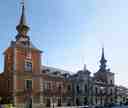
Look for a grand, rectangular red-brick palace with sharp, granite-trimmed corners and pointy spires rising from each end-just ahead on Plaza de la Provincia. Now, while you admire those dramatic towers and the play of warm brick and cool stone, imagine yourself standing here centuries ago, when this beautiful palace was actually a rather dreaded place. That’s right-you’re facing the Palace of Santa Cruz, but it wasn’t always known by such a noble name. In the days of old Madrid, this imposing building was a notorious prison, nicknamed the Cárcel de Corte. If walls could talk, these would probably start with, “You wouldn’t believe who we locked up last week…” Let’s set the scene. It’s 1629. The city is buzzing with excitement and a little nervous anticipation for the grand construction ordered by King Philip IV. Picture a crowd assembled for a ceremony as the first stone is laid, maybe by the king himself-or, if you believe gossip, by a cardinal from Málaga. Architects and builders swarm the site: Juan Gómez de Mora drew up the plans, and over the next decade, a team of Spain’s finest worked to raise this edifice that would soon become both courthouse and prison. As the building grew, so did its reputation. It had two courtyards echoing the style of Toledo’s grand locations, filling the gloomy halls with shafts of natural light. But let’s be honest: nobody really came here for the daylight. Until the time of King Philip V, convicted criminals, rebels, and the city’s most colorful characters spent plenty of nervous nights “sleeping under the angel”-a phrase even coined by Madrileños, referencing the statue of the archangel Michael that once stood watch over the front. Probably not the kind of guardian angel anyone here wanted. Sadly, the “accommodations” weren’t exactly five stars. Before 1674, if you were unlucky enough to be a prisoner, you got one meal every 24 hours. And you thought hostel breakfasts were stingy! Only later, when the authorities grew a bit softer, did they offer dinner, at least for the poorest inmates. And oh, the famous names who have paced these stone floors: Lope de Vega, the legendary playwright, spent time behind these walls. You’d find revolutionary poets, bandits like Luis Candelas, and even generals awaiting their fates. Can you imagine the whispered plots and the frustrated sighs wafting through those barred windows at night? One fateful night in 1791, a fire raged through the upper floors, destroying precious records and cloaking the place in smoke and uncertainty. But like a cat with nine lives, the palace was rebuilt under famed architect Juan de Villanueva, gaining a stern yet elegant new façade and taking on new roles: Palace of Justice, Ministry of Overseas… it wore many “hats.” During the 20th century, after being battered again by civil war, it was lovingly restored-what is it with this building and excitement? Today, the Palace of Santa Cruz houses Spain’s Foreign Ministry. Since 1996, it’s been officially protected as a Cultural Heritage site-but don’t worry, they don’t keep any poets locked up anymore. Wouldn’t want another dramatic sonnet written about the food. So, as you stand here gazing at those stately towers and the stone portal that once welcomed kings-and the occasional notorious prisoner-imagine the echoes of history that swirl around you; Madrid’s glittering future shaped by the shadows of its storied past. To expand your understanding of the architects, description or the conditions, feel free to engage with me in the chat section below.
Open dedicated page →Ahead of you, you’ll spot a wide, open plaza surrounded on all sides by tall red buildings with rows of white windows and elegant arches, and right in its heart stands a bronze…Read moreShow less
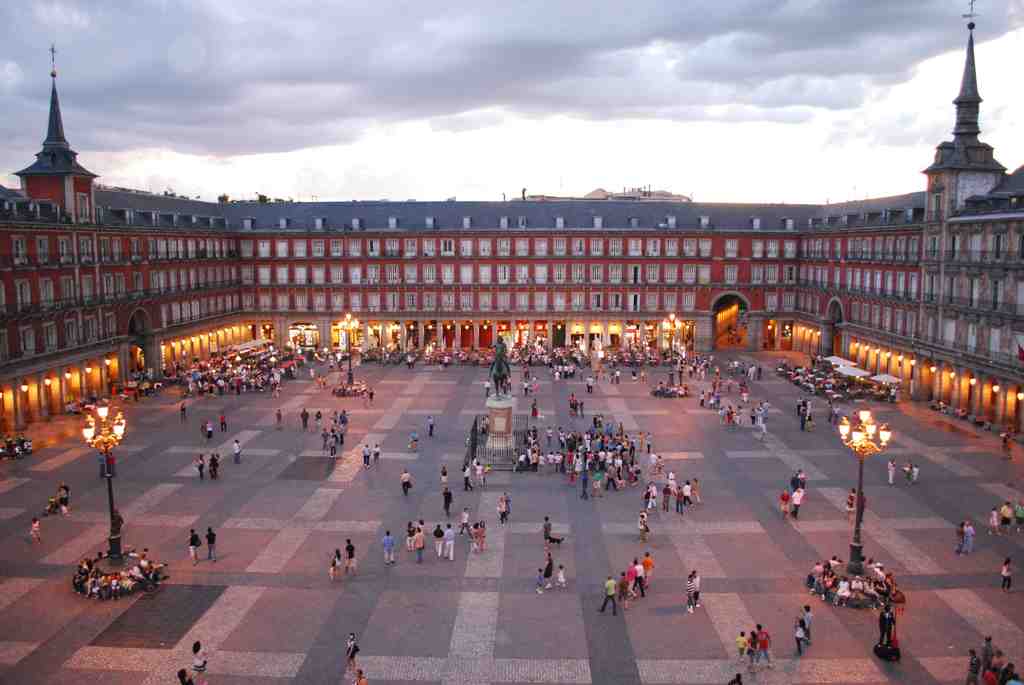
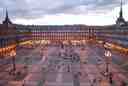
Ahead of you, you’ll spot a wide, open plaza surrounded on all sides by tall red buildings with rows of white windows and elegant arches, and right in its heart stands a bronze statue of a king on horseback-if you see a crowd and hear street music drifting through the air, you’ve found the Plaza Mayor. Welcome to the grand stage of Madrid, where history didn’t just quietly take notes-it made a ruckus! Close your eyes for a second and imagine the plaza beneath your feet, way back in the 1500s. Instead of an elegant square, you’d be standing in the lively “Plaza del Arrabal,” the city’s main market, where traders shouted over one another selling cheese, cloth, and just about anything that squeaked or sparkled. As Madrid’s importance grew, King Philip II-never the modest type-decided his city deserved a square fit for royalty. He tapped the architect Juan de Herrera to turn the raucous open-air bazaar into something more regal. Over the next few decades, the square began to take shape, first with Diego Sillero’s Casa de la Panadería, a building so impressive you’d almost expect pastries to rain down from its windows. The final touches? Left to Philip III and architect Gómez de Mora, who finished this giant living room for the entire city by 1619. But the Plaza Mayor hasn’t always been so peaceful. It has more lives than a cat and has survived three massive fires! The first, in 1631, gave town planners a very literal trial by fire. The next, in 1672, sent the square up in flames once more, only to have another fiery encore in 1790. Each time, master architects like Tomás Román and Juan de Villanueva rebuilt its walls, tweaking the Plaza-like reducing its buildings from five to three stories and giving it those dramatic, wide arches for entry. Now, as you gaze around, notice those endless balconies-237 in total, perfect for sneaking a peek at all the drama below. Those elegant porticoes along the edges aren’t just for showing off; they’ve held markets, guilds, stamp and coin shops, and nowadays, lively cafés. Let’s turn your attention to the centerpiece: the statue of King Philip III, crafted by Italian geniuses Giambologna and Pietro Tacca. Picture this: for centuries, birds slipped inside the hollow belly of the bronze horse, never to return-until someone decided to put an explosive in the statue during the 1930s. When it went off, out burst a feathery avalanche of bird bones. Most statues have pigeon problems; this one had a whole poultry crypt. If you take a closer look at the Casa de la Panadería, you’ll spot the coat of arms of Carlos II looking down upon the square. For a bit of royal gossip: you won’t see Portugal’s arms there, because by the time that was carved, Portugal had broken up with Spain-no love lost, apparently! And then there’s the plaza’s many names-a true identity crisis. From Plaza del Arrabal, to Plaza de la Constitución, to Plaza Real, to Plaza de la República, and back to Plaza Mayor, this square has had more name changes than a rock star. It’s not just a pretty place: the Plaza Mayor has seen bullfights, festivals, markets, executions (gulp), royal ceremonies, and now, holiday fairs and open-air concerts. Each December, the plaza transforms into a twinkling Christmas market, and every Sunday, collectors fill it with treasures of Madrid’s past. So, take in the expanse, listen for echoes of hooves, laughter, and music in the stones beneath you, and imagine the centuries of drama that unfolded right where you stand. Trust me, if these walls could talk, they’d have some seriously juicy stories! Ready to keep exploring? Intrigued by the the name of the square, characteristics or the uses? Explore further by joining me in the chat section below.
Open dedicated page →Right ahead, you’ll spot Calle Mayor by its long stretch of elegant, colorful buildings with rows of iron balconies and lively shopfronts running straight ahead under the bright…Read moreShow less
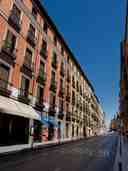
Right ahead, you’ll spot Calle Mayor by its long stretch of elegant, colorful buildings with rows of iron balconies and lively shopfronts running straight ahead under the bright Madrid sky. So here you are, on the historic Calle Mayor-the lifeline that has been threading together the heart of Madrid for more than six centuries. If these balconies could gossip, oh, they’d have endless stories! Originally, this road wasn’t even a street, but rather a ceremonial path fit for kings. Picture the swagger of the Catholic Monarchs as they paraded here at the end of the 15th century, with velvet, horses, jubilation, and probably some snazzy hats. By the 1600s, this avenue had transformed into Madrid’s grandest catwalk, where aristocrats waltzed out to show off their latest fashions, hoping the neighbors were watching (and a little jealous). Over the years, Calle Mayor became a patchwork of different names-each stretch telling its own tale. In the old maps, you could see the street labelled as Mayor, Puerta de Guadalajara, and Platerías, with each section buzzing with different trades. Imagine the scent of leather and silks, the clatter of jewelers’ hammers, the laughter from crowds passing by colorful stalls where tailors, perfumers, and basket-weavers all elbowed for the best spot. If you think traffic is bad today, just imagine trying to squeeze a horse-drawn carriage past all that! But the street has its secrets too. Some of its oldest stones once supported grand structures long gone-like the convent of San Felipe el Real, abandoned with the laws of Mendizabal and swapped out for fancy new flats. Fire claimed the Puerta de Guadalajara in 1582, leaving only smoky memories behind. Each plot, each cornerstone, has witnessed deals being made and houses being sold as far back as the 1500s, as the road was widened and reshaped to fit the growing city. Look out for buildings like the elegant Casa de Ruiz de Velasco with its early modernist flair, or the pinkish Colonial Company building. Hidden in plain sight are palaces like Cañete, or the Uceda Palace, and the spirited Italian Culture Institute within the palace of Abrantes. If you were a playwright in Spain’s Golden Age, this was the street to call home-Lope de Vega was born just at number 46, and Calderón de la Barca also scribbled his masterpieces here. It wasn’t all high drama and high society-at number 1, the Casa Cordero played host to Madrid’s first telephone exchange and a string of hospitable inns and legendary cafés. Number 59? That’s where the Farmacia de la Reina Madre served up mysterious remedies. Around the corner, hungry locals and curious visitors have always clamored for treats at La Mallorquina or eyed the hearty fare at Casa Ciriaco. Calle Mayor doesn’t just connect the Puerta del Sol and Plaza Mayor-it weaves together every flavor, ambition, and twist in Madrid’s story. Even today, as bikes whiz past in the special cycle lane and tourists pause to snap photos, this storied street is still moving, still changing, and full of life. Notice the sunshine glancing off the iron railings, the smell of chocolate from a nearby bakery, the cheerful shouts from shopkeepers, and, if you’re lucky, a bit of the magic that’s danced down this avenue for centuries. Welcome to the beating, ever-changing soul of Madrid! Want to explore the buildings, historic shops or the coda de répide in more depth? Join me in the chat section for a detailed discussion.
Open dedicated page →
Frequently asked questions
How do I start the tour?
After purchase, download the AudaTours app and enter your redemption code. The tour will be ready to start immediately - just tap play and follow the GPS-guided route.
Do I need internet during the tour?
No! Download the tour before you start and enjoy it fully offline. Only the chat feature requires internet. We recommend downloading on WiFi to save mobile data.
Is this a guided group tour?
No - this is a self-guided audio tour. You explore independently at your own pace, with audio narration playing through your phone. No tour guide, no group, no schedule.
How long does the tour take?
Most tours take 60–90 minutes to complete, but you control the pace entirely. Pause, skip stops, or take breaks whenever you want.
What if I can't finish the tour today?
No problem! Tours have lifetime access. Pause and resume whenever you like - tomorrow, next week, or next year. Your progress is saved.
What languages are available?
All tours are available in 50+ languages. Select your preferred language when redeeming your code. Note: language cannot be changed after tour generation.
Where do I access the tour after purchase?
Download the free AudaTours app from the App Store or Google Play. Enter your redemption code (sent via email) and the tour will appear in your library, ready to download and start.
If you don't enjoy the tour, we'll refund your purchase. Contact us at [email protected]
Checkout securely with 




