
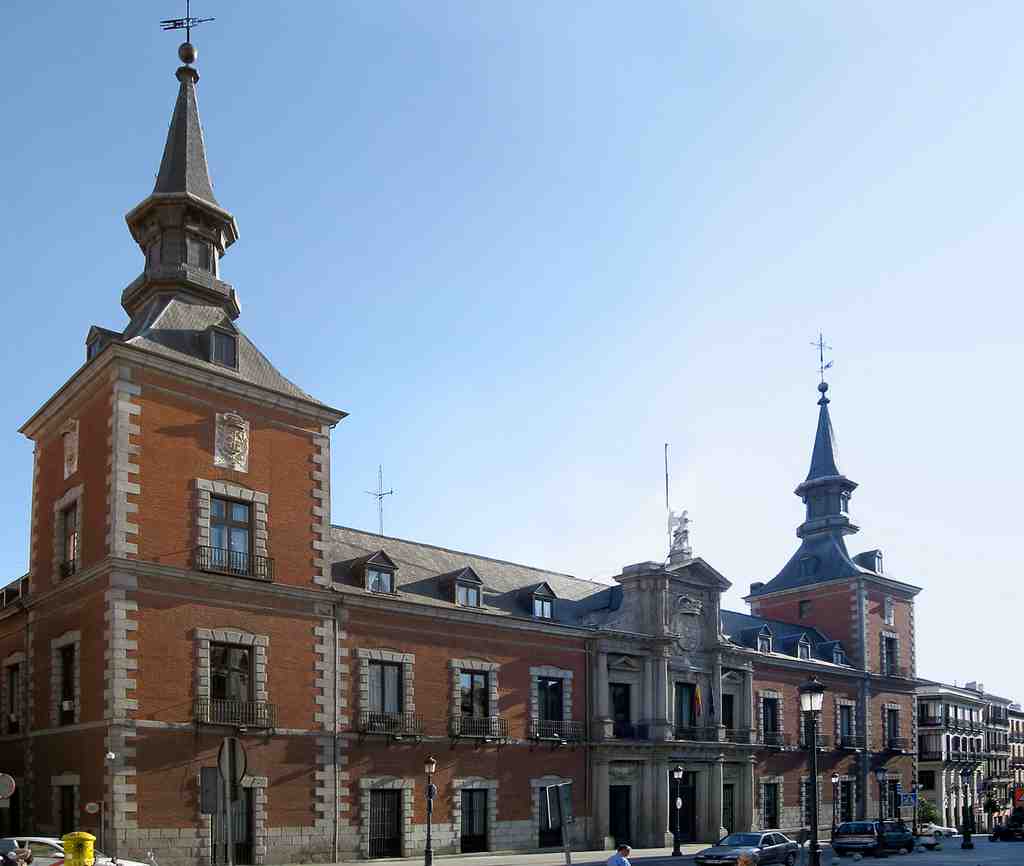
Look for a grand, rectangular red-brick palace with sharp, granite-trimmed corners and pointy spires rising from each end-just ahead on Plaza de la Provincia.
Now, while you admire those dramatic towers and the play of warm brick and cool stone, imagine yourself standing here centuries ago, when this beautiful palace was actually a rather dreaded place. That’s right-you’re facing the Palace of Santa Cruz, but it wasn’t always known by such a noble name. In the days of old Madrid, this imposing building was a notorious prison, nicknamed the Cárcel de Corte. If walls could talk, these would probably start with, “You wouldn’t believe who we locked up last week…”
Let’s set the scene. It’s 1629. The city is buzzing with excitement and a little nervous anticipation for the grand construction ordered by King Philip IV. Picture a crowd assembled for a ceremony as the first stone is laid, maybe by the king himself-or, if you believe gossip, by a cardinal from Málaga. Architects and builders swarm the site: Juan Gómez de Mora drew up the plans, and over the next decade, a team of Spain’s finest worked to raise this edifice that would soon become both courthouse and prison.
As the building grew, so did its reputation. It had two courtyards echoing the style of Toledo’s grand locations, filling the gloomy halls with shafts of natural light. But let’s be honest: nobody really came here for the daylight. Until the time of King Philip V, convicted criminals, rebels, and the city’s most colorful characters spent plenty of nervous nights “sleeping under the angel”-a phrase even coined by Madrileños, referencing the statue of the archangel Michael that once stood watch over the front. Probably not the kind of guardian angel anyone here wanted.
Sadly, the “accommodations” weren’t exactly five stars. Before 1674, if you were unlucky enough to be a prisoner, you got one meal every 24 hours. And you thought hostel breakfasts were stingy! Only later, when the authorities grew a bit softer, did they offer dinner, at least for the poorest inmates.
And oh, the famous names who have paced these stone floors: Lope de Vega, the legendary playwright, spent time behind these walls. You’d find revolutionary poets, bandits like Luis Candelas, and even generals awaiting their fates. Can you imagine the whispered plots and the frustrated sighs wafting through those barred windows at night?
One fateful night in 1791, a fire raged through the upper floors, destroying precious records and cloaking the place in smoke and uncertainty. But like a cat with nine lives, the palace was rebuilt under famed architect Juan de Villanueva, gaining a stern yet elegant new façade and taking on new roles: Palace of Justice, Ministry of Overseas… it wore many “hats.” During the 20th century, after being battered again by civil war, it was lovingly restored-what is it with this building and excitement?
Today, the Palace of Santa Cruz houses Spain’s Foreign Ministry. Since 1996, it’s been officially protected as a Cultural Heritage site-but don’t worry, they don’t keep any poets locked up anymore. Wouldn’t want another dramatic sonnet written about the food. So, as you stand here gazing at those stately towers and the stone portal that once welcomed kings-and the occasional notorious prisoner-imagine the echoes of history that swirl around you; Madrid’s glittering future shaped by the shadows of its storied past.
To expand your understanding of the architects, description or the conditions, feel free to engage with me in the chat section below.




