
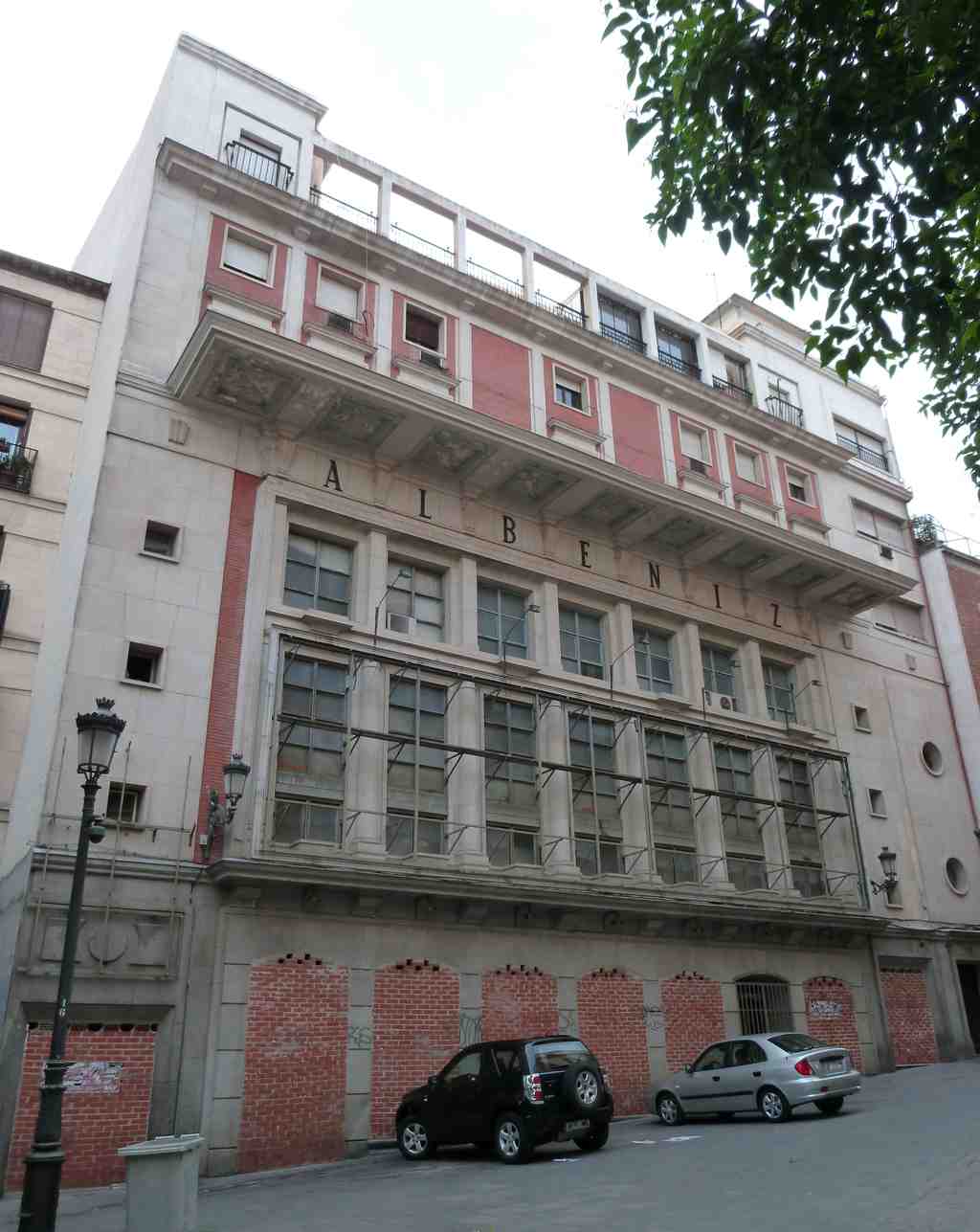
If you look just ahead, you’ll spot the Albéniz Theatre by its tall cream and red façade, with the name “ALBENIZ” clearly spelled out above a set of large windows and architectural details that stand out from the neighboring buildings.
Now, imagine it’s a lively night in March 1945. The air smells of excitement and fresh paint, and right here where you’re standing, an elegant crowd in coats and hats gathers beneath the glow of new theater lights. The Albéniz Theatre, just opened with a thousand plush seats, was the latest hotspot in Madrid. Built in the shadows of World War II, when the city was restless and hungry for some joy, this place arrived like a trumpet flourish in the middle of Calle de la Paz.
Its story starts a little earlier-picture architects hunched over blueprints, squabbling over every detail. José Luis Durán de Cottes and Rafael López Izquierdo started the project, but midway through, Manuel Ambrós Escanellas took the reins and put his own stamp on the façade and interiors. As the building slowly rose out of 1,300 square meters of city dust, construction noises mixed with the buzz of gossip. There was plenty of that when the theater’s sculpted stone figures by Ángel Ferrant appeared on the face of the building-imagine statues peeking from their niches, watching Madrid pass by, and causing a stir in every café conversation.
The inaugural show, “Aquella noche azul” by Alfonso Paso’s son, filled the hall with laughter and applause, but not everyone approved. Even the newspapers got dramatic, fussing over the décor, the design, and who got credit for what. Some thought of this place as an architectural opera, while others grumbled in outrage over reused ideas. Downstairs, a lively dance floor named Fantasía (later Folies, and then Xairo) throbbed with music, echoing through the building during the roaring '70s when drama wasn’t just on the stage but also beneath it.
By the ’80s, the Albéniz became the adopted child of the Community of Madrid and hosted everyone from local thespians to traveling festivals. But for every peak, there’s a plot twist: in the 2000s, as Madrid changed its urban planning laws, the Albéniz slipped from its golden protected status to risk becoming just another commercial site. By 2008, as the last applause faded from a performance of “La vida es sueño,” the theater’s heavy doors slammed shut.
Here’s where it gets downright theatrical-citizens, artists, and even intellectuals launched a campaign to save the building, collecting thousands of signatures and staging protests worthy of the grandest dramas. Their efforts, led by passionate advocates like Eva Aladro Vico, even went to court, and after years of legal sparring, Madrid’s top judges decided to protect the theater. Imagine the celebrations as the verdict was announced-a real-life finale with no understudies.
Fast forward through more wrangling, and finally, in 2018, the building was given the title of “Asset of Patrimonial Interest.” Discreet workmen and noisy drills returned, restoring the building-statues and all. Now part of the sparkling UMusic Hotel Madrid, the Albéniz has reopened with new seats, a hotel, and even those original wooden automata on the façade-dancing right above you, just as city lights flicker and storytellers like me share its tale with every lucky visitor. So, welcome to a place that knows how to survive drama-both on stage and off!




