
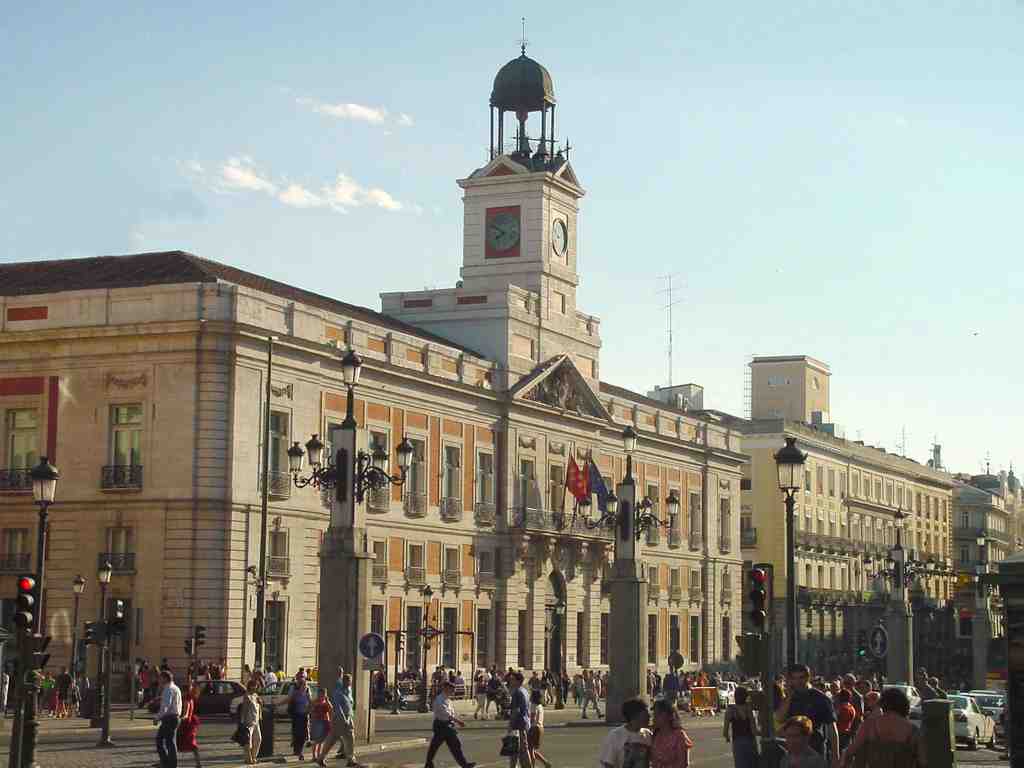
To spot the General Directorate of Security, look straight ahead for a grand, rectangular building with a pale stone façade and rows of arched windows, anchored on one end by a tall clock tower capped with a dark green dome.
All right, take a deep breath-because you’re about to step into one of the most dramatic and mysterious corners of Madrid’s past! As you stand in front of this impressive building, try to imagine it not just as blocks of stone, but as the old headquarters of the General Directorate of Security-the legendary DGS. If these walls could talk, they’d probably need a good lawyer!
Let’s begin in the year 1886, when Madrid was full of horse-drawn carts, top hats, and newspapers shouting out the day’s headlines-a perfect backdrop for intrigue. That’s when the DGS started operating here, right under the Ministry of Governance and centralizing all things “orderly” (or, depending on whom you asked, “controlling”). Now, this wasn’t the first time the government tried to bring some discipline to the wobbly streets of Spain; they’d actually given it a whirl back in 1858, but that experiment barely lasted a year. The DGS was born and reborn, renamed, and reimagined almost as often as a magician pulls scarves out of his sleeve-but with a lot more paperwork. In the early 20th century, locals called it the Directorate of Public Order for a couple of years, but the old name soon returned, a bit like your favorite pair of socks.
But things really heated up during the Spanish Civil War. The air thrummed with tension, rumors, and clattering typewriters. After the war broke out, the DGS found itself in the hands of the Republicans. Imagine this place swarming with nervous officials, flashbulbs popping, and files piling up as the chaos of the times refused to be tamed. In those wild days, the DGS was overwhelmed by “uncontrollable acts”-forgotten men and women sent out on mysterious “walks” to nowhere, clandestine interrogations, and a fog of secrets clinging to the halls. It’s said the director at the time, Alonso Mallol, would pace through these corridors horrified by it all-though, truth be told, he wasn’t able to stop much of it.
When Franco’s regime rolled in after the war, the building grew even more notorious. The DGS became the ultimate command center for repression-if Madrid was a chessboard, this was the hand moving the pieces. The new directors, José Ungría Jiménez and then José Finat y Escrivá de Romaní, wielded power the way a conductor wields a baton-except, instead of music, there were blaring commands and heavy footsteps in the halls. And yes, Escrivá de Romaní was so hardcore he even invited Heinrich Himmler to visit-yes, that Himmler, the infamous Nazi, right here on these very grounds-hoping to set up a partnership with the Gestapo. Now there’s a duo for your nightmares.
Here’s a chilling fact: this headquarters, perched on Madrid’s most famous square, became notorious as a center of torture. You can almost imagine the boots echoing on the tiles and the low hum of fear in the air. Famous political prisoners met their fate here-Julián Grimau, Lluis Companys, Tomás Centeno, and more. Some, like Centeno, never walked back out.
Beyond the politics, the DGS used to keep a sharp eye on public “morals” too. They’d issue summer warnings about “indecorous bathing costumes”-seriously, you’d be fined for showing shoulders or knees. Guess swimwear in Spain used to be longer than most political speeches!
The DGS’s reign ended in the whirlwind years after Franco’s death, as Spain tasted its first breaths of real democracy. By 1979, the DGS officially vanished, its tasks handed over to the modern National Police. Today, the building stands as a new symbol-no longer a shadowy center of control, but a vibrant hub in the heart of Madrid.
So, as you look up at its grand clock tower, remember: it’s more than just the time that’s ticking away here. It’s the memory of Madrid itself, echoing through the centuries-sometimes dark, sometimes bright, always unforgettable.




