
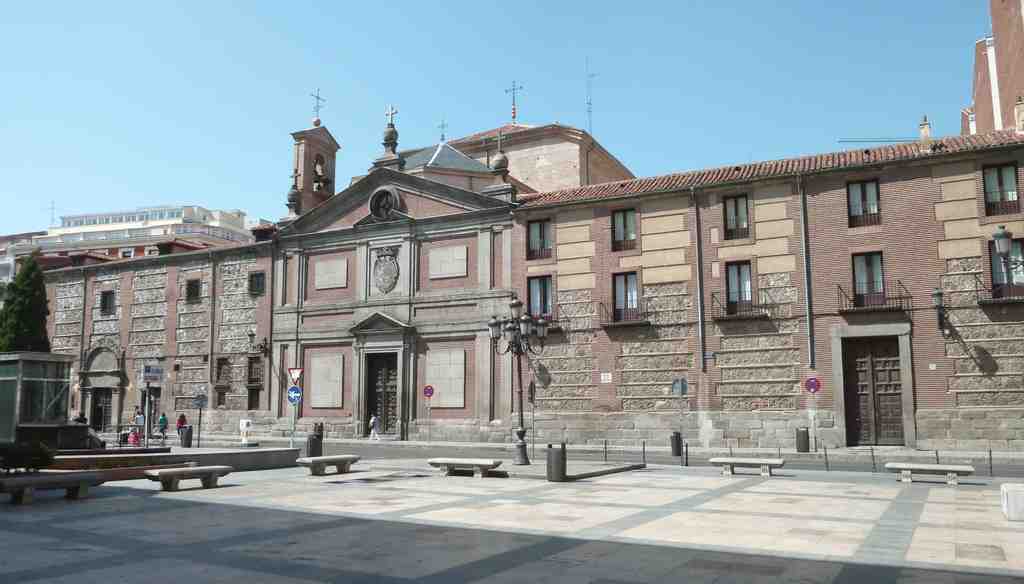
Straight ahead, you’ll spot an impressive 16th-century building with a sturdy stone façade, central church entrance, and simple, broad windows-it stretches across the plaza with a sense of calm authority, crowned by belltowers and crosses.
Welcome to the Monastery of the Descalzas Reales, or as the locals might say, the Royal Barefoot Nuns! Let me tell you, this place is no ordinary monastery-it’s a palace with a twist of convent and a sprinkle of royal drama. Picture yourself in Madrid around 1559: this spot was once a grand palace, hospitality central for noble families and even emperors! Juana of Austria, sister of Spain’s mighty King Philip II and a woman who had more titles than a Netflix series, decided to swap her crown for a wimple and founded this convent for the humble Franciscan barefoot nuns. Now, don’t worry-barefoot nuns don’t just wander the Plaza shoeless. It’s more a symbol of their vow of simplicity, but I bet they appreciated slippers in Madrid’s winters.
Imagine the square here throbbing with anticipation as members of the royal family arrive for grand celebrations and ceremonies. There was once a royal proclamation stage right in front of these walls, trumpets blaring and crowds gathered in excitement.
The convent quickly became a retirement home for queens, princesses, and noblewomen. If Spanish royal life got too much-you know, the endless formal dinners, the never-ending need to dodge political intrigue-you could escape right here and join your cousins for morning prayers and, perhaps, some medieval sisterly chat. The list of illustrious nuns could fill a soap opera: Juana herself, Empress Maria of Austria (she hosted a three-day party to persuade King Philip III to keep the court in Madrid-she failed, but at least the snacks were great), archduchesses, illegitimate princesses-it’s royal drama at every turn.
The inside holds more treasures than the Spanish crown jewels-works of art, marble tombs, baroque sculptures, and even a set of tapestries designed by Rubens. Yes, Rubens! They used to hang them outdoors for Holy Week, so forget Netflix-this was prime cultural entertainment back then.
This building itself once covered a huge area, overflowing with gardens and fields now lost to the city’s expansion-although, scandalously, part of it was nibbled away by a 20th-century underground car park. The monastery has weathered wars, fires, and even a bomb or two during the Spanish Civil War. It’s seen ceilings collapse and priceless art whisked away for safekeeping, yet it always rose again, a little like your favorite character who always survives to the next season.
And you know those classic faintly stern Spanish facades, all red brick and tan-colored stone? That was the look for the whole neighborhood once, a far cry from the skyscrapers peeking above the old roofs now. Inside, a cool, echoing cloister fills with sacred music every Easter-there’s even a haunting Good Friday procession with ancient choral music, centuries-old robes, and a sculpture Christ so lifelike it almost makes you want to behave for good.
Not only is this holy house packed with history, but it’s also a real resting place for a who’s who of Spanish and Austrian royalty-and a reminder that behind every royal spin-off series, there’s a story of faith, family, and maybe, just maybe, the occasional royal gossip swapped over prayer. So as you gaze at those strong, quiet walls, imagine this plaza buzzing with royal carriages and the soft steps of enveloped nuns, proof that no matter how much Madrid changes, this corner still holds the whispers of queens and the secrets of history.
For a more comprehensive understanding of the plaza de las descalzas, notable burials at the royal barefoot nuns or the community, engage with me in the chat section below.




