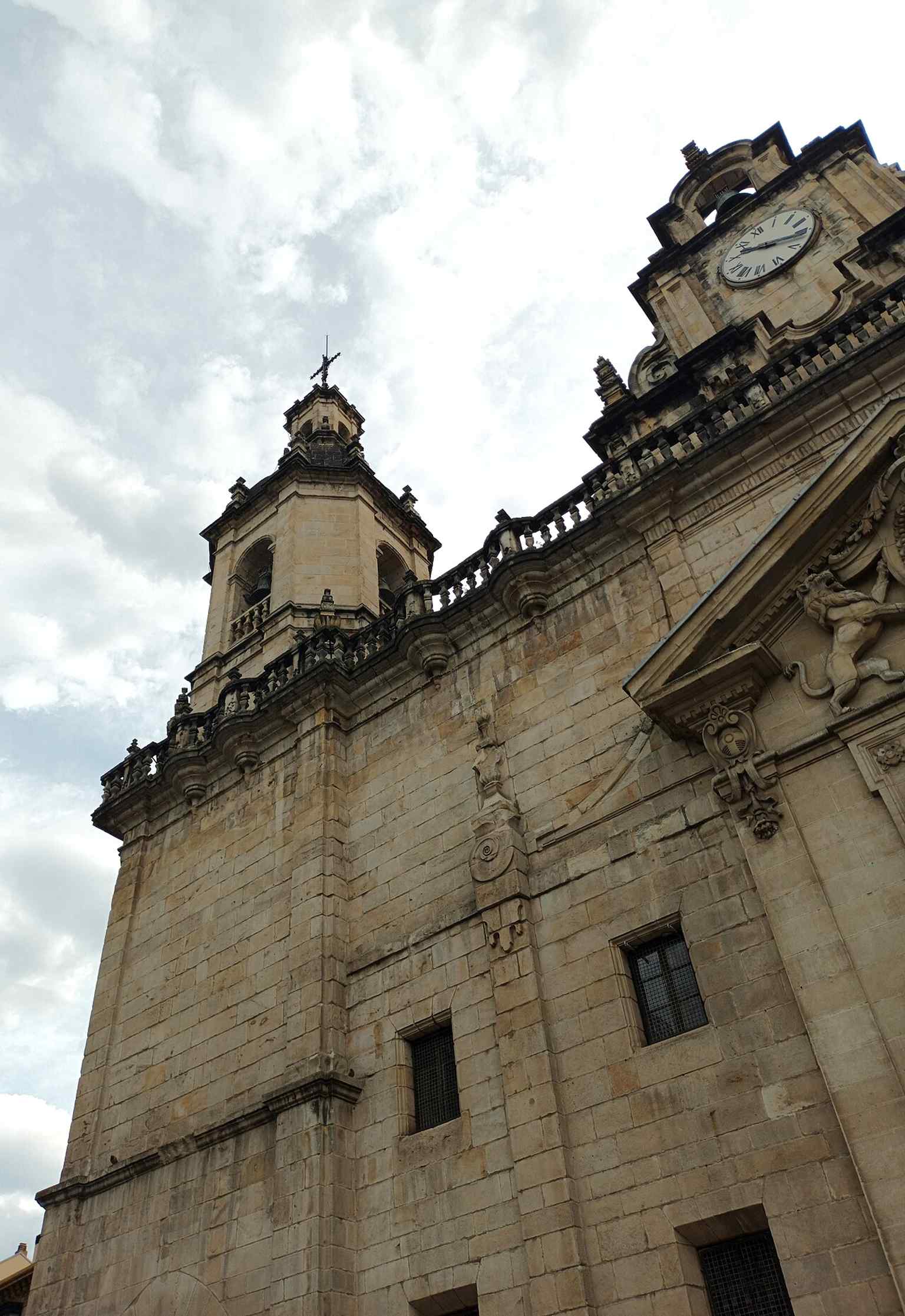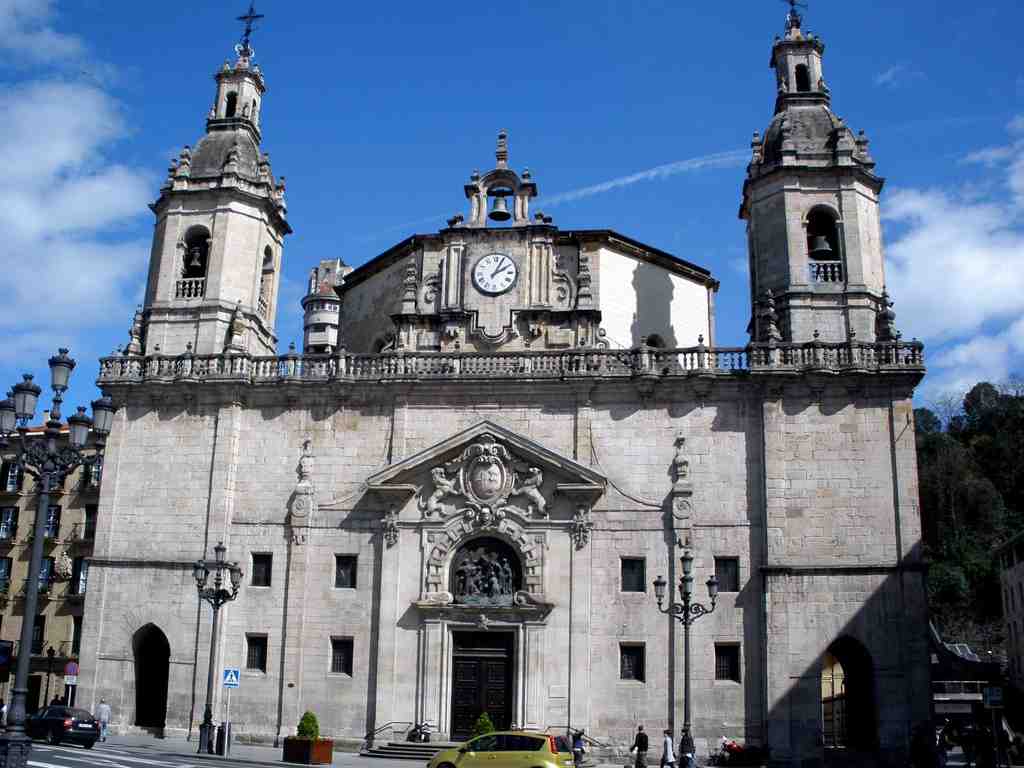
On your left, look for a pale stone Baroque church with a broad central doorway, two attached side towers, and a compact bell wall rising in front of the hidden dome.
San Nicolás looks self-assured now... but this spot began in much shakier fashion. Long before this façade faced the Arriaga, fishermen built a small chapel here for Saint Nicholas of Bari, the protector of sailors. Back then, this stood outside the old town, in a working waterside district where men headed to the river and the sea for their living. They came here to pray before storms, asking for safe return. Bilbao owed its bread to the water, and sometimes the water came back asking for interest.
That first church, founded in fourteen ninety, lost the fight. Floods weakened it, its foundations failed, and the city finally admitted defeat. Most visitors never catch that part of the story, because the present building wears such calm Baroque confidence. But behind that confidence is an engineering surrender. On the twenty-seventh of June, seventeen forty-three, the city council chose demolition. Later that same year, on the sixth of December, workers laid the first stone of the replacement you see now.
The man in charge was Ignacio Ibero, an architect from Azpeitia. He did not give Bilbao a routine parish church. He drew a Greek cross plan - that means all four arms inside are equal in length - fitted neatly into a square, then crowned it with a dome. From outside, that dome reads as an eight-sided prism, though the front bell wall cleverly hides much of it. If you glance at the image on your screen, you can see how the façade stages that little trick, almost like a proud face keeping its thoughts to itself.
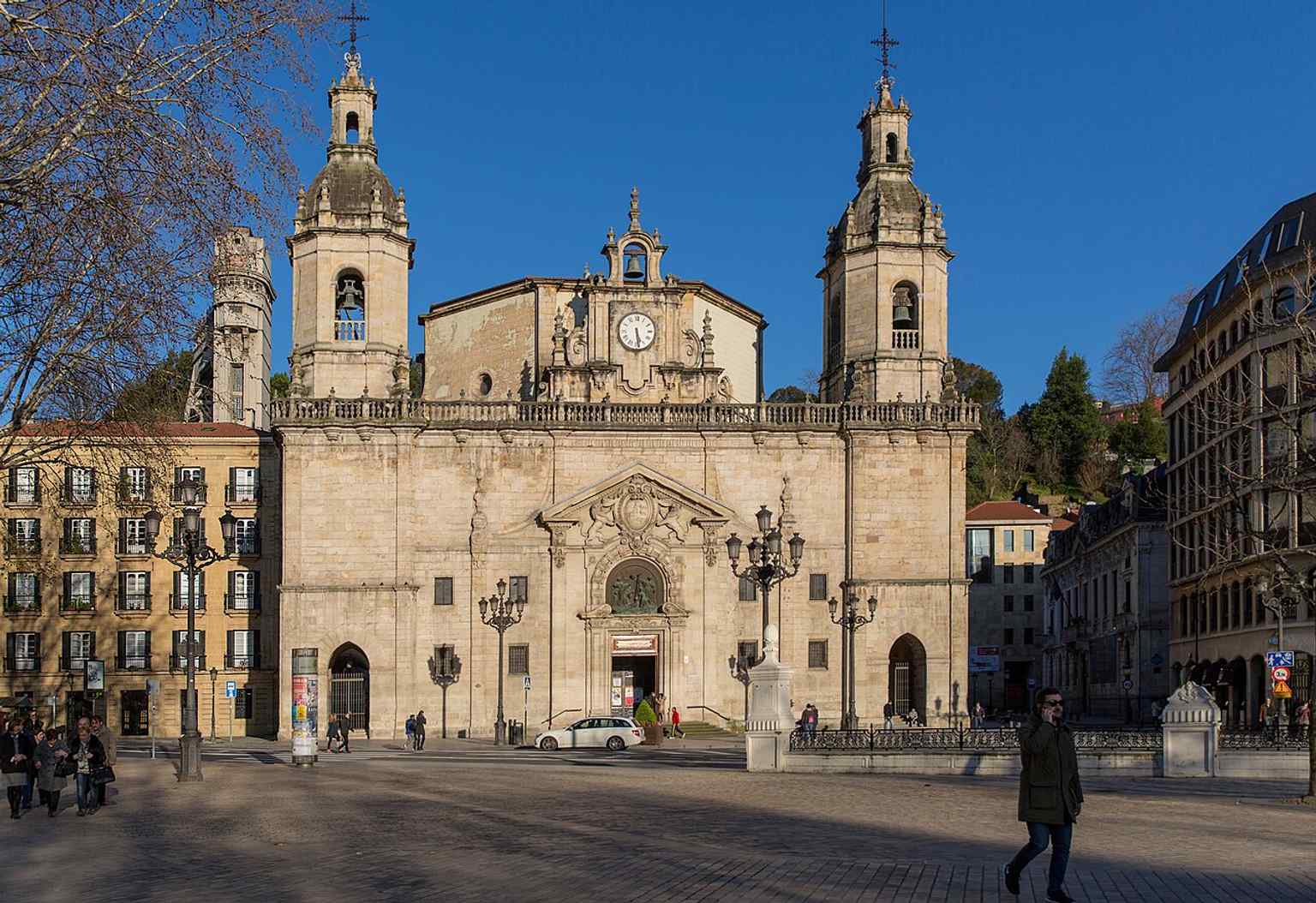
The front itself changed over time. In the late nineteenth century, builders reworked the entrance and added the bronze panel in the upper triangle, under the pediment with Bilbao’s coat of arms and two lions. Another local detail to notice: of the two side porches, only the one on the left keeps the original solution. The church has been adjusted, patched, and rethought, just like the city around it.
And the trials did not stop once the new church opened in seventeen fifty-six. The War of Independence closed it from eighteen oh eight to eighteen fourteen. Lightning struck it in eighteen sixteen. During the Carlist Wars, soldiers turned it into a military storehouse, even a powder magazine and workshop. Strange fate, isn’t it? A sanctuary built for fishermen seeking protection ended up storing the tools of war.
There is one more human thread worth holding onto. Juan Pascual de Mena, the court sculptor from Madrid, came here in seventeen fifty-four with his workshop and family to create the church’s grand altarpieces. So this was never only a neighborhood church. Bilbao’s own city council paid for much of that interior program, placing the city’s coat of arms among the sacred images. Faith and civic pride stood shoulder to shoulder here.
Even in nineteen eighty-three, floods damaged several side altarpieces, and later restoration stripped away extra layers to reveal the Ganguren stone more clearly. So yes... the river kept shaping the building, as provider, threat, and witness.
When you’re ready, head into the square pattern of the old town’s next big correction: Plaza Nueva, where Bilbao tried to bring tidy geometry to a city that had grown the old-fashioned way... one crowded corner at a time.