
San Sebastián Audio Tour: Belle Époque Wonders & Coastal Charms of Centro
Stone angels hover above glittering rooftops as secret rebel meetings echo through the old streets of San Sebastián—few places hide as many stories beneath elegant facades. Follow this self-guided audio tour through Centro’s iconic heart and hear what most visitors never discover. Trace the layers behind every majestic building, where history’s whispers meet the city’s vibrant pulse. Why did desperate citizens storm the City Council in the dead of night? What secrets linger behind the stained glass of the Cathedral of the Good Shepherd? Which world-famous actress once vanished backstage at the Victoria Eugenia Theatre, setting tongues wagging for decades? Move from square to square with fresh eyes and a racing heart, uncovering scandals and mysteries hidden in the city’s grand arches and shadowed corners. Every turn reveals a new side of San Sebastián. Plug in and let the stories shake centuries of dust from these stunning streets. The city’s secrets are waiting.
Tour preview
About this tour
- scheduleDuration 90–110 minsGo at your own pace
- straighten3.4 km walking routeFollow the guided path
- location_on
- wifi_offWorks offlineDownload once, use anywhere
- all_inclusiveLifetime accessReplay anytime, forever
- location_onStarts at Fine Arts Theatre
Stops on this tour
lock_open 3 free previews · 11 unlock with purchase
On your right, notice the broad pale stone façade, its neat rows of rectangular windows, and the little angel fixed to the wall above the spot where the old turning hatch once…Read moreShow less
Open dedicated page →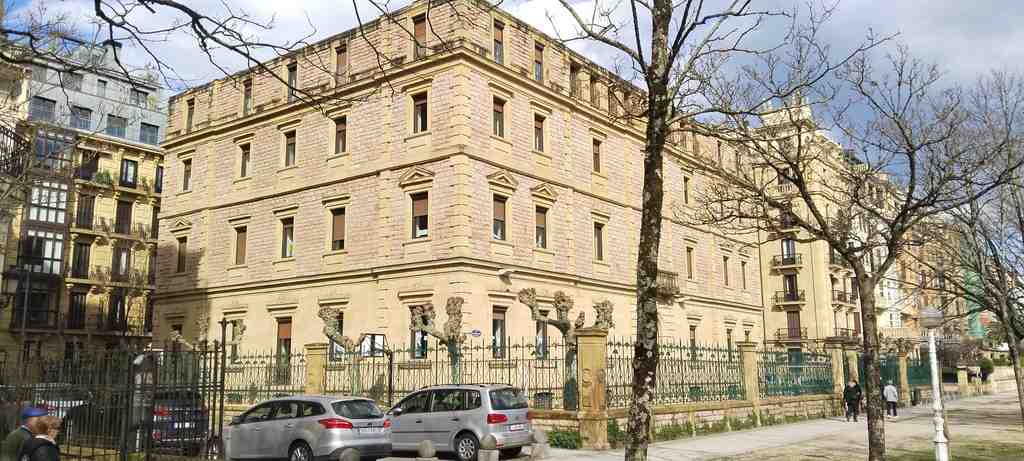
San José Children's Asylum in San SebastianPhoto: Marraski, Wikimedia Commons, CC BY-SA 4.0. Cropped & resized. On your right, notice the broad pale stone façade, its neat rows of rectangular windows, and the little angel fixed to the wall above the spot where the old turning hatch once stood.
This was the San José Children’s Asylum, and here the word “asylum” meant a charitable childcare home, not a medical institution. Ramón Cortázar designed this larger building at number thirty-three Prim Street, and workers laid its first stone on the ninth of September, nineteen oh one. When the city inaugurated it on the twenty-fourth of August, nineteen oh three, San Sebastián staged the occasion with remarkable ceremony: King Alfonso the Thirteenth arrived with the queen mother, the Princes of Asturias, the Infanta María Teresa, and a full line of local and provincial authorities waiting beneath the portico.
That tells you something important about the city taking shape here. Public care and public image moved together. The Town Hall funded the asylum, wealthy Donostiarra philanthropists added donations, and the result served both compassion and prestige: a building that cared for poor families, while also proving that San Sebastián could look modern, organised, and magnanimous.
The story began more modestly. The first San José asylum opened in eighteen ninety-one in a much smaller place at San Marcial twenty-eight, on the corner of Fuenterrabía. People credited the initiative to the widow of Elósegui, with support from several local families, and the records give a particularly vivid place to Sister Nieves Petitjean, the prioress who pushed the project forward with the help of her family’s fortune. When that first site became too cramped, the eleven ladies of the asylum board did not drift into polite helplessness. They pressed the Town Hall for a larger plot, argued that demand had outgrown the old premises, and helped force the move here beside the Urumea.
Inside, the work was practical, relentless, and deeply modern. Mothers with little money could bring their children at seven in the morning and collect them at night. The asylum fed them, washed them, taught them, and watched over them through the day. In its early years it could receive as many as four hundred children, aged roughly two to fourteen, under the care of five Daughters of Charity and additional staff.
And here is the question the building quietly asks: what tells you more truth about a city, the splendour it likes to display, or the care it puts in place for those with the least?
From August of nineteen oh two, this house also joined the Gota de Leche, literally the “Drop of Milk,” an early child welfare service that supplied prepared milk and pediatric support. Milk came through the Fraisoro network, and doctors such as Juan José Celaya and later Felipe Errandonea helped shape that system. So this was not only shelter. It was nutrition, hygiene, and preventive medicine, wrapped into one institution.
That little angel on the façade marks an older, starker reality. Beneath it stood the torno, a turning hatch where an infant could be left anonymously. When the city closed it in nineteen sixteen, Gipuzkoa lost one of the last material signs of that form of child abandonment.
The building’s life did not remain gentle. After the Nationalist takeover of San Sebastián in September nineteen thirty-six, authorities requisitioned the old asylum and used it as a women’s prison. Later, it returned to education, and it continues in that role as San José Ikastetxea.
For all the pomp of its inauguration, the truest image may be the simplest one: mothers arriving at dawn, children staying all day, and a proud city proving itself through daily care as much as grand architecture. When you are ready, walk about five minutes to María Cristina Bridge. If you wish to come back, the site generally keeps weekday hours from nine thirty to four thirty and closes on Saturdays and Sundays.
On your left, look for a broad stone-clad bridge with three low arches and four tall obelisks, each crowned with sculpture. María Cristina Bridge tells you something important…Read moreShow less
Open dedicated page →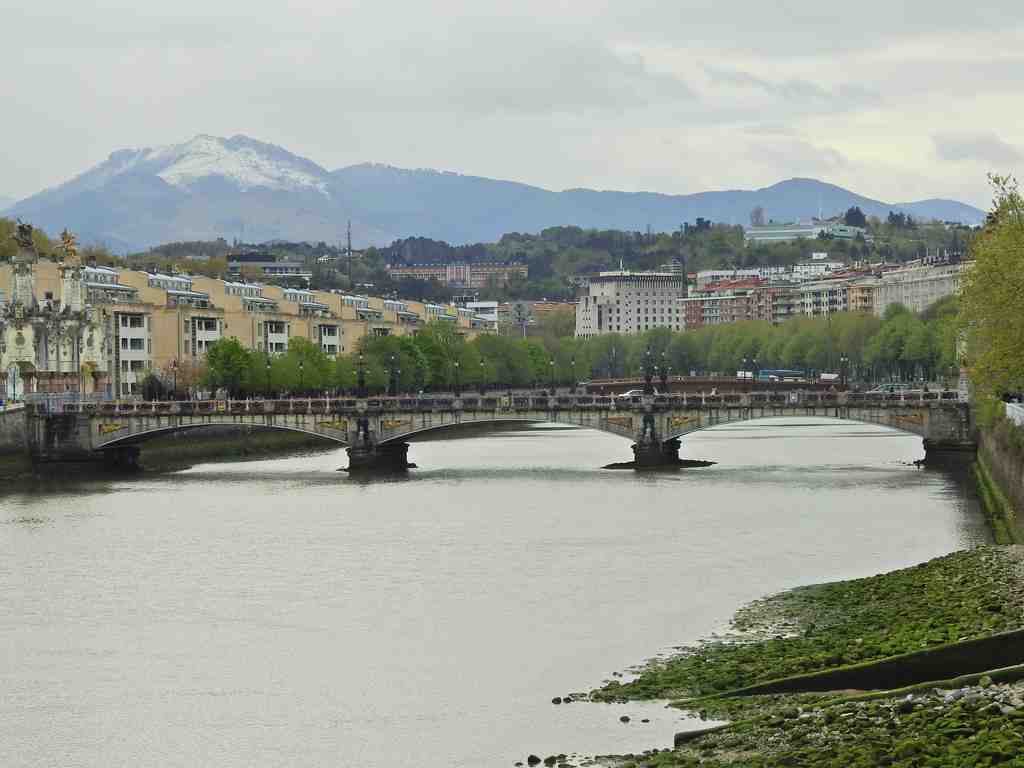
María Cristina BridgePhoto: Rehman Abubakr, Wikimedia Commons, CC BY-SA 4.0. Cropped & resized. On your left, look for a broad stone-clad bridge with three low arches and four tall obelisks, each crowned with sculpture.
María Cristina Bridge tells you something important about San Sebastián: this city rarely chose the merely practical when it could choose the practical and the memorable at once.
Before this bridge, there was only a temporary wooden walkway here, put up in eighteen ninety-three so people could reach the North Station, the bullring, and the velodrome more directly. Useful, yes. Grand, not in the least. Then came the real question: if the city was going to connect these busy parts of town properly, what sort of face would it show while doing it?
The answer emerged from a competition, and it was no small affair. A jury that included Pablo Alzola and Evaristo de Churruca sifted through a crowded field of ideas: plans written in French and sent from Germany, proposals for a single eighty-metre metal span, and others for several concrete arches. The argument was never just about engineering. It was about what kind of city San Sebastián meant to become.
José Eugenio Ribera, working with Julio María Zapata, gave the city its answer. In just nine months, in nineteen oh four, they raised a modern reinforced concrete structure, then dressed it in refinement: reddish artificial stone, multi-coloured coats of arms, decorative ceramics, and those four monumental obelisks, the tall tapering pillars at each end, inspired by the Alexander the Third Bridge in Paris. Beneath the elegance, the bridge is precise and modern: three arches, each twenty-four metres long, spanning a total length of eighty-eight metres across the Urumea.
Locals sometimes smile at one tiny detail most visitors never hear. Just before the permanent bridge opened, traffic on the old wooden crossing was suspended for the last time before it was torn down. It was almost a curtain call for the makeshift city, as if San Sebastián paused, took a bow, and stepped into a more polished role.
The opening, on the twentieth of January, nineteen oh five, the feast of Saint Sebastian, made sure everyone noticed. José Elósegui presided in representation of Queen María Cristina, whose presence in the city had already helped make it fashionable. Invitations called guests to arrive for the solemn ceremony and the tea afterward at City Hall, in frock coat or uniform. Bands played, bells rang, and one hundred and ten children from the Municipal Academy of Music sang a hymn composed by Santesteban. By evening, fireworks and a toro de fuego lit the celebrations, while lines of serenos, the old night watchmen, stood ready with sticks after earlier civic unrest. Even a bridge opening here could feel like public theatre.
If you fancy it, have a look at the before-and-after image in the app; the bridge remains unmistakably itself, even as the life around it has completely changed. That life has not always been gentle with it. In two thousand and fourteen, storm-driven waves rushing up the river damaged the structure, and later restorers spent eight months cleaning salt, recovering crystals set into the obelisks, and repairing the sculptures. So this bridge still does what it always did: carry movement, carry meaning, and quietly absorb the feelings of the city.
From here, we leave a monument to connection and head toward a monument to belonging: the Cathedral of the Good Shepherd, about six minutes away. And, fittingly, this bridge is open at all hours.
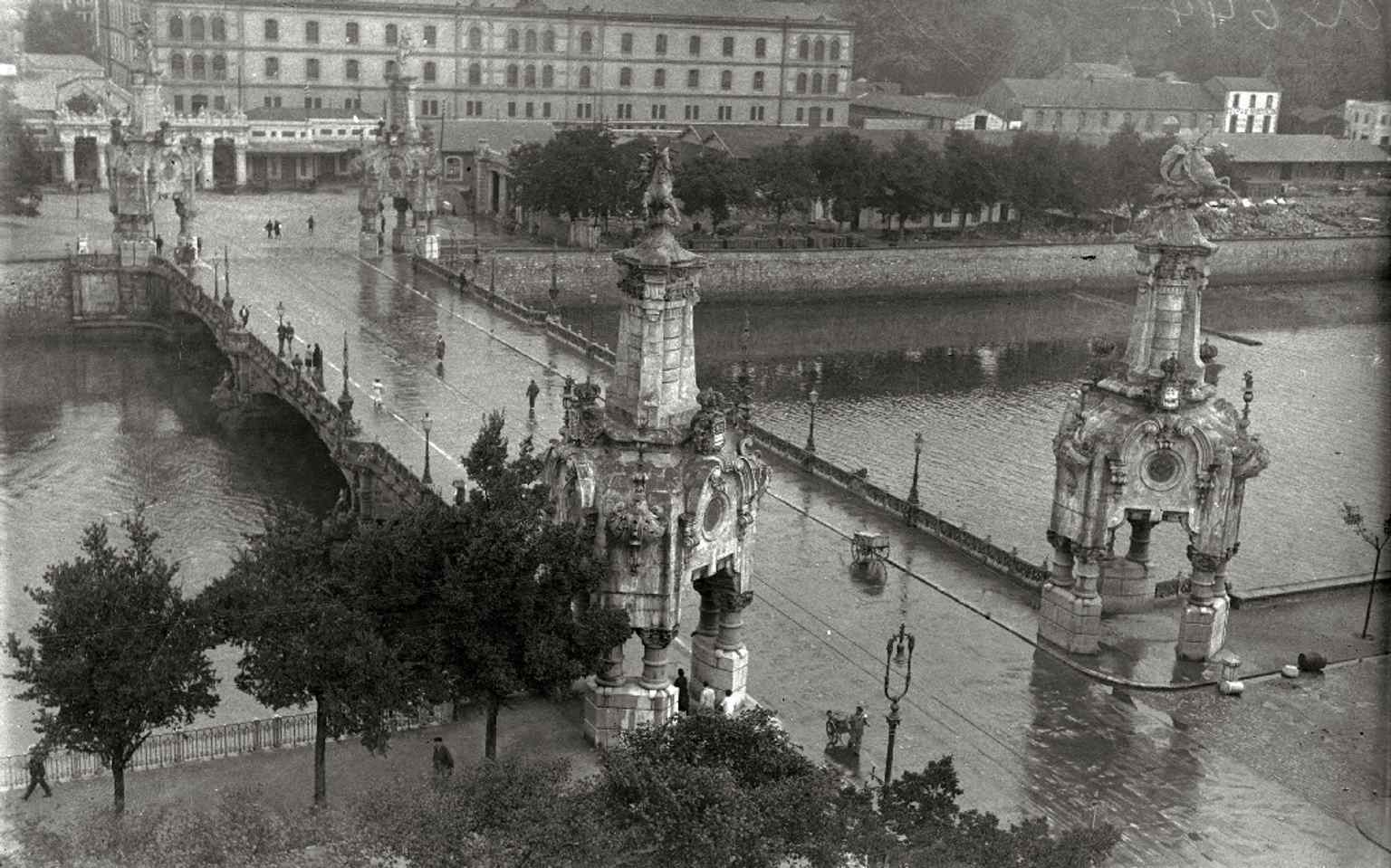
A 1924 view of María Cristina Bridge, showing the elegant early-20th-century river crossing that replaced the old wooden walkway.Photo: Ricardo Martín, Wikimedia Commons, Public domain. Cropped & resized. 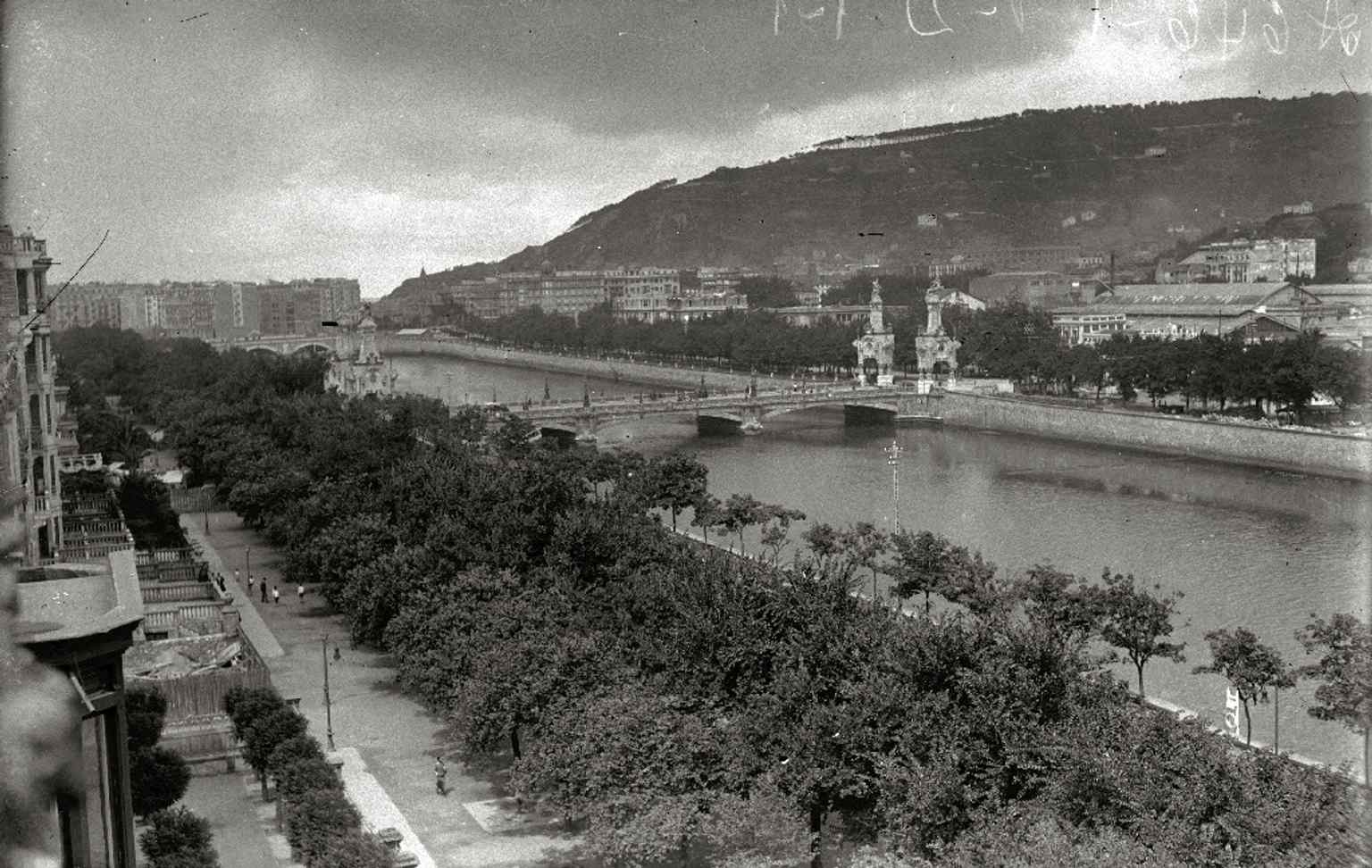
Another 1924 historic view of the bridge over the Urumea, useful for showing its monumentality before later restorations.Photo: Ricardo Martín, Wikimedia Commons, Public domain. Cropped & resized. 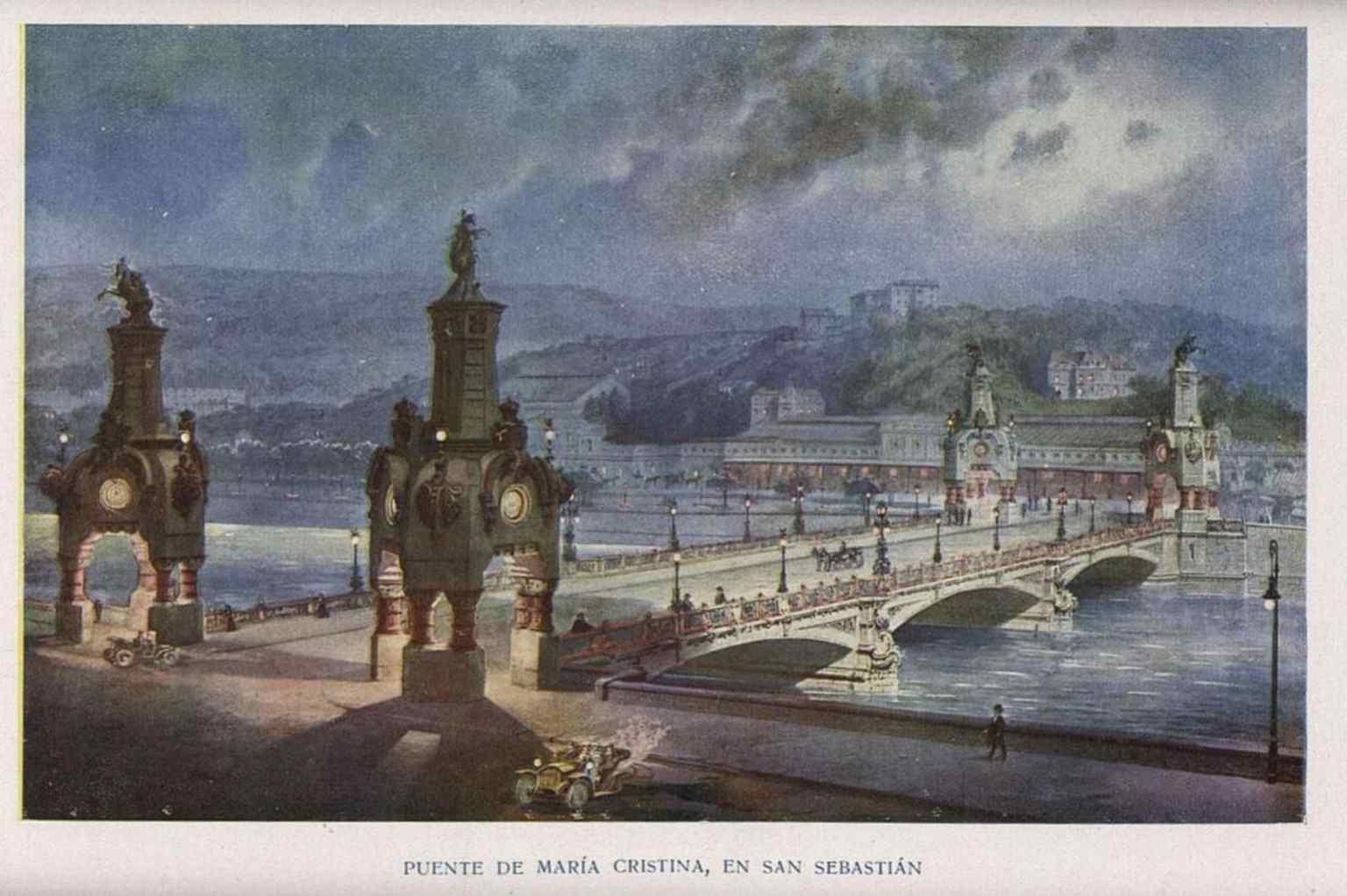
An early design drawing from 1910, echoing the bridge project by José Eugenio Ribera and the ambitious engineering ideas behind it.Photo: José Eugenio Ribera, Wikimedia Commons, Public domain. Cropped & resized. 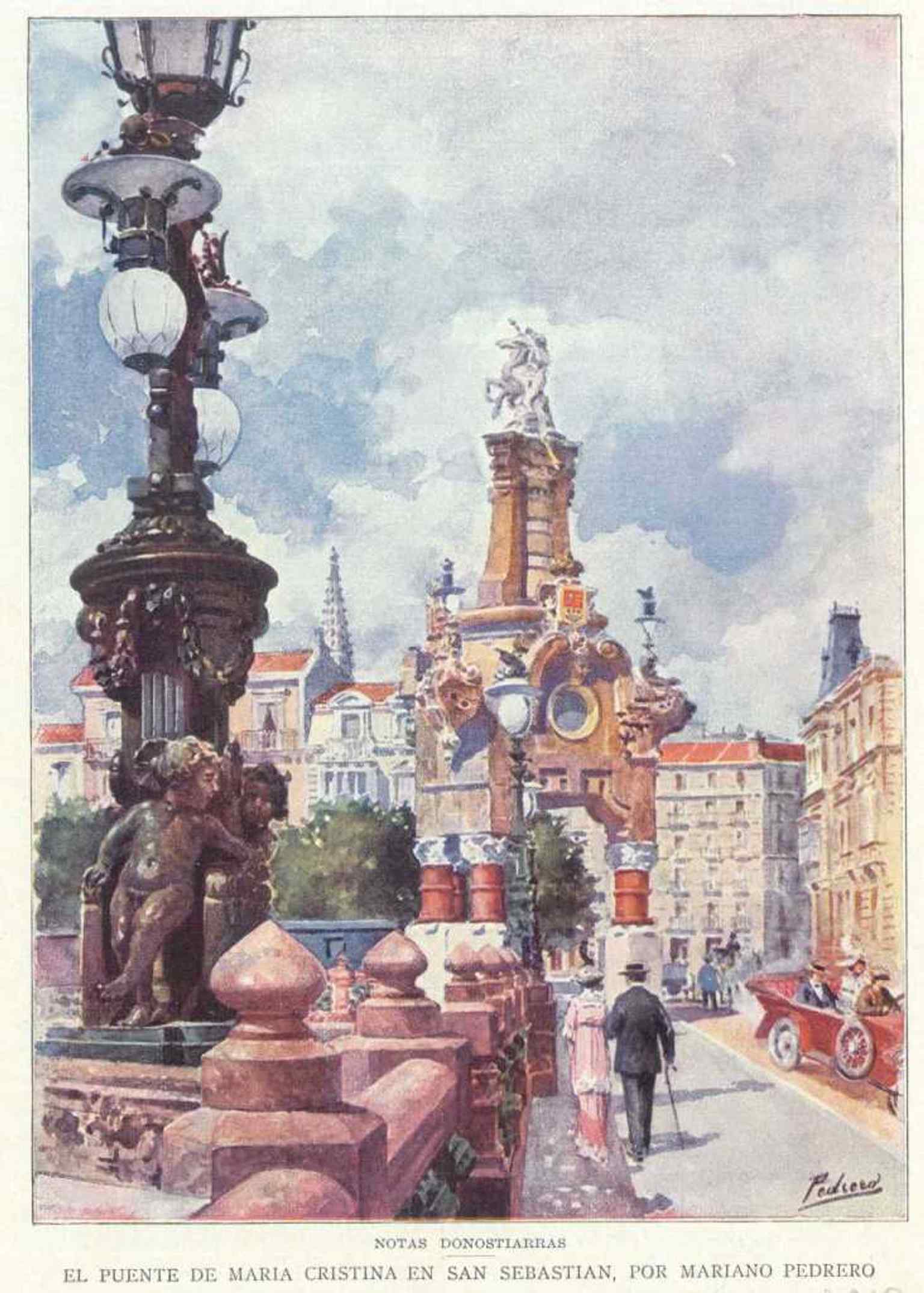
A 1913 printed illustration of the bridge, capturing its Belle Époque prestige and the Paris-inspired style linked to Pont Alexandre III.Photo: Mariano Pedrero, Wikimedia Commons, Public domain. Cropped & resized. 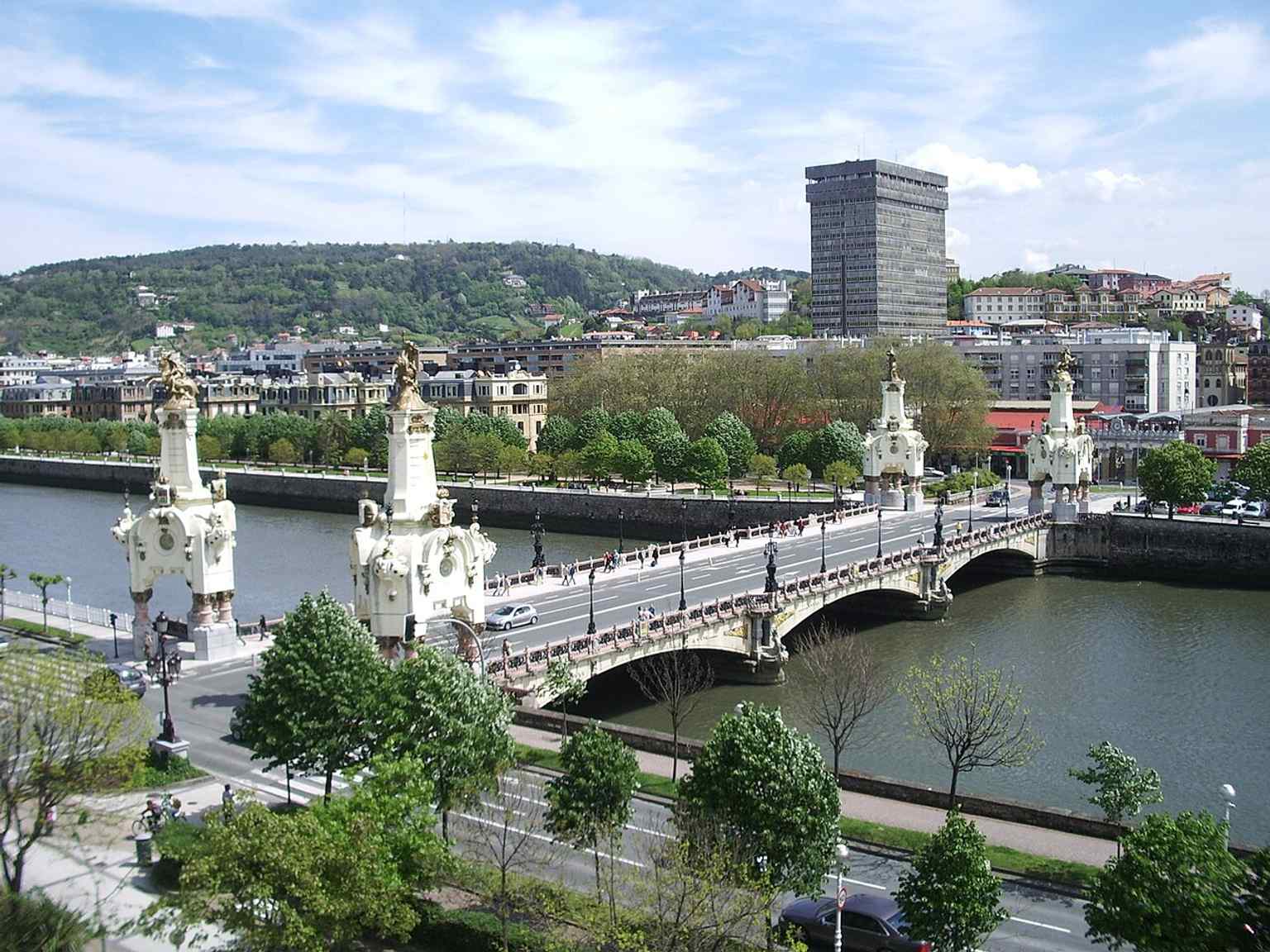
A clear daytime view of María Cristina Bridge with the Atotxa tower nearby, showing its role in the city’s riverfront landscape.Photo: Josu Goñi Etxabe, Wikimedia Commons, Public domain. Cropped & resized. 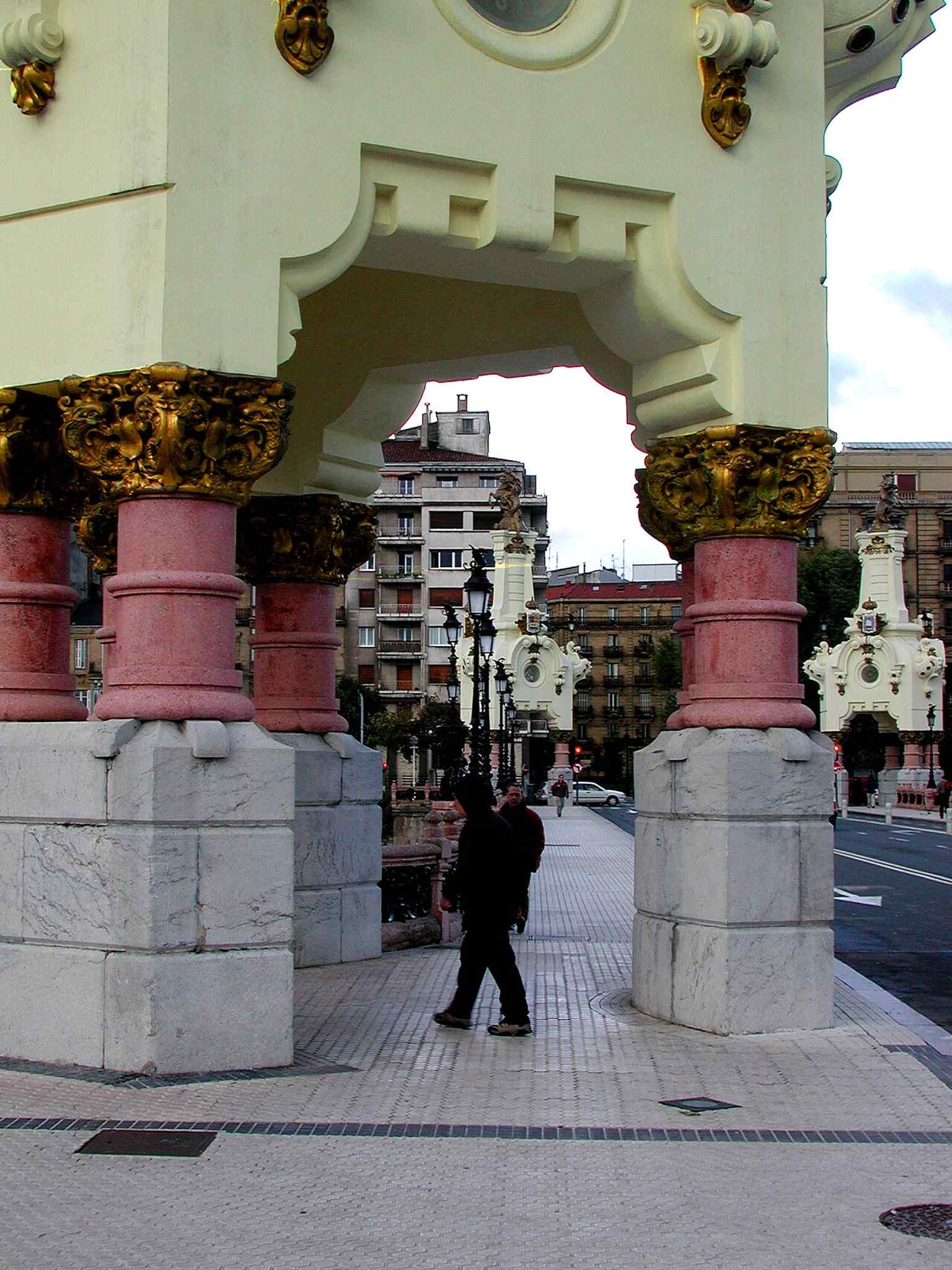
A straightforward full view of the bridge in San Sebastián, good for introducing the landmark’s overall structure.Photo: Sean an Scuab, Wikimedia Commons, CC BY-SA 3.0. Cropped & resized. 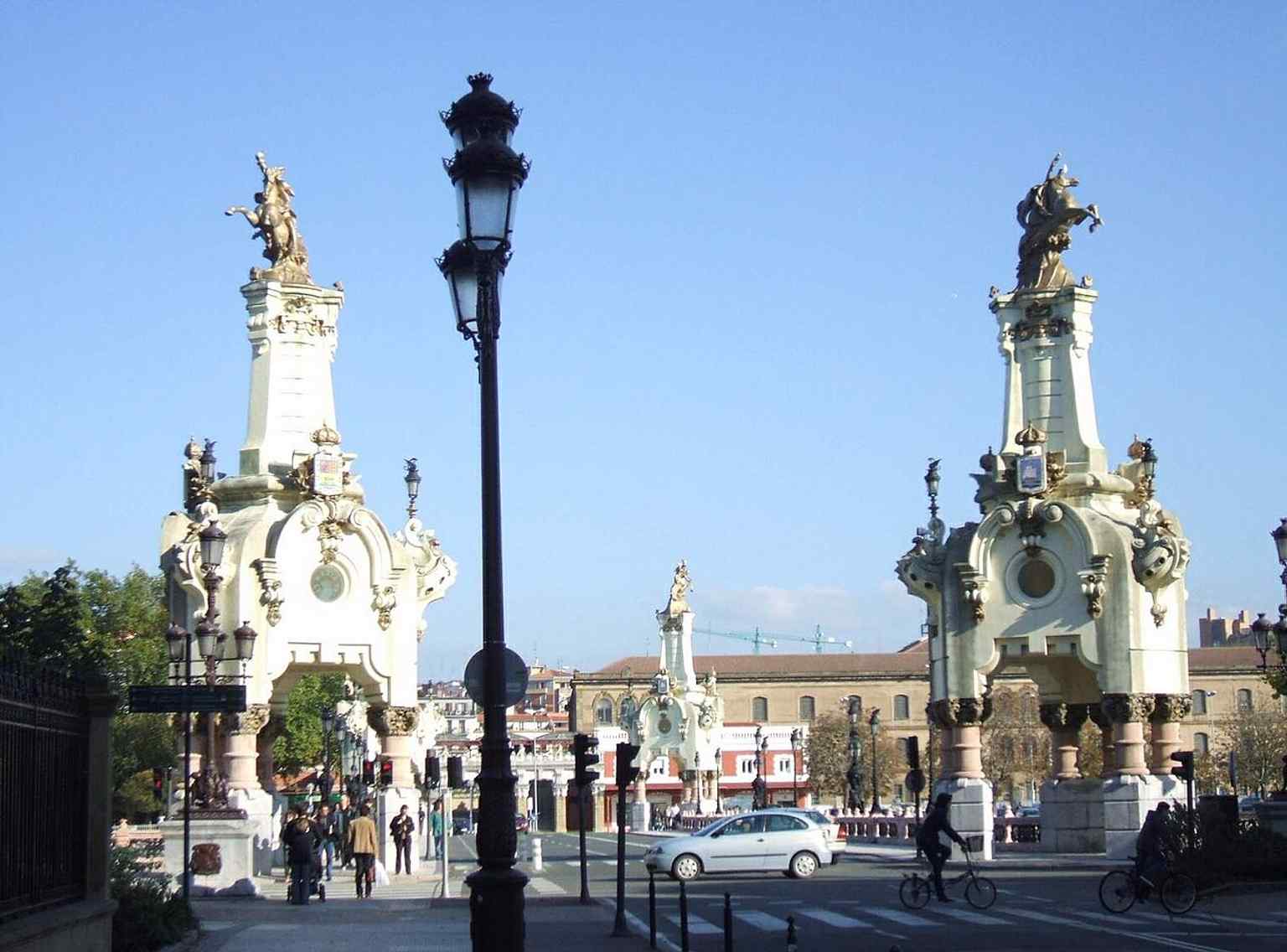
This angle shows the bridge spanning the Urumea with its ornate ends, a reminder that it was built as both infrastructure and civic statement.Photo: Zarateman, Wikimedia Commons, CC0. Cropped & resized. 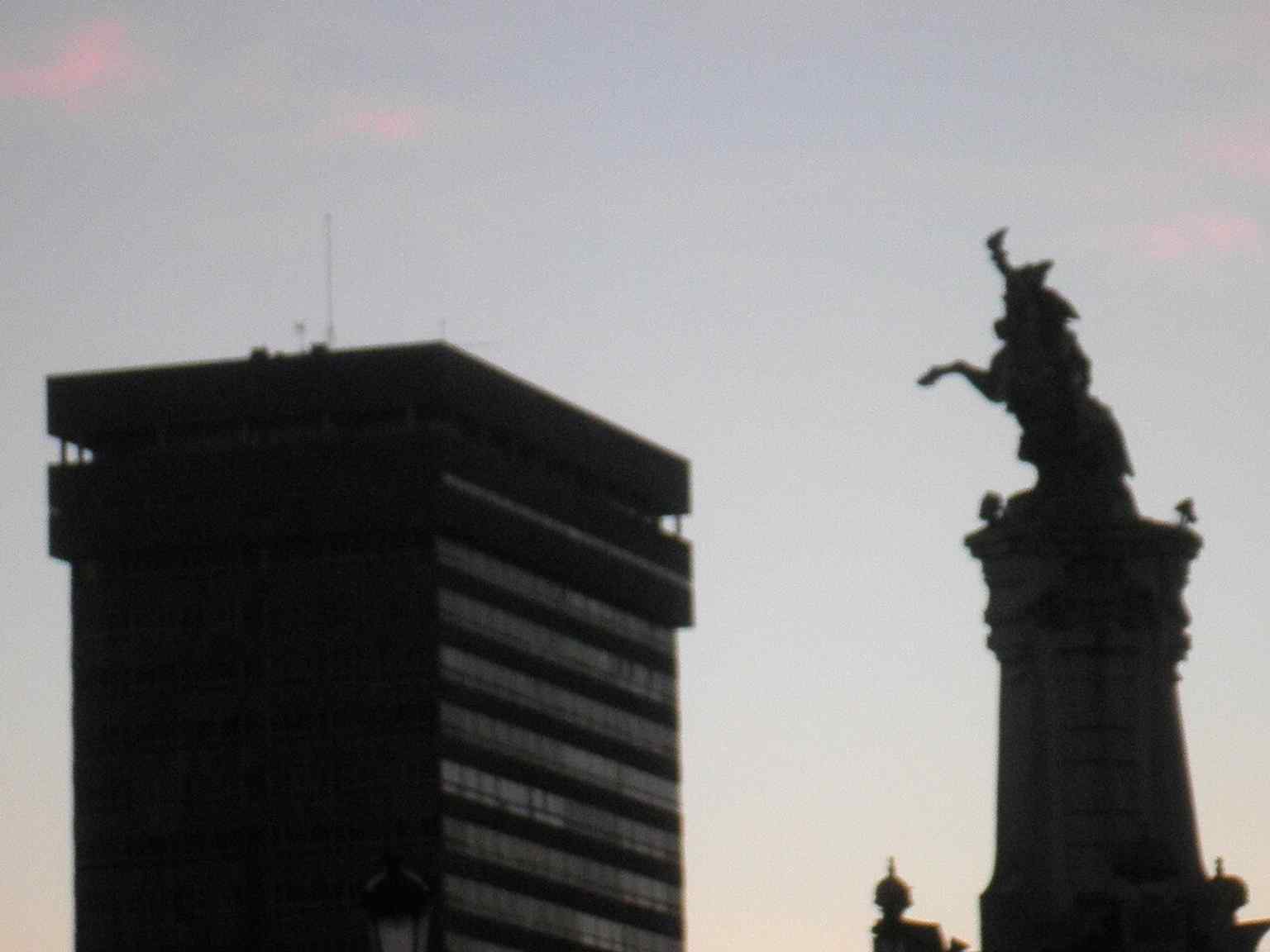
A broad elevated view with the Atotxa tower and the bridge, ideal for understanding how María Cristina Bridge connects major parts of the city.Photo: Joxemai, Wikimedia Commons, CC BY-SA 3.0. Cropped & resized. 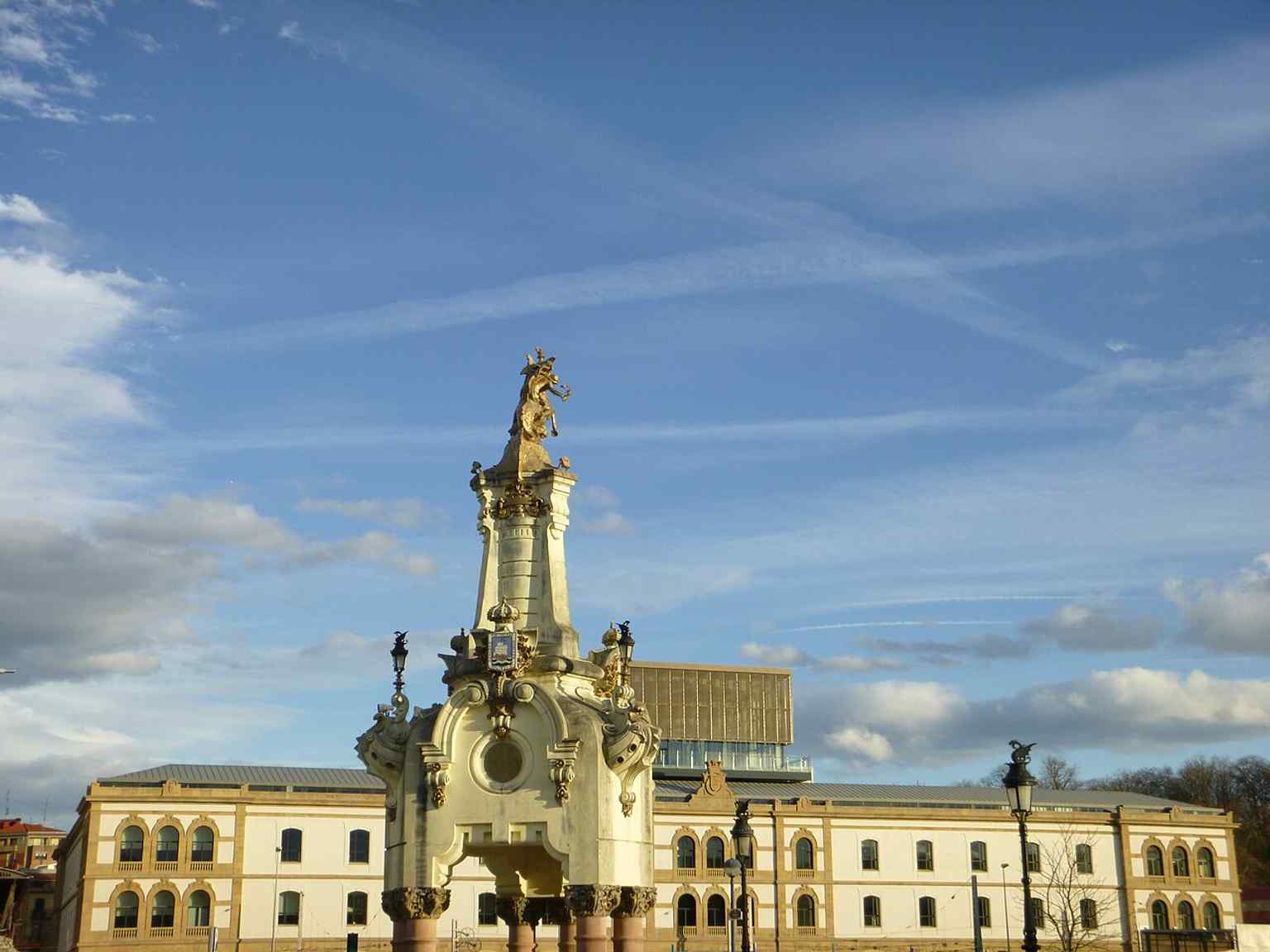
The bridge beside Tabakalera, illustrating how this historic crossing still anchors modern San Sebastián around it.Photo: Joxemai, Wikimedia Commons, CC BY-SA 4.0. Cropped & resized. 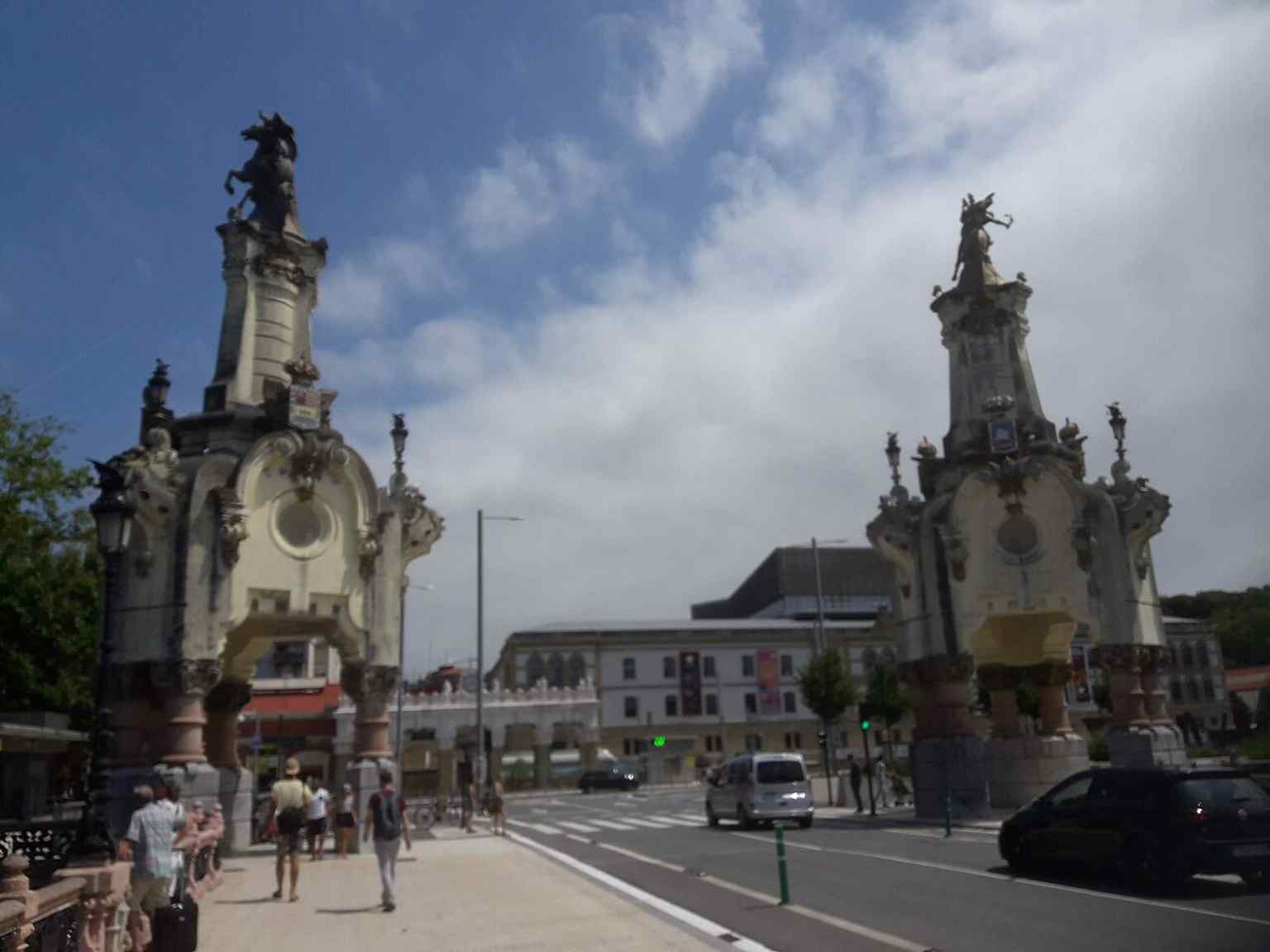
A clean 2018 view over the Urumea, useful for showing the bridge’s long, three-arch profile and its placement in the river.Photo: pere prlpz, Wikimedia Commons, CC BY-SA 3.0. Cropped & resized. 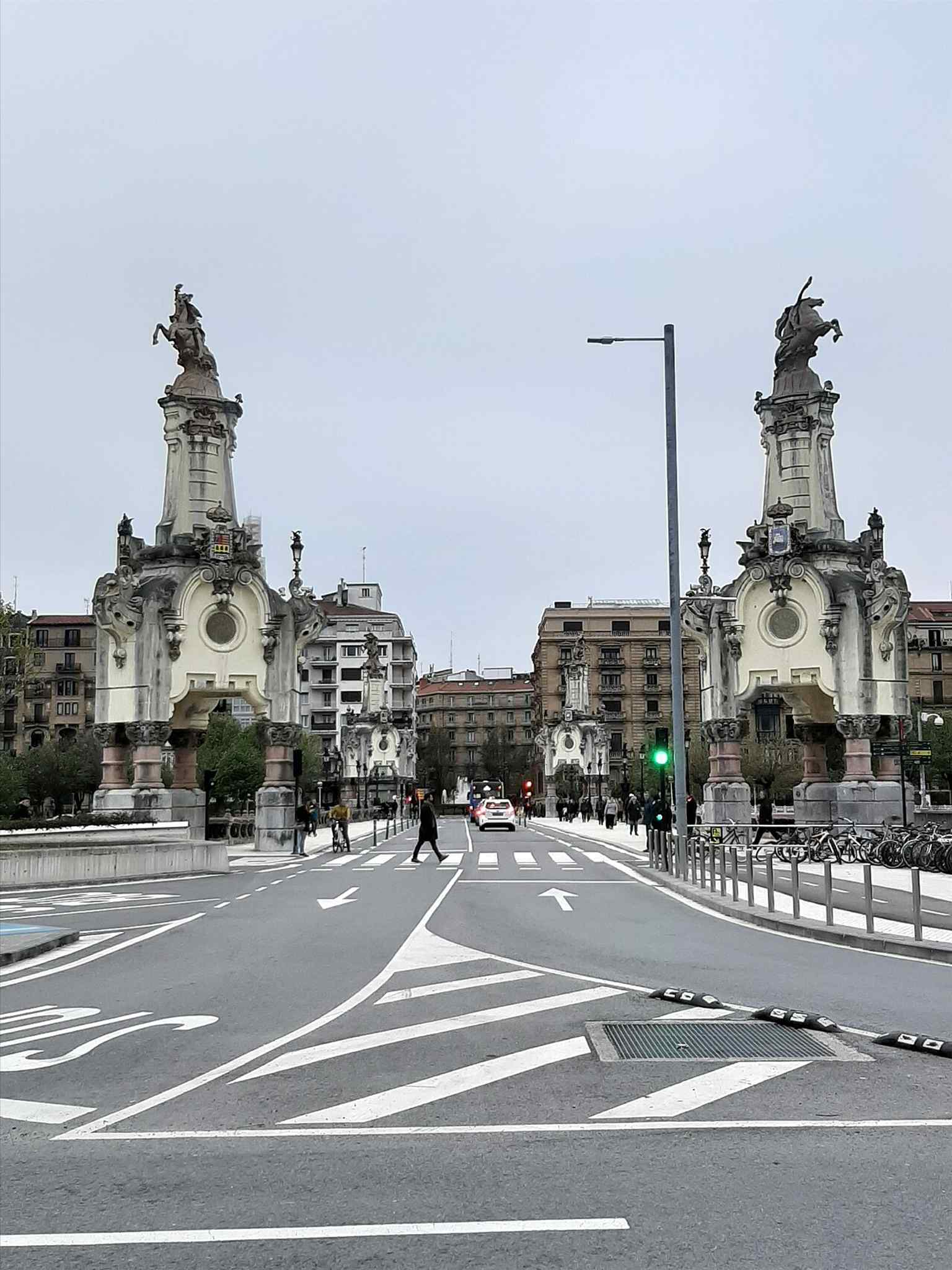
A recent full-color view of the bridge from the Basque Country, giving a modern look at the same ceremonial crossing opened in 1905.Photo: Sami Mlouhi, Wikimedia Commons, CC BY-SA 4.0. Cropped & resized. 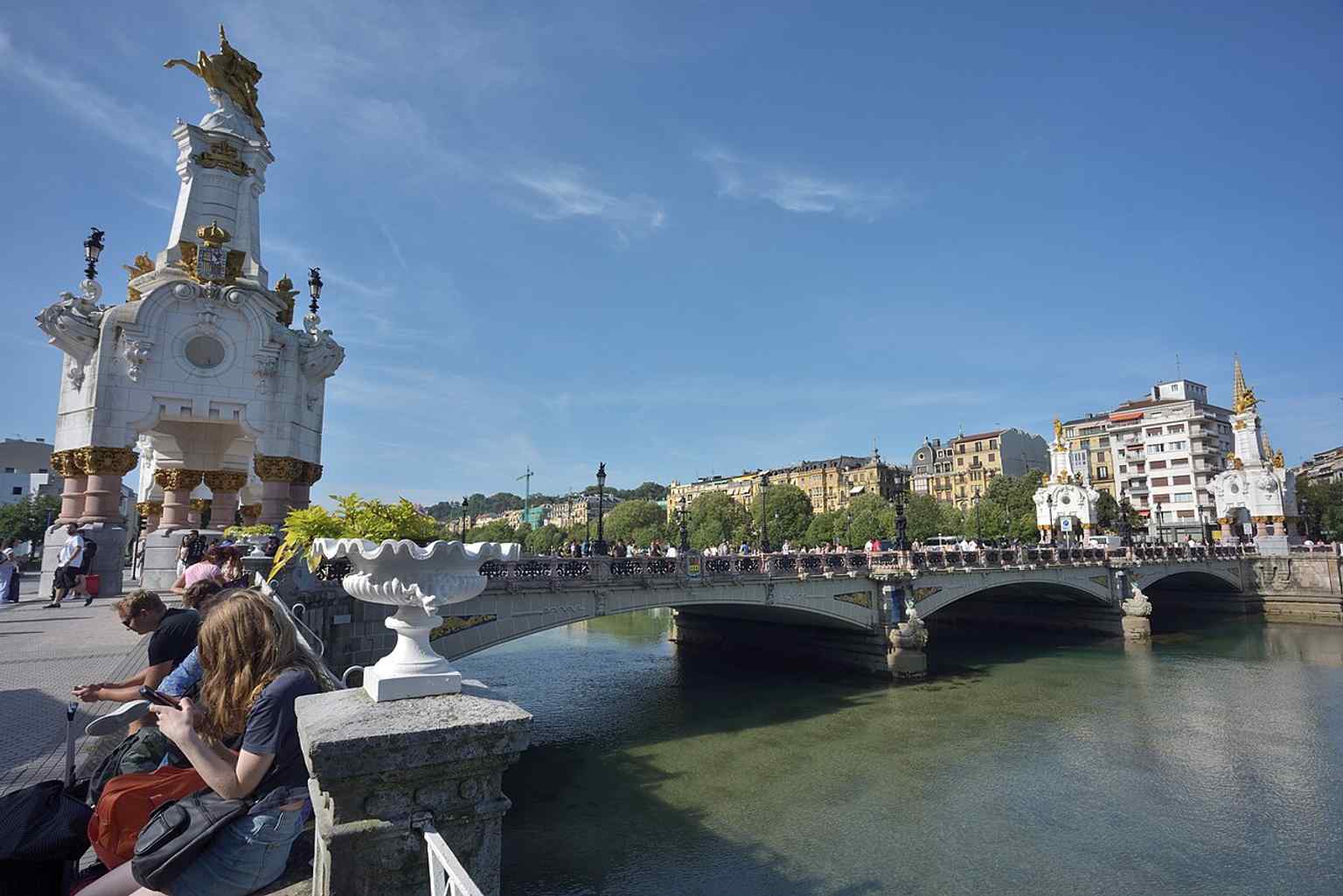
A high-resolution contemporary view of María Cristina Bridge, capturing the restored decorative finish that reflects its Belle Époque ambition.Photo: Javier Perez Montes, Wikimedia Commons, CC BY-SA 4.0. Cropped & resized.
Show 11 more stopsShow fewer stopsexpand_moreexpand_less
In front of you rises a pale sandstone church with a sharply pointed façade, clustered buttresses, and a needle-like tower set directly above the main entrance. The Cathedral of…Read moreShow less
Open dedicated page →In front of you rises a pale sandstone church with a sharply pointed façade, clustered buttresses, and a needle-like tower set directly above the main entrance.
The Cathedral of the Good Shepherd is San Sebastián’s great vertical gesture: neo-Gothic, ambitious, and still the largest church in Gipuzkoa. From where you stand, near the front-left side, the building seems to pull itself upward in stages, from the pointed doorways to the pinnacles and then that seventy-five-metre spire, which local architect Manuel Echave designed with Cologne Cathedral very much in mind.
And yet the secret of this place is that it began in improvisation.
In the eighteen eighties, this part of the city was expanding southward, and residents wanted a parish of their own. The council gave over this plot in eighteen eighty-seven, land between the Urumea and La Concha that had been sand and marsh. While builders prepared the foundations with painstaking drainage, the faithful gathered somewhere much humbler: a provisional wooden church dedicated to the Sacred Heart, near the old San Martín Market. The first parish life of this grand stone church took place in timber.
Pause for a moment and let your eyes travel from the doorway up to the tower. It is rather extraordinary to think that all this confidence in stone grew out of a stopgap wooden chapel.
Royal summers in San Sebastián gave projects like this a very particular charge. When Queen Regent María Cristina stayed in the city with her children, local ceremonies acquired the sheen of national theatre. This church benefited from that attention twice: at the laying of the first stone in eighteen eighty-eight, and again at its inauguration in eighteen ninety-seven, when María Cristina and the young Alfonso the Thirteenth both attended.
If you glance at the historic exterior on your screen, you can see how quickly the cathedral became one of the city’s fixed silhouettes. But the most delicious detail lies beneath the stone, almost like a scene from a novel. At the cornerstone ceremony, a lead box was sealed inside with portraits of the Pope and the royal family, coins, and copies of the official newspapers of the day. Then came the signature on the ceremonial document: Alfonso the Thirteenth was only two years and four months old, so María Cristina guided his hand herself. A formal act, yes, but intimate too, as though monarchy wished to leave its fingerprint inside the foundations.
The cathedral’s exterior in 1918, showing the finished neo-Gothic building just two decades after consecration.Photo: Ricardo Martín, Wikimedia Commons, Public domain. Cropped & resized. Echave and his builders gave the church real substance: sandstone from Mount Igueldo, roof slate from Angers in France, and stonework by Basque labourers throughout. The tower was not even fully finished when the church opened for worship; that final completion came in eighteen ninety-nine. Later, when San Sebastián gained its own diocese in nineteen fifty, the city chose this church as its seat, and in nineteen fifty-three it officially became a cathedral.
If you look at the interior image in the app, the bright central hall and ribbed vaults show the reward of all that ambition. Yet what matters most, perhaps, is the contrast: grandeur resting on necessity, ceremony resting on makeshift beginnings.
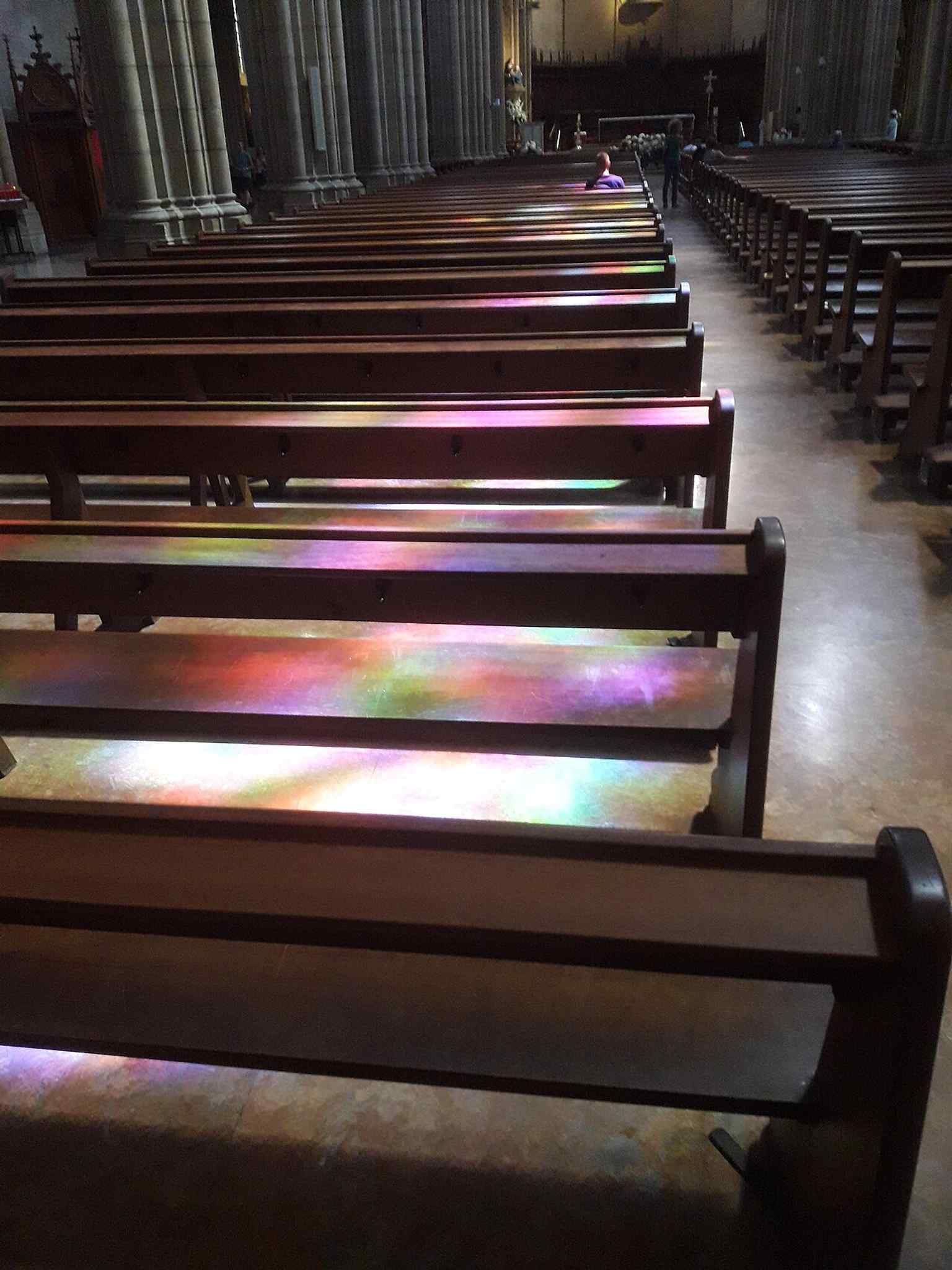
A broad interior shot that helps show the nave, vaulting, and the bright light filtered through the stained glass.Photo: pere prlpz, Wikimedia Commons, CC BY-SA 3.0. Cropped & resized. We shall carry that thought to San Martín Market, about a three-minute walk from here, where the practical life of the city once sheltered this parish before stone took over from wood.
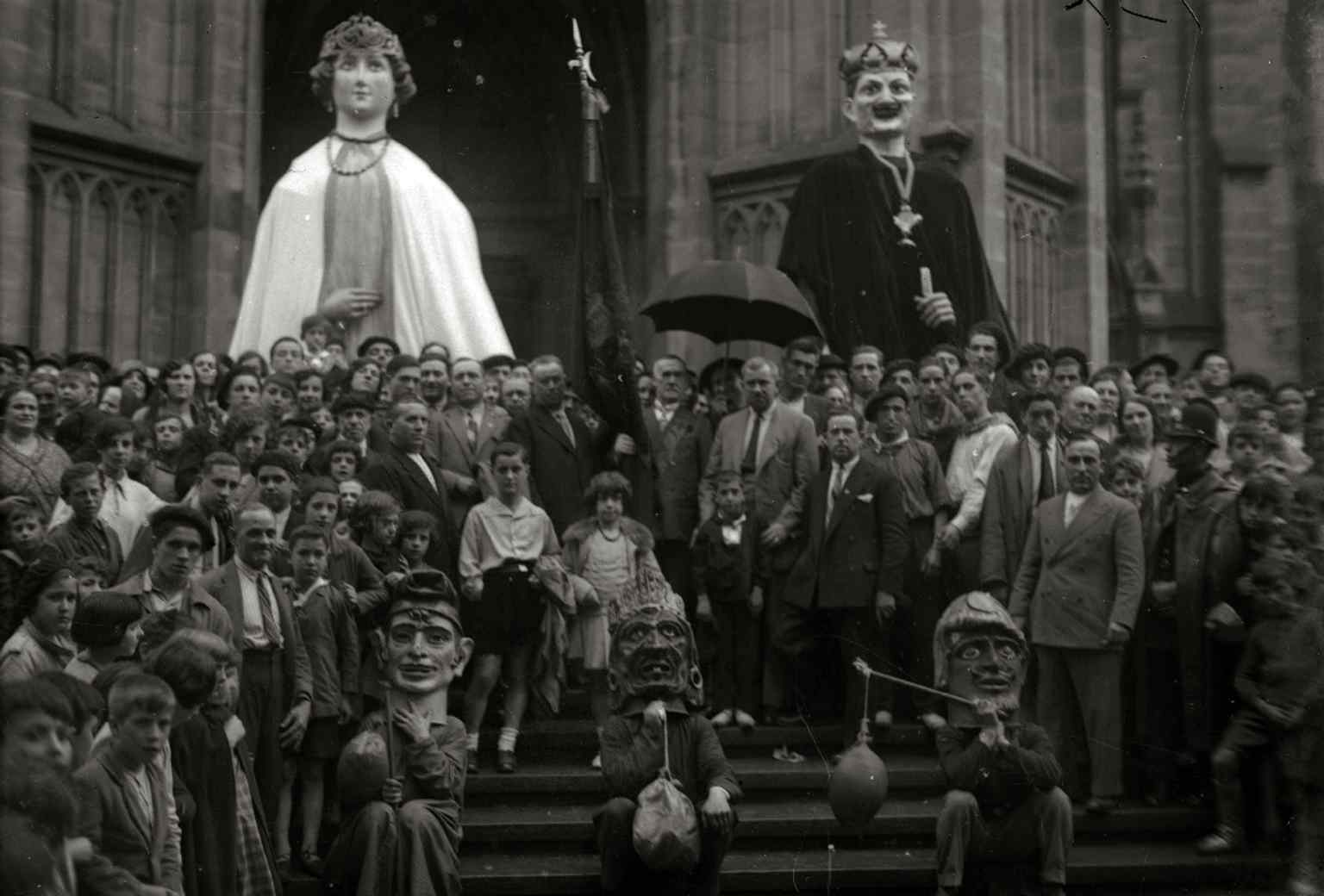
A 1930 street scene with giant parade figures outside the cathedral, capturing its role in city life, not just worship.Photo: Pascual Marín, Wikimedia Commons, CC BY-SA 3.0. Cropped & resized. 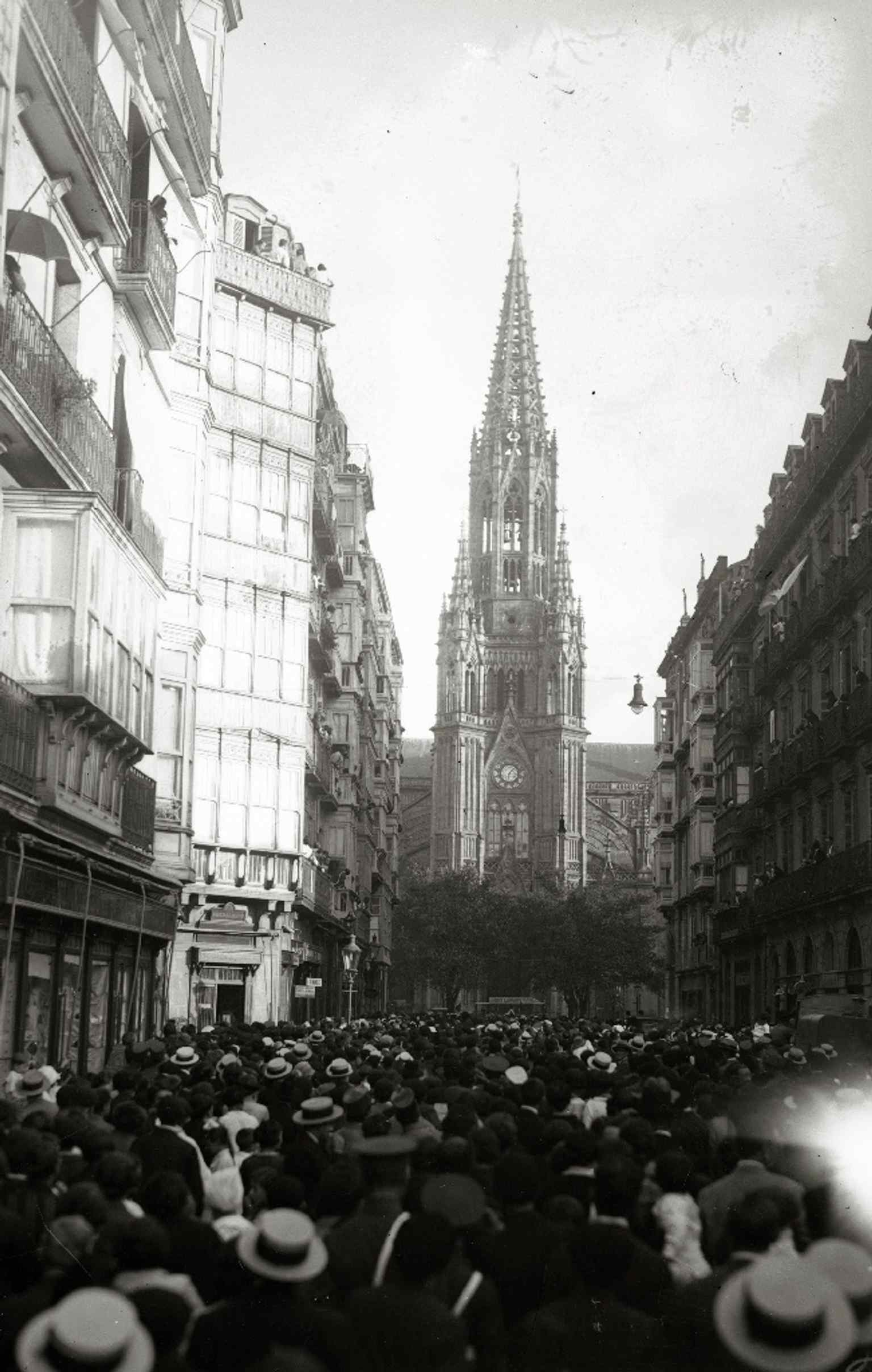
A dramatic 1926 shot of someone scaling the façade, useful for showing the cathedral’s tall vertical presence.Photo: Ricardo Martín, Wikimedia Commons, Public domain. Cropped & resized. 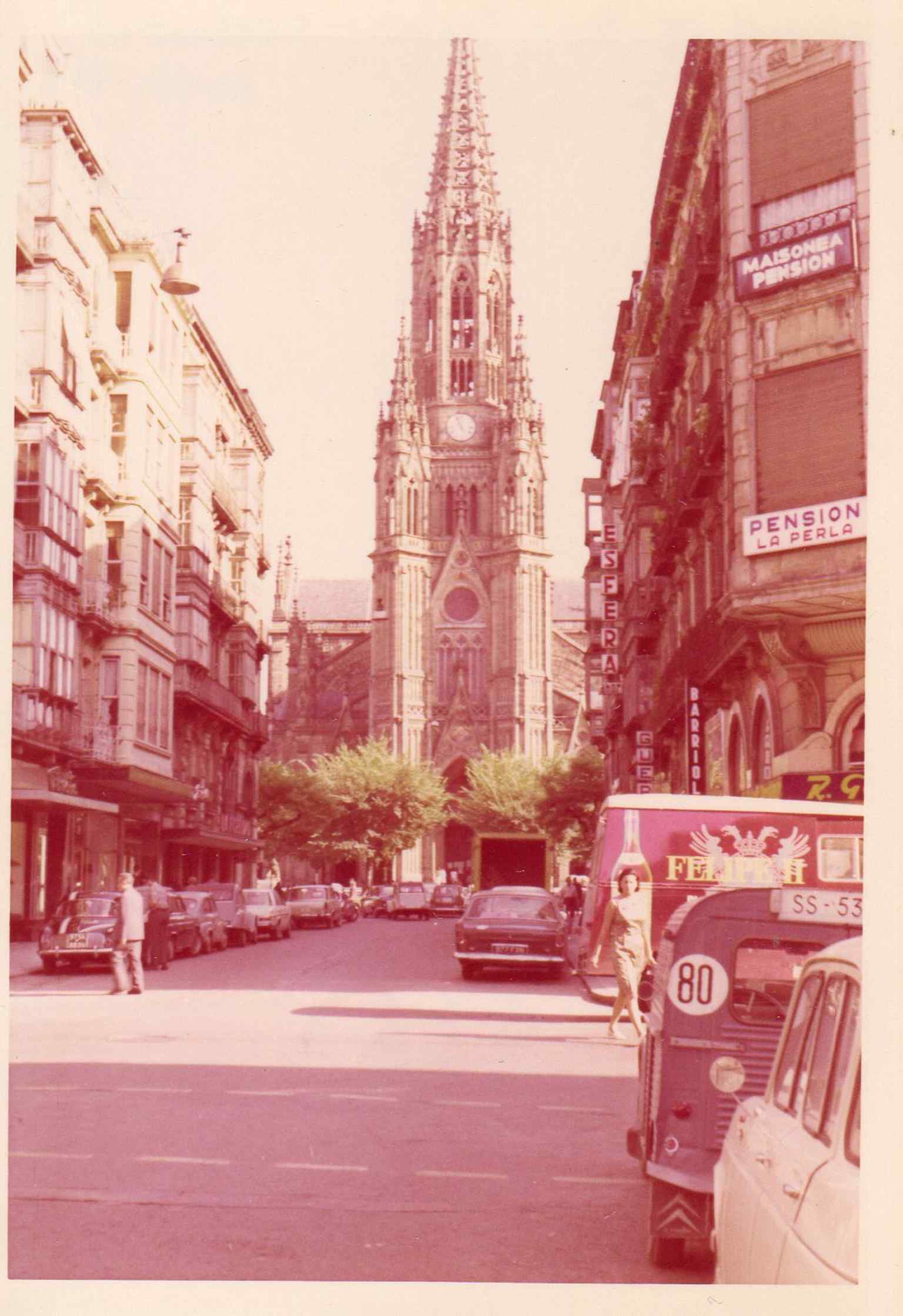
A 1968 view of the cathedral, a good mid-20th-century reference point before later restorations.Photo: Toni Sala, Wikimedia Commons, CC BY-SA 4.0. Cropped & resized. 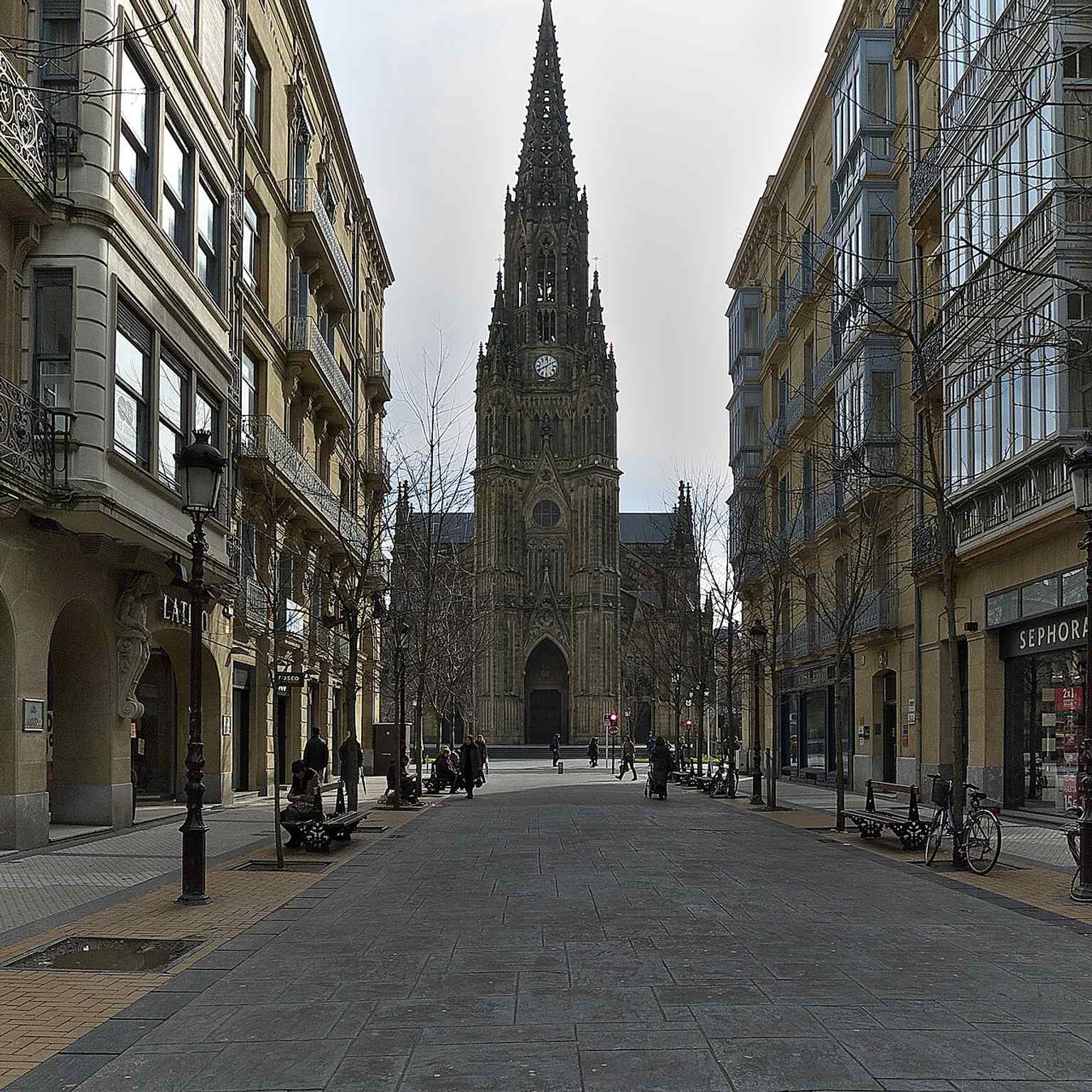
A close view of the 75-meter bell tower, echoing the Cologne-inspired spire described in the source.Photo: José Luis Filpo Cabana, Wikimedia Commons, CC BY 3.0. Cropped & resized. 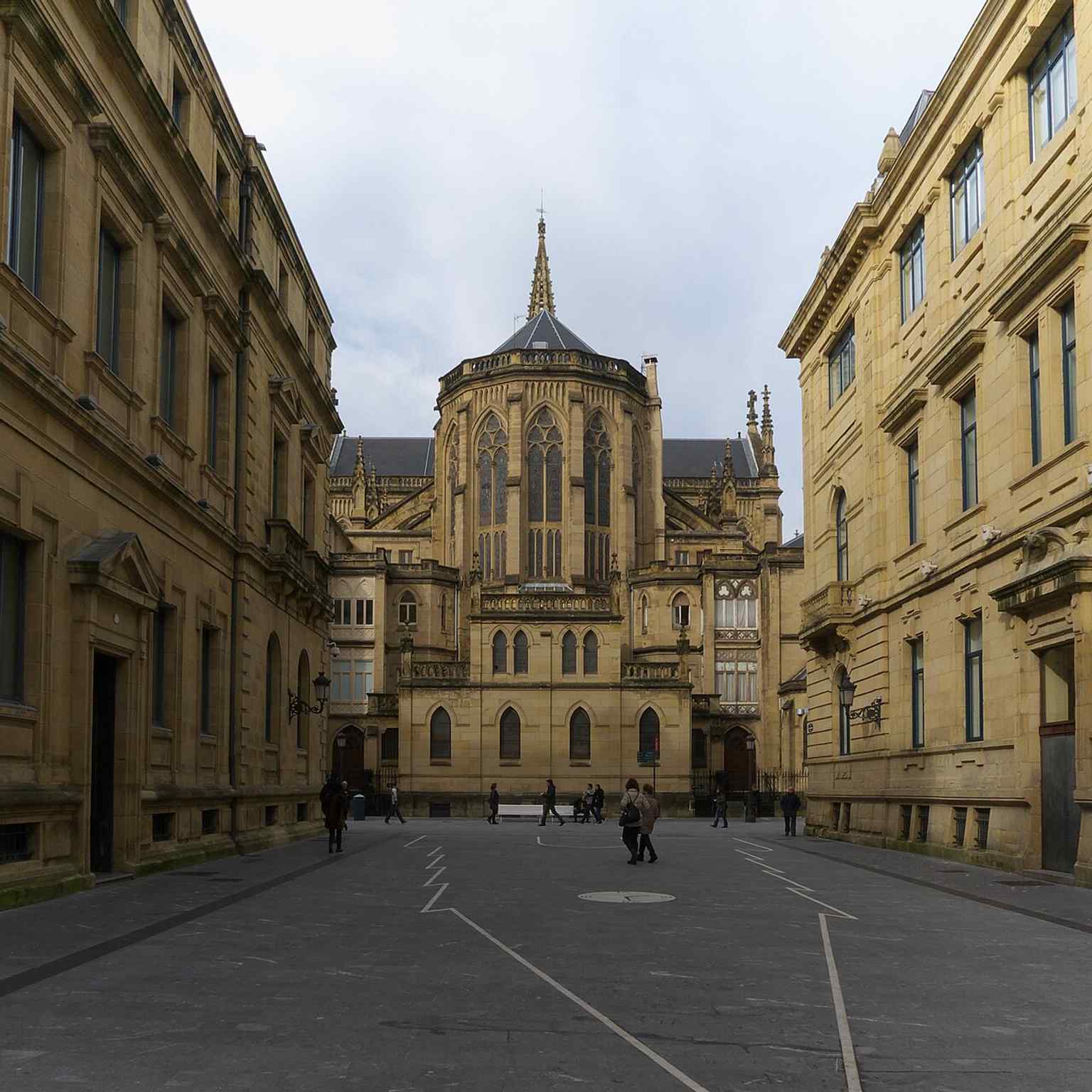
The apse from outside, highlighting the eastern end of the church and its neo-Gothic massing.Photo: José Luis Filpo Cabana, Wikimedia Commons, CC BY 3.0. Cropped & resized. 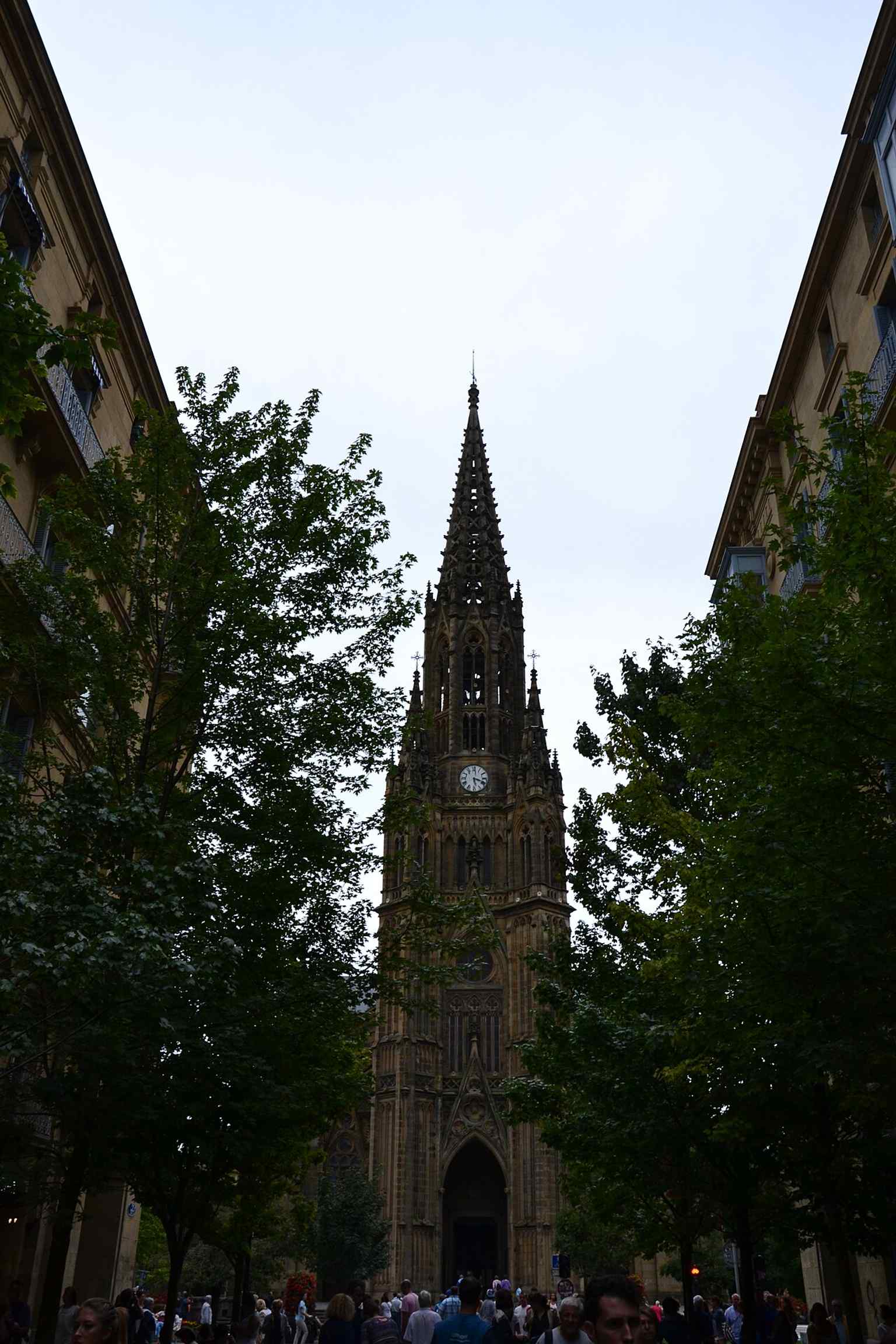
A full-height exterior view of the cathedral, ideal for showing the scale of the building above the street.Photo: Álvaroc16, Wikimedia Commons, CC BY-SA 3.0 es. Cropped & resized. 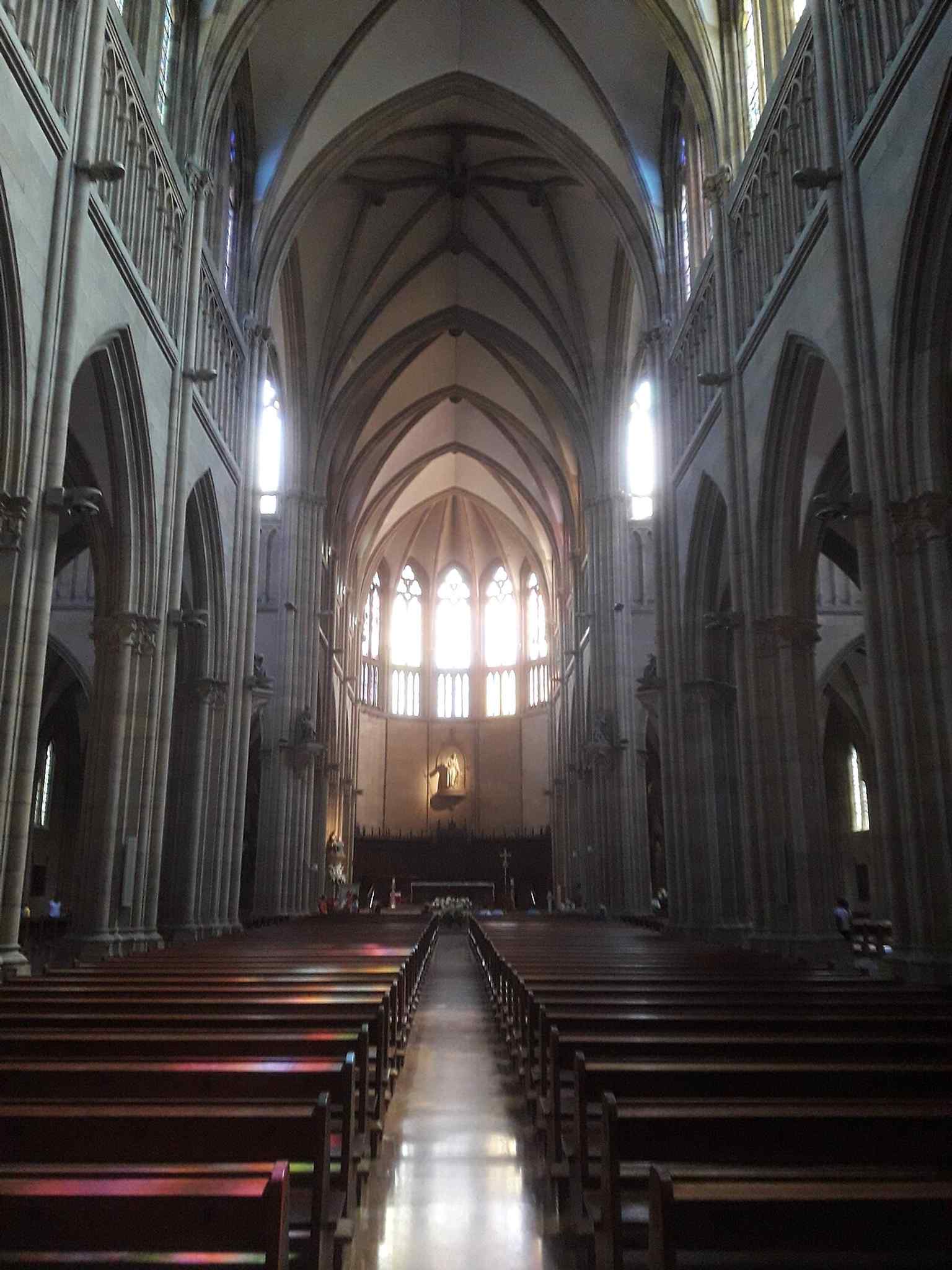
An interior view toward the sanctuary, where the cathedral’s liturgical life continues after the 1953 elevation to cathedral status.Photo: pere prlpz, Wikimedia Commons, CC BY-SA 3.0. Cropped & resized. 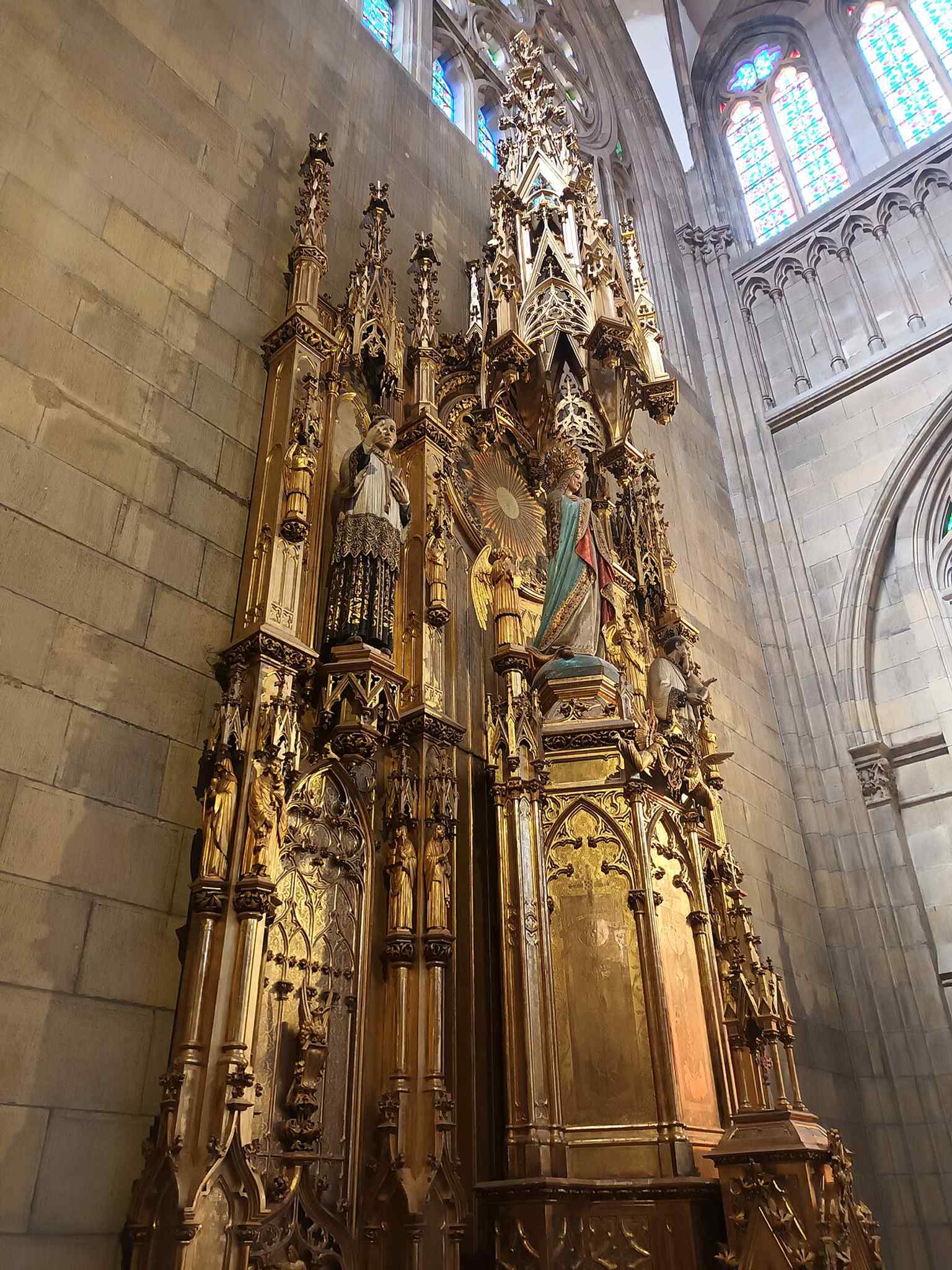
The Immaculate Conception altar, one of the decorated interior features preserved after the cathedral’s later reforms.Photo: Acediscovery, Wikimedia Commons, CC BY 4.0. Cropped & resized. On your right, San Martín Market looks like a broad glass-fronted block framed in pale stone, with a long rectangular facade and a wide covered passage opening through its…Read moreShow less
Open dedicated page →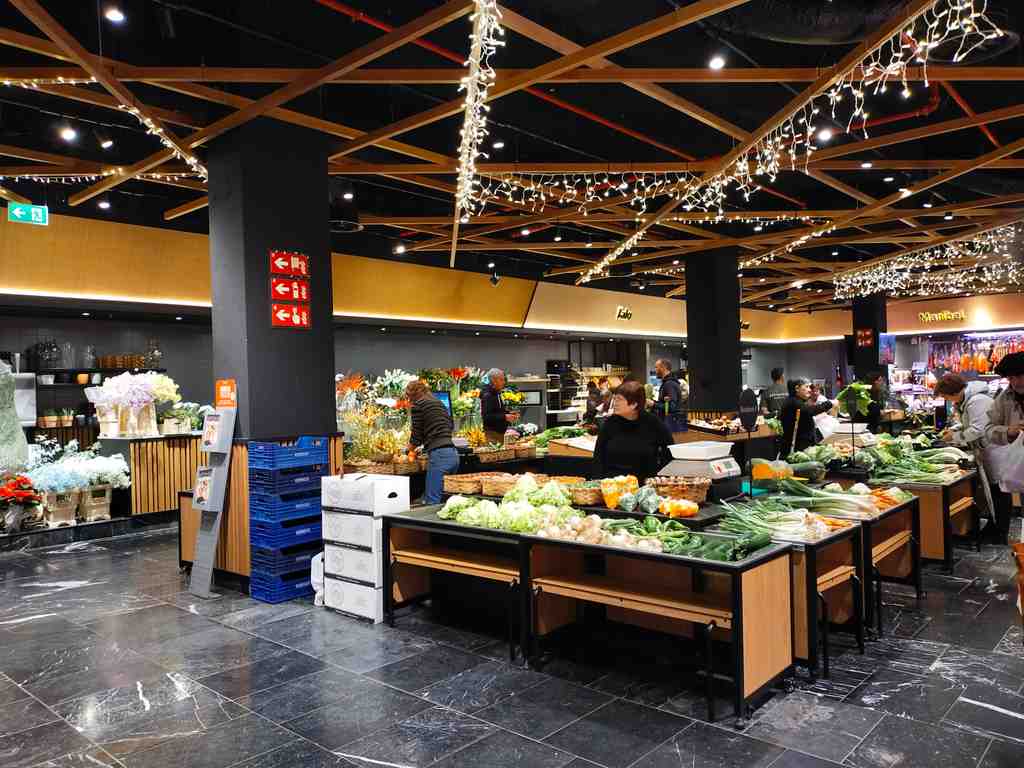
San Martin MarketPhoto: Luistxo, Wikimedia Commons, CC BY-SA 4.0. Cropped & resized. On your right, San Martín Market looks like a broad glass-fronted block framed in pale stone, with a long rectangular facade and a wide covered passage opening through its centre.
This site is one of the city’s great memory-palaces of ordinary life. Long before this polished shell appeared, people came here for fish, vegetables, gossip, bargains, and the small rituals that make a city feel inhabited rather than merely admired. Even the ground seems to remember footsteps.
In eighteen eighty-four, the architect José Goicoa gave San Sebastián a proper municipal market here, taking his cue from the iron-and-market tradition of Les Halles in Bayonne. He raised two pavilions. Then, in nineteen oh seven, the municipal architect Juan R. Alday stepped in and did something clever: he joined those two buildings with a structure over the street between them, creating a third pavilion and turning San Martín into the city’s most important food market. Commerce, in other words, did not simply fill this place; it shaped it.
And yet trade was not its only role. Before the Cathedral of the Good Shepherd was ready, this very plot even hosted a provisional wooden parish in March of eighteen eighty-eight, the Sacred Heart of Jesus. For a time, the market ground doubled as an emergency church for the neighbourhood. That is a very San Sebastián habit: one urban stage, several acts.
If you glance at the before-and-after image, you can see just how completely this place changed from open market sheds to the enclosed hall before you now. That instinct to adapt did not come gently. At the end of nineteen ninety-nine, Mayor Odón Elorza broke a long, tacit consensus when he argued publicly that the old building should come down, saying its facades held nothing worth protecting. The council then set up a mixed commission with stallholders, political parties, the Chamber of Commerce, merchant groups, and baserritarras - farmers from the Basque farmsteads - to negotiate a reform and avoid repeating mistakes made at La Bretxa. It was a row about heritage, certainly, but also about who a city centre is really for.
In two thousand and five, after demolition and two years of unusually complex works, Luis Uzcanga’s new market opened. He kept one important idea from the older place: a broad covered central street, now turned into a pedestrian spine, with large expanses of glass to hold a visual link to the past. Around it came three pedestrianised streets and a six-hundred-space underground car park. Within a year, San Martín drew seven million visits; in two thousand and six, it even won a national award for integrated retail. Not everything ran perfectly - a dilatation joint, that is, a gap that lets a building expand and contract safely, shifted in two thousand and twelve and lifted floor tiles, forcing a brief evacuation - but the market reopened the same morning.
Now the local pulse beats behind that glass, while the city’s more polished face waits ahead. We’ll head next to Hotel Continental, where San Sebastián turns everyday energy into refined welcome. If you want to return later, San Martín generally opens from early morning until late evening, with shorter hours on Sundays.
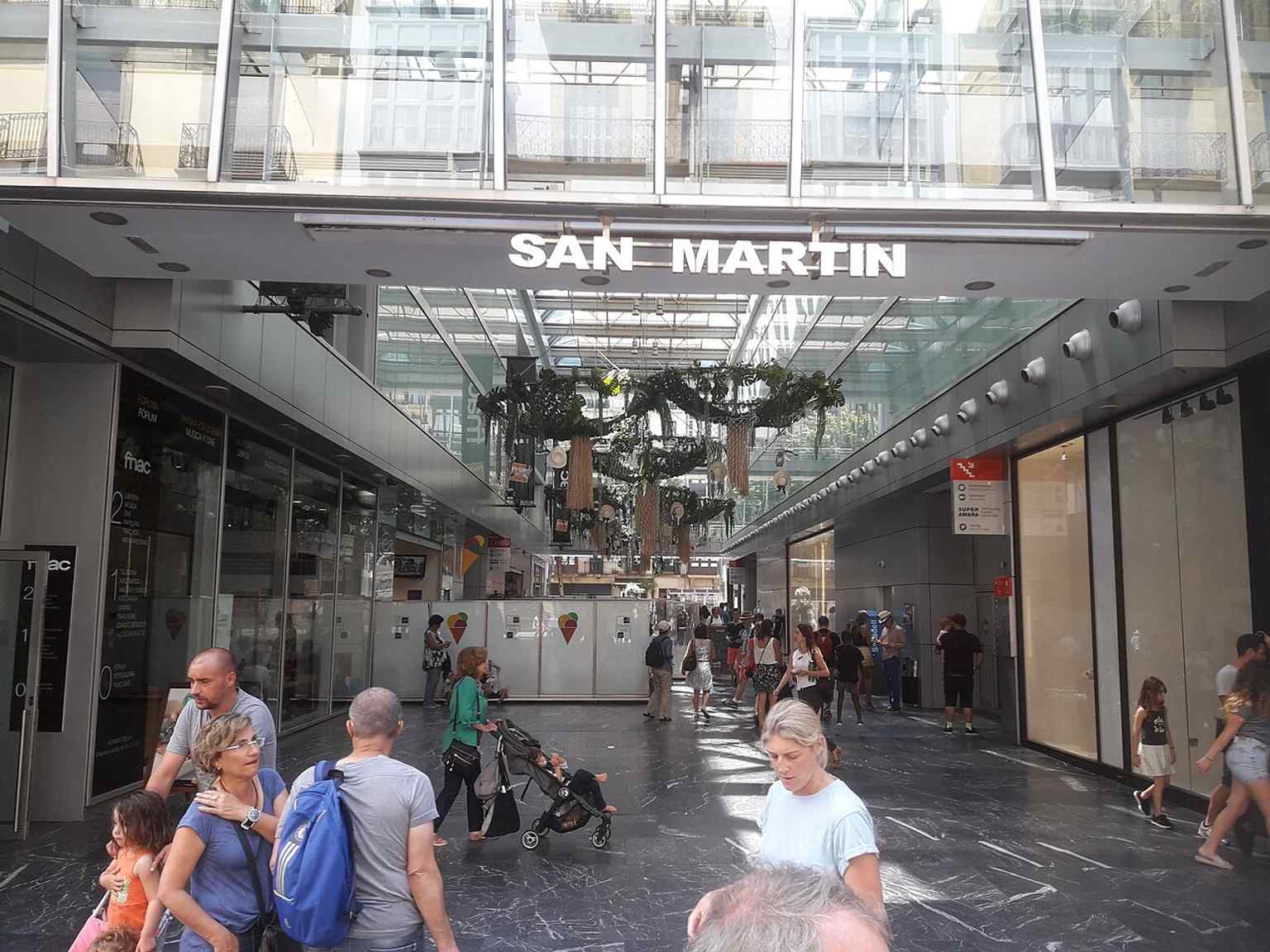
The modern San Martín Market in central San Sebastián, rebuilt in 2005 with a covered pedestrian spine and underground parking below.Photo: pere prlpz, Wikimedia Commons, CC BY-SA 3.0. Cropped & resized. 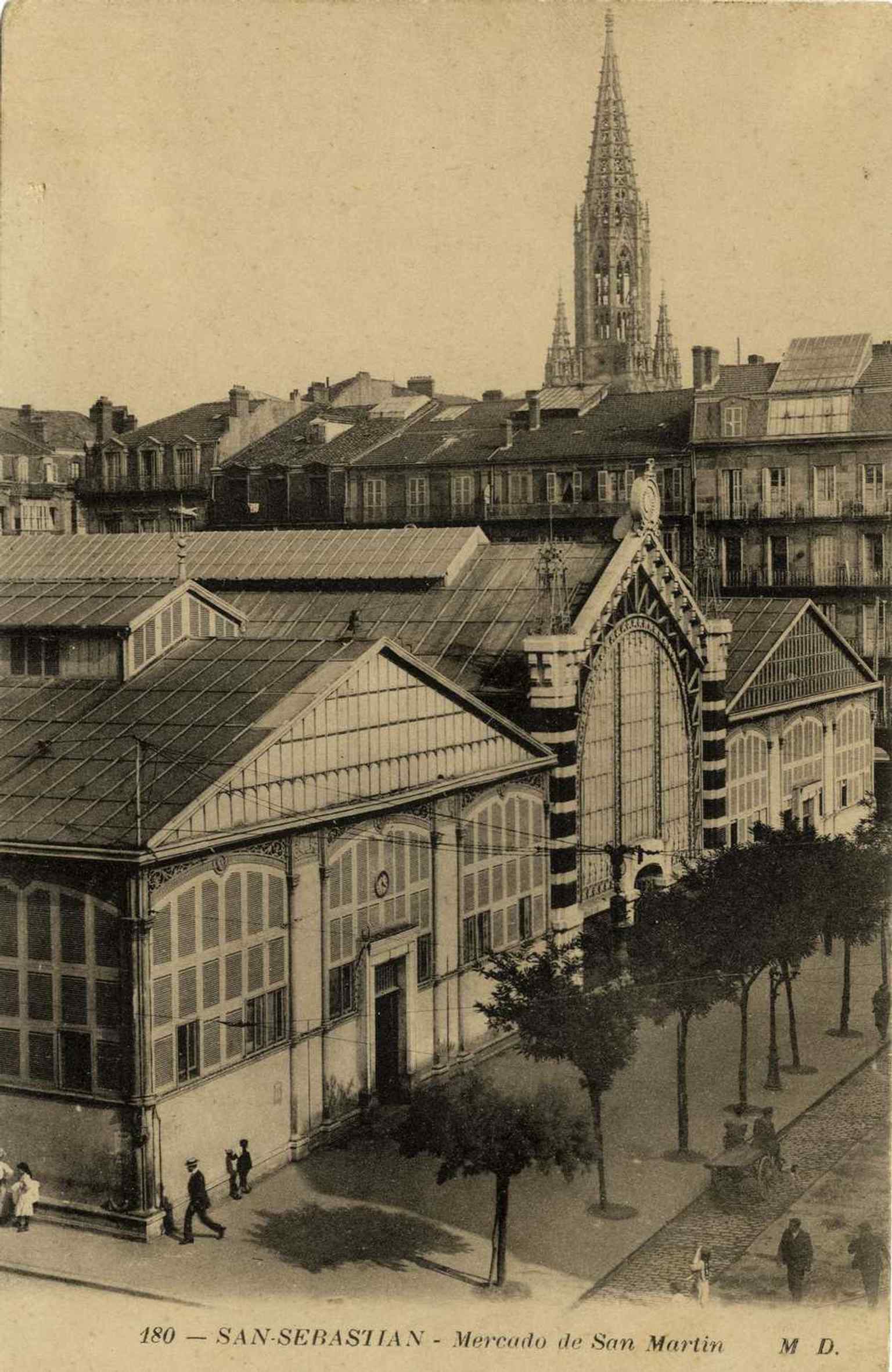
San Martín Market around 1900, showing the old municipal market before the 2005 redevelopment that replaced the historic building.Photo: Unknown authorUnknown author, Wikimedia Commons, Public domain. Cropped & resized. Look for the tall pale seafront building with its stacked wrought-iron balconies, rounded corner, and long façade facing the sweep of La Concha; this is the site where the Hotel…Read moreShow less
Open dedicated page →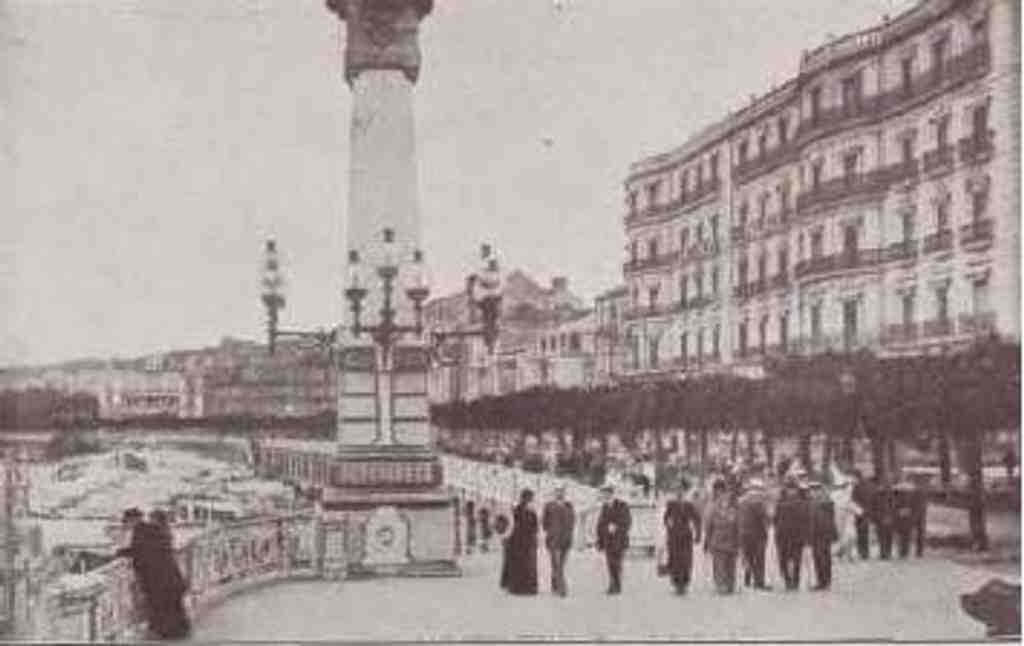
Hotel ContinentalPhoto: Suplemento Revista Internacional. Las Maravillas de España : San Sebastián, residencia real. Viuda de Tasso. Barcelona, 1915, Wikimedia Commons, CC BY-SA 4.0. Cropped & resized. Look for the tall pale seafront building with its stacked wrought-iron balconies, rounded corner, and long façade facing the sweep of La Concha; this is the site where the Hotel Continental once stood.
The Continental told the world exactly what San Sebastián wanted to become. In eighteen eighty, a Basque banker named Agustín Galíndez, living in Madrid and thinking ambitiously, took his proposal to the city council. He asked architect José Goicoa to draw a new hotel here, first under the name Hotel La Concha. That name slipped away. By the time the doors opened on the fifteenth of May, eighteen eighty-four, the house had borrowed a grander identity from fashionable Biarritz and called itself the Continental.
That choice was not accidental. This city was learning how to present itself, and the beachfront was its stage. The Continental became only the second major hotel in San Sebastián, after the old Hotel de Londres y de Inglaterra, and it faced the bay as if it fully understood the value of being seen. It followed a French-influenced resort style, with a basement for the unseen machinery of luxury: kitchens, cold rooms, and wine cellars. Above that came the performance. A long dining room, family dining rooms, a restaurant, and a salon opened toward La Concha. Even the circulation of the building had social rank: one staircase for guests, another for staff.
And then there were the bragging rights. The Continental gave San Sebastián two novelties before most local rivals could dream of them: a lift and a winter garden, meaning a glassy indoor garden lounge beside the restaurant, where elegance could continue under cover without losing any of its display.
The human touch here belongs, for me, to François Estrade. He arrived as director in the eighteen nineties, after Emiliano Lestgarens and P. Hourcade, part of that distinctly French management culture that hotel owners trusted to signal polish and reliability. Estrade did not simply run the place; he sharpened its ambitions. In eighteen ninety-nine, dinner here appeared entirely in French, with dishes such as filet of sole Orly and savarin with rum. By the new century, Estrade pushed for larger windows toward the beach, an open central courtyard, and a more commanding silhouette. In nineteen eleven he bought the neighboring house from architect Luis Elizalde, expanded the building from four floors to seven plus a mezzanine, and rechristened it Palacio Continental. More rooms, more visibility, more bay.
That glittering address also connected to power. The hotel kept close ties with the San Sebastián Casino and later entered the Palace hotel group led by Georges Marquet, the same businessman linked to the Casino. So this was never just a place to sleep. It was part of a network of prestige, gaming, business, and carefully managed appearance.
Then history altered the mood. During the Civil War, militias used the hotel as a command post and barracks. Later, it hosted political banquets. In nineteen seventy-two, it closed for good, and developers demolished it for a more profitable residential block with sea views. That, too, says something rather sharp about this promenade: glamour always answered to real estate in the end.
Still, the real luxury remains where it always was - out there, along the curve of the bay. Walk on to La Concha beach in about two minutes. And, as a practical note, this stop sits on a street that never really sleeps: access here is available at all hours.
In front of you lies a broad crescent of pale sand, edged by a stone promenade and marked by the white iron railing that has become La Concha’s signature. La Concha Bay is not…Read moreShow less
Open dedicated page →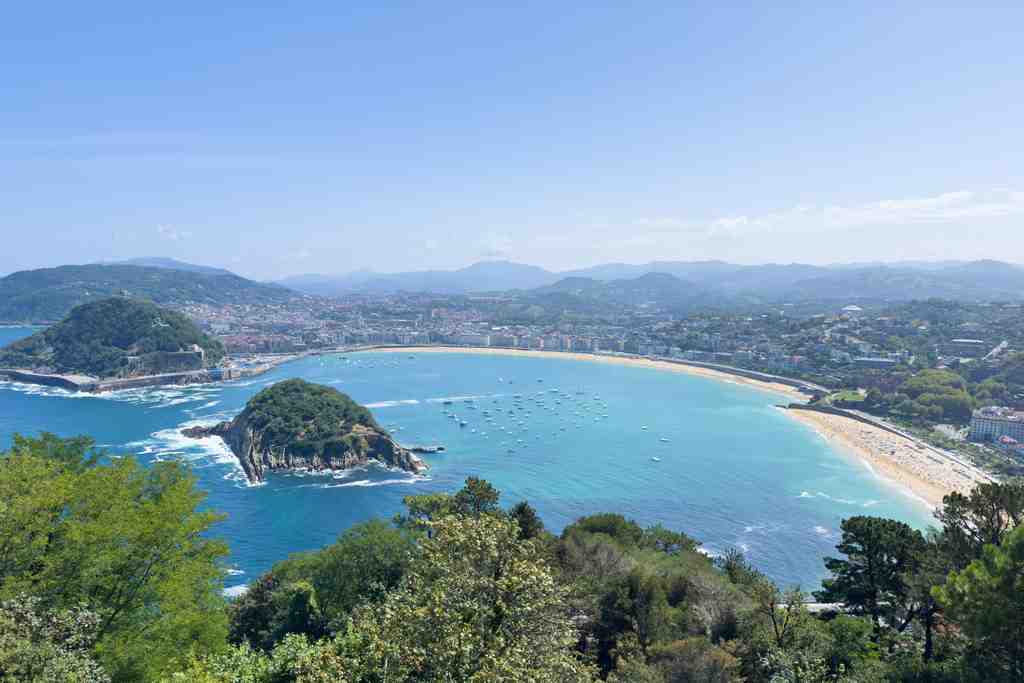
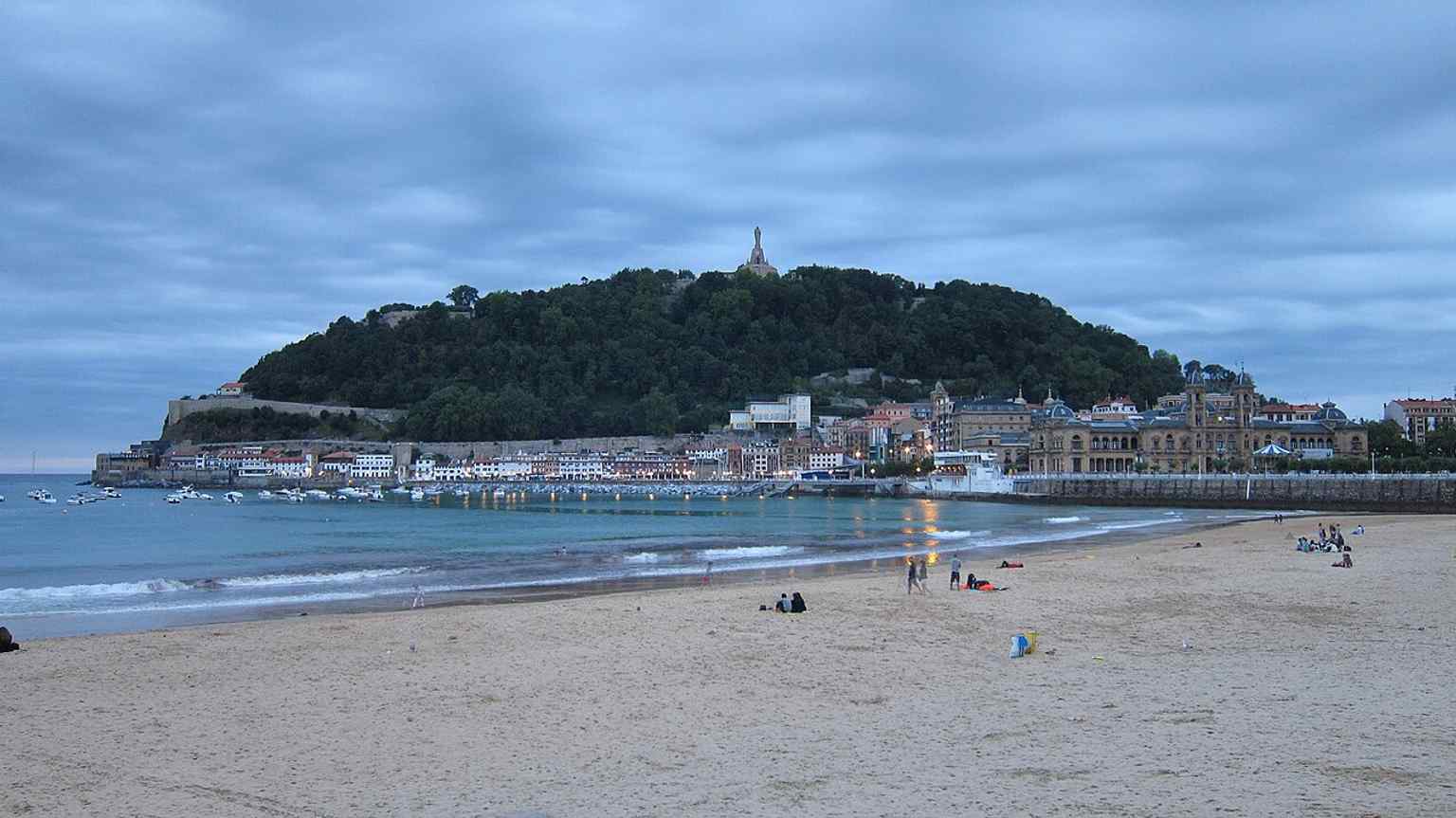
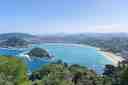
Beach of La ConchaPhoto: Kent Wang, Wikimedia Commons, CC BY-SA 4.0. Cropped & resized. In front of you lies a broad crescent of pale sand, edged by a stone promenade and marked by the white iron railing that has become La Concha’s signature.
La Concha Bay is not simply a beautiful accident of geography. It is a natural curve that San Sebastián carefully edited into an urban emblem, a place where scenery could be arranged, admired, and quietly turned into prestige. Its shell-like form gave the beach its name, and that very shape helped the city sell an image of order, elegance, and ease. If you glance at the image on your screen, you can see that composed sweep for yourself.
In the nineteenth century, Queen Isabel the Second came here to take sea baths, and the shoreline’s reputation changed at once. Then Queen María Cristina raised the stakes further: in eighteen ninety-three she chose the slope above the bay for Miramar Palace, making this whole waterfront feel like a royal stage set. What had been a beach became a backdrop for high society, and the city understood the opportunity.
Pause for a moment and let your eyes travel from the curve of the sand to the promenade and that railing. How much feels natural, and how much feels carefully arranged for an audience?
By eighteen seventy-nine, the bay had become a grandstand for the rowing races now called the Bandera de La Concha. Traditional traineras, long racing boats with thirteen rowers and a helmsman, cut across the water while spectators packed the edge of the beach. Then, around nineteen ten, Juan Rafael Alday gave the promenade its white railing, and with one design gesture he fixed La Concha in the city’s visual memory. You can study that detail on your phone here.
Yet this stage has seen stranger arrivals too: French aviator Hubert Le Blon crashed into the sea here in nineteen ten, and in nineteen forty-five Léon Degrelle, fleeing the collapse of Nazi Europe, made an emergency water landing in the bay.
That is La Concha’s secret: civic theatre never really stopped. It simply changed its music. In about seven minutes, we’ll follow that thread to Jazzaldia, where the city still knows exactly how to turn itself into a performance.
A broad seaside view of the crescent-shaped bay, showing why La Concha is celebrated as one of Europe’s most beautiful urban beaches.Photo: Carlos Cunha, Wikimedia Commons, CC BY-SA 3.0. Cropped & resized. 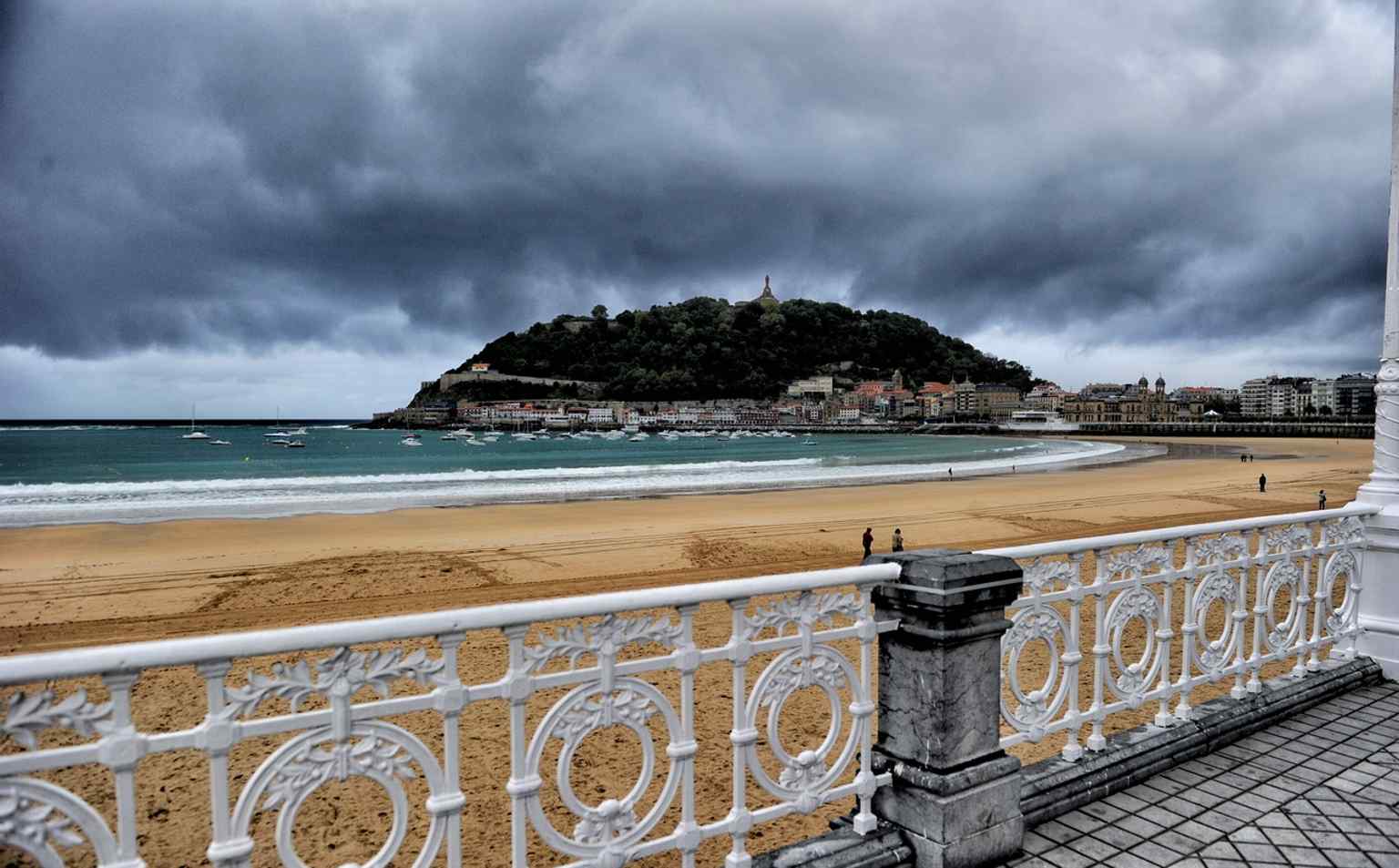
The iconic La Concha promenade railing, installed around 1910, turned the shoreline walk into one of San Sebastián’s signature city images.Photo: Валерий Дед, Wikimedia Commons, CC BY 3.0. Cropped & resized. 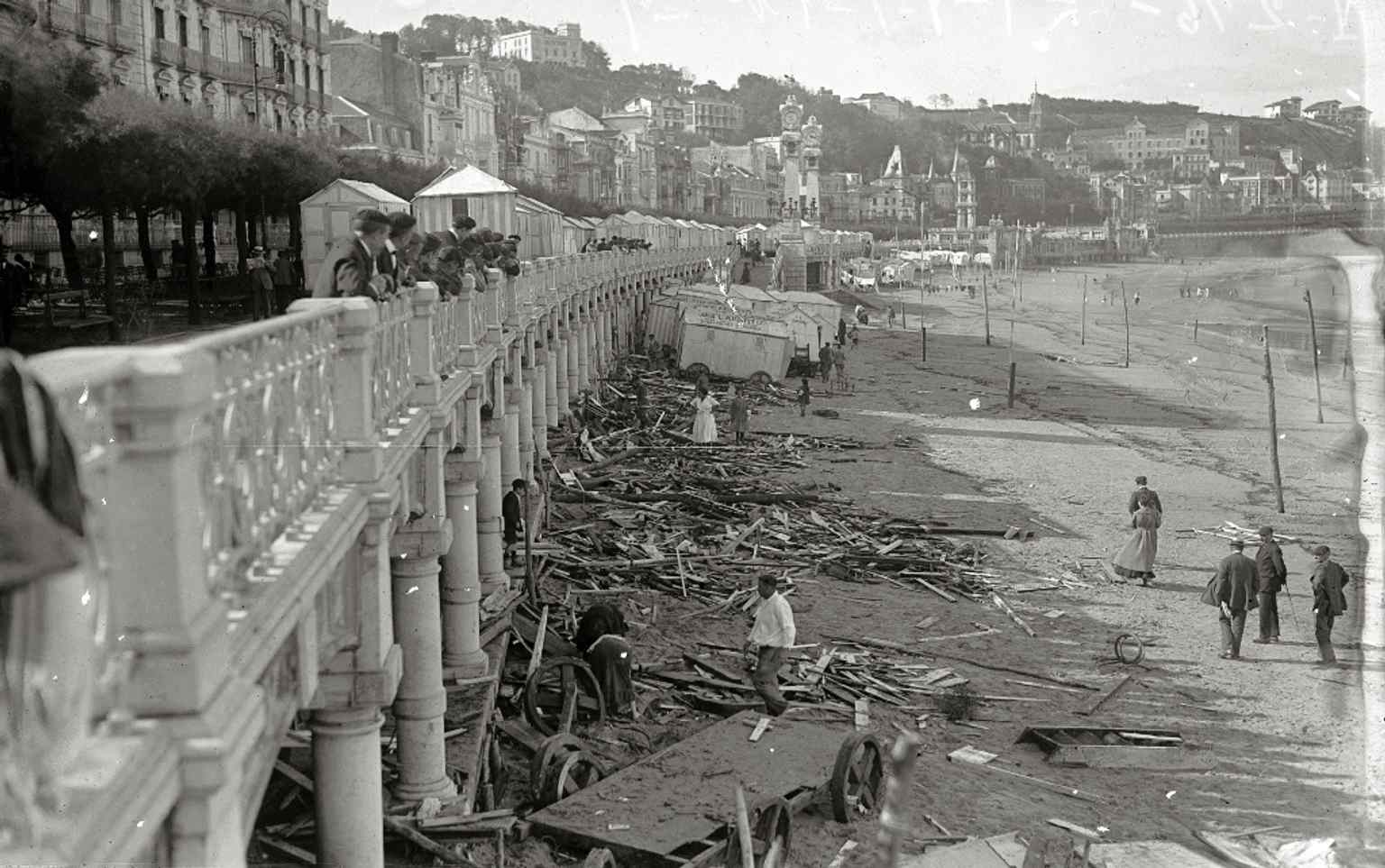
Storm damage on La Concha Beach in 1918, a reminder that this elegant promenade has long been battered by the Bay of Biscay.Photo: Ricardo Martín, Wikimedia Commons, Public domain. Cropped & resized. 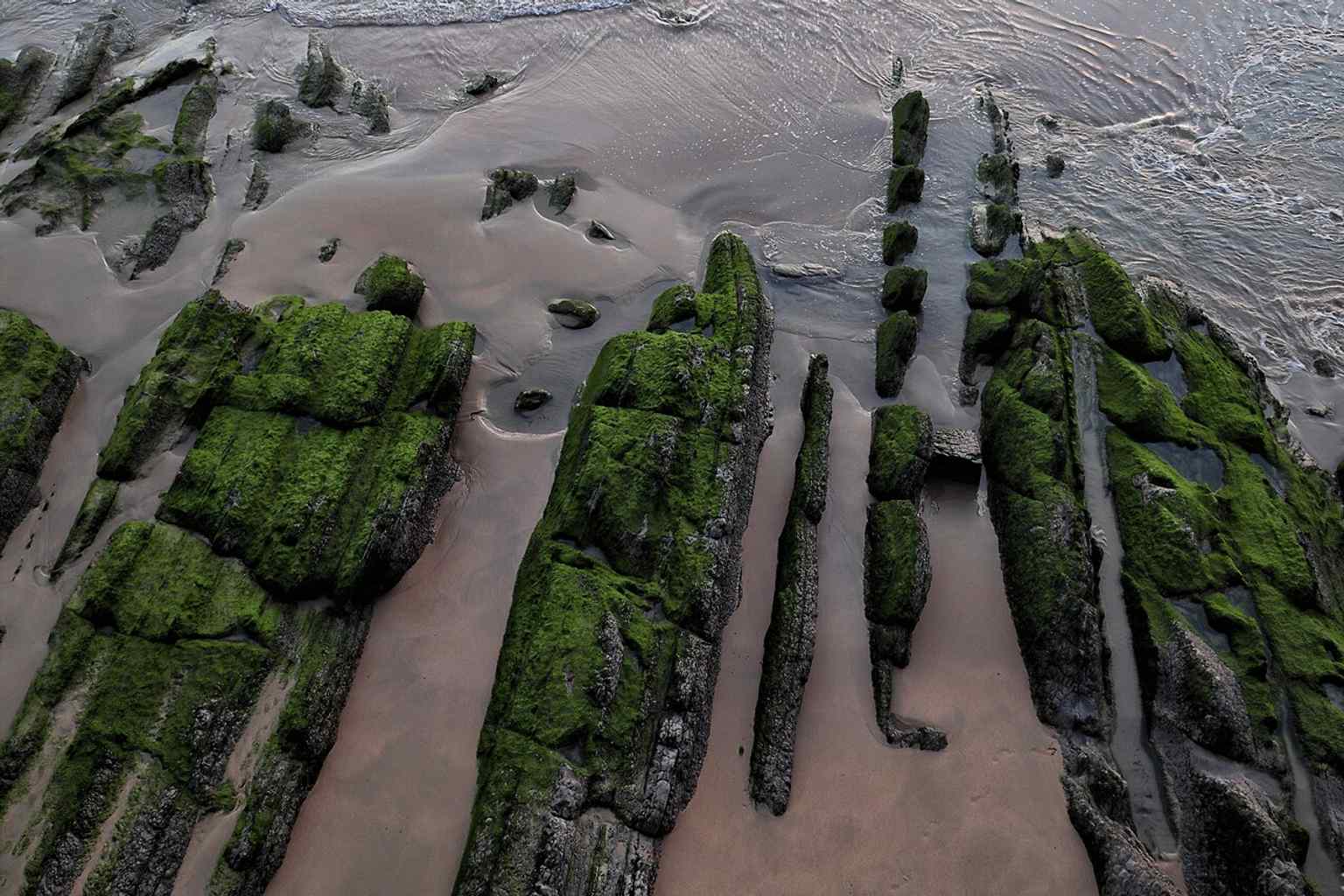
A sunset view across La Concha Beach, capturing the calm urban seaboard that helped make the resort internationally famous.Photo: Javier Perez Montes, Wikimedia Commons, CC BY-SA 4.0. Cropped & resized. 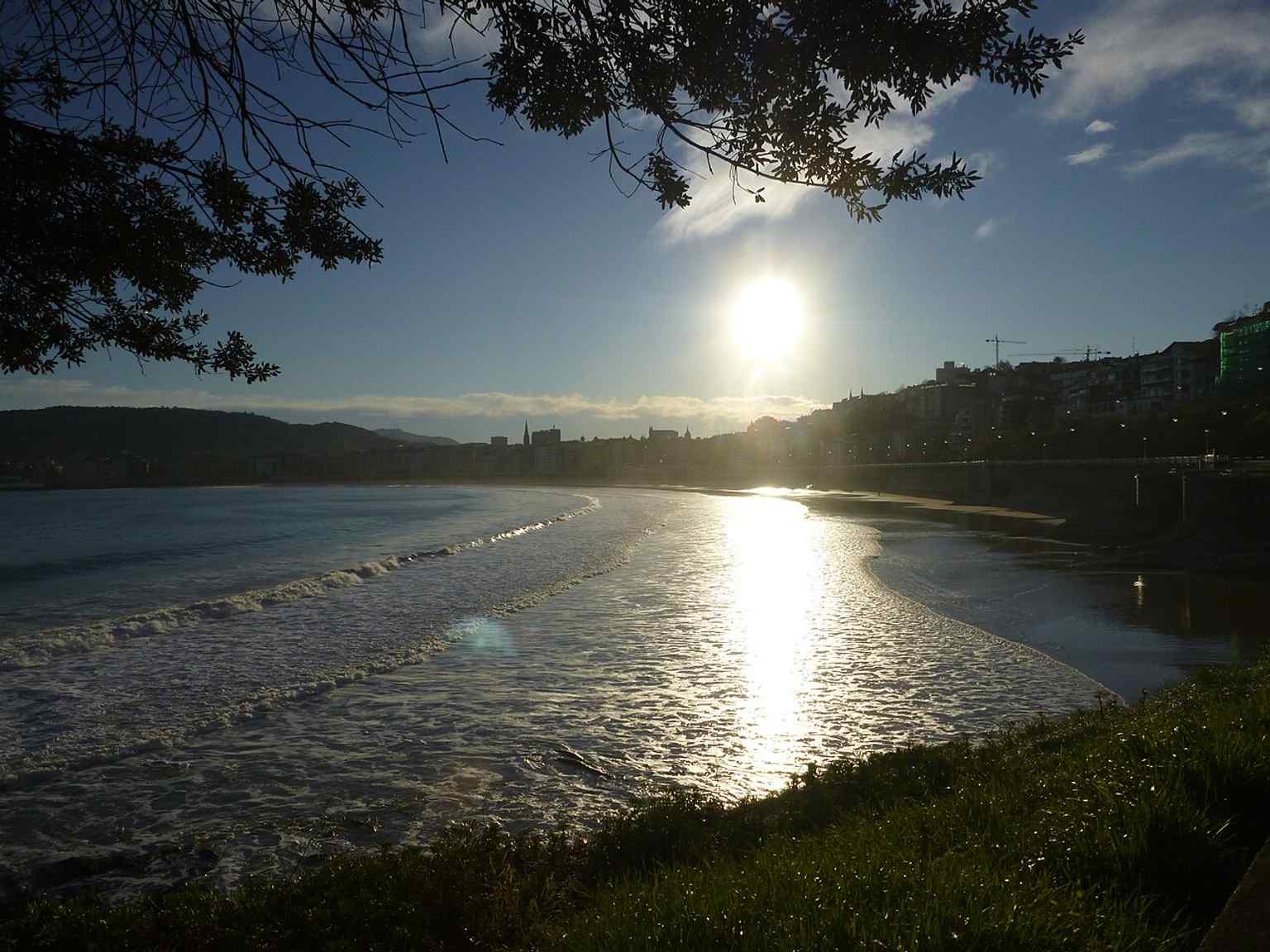
Evening light on La Concha’s shoreline, with the bay’s long curve emphasizing its distinctive shell-like shape.Photo: Joxemai, Wikimedia Commons, CC BY-SA 4.0. Cropped & resized. 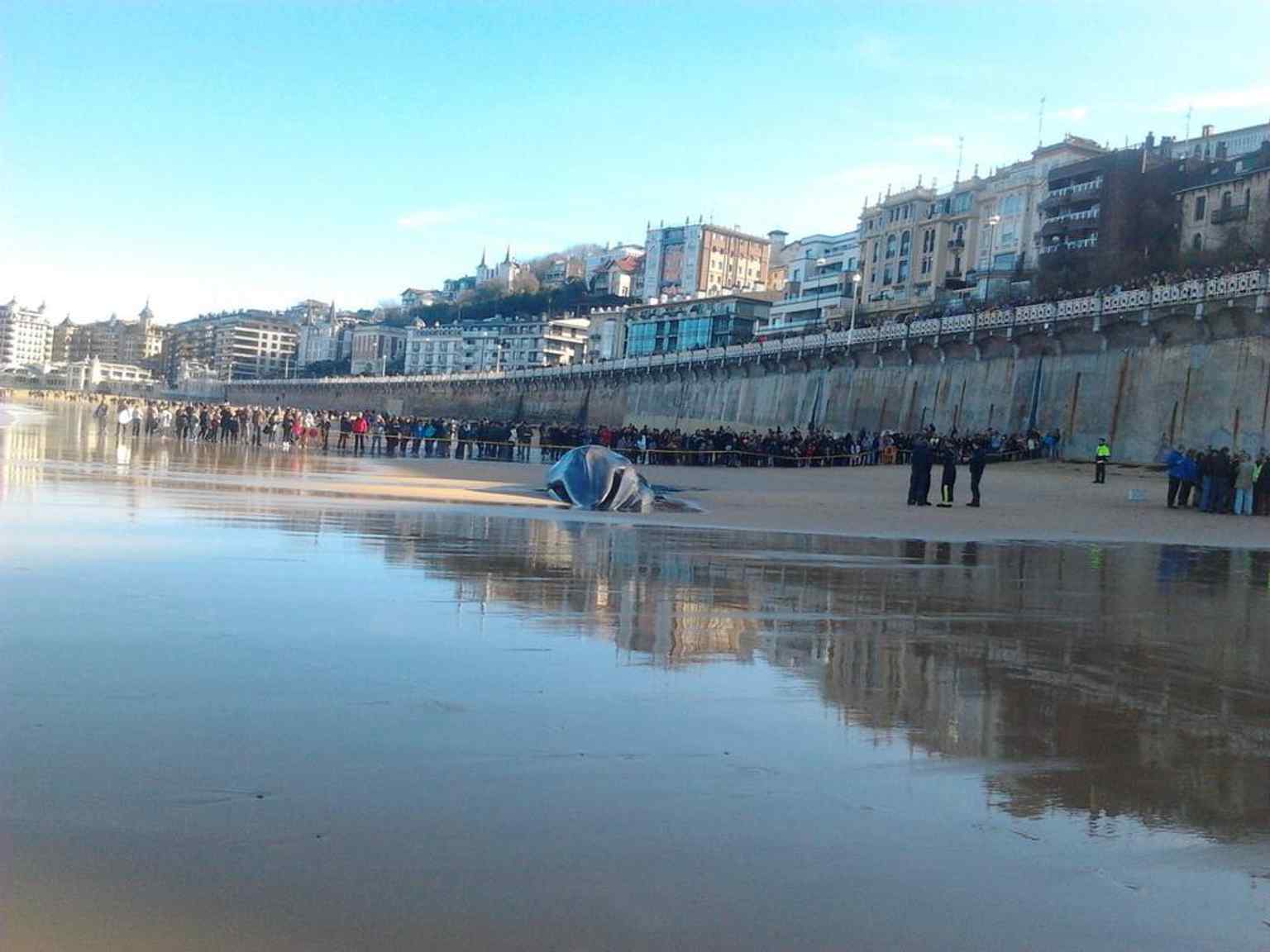
A rare natural event on La Concha Beach: a beached fin whale, showing how open the bay is to the sea.Photo: Luistxo Fernandez, Wikimedia Commons, CC BY-SA 4.0. Cropped & resized. 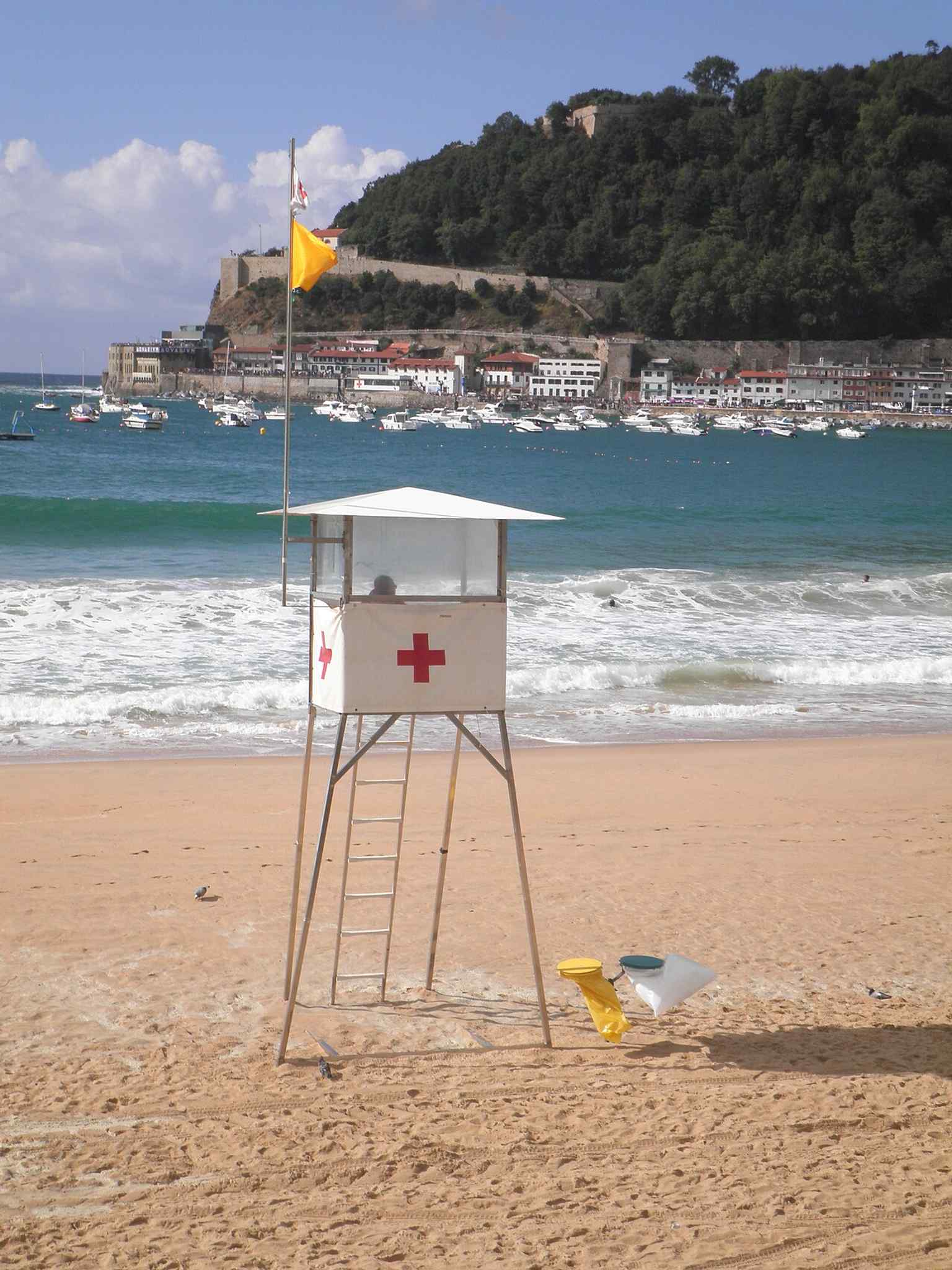
A yellow warning flag on La Concha, a practical sign of the beach’s strong tides and changing swimming conditions.Photo: Joxemai, Wikimedia Commons, CC BY-SA 3.0. Cropped & resized. 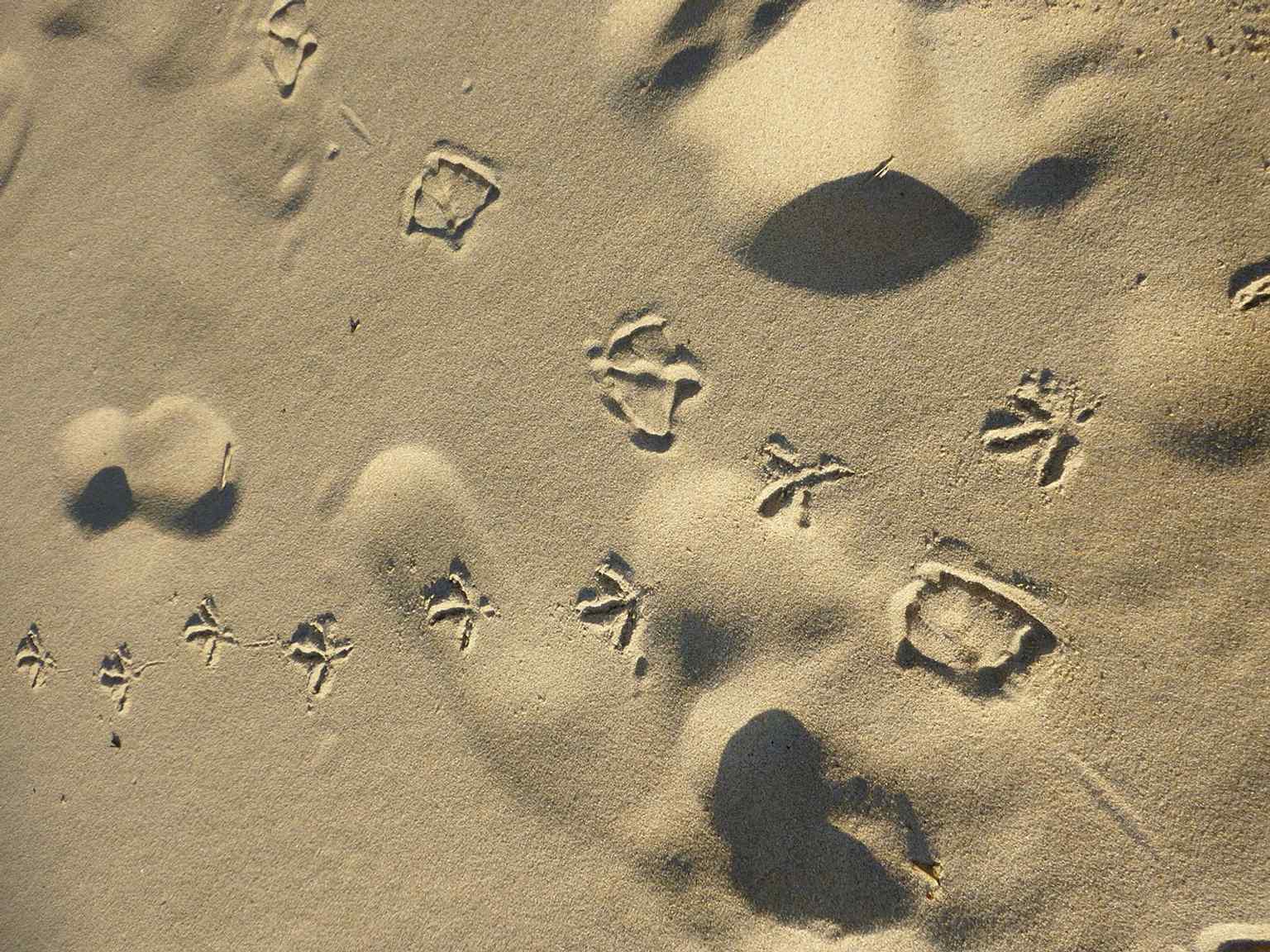
Bird footprints in the sand reveal the beach’s broad, shallow foreshore, which expands and shrinks with the tide.Photo: Joxemai, Wikimedia Commons, CC BY-SA 4.0. Cropped & resized. 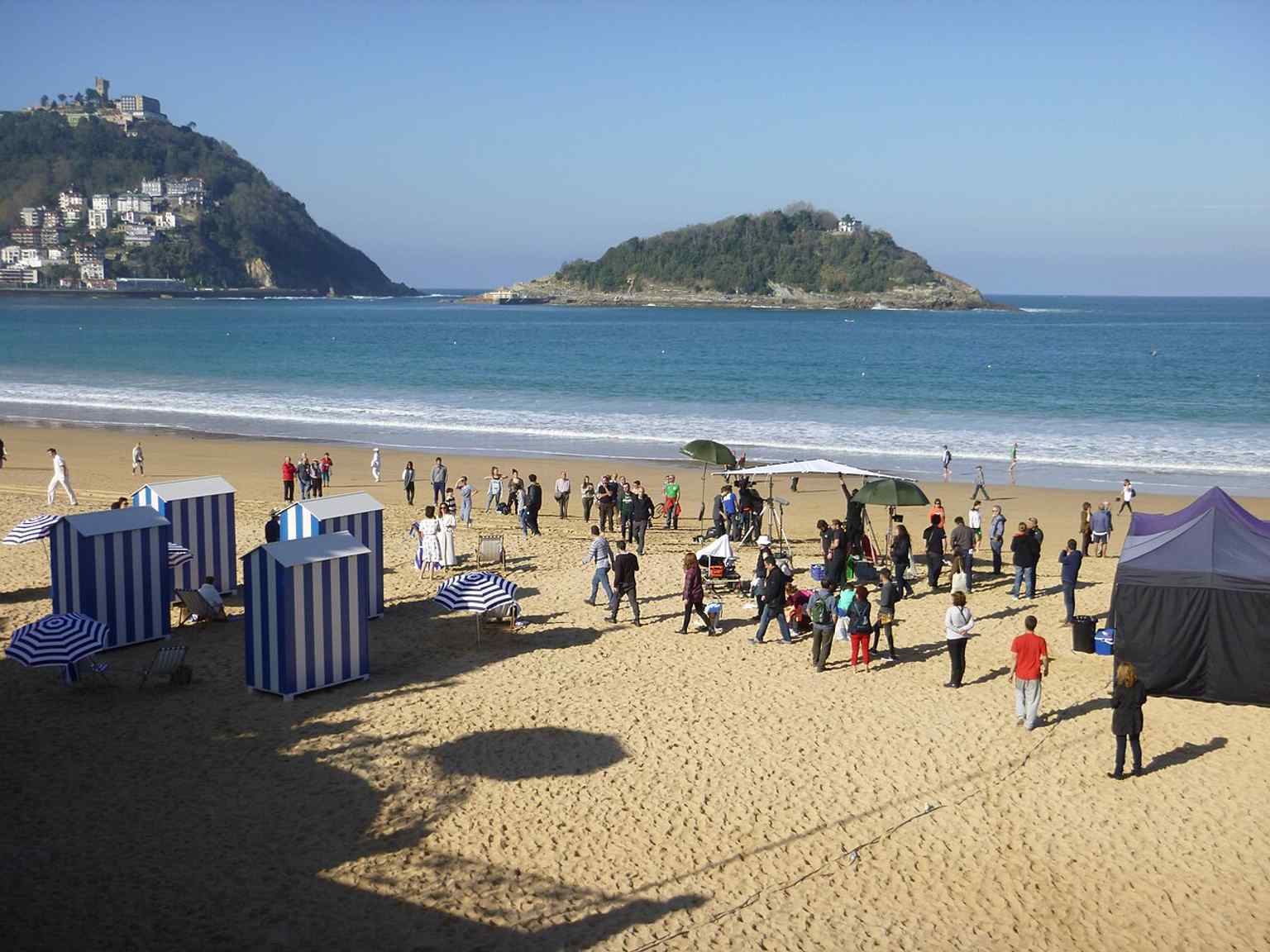
A contemporary beach scene on La Concha, reflecting its everyday use as a busy urban waterfront.Photo: Joxemai, Wikimedia Commons, CC BY-SA 4.0. Cropped & resized. 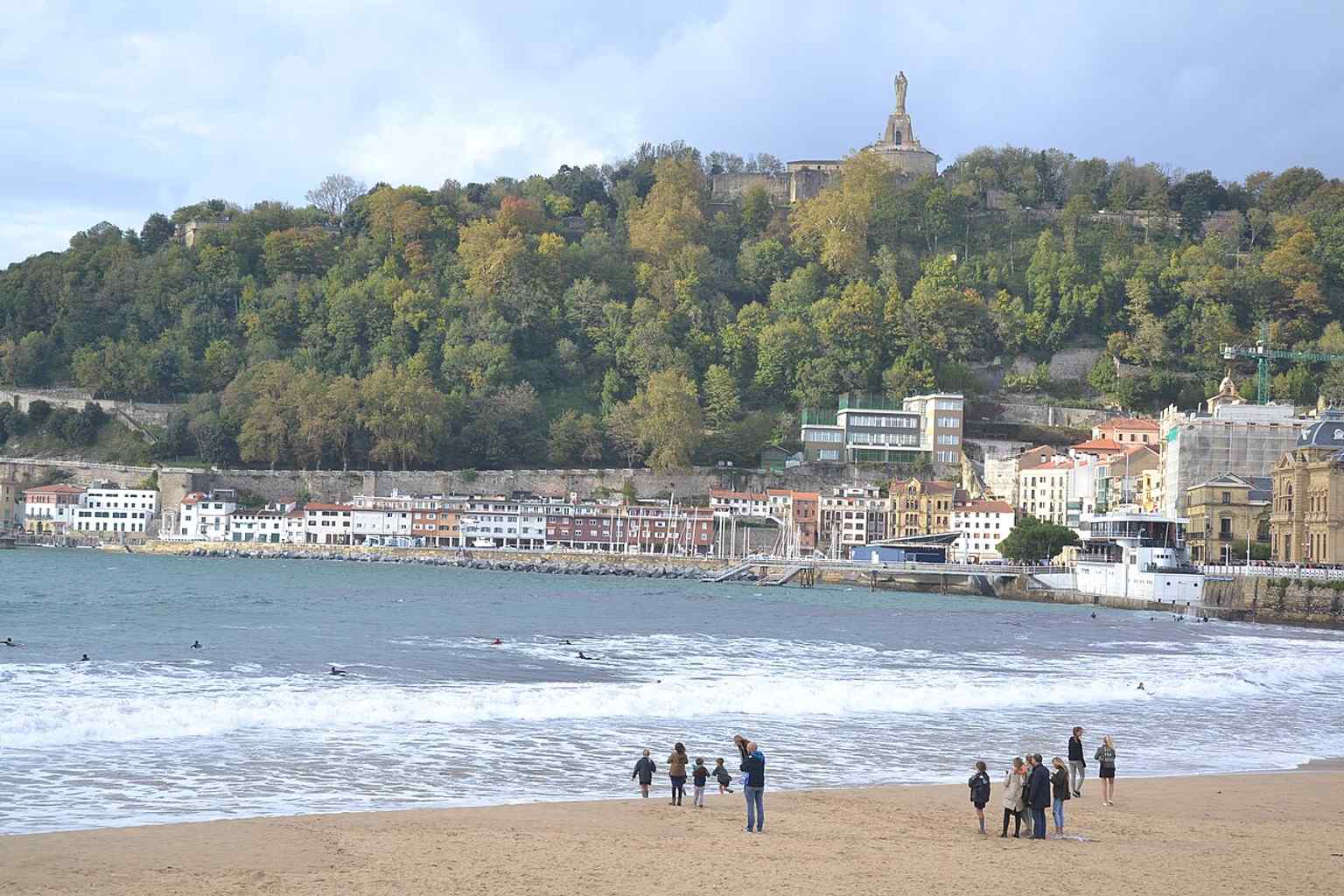
A classic daylight view of Playa de la Concha in San Sebastián, showing the city beach framed by the bay.Photo: LucasD, Wikimedia Commons, CC BY-SA 4.0. Cropped & resized. On your right, look for a compact stone square with steep stepped sides and high masonry walls, a surprisingly theatrical hollow carved into the old city. Jazzaldia is not a…Read moreShow less
Open dedicated page →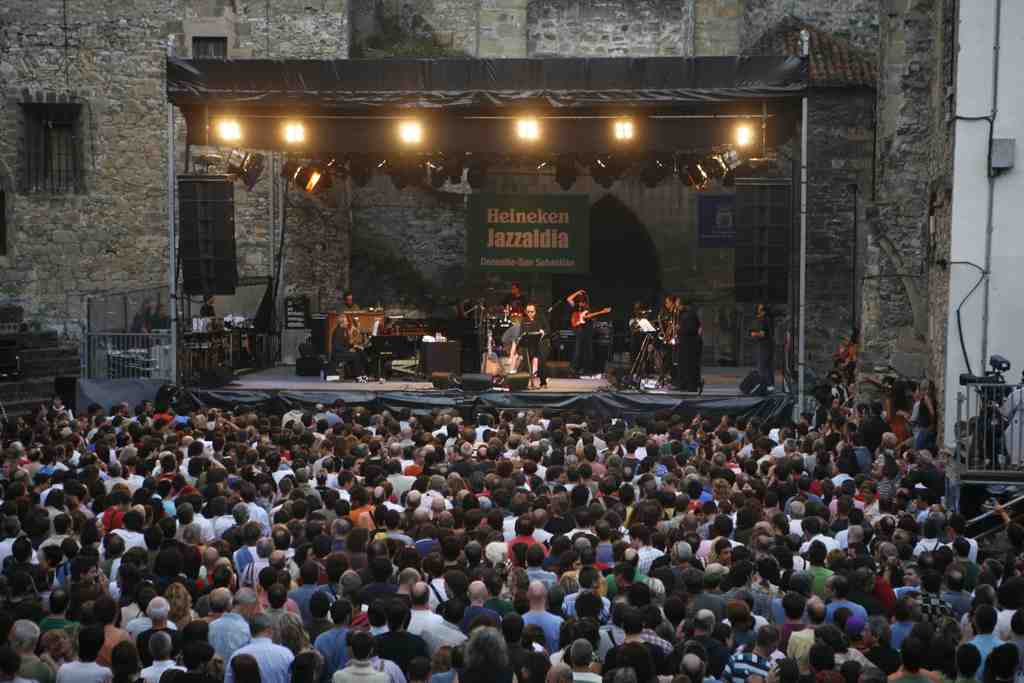
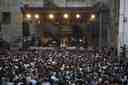
JazzaldiaPhoto: Vidartereyes, Wikimedia Commons, CC BY-SA 4.0. Cropped & resized. On your right, look for a compact stone square with steep stepped sides and high masonry walls, a surprisingly theatrical hollow carved into the old city.
Jazzaldia is not a monument in the usual sense. It is something more interesting: a festival that taught San Sebastián to treat the whole city as a stage. What once belonged mainly to elegant interiors now spills across beaches, terraces, theatres, and plazas, until music feels woven into the streets themselves.
The festival began in nineteen sixty-six, and that matters. Jazzaldia is the oldest jazz festival in Spain and one of the oldest in Europe, and it has continued without interruption ever since. The first edition lasted only two days, the tenth and eleventh of September, with an international amateur contest and just one professional act, the guitarist Mickey Baker. The following year, the organisers shifted it to July, where it has remained.
But here is the turn in the story: behind all the polish, Jazzaldia started with scarcity and a quiet streak of defiance. In that first edition, while Franco’s regime still restricted public expressions of Basque culture, the festival included a demonstration of txalaparta, an ancestral Basque percussion instrument played by striking wooden boards in rhythm. That single gesture tied an imported art form to local roots. From the beginning, this was never just fashionable entertainment.
Its soul settled in Plaza de la Trinidad, the festival’s most storied setting. Musicians adore it because the audience sits so close, almost breathing with the band. Yet closeness brought pressure. When Charles Mingus played here in nineteen seventy-four, the organisation still operated with a kind of inspired precariousness. Mingus did not even have his own double bass to hand, so the musician Jimmy Leary lent him one. Even so, the concert blazed with such force that it changed the festival’s future. Crowds swelled; the city had to think bigger. Jazz moved from this intimate square to sports halls and the velodrome, not because the spirit had faded, but because too many people wanted in.
And that is the real revelation. San Sebastián did not simply decorate itself with culture; it engineered public desire around it, then kept widening the circle. Jazzaldia now spreads through roughly a dozen venues, with close to a hundred concerts, some ticketed, many free. The vast gatherings on Zurriola Beach and the terraces of the Kursaal opened the festival to younger audiences and enormous crowds. In two thousand and twenty-four, attendance reached about one hundred and eighty-five thousand.
There are delicious human footnotes too. In nineteen seventy-five, an amateur British group called Last Exit slipped into the contest almost unnoticed. Its blond young bassist was Gordon Sumner, long before the world knew him as Sting. Miles Davis came later and reportedly diverted his taxi through the city hunting for one very particular fur coat before vanishing into hotel seclusion. Even Van Morrison, not famous for warmth, called his nineteen ninety-nine concert here one of the best of his career.
Soon we’ll make for the Victoria Eugenia Theatre, where San Sebastián gave performance an even grander frame. If you fancy carrying the jazz mood into the evening, the nearby venue linked to this stop usually opens from Tuesday to Sunday and closes on Mondays.
On your right, the Victoria Eugenia Theatre shows itself as a grand pale sandstone block, palace-like and symmetrical, with carved balconies and a row of sculpted busts set into…Read moreShow less
Open dedicated page →On your right, the Victoria Eugenia Theatre shows itself as a grand pale sandstone block, palace-like and symmetrical, with carved balconies and a row of sculpted busts set into the main façade.
This theatre opened in nineteen twelve, and it was never meant to be just a playhouse. Francisco Urcola designed it as part of a larger act of civic self-invention, paired with the luxury hotel across the river so San Sebastián could greet visitors with culture on one side and hospitality on the other. Even the exterior tells that story. While so many buildings in the city borrowed French manners, Urcola looked instead to the palace of Monterrey in Salamanca, giving this place a distinctly Spanish grandeur.
Its first night carried a delicious little irony. The official inauguration took place on the twentieth of July, nineteen twelve, but Queen Victoria Eugenia, whose name the theatre bears, did not attend. She came the following day instead, with King Alfonso the Thirteenth and Queen Mother María Cristina, after the curtain had already risen on Eduardo Marquina’s En Flandes se ha puesto el sol, performed by the celebrated company of María Guerrero and Fernando Mendoza.
That blend of glamour and careful staging never really ended. For decades, every edition of the San Sebastián International Film Festival played through this building until nineteen ninety-nine, and that is how a Belle Époque theatre became part of film mythology. Alfred Hitchcock stood here in nineteen fifty-eight for the world premiere of Vertigo. Most visitors hear that and picture suspense, spirals, and icy blondes. Locals tend to remember something more earthly: from his room at the hotel just opposite, Hitchcock became enchanted by Basque cooking, especially chipirones en su tinta, baby squid in its own ink, which he later insisted Eva Marie Saint must try.
Then came another astonishing evening in nineteen seventy-seven, when Star Wars received its European premiere here. Harrison Ford and Carrie Fisher posed on these steps, full of youthful promise, and inside, the audience sat in baffling silence. Festival-goers expected solemn art cinema; George Lucas gave them a space opera. The festival director, Luis Gasca, later admitted he feared disaster before the world fell in love with it.
And yet this elegant shell has held more than applause. In July nineteen thirty-six, Republican militiamen occupied the theatre and fired from here toward the hotel opposite, where rebel officers had barricaded themselves. Later, Franco’s regime turned the building into a propaganda venue. So the city’s polished stage could become, with alarming ease, a battlefield and then a political instrument.
If you fancy it, take a quick look at the before-and-after image in the app; the façade barely flinches, even as the world around it changes completely. And if you glance at your screen, image five gives you the auditorium before the great renovation, when it still held around one thousand two hundred and fifty seats beneath Ignacio Ugarte’s painted vault. The reforms from two thousand one to two thousand and seven modernised the machinery, improved access, and even created new rooms, though some mourn the loss of the older pink-and-gold entrance in favour of rather too much marble. That, too, belongs to this theatre’s story: permanence on the outside, reinvention within.
Now cast your eyes across toward the hotel that faces it; we’re heading there next, to Hotel María Cristina, only about two minutes away. If you want to return, the theatre generally opens from late morning to early afternoon and again from early evening, with Saturday starting a little earlier.
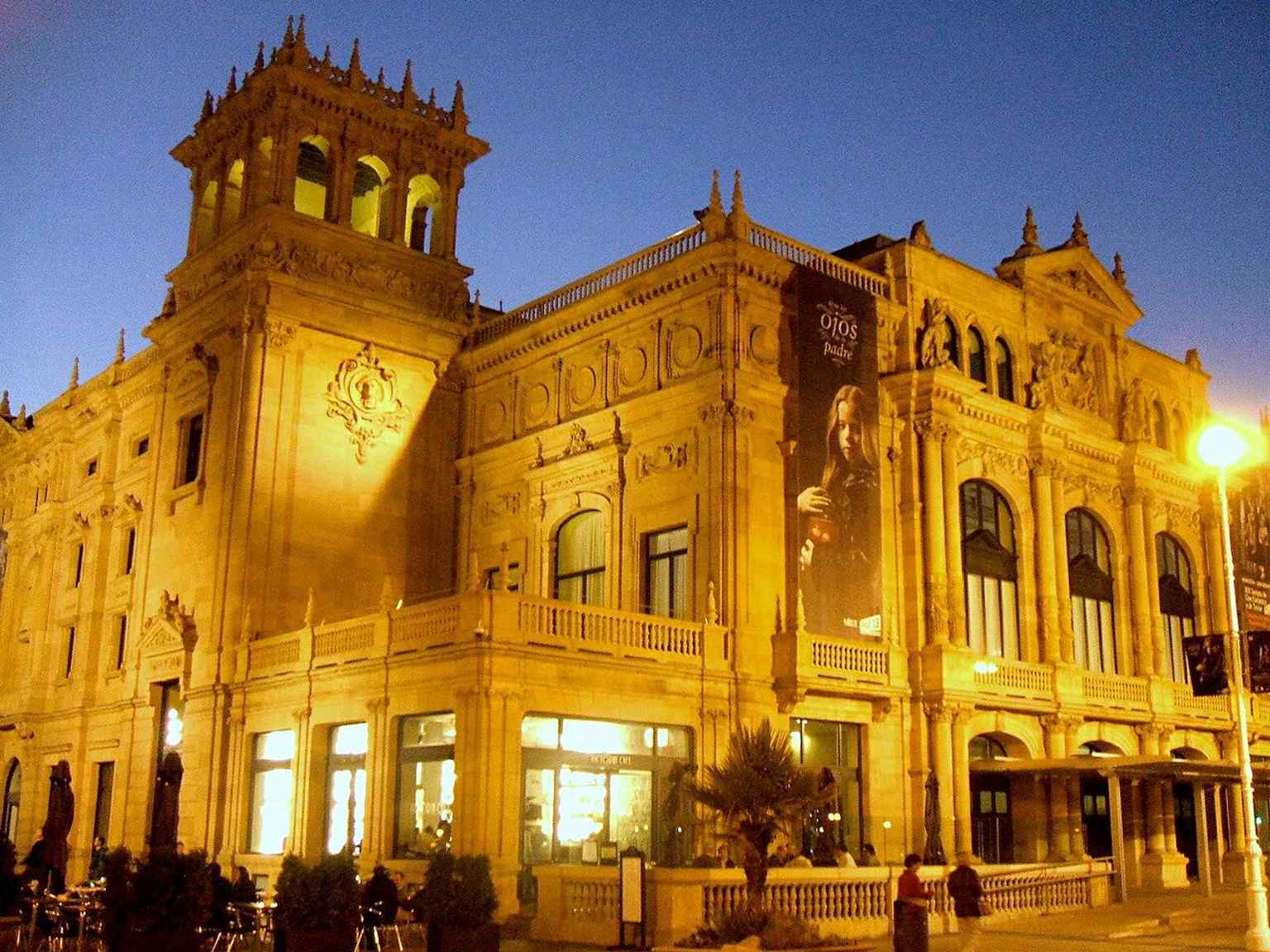
A clean modern view of the theatre’s exterior, useful for showing the building’s neorenaissance, neoplateresque character.Photo: Zarateman, Wikimedia Commons, CC0. Cropped & resized. 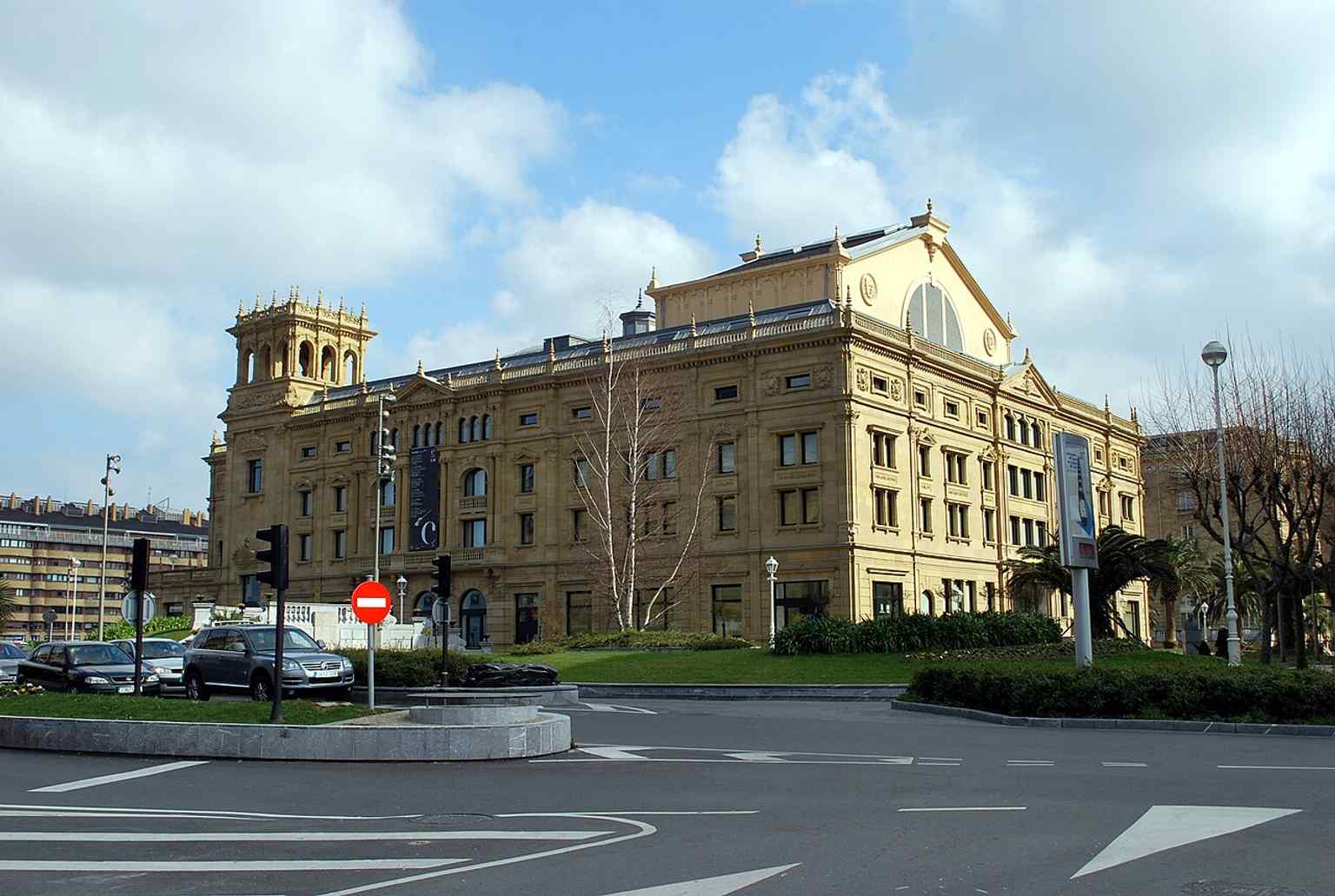
The rear of the theatre — a less-seen angle that helps show the full footprint of the building beyond its famous front entrance.Photo: Jean Michel Etchecolonea, Wikimedia Commons, CC BY-SA 3.0. Cropped & resized. 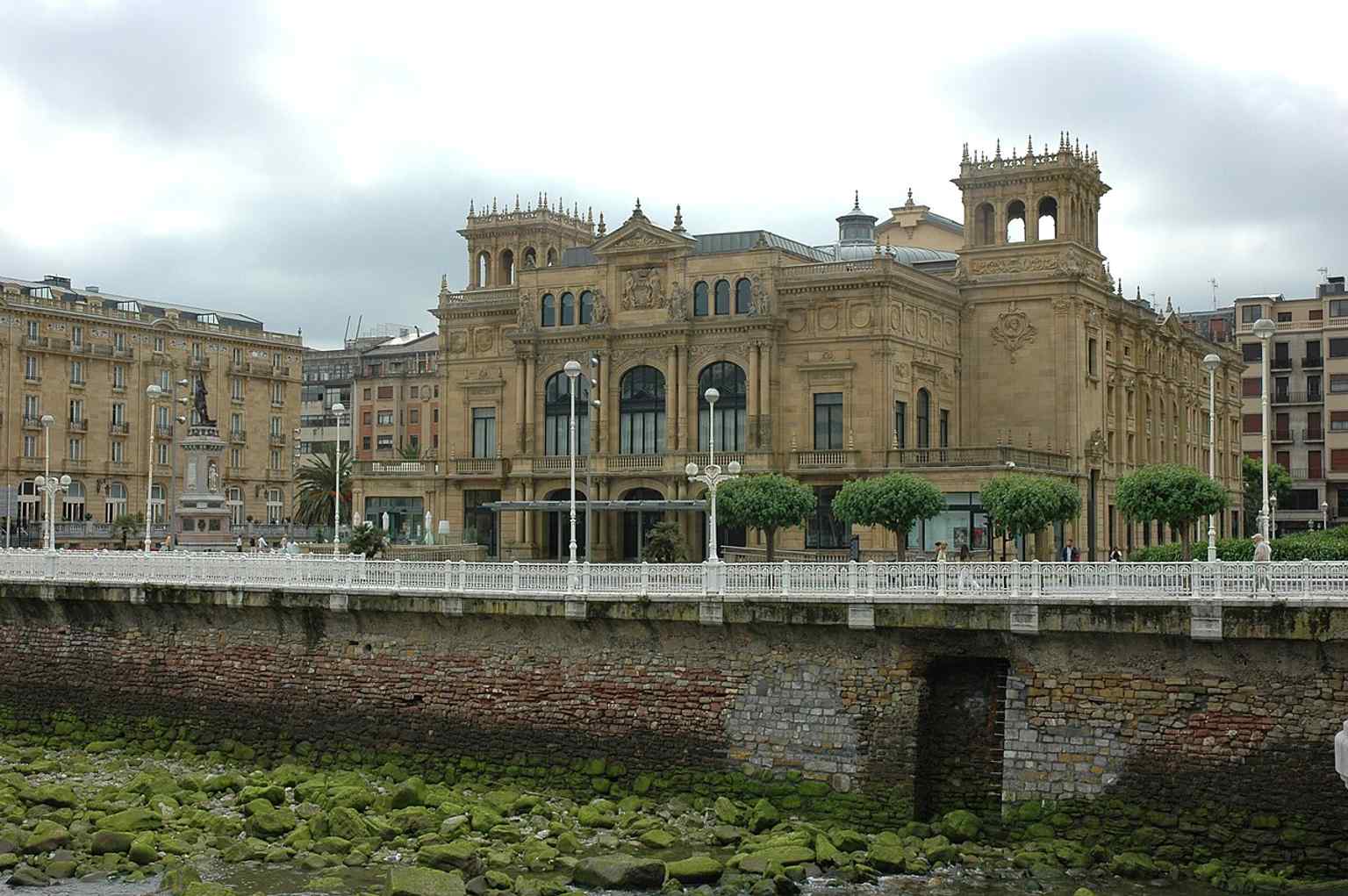
A 2015 façade view that captures the theatre’s grand street presence after its major restoration.Photo: Calips, Wikimedia Commons, CC BY-SA 3.0. Cropped & resized. 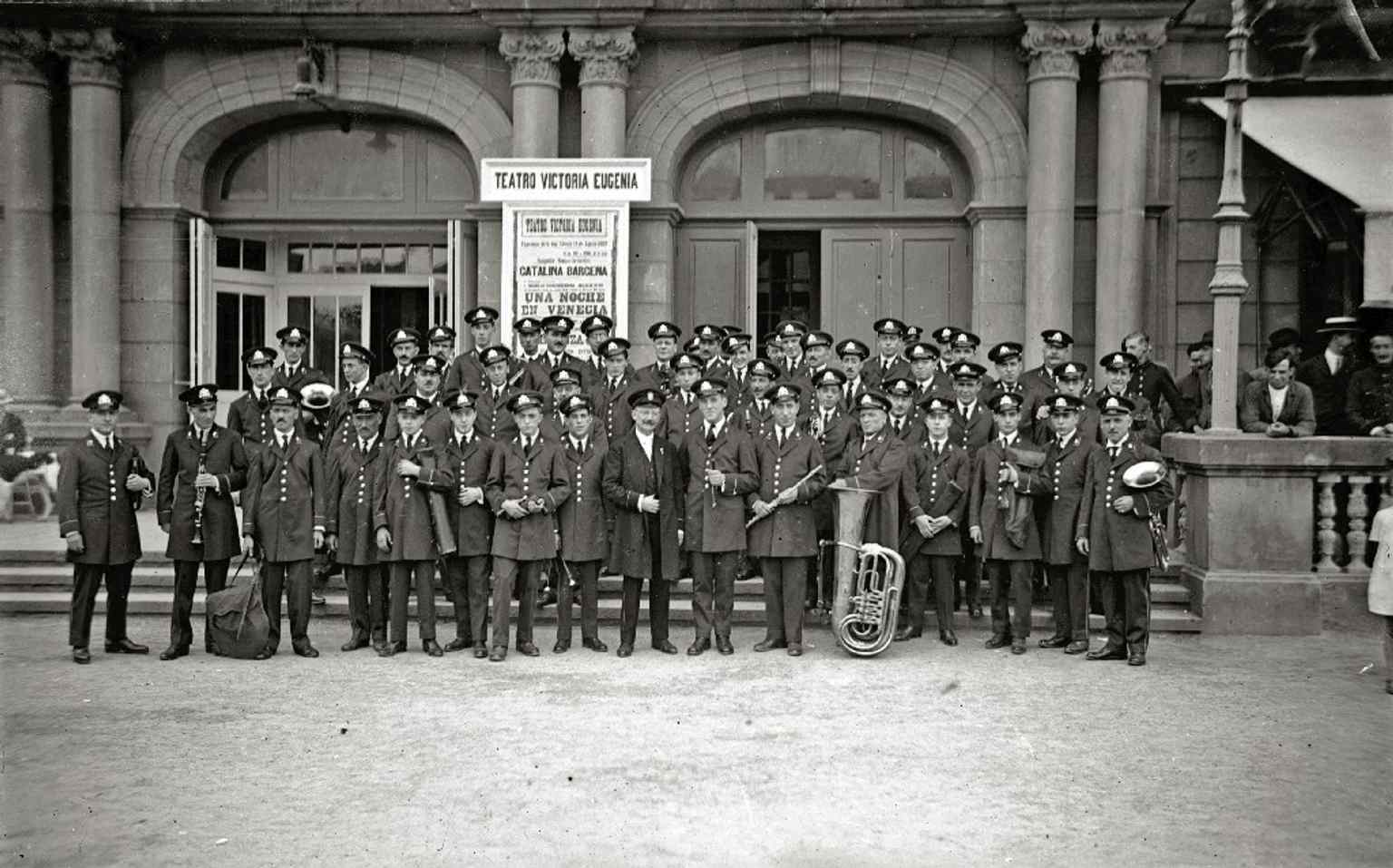
A black-and-white scene of a band outside the theatre, evoking the building’s long role as a civic and cultural gathering place.Photo: Pascual Marín, Wikimedia Commons, CC BY-SA 3.0. Cropped & resized. 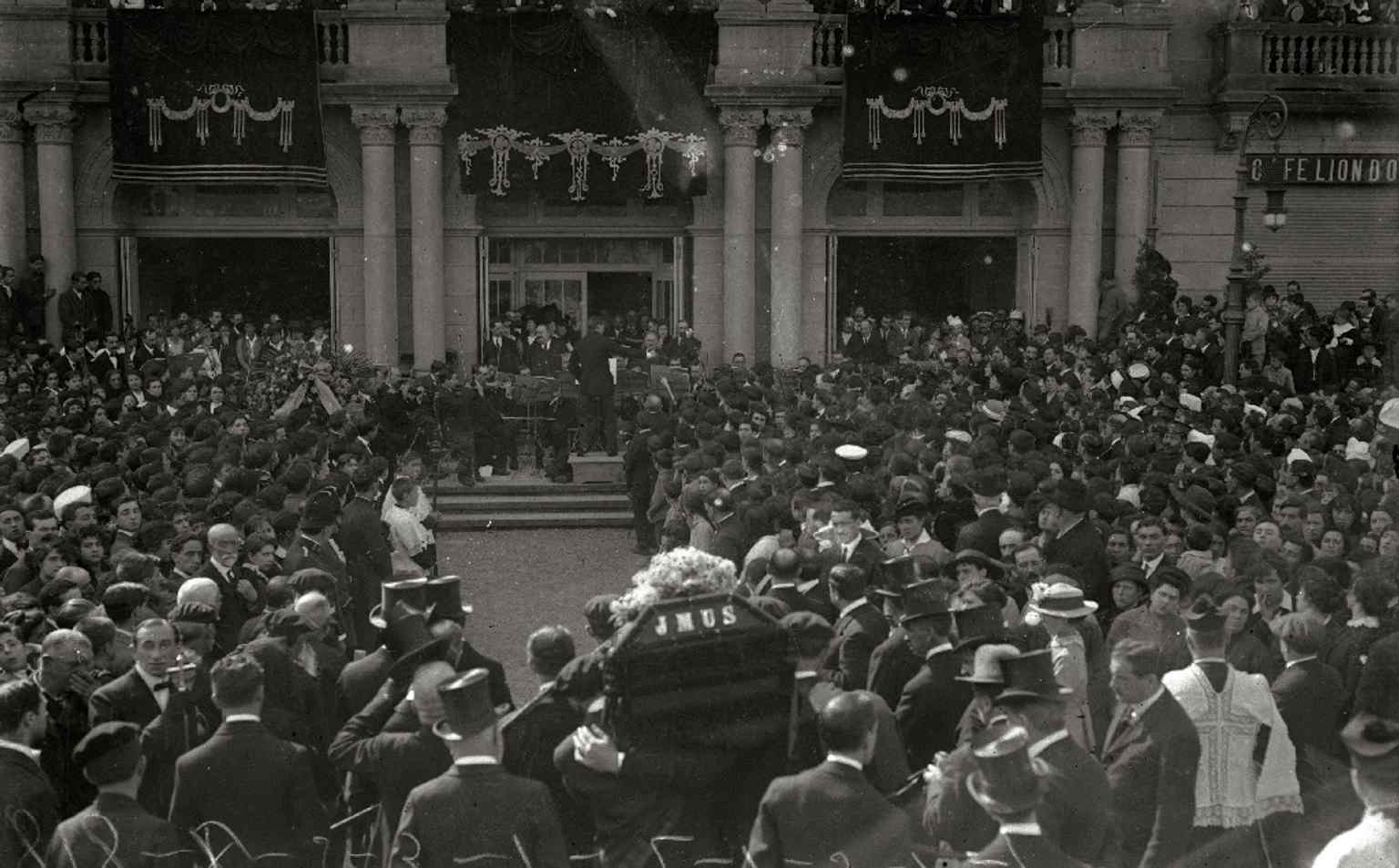
A 1915 funeral procession at the theatre entrance — a rare historical image showing the building as a public stage for city life.Photo: Ricardo Martín, Wikimedia Commons, Public domain. Cropped & resized. 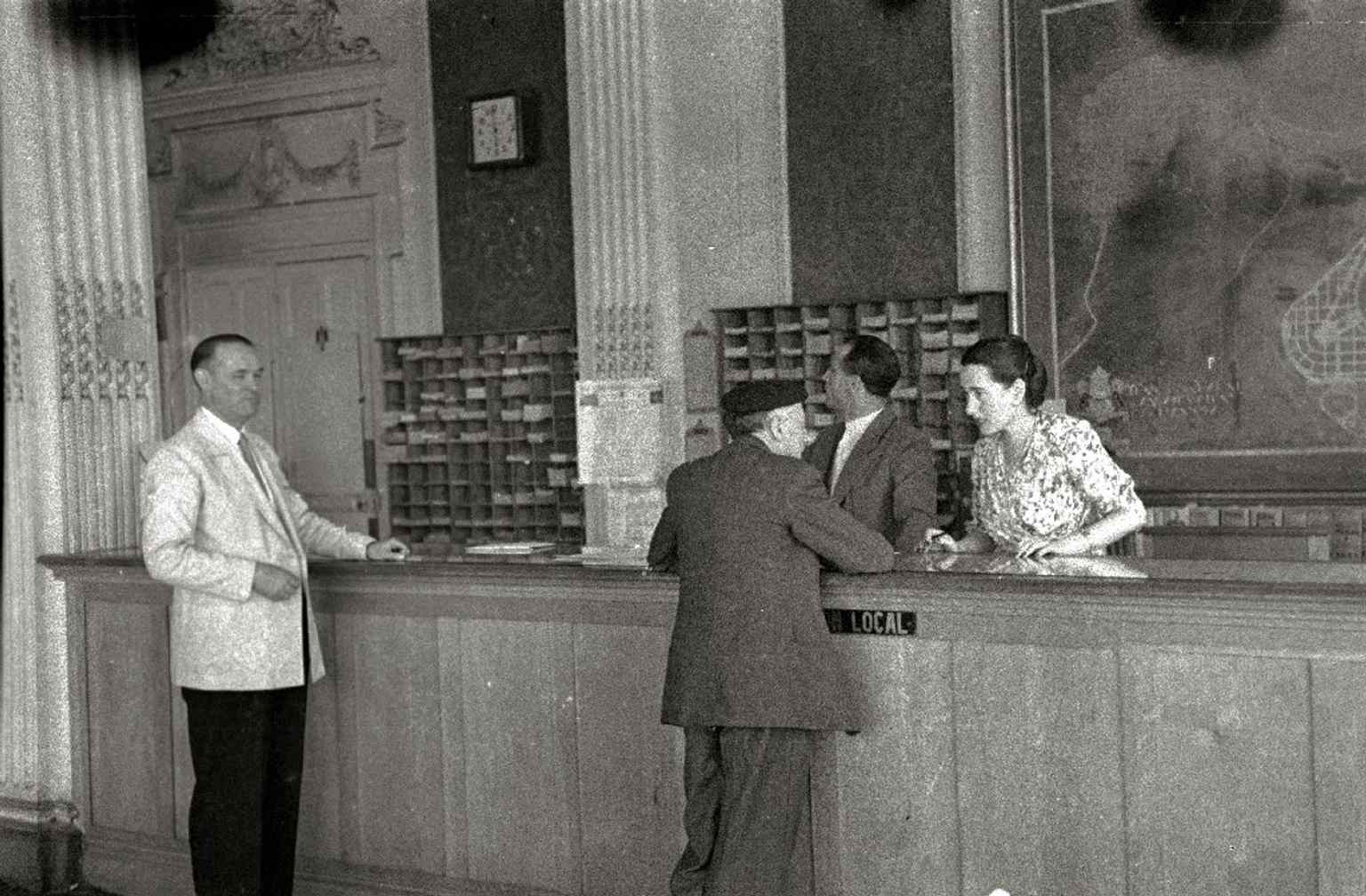
The tourism office in the theatre’s lower levels in 1947, a reminder that the building has hosted more than performances alone.Photo: Vicente Martín, Wikimedia Commons, CC BY-SA 3.0. Cropped & resized. 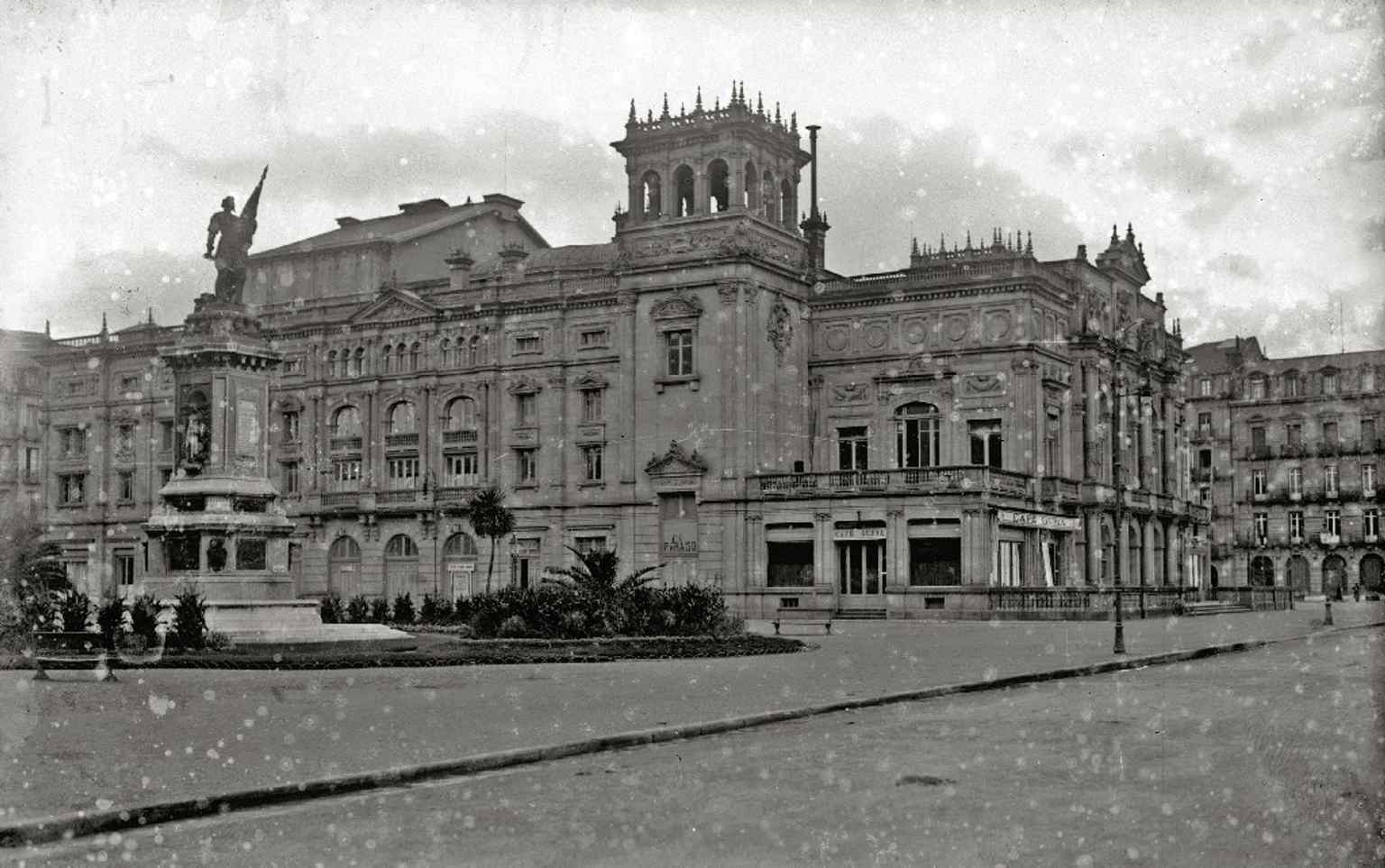
A 1921 view of the theatre in its early years, valuable for seeing the original atmosphere of the building before later changes.Photo: Ricardo Martín, Wikimedia Commons, Public domain. Cropped & resized. 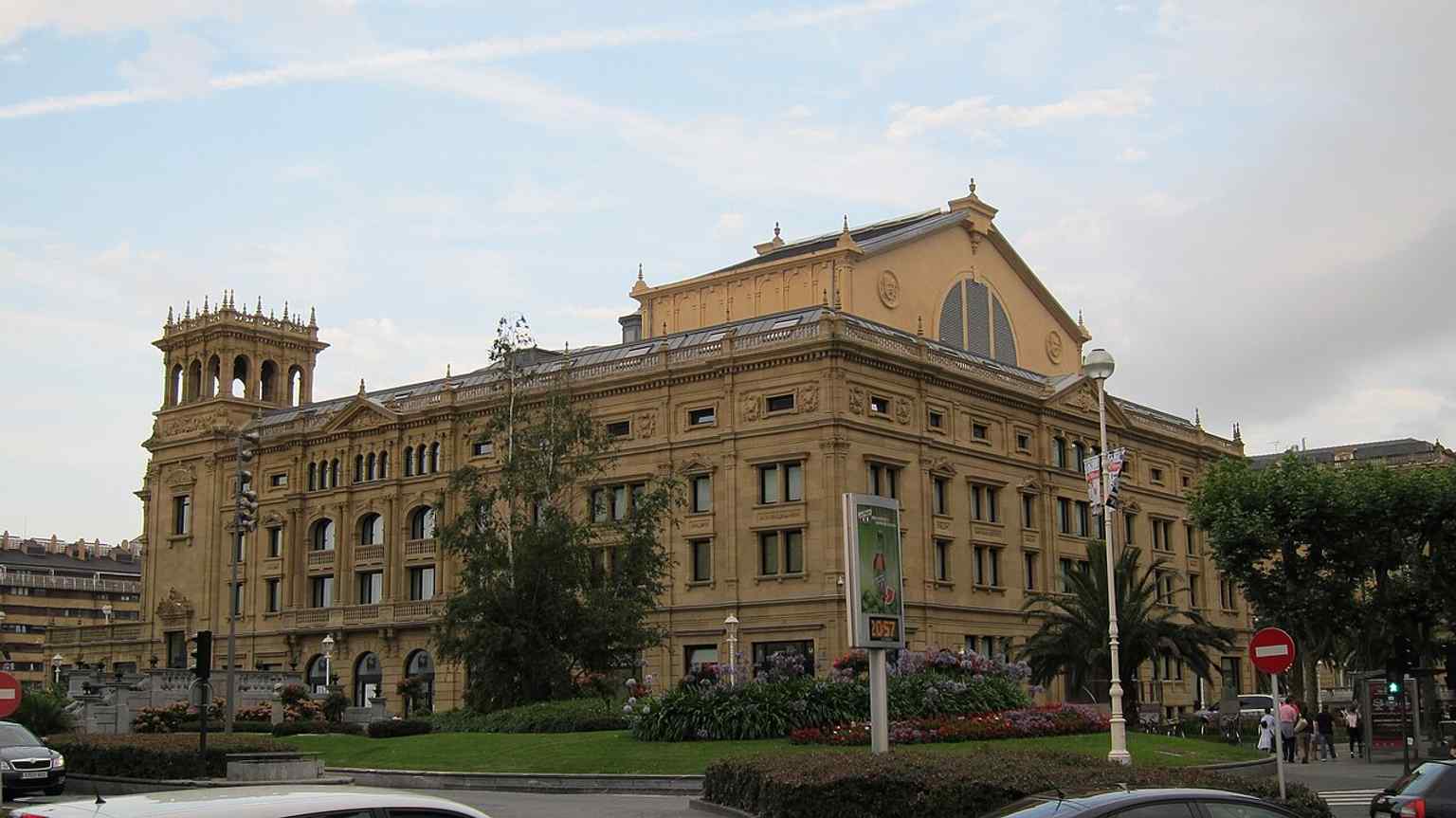
A wide panorama of the theatre and its urban setting, ideal for placing it within San Sebastián’s riverfront landscape.Photo: Carlos Cunha, Wikimedia Commons, CC BY-SA 3.0. Cropped & resized. 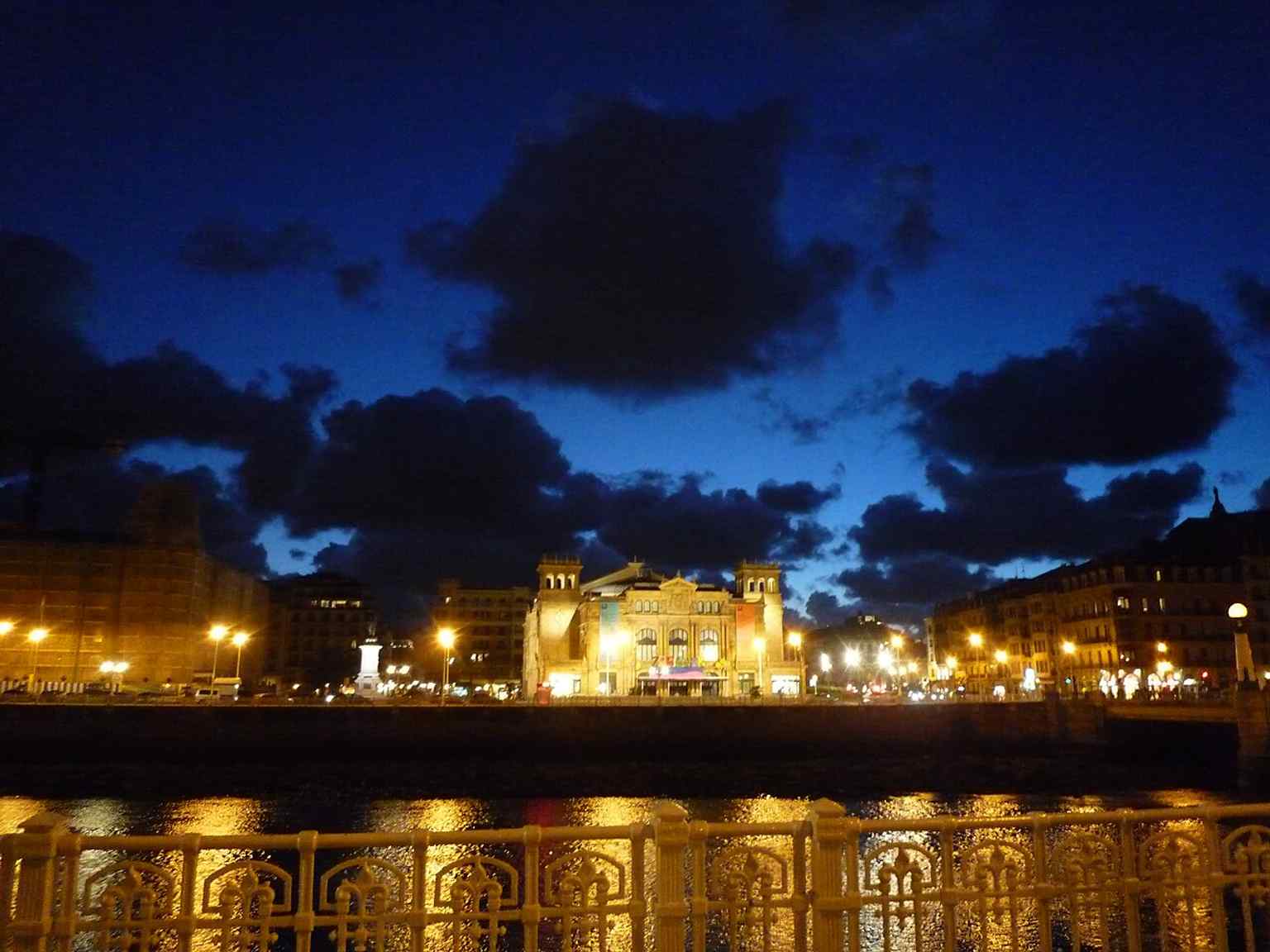
The theatre beside the Monument to Antonio de Oquendo — a strong composition that situates it in one of the city’s landmark plazas.Photo: Zarateman, Wikimedia Commons, CC0. Cropped & resized. 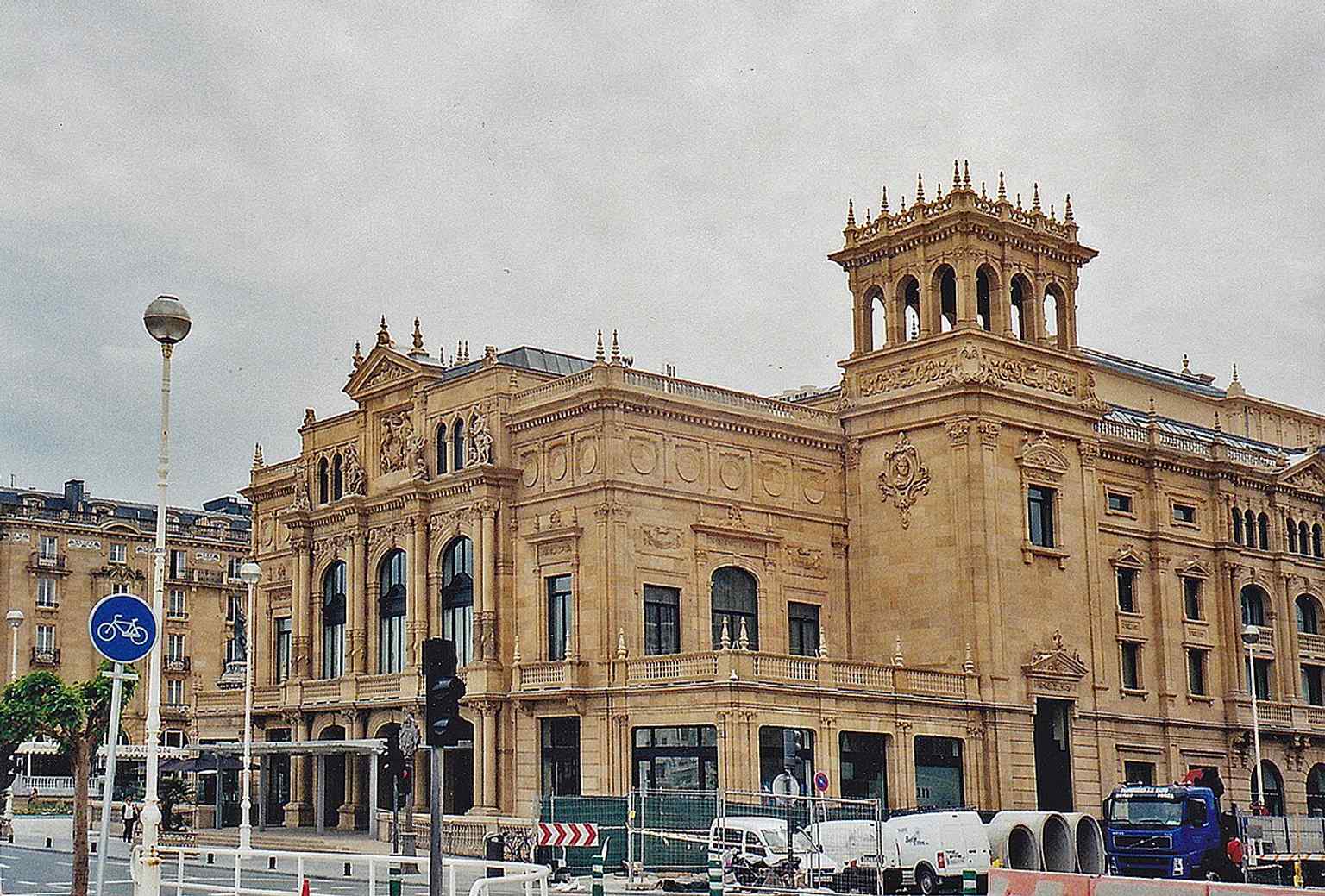
An archival scan of the theatre from an older photographic source, adding a historic documentary perspective to the collection.Photo: SchiDD, Wikimedia Commons, CC BY-SA 4.0. Cropped & resized. On your right, the Hotel María Cristina shows itself in pale stone, with a long symmetrical façade of tall windows and wrought-iron balconies, all lifted by a dark mansard roof…Read moreShow less
Open dedicated page →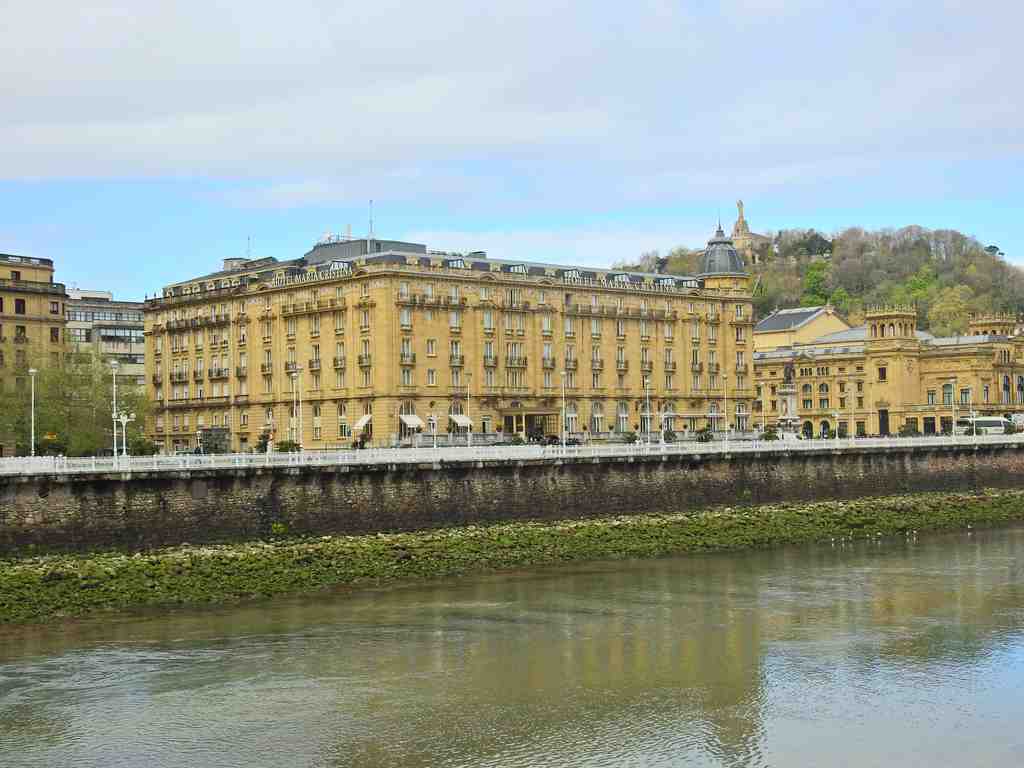
Hotel María CristinaPhoto: Rehman Abubakr, Wikimedia Commons, CC BY-SA 4.0. Cropped & resized. On your right, the Hotel María Cristina shows itself in pale stone, with a long symmetrical façade of tall windows and wrought-iron balconies, all lifted by a dark mansard roof pricked with neat dormer windows.
There is something wonderfully calculated about this building. It does not simply offer rooms. It presents San Sebastián to the world.
At the start of the twentieth century, local business leaders understood that a fashionable resort needed more than scenery. In nineteen hundred and two, a group of ambitious Donostiarras created the Sociedad de Fomento, a private development society that set out to reshape the city’s image in a very public way. Their great idea was bold and rather theatrical: build a luxury hotel and a grand theatre together, so culture and hospitality would arrive as a pair.
They studied several locations, including the edge of La Concha, then chose the gardens of Zurriola by the Urumea. The city council agreed to give up that land, but attached a condition with real foresight: after seventy years, both the theatre and the hotel would pass into municipal ownership. That is the cleverness of this place in one stroke. Private money created prestige, but the city made sure the prize would one day belong to the public.
The hotel itself came from Charles Mewes, the architect behind several Ritz hotels in Europe, including Madrid and Paris. Francisco Urcola directed the project here, while also shaping the neighbouring Victoria Eugenia Theatre. Construction on both began in nineteen hundred and nine, and in nineteen twelve Queen María Cristina attended the inauguration. From that moment, the pair announced that San Sebastián intended to stand among Europe’s refined resort cities, not as a provincial imitation, but as a confident equal.
Its early glory matched the city’s belle époque, when the royal summer presence and the disruptions of the First World War turned San Sebastián into a gathering place for the wealthy. Yet this hotel has never belonged only to luxury. In July nineteen thirty-six, at the opening of the Civil War, political violence briefly turned it into a kind of improvised stronghold. Much later, in twenty twenty, the hotel of film stars took in recovering covid patients. Even here, glamour has never entirely escaped history.
And then there is the folklore. Trotsky stayed here. So did Mata Hari, Maurice Ravel, Coco Chanel, Audrey Hepburn, Alfred Hitchcock, Steven Spielberg and Mick Jagger. During the film festival, the hotel became part of the performance itself, its closeness to the theatre allowing stars to move between bedchamber and spotlight with almost absurd ease. One of the people who knew that ritual best was Miguel Ángel Aldazábal, the doorman who began work in nineteen ninety. He opened the door to Jerry Lewis and Peter O’Toole in his first days, and over the years became nearly as familiar to festival followers as the celebrities he welcomed.
The building changed shape in the nineteen fifties, when a new wing gave it a U-shaped plan instead of its original L. In nineteen eighty-two, just as that old municipal clause intended, the hotel passed to the city council. Later renovations restored its five-star status, and in two thousand and twelve a major refurbishment refreshed the belle époque air without erasing its character.
So as you stand before this polished façade, one question lingers: did San Sebastián build a hotel for guests, or a monument designed to persuade the wider world that the city belonged on the grand European stage?
We leave that polished answer now and walk toward power in a sterner language: the Provincial Palace of Guipúzcoa.
On your left, look for the pale stone façade with its ground-floor round arches, its steep mansard roof, and the Guipúzcoa coat of arms set high at the centre. This palace tells…Read moreShow less
Open dedicated page →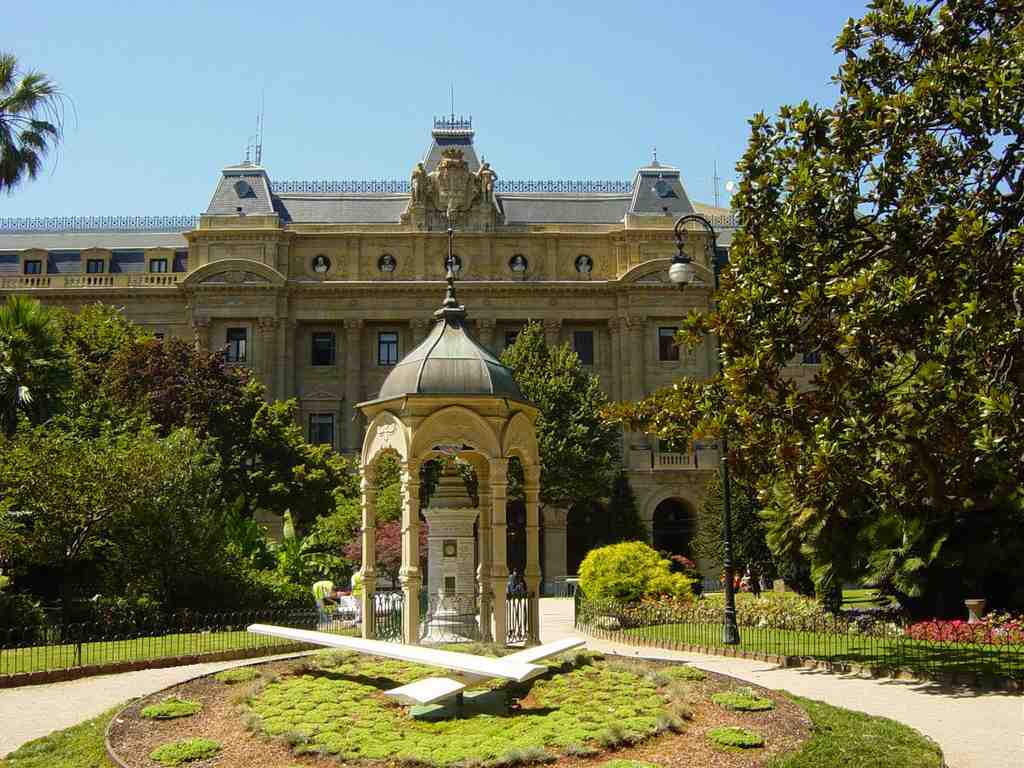
Provincial Palace of GuipúzcoaPhoto: Generalpoteito, Wikimedia Commons, Public domain. Cropped & resized. On your left, look for the pale stone façade with its ground-floor round arches, its steep mansard roof, and the Guipúzcoa coat of arms set high at the centre.
This palace tells a quieter, tougher story than the hotels and theatres nearby. After the abolition of the fueros - the old provincial rights and self-government that had shaped local identity for centuries - Guipúzcoa needed more than office space. It needed a public face that could say, with perfect calm, that the province still knew who it was.
So this building answered a political wound with architecture. In September of eighteen sixty-six, the square itself took the name Plaza de Guipúzcoa because the provincial palace stood here. Later, when the great project took shape, municipal architect José Goicoa conceived something wonderfully strategic: not one institution, but three, hidden behind a single grand front. One wing served the Treasury, another the Civil Government, and another the provincial council. A unified façade for a newly complicated relationship with the Spanish state.
And what a façade. Its style belongs to the Second Empire, the richly formal language of nineteenth-century power, and its main elevation deliberately echoes Charles Garnier’s Paris Opera. Notice the rhythm: arches below, then windows with triangular and curved pediments - those little stone crowns above the openings - then pilasters and columns lifting the eye upward. Along the attic run medallions with illustrious Guipuzcoans: Elcano, Urdaneta, Oquendo, Legazpi, Blas de Lezo. It is a roll call in stone.
Yet the palace very nearly vanished. Builders finished the first campaign in eighteen eighty-five, then fire tore through the interior and left little beyond the shell and foundations. Luis Aladrén and Adolfo Morales took on the reconstruction and, with almost archaeological patience, rebuilt the palace while preserving what they could. By eighteen ninety, it had recovered its dignity without pretending nothing had happened. That resilience is part of its meaning.
Inside, the most revealing flourish may be the great stained-glass window of Alfonso the Twelfth swearing to respect the fueros. The council commissioned painter José Etxenagusia in eighteen eighty-nine to prepare the design, then craftsmen in Munich turned it into glass for the main staircase. It was not mere decoration. It taught every visitor a lesson about memory, legitimacy, and continuity. If you glance at the image in the app, you can see that the palace still serves as a living ceremonial stage, not a frozen relic.
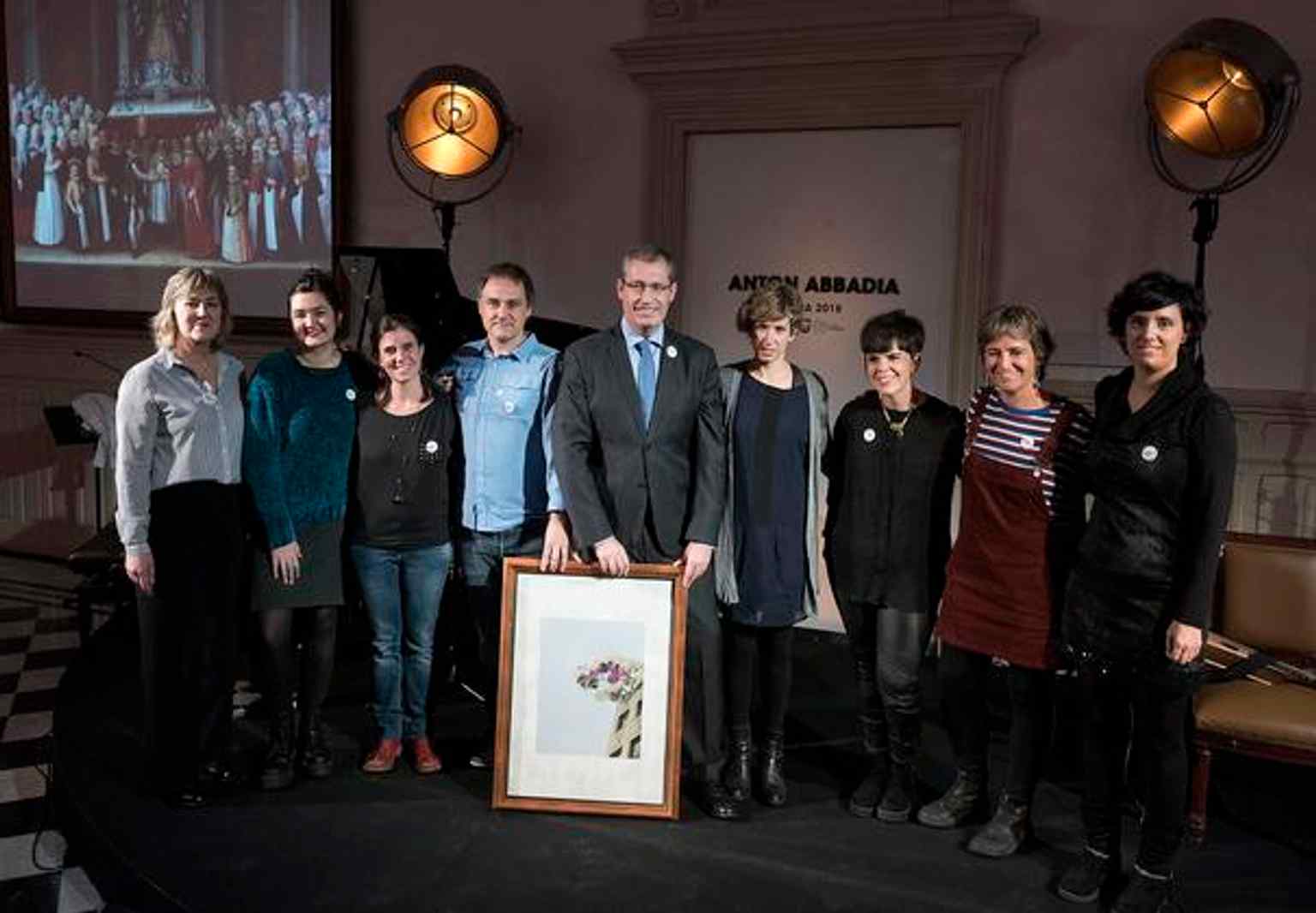
An institutional event inside the Provincial Palace of Guipúzcoa, showing the building still used for public ceremonies rather than just as a monument.Photo: Gipuzkoako Foru Aldundia, Wikimedia Commons, CC BY-SA 4.0. Cropped & resized. In a moment, we head toward Alderdi Eder Park, where official power loosens its collar and meets the promenade and the sea. If you plan to come back inside, the palace generally opens on weekdays, with shorter hours on Fridays.
Ahead of you lies a formal green garden of clipped hedges and gravel paths, shaded by rounded tamarind canopies and marked by fountains and sculpted stone details. Alderdi Eder…Read moreShow less
Open dedicated page →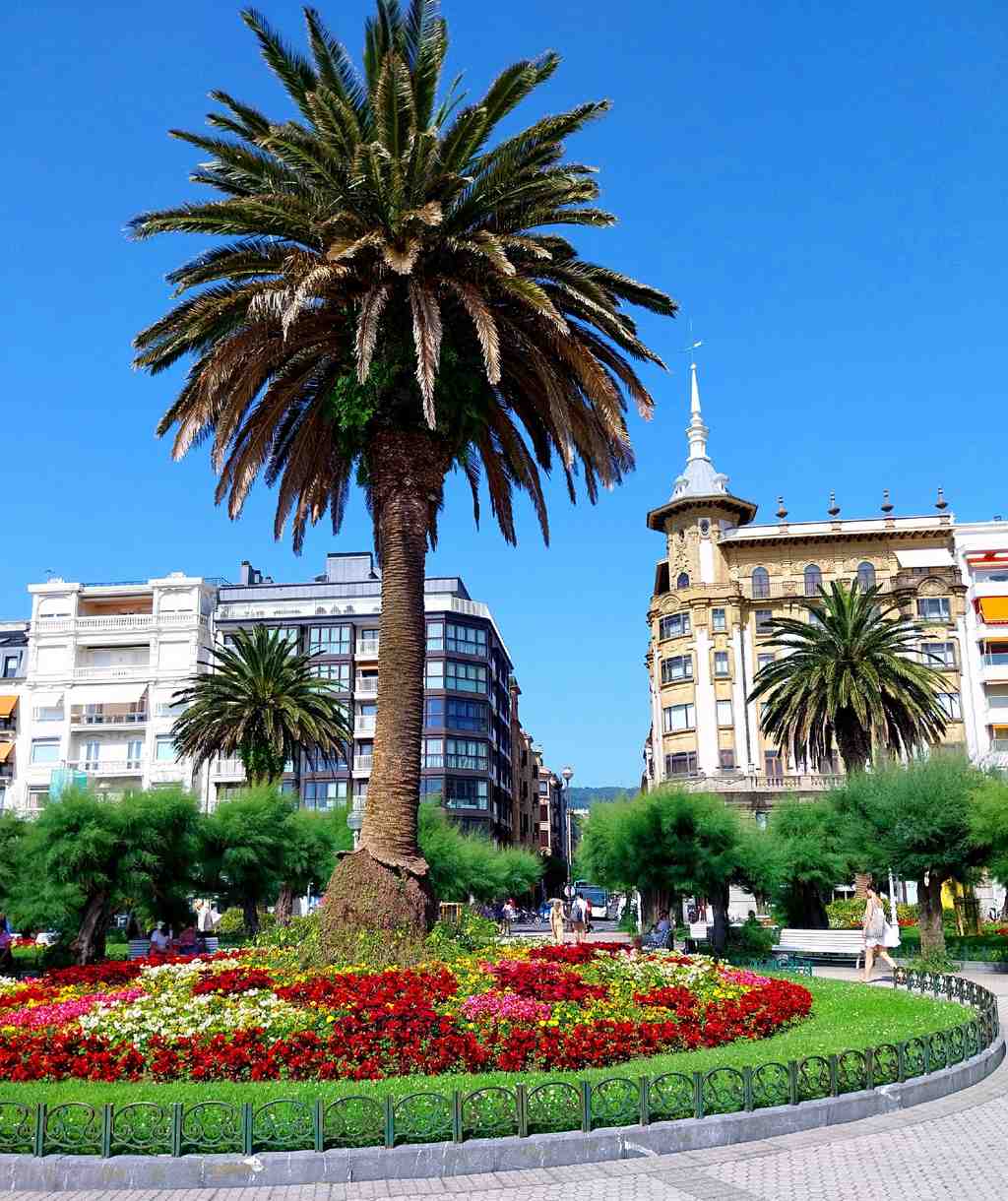
Alderdi Eder ParkPhoto: Daniel Díez Sanquirce, Wikimedia Commons, CC BY-SA 3.0. Cropped & resized. Ahead of you lies a formal green garden of clipped hedges and gravel paths, shaded by rounded tamarind canopies and marked by fountains and sculpted stone details.
Alderdi Eder means “beautiful place” in Euskera, the Basque language, and San Sebastián chose that name with unusual honesty. This is not simply a park. It is one of the city’s great front rows: to the bay, to public life, and, for a long while, to spectacle itself.
In eighteen eighty, the city took an old military drill ground beside La Concha and turned it into pleasure space. First came amusements: a circus, a velodrome for cycle racing, even a puppet theatre. Then ambition grew grander. More than three hundred shareholders, mostly local people, backed a casino on municipal land, and the young architects Luis Aladrén and Adolfo Morales de los Ríos won the design competition with a proposal called Aurrera, meaning “forward.” When the casino rose behind these gardens, the whole setting changed with it.
If you glance at the image in the app, you can see the park as it still works best: a green balcony between the promenade and the city’s grand public face.
The French gardener Pierre Ducasse gave that balcony its poise. He planted nearly a hundred trees here, along with formal flowerbeds, hedges, a pond, fountains and statues. He was designing more than decoration. He was arranging an audience chamber in the open air. During the casino years, the access terrace hosted two orchestra concerts each day, and the music drifted across every corner of the garden. Downstairs in the building, people drank coffee, read newspapers, dined, and talked. Upstairs, in the more secret rooms, they played roulette and baccarat, the card game beloved by high society, even though gambling was illegal.
Locals, with that dry Donostiarra wit, gave the casino a nickname most visitors never hear: Santa María de la Roulette. Its twin towers made it look faintly church-like, while roulette wheels spun inside. That little joke tells you everything about this place. Respectability in full view, temptation just above it.
When Primo de Rivera closed the casino in nineteen twenty-four, the twist was exquisite. The palace of private pleasure became the City Hall, and Alderdi Eder turned from fashionable forecourt into civic stage. Even so, it kept gathering the city to itself: for concerts, for festival rituals, for grief as well. In two thousand and seven, Aitor Mendizábal’s Oroimena-Memoria memorial gave the garden a new gravity, a place where remembrance joined leisure. If you look at the detail on your screen, you can feel that quieter layer.
That is the secret of Alderdi Eder: San Sebastián learned to perform itself here, then learned how to remember here too. As you head towards the Central Municipal Library, remember that Alderdi Eder never closes; the park remains open twenty-four hours.
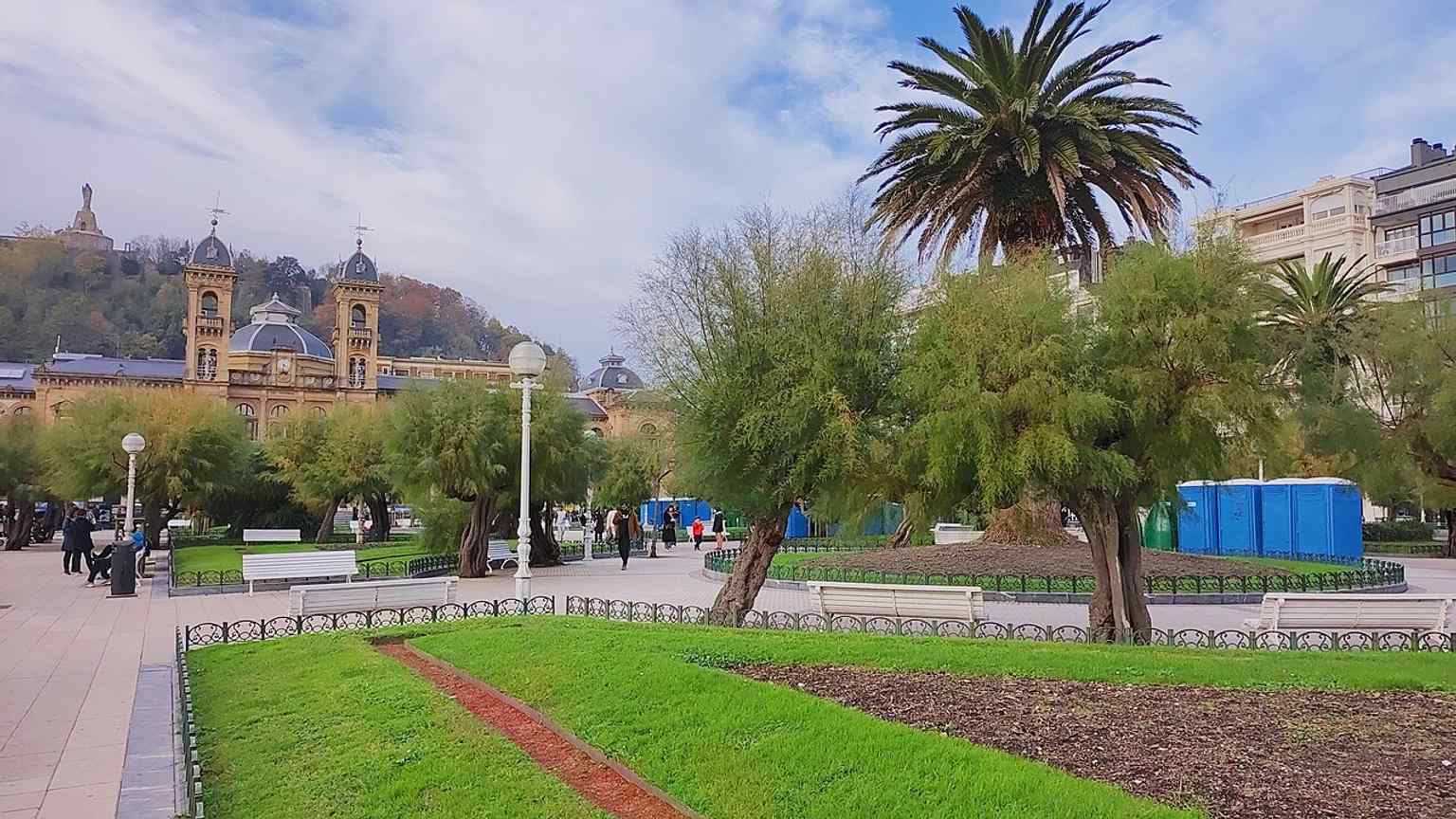
A wide view of Alderdi Eder Park, the green waterfront garden that faces San Sebastián’s City Hall and La Concha Bay.Photo: Josi, Wikimedia Commons, CC BY-SA 4.0. Cropped & resized. 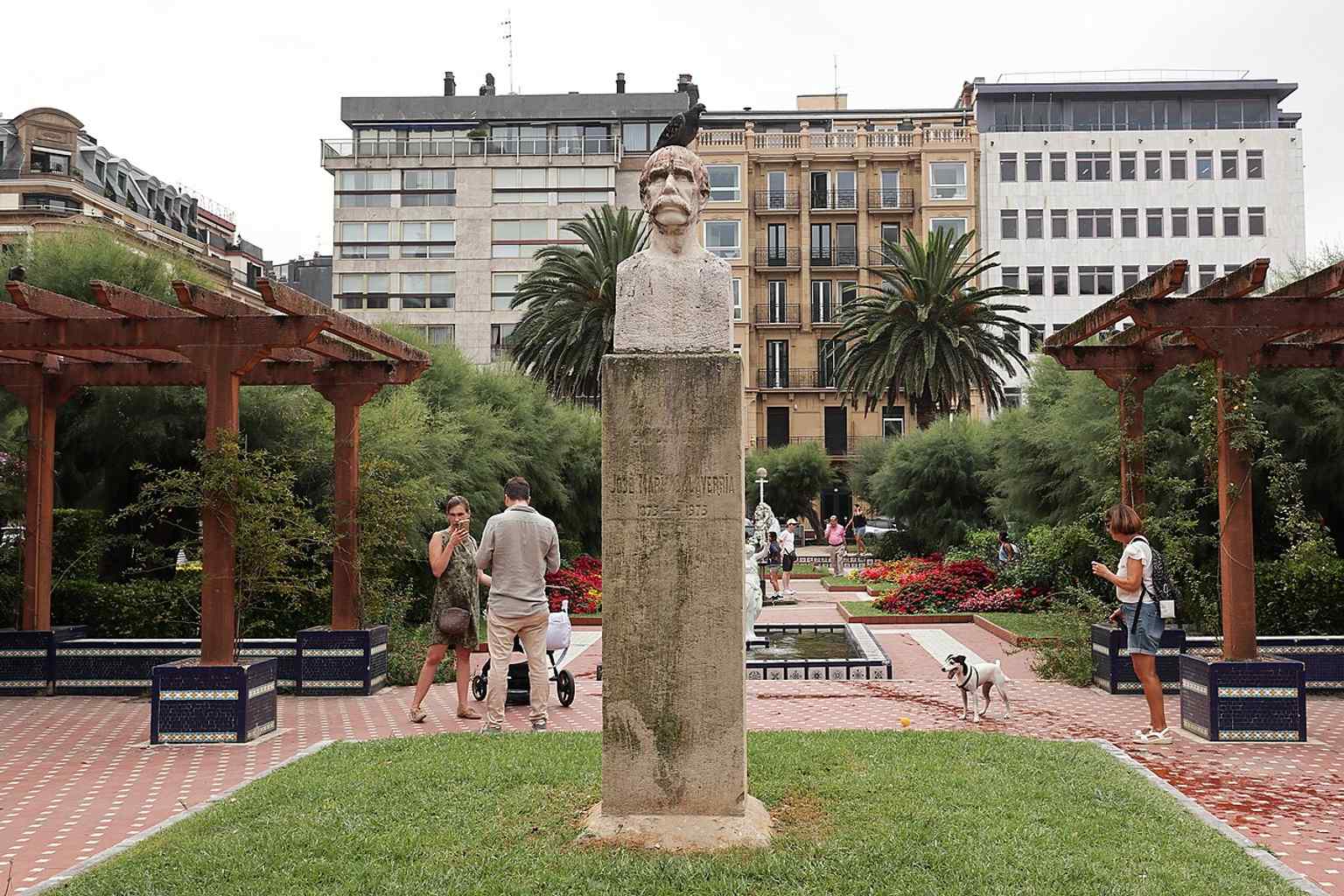
The José María Salaverría monument inside Alderdi Eder, showing the park’s role as a civic memorial space as well as a leisure garden.Photo: Javier Perez Montes, Wikimedia Commons, CC BY-SA 4.0. Cropped & resized. 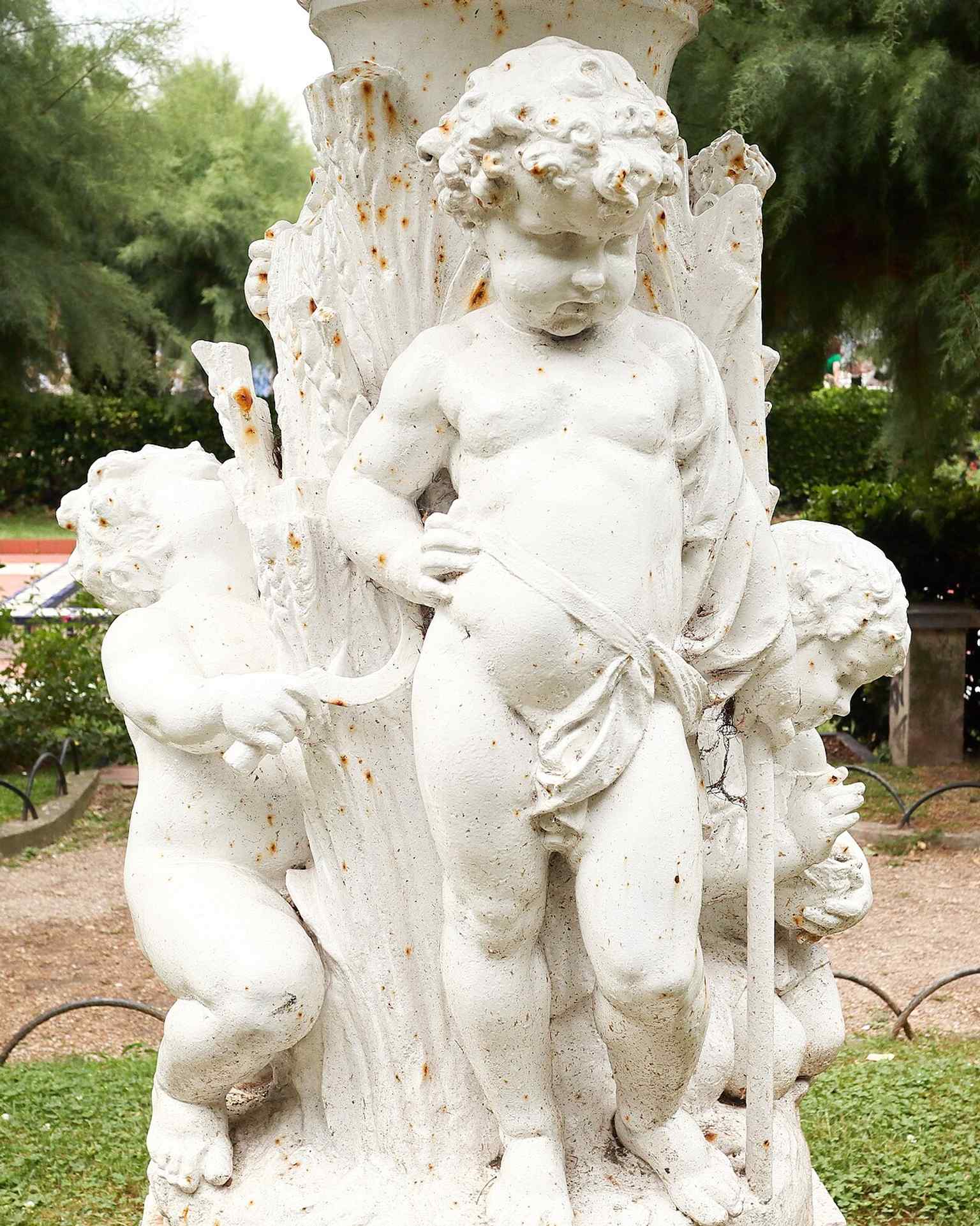
An ornamental planter in Alderdi Eder, part of the park’s flowerbeds and decorative landscaping designed to frame the promenade.Photo: Javier Perez Montes, Wikimedia Commons, CC BY-SA 4.0. Cropped & resized. 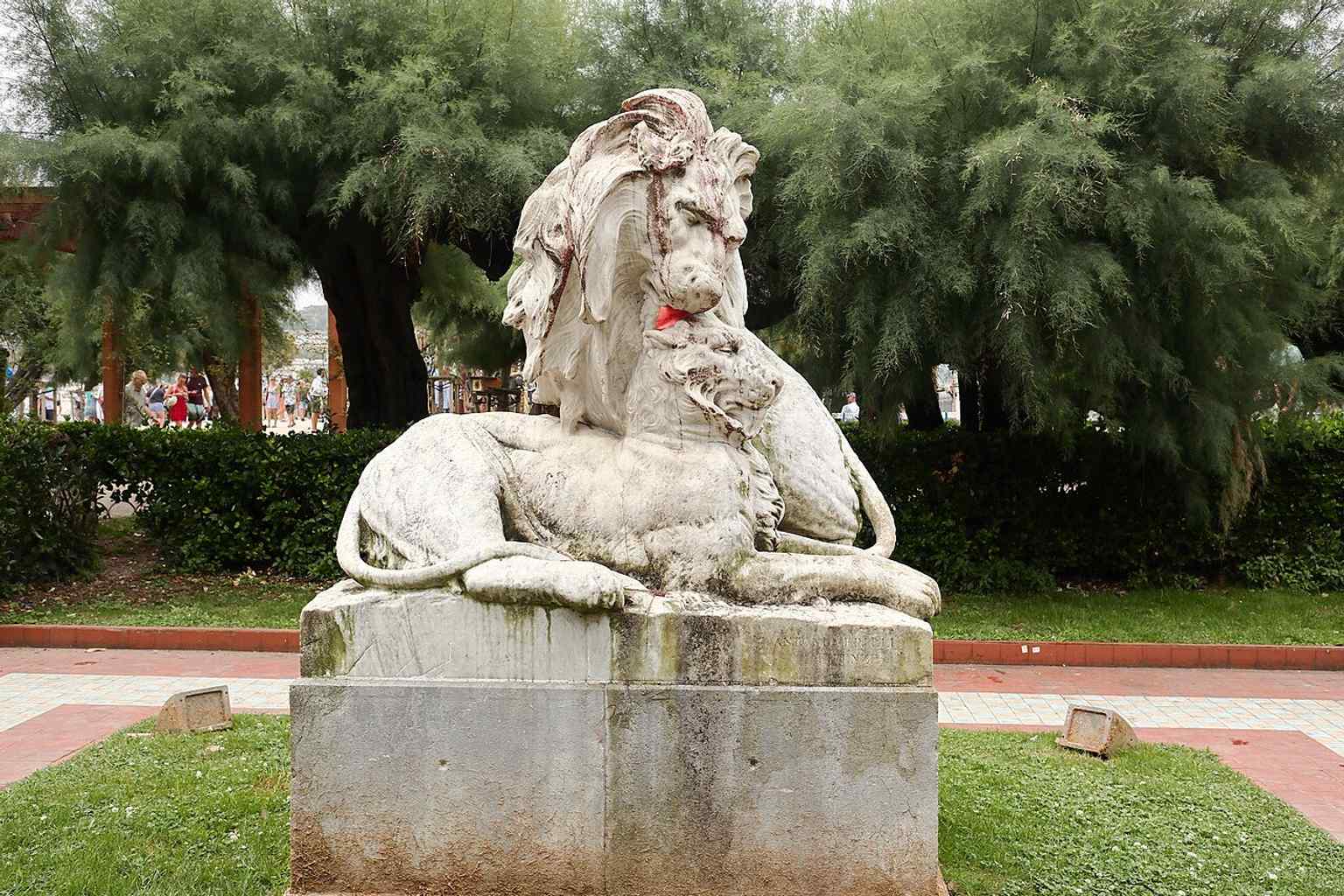
The stone lions by Antonio Frilli, one of the park’s sculptural details that add to Alderdi Eder’s classic Belle Époque atmosphere.Photo: Javier Perez Montes, Wikimedia Commons, CC BY-SA 4.0. Cropped & resized. Look for the pale stone base with deep round arches and iron-railed openings, set into the lower level of a grand civic building with a formal balustrade above. There is…Read moreShow less
Open dedicated page →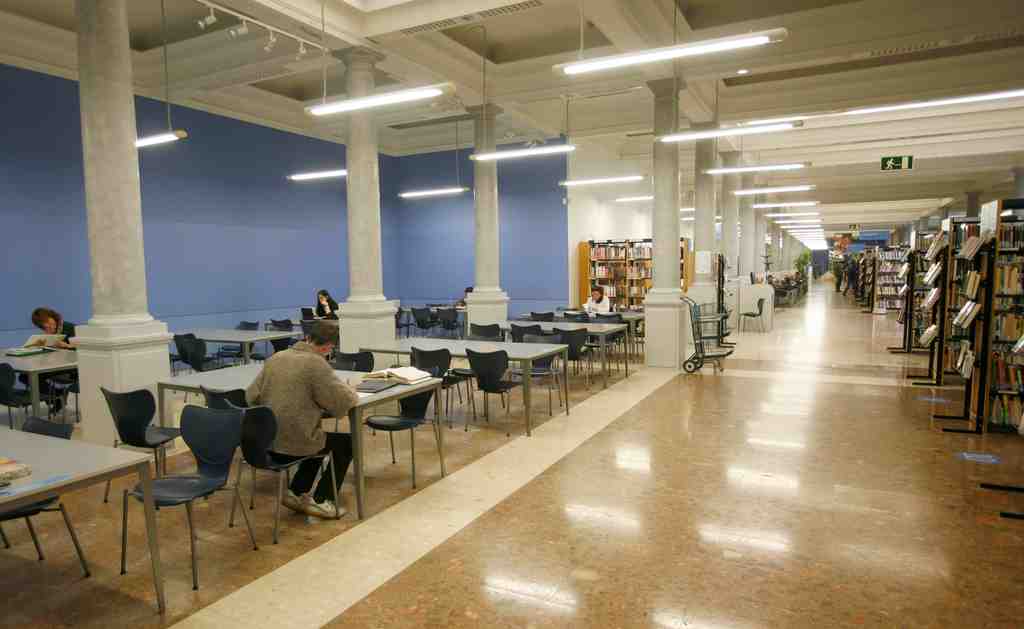
Central Municipal Library of San SebastianPhoto: Arantxa Arzamendi, Wikimedia Commons, CC BY-SA 3.0. Cropped & resized. Look for the pale stone base with deep round arches and iron-railed openings, set into the lower level of a grand civic building with a formal balustrade above.
There is something quietly moving about a library at the end of a walk like this. So many of the places in central San Sebastián perform themselves in public. This one keeps the city’s inward life: its reading, its memory, its paper trail. And even that memory does not live in one room alone. The Central Municipal Library now spreads across three homes: the adult service here in Alderdi Eder, the children’s library and documentation centre for children’s books on Fermín Calbetón, and the historic collections, activity room, technical unit and direction in the Plaza de la Constitución. One institution, several addresses, as if the city had learned to shelve itself in chapters.
Its story begins with a man named Sebastián de Miñano. In eighteen forty-four, he offered the city his own collection of books. It was a generous, almost tender gesture. Then he died the following year, and his library project did not come to life. The idea had to wait. At last, in eighteen seventy-four, San Sebastián opened the Municipal Library in the old institute building at Andía and Garibai. The first shelves grew from donations, and the place began, quite literally, as a civic act of trust.
The figure I would keep in mind here is José Manterola. He took over in eighteen seventy-six. He was a writer, a teacher, and a man marked by conviction: the authorities removed him from his teaching post after he protested the law that abolished the Basque fueros, the old regional rights. He turned that loss into energy. In the library, he built the collection with fierce purpose and created what he called the Sección especial bascongada, a special section bringing together any work, in any language, that helped people study the Basque country. It gave the library a distinct soul. This would not be merely a room of books. It would be a place where a region could recognise itself.
The library kept moving, but it never lost that task. It lived in the School of Arts and Crafts on Urdaneta, then in San Telmo, then in nineteen fifty-one in the former Town Hall on the Plaza de la Constitución. Under director Rufino Mendiola, it also became guardian of something fragile: local newspapers. He saw that San Sebastián’s old press survived here almost alone, and he created the hemeroteca, the newspaper and magazine archive, so those voices would not vanish. Daily life, arguments, notices, scandals, theatre listings, griefs, triumphs: the city speaking in its own hurried ink.
Then the library changed again. In nineteen eighty-six it began lending books for ordinary home reading, not only research. The children’s section moved to larger quarters in nineteen ninety-four. The adult service came here in nineteen ninety-nine. More recently, the collections stepped into digital life, first online and then through DonostiaTEKA, so memory could travel without leaving the shelf behind.
That, perhaps, is one of this city’s finest habits: it lets institutions survive by changing their rooms, and lets buildings survive by changing their meaning. In a moment, we’ll make the brief walk to San Sebastián City Council, where that quiet transformation becomes gloriously visible. If you wish to return, the adult library generally opens Monday to Friday from ten in the morning to half past eight, and on Saturdays from ten to two and from half past four to eight.
On your left, look for the pale stone façade with its broad, symmetrical front, two towered corners, and a formal central balcony that crowns the old casino turned city…Read moreShow less
Open dedicated page →
San Sebastian City CouncilPhoto: User:Luiispaeez, Wikimedia Commons, Public domain. Cropped & resized. On your left, look for the pale stone façade with its broad, symmetrical front, two towered corners, and a formal central balcony that crowns the old casino turned city hall.
This building tells San Sebastián’s secret in plain sight. It governs the city now, but it began as a stage for pleasure. Builders started it in eighteen eighty-two in the Alderdi Eder gardens, and they opened it on the first of July, eighteen eighty-seven, with Queen María Cristina herself attending for the first time. That entrance mattered. The city was presenting itself to power, to fashion, to Europe.
At first, this was the casino, and people nicknamed it Santa María de la Roulette. The joke hung on those two towers, which cheekily echoed the towers of the Basilica of Santa María del Coro. Inside, money moved with astonishing speed. The profits from gambling did more than enrich shareholders; they helped pay for the city’s modern face, including the Paseo de la Concha, the Paseo Nuevo, and the asylum of La Misericordia. There was, however, a delicious hypocrisy at the heart of it all: the gaming rooms upstairs admitted foreigners only, supposedly to protect local morals, while many locals found ways to laugh at that rule and slip around it.
If you glance at your screen, the older casino identity comes into focus beautifully there. It helps you see this façade not as a sober office block, but as a place designed to dazzle.
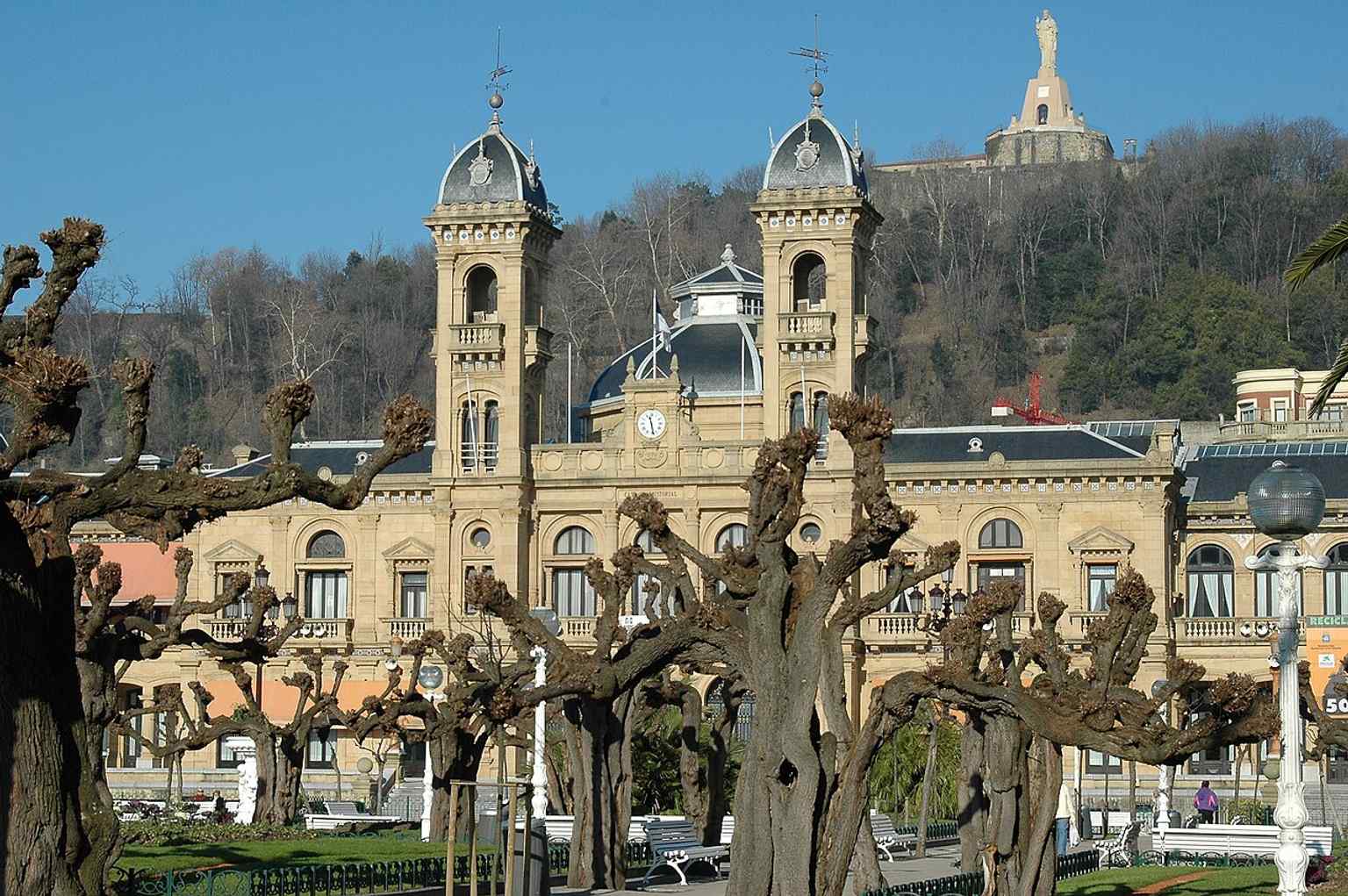
The historic façade of the old Casino of San Sebastián, the landmark’s original Belle Époque role before gambling was banned in 1924.Photo: Enfo, Wikimedia Commons, CC BY-SA 3.0 es. Cropped & resized. Then came the First World War, and the glamour sharpened into intrigue. Spain stayed neutral, so San Sebastián filled with refugees, aristocrats, and intelligence agents. The casino became, in effect, a nest of spies. The most famous visitor was Mata Hari, the dancer and spy, who lodged at the nearby Hotel de Londres and came here often. Local memory insists that amid these salons and glasses raised in conversation, she carried on a romance with the journalist Enrique Gómez Carrillo while whispers about the European front drifted between the dance floor and the card tables.
The performance could not last. Gambling was banned in nineteen twenty-four, and the casino closed. After that, the building passed through grim reinventions: it served as a hospital for wounded soldiers from the Rif War, and in July of nineteen thirty-six, at the outbreak of the Civil War, rebel troops and Carlist requetés barricaded themselves inside. The fighting was fierce enough that chroniclers say bullet scars could still be traced on the Boulevard side.
Then came the most revealing transformation of all. In nineteen forty-five, the city hall moved here from the building that now houses the municipal library in the old town. Luis Jesús Arizmendi, the municipal architect and, wonderfully, also the city’s fire chief, reshaped the old casino with a practical but respectful hand. The grand ballroom, where the Belle Époque had danced waltzes and foxtrots, became the council chamber where ordinances are debated. If you open the second image, you can feel that double life almost at once.
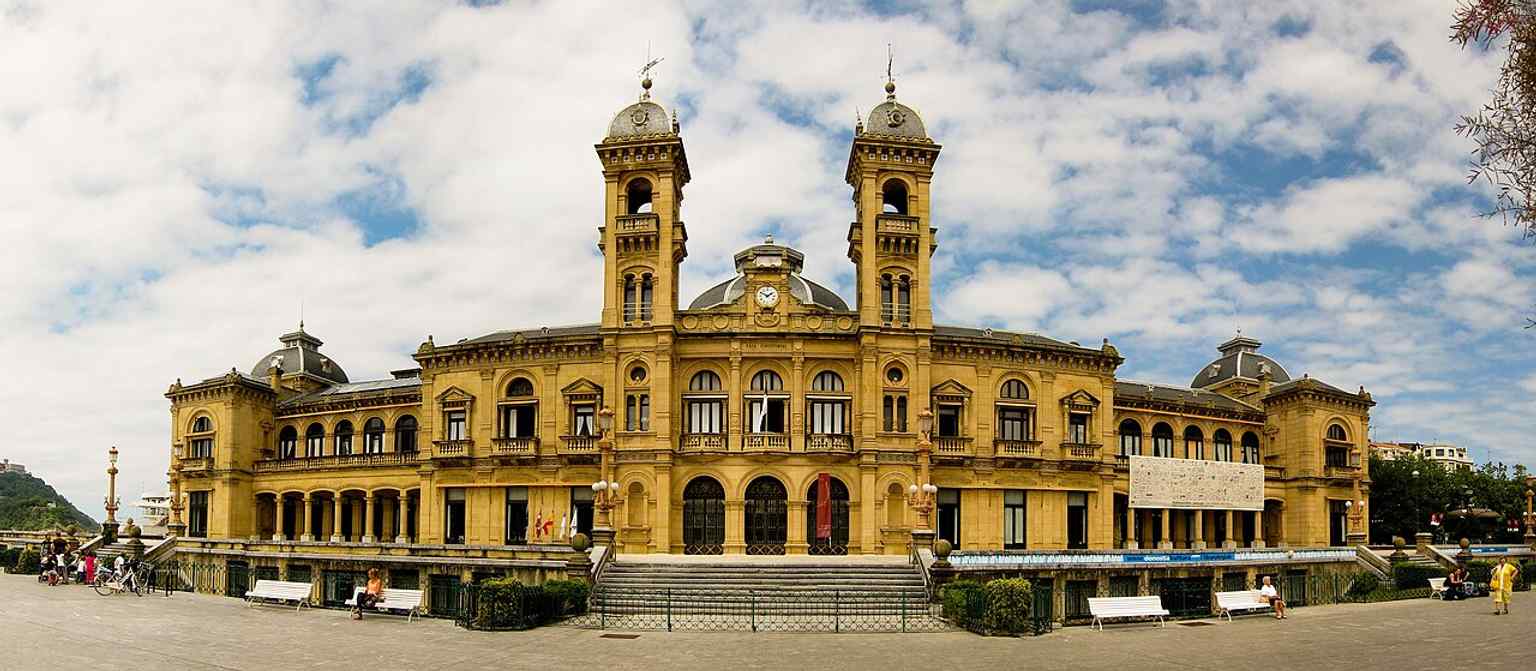
This view highlights the building’s identity as the former casino that became the city’s seat of government after its 1945 transformation.Photo: Antonio de la Mano, Wikimedia Commons, CC BY-SA 3.0 es. Cropped & resized. Even in democracy, this building kept absorbing the city’s joys and wounds. After the return of democratic elections in nineteen seventy-nine, mayors and coalitions changed, arguments sharpened, and public life found new rhythms here. One absence cut especially deep: after E-T-A murdered deputy mayor Gregorio Ordóñez in nineteen ninety-five, his empty chair in the chamber stood for years as a sign of grief and division.
And so this façade resolves something essential about San Sebastián. Here, elegance did not vanish; it learned responsibility. A house of spectacle became a house of decisions, and the bay beside it kept watch through every costume change. The city never stopped changing costumes, but it remained recognizably itself.
If you’d like to go inside on another day, city hall usually opens Monday to Friday from nine in the morning until two in the afternoon.
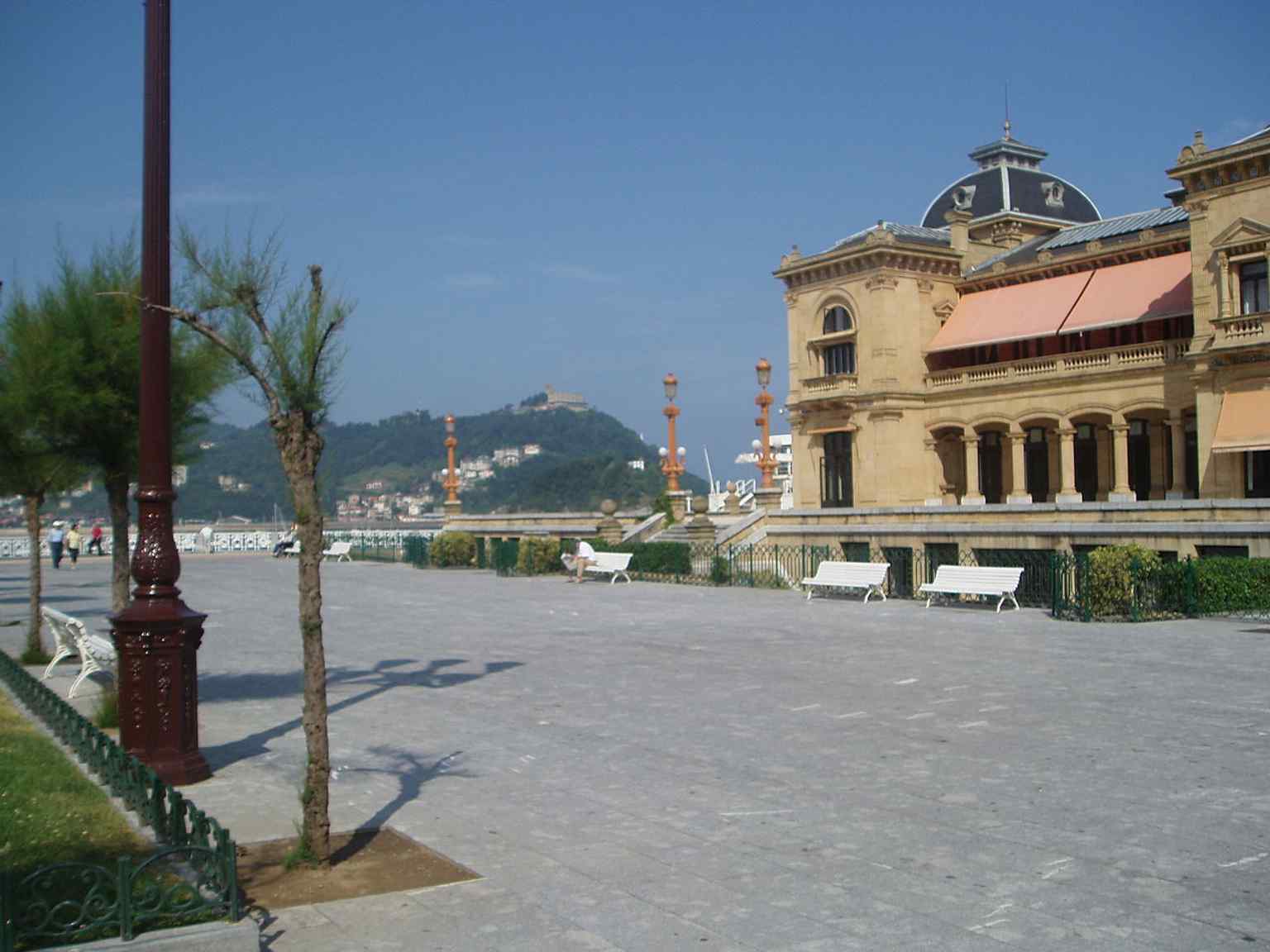
A classic view linking the City Hall to La Concha Bay and Monte Igueldo, showing its prime waterfront setting next to the old casino site.Photo: Daniel Díez Sanquirce, Wikimedia Commons, CC BY-SA 3.0. Cropped & resized. 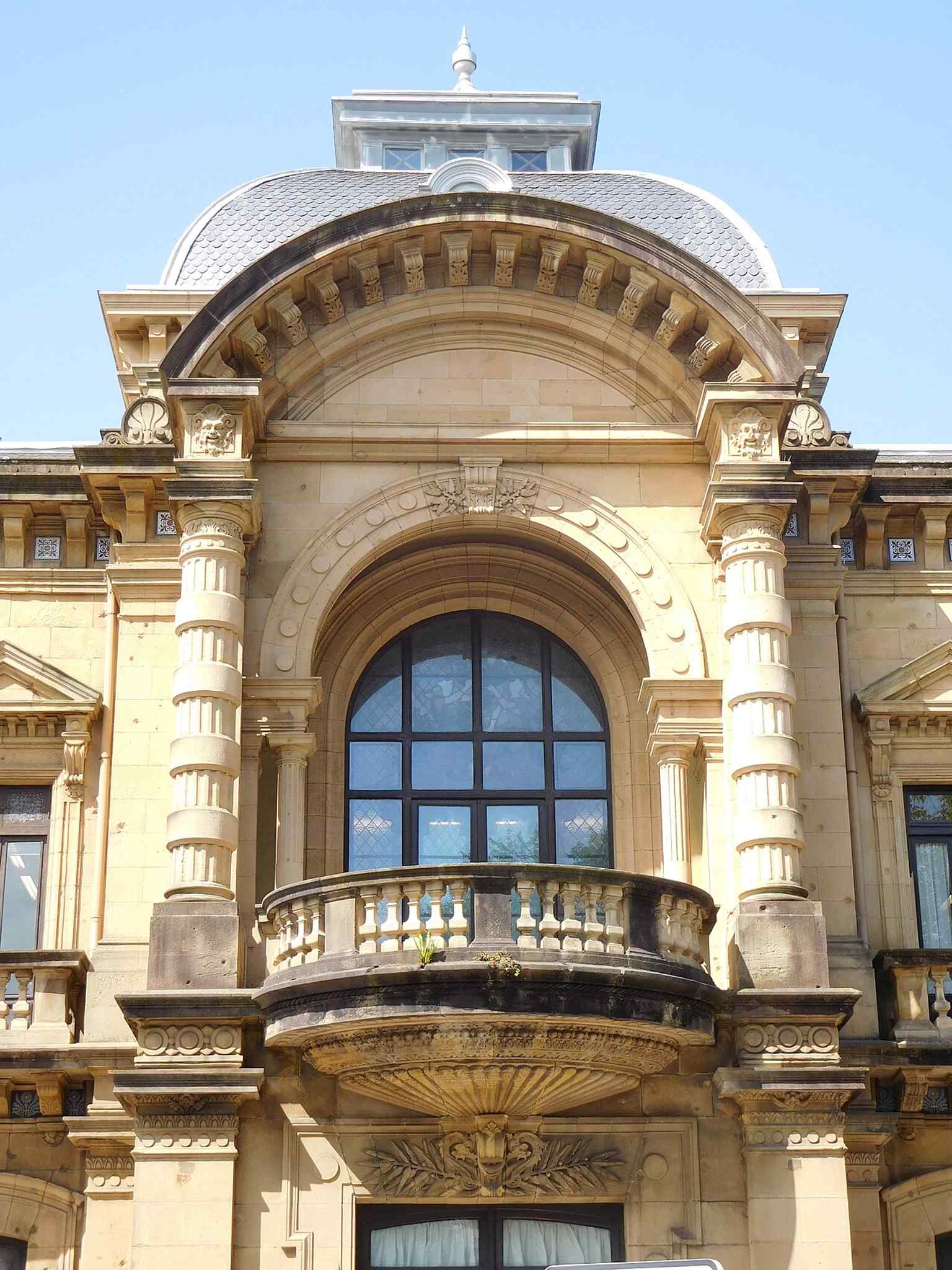
A balcony detail on the town hall’s northeast side, useful for showing the richly ornamented architecture of the former casino.Photo: JiriMatejicek, Wikimedia Commons, CC BY-SA 3.0. Cropped & resized. 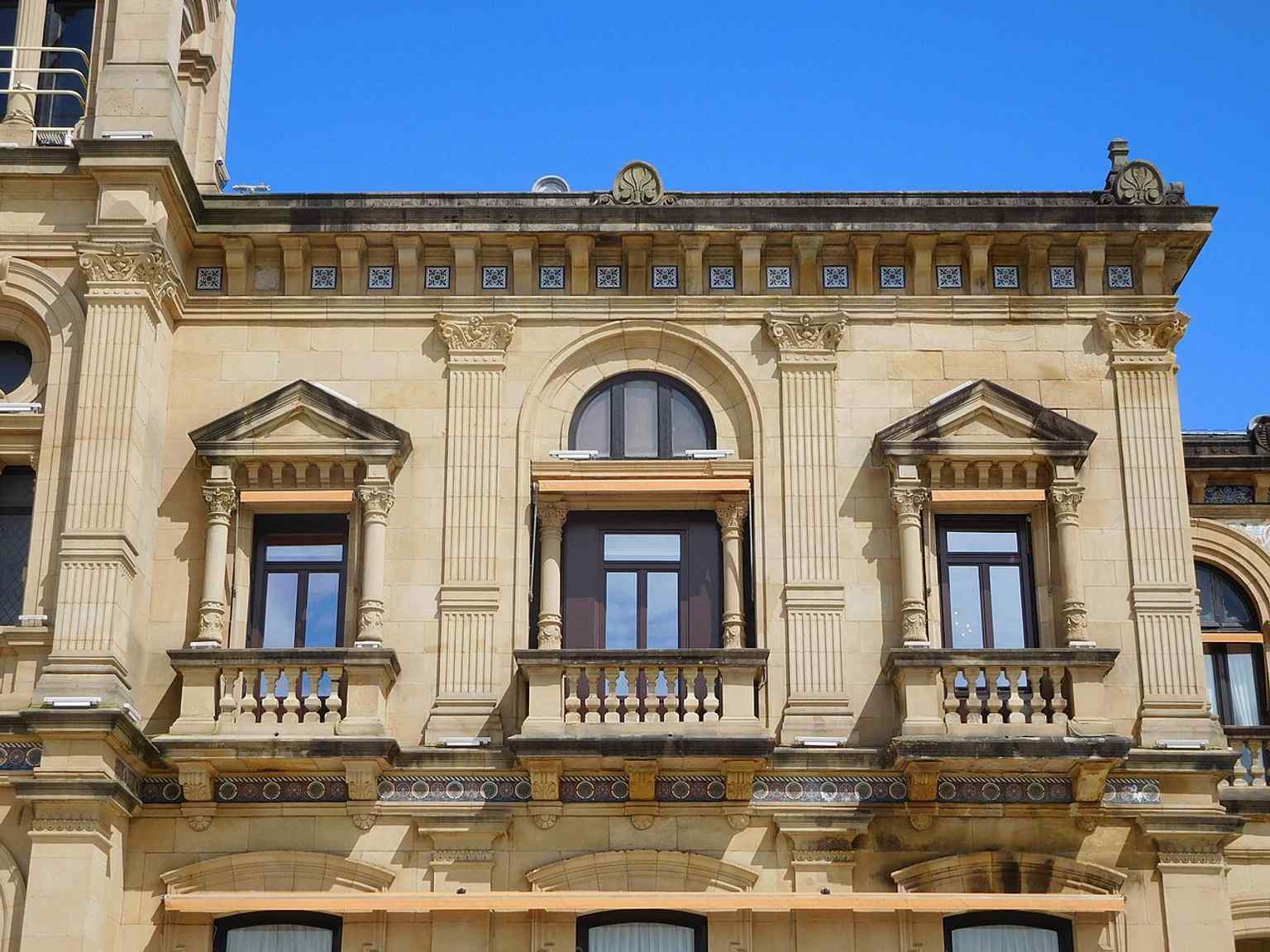
A sharp 2018 view of the southeastern façade, ideal for showing the building’s neo-Renaissance/eclectic design in detail.Photo: JiriMatejicek, Wikimedia Commons, CC BY-SA 3.0. Cropped & resized. 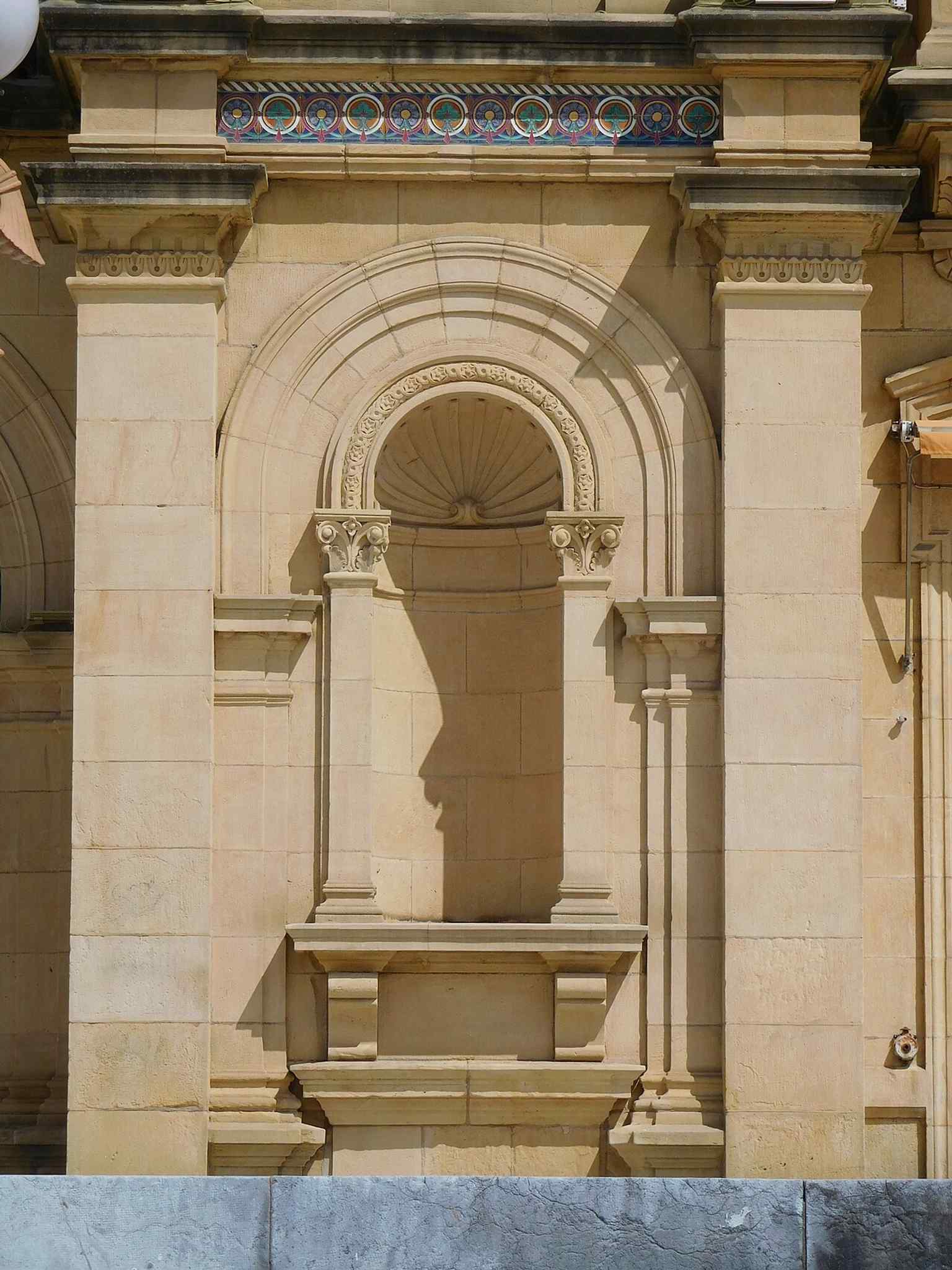
Close-up façade ornamentation from 2018, capturing the textured stonework of the old casino turned municipal headquarters.Photo: JiriMatejicek, Wikimedia Commons, CC BY-SA 3.0. Cropped & resized.


Frequently asked questions
How do I start the tour?
After purchase, download the AudaTours app and enter your redemption code. The tour will be ready to start immediately - just tap play and follow the GPS-guided route.
Do I need internet during the tour?
No! Download the tour before you start and enjoy it fully offline. Only the chat feature requires internet. We recommend downloading on WiFi to save mobile data.
Is this a guided group tour?
No - this is a self-guided audio tour. You explore independently at your own pace, with audio narration playing through your phone. No tour guide, no group, no schedule.
How long does the tour take?
Most tours take 60–90 minutes to complete, but you control the pace entirely. Pause, skip stops, or take breaks whenever you want.
What if I can't finish the tour today?
No problem! Tours have lifetime access. Pause and resume whenever you like - tomorrow, next week, or next year. Your progress is saved.
What languages are available?
All tours are available in 50+ languages. Select your preferred language when redeeming your code. Note: language cannot be changed after tour generation.
Where do I access the tour after purchase?
Download the free AudaTours app from the App Store or Google Play. Enter your redemption code (sent via email) and the tour will appear in your library, ready to download and start.
If you don't enjoy the tour, we'll refund your purchase. Contact us at [email protected]
Checkout securely with 





%20-%20Fondo%20Car-Kutxa%20Fototeka.jpg)
%20-%20Fondo%20Car-Kutxa%20Fototeka.jpg)


%20-%20Fondo%20Car-Kutxa%20Fototeka.jpg)

%20-%20Fondo%20Mar%C3%ADn-Kutxa%20Fototeka.jpg)
%20-%20Fondo%20Car-Kutxa%20Fototeka.jpg)

.%20San%20Sebasti%C3%A1n.jpg)
.%20%C3%81bside.jpg)


.jpg)
.jpg)
%20-%20Fondo%20Car-Kutxa%20Fototeka.jpg)


%20-%20Fondo%20Mar%C3%ADn-Kutxa%20Fototeka.jpg)
%20-%20Fondo%20Car-Kutxa%20Fototeka.jpg)
%20-%20Fondo%20Car-Kutxa%20Fototeka.jpg)
%20-%20Fondo%20Car-Kutxa%20Fototeka.jpg)


%20de%20San%20Sebasti%C3%A1n.jpg)


