
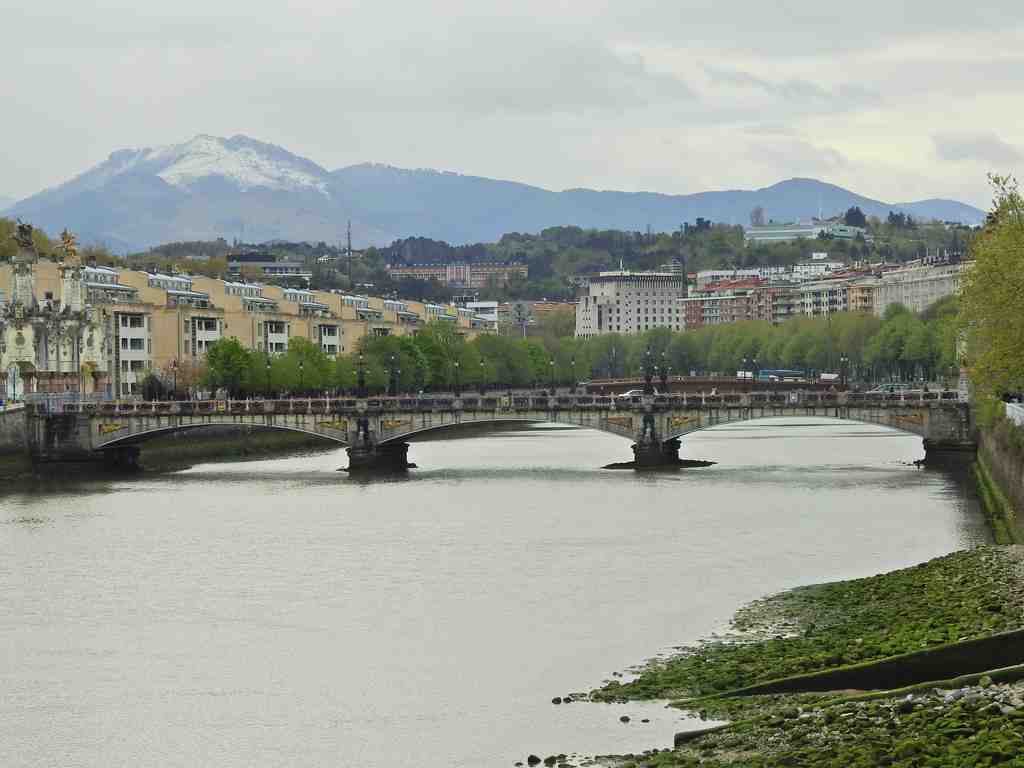
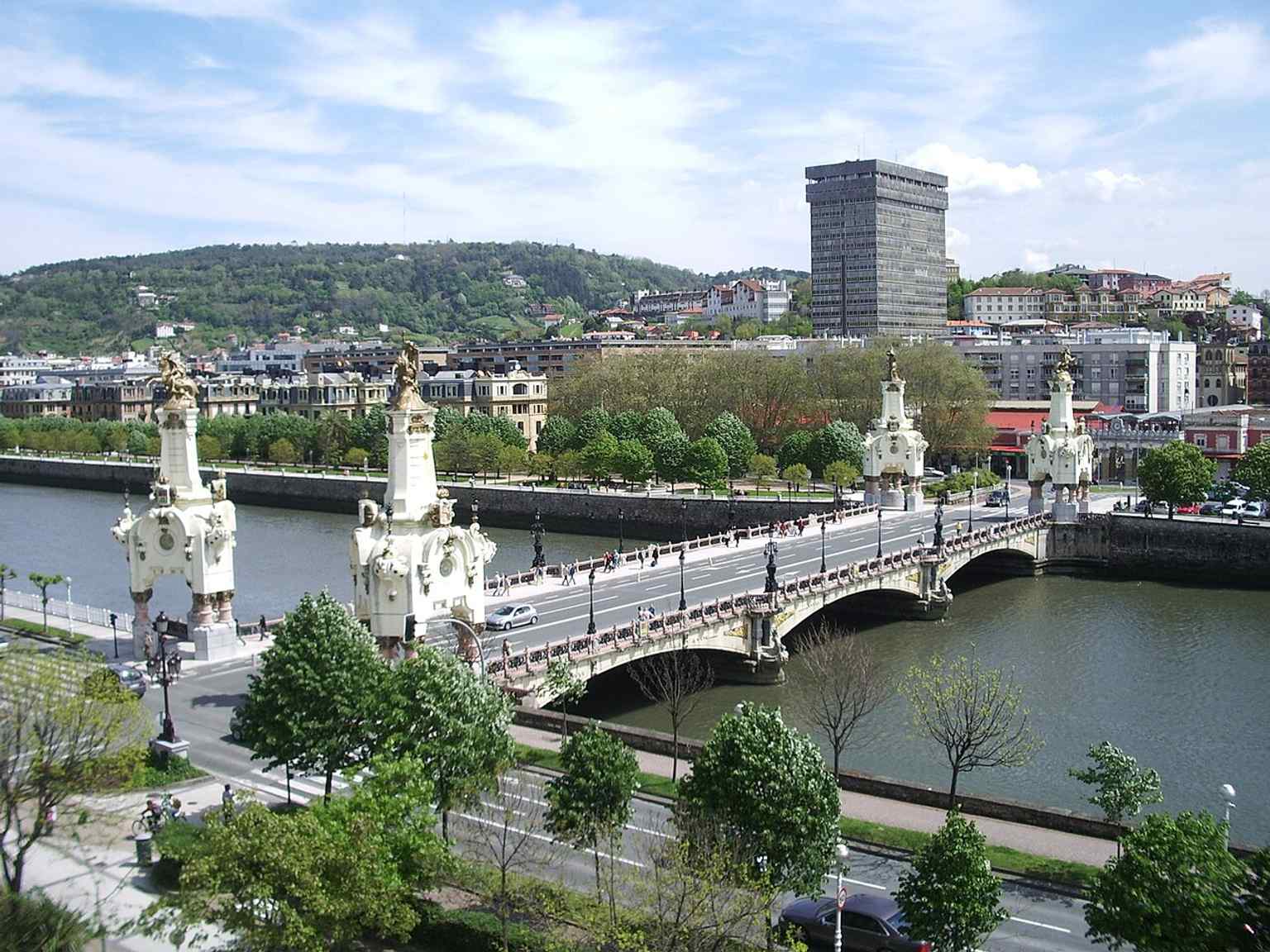
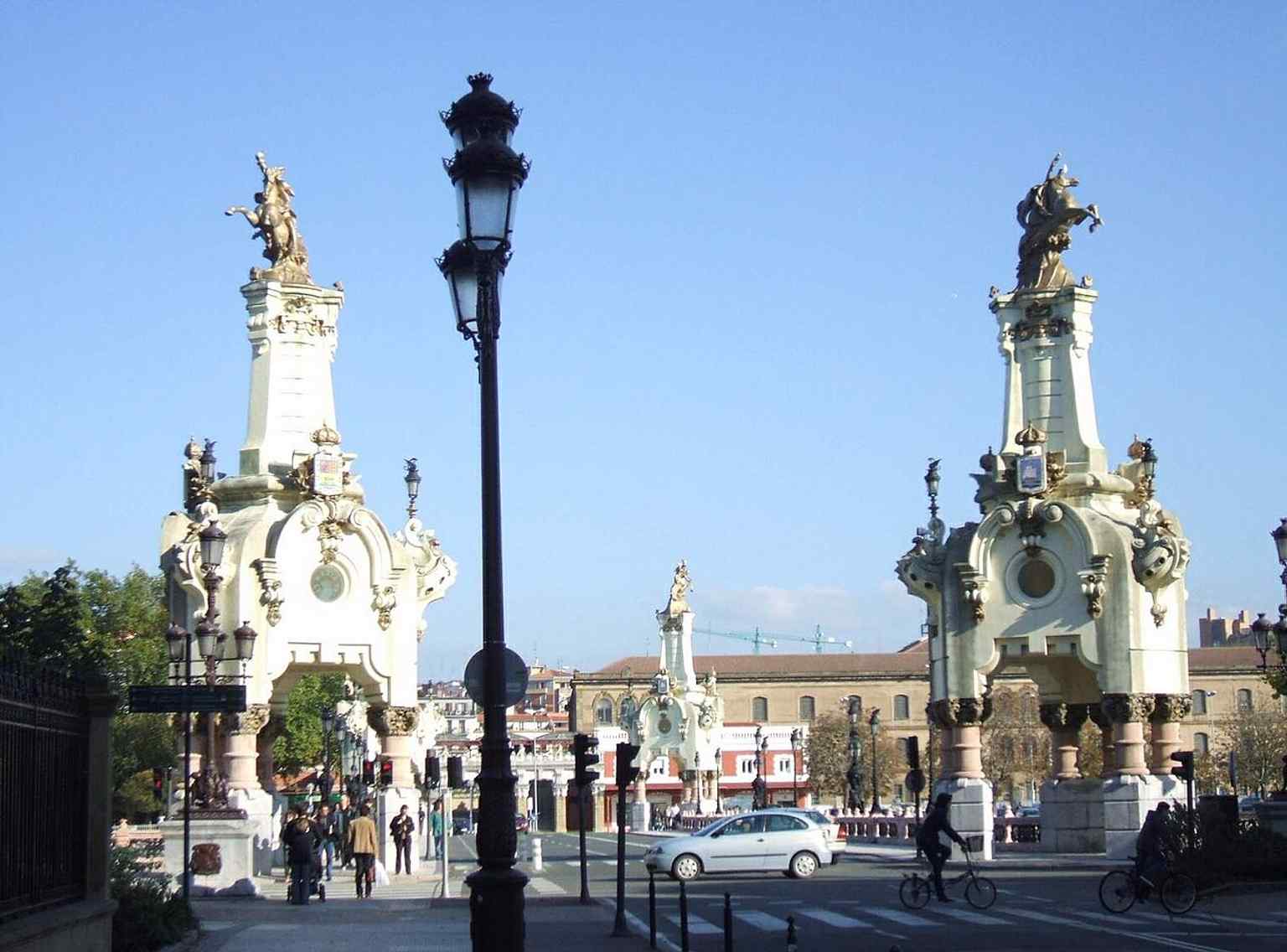
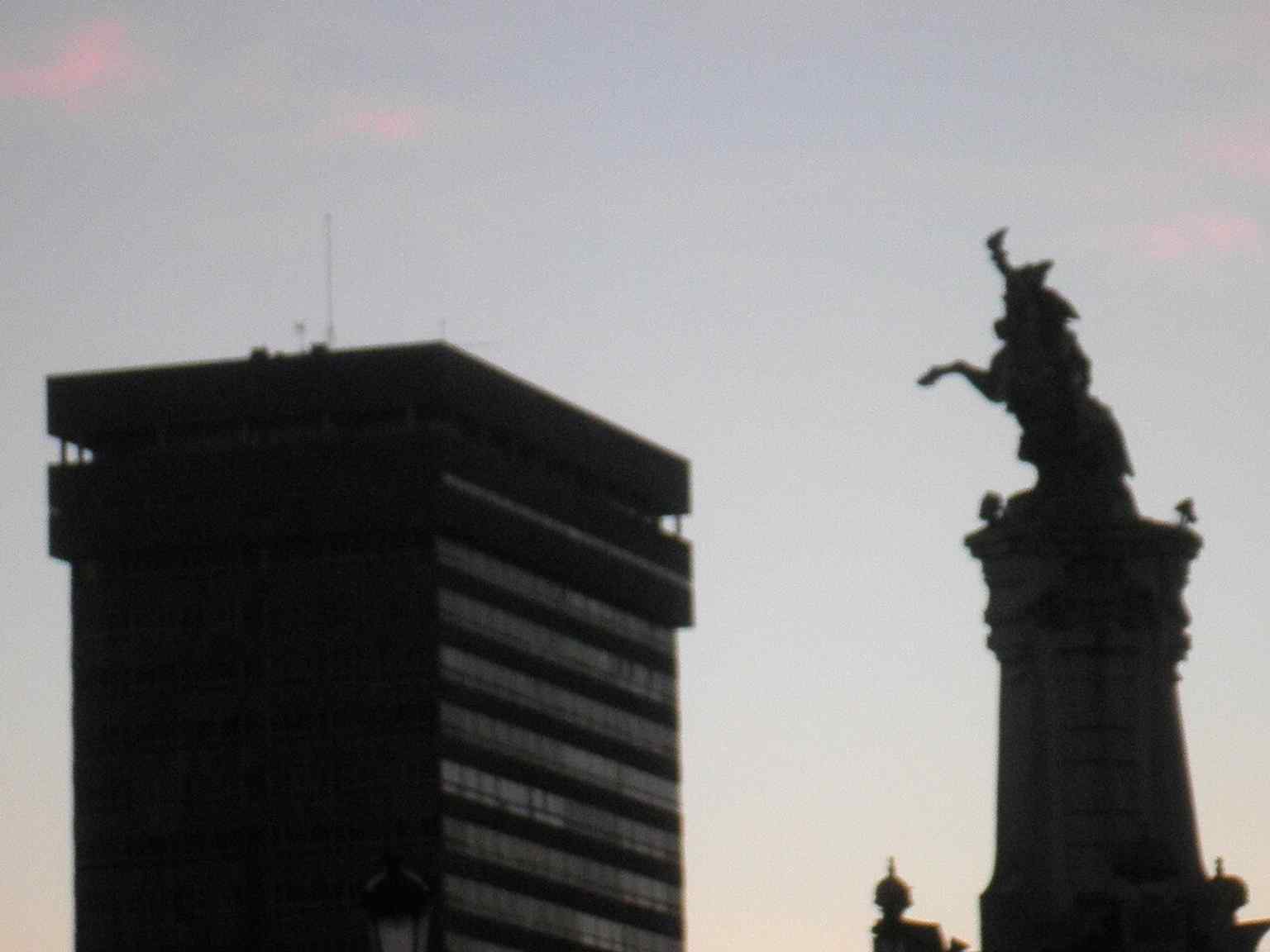
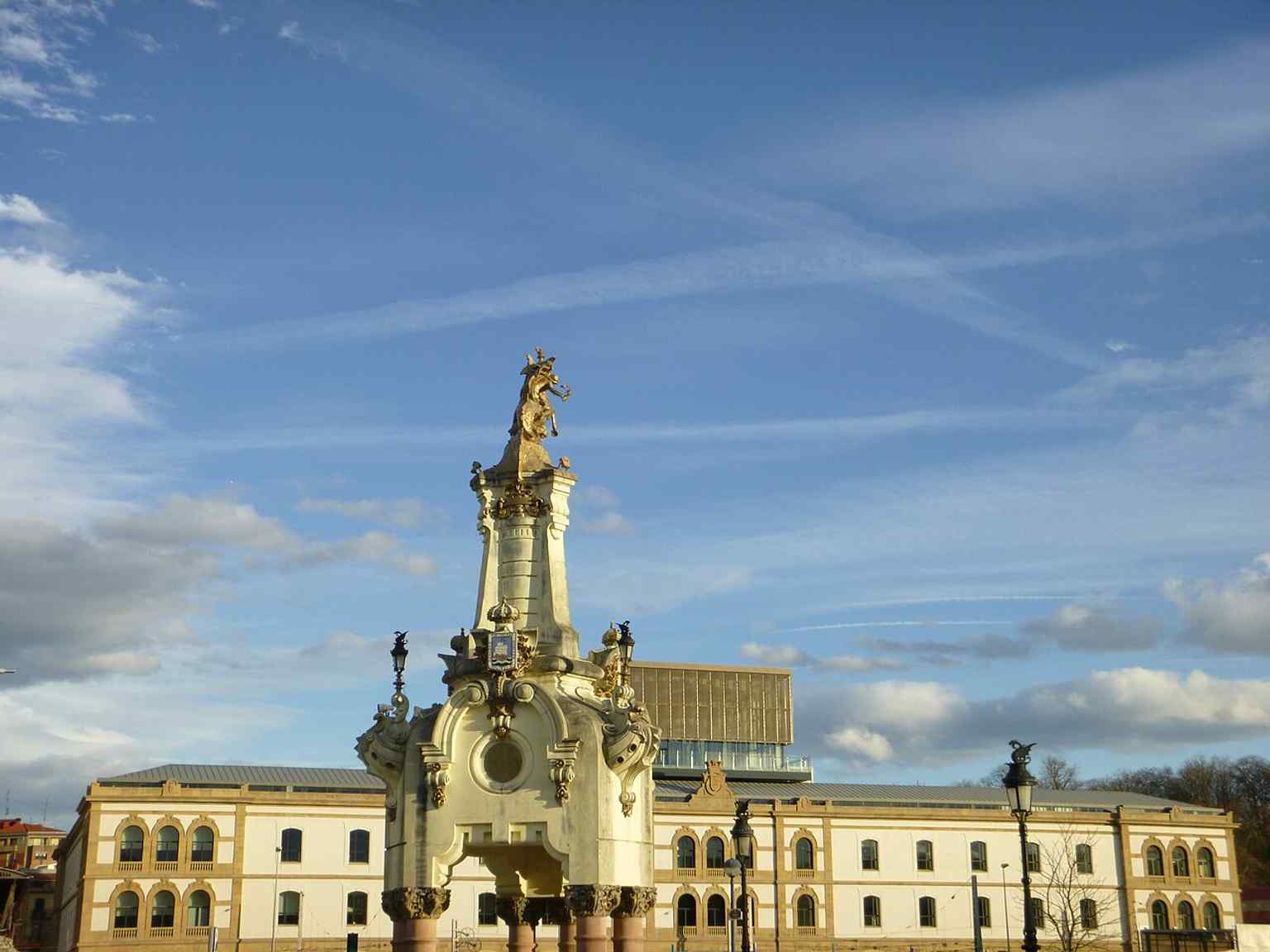
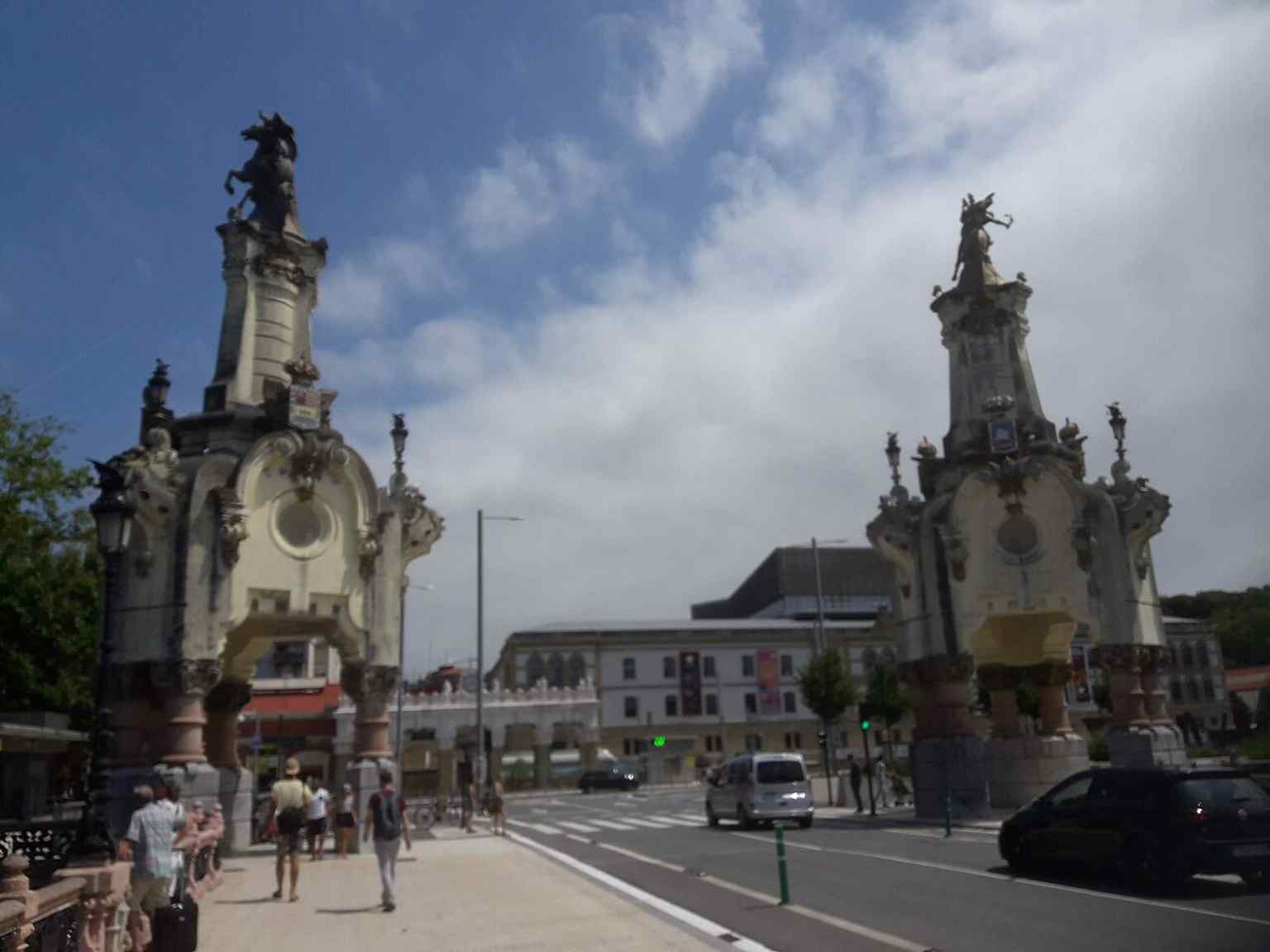
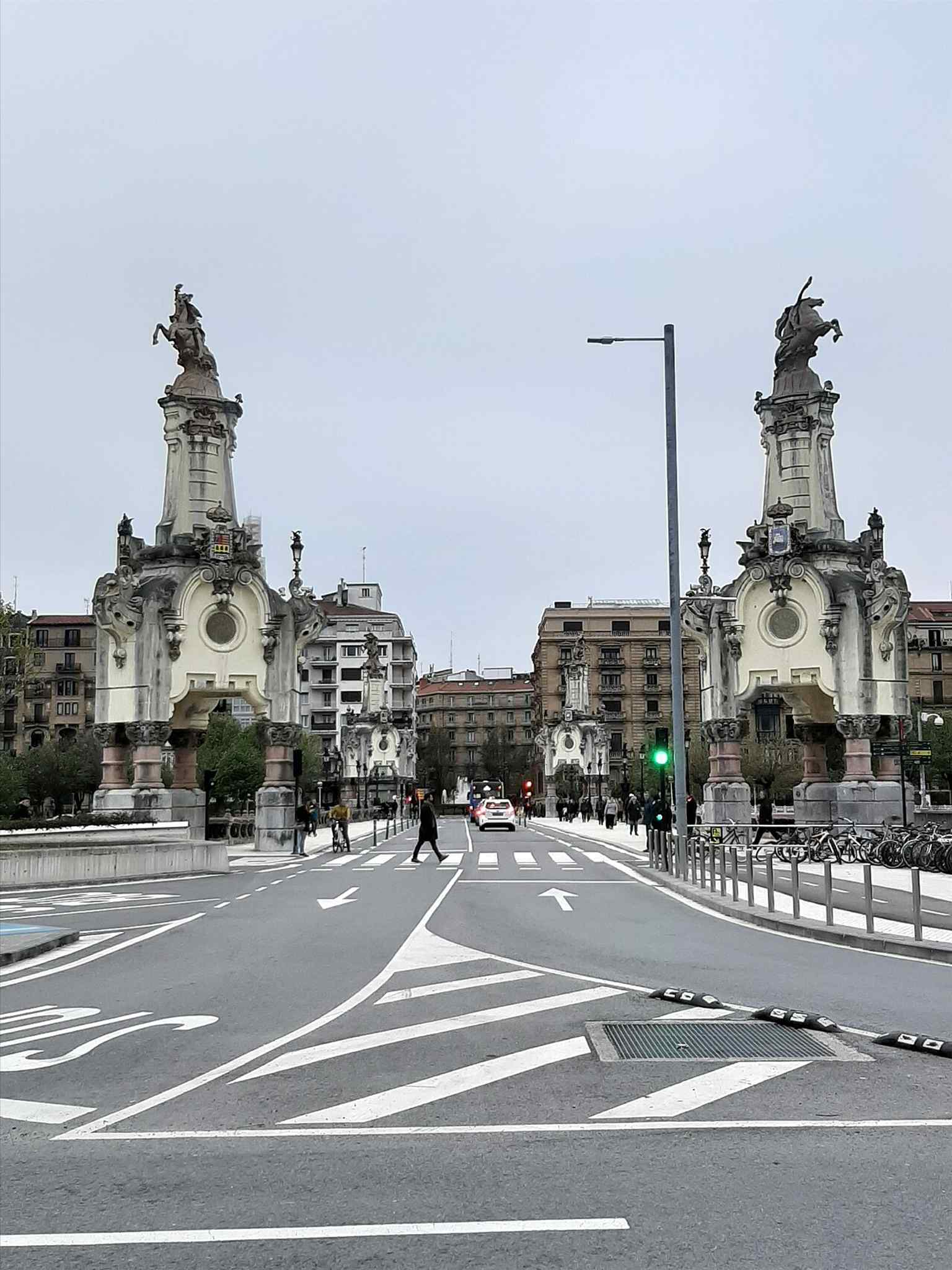
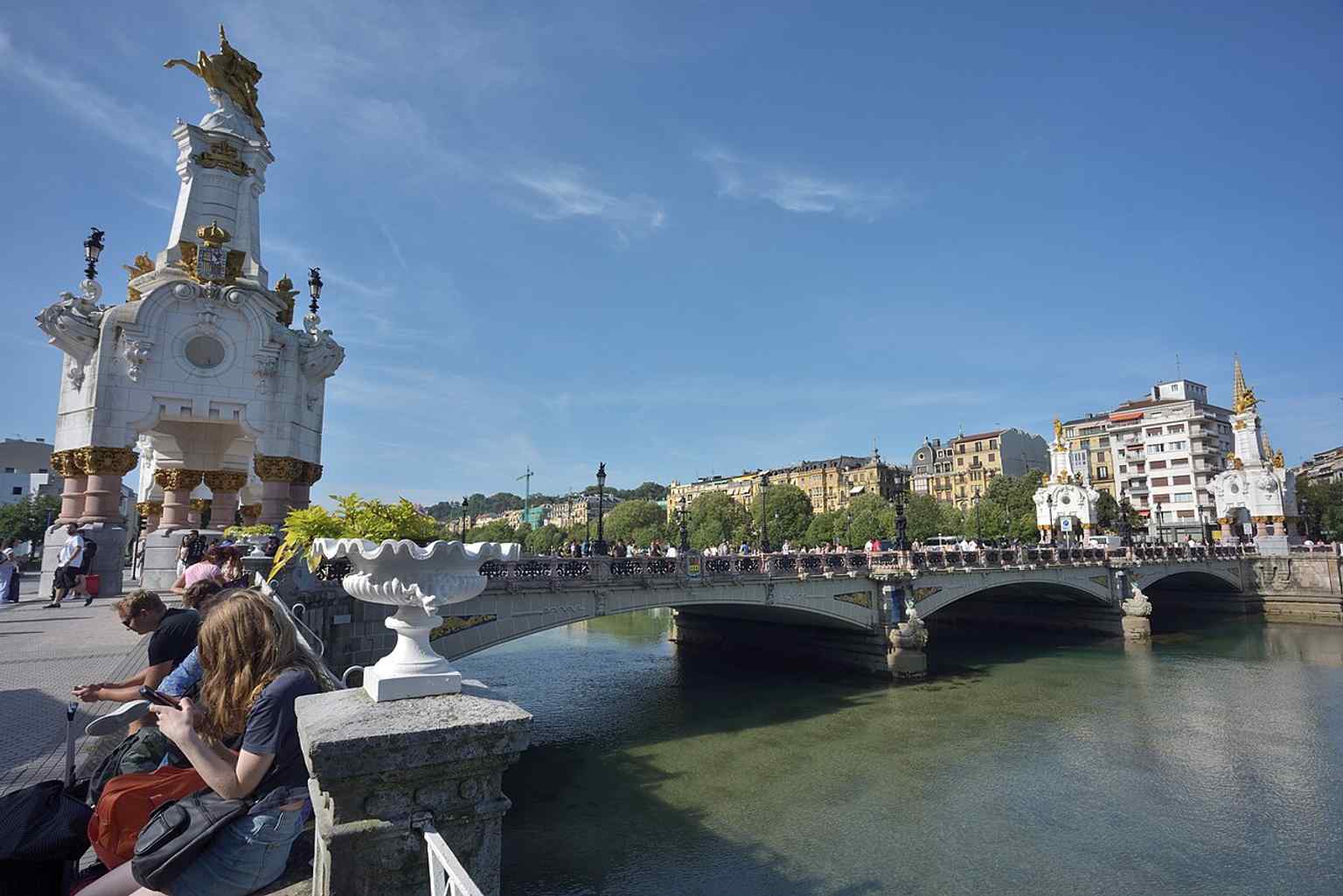
On your left, look for a broad stone-clad bridge with three low arches and four tall obelisks, each crowned with sculpture.
María Cristina Bridge tells you something important about San Sebastián: this city rarely chose the merely practical when it could choose the practical and the memorable at once.
Before this bridge, there was only a temporary wooden walkway here, put up in eighteen ninety-three so people could reach the North Station, the bullring, and the velodrome more directly. Useful, yes. Grand, not in the least. Then came the real question: if the city was going to connect these busy parts of town properly, what sort of face would it show while doing it?
The answer emerged from a competition, and it was no small affair. A jury that included Pablo Alzola and Evaristo de Churruca sifted through a crowded field of ideas: plans written in French and sent from Germany, proposals for a single eighty-metre metal span, and others for several concrete arches. The argument was never just about engineering. It was about what kind of city San Sebastián meant to become.
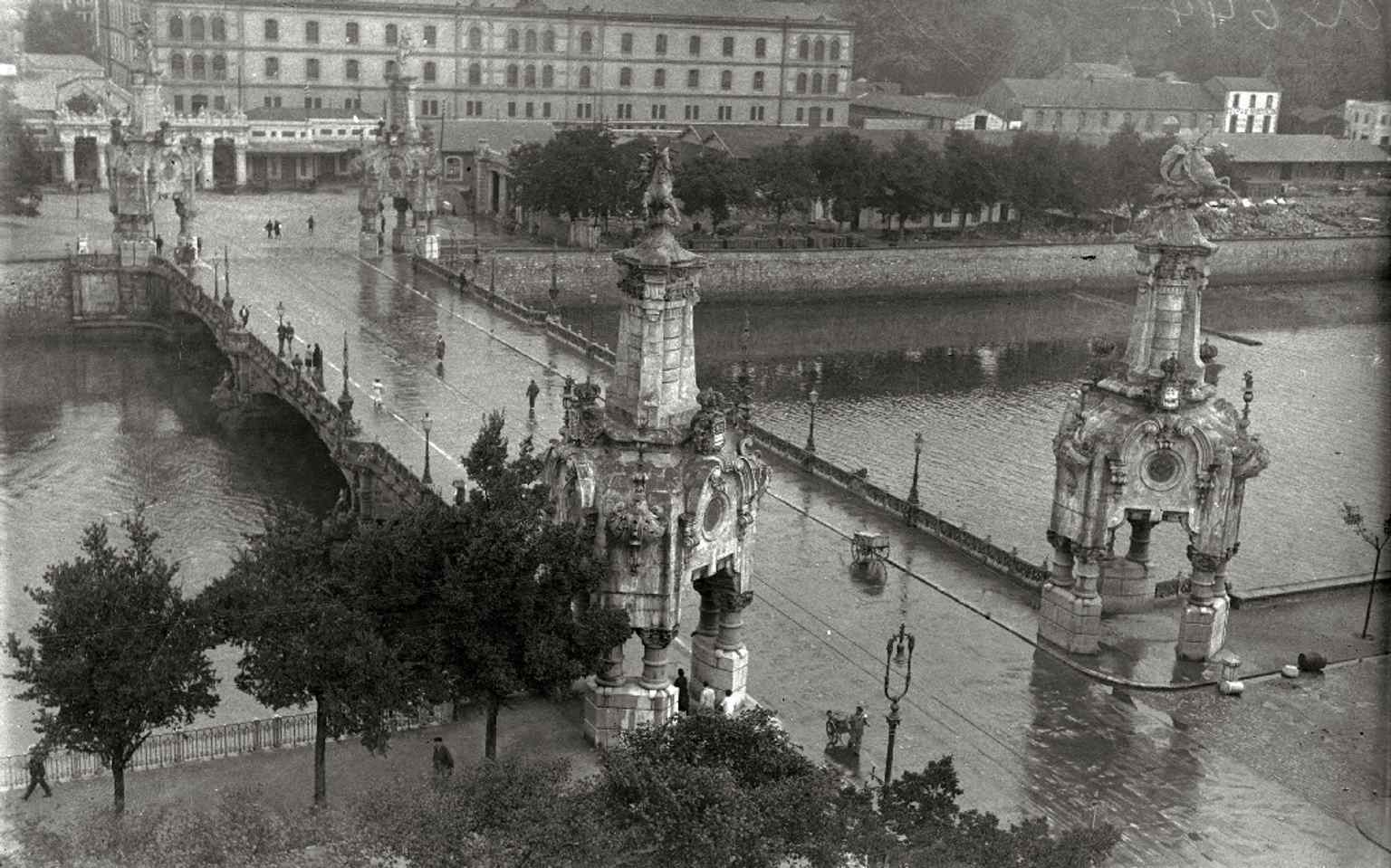
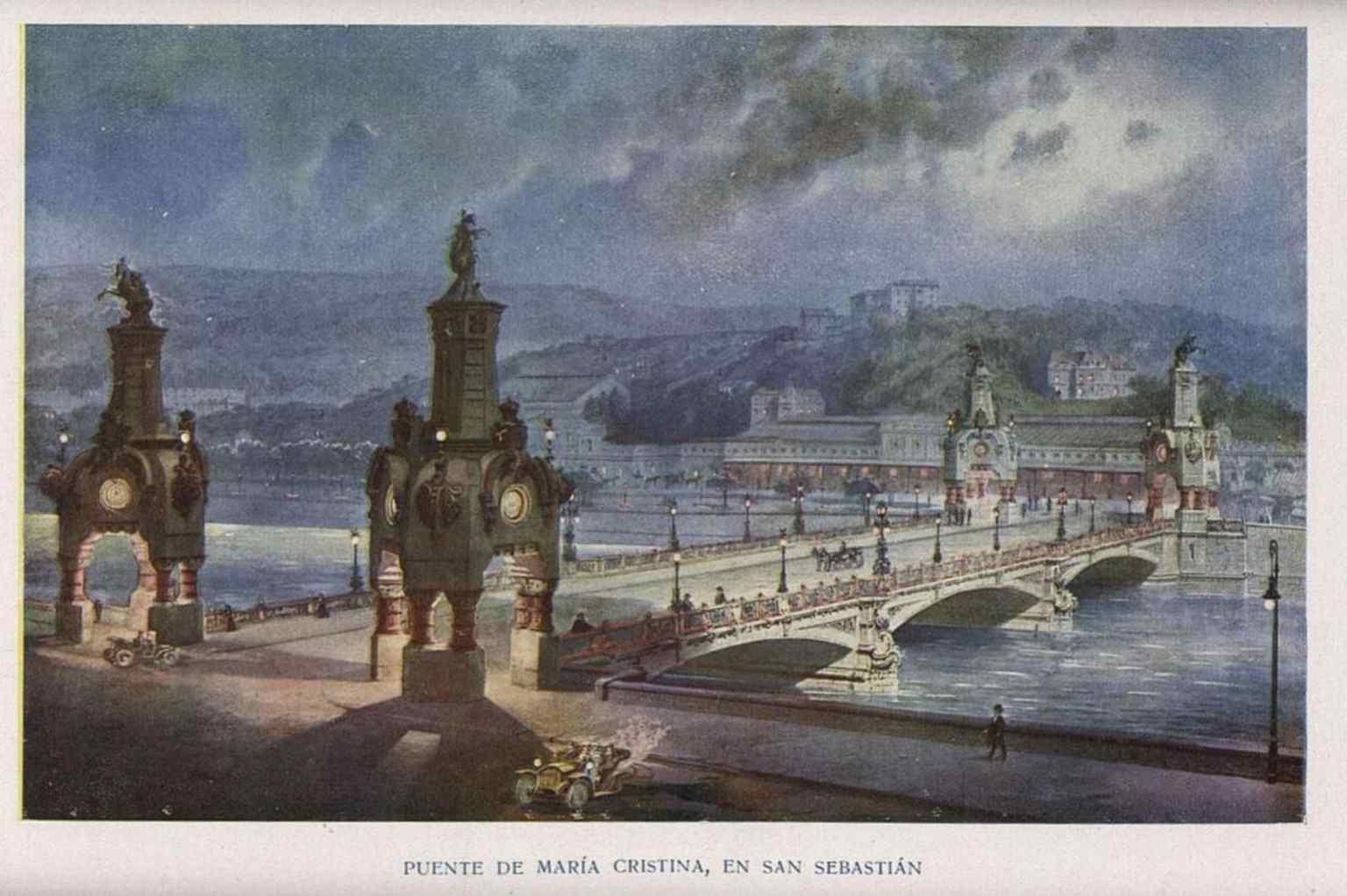
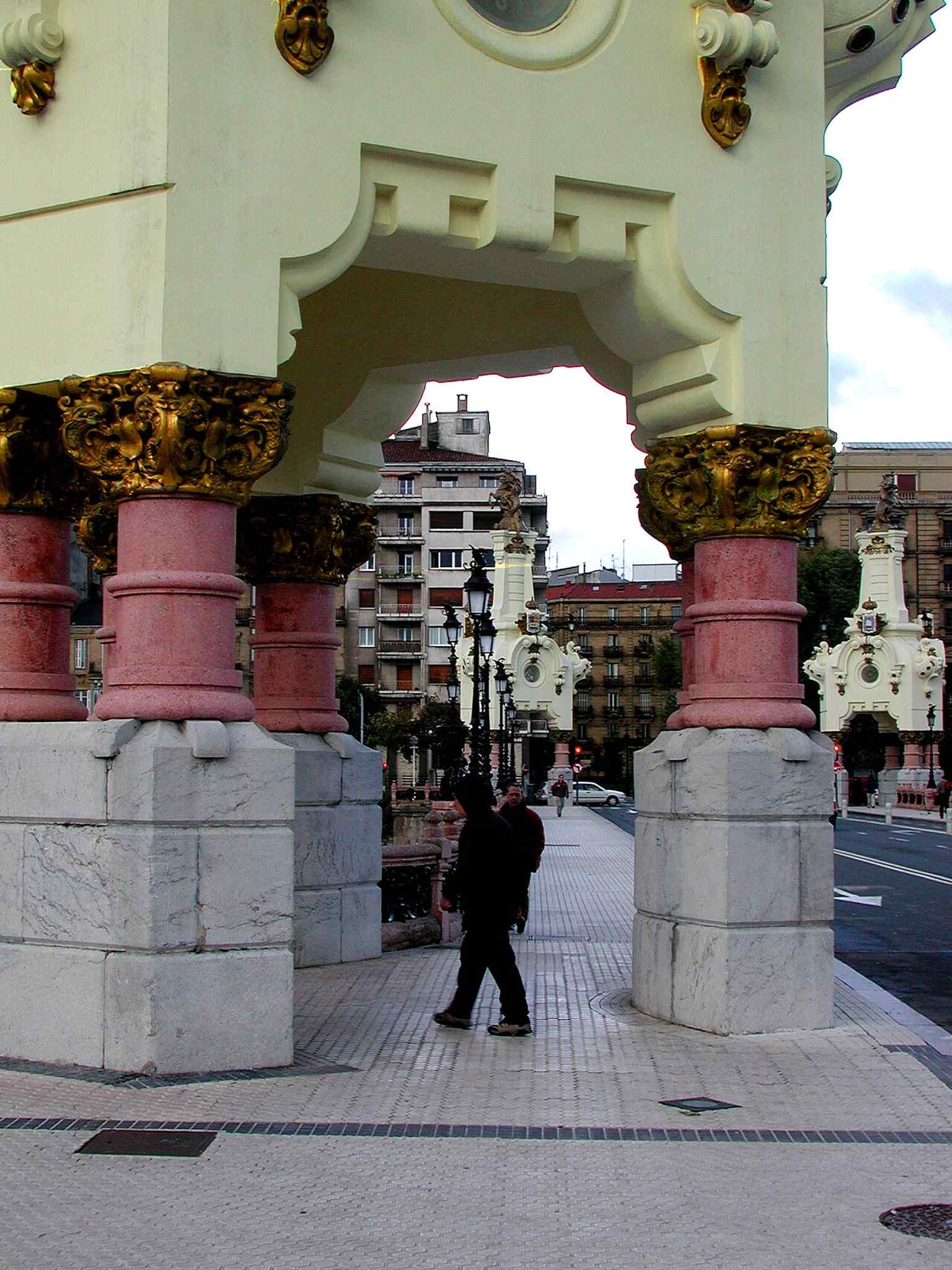
José Eugenio Ribera, working with Julio María Zapata, gave the city its answer. In just nine months, in nineteen oh four, they raised a modern reinforced concrete structure, then dressed it in refinement: reddish artificial stone, multi-coloured coats of arms, decorative ceramics, and those four monumental obelisks, the tall tapering pillars at each end, inspired by the Alexander the Third Bridge in Paris. Beneath the elegance, the bridge is precise and modern: three arches, each twenty-four metres long, spanning a total length of eighty-eight metres across the Urumea.
Locals sometimes smile at one tiny detail most visitors never hear. Just before the permanent bridge opened, traffic on the old wooden crossing was suspended for the last time before it was torn down. It was almost a curtain call for the makeshift city, as if San Sebastián paused, took a bow, and stepped into a more polished role.
The opening, on the twentieth of January, nineteen oh five, the feast of Saint Sebastian, made sure everyone noticed. José Elósegui presided in representation of Queen María Cristina, whose presence in the city had already helped make it fashionable. Invitations called guests to arrive for the solemn ceremony and the tea afterward at City Hall, in frock coat or uniform. Bands played, bells rang, and one hundred and ten children from the Municipal Academy of Music sang a hymn composed by Santesteban. By evening, fireworks and a toro de fuego lit the celebrations, while lines of serenos, the old night watchmen, stood ready with sticks after earlier civic unrest. Even a bridge opening here could feel like public theatre.
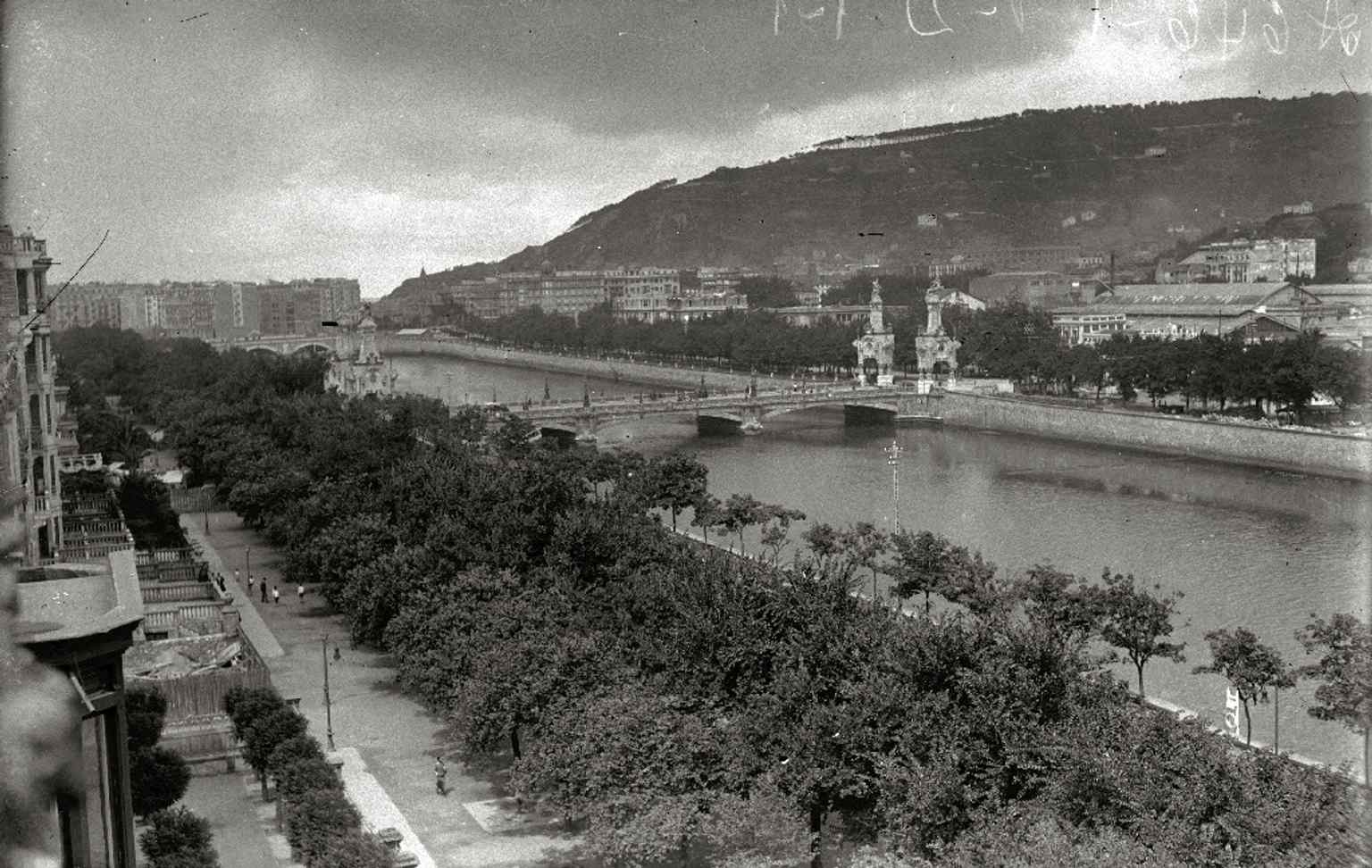
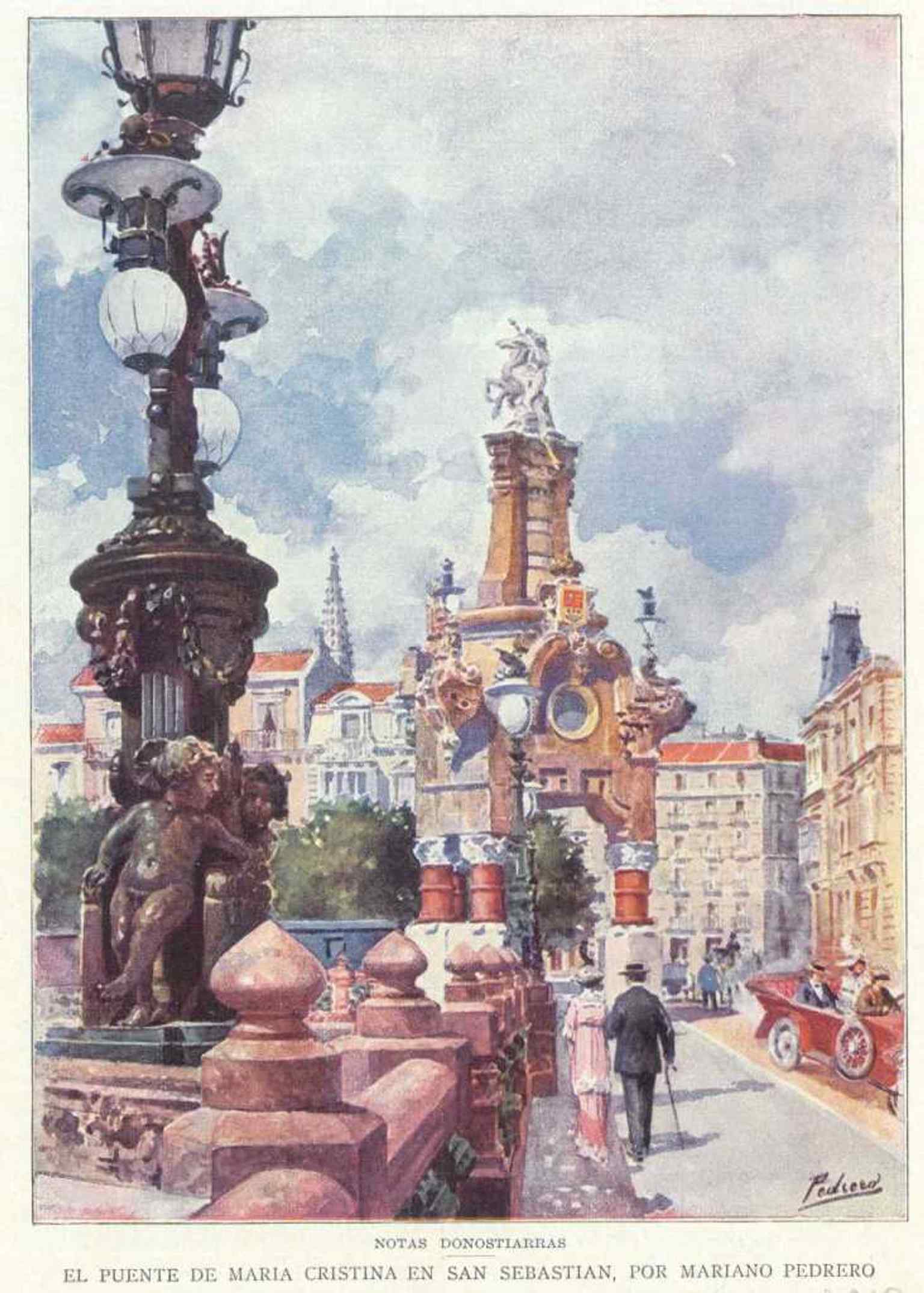
If you fancy it, have a look at the before-and-after image in the app; the bridge remains unmistakably itself, even as the life around it has completely changed. That life has not always been gentle with it. In two thousand and fourteen, storm-driven waves rushing up the river damaged the structure, and later restorers spent eight months cleaning salt, recovering crystals set into the obelisks, and repairing the sculptures. So this bridge still does what it always did: carry movement, carry meaning, and quietly absorb the feelings of the city.
From here, we leave a monument to connection and head toward a monument to belonging: the Cathedral of the Good Shepherd, about six minutes away. And, fittingly, this bridge is open at all hours.





%20-%20Fondo%20Car-Kutxa%20Fototeka.jpg)
%20-%20Fondo%20Car-Kutxa%20Fototeka.jpg)


