
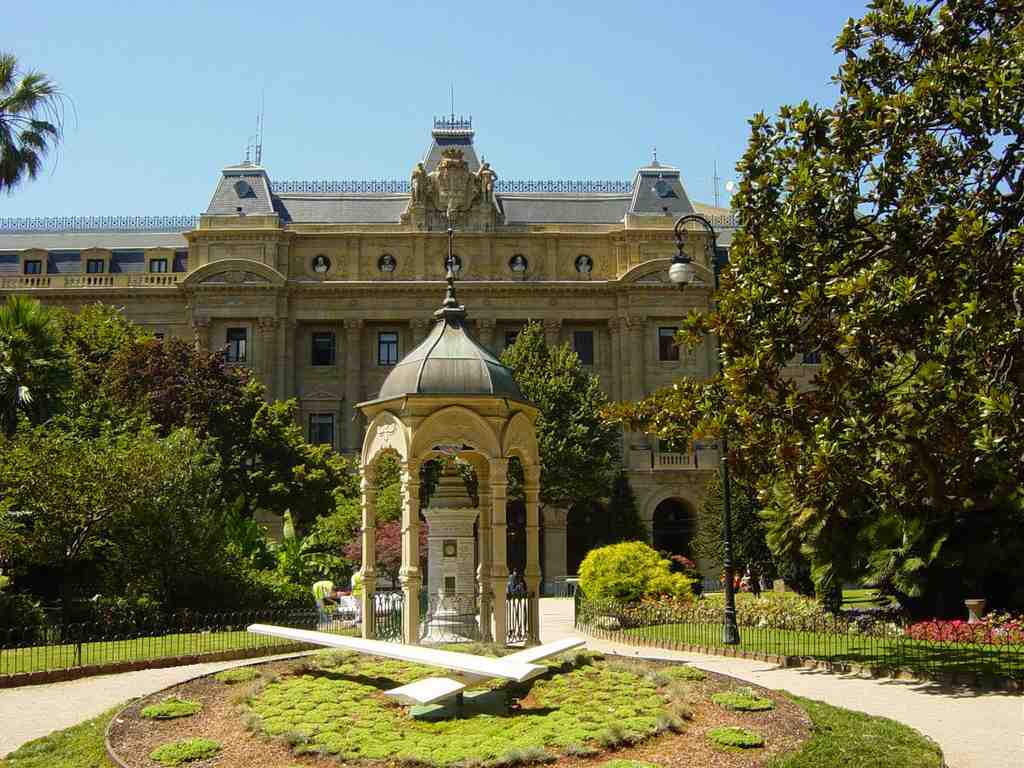
On your left, look for the pale stone façade with its ground-floor round arches, its steep mansard roof, and the Guipúzcoa coat of arms set high at the centre.
This palace tells a quieter, tougher story than the hotels and theatres nearby. After the abolition of the fueros - the old provincial rights and self-government that had shaped local identity for centuries - Guipúzcoa needed more than office space. It needed a public face that could say, with perfect calm, that the province still knew who it was.
So this building answered a political wound with architecture. In September of eighteen sixty-six, the square itself took the name Plaza de Guipúzcoa because the provincial palace stood here. Later, when the great project took shape, municipal architect José Goicoa conceived something wonderfully strategic: not one institution, but three, hidden behind a single grand front. One wing served the Treasury, another the Civil Government, and another the provincial council. A unified façade for a newly complicated relationship with the Spanish state.
And what a façade. Its style belongs to the Second Empire, the richly formal language of nineteenth-century power, and its main elevation deliberately echoes Charles Garnier’s Paris Opera. Notice the rhythm: arches below, then windows with triangular and curved pediments - those little stone crowns above the openings - then pilasters and columns lifting the eye upward. Along the attic run medallions with illustrious Guipuzcoans: Elcano, Urdaneta, Oquendo, Legazpi, Blas de Lezo. It is a roll call in stone.
Yet the palace very nearly vanished. Builders finished the first campaign in eighteen eighty-five, then fire tore through the interior and left little beyond the shell and foundations. Luis Aladrén and Adolfo Morales took on the reconstruction and, with almost archaeological patience, rebuilt the palace while preserving what they could. By eighteen ninety, it had recovered its dignity without pretending nothing had happened. That resilience is part of its meaning.
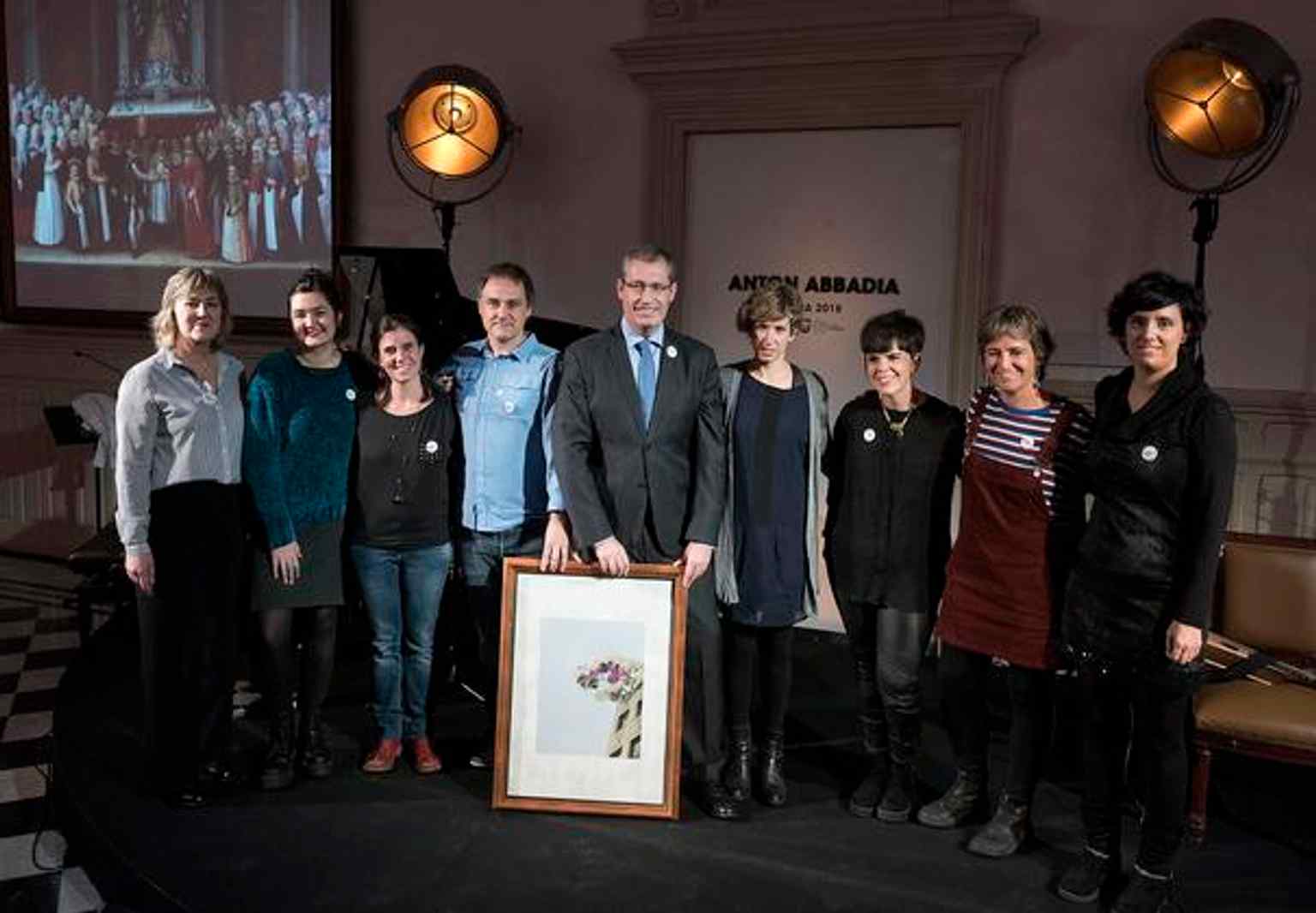
Inside, the most revealing flourish may be the great stained-glass window of Alfonso the Twelfth swearing to respect the fueros. The council commissioned painter José Etxenagusia in eighteen eighty-nine to prepare the design, then craftsmen in Munich turned it into glass for the main staircase. It was not mere decoration. It taught every visitor a lesson about memory, legitimacy, and continuity. If you glance at the image in the app, you can see that the palace still serves as a living ceremonial stage, not a frozen relic.
In a moment, we head toward Alderdi Eder Park, where official power loosens its collar and meets the promenade and the sea. If you plan to come back inside, the palace generally opens on weekdays, with shorter hours on Fridays.





