
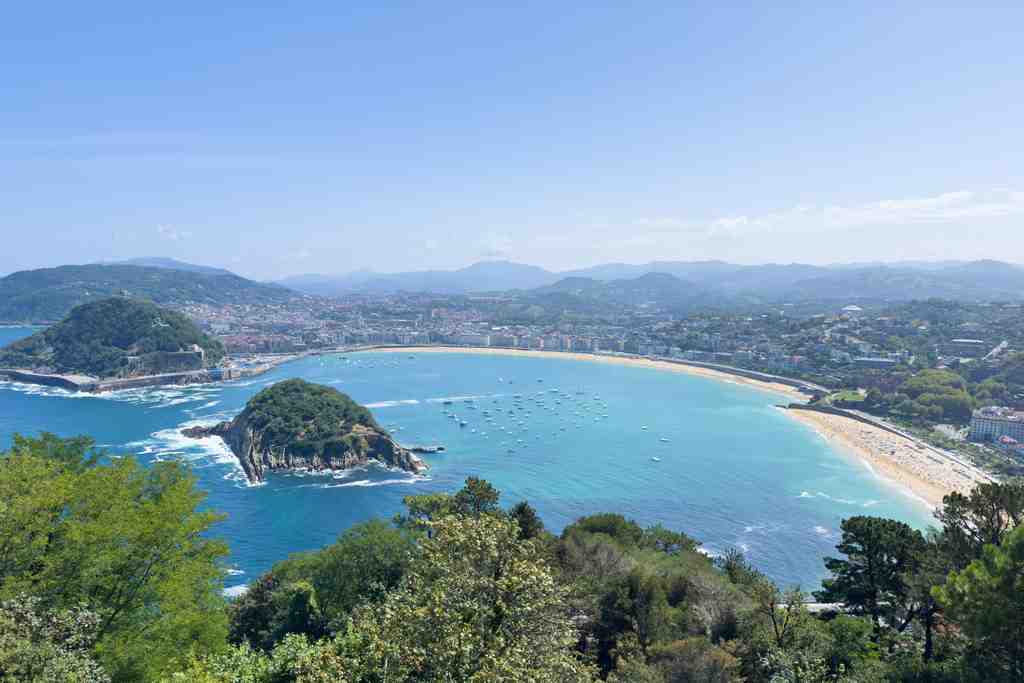
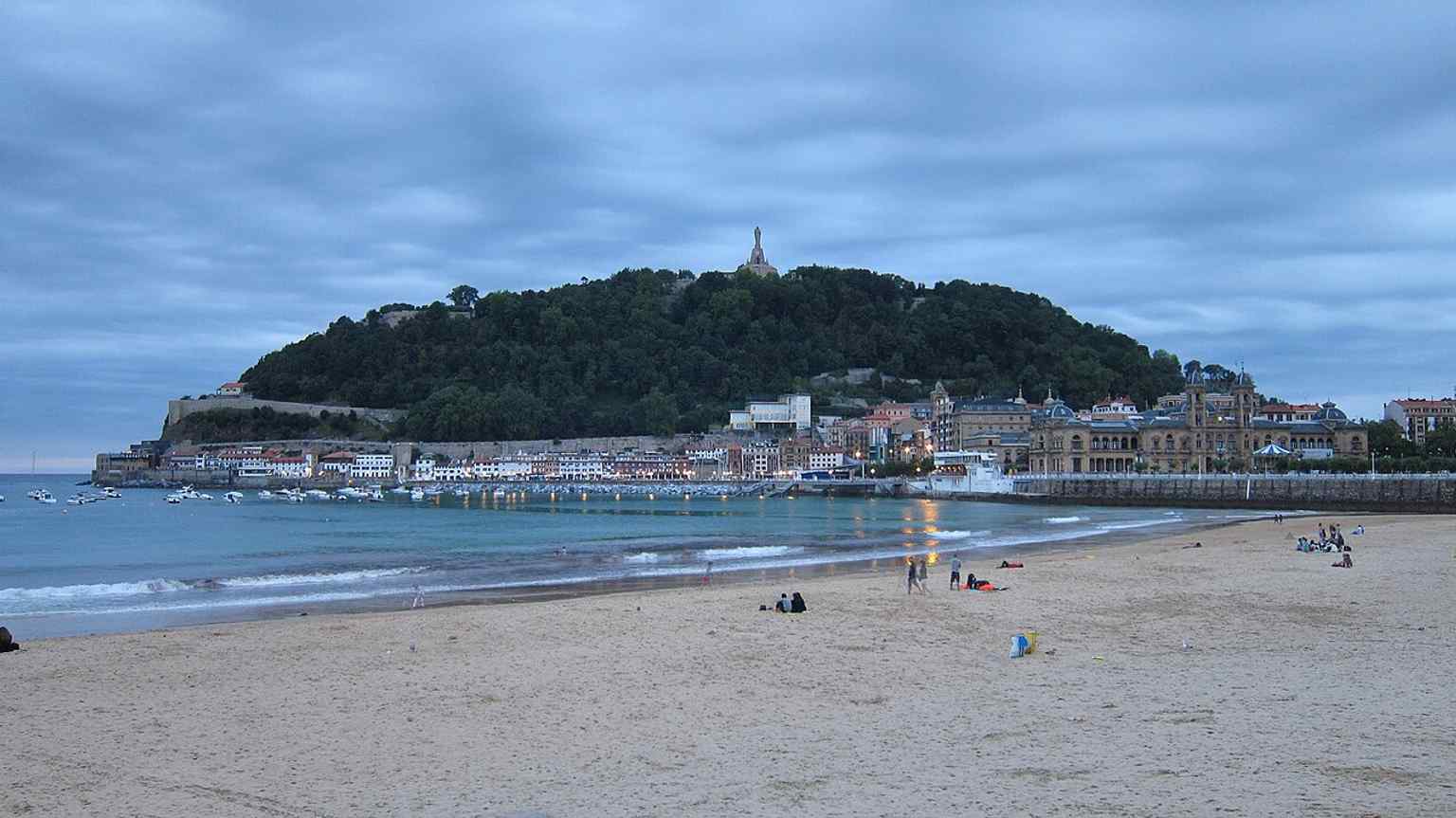
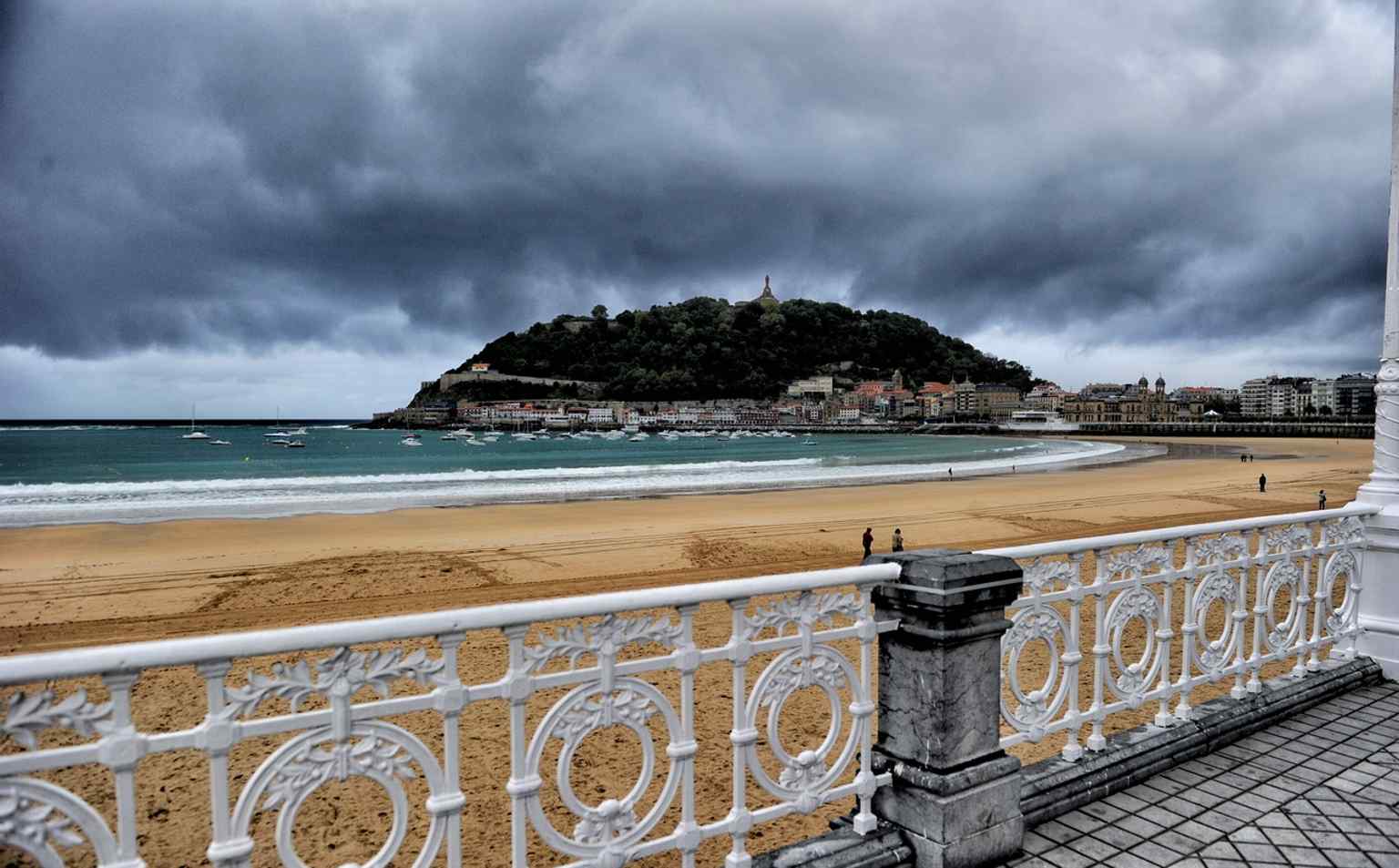
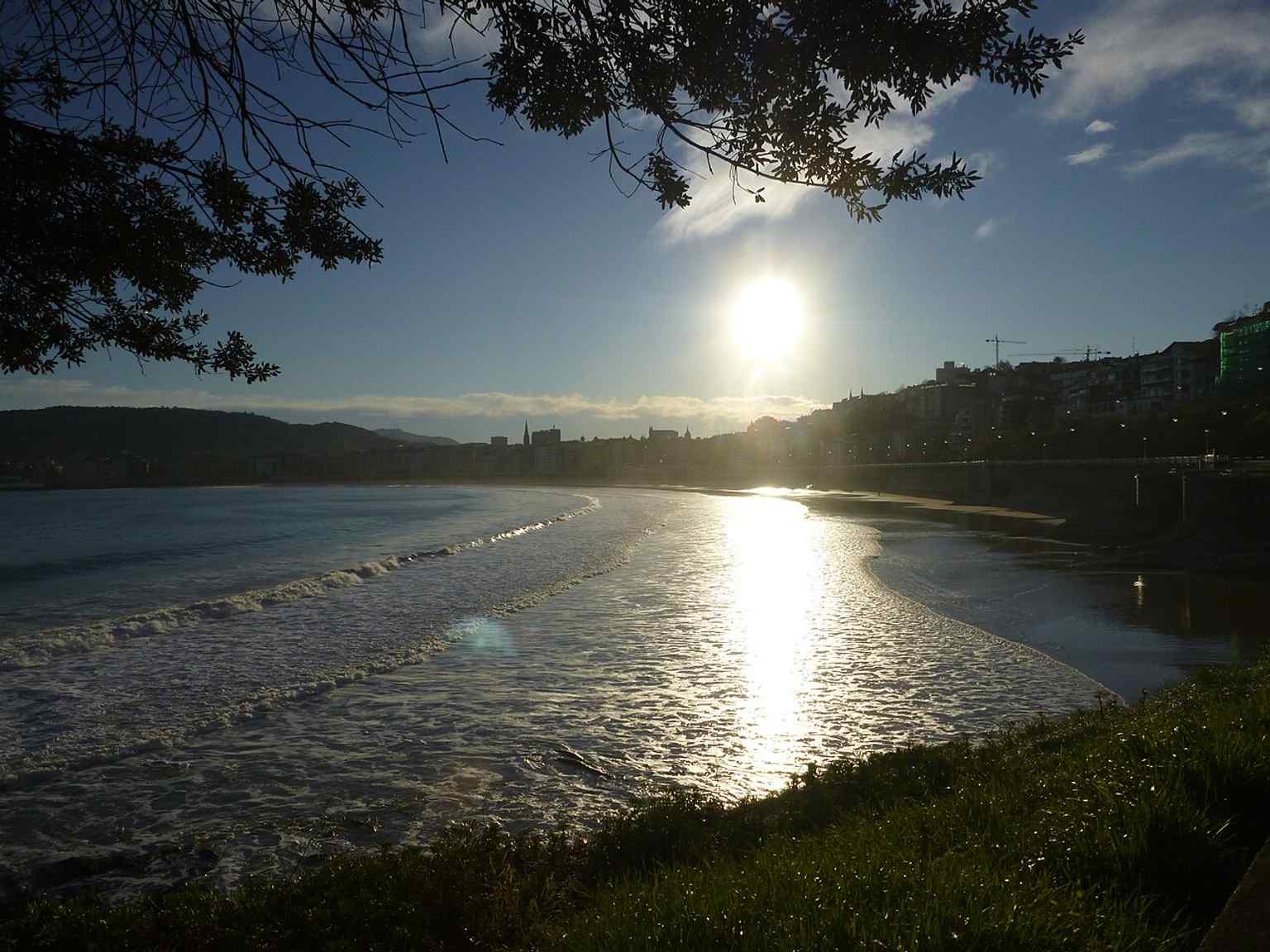
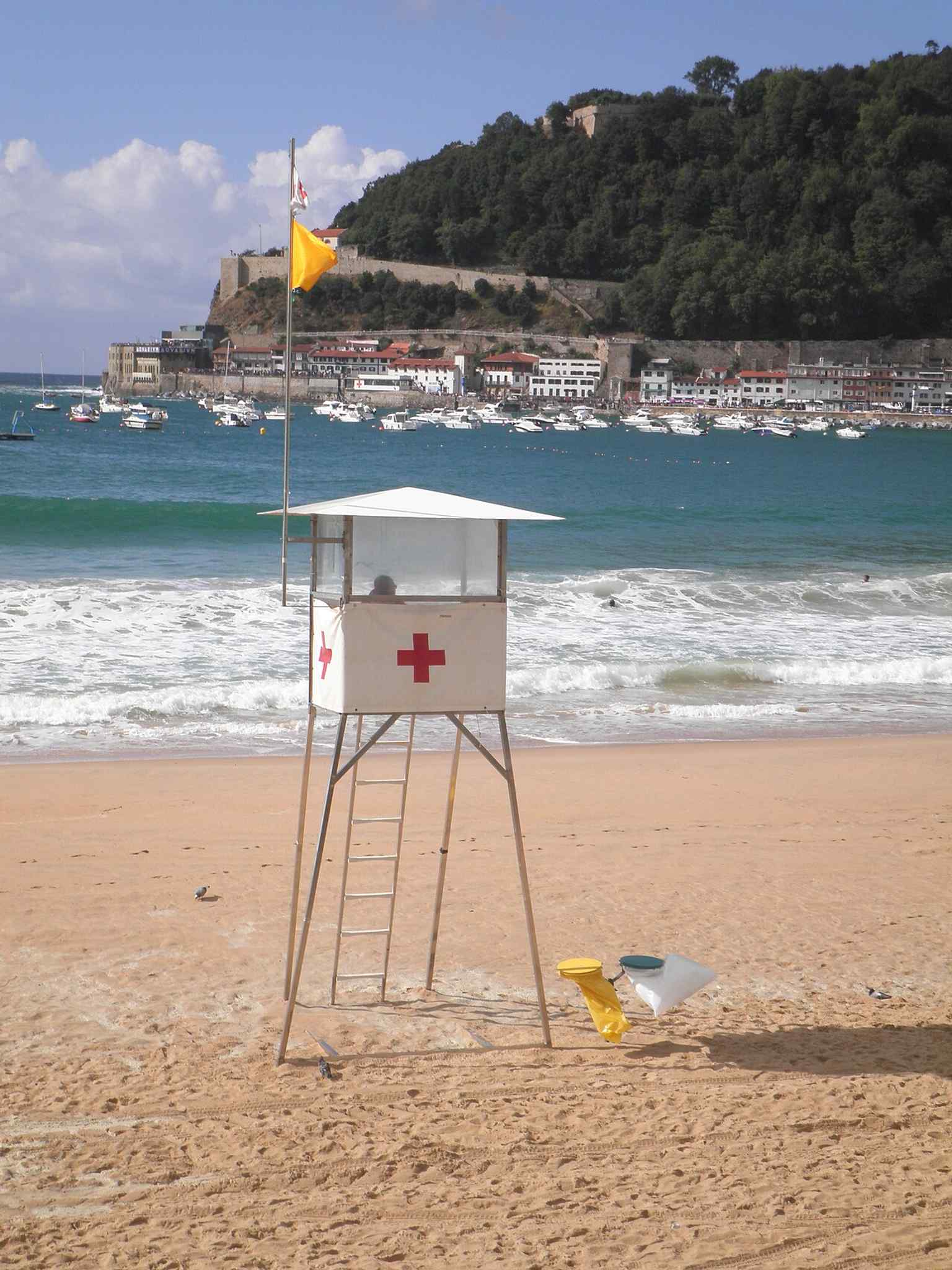
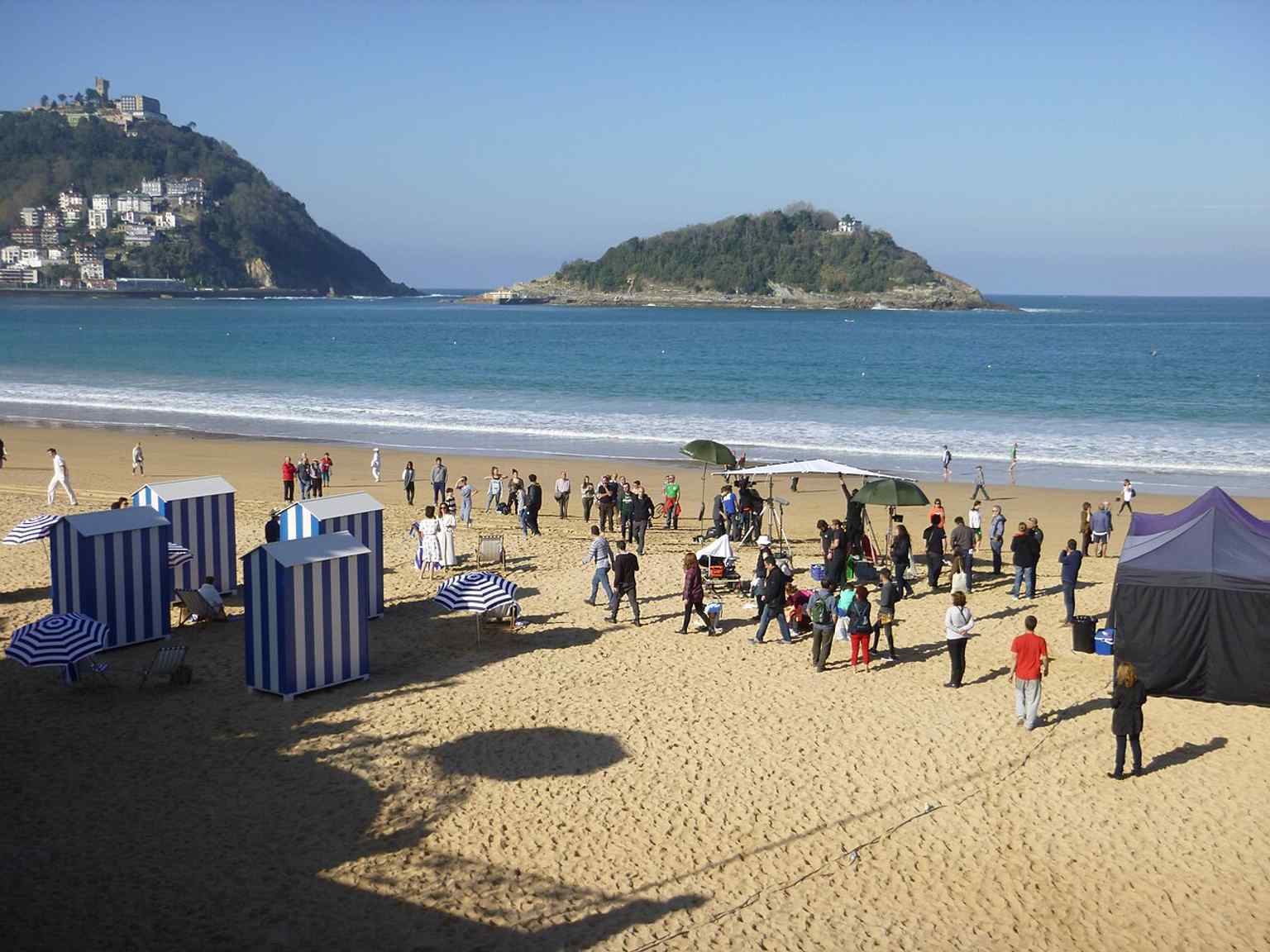
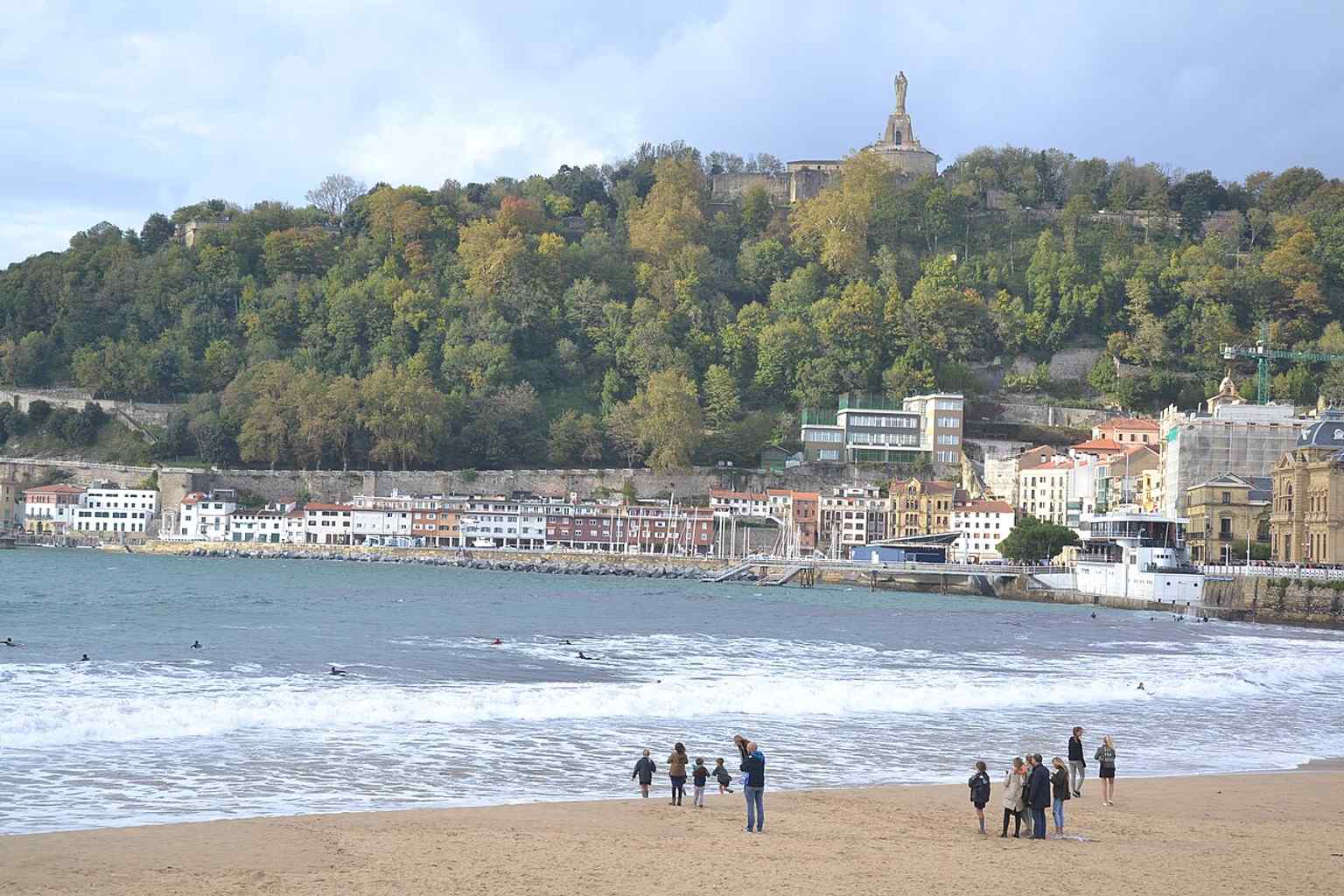
In front of you lies a broad crescent of pale sand, edged by a stone promenade and marked by the white iron railing that has become La Concha’s signature.
La Concha Bay is not simply a beautiful accident of geography. It is a natural curve that San Sebastián carefully edited into an urban emblem, a place where scenery could be arranged, admired, and quietly turned into prestige. Its shell-like form gave the beach its name, and that very shape helped the city sell an image of order, elegance, and ease. If you glance at the image on your screen, you can see that composed sweep for yourself.
In the nineteenth century, Queen Isabel the Second came here to take sea baths, and the shoreline’s reputation changed at once. Then Queen María Cristina raised the stakes further: in eighteen ninety-three she chose the slope above the bay for Miramar Palace, making this whole waterfront feel like a royal stage set. What had been a beach became a backdrop for high society, and the city understood the opportunity.
Pause for a moment and let your eyes travel from the curve of the sand to the promenade and that railing. How much feels natural, and how much feels carefully arranged for an audience?
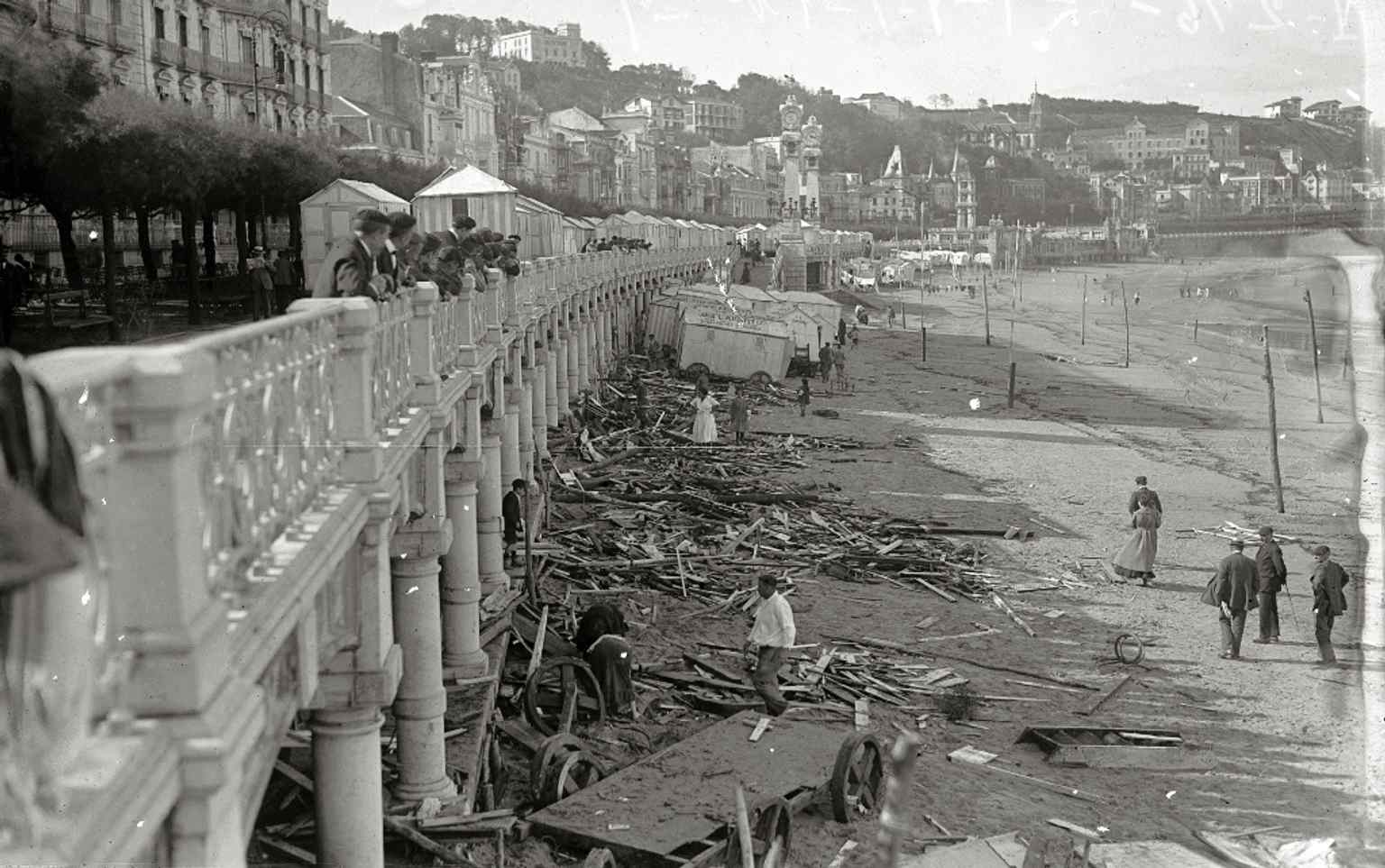
By eighteen seventy-nine, the bay had become a grandstand for the rowing races now called the Bandera de La Concha. Traditional traineras, long racing boats with thirteen rowers and a helmsman, cut across the water while spectators packed the edge of the beach. Then, around nineteen ten, Juan Rafael Alday gave the promenade its white railing, and with one design gesture he fixed La Concha in the city’s visual memory. You can study that detail on your phone here.
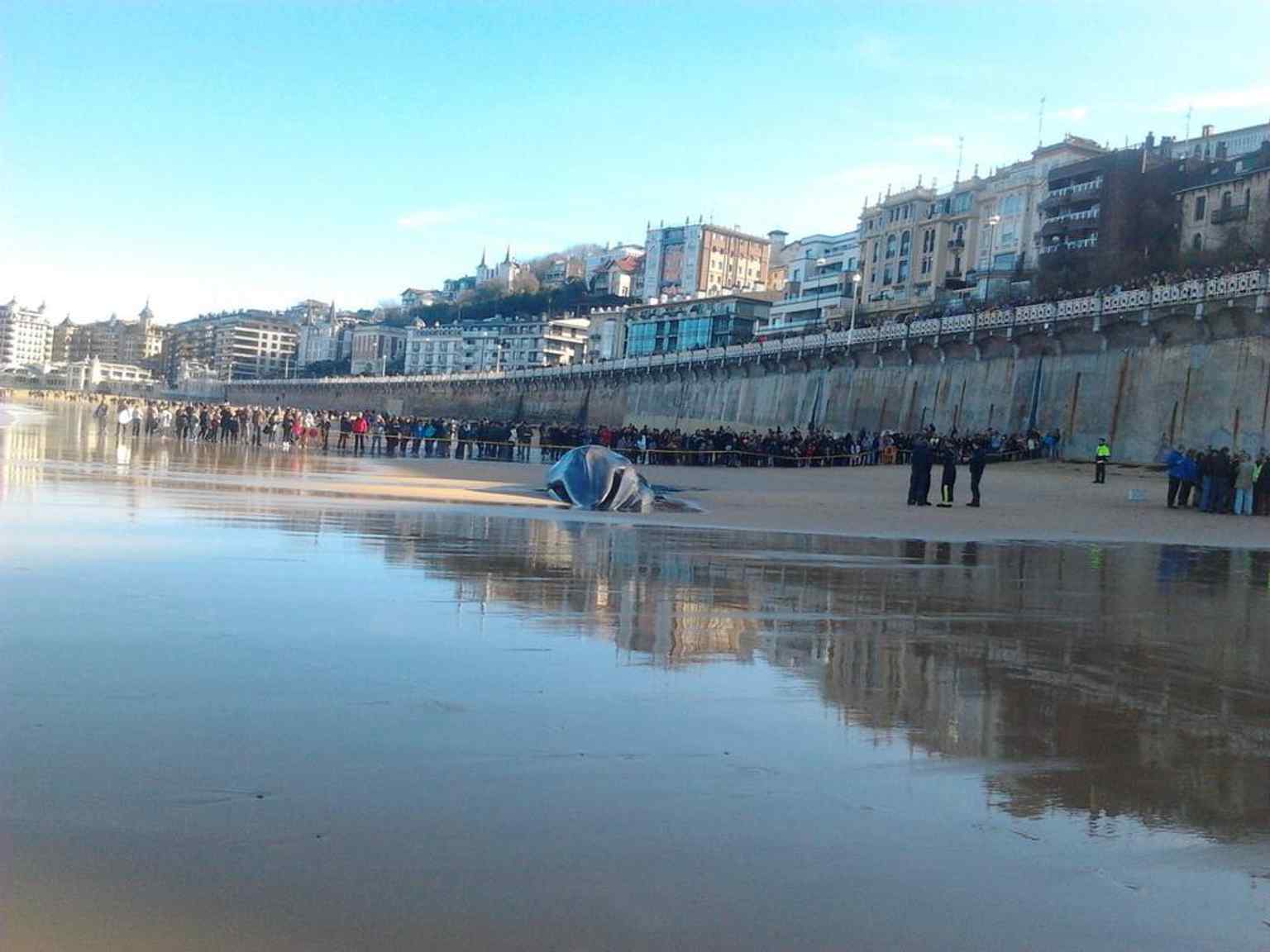
Yet this stage has seen stranger arrivals too: French aviator Hubert Le Blon crashed into the sea here in nineteen ten, and in nineteen forty-five Léon Degrelle, fleeing the collapse of Nazi Europe, made an emergency water landing in the bay.
That is La Concha’s secret: civic theatre never really stopped. It simply changed its music. In about seven minutes, we’ll follow that thread to Jazzaldia, where the city still knows exactly how to turn itself into a performance.





.jpg)
.jpg)
%20-%20Fondo%20Car-Kutxa%20Fototeka.jpg)


