
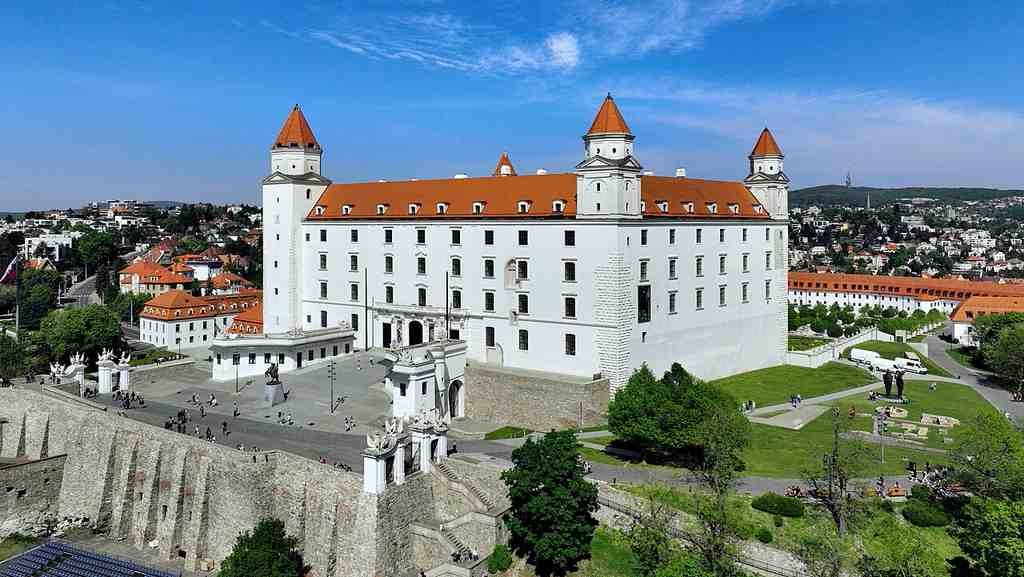
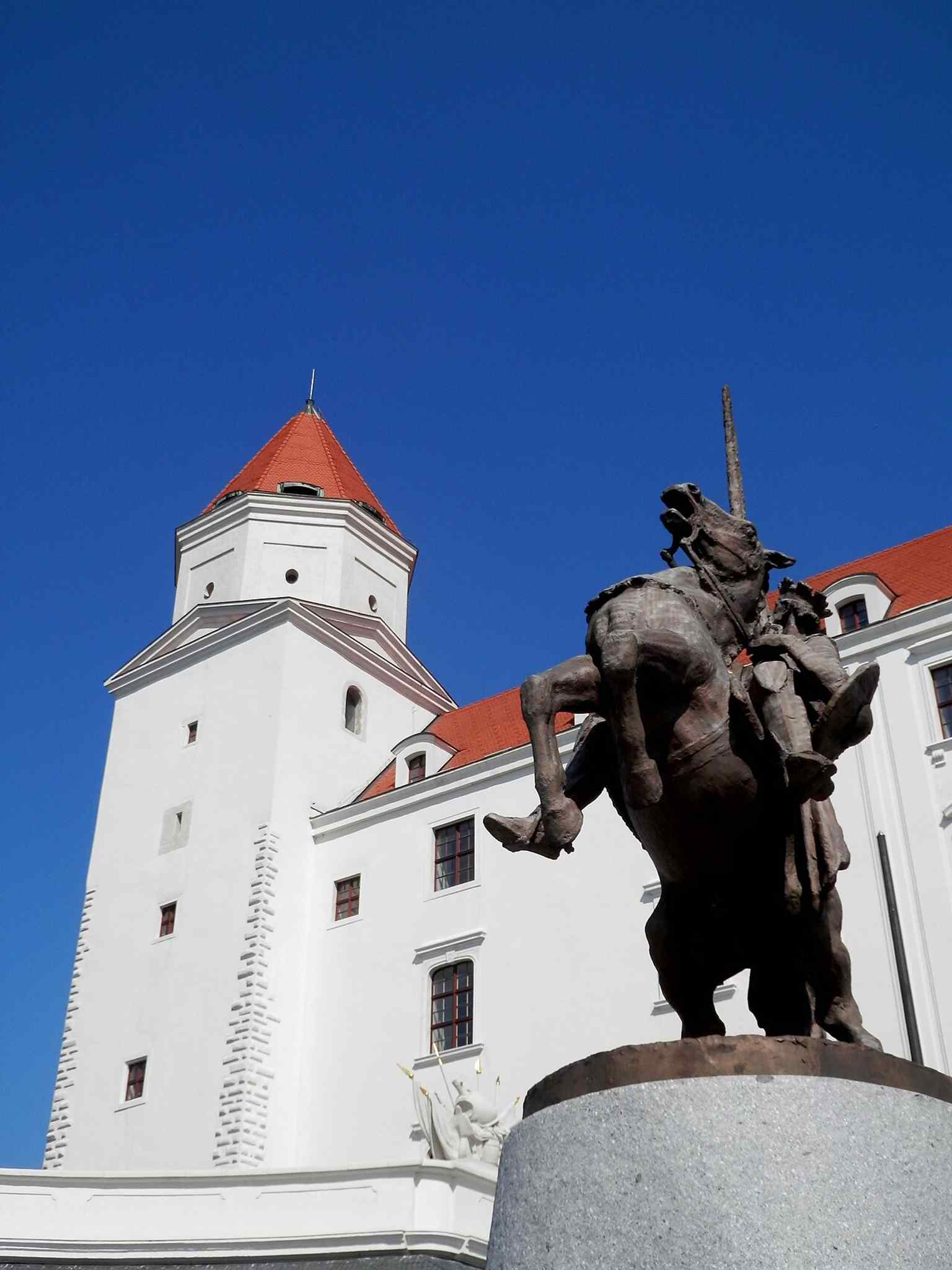
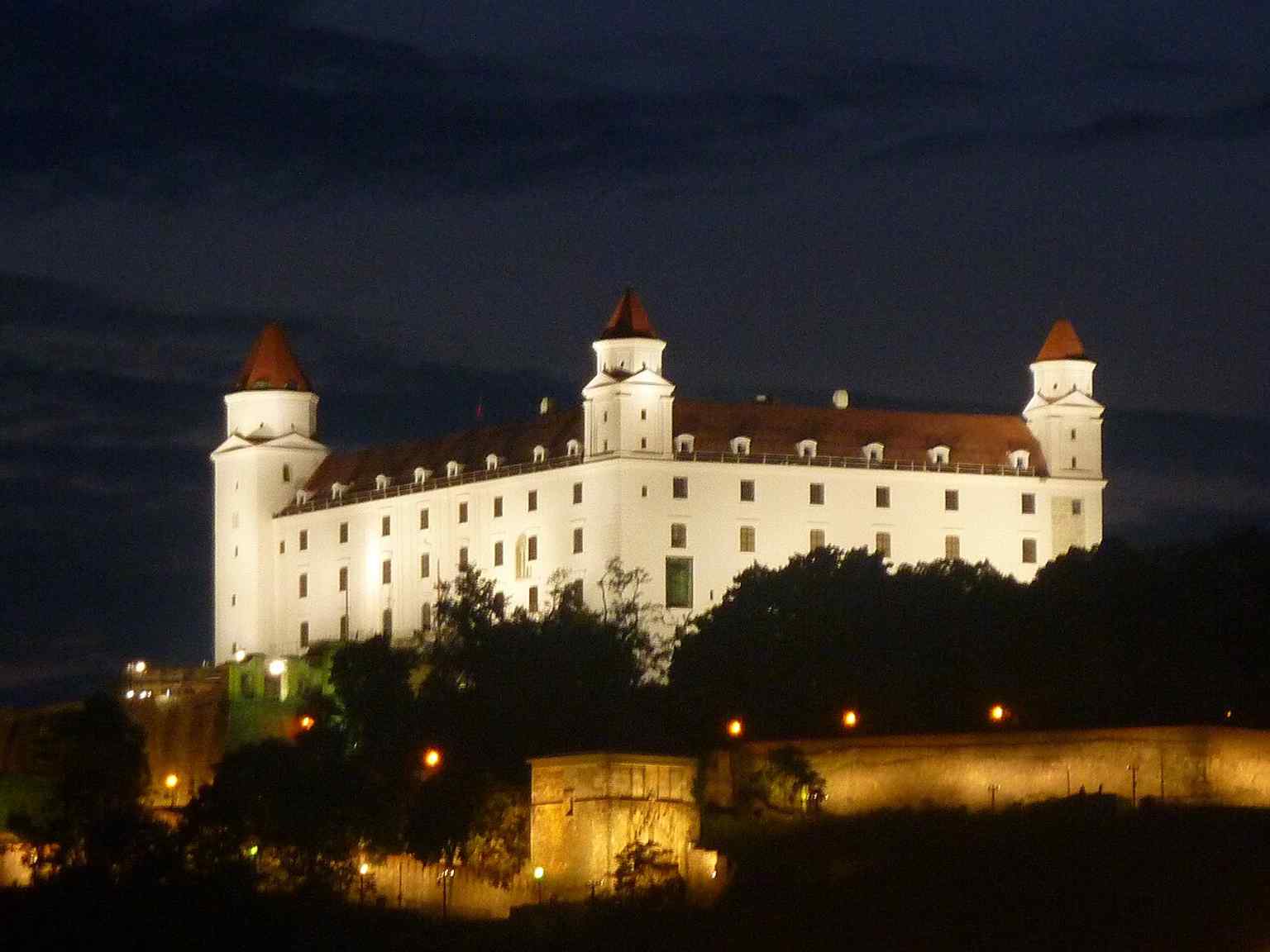
On your left rises a white rectangular palace of stone and plaster, framed by four corner towers and marked by the taller Crown Tower that gives the whole hill its unmistakable profile.
From this courtyard, facing the main facade, you’re looking at the grand scrapbook of Bratislava... only this scrapbook happens to sit on a strategic hill above the Danube. A place like this never stays unemployed for long. People have fought over it, renamed it, rebuilt it, burned it, and then, like stubborn locals everywhere, rebuilt it again.
Even the city’s identity gathers here. In the early records, this hill appears as Brezalauspurch in the year nine hundred seven. Later came forms like Bresburg, then Pressburg in German, Pozsony in Hungarian, and only in the nineteenth century did the name Bratislava take hold, thanks to the Slovak national revival. Same hill, same commanding perch... different powers trying on different names.
And beneath this elegant shell are older lives stacked like hidden floors. Archaeologists found traces of settlement from roughly four thousand five hundred years ago, then a Celtic stronghold with Biatec coins, then Roman material reused in later walls, including bricks stamped by the Fourteenth Legion. By the ninth century, this was a Great Moravian fortified center with a palace and a three-aisled basilica - that means a church with a tall central hall and two side aisles. So yes, when Bratislava says it has layers, it is not kidding around.
If you glance at the image on your screen, you’ll see one of the castle’s earliest dramatic memories: the siege of ten fifty-two. Emperor Henry the Third tried for two months to force the place, and later illustrations show defenders striking at his ships on the Danube. Whether drawn with a little artistic swagger or not, the message is clear: this hill was hard to crack.
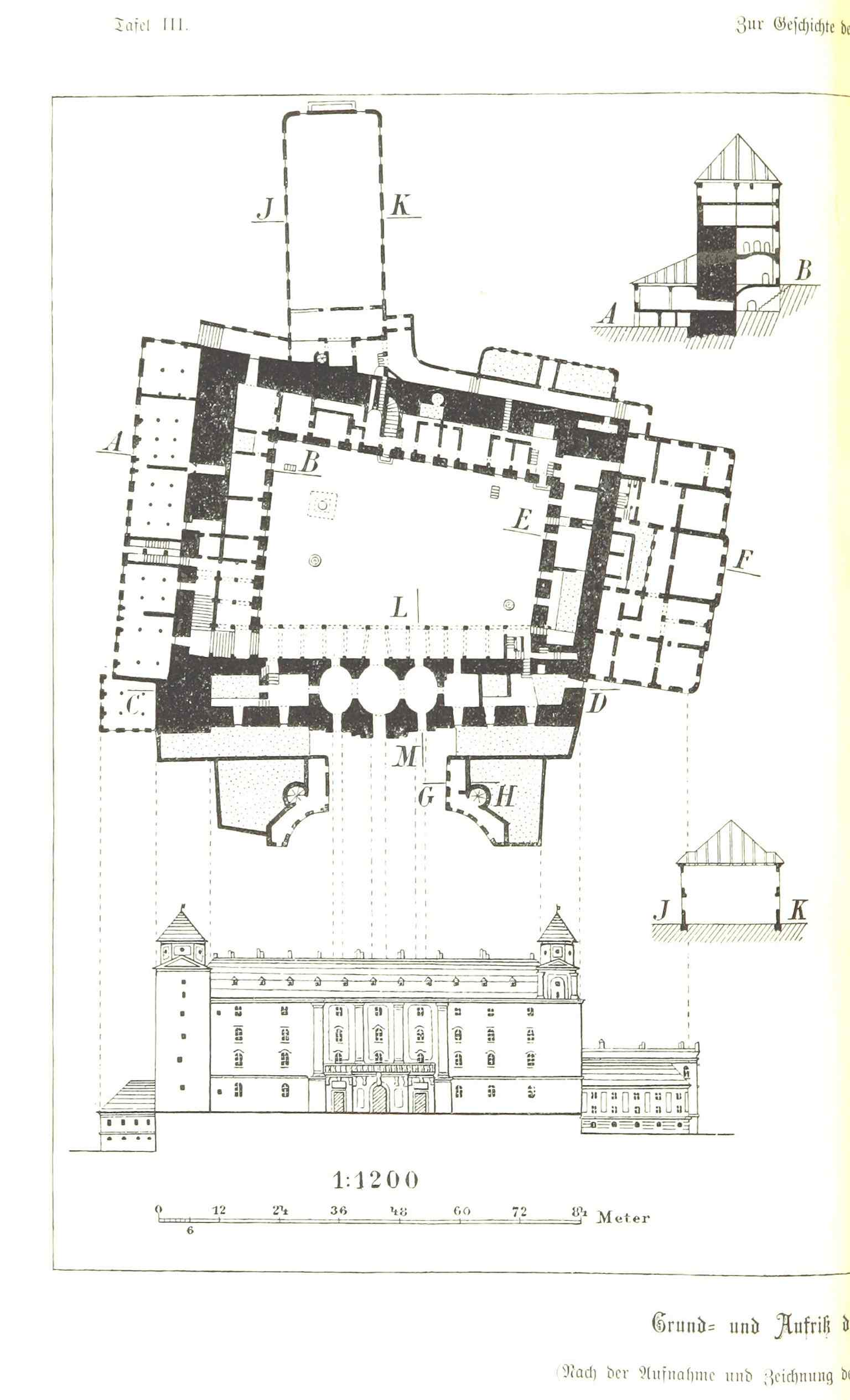
Then came kings with bigger plans. Sigismund of Luxembourg pushed a major rebuilding after fourteen twenty-three, shaping the castle into a regular four-sided residence-fortress. After the disaster of Mohács in fifteen twenty-six, power shifted here in earnest. Bratislava became the main and coronation city of the Kingdom of Hungary for nearly three centuries, and this castle became the chief royal castle. Crown jewels rested in the Crown Tower from the early seventeenth century. Maria Theresa later softened the fortress into a baroque residence fit for ceremony, gardens, and court life - the formal polish to match the political muscle.
But glory can be a fair-weather friend. Joseph the Second moved institutions away. The palace became a seminary, then barracks. Napoleon’s wars damaged it, and in eighteen eleven careless soldiers started a fire that gutted the complex. Take a look at the ruined shell in the old photograph on your phone. For generations, that wreck still defined the skyline.
One man I always remember here is Alfréd Piffl, the architect and researcher who, in the nineteen fifties, proved these walls could be saved. He helped rescue the castle from becoming just a romantic ruin. The cruel twist: the communist regime later imprisoned him. So even the modern restoration carries its own scar.
That’s why this place matters so much. It is not one castle from one age. It is a pileup of names, loyalties, crowns, arguments, and second chances.
And in about ten minutes, St. Martin’s Cathedral will bring the final piece into focus. Up here, rulers stored the crown and staged power. Down there, at the cathedral, ritual turned that power into something official.





.jpg)


