AudaTours logoAudaTours

Stop 2 of 17

Tomb of the Unknown Soldier

Tomb of the Unknown Soldier
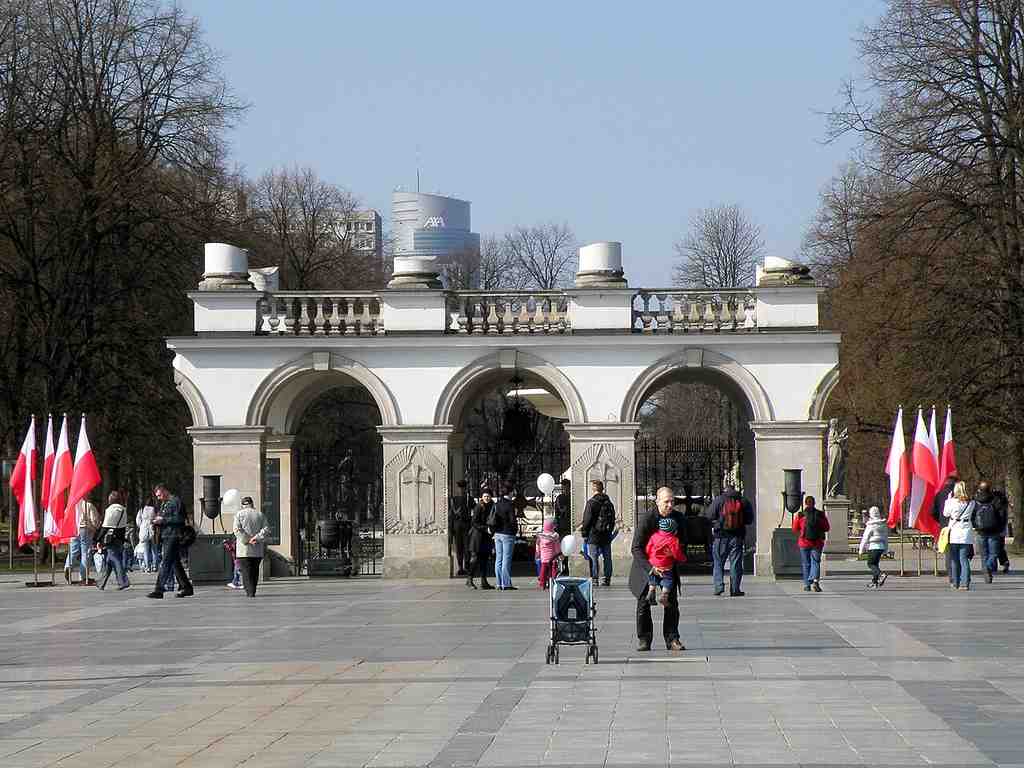
Tomb of the Unknown Soldier in Warsaw
Tomb of the Unknown Soldier in WarsawPhoto: Ala z, Wikimedia Commons, Public domain. Cropped & resized.

Look for three pale stone arches with thick square columns and a vaulted top, with the tomb and eternal flame set beneath the center arch.

Before this became a monument, it began with a mother. In October of nineteen twenty-five, Jadwiga Zarugiewiczowa, a Polish Armenian whose own son had died and never been found, stood in Lwów and chose one coffin from several exhumed graves. Inside lay an unnamed young fighter, likely a volunteer, identified by a simple cap with the Polish eagle and no military rank. One body came here to stand for thousands whose names never came home.

That idea reached Poland after the First World War, when France and Britain created tombs for unknown soldiers. Warsaw opened its own on the second of November, nineteen twenty-five, and placed it here in the middle arches of the Saxon Palace colonnade. That matters. This square was once part of the Saxon seat of power, a grand state setting of palace, square, and garden. Poland put mourning right into the bones of authority.

You can feel that double meaning even now. The eternal flame burns, the honor guard from the Polish Army’s representative unit stands watch, and state ceremonies still gather here. But this is not just a polished national altar. It is also a wound that the city chose not to hide.

Take a moment and study the arches... then the rougher brick that shows through on the side. Which carries more force for you: the rebuilt stone, or the missing palace it hints at? If you want a closer look at that scar, the side-detail image in the app makes the brickwork easy to spot.
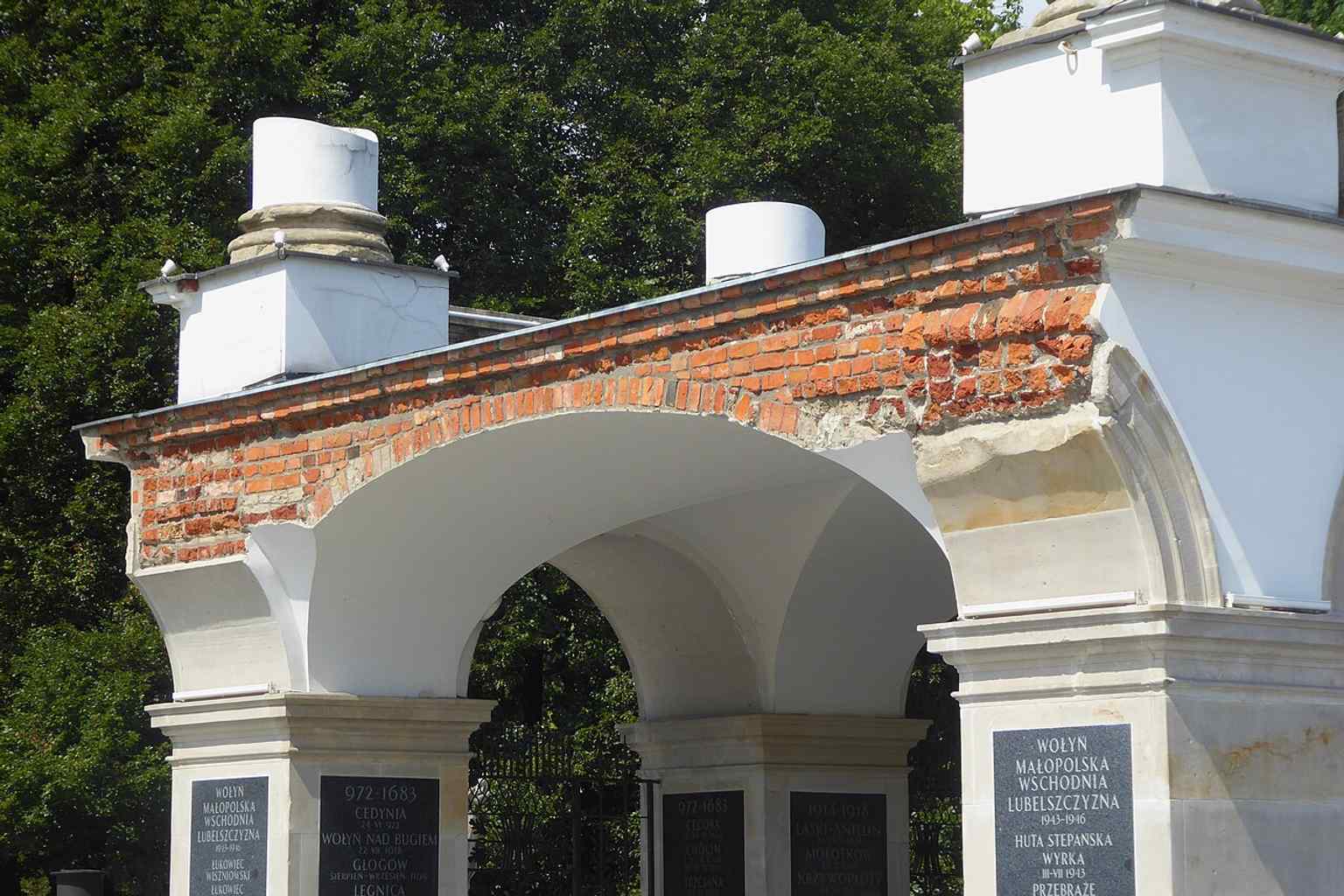
The southern side detail where the original brickwork is visible — a reminder that the tomb is the preserved remnant of a much larger palace structure.
The southern side detail where the original brickwork is visible — a reminder that the tomb is the preserved remnant of a much larger palace structure.Photo: Ethan Doyle White, Wikimedia Commons, CC BY-SA 4.0. Cropped & resized.

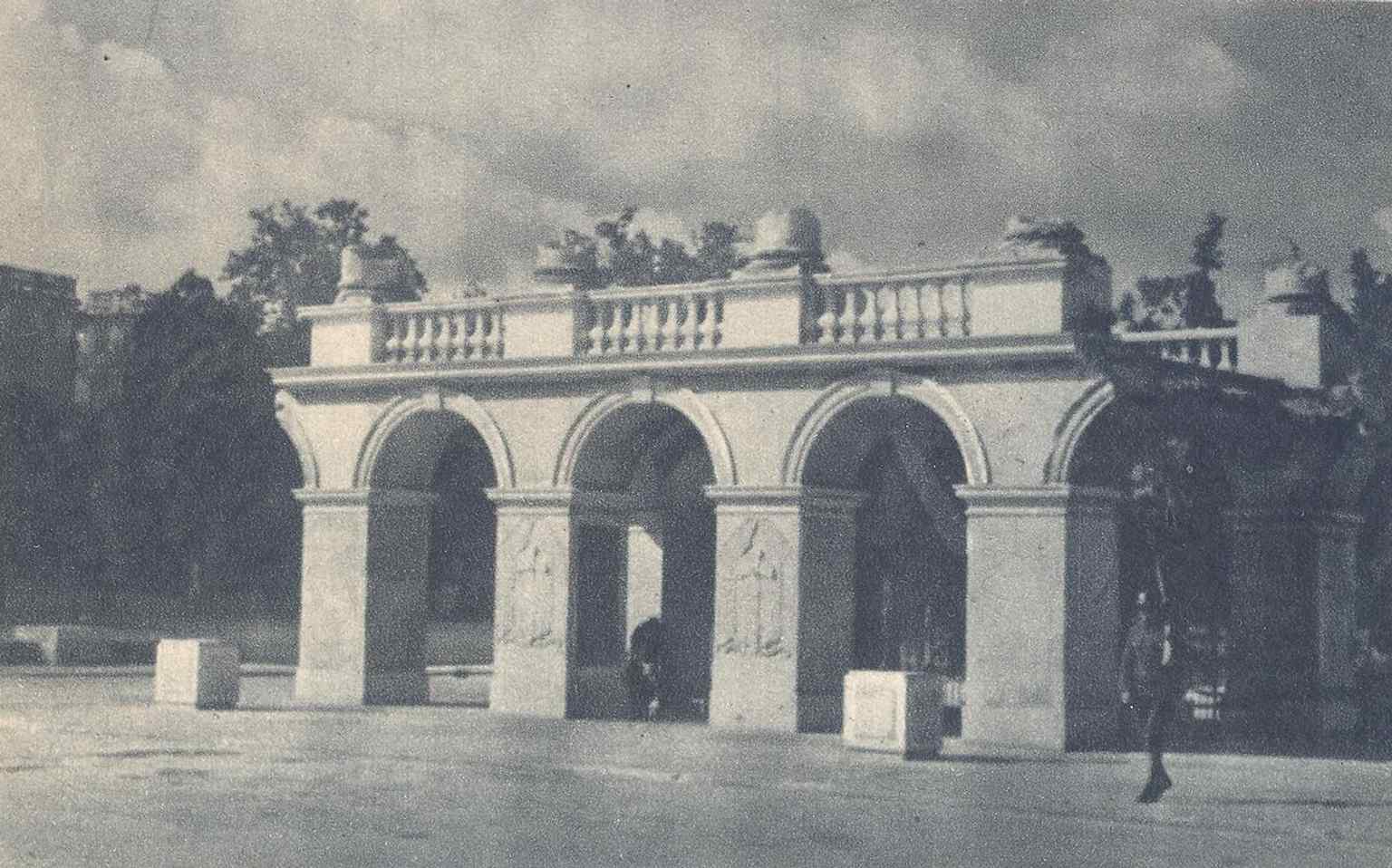
Most visitors sense something unusual here without quite naming it, so here’s the local tip: this tomb is not a freestanding monument at all. It is only the surviving fragment of a much larger palace colonnade, blown apart by the Germans in December of nineteen forty-four. That is why it feels complete and incomplete at the same time, like a sentence with the middle intact and the rest torn away. If you check the before-and-after image, you can see that transformation in one glance.

After the war, architect Zygmunt Stępiński rebuilt only these three arches, on purpose, preserving the place as a ruin-symbol rather than smoothing it into a neat replacement. Warsaw does this a lot. It lets damage stay readable. The missing parts become part of the meaning.

So this first stop sets the tone for the city around you. Public memory here does not live in one clean story; it lives in ritual, fragments, and the stubborn decision to keep showing where the break happened. From here, we’ll walk about four minutes to the Grand Theatre, where power and performance take the stage in a very different way.

And one practical note: the tomb is open to the public around the clock.
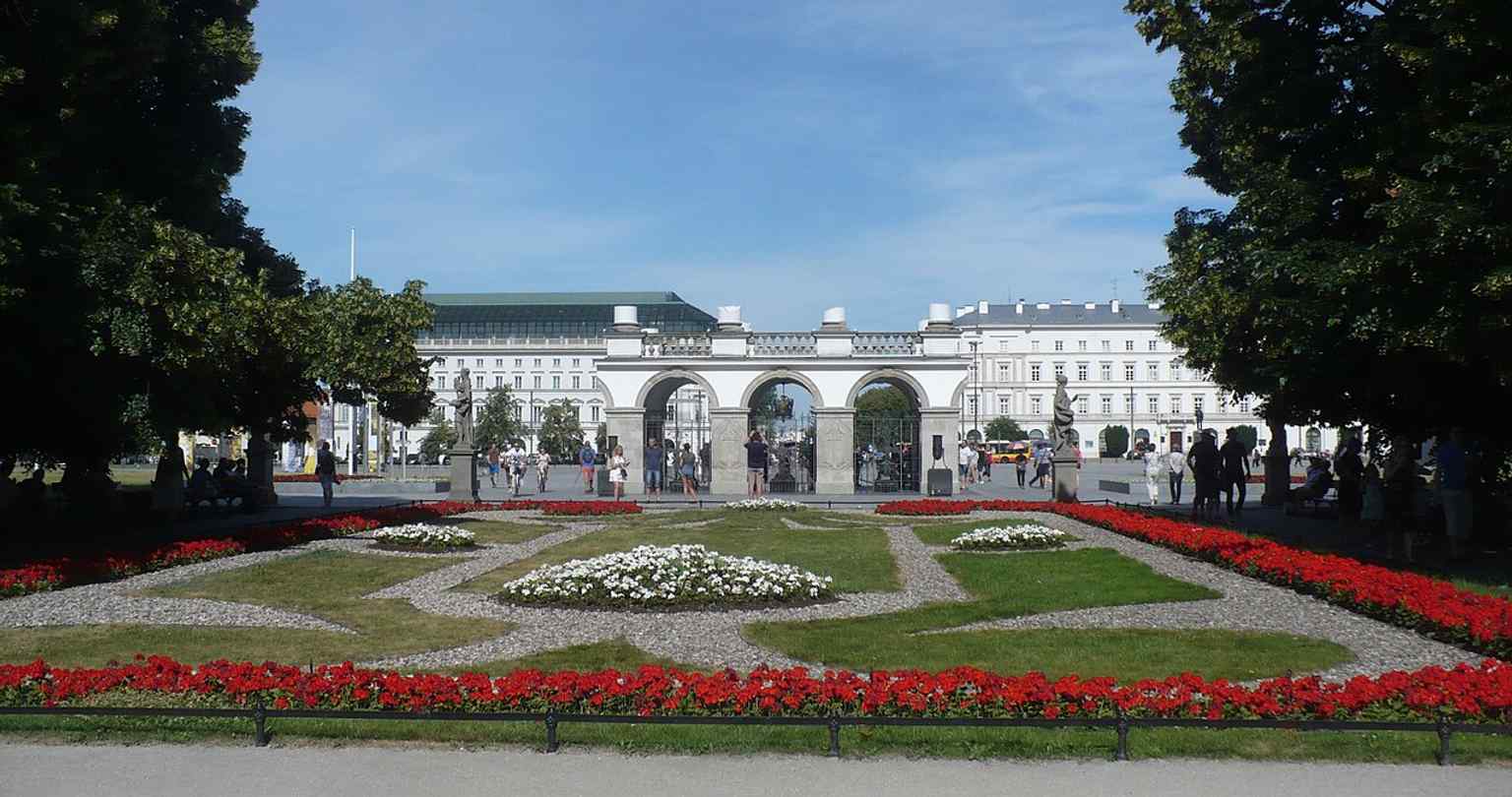
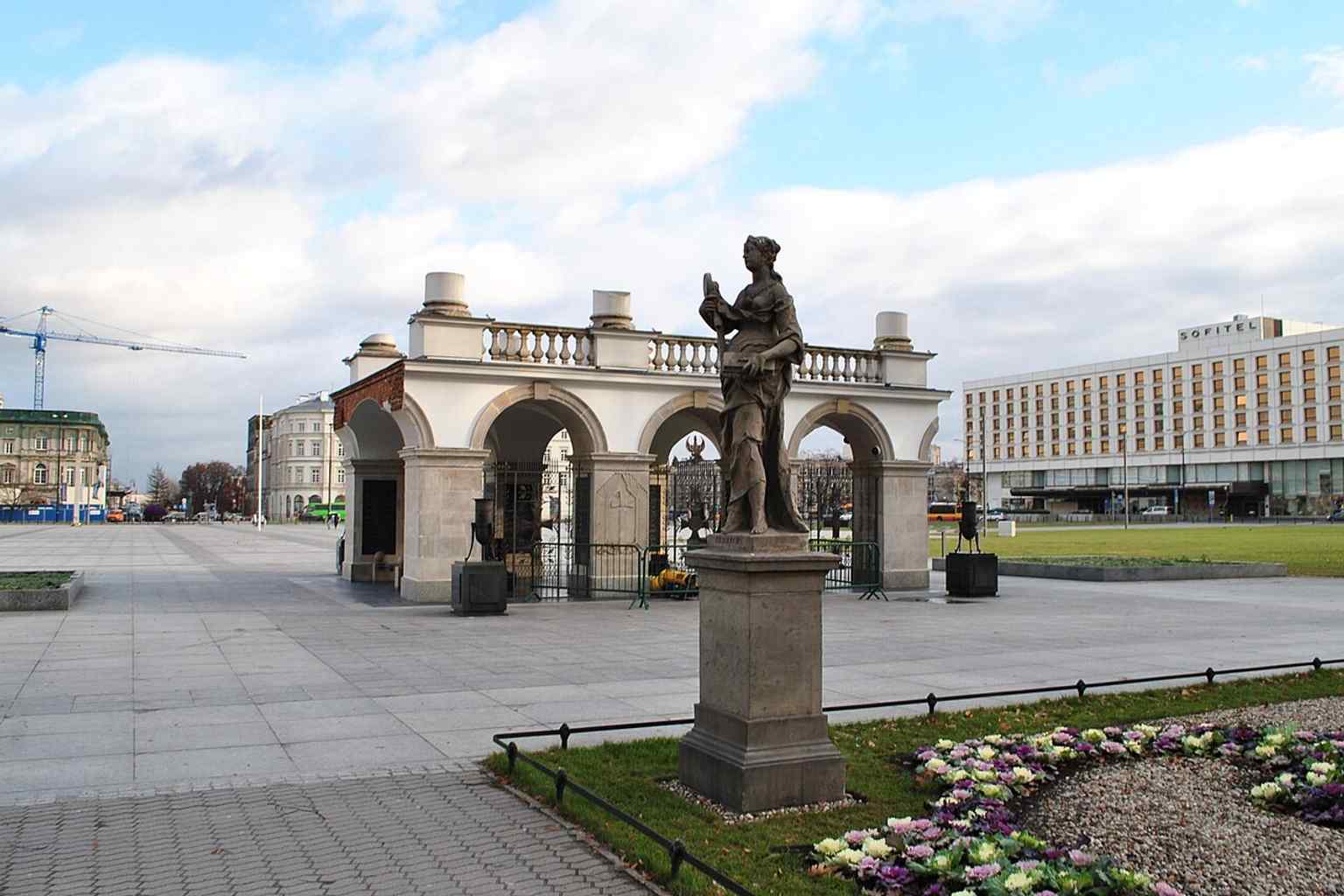
A wider exterior view of the monument on Piłsudski Square, useful for showing the surviving arcade fragment of the former Saxon Palace colonnade.
A wider exterior view of the monument on Piłsudski Square, useful for showing the surviving arcade fragment of the former Saxon Palace colonnade.Photo: Оксана Проценко, Wikimedia Commons, CC BY-SA 4.0. Cropped & resized.
The tomb seen in its urban setting beside Piłsudski Square and the Saxon Garden, matching the landmark’s role as the ceremonial center of Warsaw.
The tomb seen in its urban setting beside Piłsudski Square and the Saxon Garden, matching the landmark’s role as the ceremonial center of Warsaw.Photo: Marek Mróz, Wikimedia Commons, CC BY 4.0. Cropped & resized.
A wartime 1944 image of the Tomb of the Unknown Soldier, valuable for contrasting the monument’s later ruin and postwar restoration.
A wartime 1944 image of the Tomb of the Unknown Soldier, valuable for contrasting the monument’s later ruin and postwar restoration.Photo: Unknown authorUnknown author, Wikimedia Commons, Public domain. Cropped & resized.
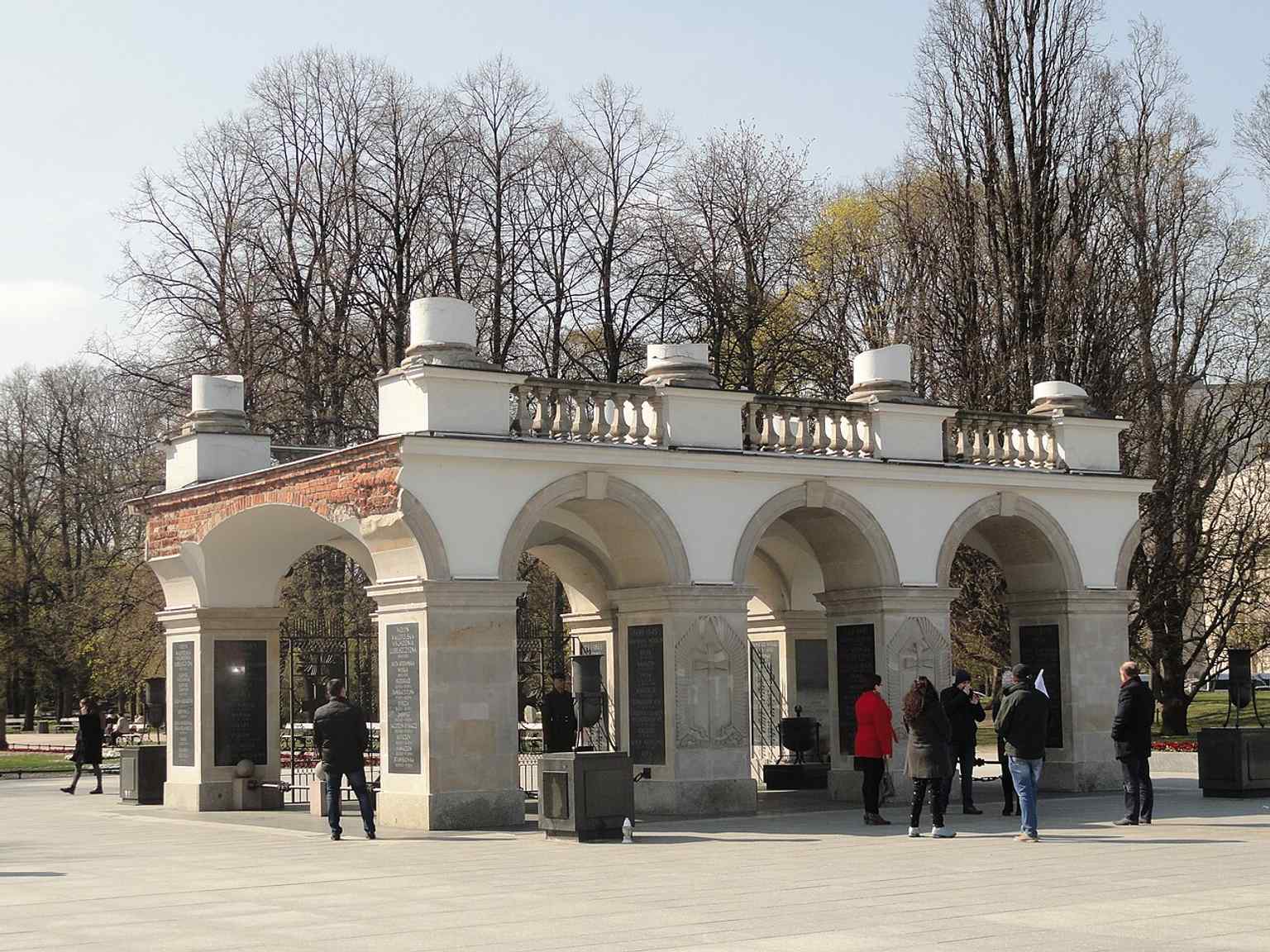
A high-resolution modern view that captures the monument’s restored stonework and the three-arched colonnade fragment in detail.
A high-resolution modern view that captures the monument’s restored stonework and the three-arched colonnade fragment in detail.Photo: Cybularny, Wikimedia Commons, CC BY-SA 4.0. Cropped & resized.
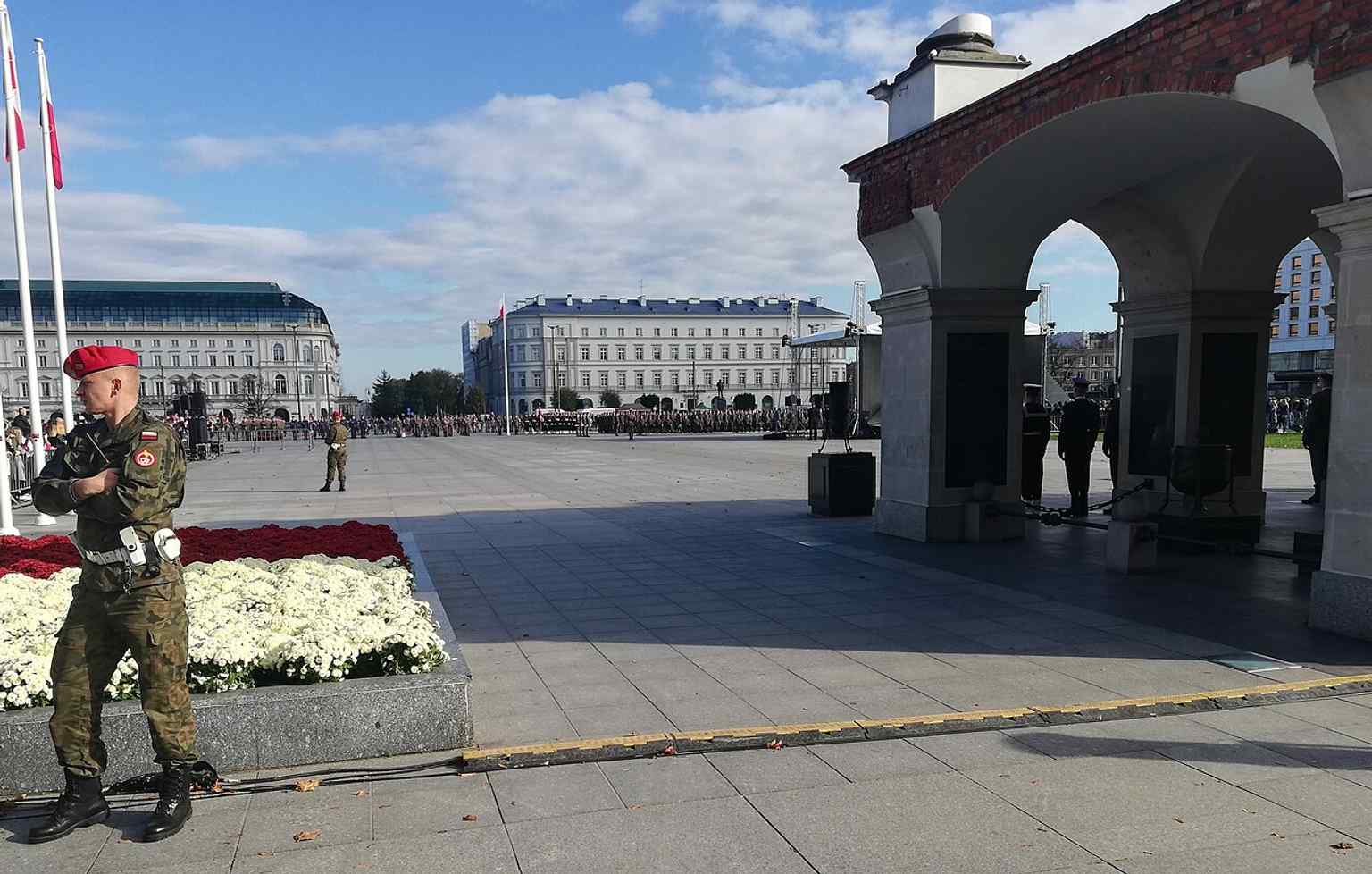
A clear view of a military ceremony directly in front of the tomb, illustrating the honor guard tradition described in the source text.
A clear view of a military ceremony directly in front of the tomb, illustrating the honor guard tradition described in the source text.Photo: Heshq, Wikimedia Commons, CC BY-SA 4.0. Cropped & resized.
arrow_back Back to Warsaw Audio Tour: Royal Heritage Walk
Loved by travellers

Thousands of tours started.
Plenty of opinions.

4.8 across the App Store and Google Play. Here's a few we keep coming back to.

starstarstarstarstar
This was a solid way to get to know Brighton without feeling like a tourist. The narration had depth and context, but didn't overdo it.
Christoph
Christoph
Brighton Tour
starstarstarstarstar
Started this tour with a croissant in one hand and zero expectations. The app just vibes with you, no pressure, just you, your headphones, and some cool stories.
download Get the app

Pop your headphones in.
Step outside.

Free to download. Tours in every city. Start in 60 seconds — no account, no card.

Download on the App StoreGet it on Google Play
starstarstarstarstar_half
4.8
AudaTours app icon
headphones
~ 4 min until your first tour starts
public
1,000+ cities worldwide
all_inclusive
AudaTours
Unlimited

Every tour. Every city. One subscription.

3097 tours2273 cities138 countries50+ languages