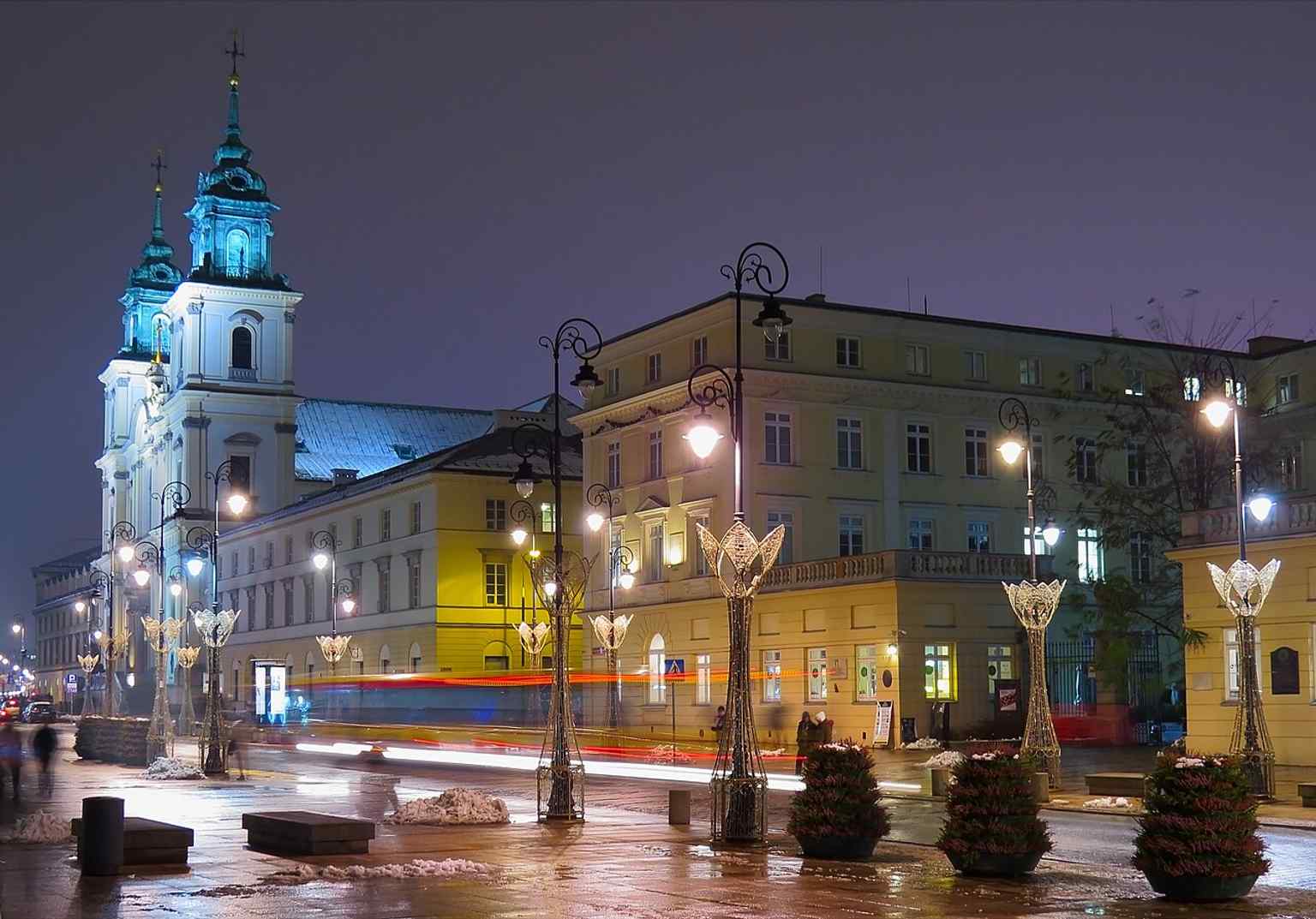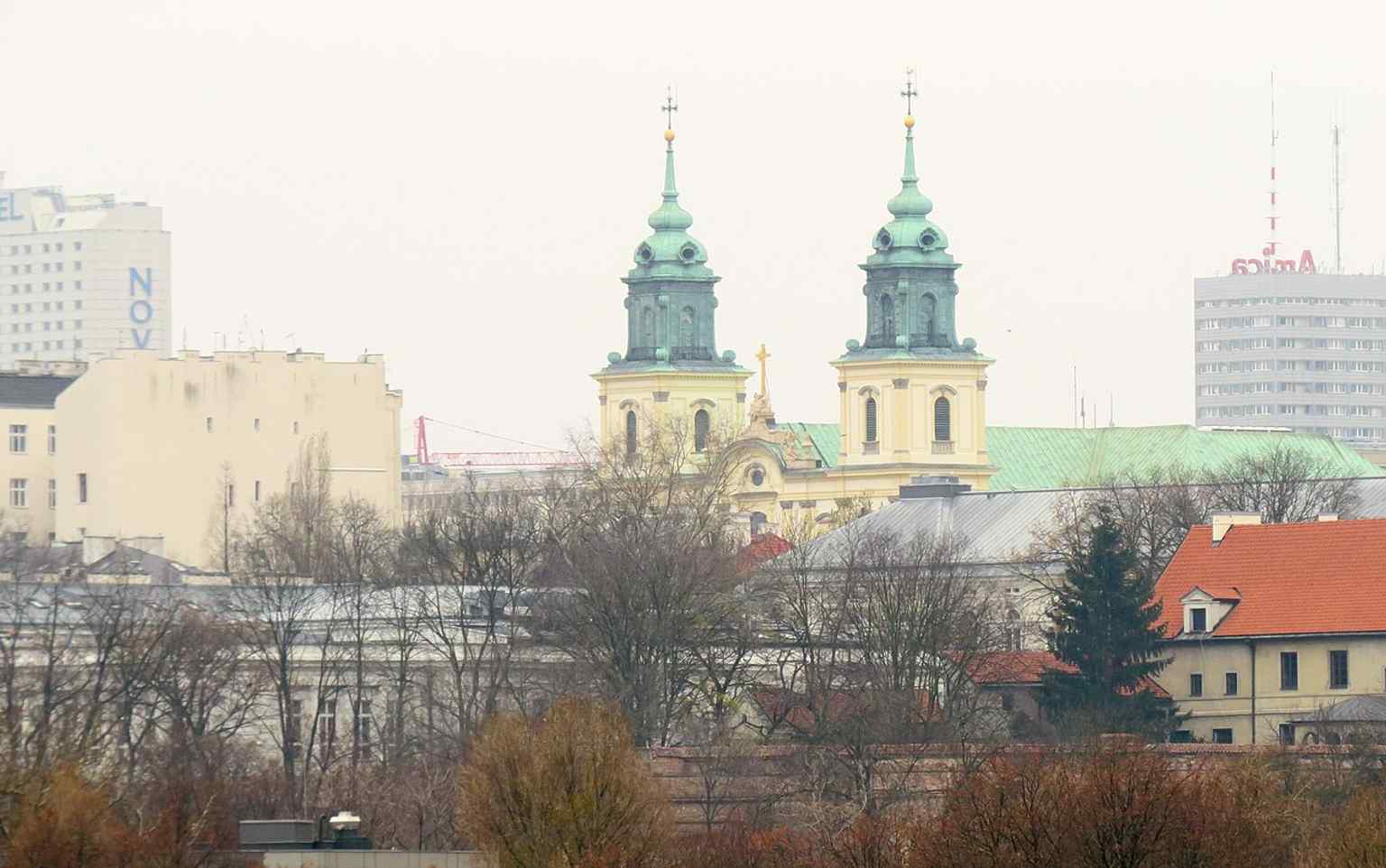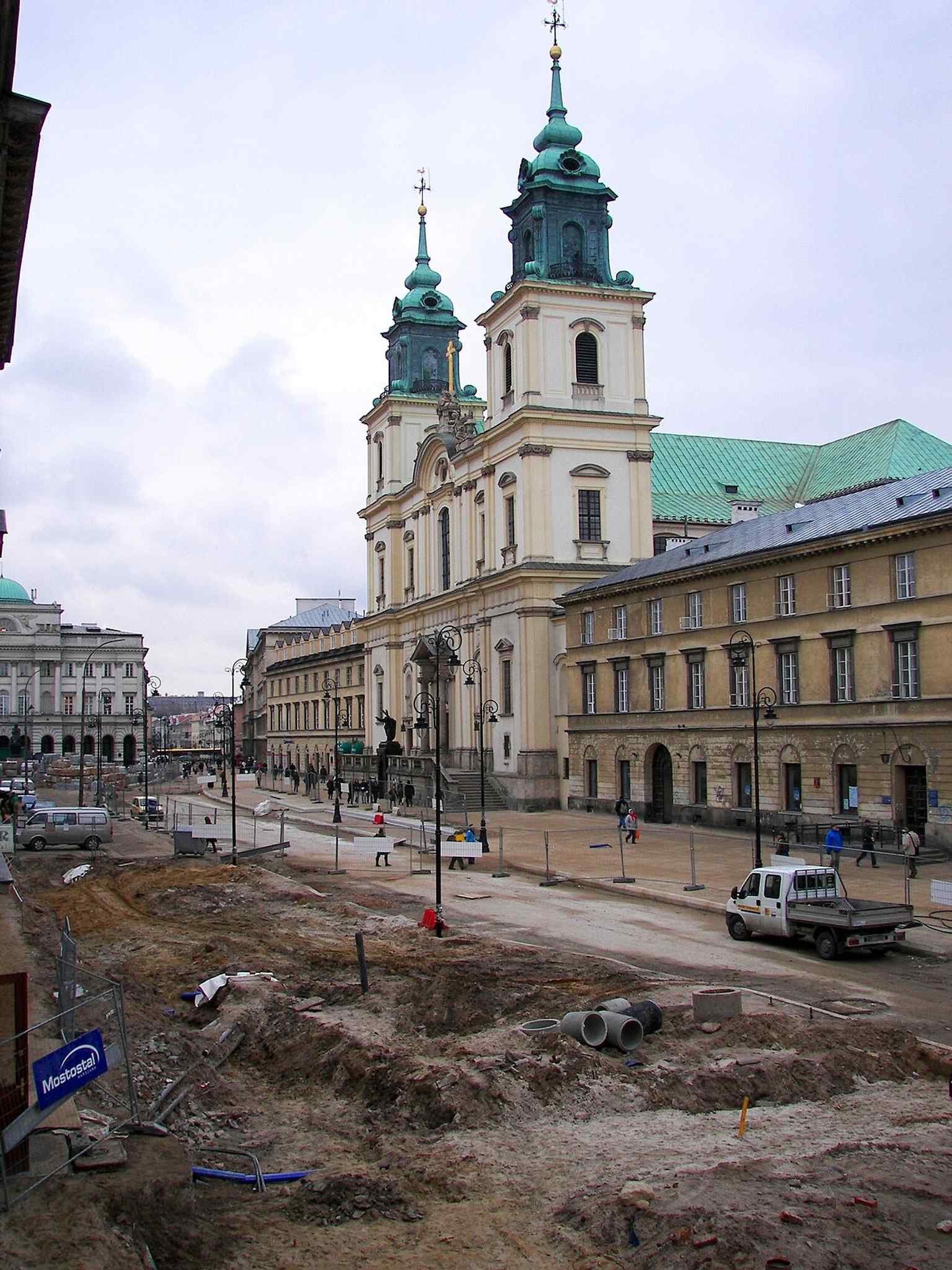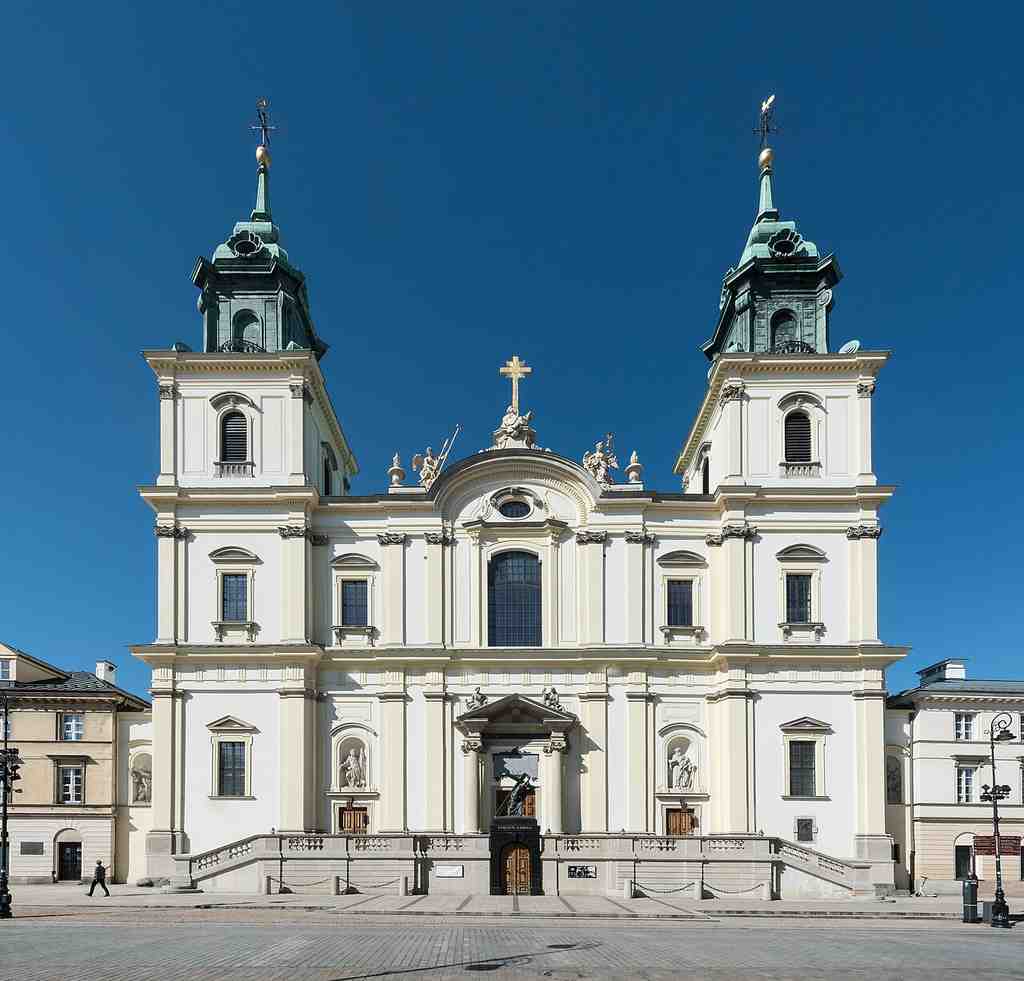
Look for the pale stone Baroque façade with its twin towers and the dark bronze figure of Christ carrying a cross on a black pedestal before the entrance.
This is the Basilica of the Holy Cross, and for Warsaw it is more than a church. It is a kind of chest of memory. Inside one of its pillars rests perhaps the city’s most intimate national relic: Chopin’s heart in Warsaw. Not his statue, not just his music drifting through concert halls... his actual heart, brought back to Poland according to his wish, first kept in the crypts, then placed here with an epitaph of white Carrara marble. Suddenly history stops being abstract and gets very personal.
Stand with that a moment. A nation can honor a composer with street names and monuments, sure... but here Warsaw kept the part of him that beat.
The church itself goes way back. A chapel stood here by the early sixteenth century, then Marta Möller funded a small church in fifteen twenty-five. After wars battered the site, Queen Ludwika Maria Gonzaga helped bring in the Vincentian missionaries in the seventeenth century, and their order still serves the church. The grand building in front of you took shape between sixteen seventy-nine and sixteen ninety-six, designed by the Italian royal architect Józef Szymon Bellotti. Later, Jakub Fontana gave the façade its elegant theatrical front, while his father designed the tower helmets. Warsaw does love family businesses.
But this place gathered more than worship. King Jan the Third Sobieski prayed here before heading to Vienna in sixteen eighty-three. Kazimierz Pułaski was baptized here. King Stanisław August awarded the Order of Saint Stanislaus here. In seventeen ninety-two, deputies marked the first anniversary of the Constitution of the Third of May here before processing onward through the city. So yes, this church prayed... and it also witnessed the nation talking to itself.
If you peek at the before-and-after image in the app, you can see how this stretch of Krakowskie Przedmieście changed from an eighteenth-century churchscape into a rebuilt postwar capital.
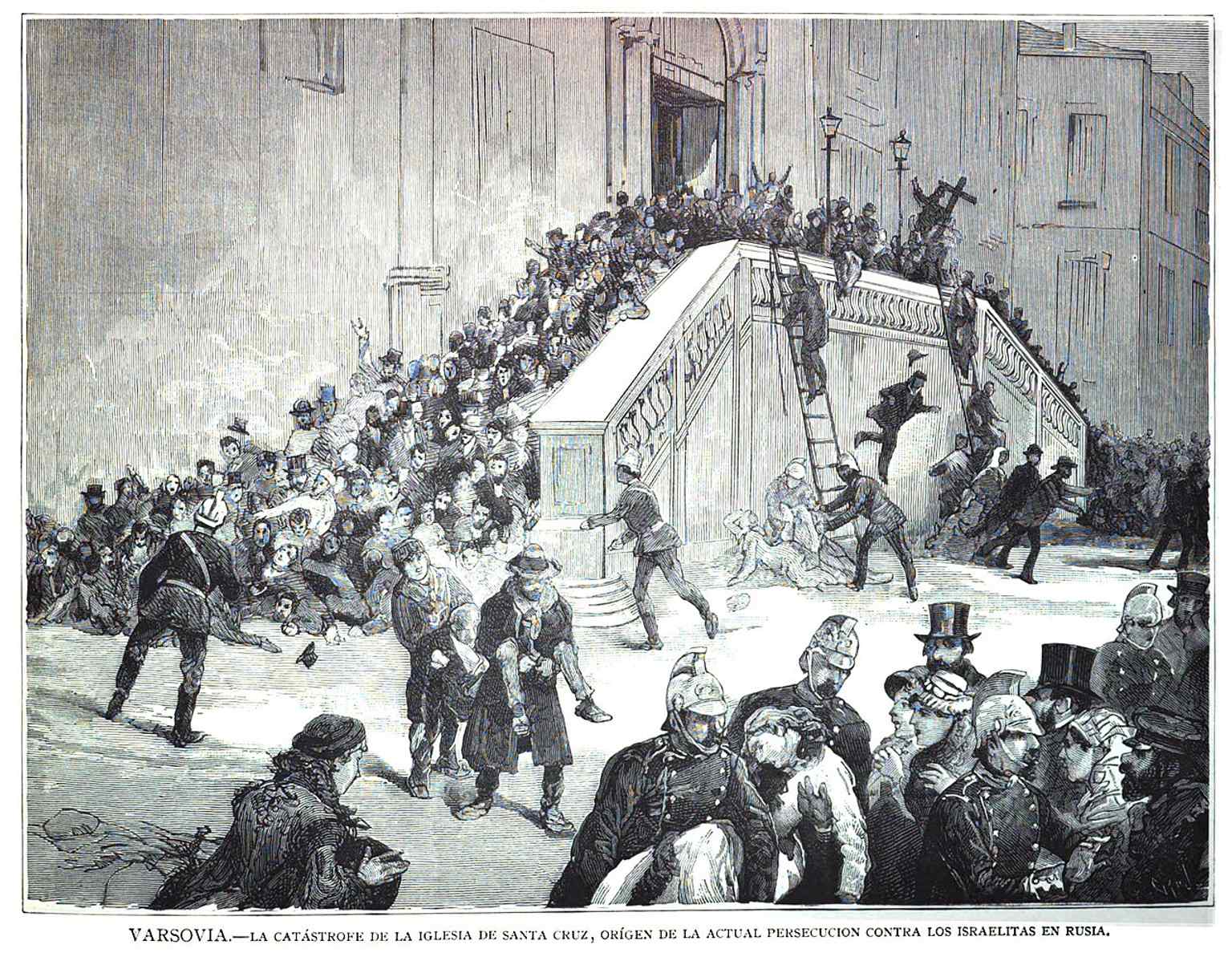
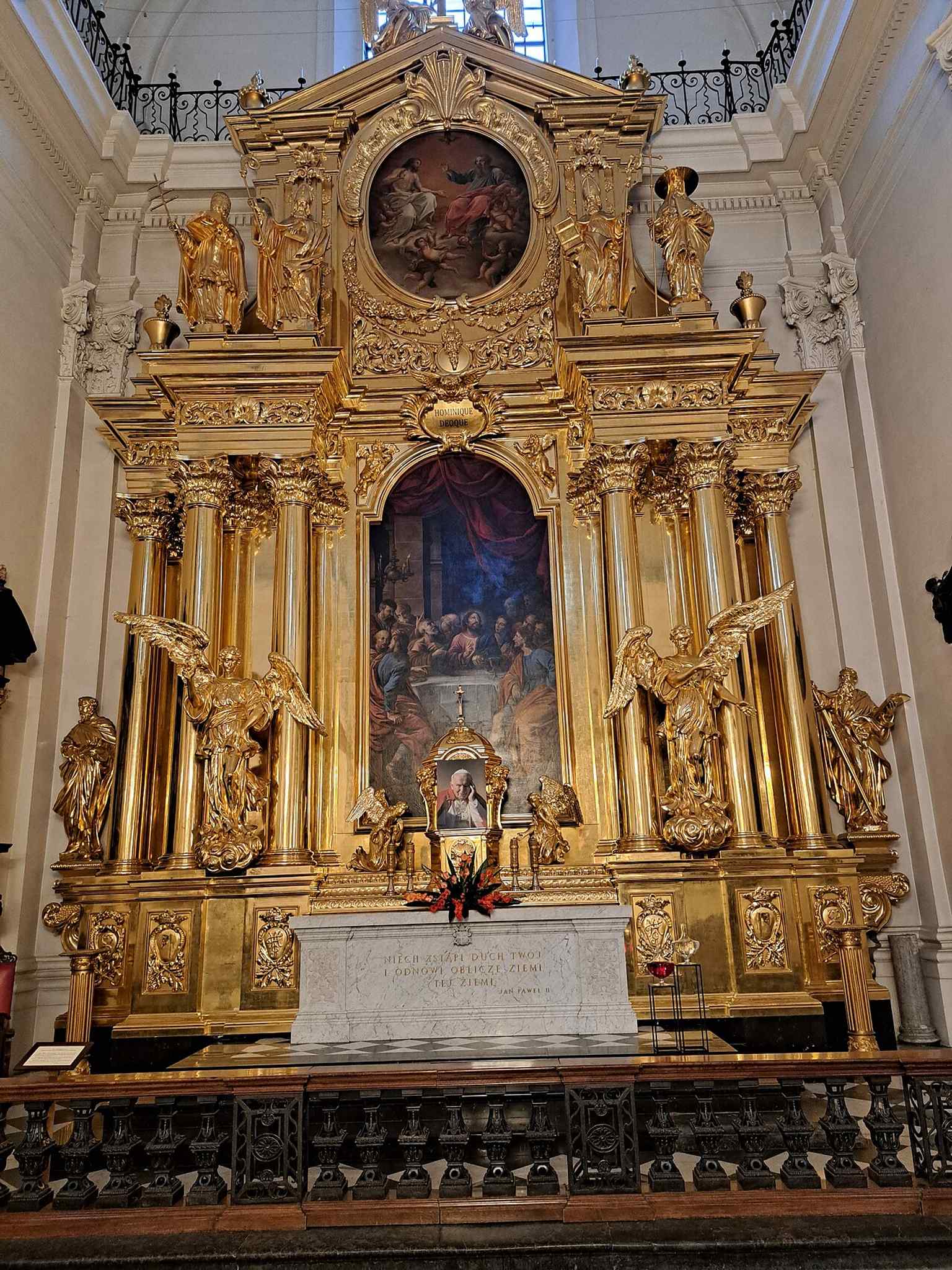
The scars run deep. In the Christmas panic of eighteen eighty-one, about twenty-nine or thirty people died in a stampede here, and a false rumor blaming Jews helped trigger a pogrom. Then the Second World War tore into the building again. During the Warsaw Uprising, German forces used the church as a fortified point. On the sixth of September, nineteen forty-four, they drove in two small explosive vehicles called Goliaths and detonated them. The blast shattered the façade, wrecked the great altar, and brought down the famous Christ statue outside. It fell onto the street still pointing upward above the words Sursum Corda, “Lift up your hearts.” That is pure Warsaw: even toppled, it kept making its point.
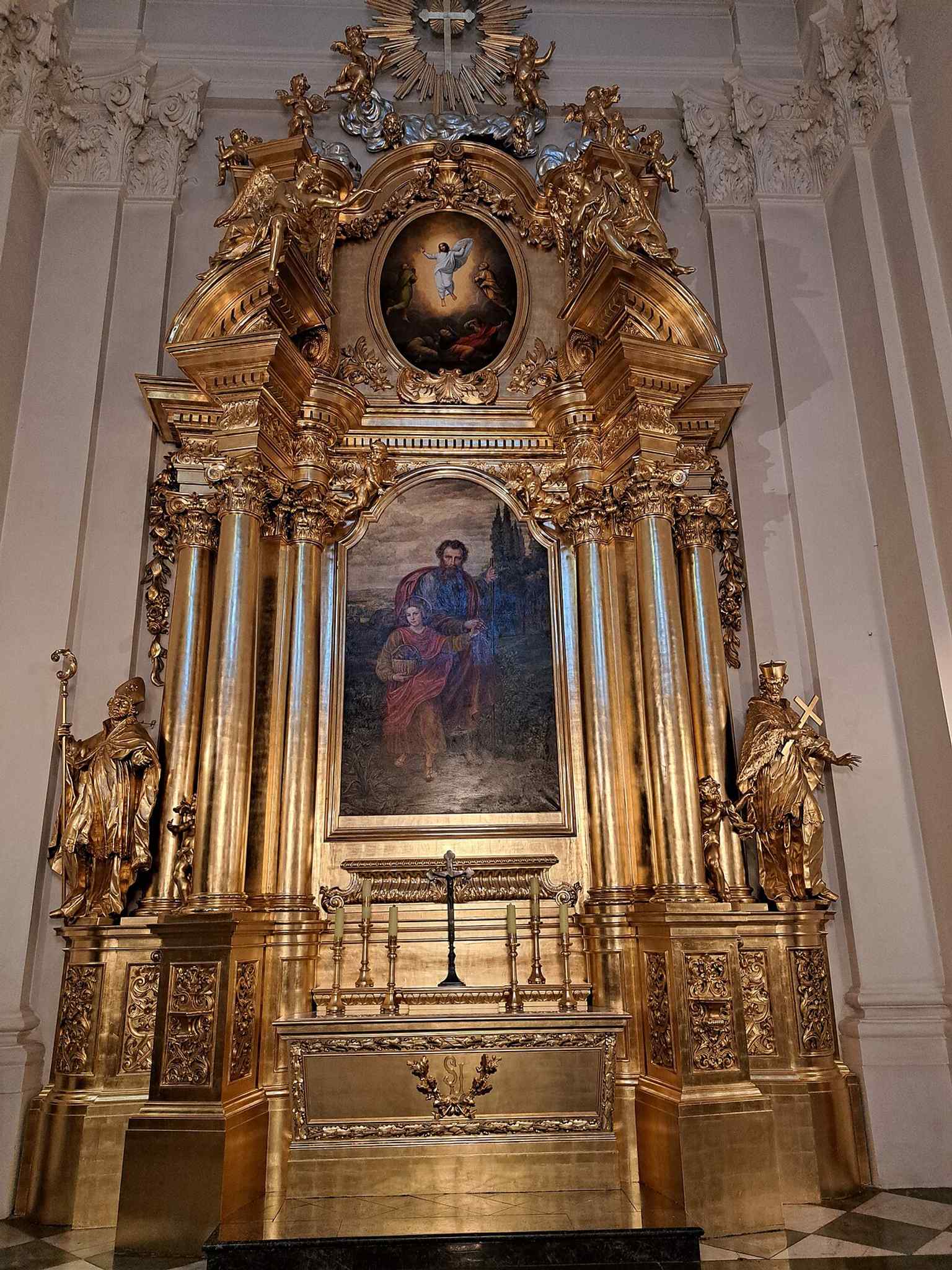
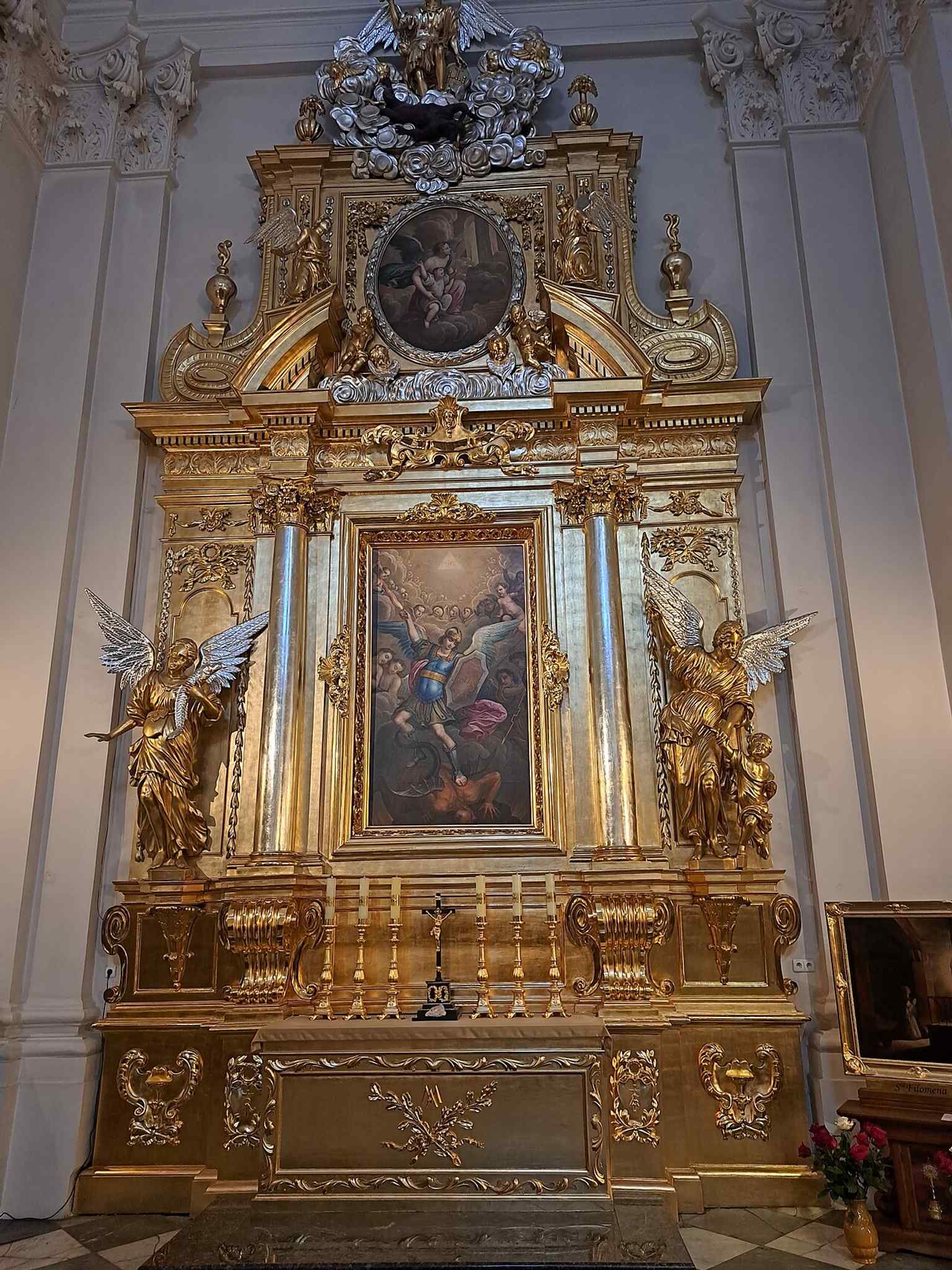
If you want a glimpse of the restored interior, bring up the long central hall, the nave, on your screen.
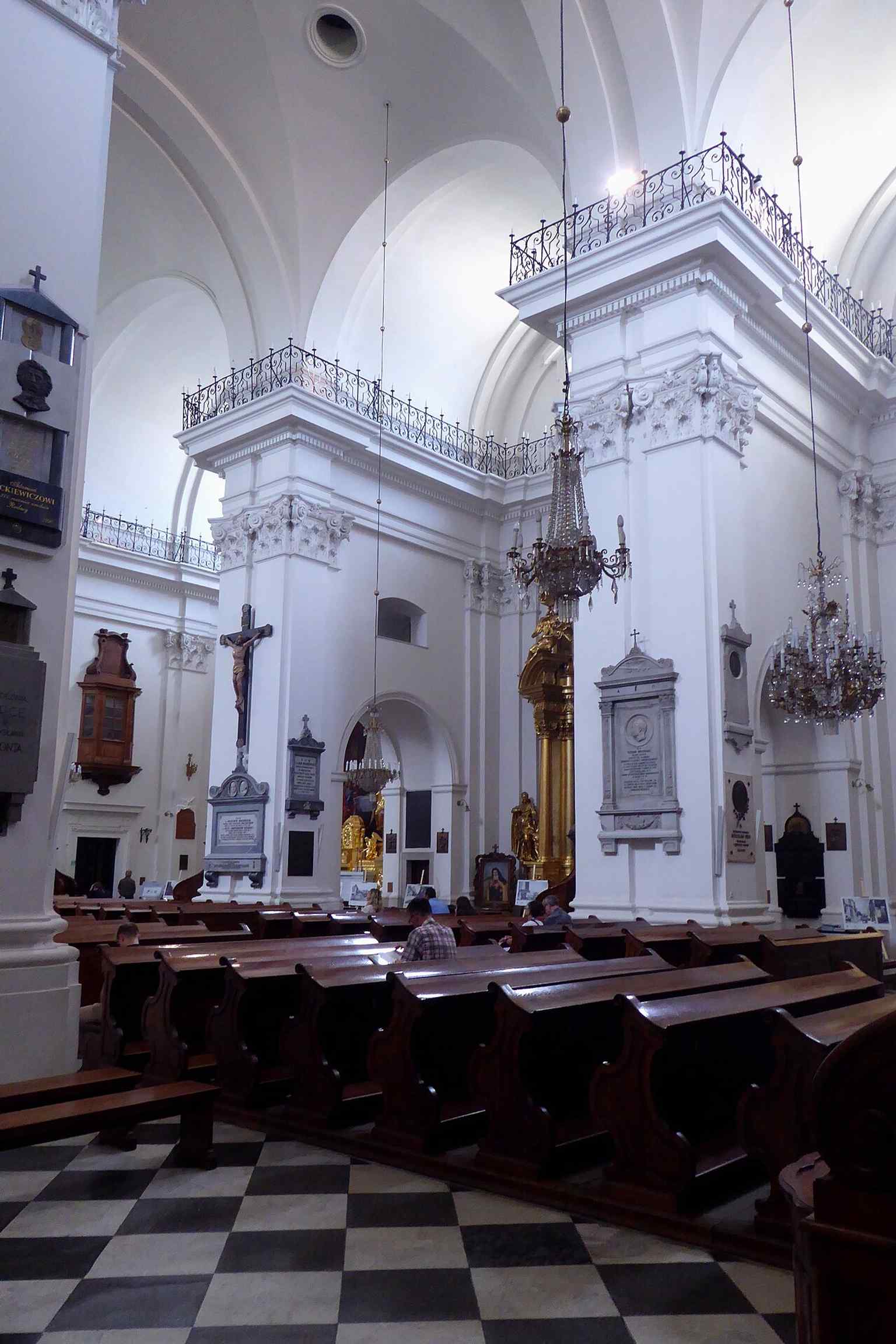
After the war, workers rebuilt the church and finished by nineteen fifty. Cardinal Stefan Wyszyński consecrated the reconstructed main altar in nineteen fifty-three, giving the whole effort the feel of a moral repair, not just an architectural one.
And here is the question I’d leave with you: why would a people choose to preserve a composer’s heart in a church, instead of only raising statues or naming concert halls? In Warsaw, even the body can become a monument... and next we’ll meet a man whose mind the city cast in bronze, at the Copernicus Monument, about a two-minute walk ahead.
If you plan to step inside later, the basilica is generally open from early morning until evening, with slightly shorter hours on Saturday.