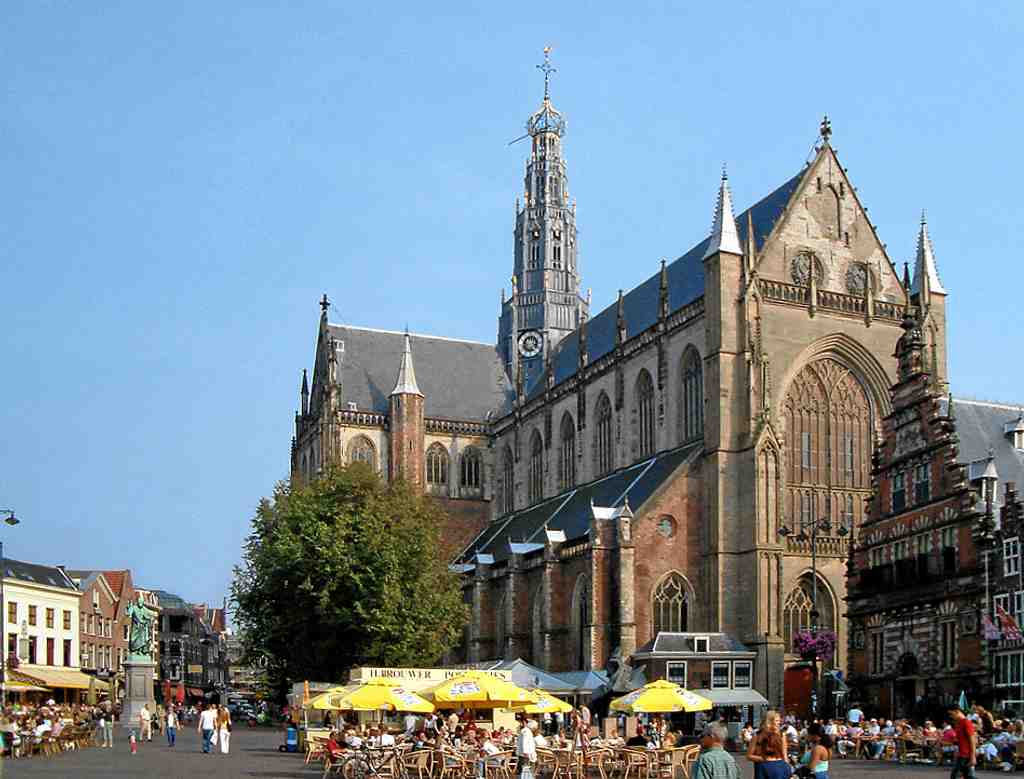
On your right, look for a vast dark-brick Gothic church with a steep roof and a tall square tower rising above the crossing like Haarlem’s old compass needle.
This is the Grote Kerk, also called Saint Bavo Church, and for centuries it has done more than fill the square... it has organized the city. From the river, from side streets, from market lanes, people kept finding their bearings by this tower. If Haarlem had a north star made of brick, this would be it.
A church stood on this spot long before the present one. By the year twelve forty-five, records already described an important parish church here with a bell tower, and they even remembered one of its priests by name: Arnoud van Sassenheim. The early church was wooden. Fire took it in the fourteenth century, and Haarlem answered the old Dutch way: rebuild, enlarge, carry on. By the fifteenth century, master builders turned it into the great Gothic landmark in front of you, large enough to outgrow the Janskerk and become the city’s main church.
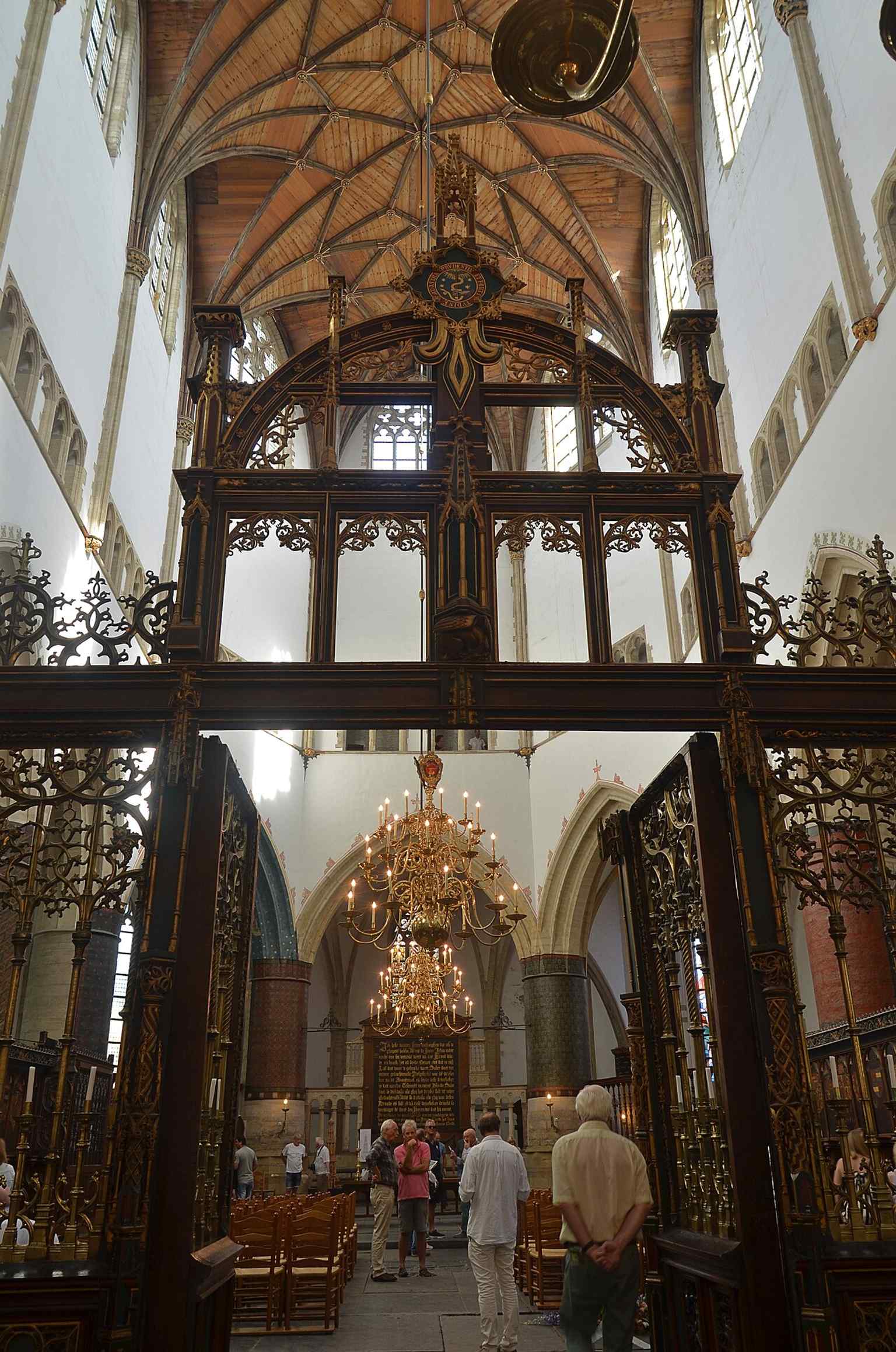
Its religious life changed, but never cleanly. It began as a Catholic church, became a chapter church in fourteen seventy-nine, then a cathedral in fifteen fifty-nine... and only nineteen years later, during the upheaval of the Reformation in fifteen seventy-eight, the city took it over for Protestant worship. So this building holds both worlds at once: the older Catholic rhythms of baptism, saints, and chapels, and the later Protestant focus on preaching and congregational life. One lovely surviving clue is the Font Chapel, added in the fourteen twenties or early fourteen thirties, where a baptismal font once stood with its own wrought-iron tap. Faith here was not just doctrine; it was babies, families, and belonging.
Take a moment and look up at how completely the church commands the square. Once you notice that, it becomes easier to understand how much of Haarlem learned to think of itself in relation to this one building.
Now for a fine old construction headache: in the early sixteenth century, Cornelis de Wael designed a heavy stone tower for the crossing - the spot where the nave and transept meet - and Anthoni Keldermans carried the plan forward. Trouble was, the tower weighed too much. The north-east pillar sank, nearby gravestones cracked, and the city had a very expensive lesson in gravity. Jacob Symonsz of Edam solved it by replacing the monster with a lighter wooden tower clad in lead between fifteen eighteen and fifteen twenty. Elegant, practical, very Dutch.
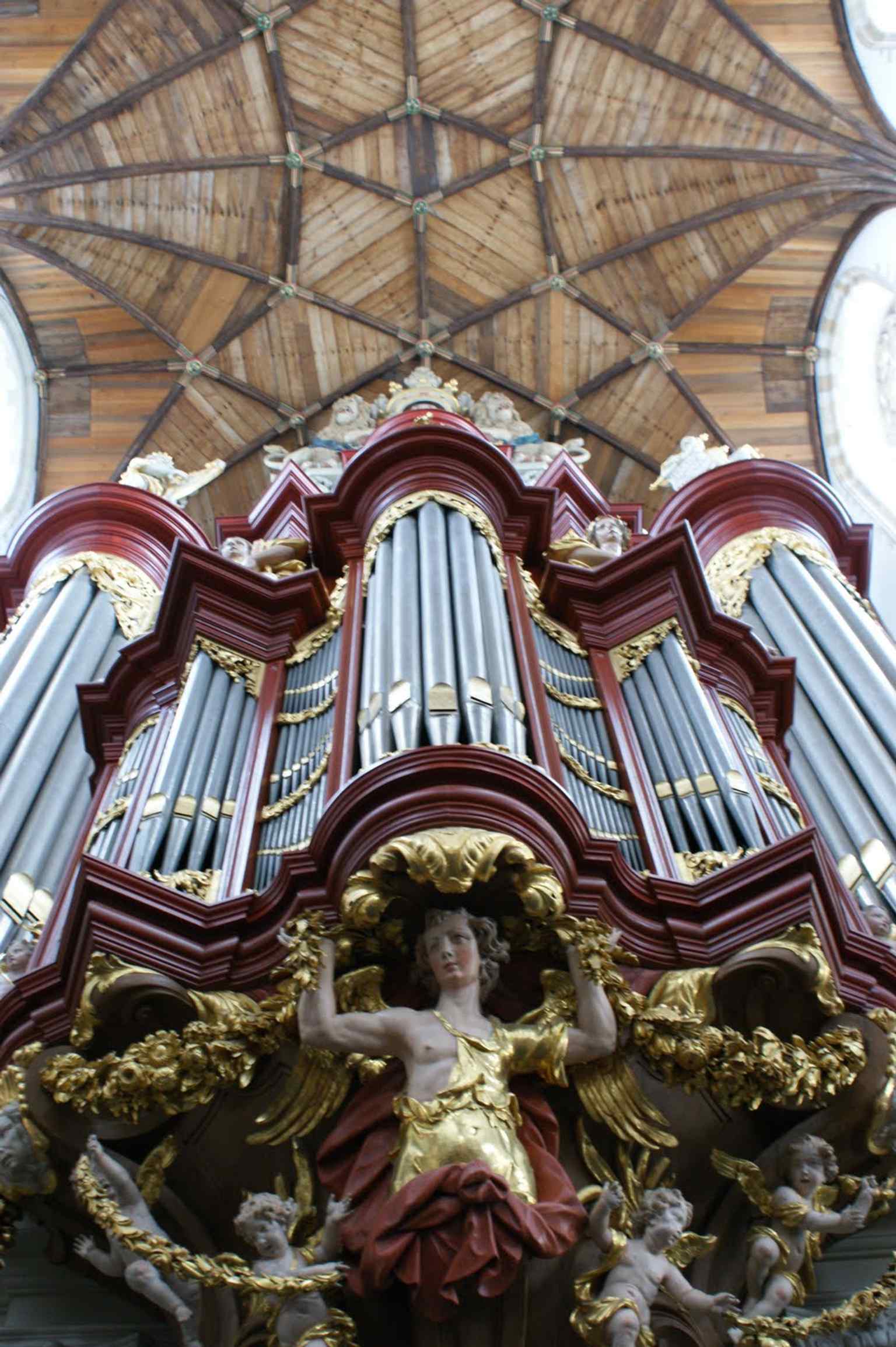
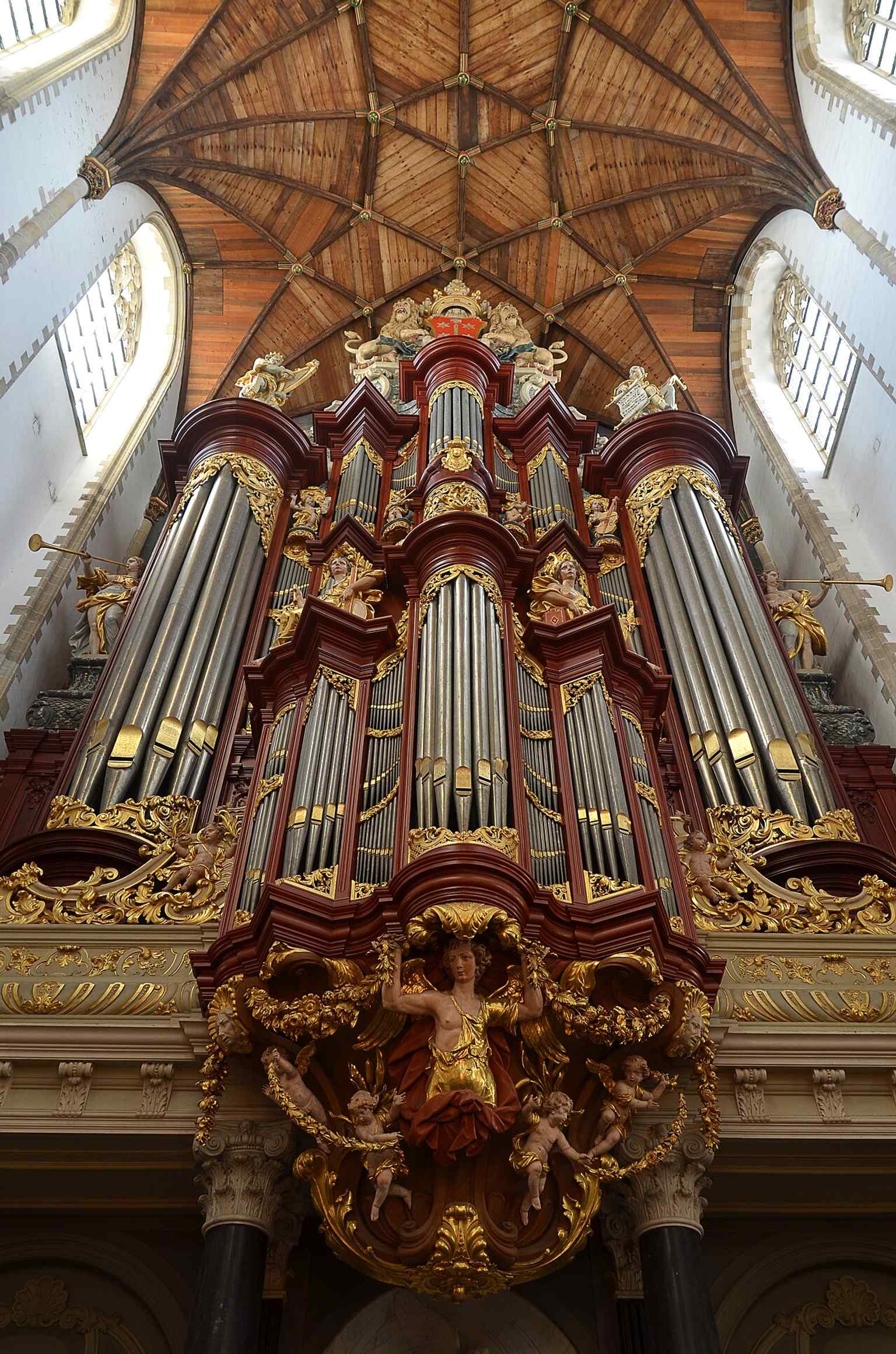
Inside, another layer waits. If you check the app, the great Müller organ fills the church like a carved wooden theater. Christian Müller finished it in the seventeen thirties, and it became so famous that Handel played it, and Mozart tried it as a ten-year-old boy. A local tale says its bass notes shook mortar loose. Honestly... I’m willing to believe it.
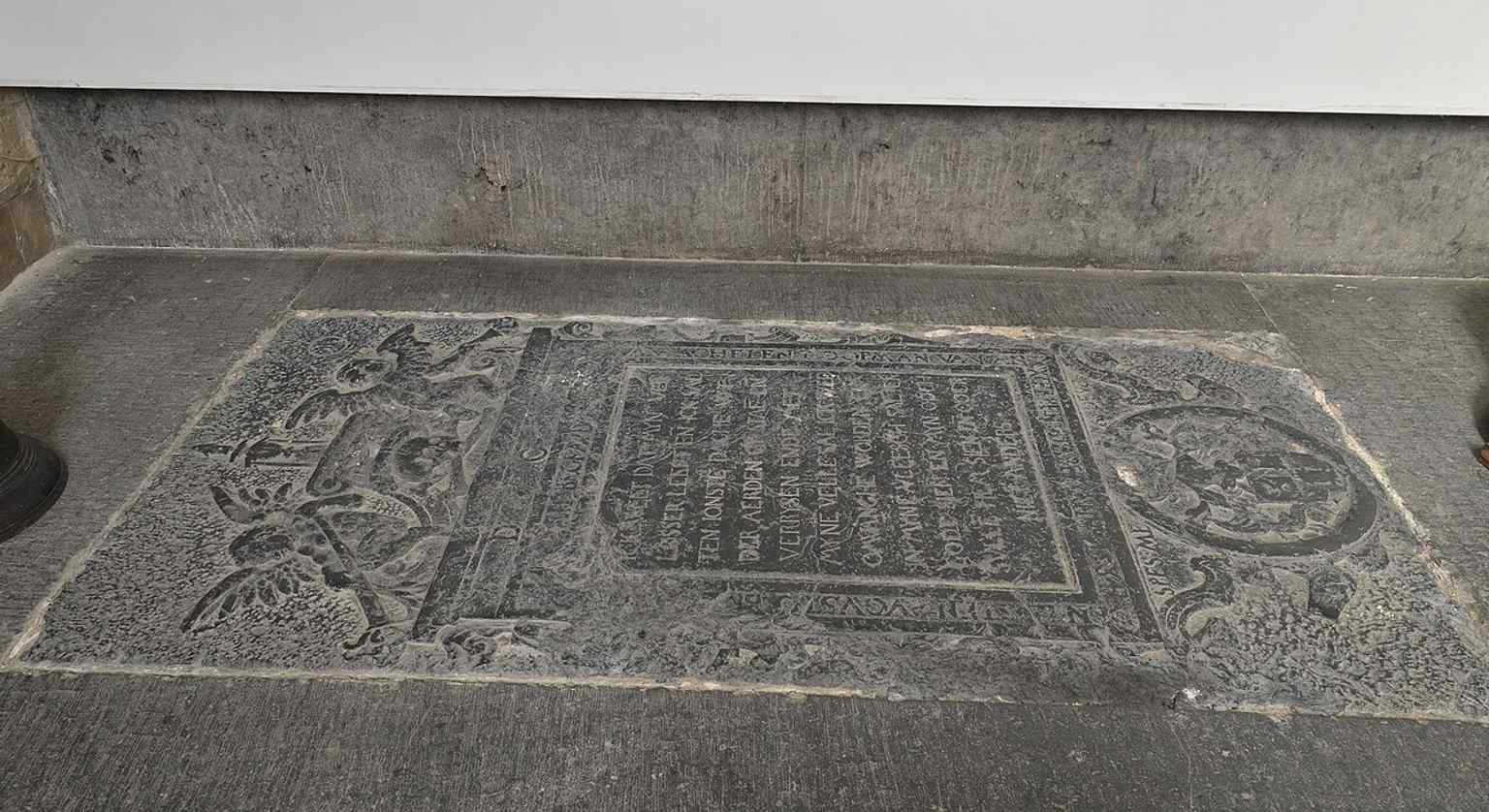
And then there’s Maarten van Heemskerck, the painter. He served as one of the church wardens from fifteen fifty-three until his death in fifteen seventy-four, and in his will he left money for poor young women, on one condition: they had to marry on his gravestone. That is Haarlem in a nutshell - piety, patronage, and a little theatrical flair. Later, even his grave was disturbed and re-marked, which tells you something important: this church keeps changing, but it rarely throws its past away entirely. Even Frans Hals lies buried inside, and we’ll meet him again before long.
Next, we trade clergy for craftspeople and head to Barn, about a two-minute walk away, where community gathers around making instead of worship. If you want to step inside later, the church is generally open Monday through Saturday from ten to five, and closed on Sunday.