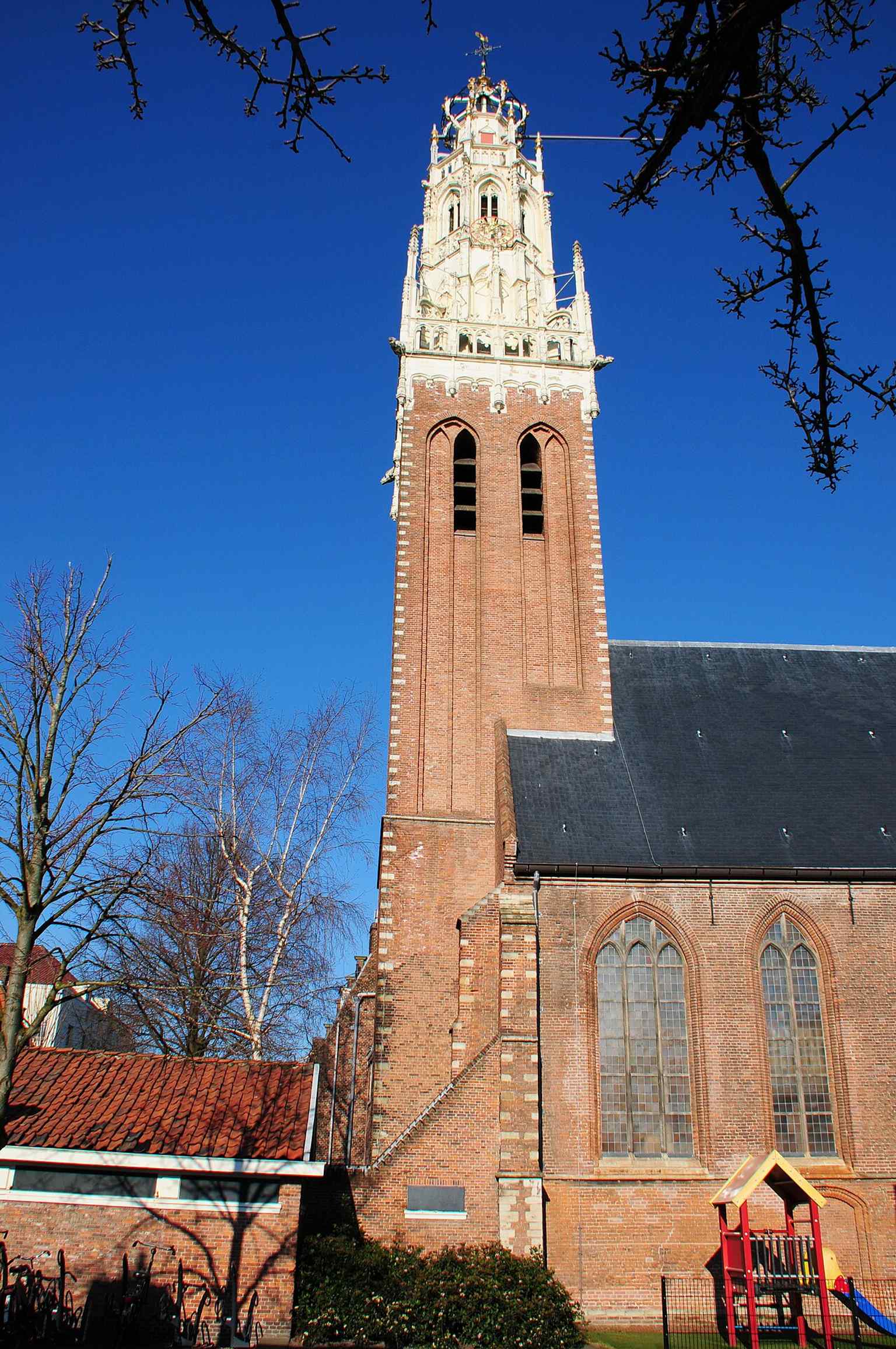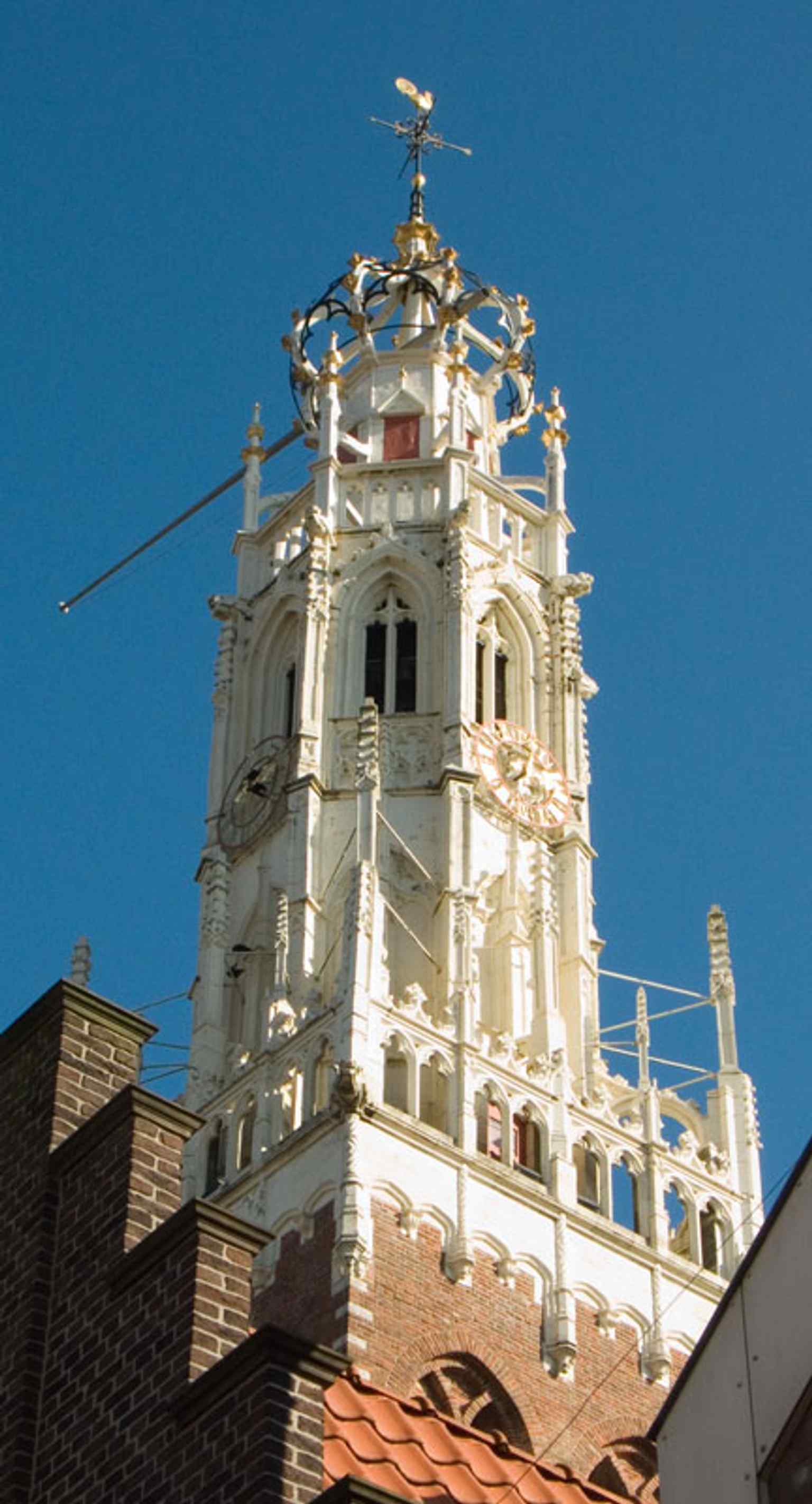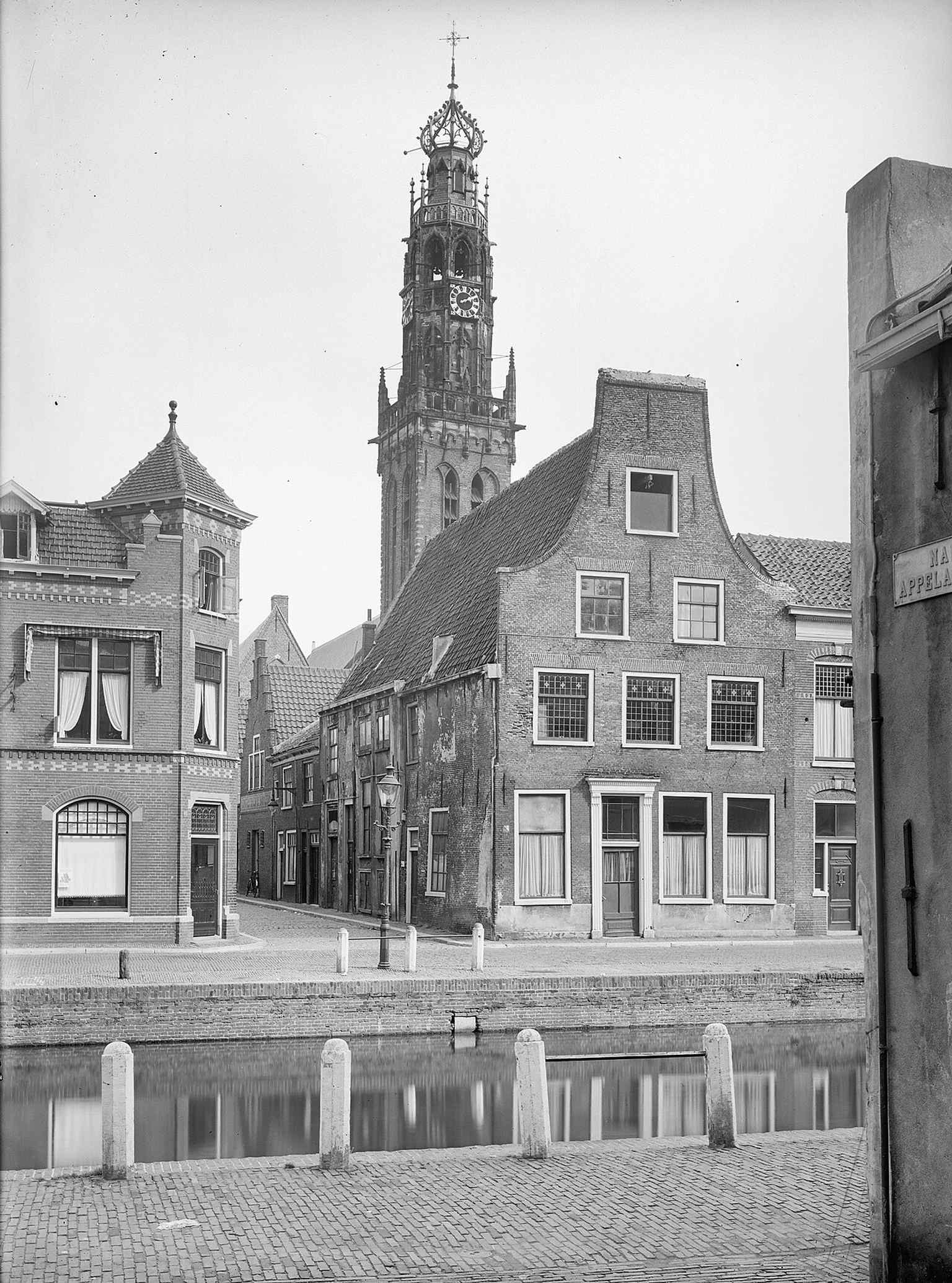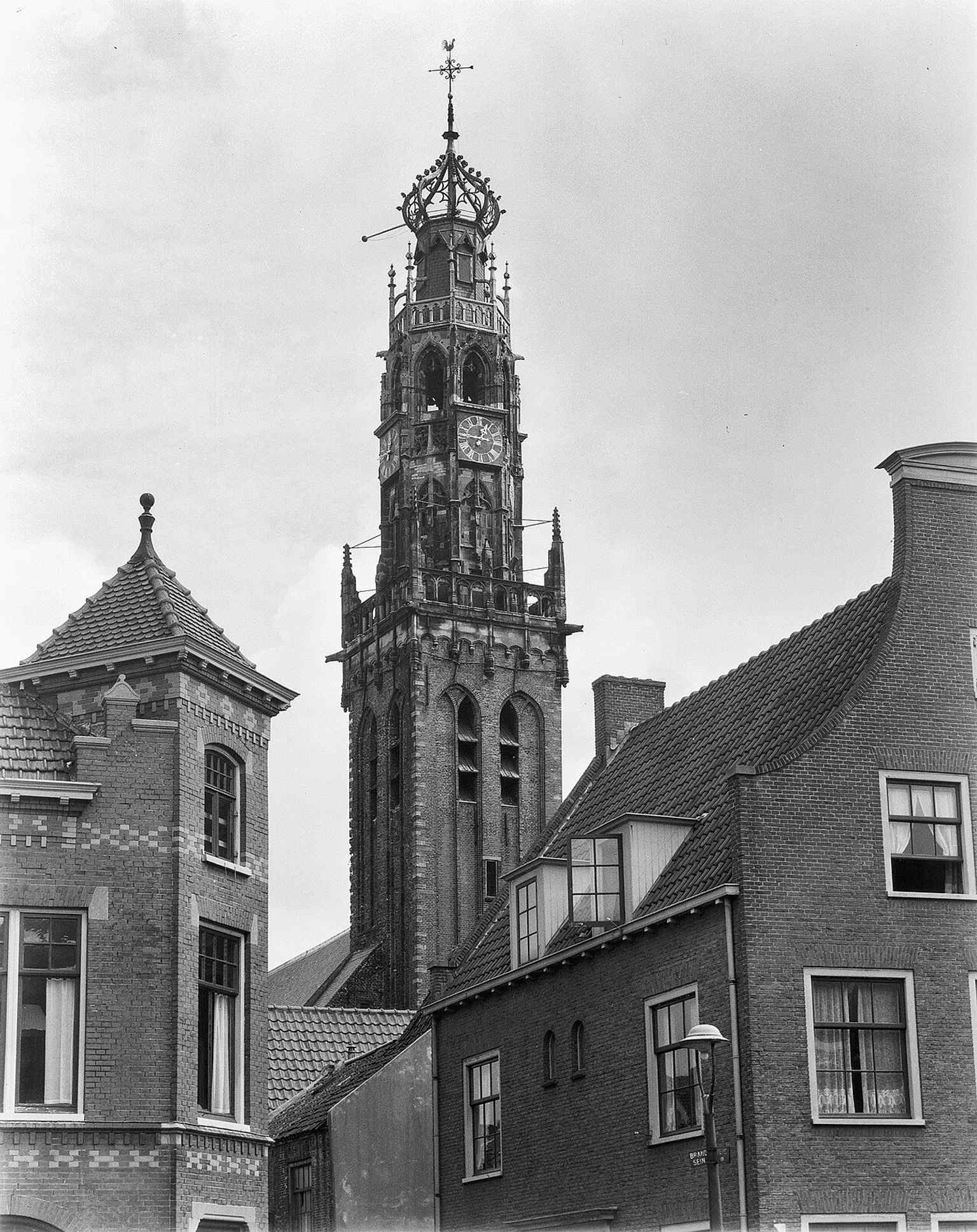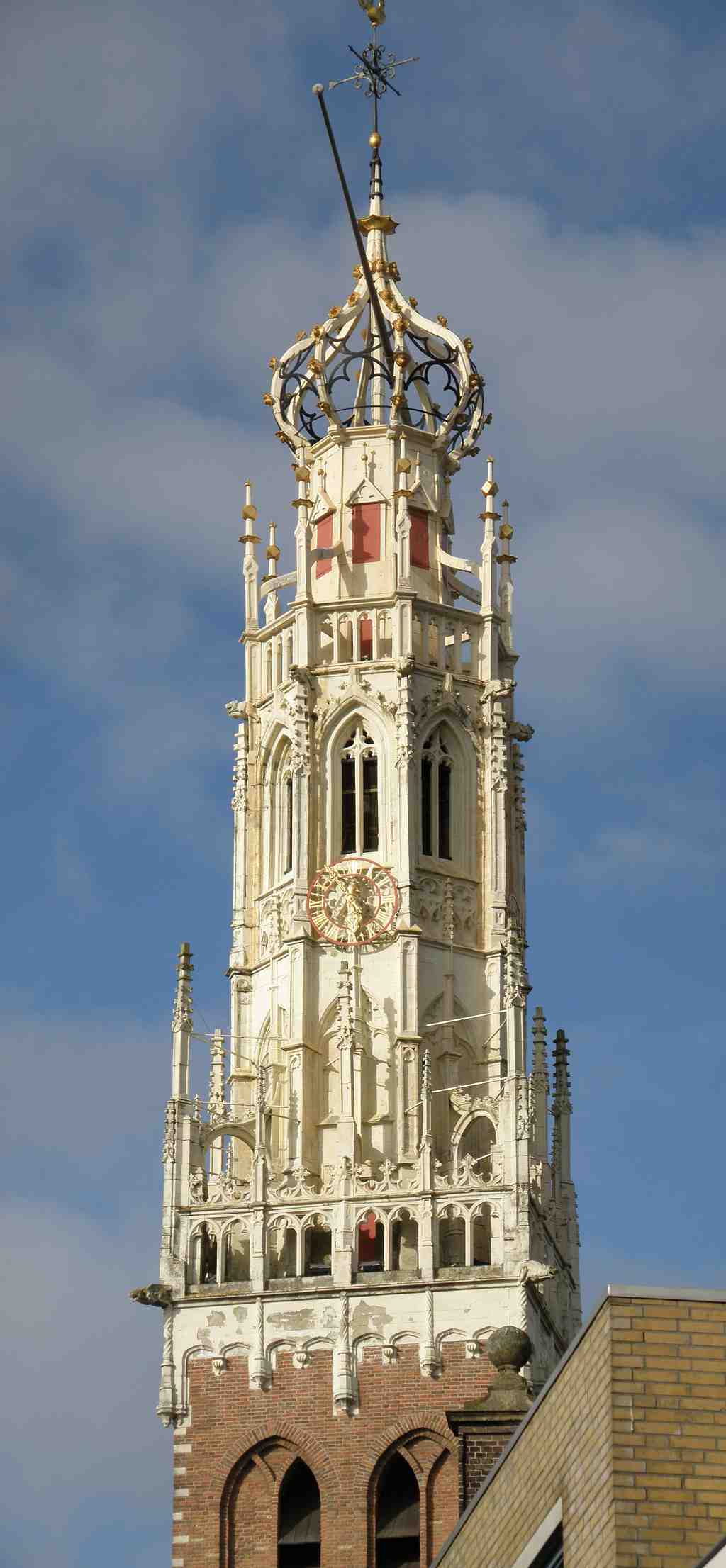
On your right, look for a brick church with a long gabled roof and a striking white tower, its pale crown lifting above the houses like a quieter cousin of Haarlem’s bigger church towers.
This is the Bakenesserkerk, and it carries its history with a kind of stubborn grace. It likely began in the thirteenth century as a count’s chapel dedicated to Mary, then grew into the fifteenth-century church you see here. What stands here now is really two churches stitched together over time: the older main hall on the south side, ending in a five-sided choir at the east, and a second aisle added and repaired in the seventeenth century. Haarlem has a habit of reworking old spaces instead of starting fresh... and this place may be one of the clearest examples.
The tower is the first thing locals notice. Around fifteen thirty, builders gave Bakenesserkerk this richly decorated tower, and ever since, people have compared it with the Grote Kerk’s tower. They’re known as Haarlem’s twin towers: this one white, that one gray. There’s a good story that an abandoned stone tower project from the Grote Kerk somehow got reused here. It’s a handsome story... but historians don’t really buy it. The records stay quiet, and the measurements don’t line up.
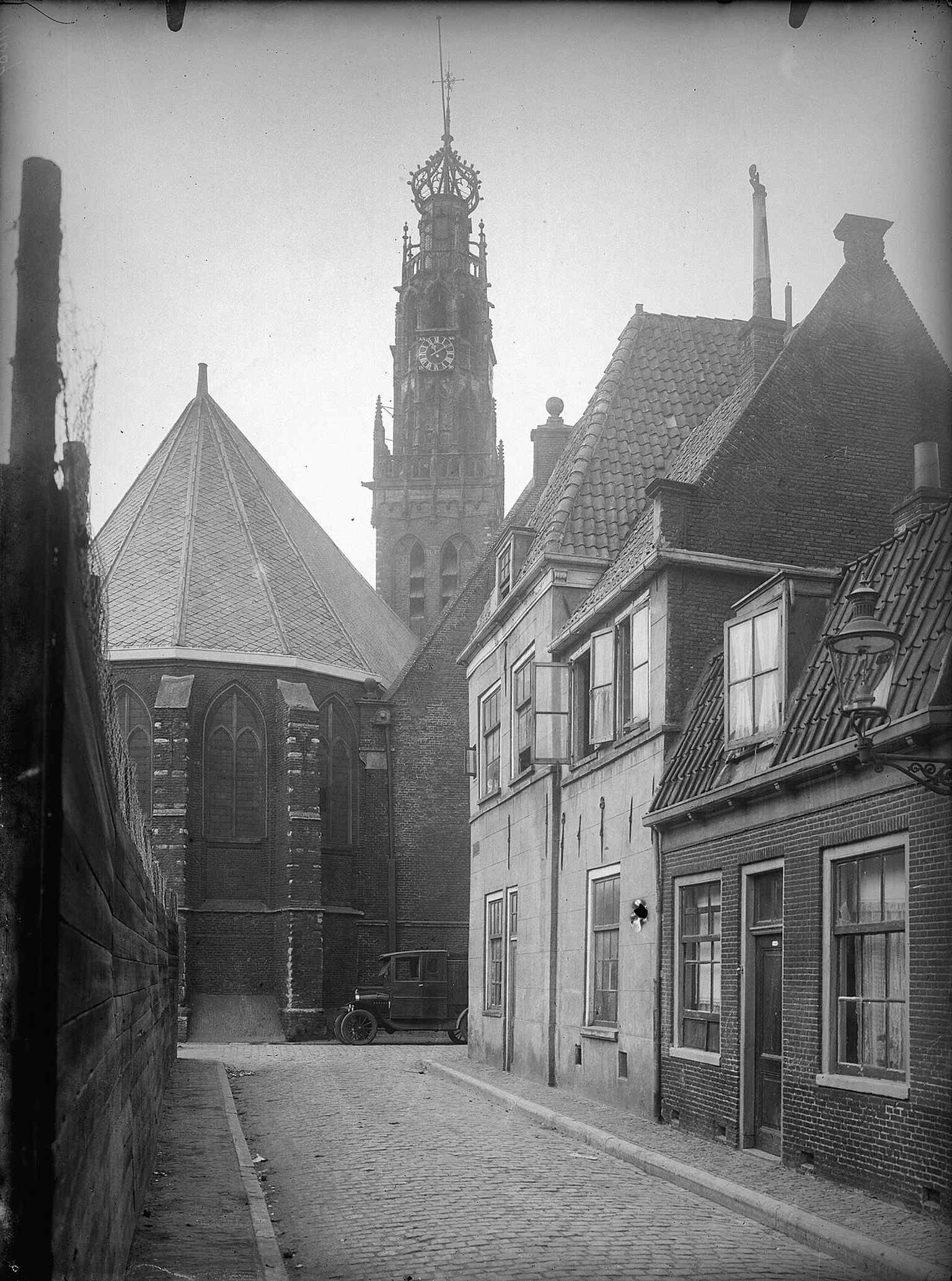
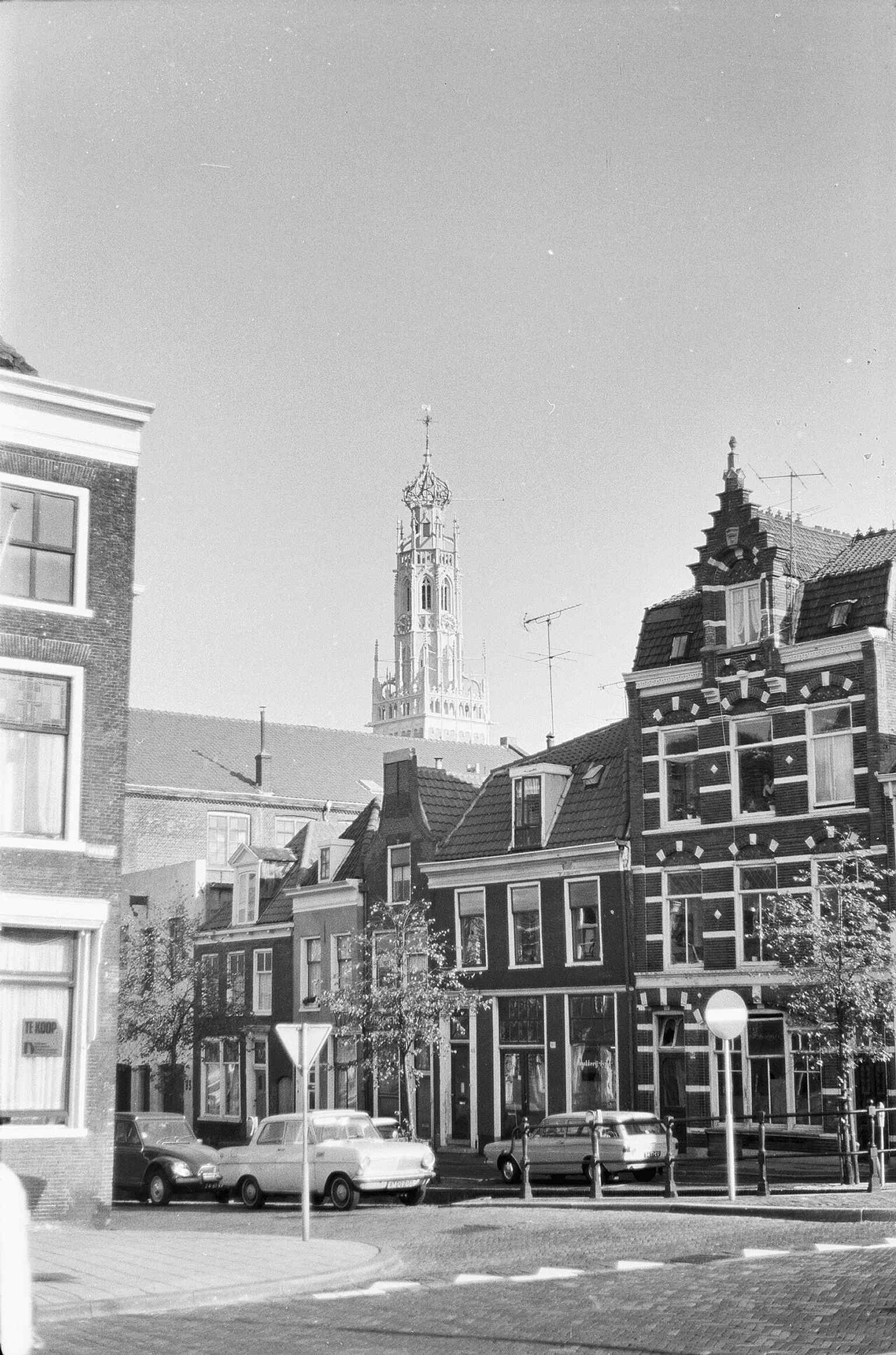
If you want to see how the silhouette changed, take a quick peek at the before-and-after image; the little pinnacles that once crowned the balustrade are gone now, so the tower looks plainer than it did a century ago.
Inside, the church once held a broad, restrained Protestant interior: wooden barrel vaults overhead - that means a ceiling curved like the inside of a half barrel - and rows of columns banded with stone. But one person preserved that interior better than any inventory ever could: the painter Johannes Bosboom. He returned to this church again and again in the nineteenth century, making it one of his recurring subjects. One of his views now hangs in the National Gallery in London; another lives in the Flemish Art Collection. If you glance at the image on your screen, you can see how he treated the space almost like a stage for memory.
Here’s the detail most visitors miss. Bosboom did not only paint empty architecture. In one version, he showed an infant baptism. That single scene quietly saves a whole vanished routine of worship: family gathered, child carried forward, ritual unfolding under these beams. Long after church life changed, the painting kept the act alive.
And church life did change. After the Reformation, in fifteen seventy-seven, the building passed from Catholic to Reformed hands. From seventeen seventy-nine onward, it also served as a children’s church, where youngsters - often orphans supported by the diaconie, the church poor-relief board - received religious instruction. If they skipped the service, their allowance could be cut. Even piety, it seems, sometimes needed paperwork.
Then came decline. Services stopped long ago. Private owners let the building deteriorate; walls cracked, gates crumbled, metal rusted. In two thousand and seven, neighbors formed the Friends of the Bakenes to save it, and the city stepped in soon after. Now Haarlem’s archaeologists work here, and finds from beneath the streets are shown inside on public days. A church became a home for underground history. That’s Haarlem in a nutshell.
From this quiet threshold, we’ll head toward a different kind of passageway next: Gravestone Bridge, about a three-minute walk from here, where crossings and control start to matter again.