
Victoria Highlights Audio Tour: Citadel and Historical Treasures
Beneath the golden limestone of Victoria lies a labyrinth of secrets where ancient empires once bled for dominance. This self guided audio tour pulls back the heavy velvet curtain of history to reveal the raw, unfiltered soul of Gozo. You will navigate beyond the polished facade to uncover the scandals and forgotten rebellions that shaped these winding streets. Why did the Cathedral of the Assumption hide its darkest treasures from the invading knights? What whispered promise led to the sudden, unexplained silence inside St. George’s Basilica? And which common household object was once used to signal a bloody uprising at the Gozo Museum of Archaeology? Traverse through centuries of drama, tracing the shadows of past titans and restless ghosts. Feel the weight of time shift under your feet as hidden narratives emerge from every corner. Claim your freedom, press play, and let the stone walls finally speak their truth.
Tour preview
About this tour
- scheduleDuration 60–80 minsGo at your own pace
- straighten1.8 km walking routeFollow the guided path
- location_on
- wifi_offWorks offlineDownload once, use anywhere
- all_inclusiveLifetime accessReplay anytime, forever
- location_onStarts at Church of St Francis, Victoria
Stops on this tour
lock_open 3 free previews · 8 unlock with purchase
In front of you stands a honey-colored limestone church with a broad baroque façade, a tall arched doorway, and a compact bell tower peeking above the roofline. Here is Victoria…Read moreShow less
Open dedicated page →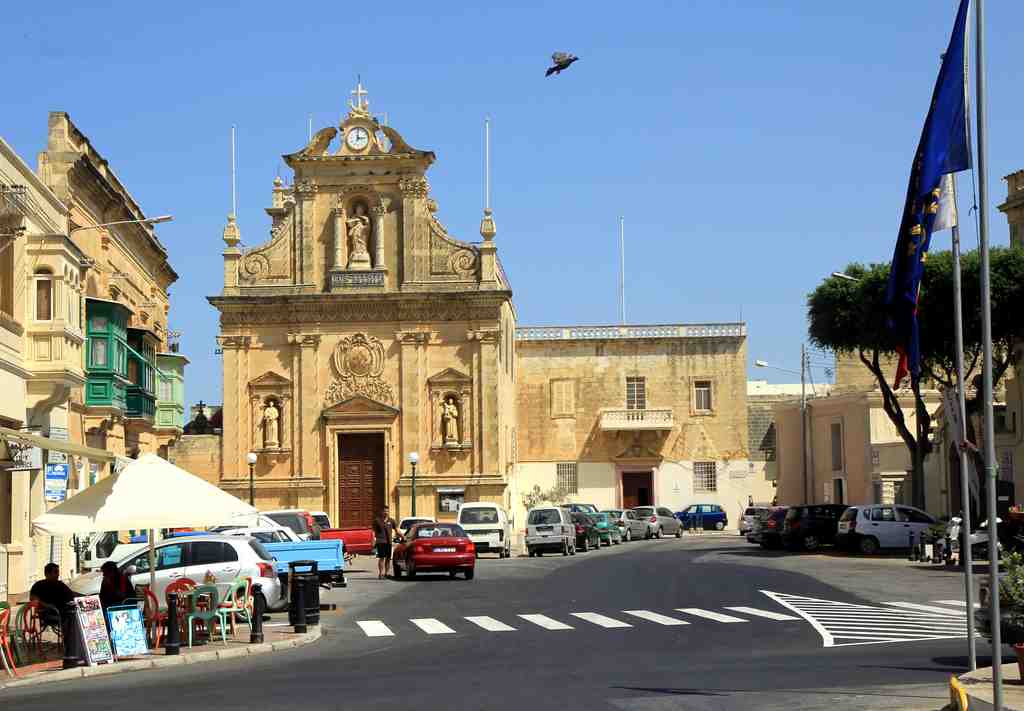
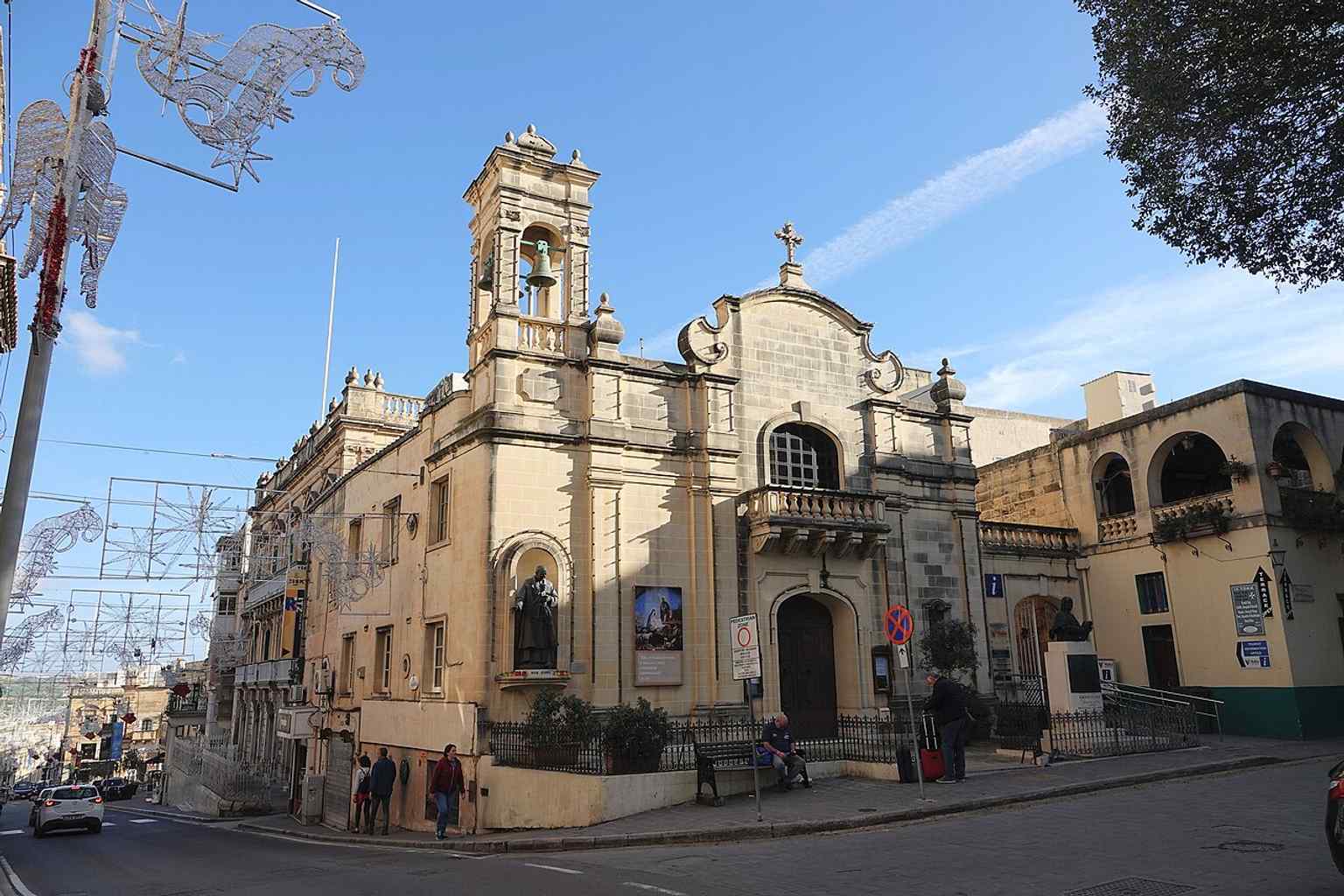
Church of St Francis, VictoriaPhoto: Karelj, Wikimedia Commons, CC BY-SA 3.0. Cropped & resized. In front of you stands a honey-colored limestone church with a broad baroque façade, a tall arched doorway, and a compact bell tower peeking above the roofline.
Here is Victoria in miniature: a church that began around fourteen ninety-two as St Mark, changed its name to St Francis in fifteen thirty-five, took on most of its present form in the seventeenth century, and still refused to behave like a tidy official timeline. The building was ready for worship by sixteen thirty-three... yet the formal consecration, the ceremony that fully dedicates a church, did not happen until nineteen oh-six. Apparently heaven was less bothered by paperwork than people were.
The Conventual Franciscans, the friars living beside the church, kept the place going through exactly the sort of uncertainty that makes old buildings feel human. In sixteen fifty-two, Pope Innocent the Tenth nearly confiscated the property, and only an intervention by an influential supporter saved it. Local tradition says the first friars in Gozo had even lived in nearby caves, and during fears of Turkish raids they sheltered at night inside the Citadel. Not glamorous, but survival rarely is.
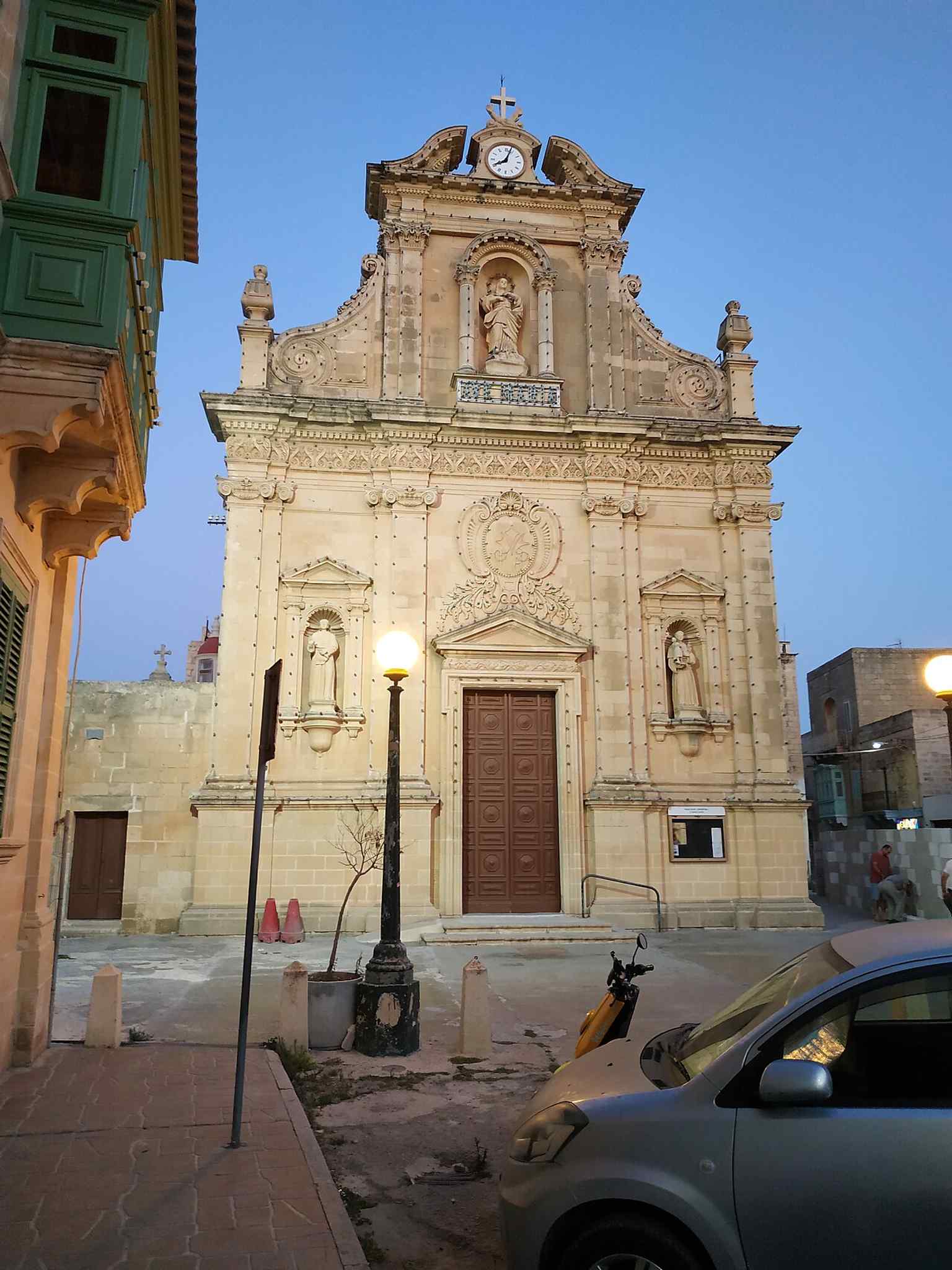
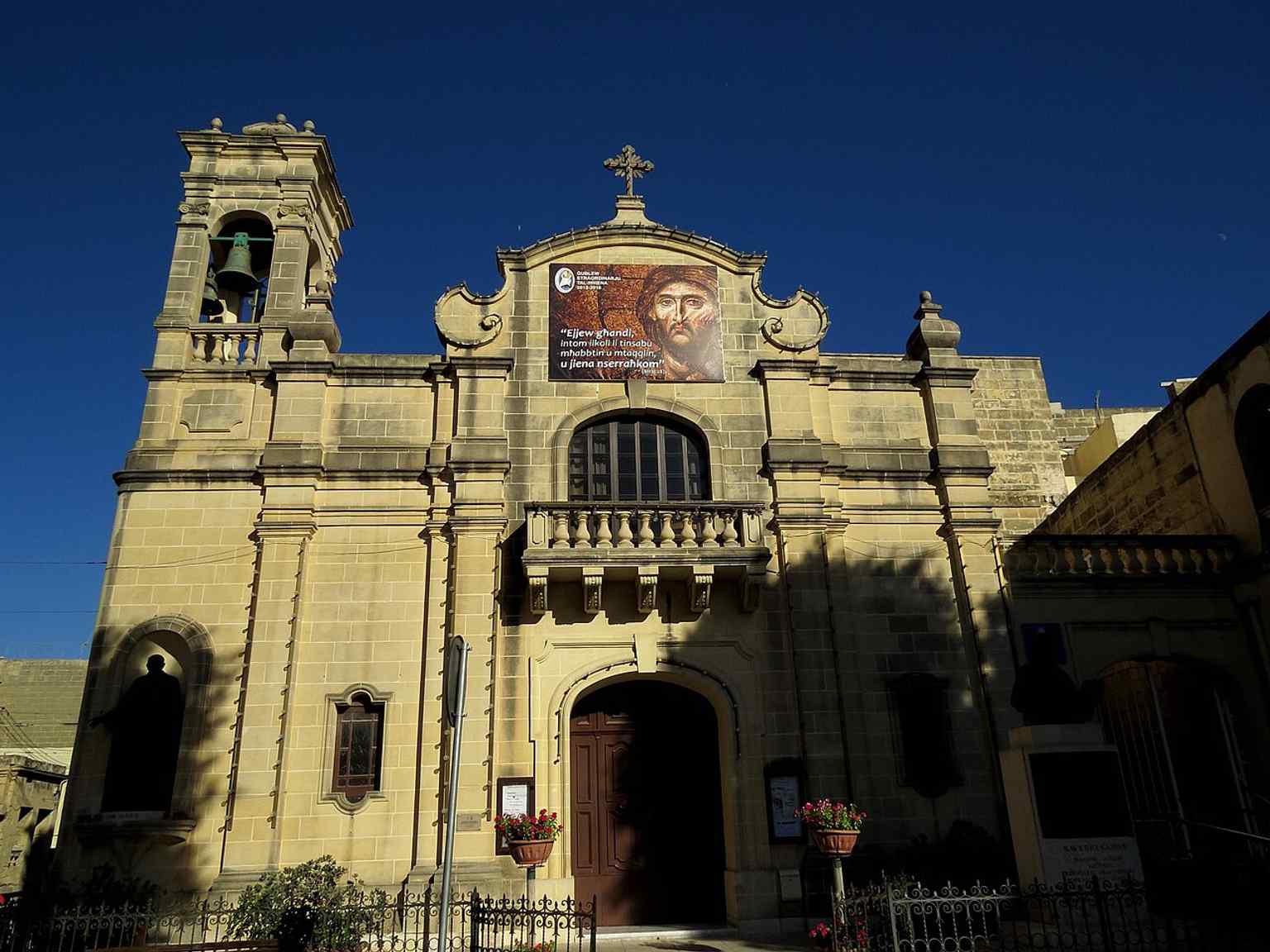
If you glance at your screen, the exterior detail shows the later rebuilding work that followed one of the church’s rougher chapters. In December of eighteen ninety, the government shut the church because the ceiling had become dangerous. Workers rebuilt the ceiling and the façade, and the church reopened in April of eighteen ninety-three. So... when does a sacred place truly become a community’s own: at the first prayer, at the official blessing, or after generations refuse to give it up?
Closer architectural detail of the church exterior, matching the story of its later 19th-century restoration.Photo: Ormelune, Wikimedia Commons, CC BY-SA 4.0. Cropped & resized. There’s a more personal trace here too. In seventeen forty-two, Grand Master António Manoel de Vilhena stayed in the convent for five days while taking possession of Gozo, and the friars marked his visit with an inscription in the room he used. And inside, as you can see on your phone, devotion kept accumulating: Jean-Baptiste van Loo’s painting of St Francis receiving the stigmata still presides over the church.
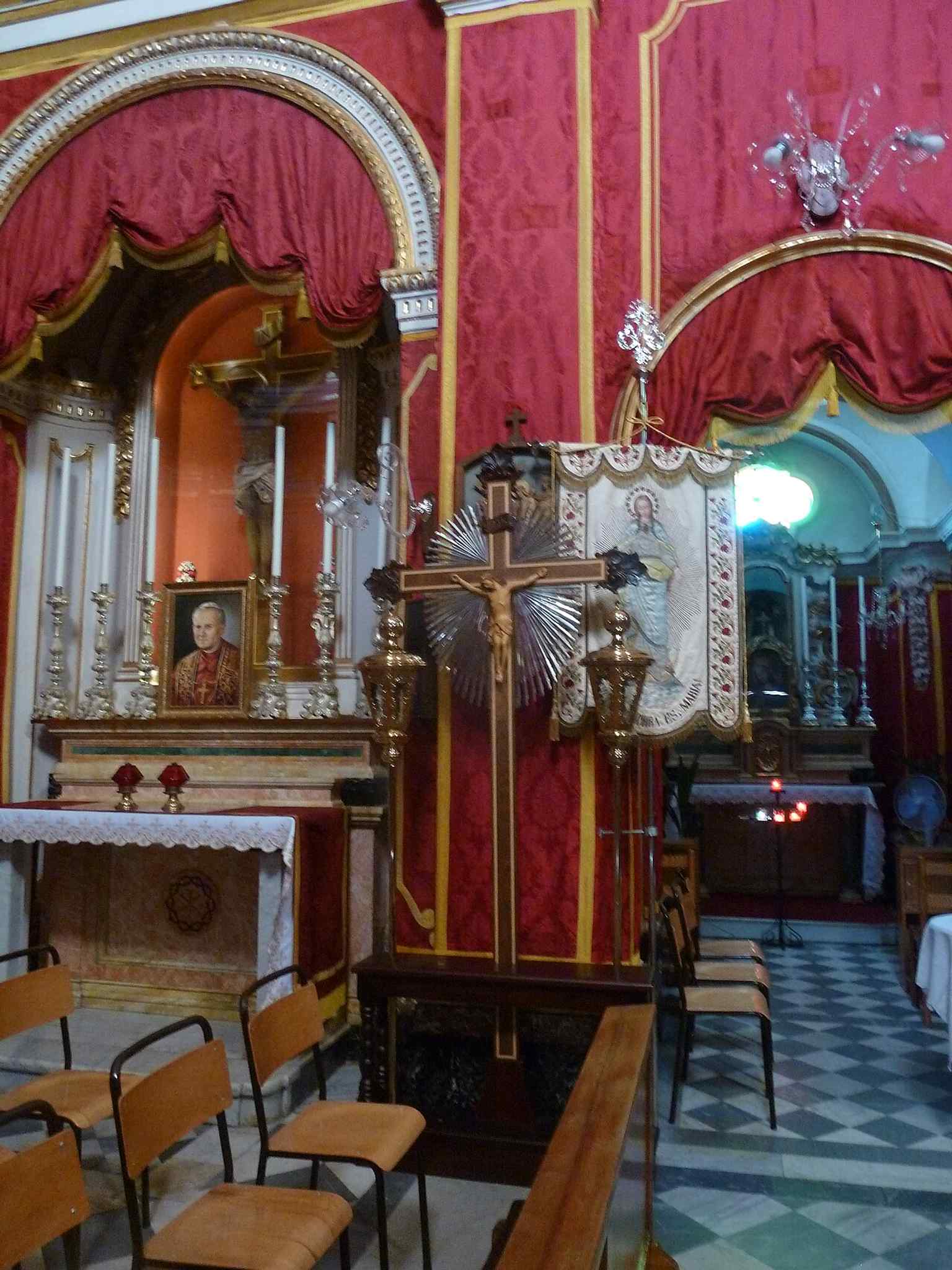
Interior view of the friary church, where the titular painting of St Francis and centuries of devotion are part of daily worship.Photo: NataliiaBashmakova, Wikimedia Commons, CC BY-SA 4.0. Cropped & resized. This is only one convent church, but it opens the door to a whole town shaped by different religious houses, each adapting, repairing, and carrying on. From here, the Church of St Augustine is about a six-minute walk away.
A different street-level view of the church, useful for showing the historic convent church in context.Photo: Ormelune, Wikimedia Commons, CC BY-SA 4.0. Cropped & resized. 
The church and square from a side angle, reflecting the long Franciscan presence beside the convent.Photo: Ormelune, Wikimedia Commons, CC BY-SA 4.0. Cropped & resized. 
A more distant view of the church complex, echoing the site’s role as a major landmark in Victoria.Photo: Ormelune, Wikimedia Commons, CC BY-SA 4.0. Cropped & resized. On your left, look for a pale limestone church with a symmetrical front, a rounded central doorway, and the attached monastery stretching along its side. This is the Church of…Read moreShow less
Open dedicated page →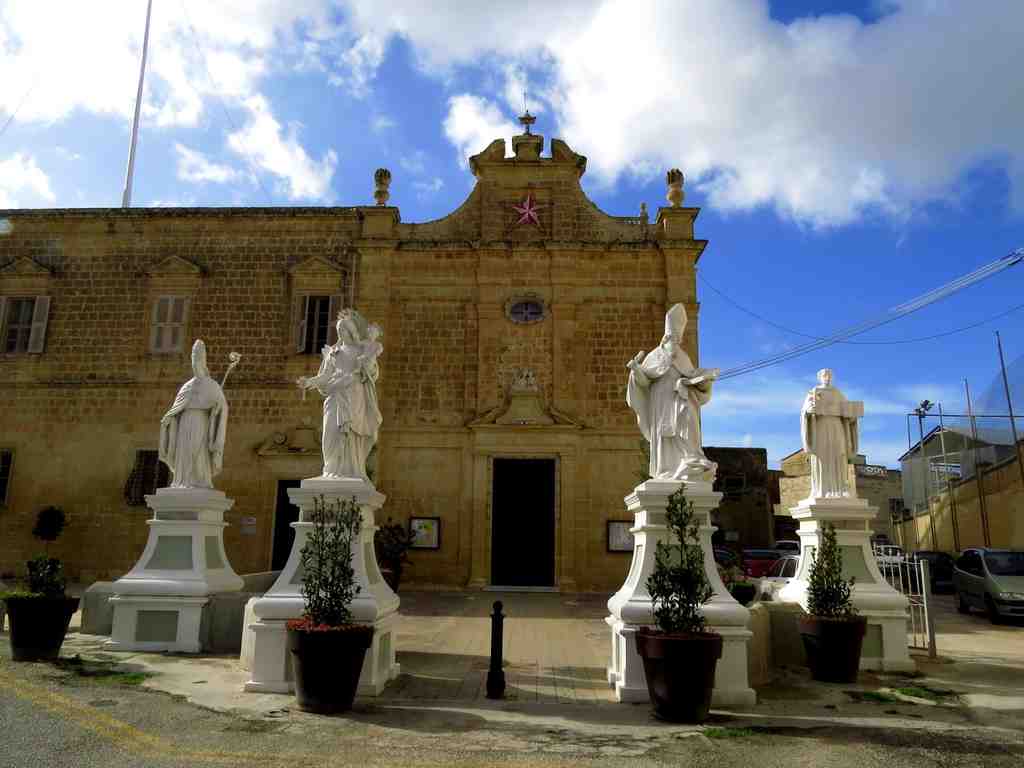
Church of St Augustine, Victoria GozoPhoto: BrandyMay, Wikimedia Commons, CC BY-SA 4.0. Cropped & resized. On your left, look for a pale limestone church with a symmetrical front, a rounded central doorway, and the attached monastery stretching along its side.
This is the Church of Saint Augustine, part of an Augustinian monastery, meaning the friars’ religious home as well as their place of prayer. Gozo’s religious orders were never a single neat system; different communities planted themselves across the island and helped hold it together when life here turned unstable. The Augustinians were the oldest order on Gozo, and probably the first to establish a permanent house in Malta.
Their roots here run deep. The earliest firm mention of this church and monastery comes in fourteen thirty-five, though some researchers think the community already existed by twelve sixty. Before settling in Victoria, the friars lived in Xagħra near a small church dedicated to Our Lady of the Seven Joys. So even before this square took shape, the Augustinians were already part of Gozo’s spiritual map.
Then came the fifteen fifty-one corsair raid on Gozo, one of the island’s defining shocks. Ottoman raiders and their allies devastated the island and carried much of the population into slavery. That memory lingered for generations, which helps explain why so many religious buildings here feel less like untouched relics and more like determined acts of rebuilding. One Augustinian from this house, Fra Bartolomeo Bonavia, even served as an intermediary between the Knights and the Ottoman pasha during the crisis. Not every friar spent his life in peaceful contemplation.
The church you see now grew out of that stubborn survival. In the seventeenth century, the friars rebuilt the church and enlarged the monastery. They finished the church sometime between sixteen sixty-two and sixteen sixty-six, completed the monastery by seventeen seventeen, and Bishop Vincenzo Labini consecrated the church in seventeen eighty-two.
If you glance at the image on your screen, you can get a fuller sense of how the church and monastery work as one ensemble facing the square. Inside, the star object is the titular altarpiece - that simply means the main painting dedicated to the church’s patron saint. Giovanni Gurgion paid for it, and Mattia Preti painted it in sixteen ninety-four, showing Augustine of Hippo with John the Baptist and William, Duke of Aquitaine. Later scholars found the commission went back to sixteen ninety, and that Preti’s workshop helped more than people first thought. Even masterpieces, it turns out, had teamwork and layers of dark varnish.
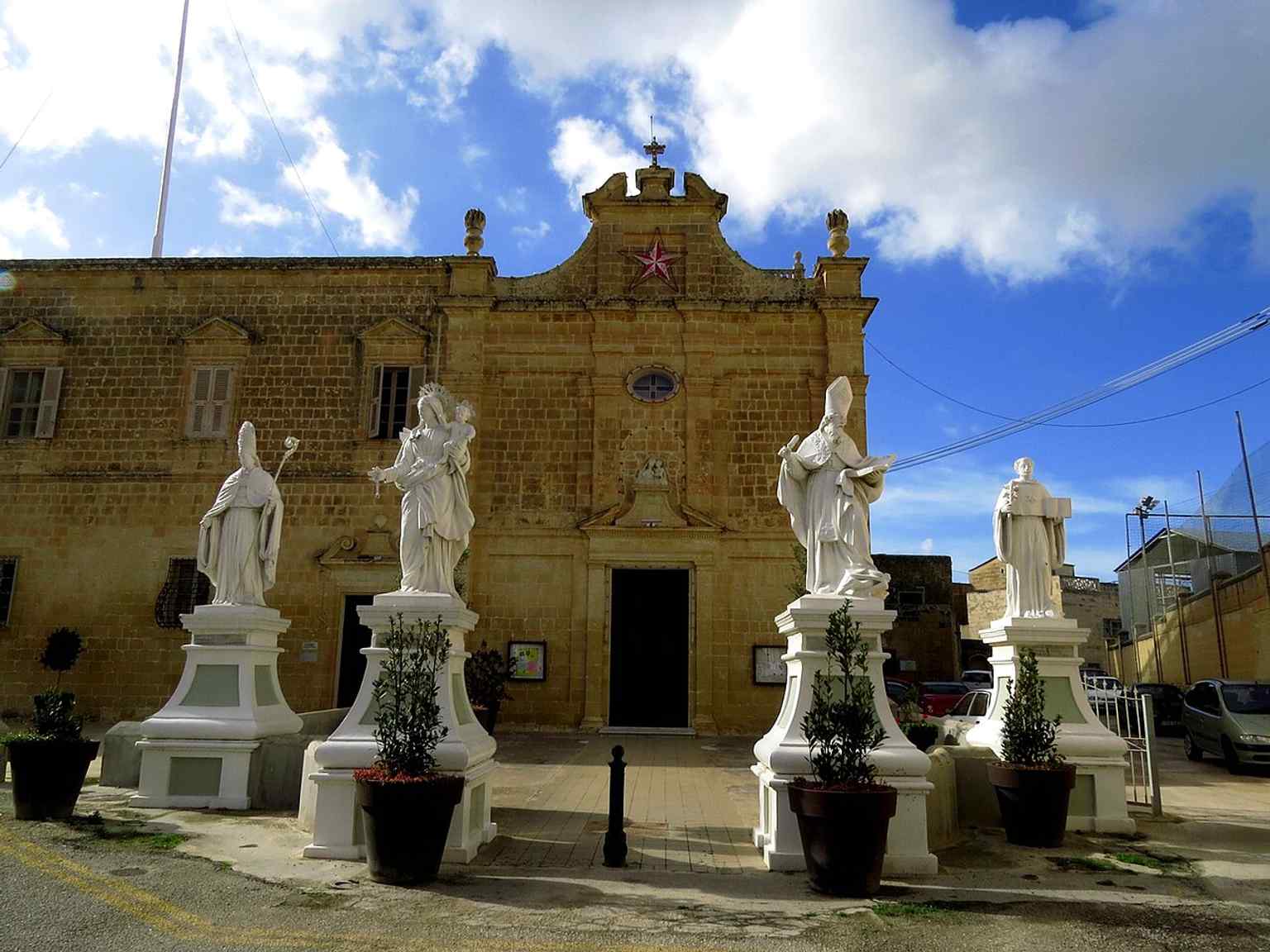
The Church of St Augustine in Victoria’s St Augustine’s Square, part of the Augustinian monastery that has stood at the heart of Gozo’s religious life for centuries.Photo: BrandyMay, Wikimedia Commons, CC BY-SA 4.0. Cropped & resized. The church kept absorbing damage and renewal. An icon of Our Lady of Good Counsel arrived here from Rome in seventeen sixty-five; thieves stripped silver ornaments from it in two thousand and seven, but the image survived and restorers later brought it back. So this place has not endured by staying unchanged. It has endured by being repaired, defended, and loved again.
And in Victoria, that continuity did not produce harmony alone. Churches also competed for patrons, prestige, and public attention... which becomes much clearer at Saint George’s Basilica, about five minutes from here.
Look for the pale limestone Baroque façade with its curved front, the dome lifting behind it, and the heavy bronze main door at the center. This is St. George’s Basilica, and it…Read moreShow less
Open dedicated page →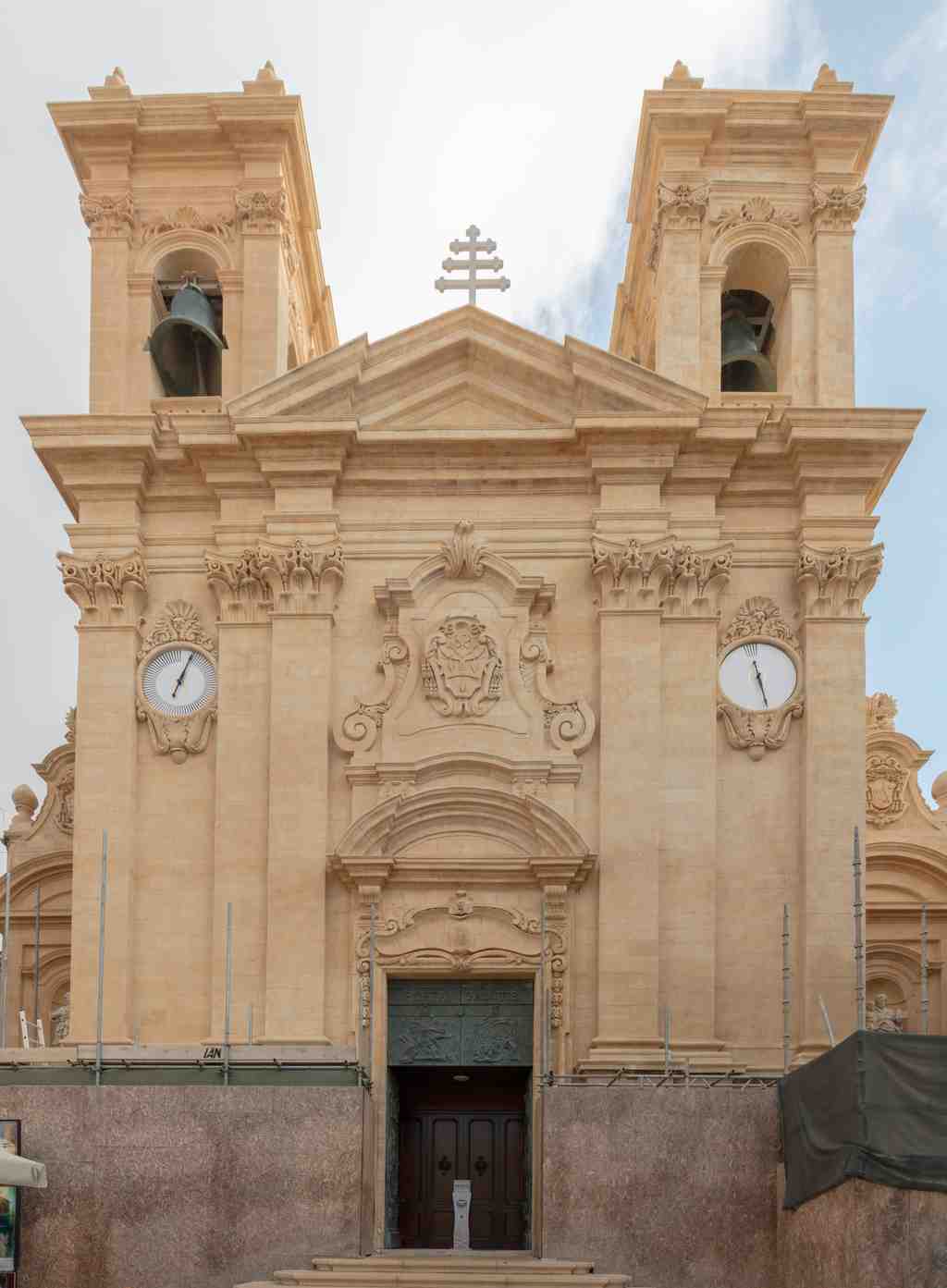
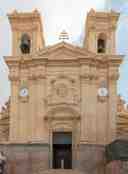
St. George's Basilica, MaltaPhoto: Diego Delso, Wikimedia Commons, CC BY-SA 4.0. Cropped & resized. Look for the pale limestone Baroque façade with its curved front, the dome lifting behind it, and the heavy bronze main door at the center.
This is St. George’s Basilica, and it makes quite a statement. Not a shy parish church, this one. It stands in the lower town like a declaration that religious power did not belong only to the Citadel above.
That confidence rests on very old ground. Long before this façade took shape, the site already carried a deep sacred history. By around twelve fifty, records already show a parish here dedicated to Saint George. By around twelve fifty, records already show a parish here. Even more striking, this church kept using the Byzantine Rite, the eastern form of Christian worship, until fifteen seventy-five. It was the last place on the island to do so. So even before the Baroque grandeur, this was a place where older layers refused to vanish politely.
Then came danger, repair, danger again. In fifteen fifty-one, Ottoman raiders devastated Gozo and carried off much of the population to Constantinople. The parish priest here, Reverend Lorenzo de Apapis, went with them as a prisoner. He later bought his freedom, returned, and helped rebuild Saint George’s. That detail matters. This church did not simply survive on paper; people dragged it back into being.
The present basilica took shape between sixteen seventy-two and sixteen seventy-eight. Vittorio Cassar planned it, and he did so in a town already negotiating a delicate question: who truly held spiritual center stage, this thriving parish below or the older matrix church, meaning the mother church, inside the Citadel? In sixteen thirty, church officials even proposed joining the two parishes because the clergy were quarrelling and competing. Sacred geography here was not serene. It was argued over, managed, and, eventually, fused. In sixteen eighty-eight, Saint George’s was formally joined to the Cathedral parish above, and that arrangement lasted for two hundred and sixty-six years before Bishop Giuseppe Pace restored Saint George’s independence in nineteen fifty-five. Victoria, it turns out, could manage two proud churches and one long grudge.
Outside, the façade you see dates largely from eighteen eighteen, after earthquake damage forced a rebuild. Inside, though you cannot see it from here, the church earned the nickname the golden church of Gozo. Marble, gold stucco, a grand central hall, side chapels, and a dome redecorated after the Second World War turn the interior into a full performance of Catholic confidence. Mattia Preti’s great altarpiece of Saint George defeating the dragon crowns that ambition, and the donor, Governor Francesco de Corduba, appears there too, offering a little model of the church to the saint. Gratitude, power, and self-advertisement... all in one frame. Efficient, really.
There is one more twist I like. In a basilica so proudly Baroque, the parish later added a Byzantine-style chapel, deliberately recalling the Christian East. So even at its grandest, Saint George’s still remembers its earliest roots.
From here, the lower town and the Citadel above feel less like separate worlds than two old rivals forced into an endless conversation. In about three minutes, head on to the Church of the Nativity of Our Lady, where that conversation takes another turn. If you want to return and go inside, the basilica usually opens from eleven thirty to four thirty, with slightly shorter hours on Sunday.
Show 8 more stopsShow fewer stopsexpand_moreexpand_less
On your left, look for a pale stone façade with a broad triangular pediment, a central arched doorway, and a small bell tower rising neatly above the roofline. Ta’ Savina feels…Read moreShow less
Open dedicated page →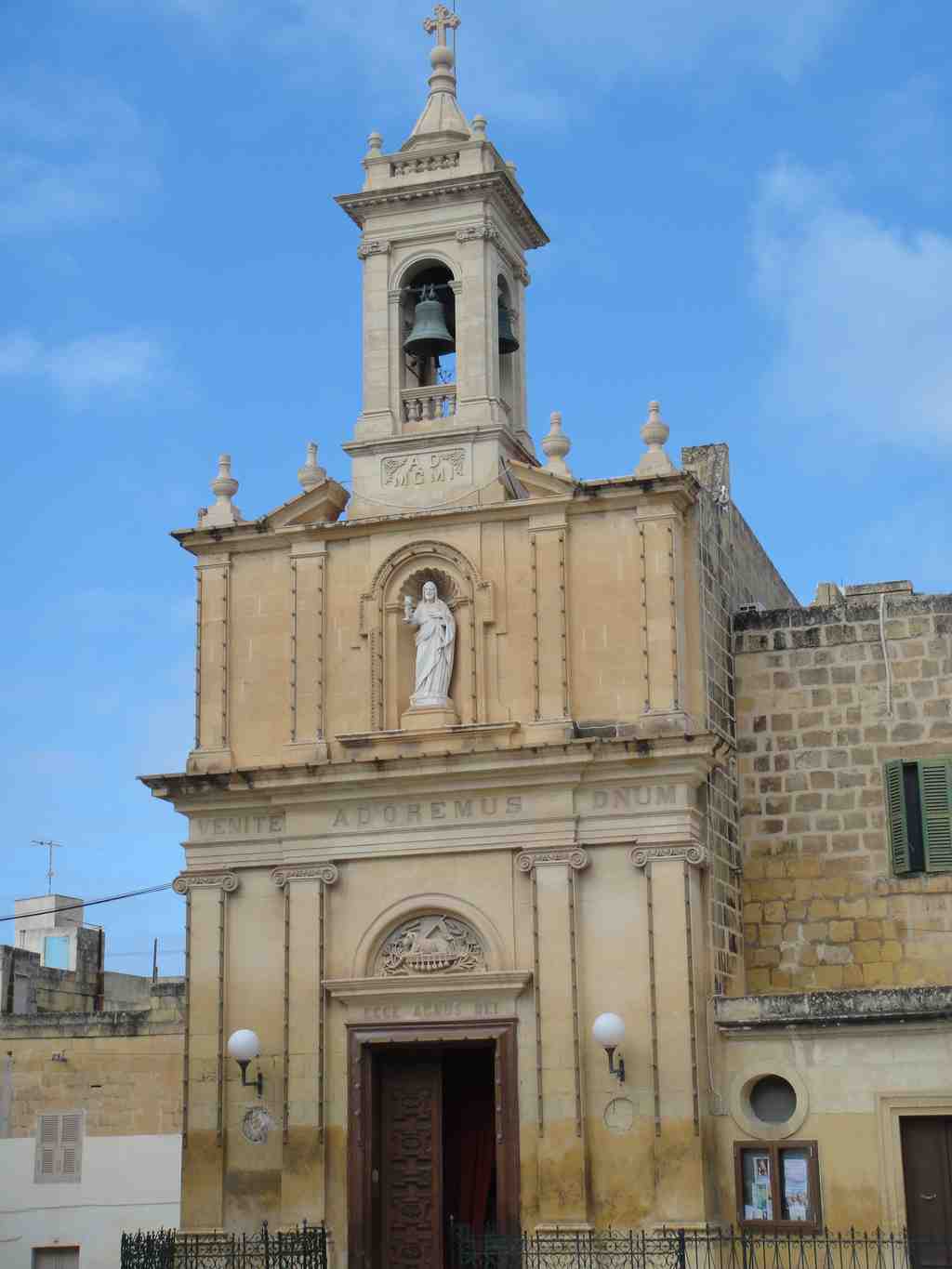
Church of the Nativity of Our LadyPhoto: NickGeorge1993, Wikimedia Commons, CC BY-SA 3.0. Cropped & resized. On your left, look for a pale stone façade with a broad triangular pediment, a central arched doorway, and a small bell tower rising neatly above the roofline.
Ta’ Savina feels personal. In Victoria, devotion to Mary runs like a steady undercurrent through sacred life, not always loud, not always grand, but stubbornly present. It gathers around birth, protection, grief, and hope... and this church has carried that feeling for centuries.
An earlier church stood here by fourteen seventy-nine, and some traditions trace the site back even further, to Count Roger of Sicily. People rebuilt it in fifteen oh-two, and for a long stretch this church, together with St James and St George’s, served locals as a parish church at night, when the cathedral inside the Citadel was too difficult to reach from outside the fortified hill. That tells you a lot about Victoria: prayer had to work around locked defenses, fear of raids, and ordinary daily life. Faith, like water, tends to find a route.
If you glance at the image on your screen, the present front belongs to the rebuilding of nineteen oh-one to nineteen oh-four, when the community gave Savina a new body without giving up its older heart. They enlarged it again in nineteen thirteen, and Cardinal Domenico Ferrata reopened it. Burials continued in the churchyard until eighteen ninety-nine, so this was never just a stop for worship; it held families close in life and in death.
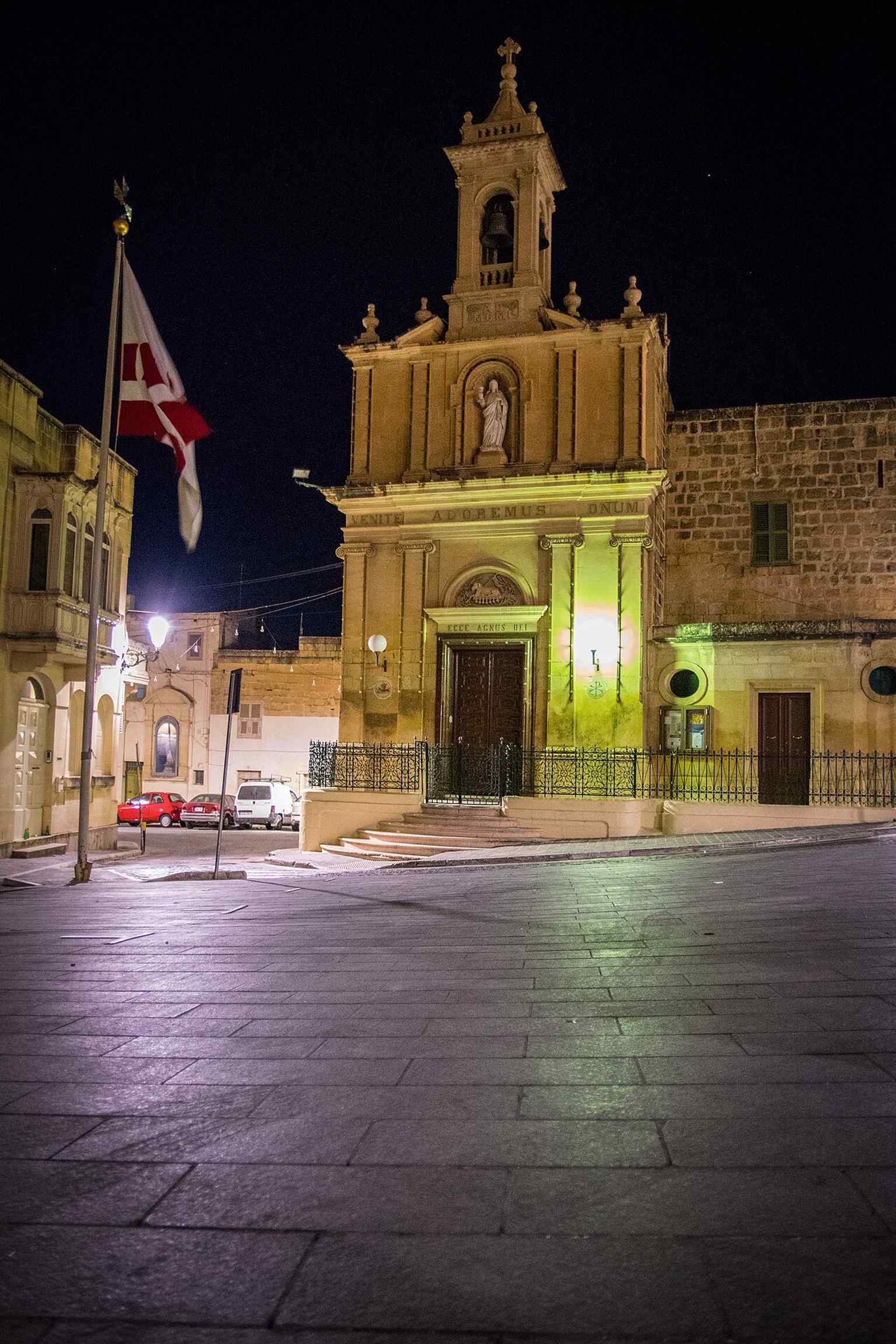
The church’s main façade in Victoria, the rebuilt Ta’ Savina listed as Maltese cultural property.Photo: Jeremy Dimech, Wikimedia Commons, CC BY-SA 4.0. Cropped & resized. The modern human face of Savina is Monsignor Luigi Vella, better known as Dun Alwiġ Ta’ Savina. He drove the rebuilding, became the first rector here, and opened the church for perpetual adoration, meaning continuous prayer before the consecrated host. Later he rose to become archdeacon of the cathedral, but here he remained the priest who turned inherited devotion into a living routine.
What many visitors do not expect from this exterior is the older devotion to the child Mary inside. The marble interior holds a statue of the young Virgin Mary, brought from Marseilles in eighteen seventy-eight, a tender Marian presence that predates the present building. Later, in nineteen thirty-four, a second beloved image arrived: the Bambina of the Nativity sculpted by Wistin Camilleri. And the main altar painting, commissioned in sixteen twenty-two by Gozo’s governor Riccardo de Nini Claret, shows the birth of Mary while quietly preserving a detailed view of the Citadel and the medieval mother church. So the church keeps memory in prayer... and in pictures.
Savina makes one thing clear: devotion does not only live in grand spaces. Sometimes it gathers most faithfully around a local shrine people refuse to let go of. In about a minute, at Banca Giuratale, you’ll see how that same memory enters civic life.
On your right is a compact limestone church with a plain baroque front, an arched doorway, and a small bell-cote rising above the facade. St James stands right in Independence…Read moreShow less
Open dedicated page →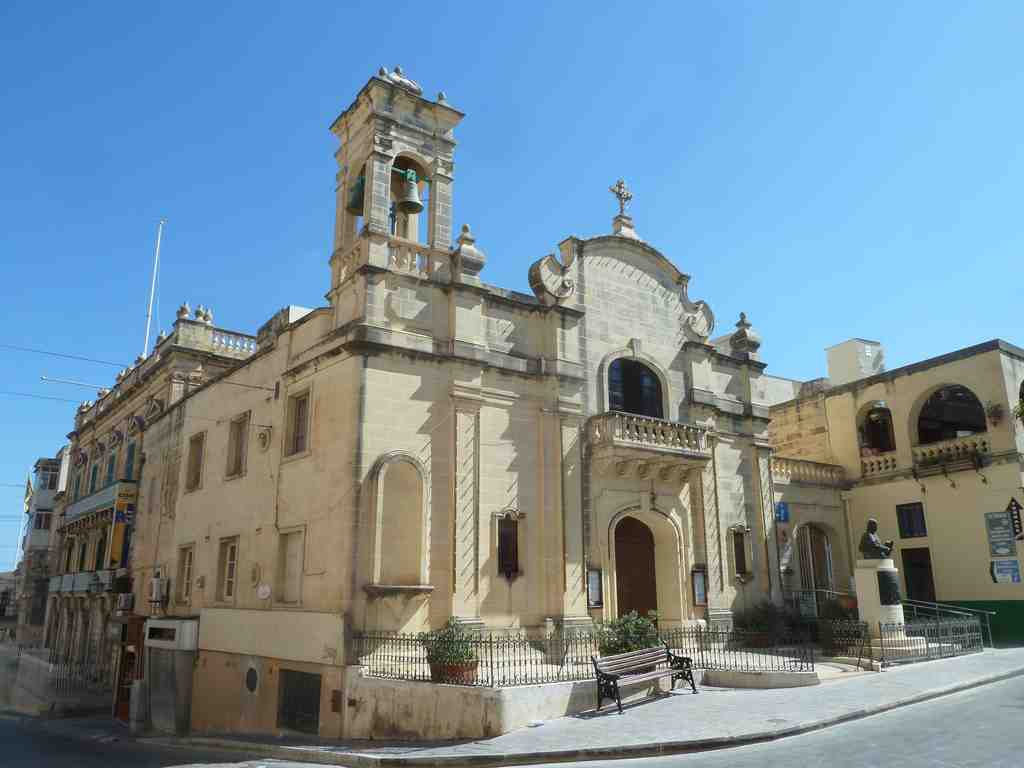
Church of St James, Victoria GozoPhoto: Ormelune, Wikimedia Commons, CC BY-SA 4.0. Cropped & resized. On your right is a compact limestone church with a plain baroque front, an arched doorway, and a small bell-cote rising above the facade.
St James stands right in Independence Square, where prayer and public life have long shared the same patch of stone. This is the kind of place where people came to hear Mass, settle errands, meet neighbors, and watch processions pass through the town’s civic heart. In Victoria, religion did not tuck itself neatly indoors... it spilled into the square, and the square answered back.
The church goes back at least to the sixteen hundreds, and inquisitor Pietro Dusina recorded it in fifteen seventy-five, along with two attached chapels, one for the Holy Cross and one for Saint Mark. At that stage, it even served the eastern part of Gozo during the night hours, back when the island had only two main parishes: Saint George and the Assumption, today’s cathedral. That raid damaged this church badly enough that later leaders had to start again. Bishop Balaguer deconsecrated it in sixteen fifty-seven, Grand Master Ramon Despuig ordered a new one, and that rebuilding reached completion in seventeen forty. Even then, the story did not settle down. The present church is mostly twentieth century, though its sanctuary still preserves eighteenth-century fabric, and structural damage forced another partial demolition and rebuild in nineteen seventy-nine. This place has made a career out of survival.
There is a quieter claim to fame here too. Future Archbishop Joseph Mercieca was ordained in this church, not the cathedral, on the eighth of March... though published accounts cannot agree whether that was nineteen fifty-one or nineteen fifty-two. That tiny disagreement is oddly revealing: even recent sacred memory can blur at the edges. One account says he stood here alongside Saver Calleja and Anton Bajada.
And there is a harder layer. In two thousand and eight, a former altar boy sued, alleging that Father Anthony Mercieca had abused him here in the bell tower decades earlier. So St James is not only a place of ceremony; it also carries pain.
If you check the image on your screen, the modest exterior makes all that history feel almost improbable. Inside, the church keeps a seventeen forty-two altarpiece of Saint James, and its best-loved treasure is the statue of Our Lady of Sorrows, brought from Munich in eighteen seventy-nine and still carried through Victoria before Good Friday.
A clear modern exterior of Church of St James, the rebuilt church whose history includes damage, reconstruction, and continued use for the feast of Our Lady of Sorrows.Photo: Nenea hartia, Wikimedia Commons, CC BY-SA 4.0. Cropped & resized. Now lift your thoughts uphill, toward the Citadel, where busy town life gives way to much older layers... and in about five minutes, the Gozo Museum of Archaeology starts peeling them back. If you want to return later, the church is generally open daily from seven in the morning until seven thirty in the evening.
Street-level view of St James in Victoria, the small town church that stands in Independence Square and remains a living parish center.Photo: BrandyMay, Wikimedia Commons, CC BY-SA 4.0. Cropped & resized. 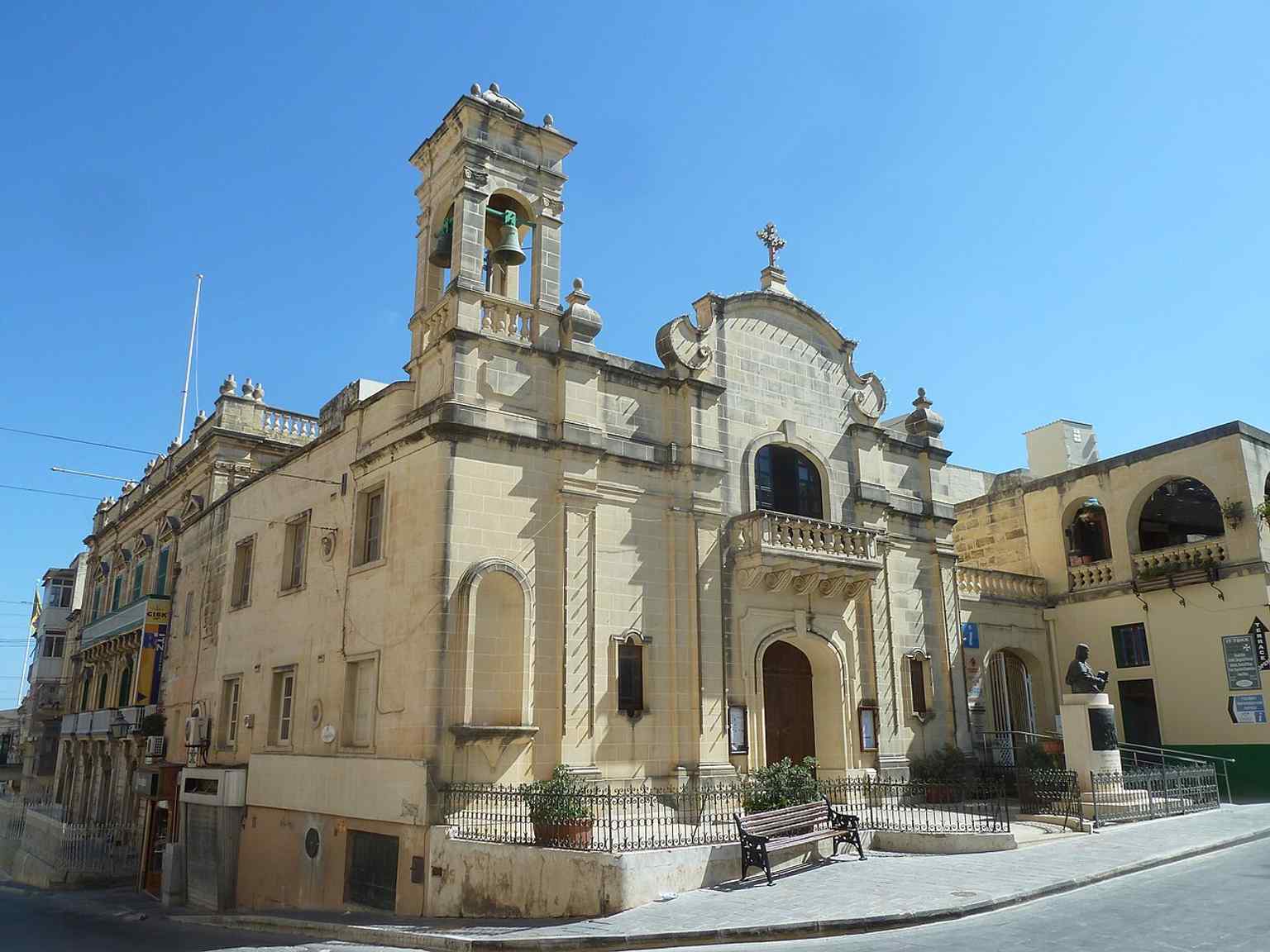
The chapel facade in Pjazza L-Indipendenza, matching the church’s central setting in Gozo’s busiest civic square.Photo: Ormelune, Wikimedia Commons, CC BY-SA 4.0. Cropped & resized. In front of you stands a plain two-storey limestone house, square and symmetrical, with a carved stone balcony set directly above the central doorway. This is the Gozo Museum of…Read moreShow less
Open dedicated page →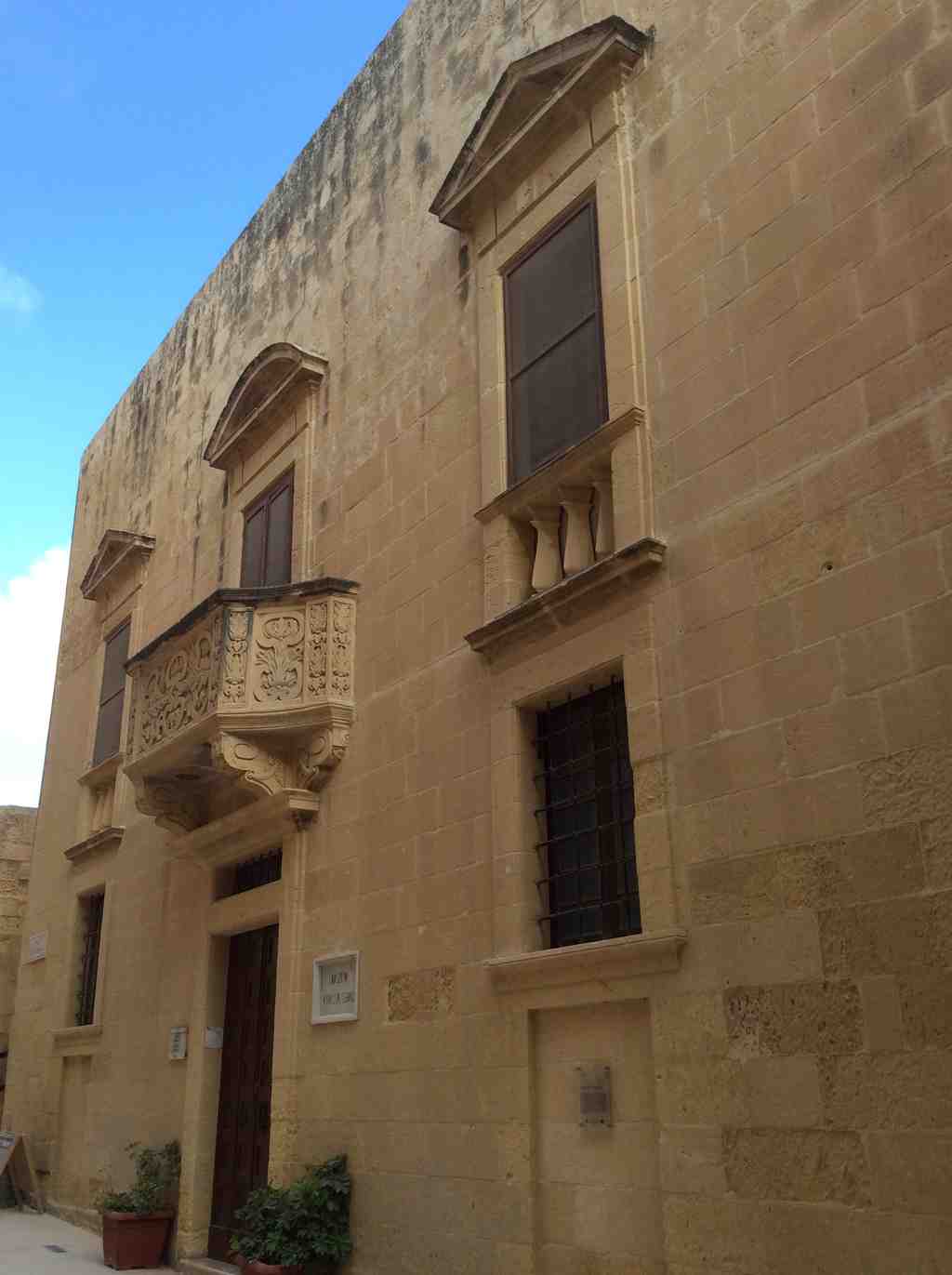
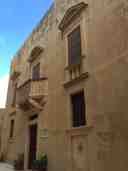
Gozo Museum of ArchaeologyPhoto: Continentaleurope, Wikimedia Commons, CC BY-SA 4.0. Cropped & resized. In front of you stands a plain two-storey limestone house, square and symmetrical, with a carved stone balcony set directly above the central doorway.
This is the Gozo Museum of Archaeology, but its first story is really about rescue. The house began as Casa Bondi, a seventeenth-century home that slipped into neglect until Sir Harry Luke, the Lieutenant Governor of the Maltese Islands, stepped in during nineteen thirty-seven and pushed for its restoration. That gave the building a second life... and that habit of reusing what survives turns out to be one of Victoria’s great talents.
The government bought the house from the Bondi family, and in nineteen sixty it opened as Gozo’s first public museum. Then, in nineteen eighty-six, the collections were reorganized and Casa Bondi took on a new assignment: archaeology. So even the container of history got repurposed. Very Gozo, really.
Inside, the displays stretch from prehistory to the early modern period. In two thousand and three, important prehistoric finds came over from Valletta, including objects from the Gozo Stone Circle: a twin-seated figurine and small stick idols, both carefully conserved before installation here. Later, the museum added nine climate-controlled cases, costing more than one hundred and eleven thousand euros, so fragile Neolithic, Temple Period, and Bronze Age pieces could be shown without slowly destroying them. Preservation is not glamorous, but it beats losing the evidence.
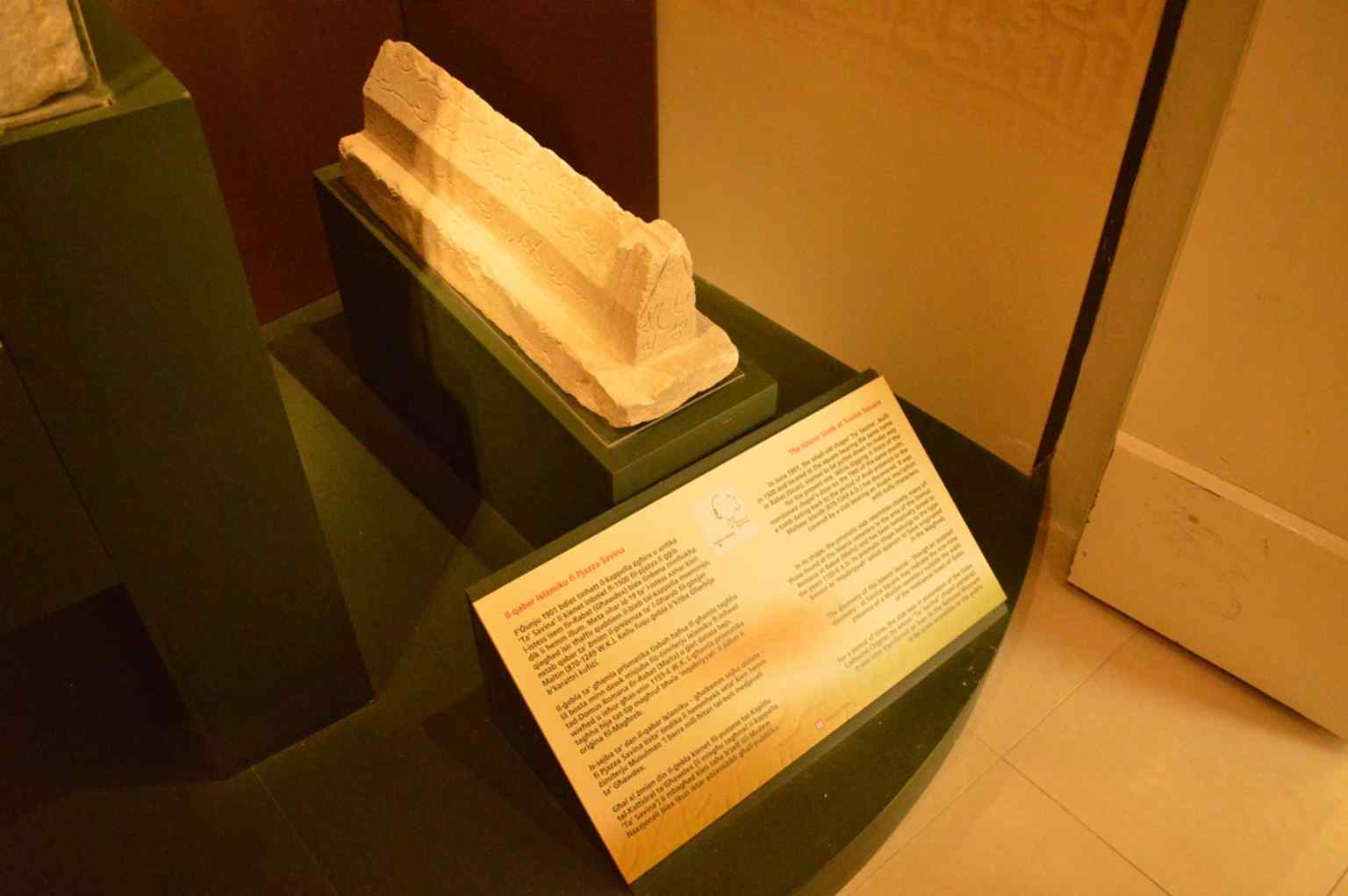
If you check your screen, the Maymūnah Stone is one of the museum’s great puzzles. Heritage Malta says it was allegedly found between Xewkija and Ta’ Sannat, but even here certainty has limits. Another stone, a sixteenth-century inscription naming Governor Bernardo Daldana, spent years in storage until researcher George Azzopardi reconstructed its story from old documentation. That is the twist here: history does not arrive tidy. It gets misplaced, reassigned, rescued, and argued over.
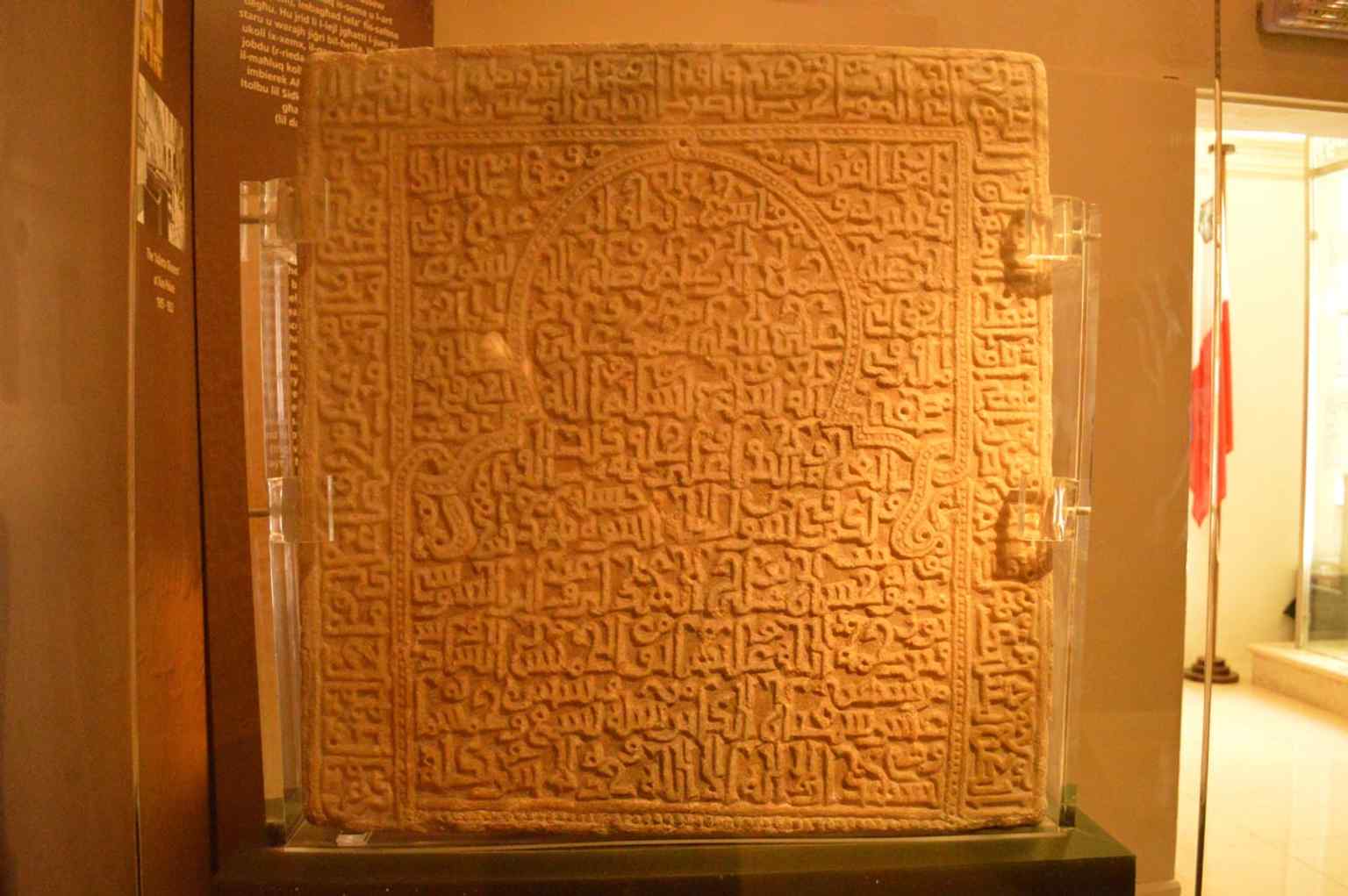
A close look at the museum’s most famous exhibit, the Maymūnah Stone, associated with the local lore and archaeology of Gozo.Photo: Continentaleurope, Wikimedia Commons, CC BY-SA 4.0. Cropped & resized. And that makes this hill larger than its churches alone. Ahead, at the Cathedral of the Assumption, you will meet a sacred site built on ground whose memory started long before the Christian chapter took hold.
Another view of the museum house, useful for showing how the former Casa Bondi fits into the fortified Cittadella streetscape.Photo: Continentaleurope, Wikimedia Commons, CC BY-SA 4.0. Cropped & resized. 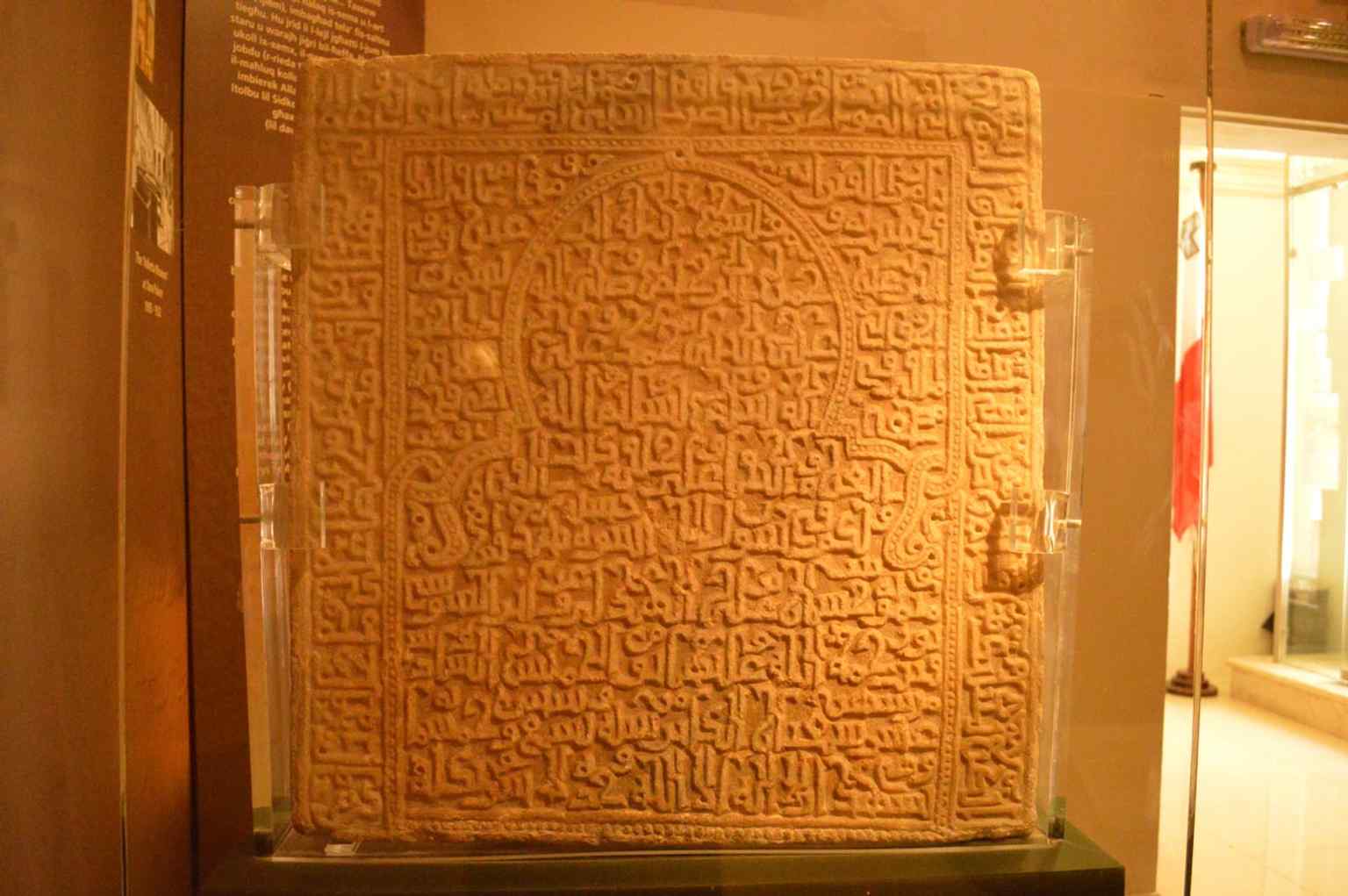
The Maymūnah Stone on display — one of the museum’s key objects, said by Heritage Malta to have been found in Gozo between Xewkija and Ta’ Sannat.Photo: Continentaleurope, Wikimedia Commons, CC BY-SA 4.0. Cropped & resized. 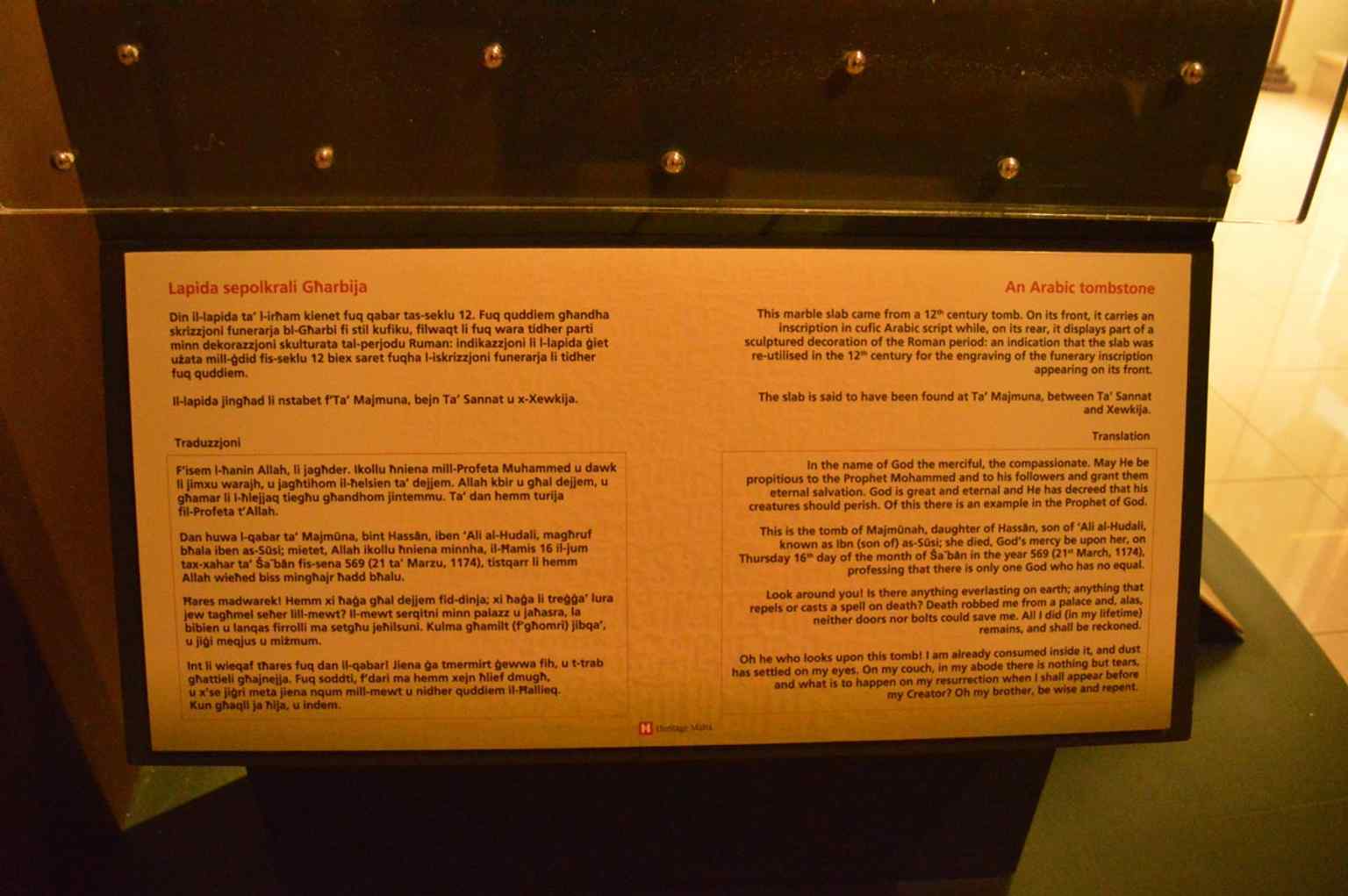
An important inscribed stone from the museum collection, echoing the site’s focus on objects that help reconstruct Gozo’s past.Photo: Continentaleurope, Wikimedia Commons, CC BY-SA 4.0. Cropped & resized. 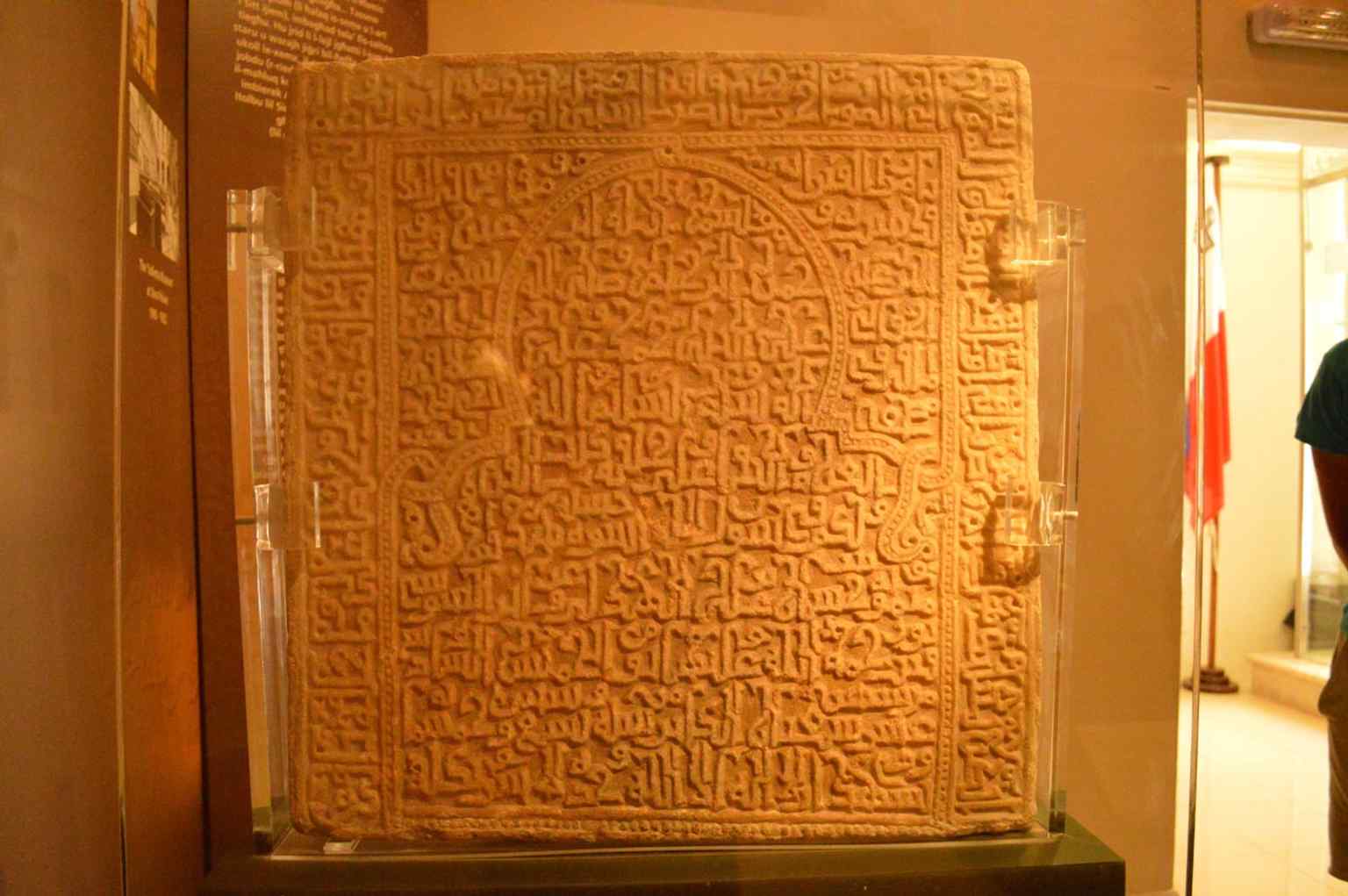
Another close view of the Maymūnah Stone, a highlight of the collection that links the museum to medieval and early historical Gozo.Photo: Continentaleurope, Wikimedia Commons, CC BY-SA 4.0. Cropped & resized. 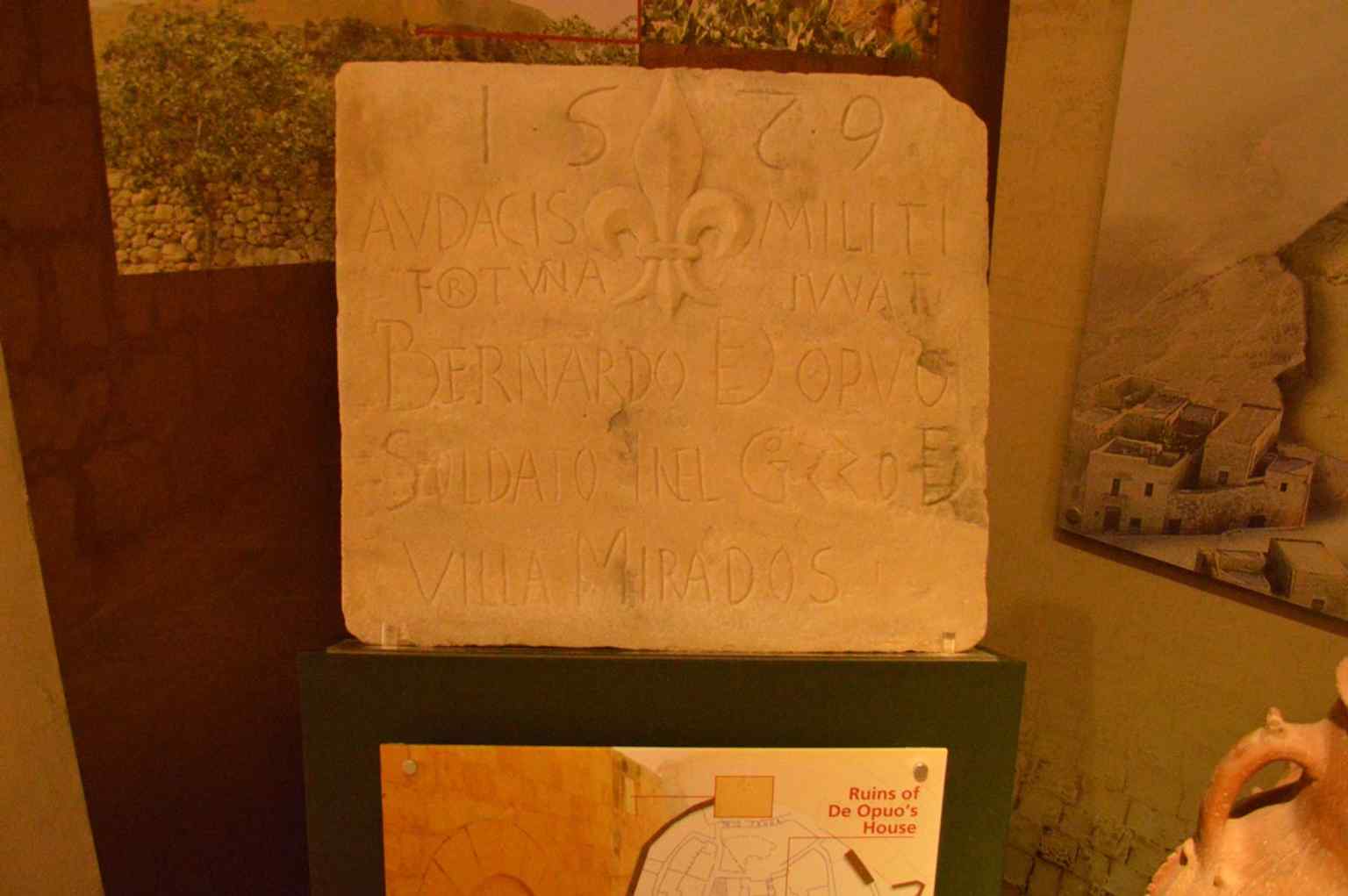
Inside the museum’s display area, where archaeological material from Gozo is presented in the building’s later, more carefully conserved exhibition spaces.Photo: Continentaleurope, Wikimedia Commons, CC BY-SA 4.0. Cropped & resized. 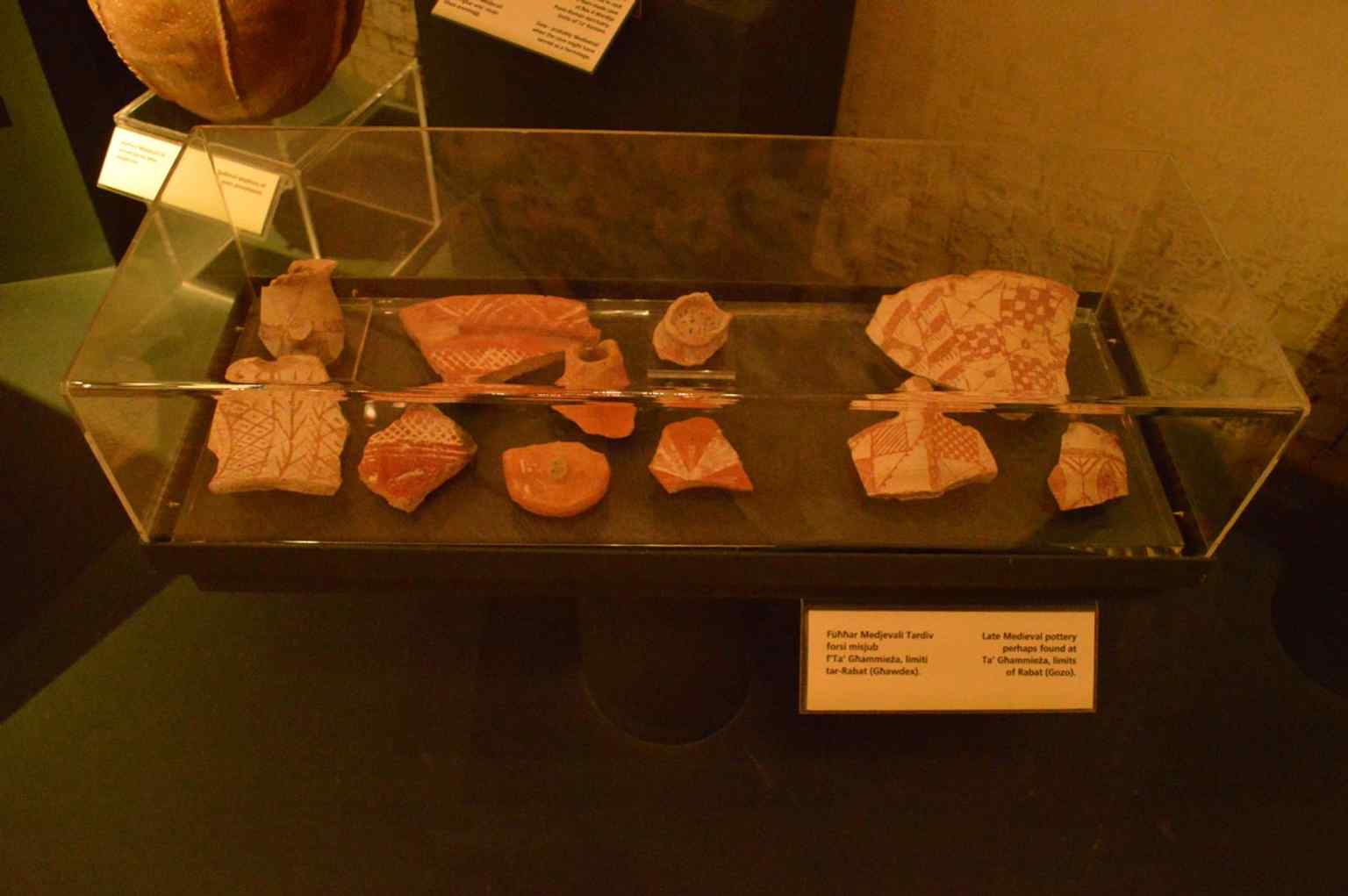
An interior gallery view that reflects the museum’s 1986 reorganisation, when Casa Bondi was assigned the archaeological holdings.Photo: Continentaleurope, Wikimedia Commons, CC BY-SA 4.0. Cropped & resized. 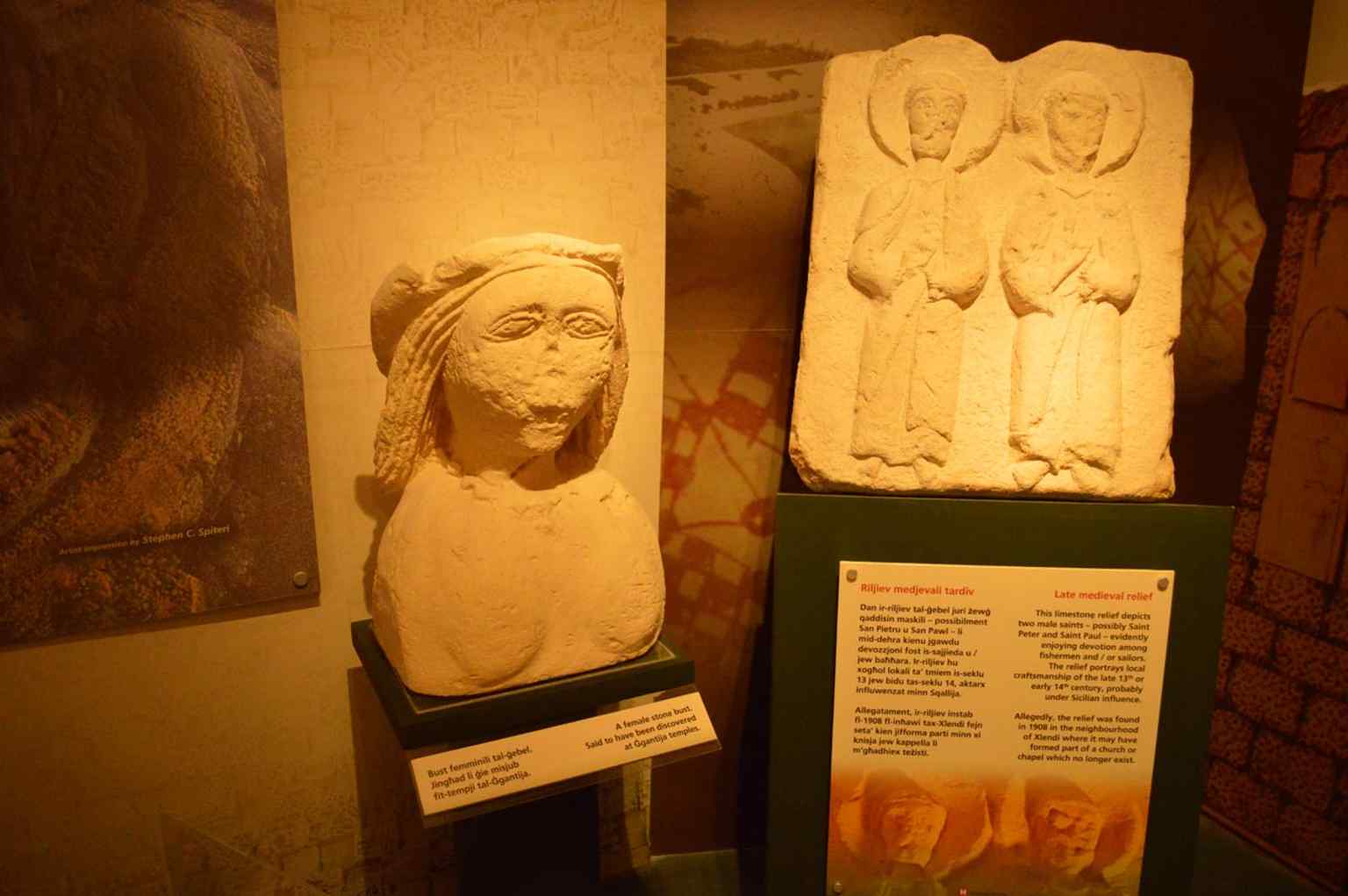
The museum’s climate-controlled display setting, introduced in the mid-2000s to protect fragile Neolithic, Temple Period and Bronze Age artefacts.Photo: Continentaleurope, Wikimedia Commons, CC BY-SA 4.0. Cropped & resized. 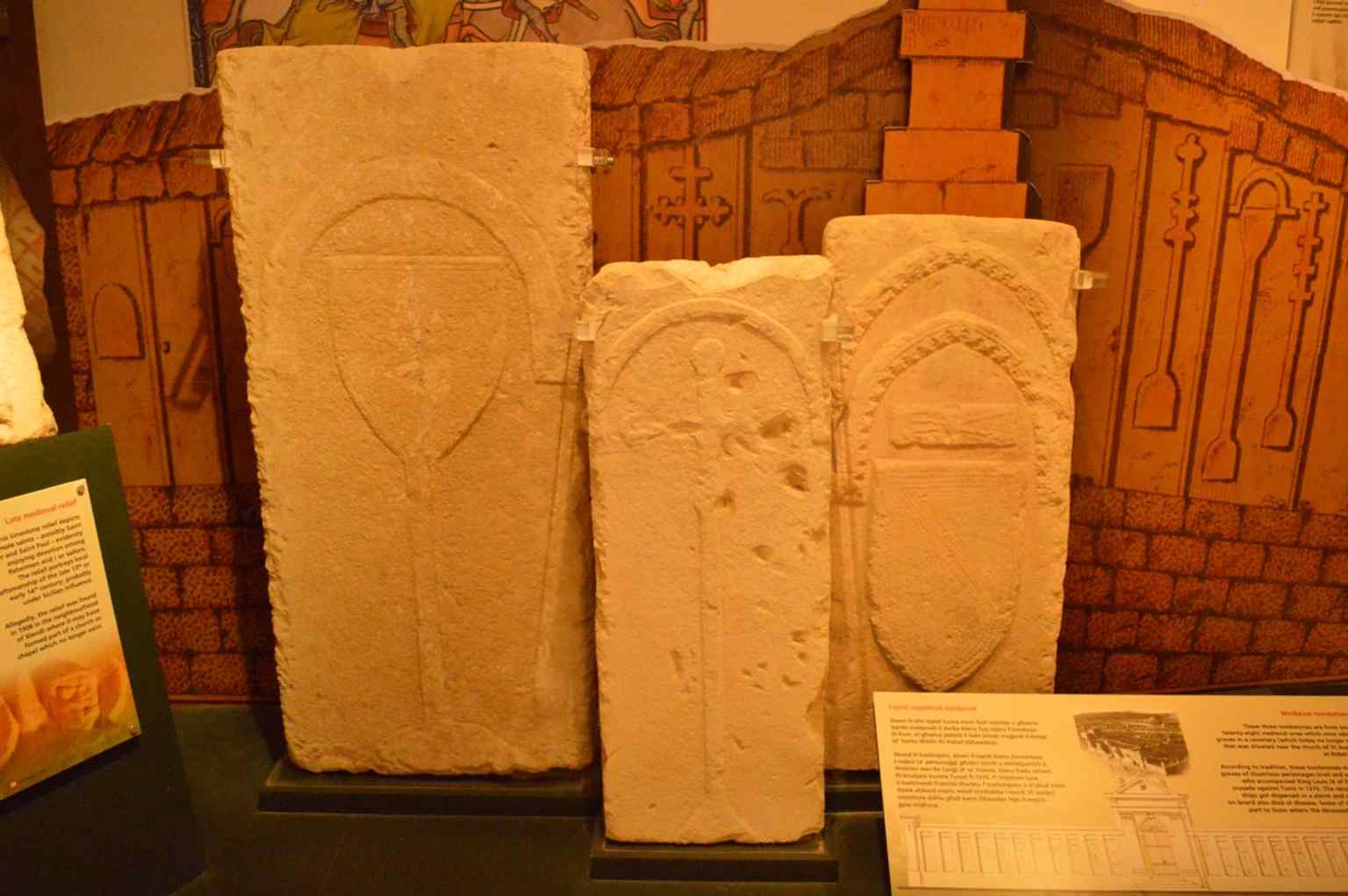
A gallery scene showing how the collection is interpreted today, from prehistory through the medieval period and beyond.Photo: Continentaleurope, Wikimedia Commons, CC BY-SA 4.0. Cropped & resized. 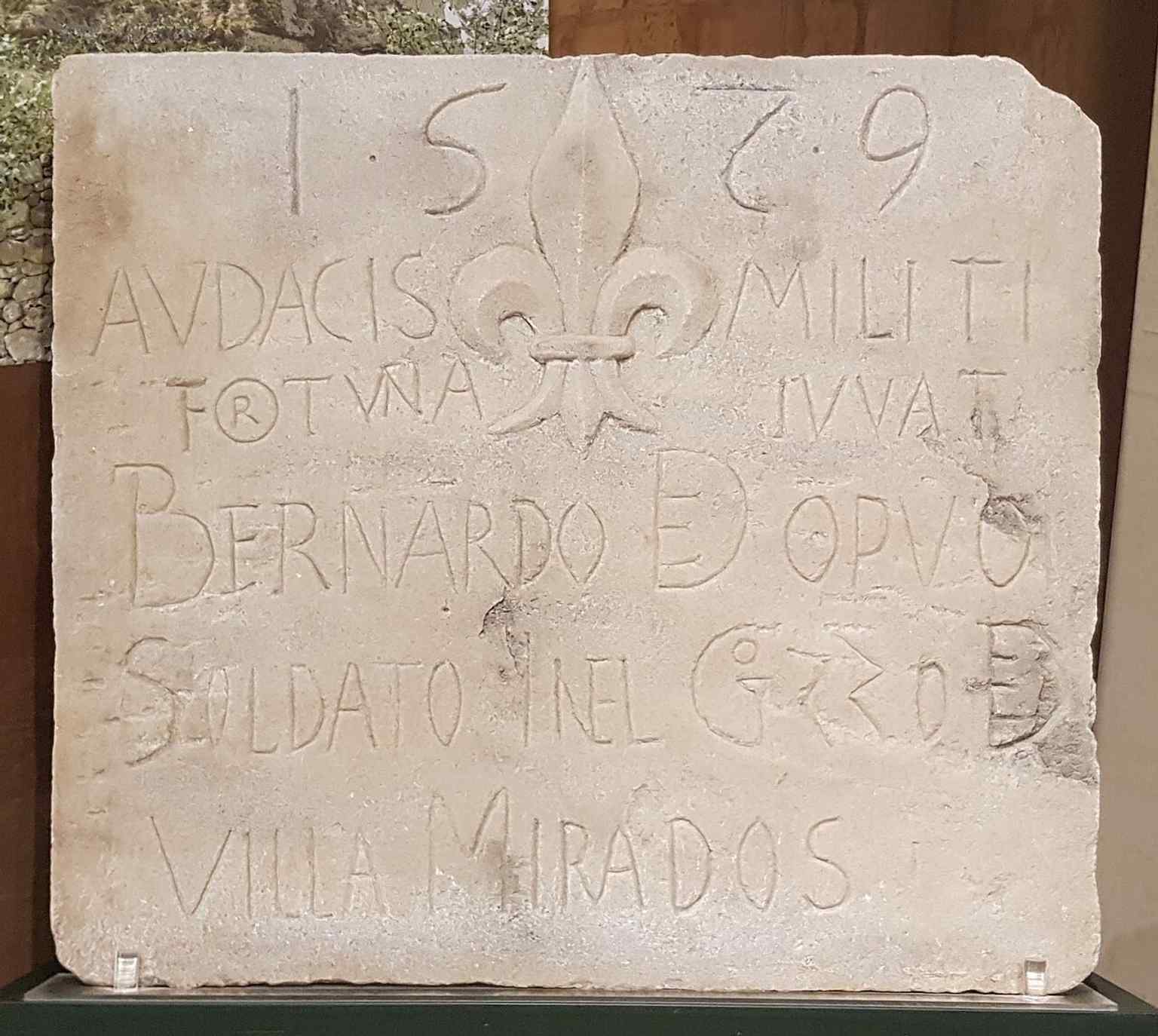
The Bernardo Daldana inscription, a stone that was reconstructed from documentation after spending years in storage at the museum.Photo: Matthew Axiak, Wikimedia Commons, CC BY-SA 4.0. Cropped & resized. 
A view of Casa Bondi within the Cittadella walls, underscoring the museum’s place in Gozo’s fortified historic core.Photo: Continentaleurope, Wikimedia Commons, CC BY-SA 4.0. Cropped & resized. The honey-colored stone cathedral rises in a crisp Baroque front, with a triangular pediment, tall pilasters, and a bell tower tucked to one side inside the Citadel walls. This…Read moreShow less
Open dedicated page →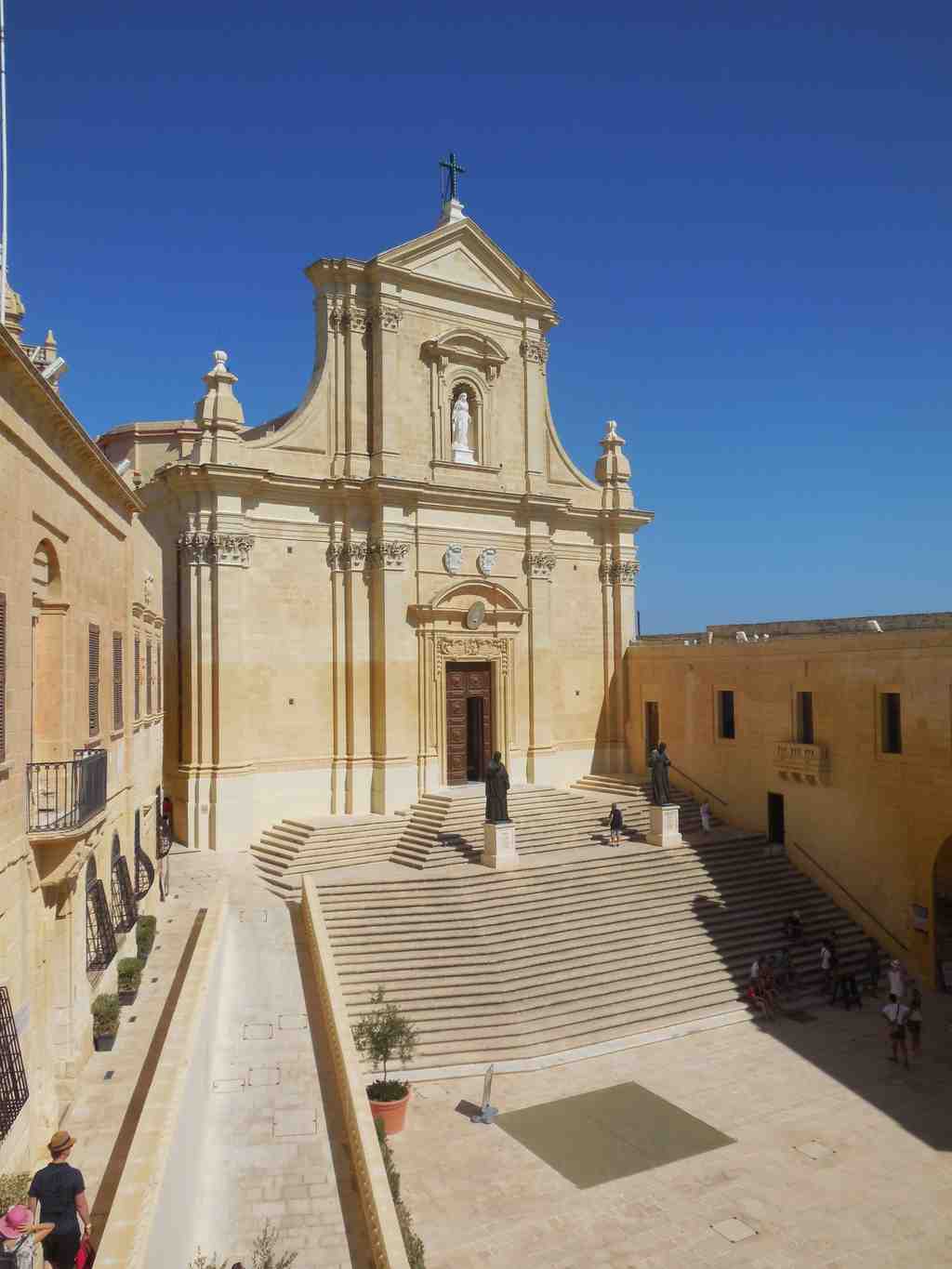
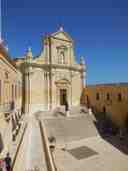
Cathedral of the Assumption, GozoPhoto: Laredawg, Wikimedia Commons, CC BY-SA 4.0. Cropped & resized. The honey-colored stone cathedral rises in a crisp Baroque front, with a triangular pediment, tall pilasters, and a bell tower tucked to one side inside the Citadel walls.
This is the point where Victoria’s layers stop being a theory and become a fact under your feet. The cathedral honors the Assumption of Mary, and since eighteen sixty-four it has served as the seat of Gozo’s bishop. But its story does not begin with a cathedral... or even with a church.
Long before this façade appeared, this hill held Roman sacred foundations, probably a temple to Juno. Later Christians claimed the site for the Virgin Mary, though archaeology has made that old neat conversion story a bit messier, which is usually how real history behaves. In fact, locals love this detail: when builders laid the foundation stone in sixteen ninety-seven, they exposed the base of the Roman temple itself. So the birth of the Baroque cathedral doubled as an archaeological dig.
If a cathedral stands on older holy ground, does that make the place feel more continuous... or more complicated?
The medieval parish here shows up in records by twelve ninety-nine. It grew, it suffered, and it kept going. Ottoman raiders sacked it in fifteen fifty-one; the church reopened by September fifteen fifty-four. Then the earthquake of sixteen ninety-three damaged it badly enough that rebuilding became unavoidable.
One man drove that effort: Archpriest Dun Karlu Magri. He secured approval, set aside funds, bought neighboring property, and brought in Lorenzo Gafà, Malta’s great Baroque architect. Magri died in the same grim year as the earthquake, so his successor, Dun Nikol Natal Cassia-Magri, carried the project forward, helped by the noble benefactor Felice Axac. They inaugurated this church in seventeen eleven, and Bishop Giacomo Cañaves consecrated it in seventeen sixteen to the Virgin Mary and also to Saint Ursula, Gozo’s patron. For all the strength of parish life below in Saint George’s, this hilltop church kept the older claim to seniority.
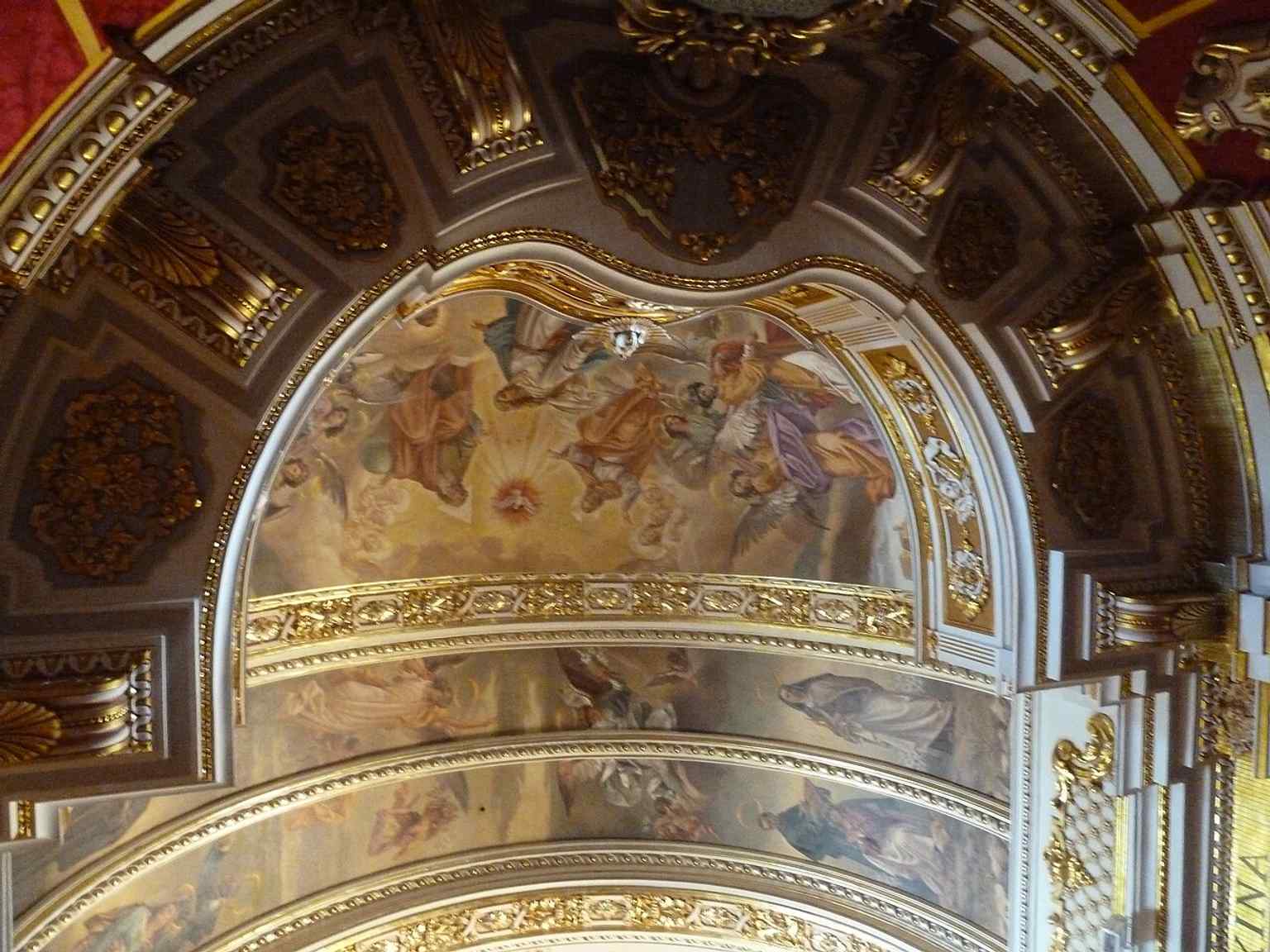
If you check the image on your screen, you can see the interior trick that made the cathedral famous. There is no real masonry dome. The opening exists, but a painted canvas installed in seventeen thirty-nine creates the illusion of one, because a true dome would have risen too high inside the Citadel bastions. Very Baroque, really: if you cannot build the heavens, paint them persuasively.
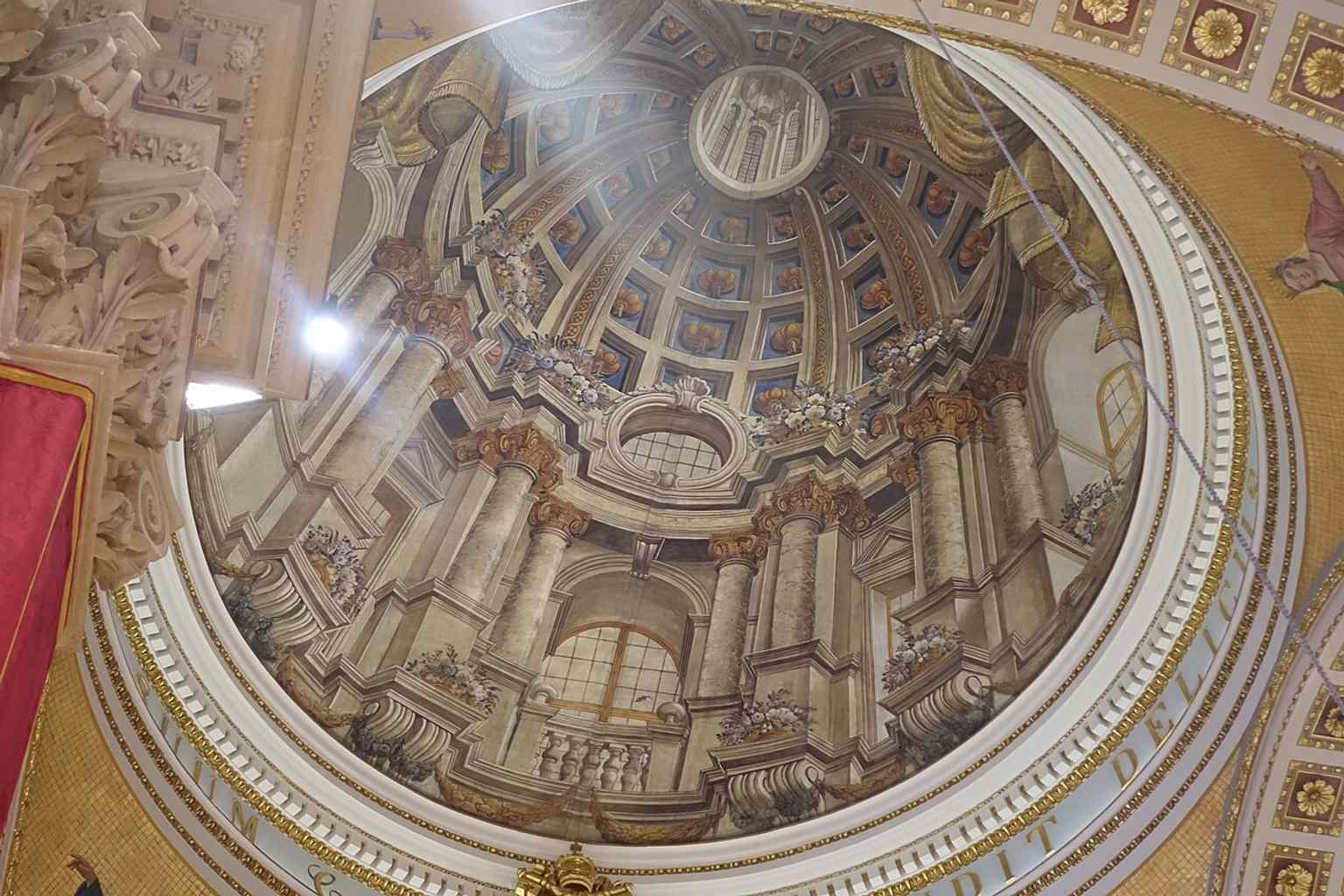
The famous trompe-l’oeil dome illusion — a clever painted substitute installed in 1739 because a full masonry dome would have been too high.Photo: Joseolgon, Wikimedia Commons, CC BY 4.0. Cropped & resized. And the ground still argues back. In the early two thousands, work beneath the sacristy exposed a Roman wall, ancient floors, coins, and broken pottery from different eras... proof that this place never belonged to just one century.
So here you are, standing before a church that is also a Roman footprint, a medieval parish memory, a Marian landmark, and a post-disaster act of stubborn rebuilding. Now we leave bishops and bastions for domestic life nearby, at Gran Castello Historic House, about a minute away. If you want to return and go inside, the cathedral usually opens Monday through Saturday and stays closed on Sunday.
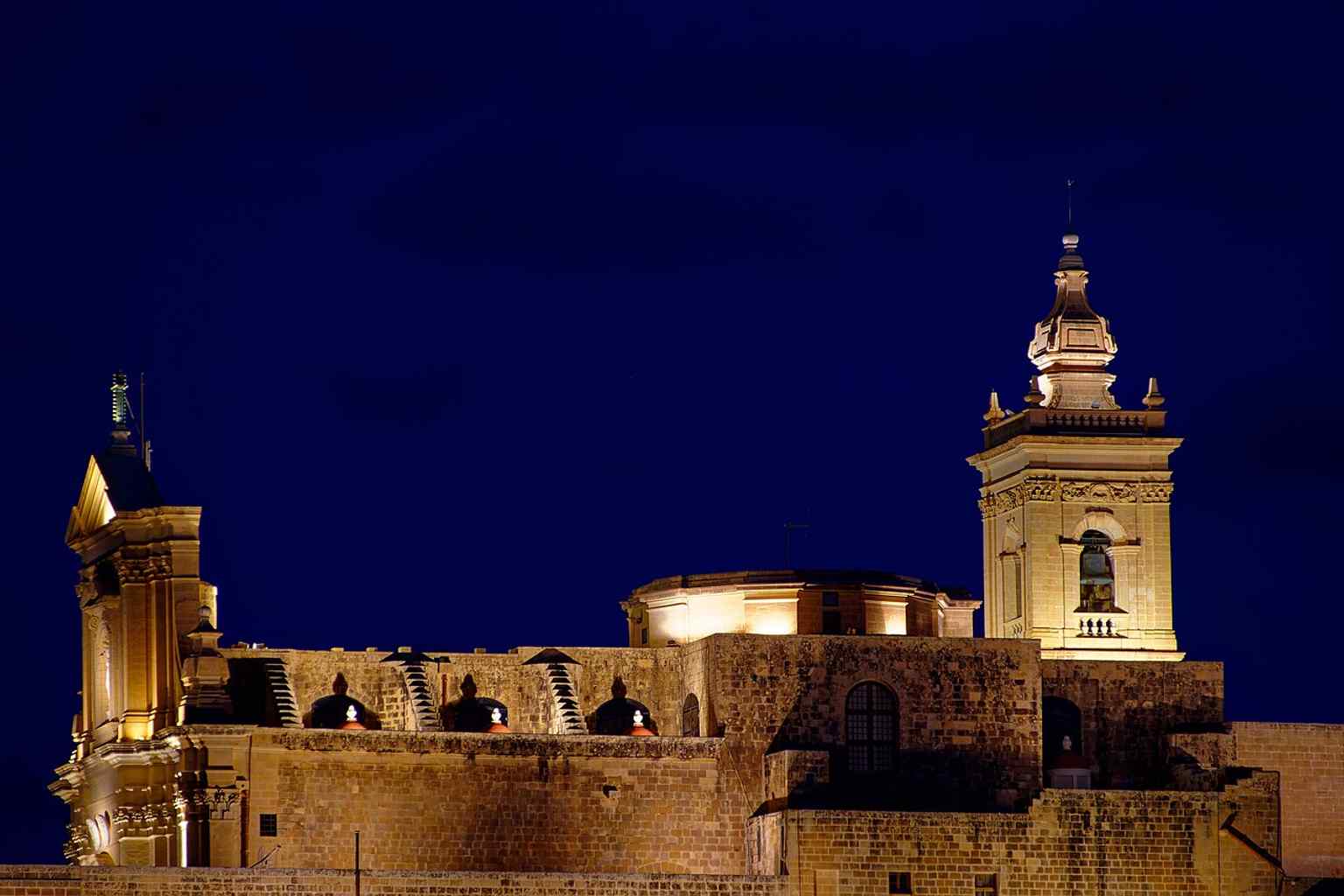
A broad view of the cathedral inside the Cittadella, matching its hilltop setting and the long history built on earlier religious layers.Photo: Tranceliner, Wikimedia Commons, CC BY-SA 4.0. Cropped & resized. 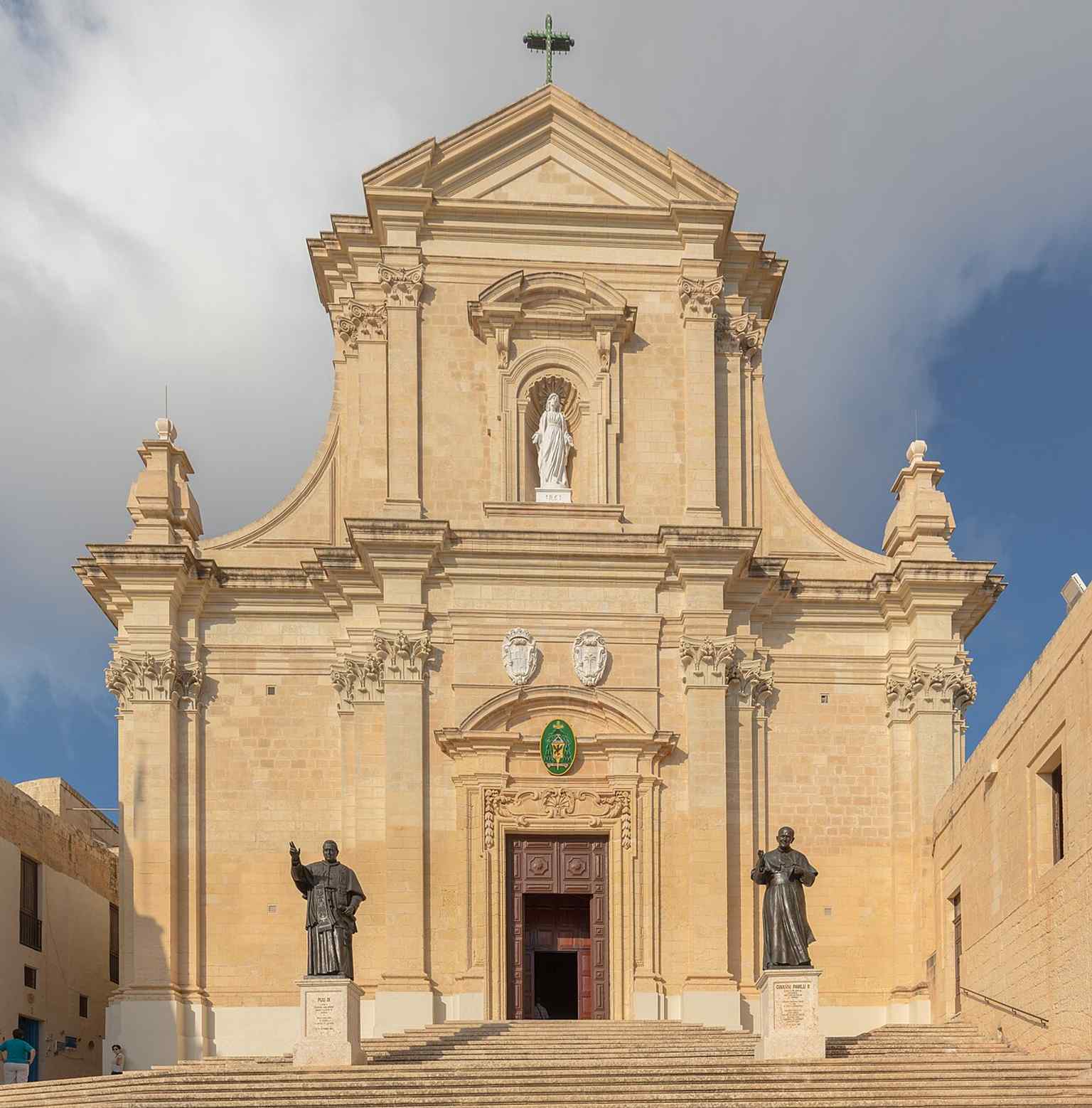
The cathedral’s Baroque façade in Victoria, showing the grand rebuilt church that replaced the earthquake-damaged medieval parish church.Photo: Diego Delso, Wikimedia Commons, CC BY-SA 4.0. Cropped & resized. 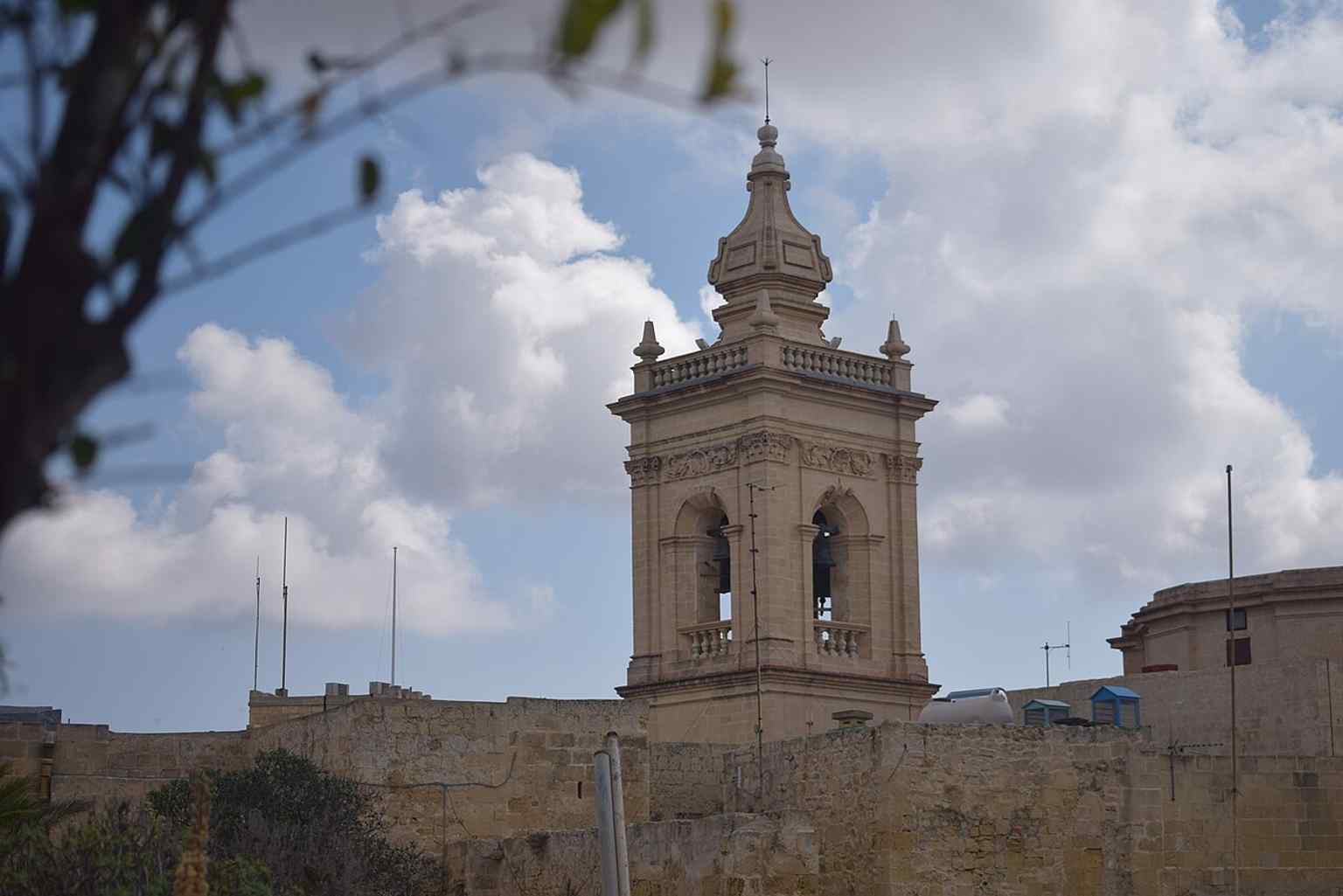
The bell tower on the north-east side, one of the cathedral’s most recognisable exterior features in the Cittadella skyline.Photo: Maltaphotographer, Wikimedia Commons, CC BY-SA 4.0. Cropped & resized. 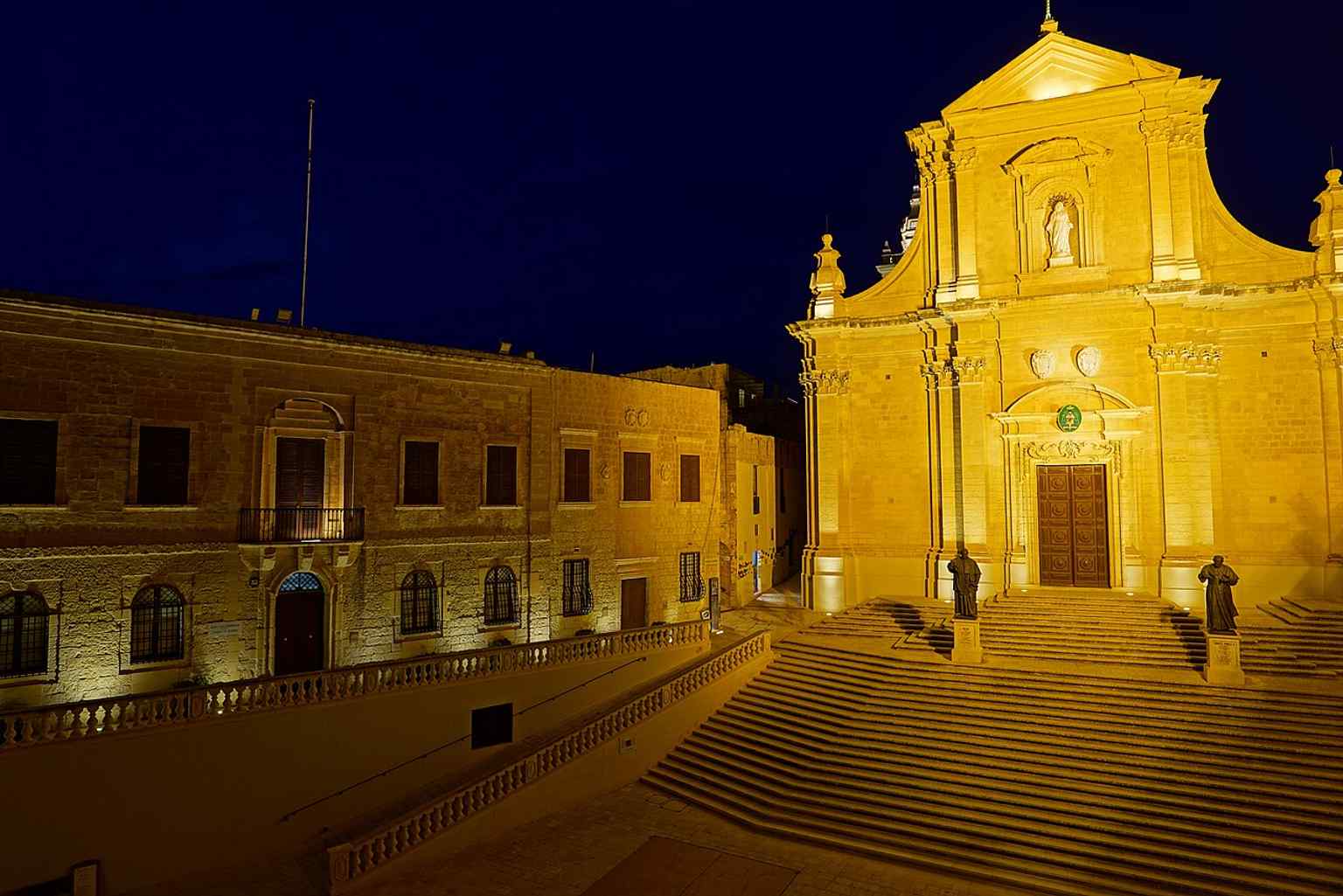
The cathedral beside the Citadella law courts, a good context shot for how the church sits within Gozo’s fortified civic core.Photo: Redeemer, Wikimedia Commons, CC BY-SA 4.0. Cropped & resized. 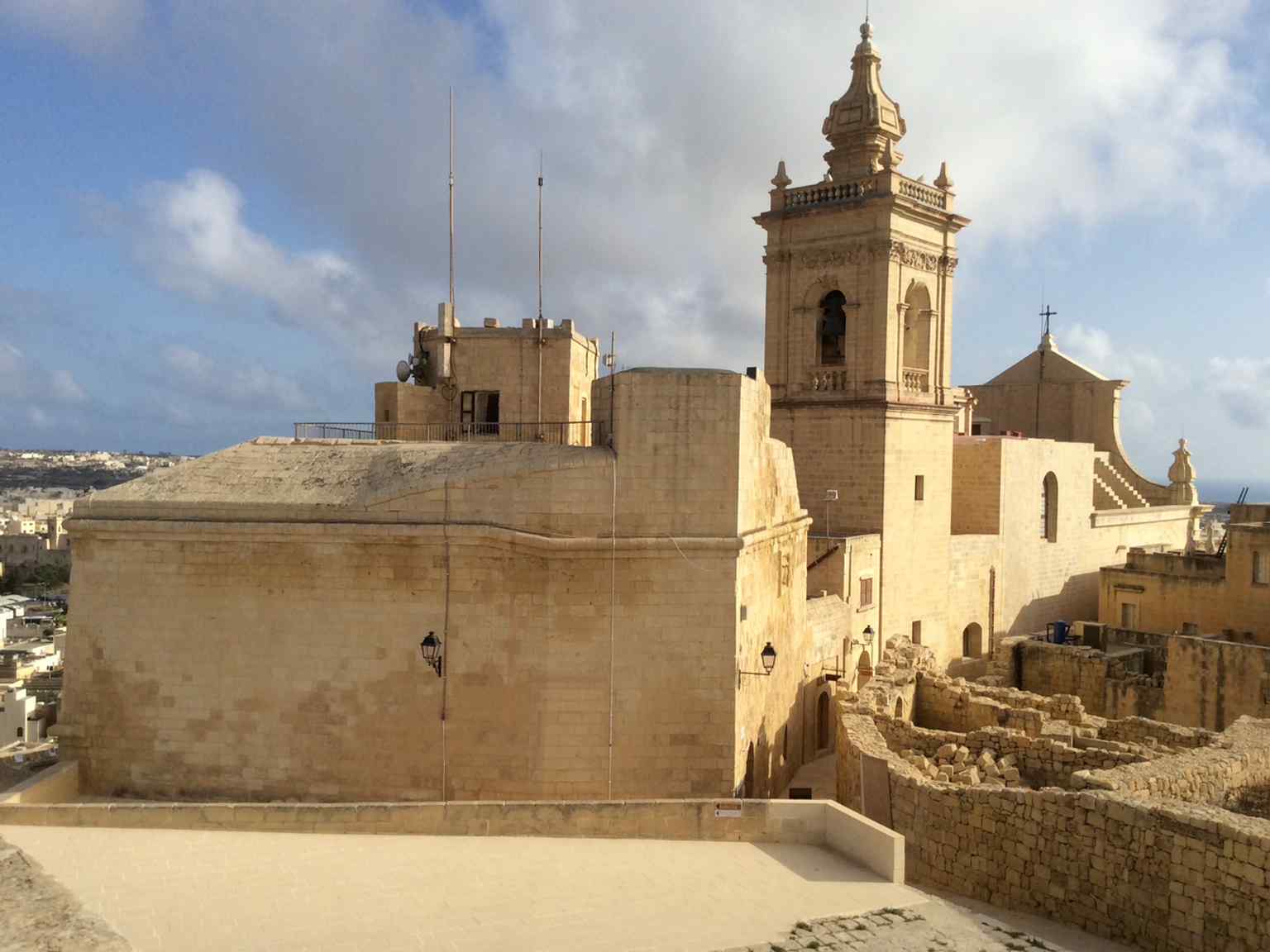
A wider Cittadella view with the cathedral and surrounding quarters, echoing the site’s layered history of settlement and reuse.Photo: Continentaleurope, Wikimedia Commons, CC BY-SA 4.0. Cropped & resized. 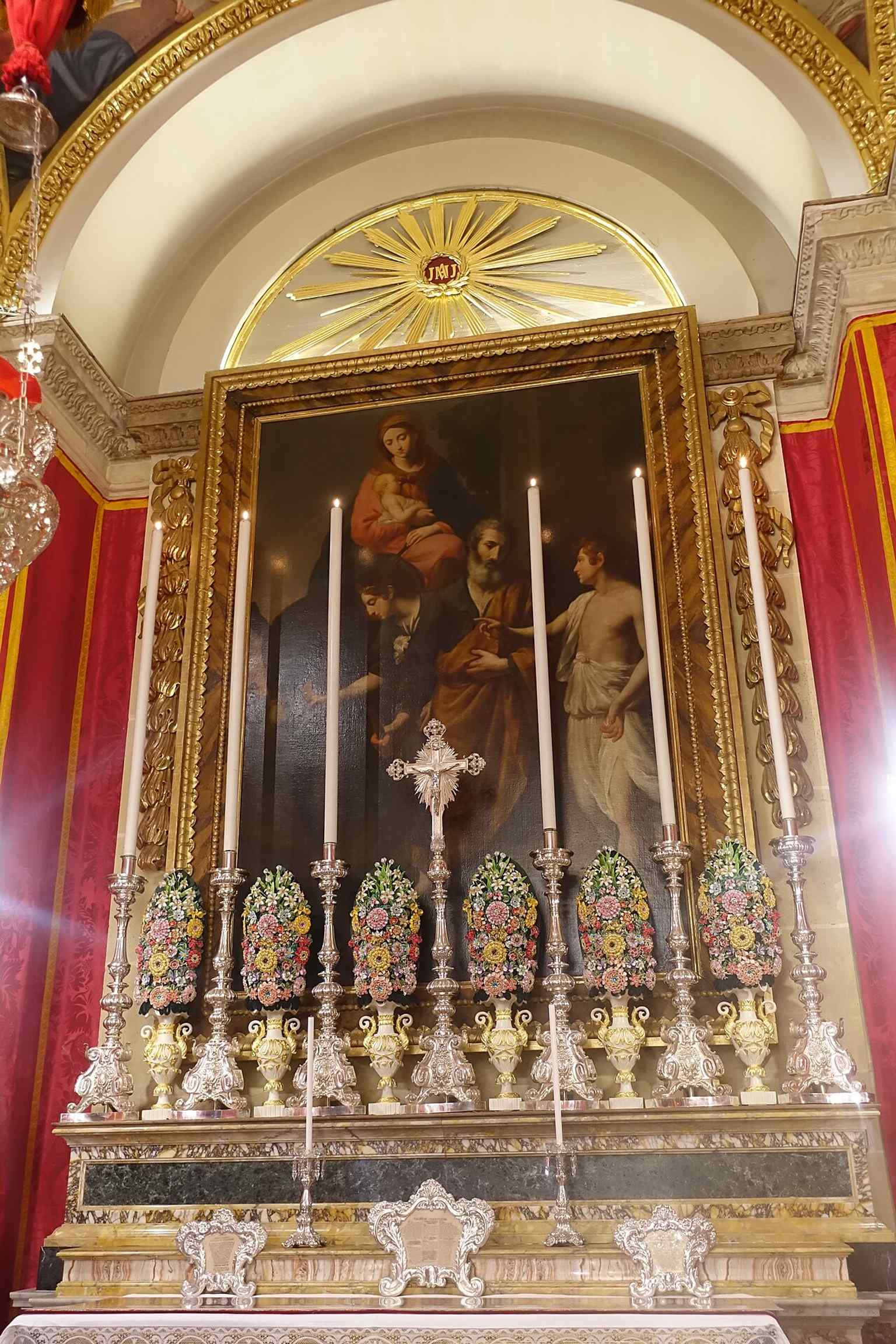
An interior view of the nave, where the painted ceiling helps conceal the fact that the cathedral has no real stone dome.Photo: Joseolgon, Wikimedia Commons, CC BY 4.0. Cropped & resized. 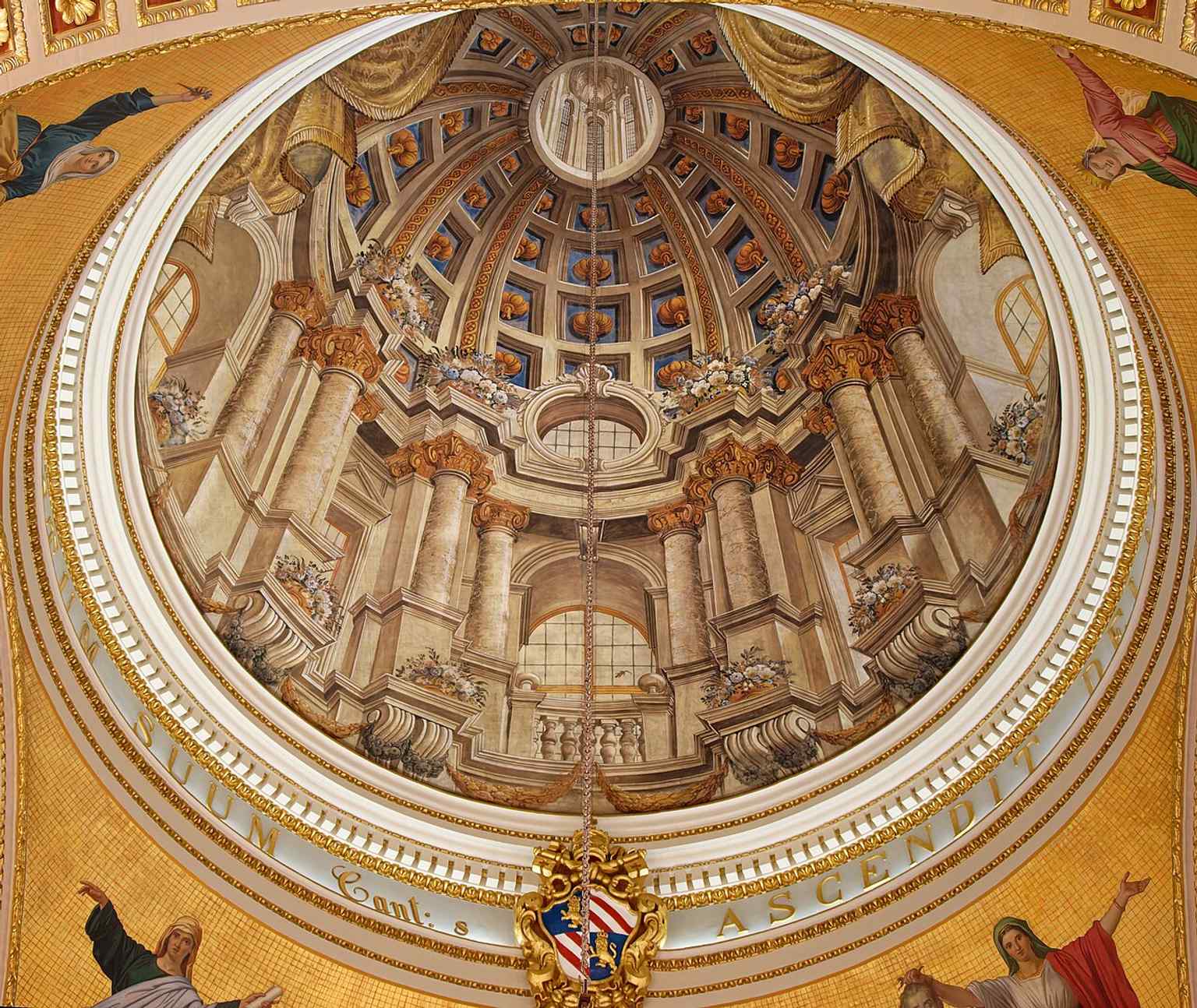
The interior artwork and lighting emphasize the cathedral’s theatrical Baroque finish, completed as a visual counterpart to its liturgical role.Photo: Tranceliner, Wikimedia Commons, CC BY-SA 4.0. Cropped & resized. 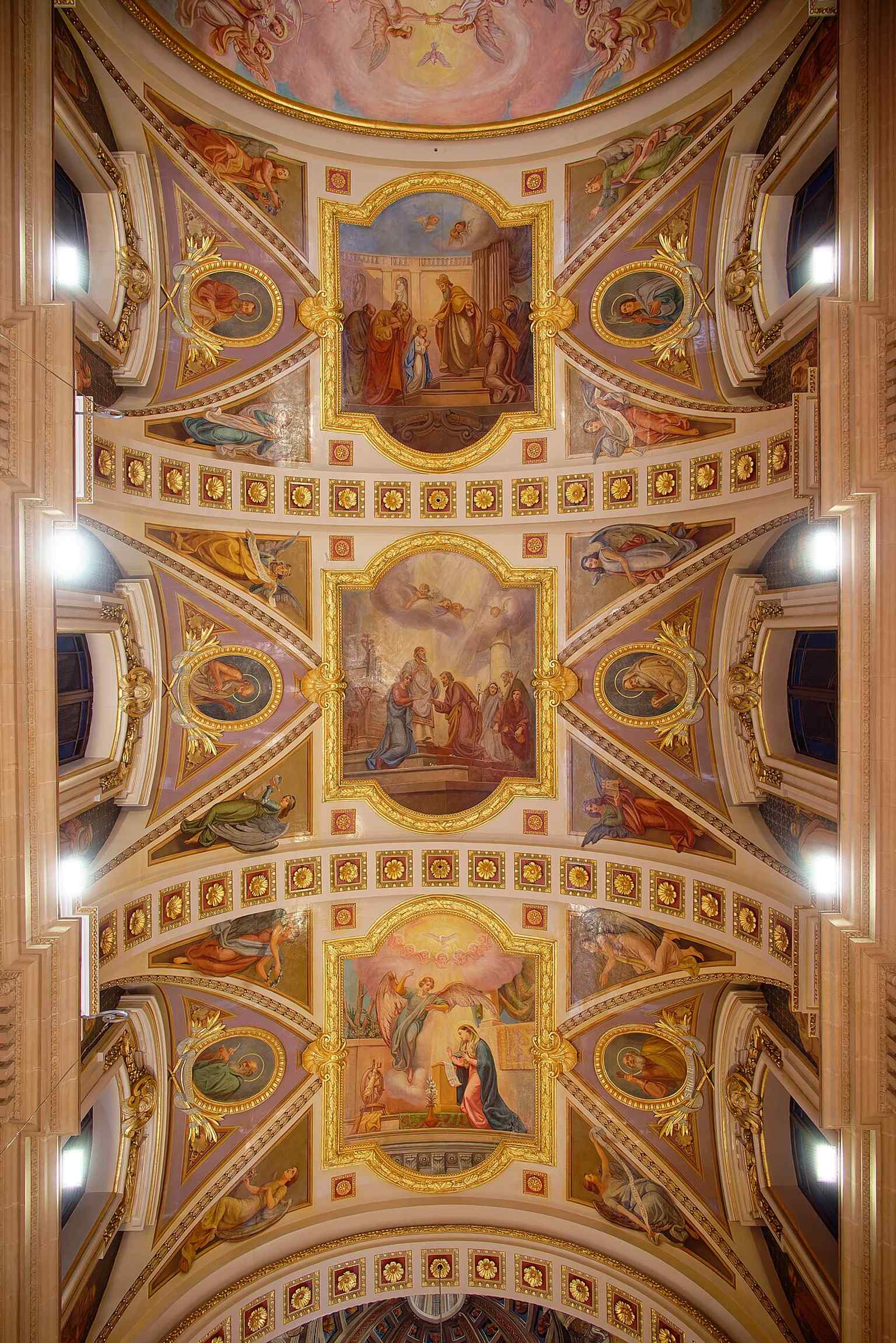
A close look at the painted ceiling that created the cathedral’s famous dome illusion, one of Gozo’s best-known Baroque tricks.Photo: Tranceliner, Wikimedia Commons, CC BY-SA 4.0. Cropped & resized. 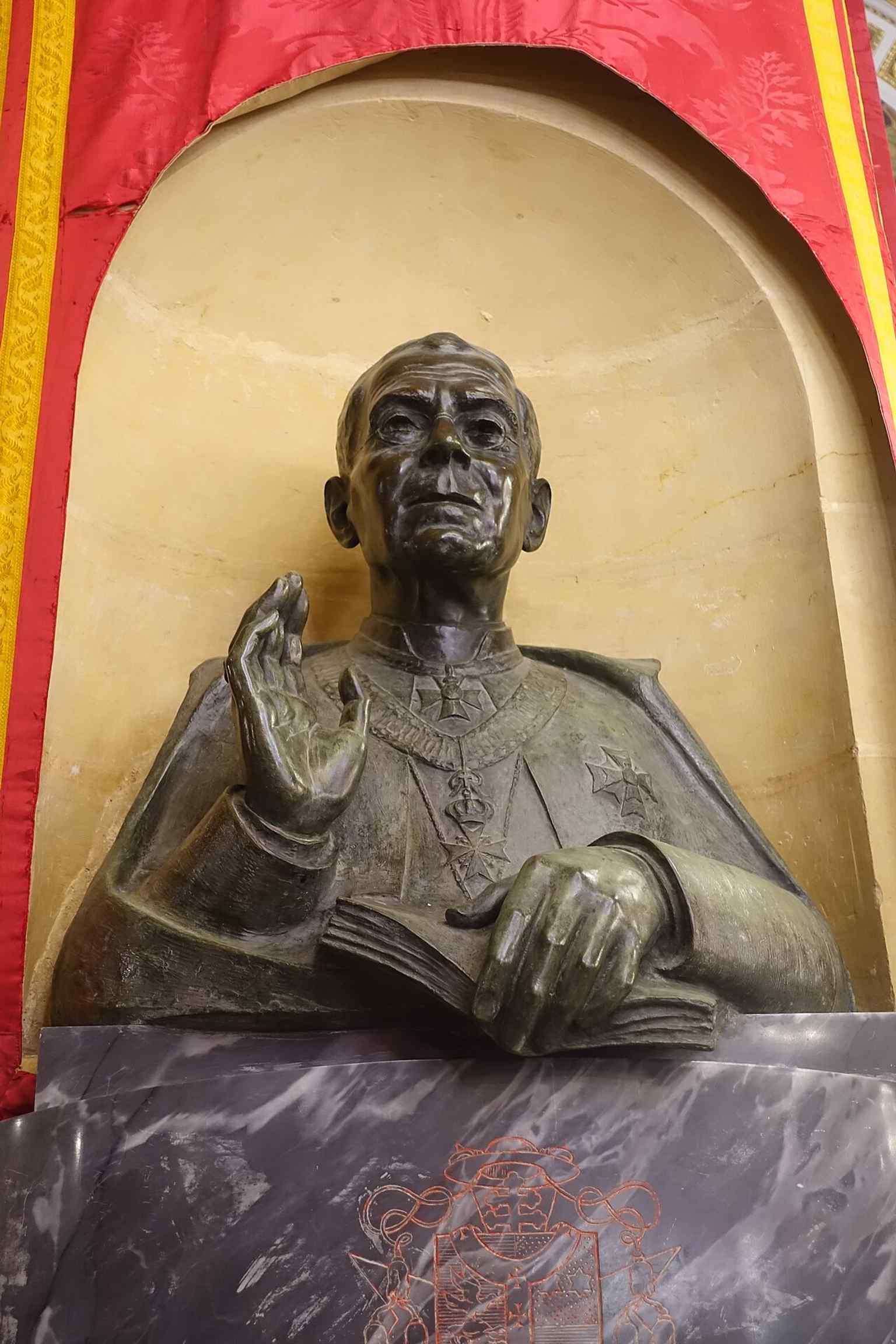
The bust of Bishop Pietro Pace inside the cathedral, reflecting its later role as the seat of the Diocese of Gozo from 1864.Photo: Joseolgon, Wikimedia Commons, CC BY 4.0. Cropped & resized. 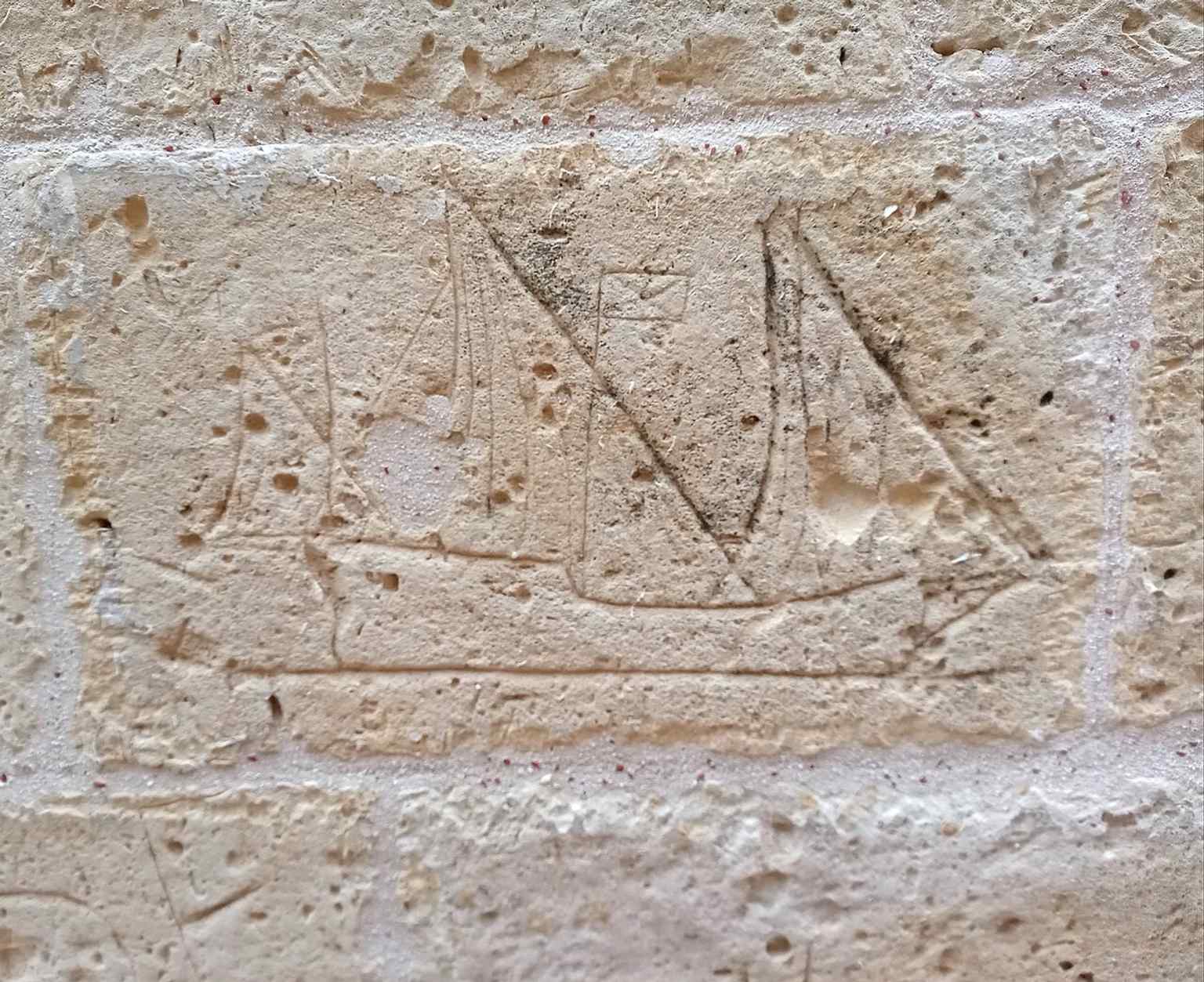
A small graffiti-like sailing boat on the cathedral wall, a human trace on a building layered over centuries of history.Photo: A.-K. D., Wikimedia Commons, CC BY-SA 4.0. Cropped & resized. 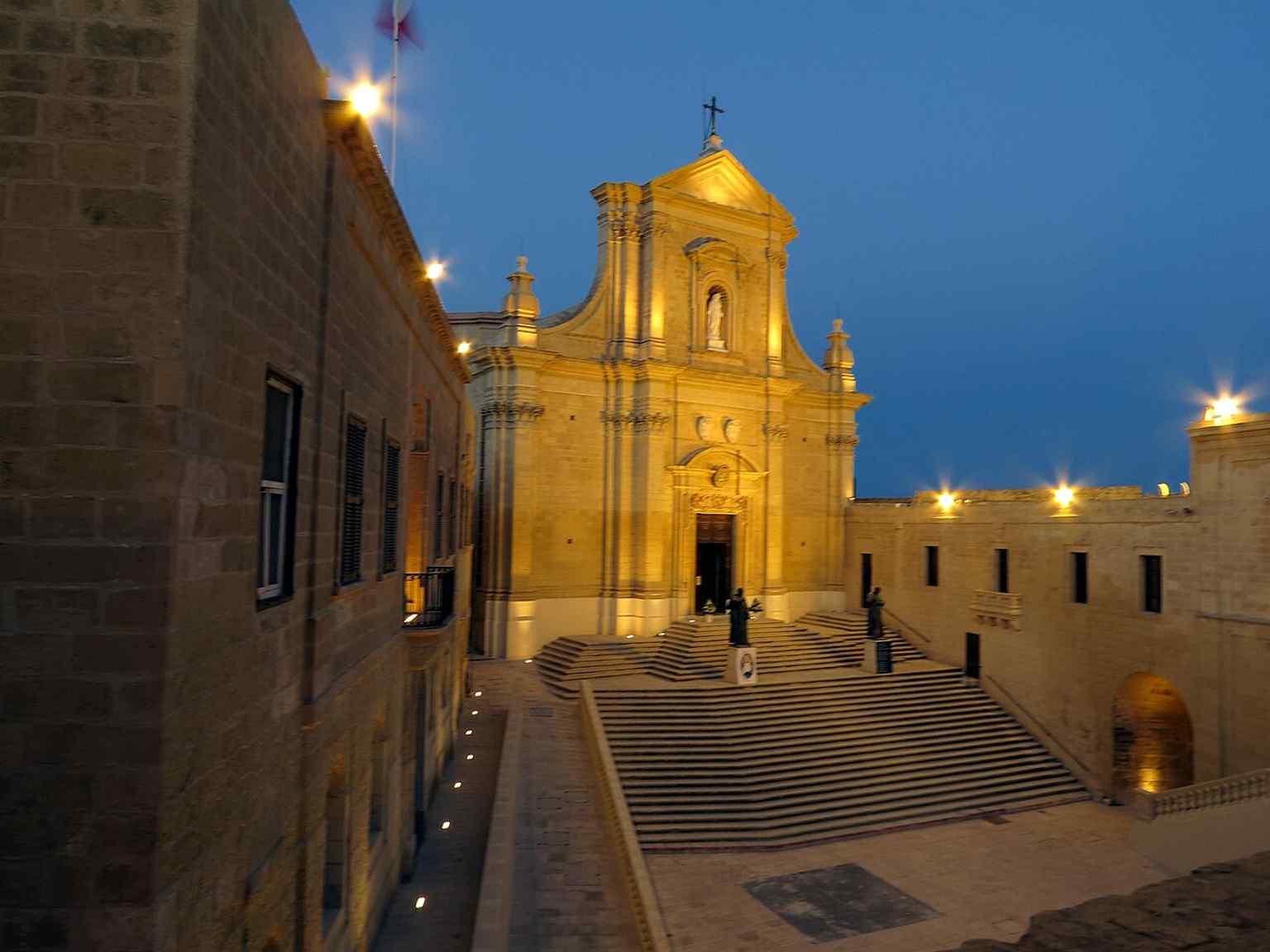
The cathedral façade in full daylight, a clear reference image for the island’s cathedral dedicated to the Assumption of Mary.Photo: BrandyMay, Wikimedia Commons, CC BY-SA 4.0. Cropped & resized. 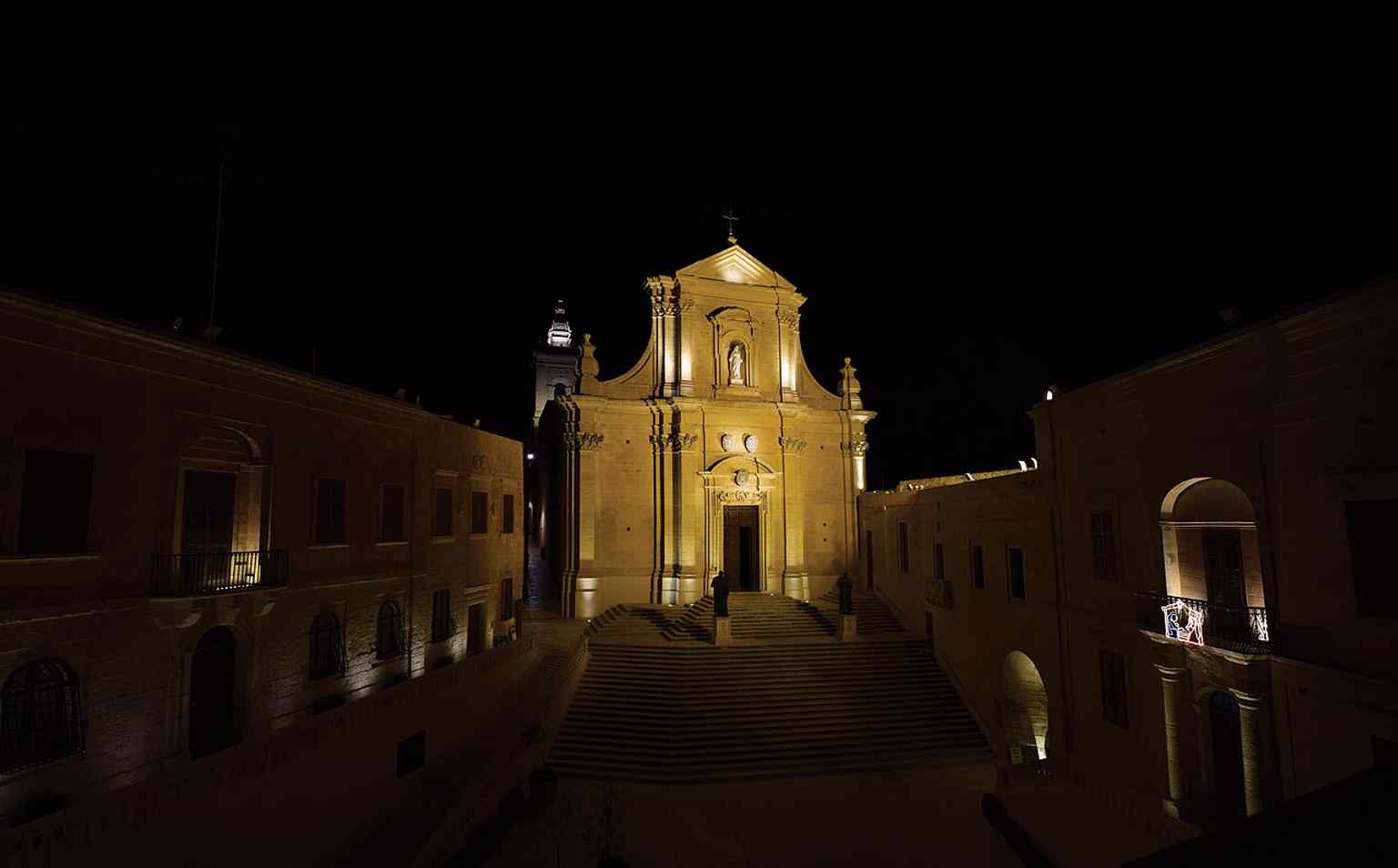
The cathedral at night, giving a dramatic sense of the landmark’s presence above Victoria and within the fortified Cittadella.Photo: Jeremy Dimech, Wikimedia Commons, CC BY-SA 4.0. Cropped & resized. 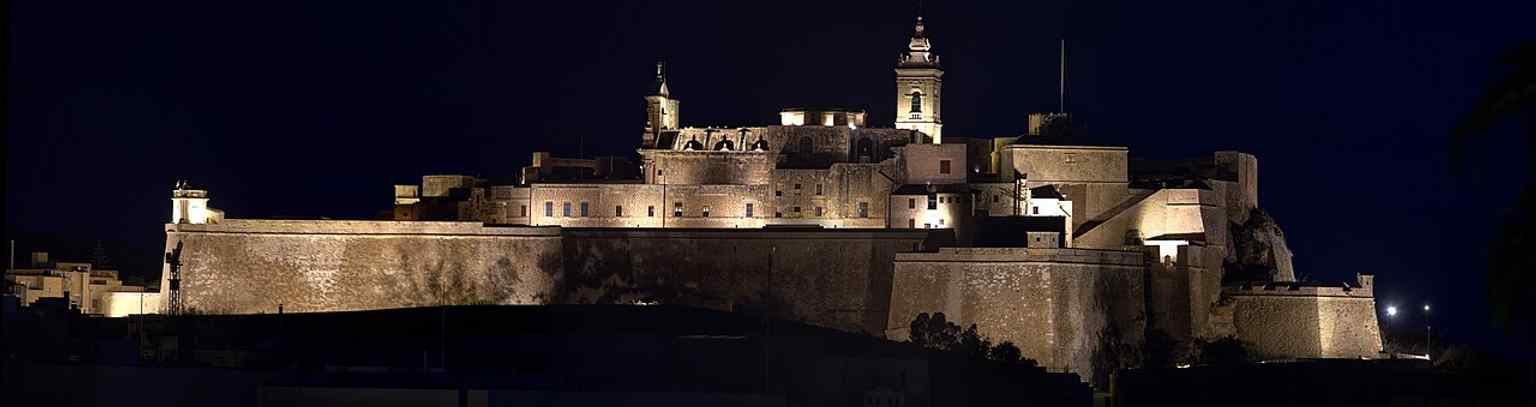
A sweeping high viewpoint of the Cittadella, useful for showing the cathedral’s commanding position within Gozo’s historic fortress.Photo: Tranceliner, Wikimedia Commons, CC BY-SA 4.0. Cropped & resized. On your left stands a pale limestone cluster of town houses with straight façades, small rectangular windows, and a delicate baroque doorway that gives away its more refined…Read moreShow less
Open dedicated page →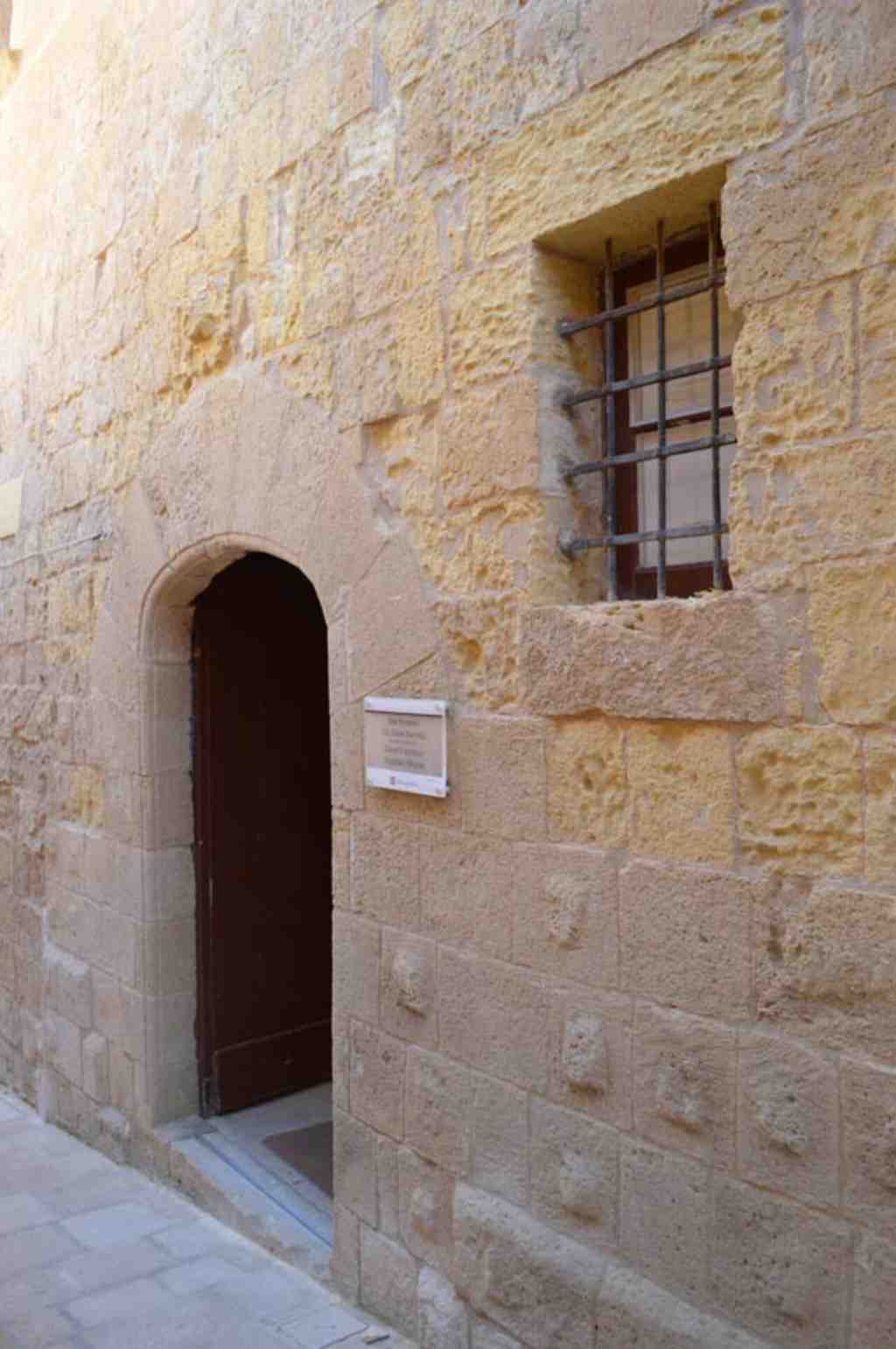
Gran Castello Historic HousePhoto: Continentaleurope, Wikimedia Commons, CC BY-SA 4.0. Cropped & resized. On your left stands a pale limestone cluster of town houses with straight façades, small rectangular windows, and a delicate baroque doorway that gives away its more refined past.
This is the Gran Castello Historic House, once called the Folklore Museum, and it quietly corrects a habit cities encourage... the habit of remembering bishops, councils, and grand façades while forgetting who scrubbed pots, spun cotton, gave birth, and tucked children into bed. Domestic memory of ordinary Gozitans matters here. Rooms, tools, and daily routines are a kind of archive too.
Heritage Malta traces these houses back to the late fifteenth century. Over time, owners kept changing, walls shifted, additions crept in, and the place adapted like the rest of Victoria. In the nineteen thirties, Sir Harry Luke, the British governor of Malta, stepped in and pushed for restoration, helping save the complex. Not exactly glamorous work, but then survival rarely is. Buildings, like people, often stay alive by finding a new use.
And useful it became in a very different way. After that rescue, the place served for rearing livestock and poultry before the Maltese government secured it and reopened it in nineteen eighty-three as a museum. If you glance at the image in the app, you can catch that layered character in the façade itself.
Now, picture what sits behind these walls: an eighteenth-century household rebuilt room by room... a main bedroom, a child’s bedroom, a birth room, a dining room, a scullery, meaning the working room for washing and food prep, and servants’ quarters. One house even keeps its original kitchen and stone stove, a rare survivor. Notice how tightly work, sleep, birth, and family life would have fit together here; history was not arranged by topic, but by necessity.
The museum also follows cotton through Gozo’s economy, with a cotton gin, spinning wheel, weaving tools, and reminders of lace-making, another patient craft now fading. In two thousand and sixteen, the site took its current name to stress that this was not just a container for folklore, but a real residence for well-to-do Gozitan families.
Still... not every room in the Citadel offered shelter. Some held people in. The Old Prison waits nearby, about two minutes away. If you plan to come back inside here later, it’s usually open Tuesday through Sunday from nine in the morning to five in the afternoon, and closed on Monday.
Look for a plain limestone facade with a low rectangular doorway and small grilled openings, tucked into the Citadel wall beside the old law courts. This place has a double…Read moreShow less
Open dedicated page →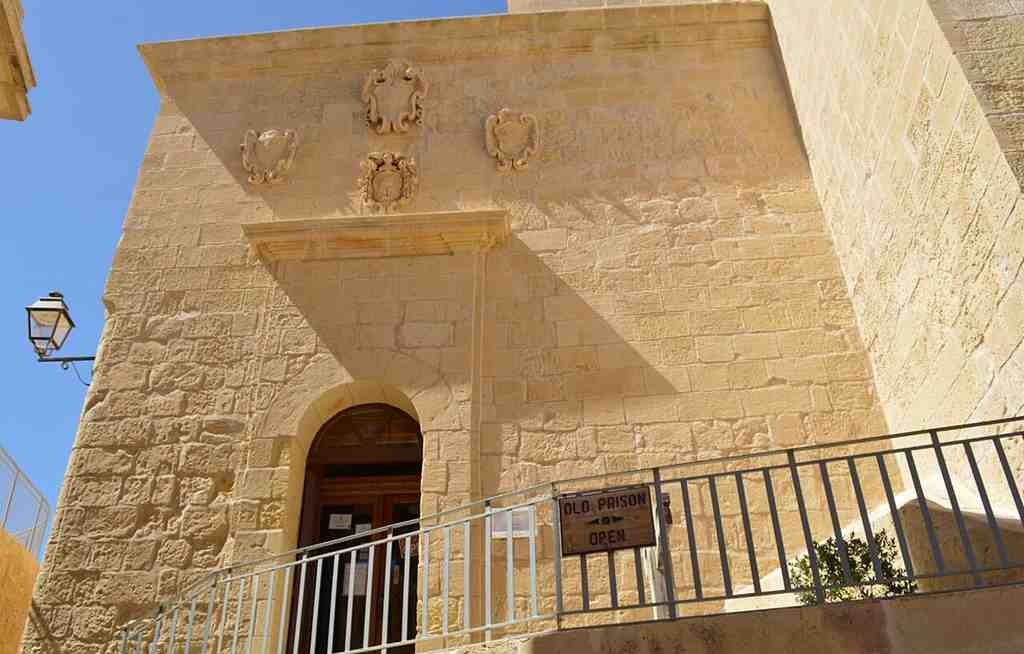
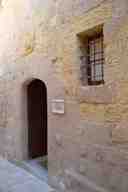
Old Prison (Victoria)Photo: Continentaleurope, Wikimedia Commons, CC BY-SA 4.0. Cropped & resized. Look for a plain limestone facade with a low rectangular doorway and small grilled openings, tucked into the Citadel wall beside the old law courts.
This place has a double identity. It was a prison, yes, but not simply a gloomy box for punishment; because it stood right beside the Courts of Justice and was once connected to them, it also worked as a holding place for people awaiting trial and as a tool for keeping order when tempers, rules, or reputations went off the rails.
The story here reaches back deep into the Knights’ period. Records say that by fifteen thirty-five, two Knights of Saint John had already been sentenced to prison in Gozo, and in fifteen forty-eight the archives mention a new prison under construction. So even if historians still argue over the exact earliest site, this patch of the Citadel had a long memory for discipline. The prison stayed active from the mid-sixteenth century all the way to nineteen sixty-two... which is a surprisingly long career for a building devoted to bad decisions.
Its most famous inmate gives the place a sharp edge. Fra Jean Parisot de La Valette, the future Grand Master whose name would later cling to Valletta, landed here in fifteen thirty-eight after he attacked a layman. He spent four months in the Gozo prison, then the authorities sent him into exile in Tripoli for two years to cool his temper. Apparently even legends sometimes need a timeout.
By the nineteenth century, the prison’s job had shifted. A newer prison elsewhere in the Citadel took on more of the hard labor of incarceration, while this one increasingly held people waiting for judgment. The building changed too: an upper wing rose above older cells, proof that even a prison had to adapt when the system got crowded.
What lasts most powerfully here are the marks people left behind. If you check the image on your screen, you can see the graffiti cut into the limestone walls: ships, crosses, names, dates, handprints, even little game boards for trija, a simple three-men’s game scratched out to pass the time. Restoration in nineteen ninety-six removed thick whitewash and revealed those carvings again. Prisoners had no knives, so they improvised with bone points, bits of cutlery, or sharp stones. Another image shows how rough and intimate those lines are.
One cell seems to have held members of the Order, because it carries many eight-pointed crosses and the date sixteen thirty-eight. Elsewhere, hand symbols may have served as signatures for men who could not write, or as small charms for luck. And despite the building’s grim reputation, Heritage Malta says there is not enough evidence to confirm torture here... which, in a place like this, feels like a rare and modest mercy.
From open squares and civic offices to these enclosed cells, the Citadel kept finding ways to manage human behavior. Our final stop offers a strange release from all that: a museum set in an old inn and wartime shelter, the Gozo Nature Museum, about a one-minute walk away. If you want to come back inside here later, it is generally open from Tuesday to Sunday, from nine in the morning until five in the afternoon, and closed on Monday.
On your right, look for a compact cluster of pale limestone houses with simple rectangular facades and small shuttered windows, joined together into one irregular old Citadel…Read moreShow less
Open dedicated page →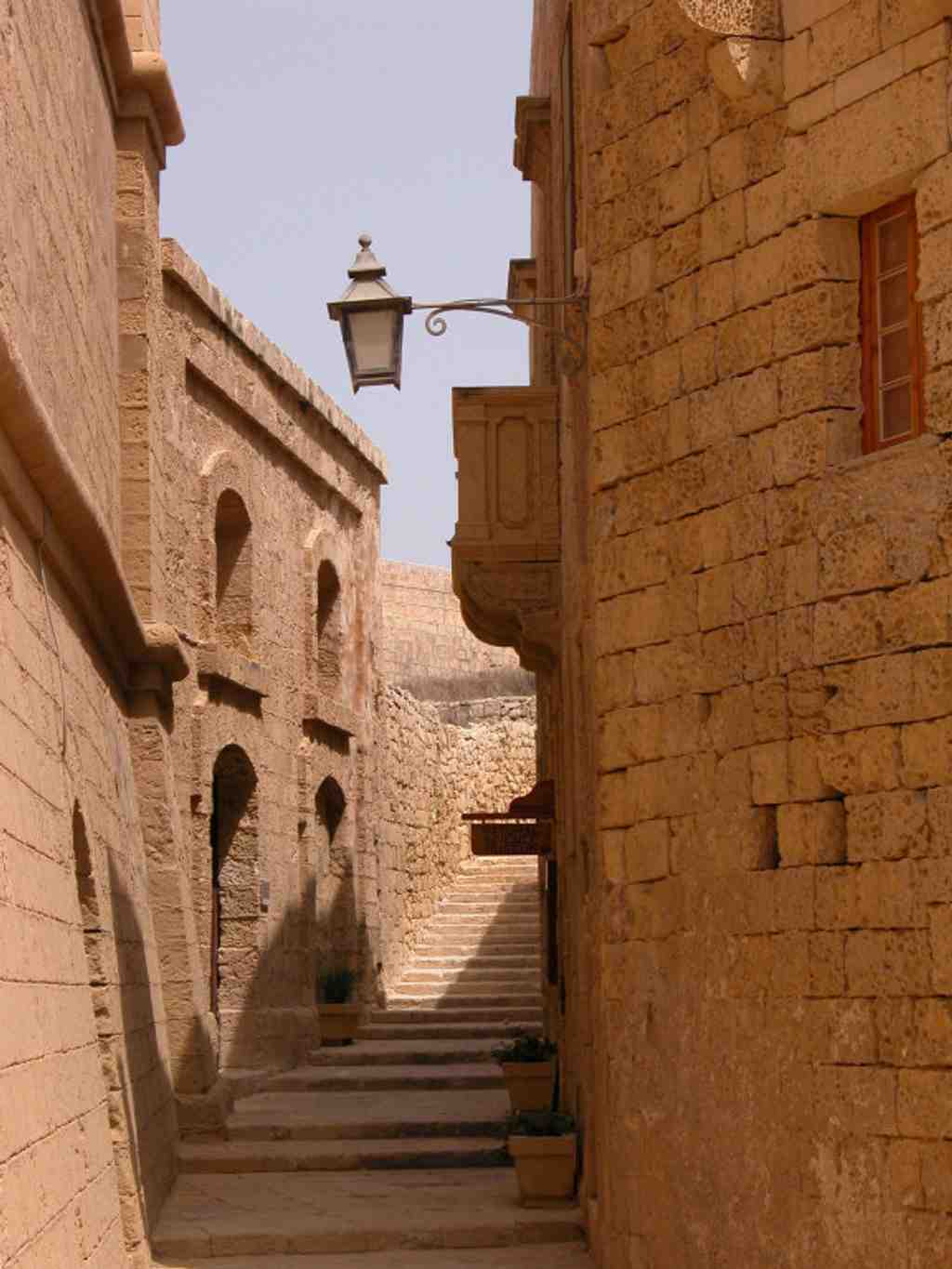
Gozo Nature MuseumPhoto: Yoruno, Wikimedia Commons, CC BY-SA 3.0. Cropped & resized. On your right, look for a compact cluster of pale limestone houses with simple rectangular facades and small shuttered windows, joined together into one irregular old Citadel building.
This is the Gozo Nature Museum, open to the public since nineteen ninety-one... though the building itself had several careers before anyone thought of labeling specimens inside glass cases. Part of it began as an inn in fourteen ninety-five, and the rest grew through later centuries into the patchwork house complex you see now. It still feels less like a grand museum and more like a place where people actually lived, ate, worried, and carried on.
One of those witnesses was Thomas MacGill. In eighteen thirty-nine, he wrote a guide for travelers and praised this inn as, an excellent house of entertainment, with clean comfortable beds and reasonably priced dinners. Not the sort of line heritage officers invent later... just a relieved traveler, apparently well fed. Then the twentieth century changed the script. During the Second World War, families sheltered here from aerial bombing. The same rooms that once welcomed guests turned into refuge.
If you glance at your screen, the exterior image helps show that slightly stitched-together character of the place. And inside, the story stretches far beyond human emergencies or human hospitality. The collections move through Gozo’s geology, minerals, marine life, insects, habitats, ecosystems, native plants like the Maltese Rock Centaury, and even human and animal evolution. Some mineral specimens came from Dr Lewis Mizzi, a Gozitan lawyer with a serious enthusiasm for stones... which is one dignified way of describing a splendid obsession. The fossils here come from marine life laid down between thirty-five and five million years ago, alongside stalactites, stalagmites, and even fragments of moonstone.
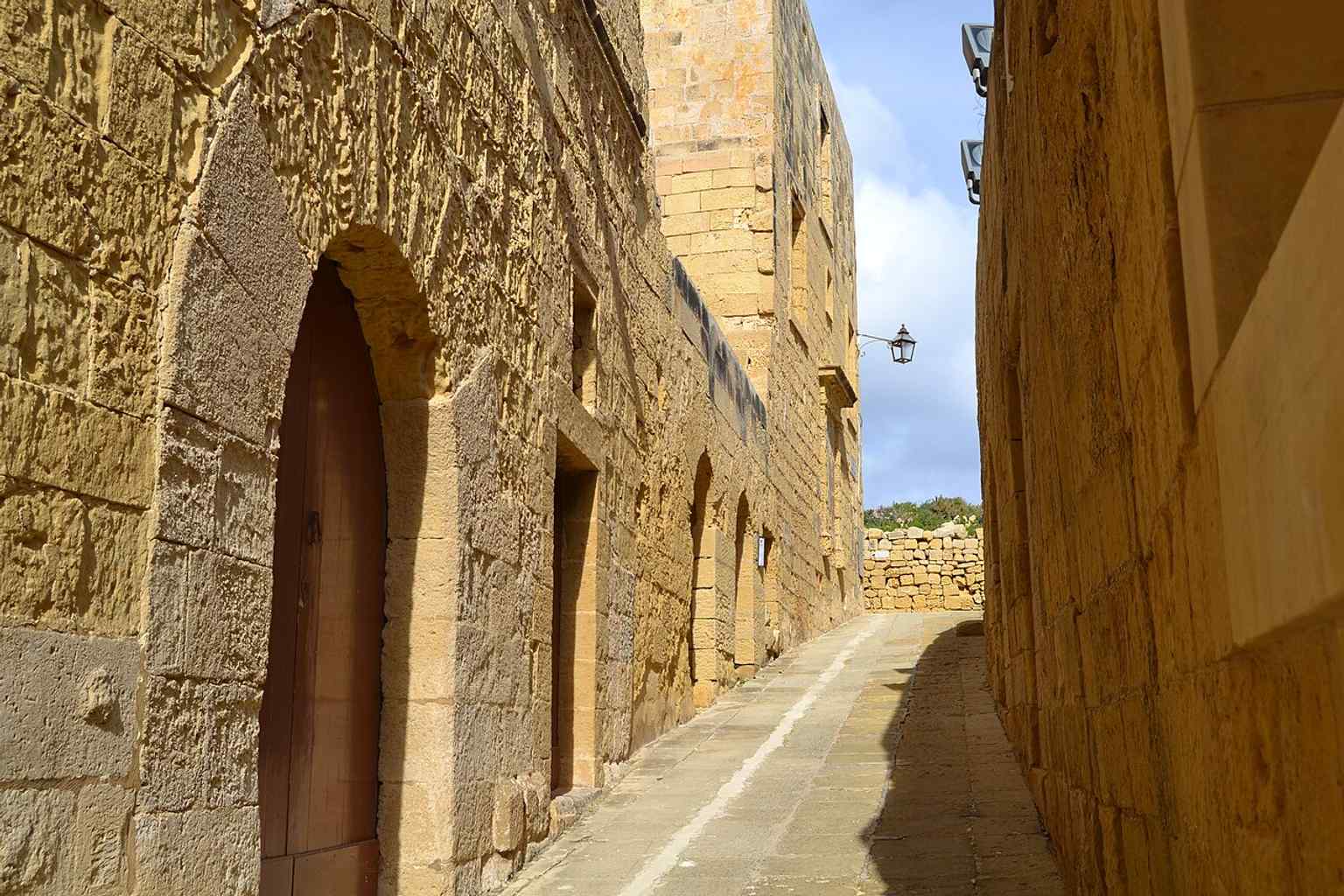
The Gozo Nature Museum set in the Cittadella houses — a listed heritage building that once served as an inn and wartime shelter.Photo: Mandyy88, Wikimedia Commons, CC BY-SA 4.0. Cropped & resized. That may be the right ending for Victoria: a hill town where churches, prisons, homes, and shelters keep changing their use, while the island underneath them remembers seas older than any prayer or wall. If you want to go in, the museum is generally open Tuesday through Sunday from nine AM to five PM, and closed on Monday.
Frequently asked questions
How do I start the tour?
After purchase, download the AudaTours app and enter your redemption code. The tour will be ready to start immediately - just tap play and follow the GPS-guided route.
Do I need internet during the tour?
No! Download the tour before you start and enjoy it fully offline. Only the chat feature requires internet. We recommend downloading on WiFi to save mobile data.
Is this a guided group tour?
No - this is a self-guided audio tour. You explore independently at your own pace, with audio narration playing through your phone. No tour guide, no group, no schedule.
How long does the tour take?
Most tours take 60–90 minutes to complete, but you control the pace entirely. Pause, skip stops, or take breaks whenever you want.
What if I can't finish the tour today?
No problem! Tours have lifetime access. Pause and resume whenever you like - tomorrow, next week, or next year. Your progress is saved.
What languages are available?
All tours are available in 50+ languages. Select your preferred language when redeeming your code. Note: language cannot be changed after tour generation.
Where do I access the tour after purchase?
Download the free AudaTours app from the App Store or Google Play. Enter your redemption code (sent via email) and the tour will appear in your library, ready to download and start.
If you don't enjoy the tour, we'll refund your purchase. Contact us at [email protected]
Checkout securely with 






%2C%20Malta.01.jpg)


