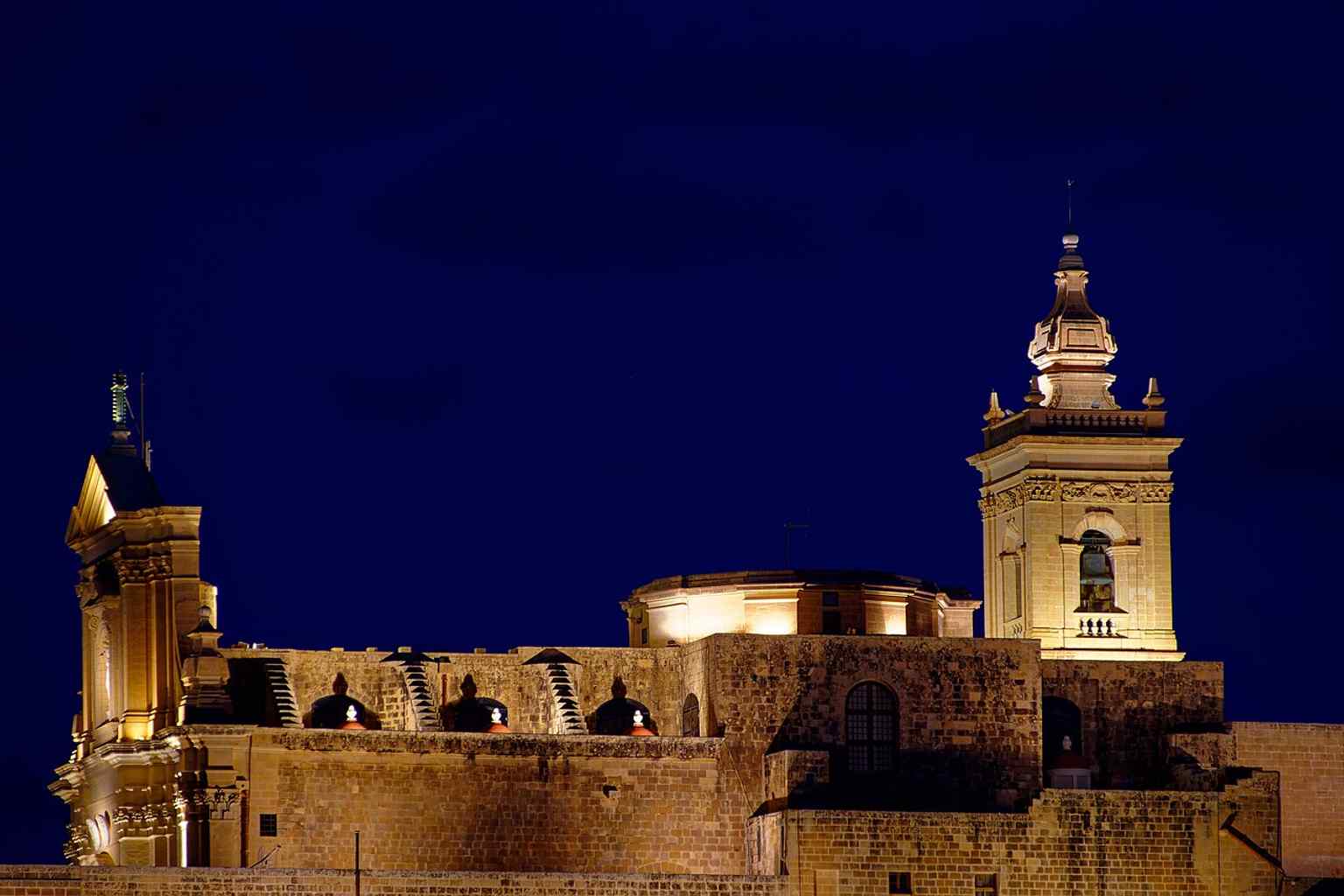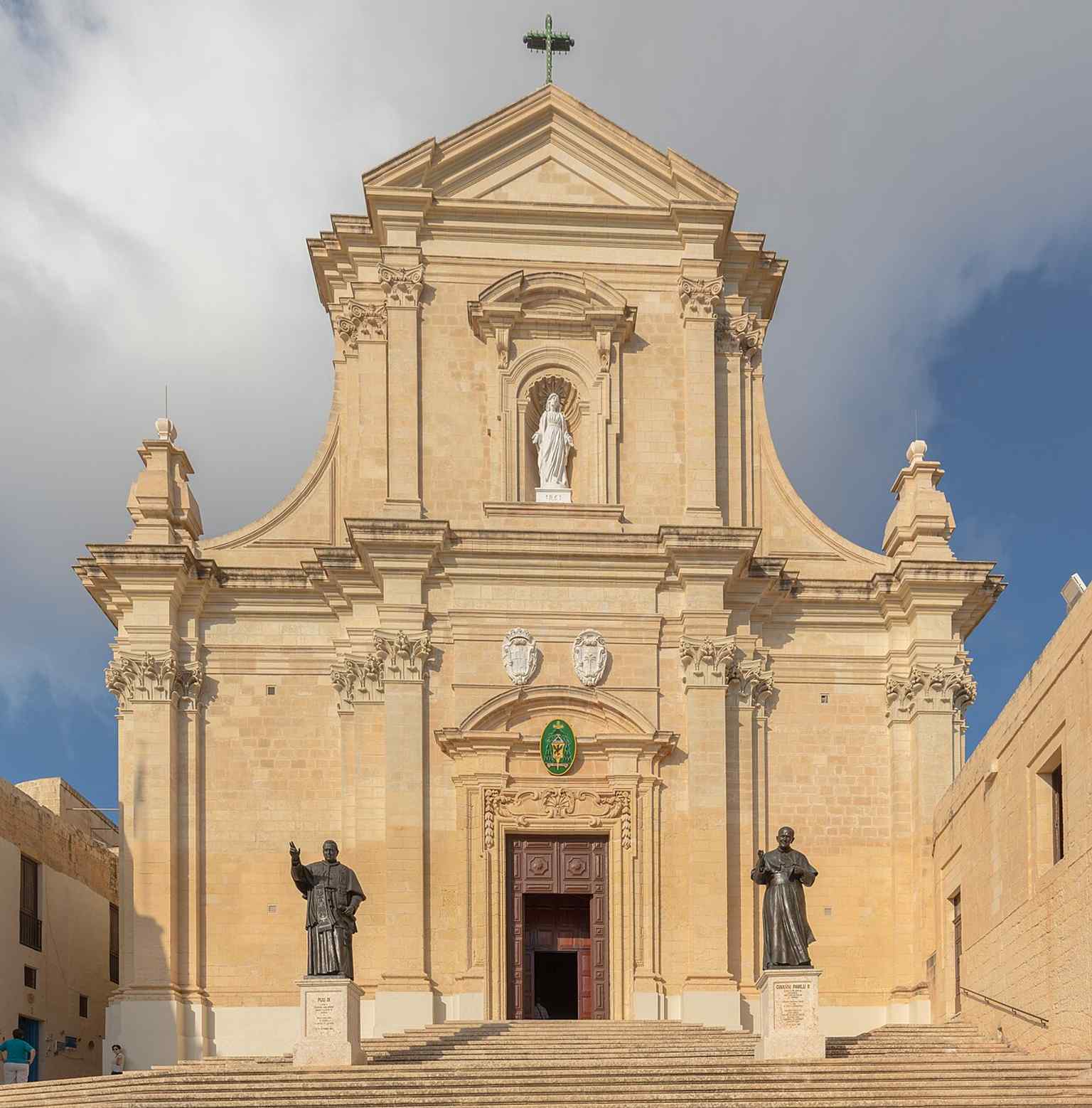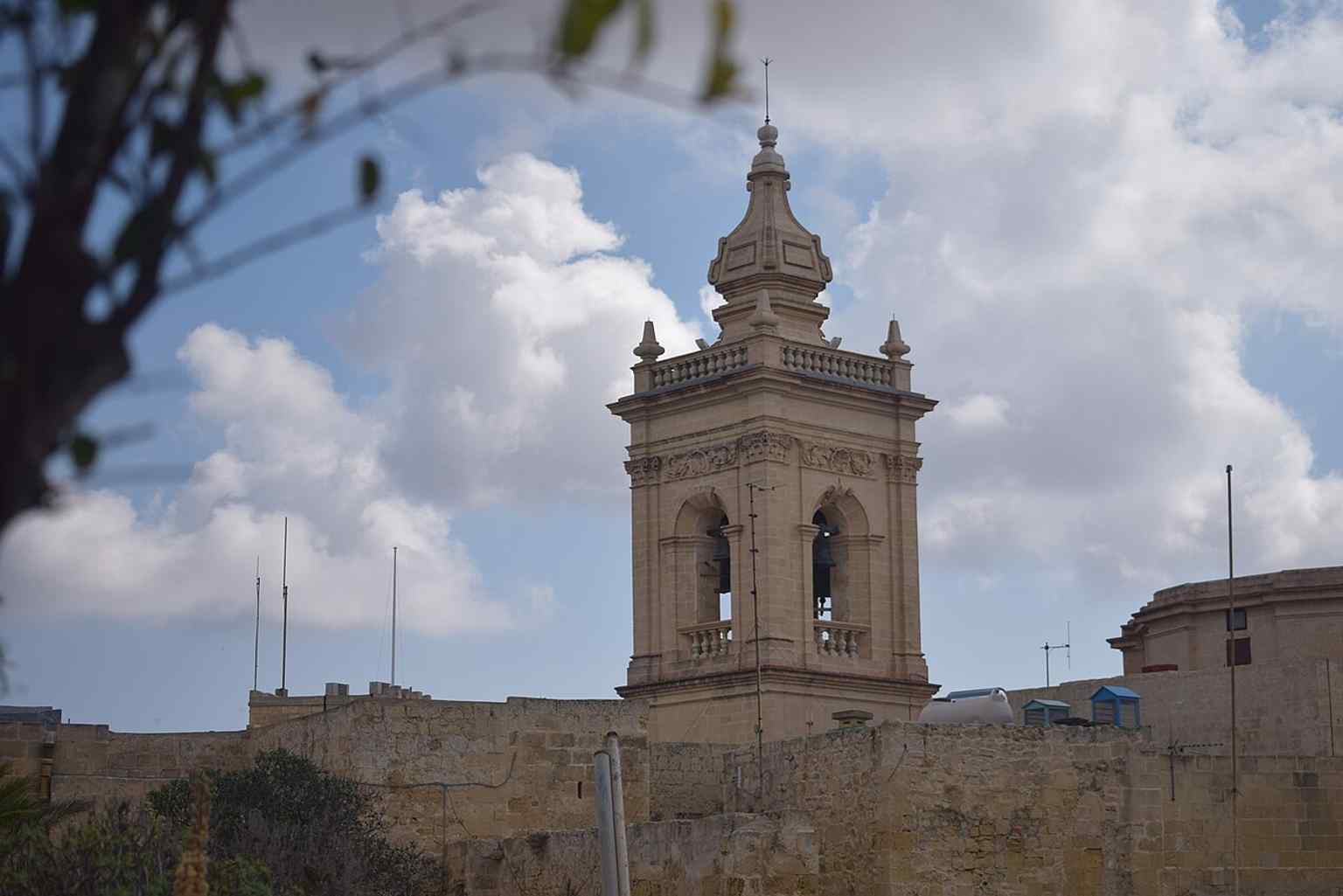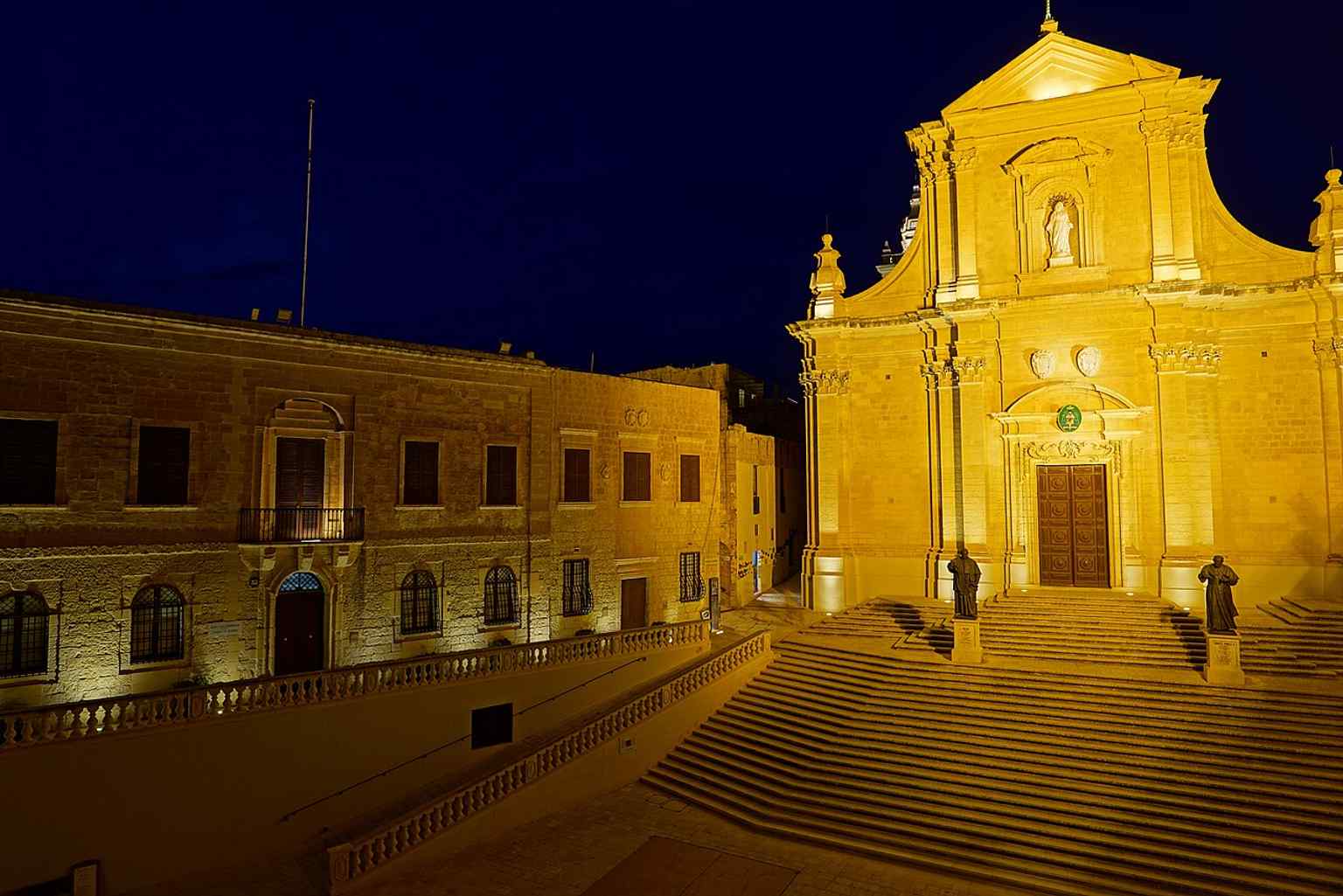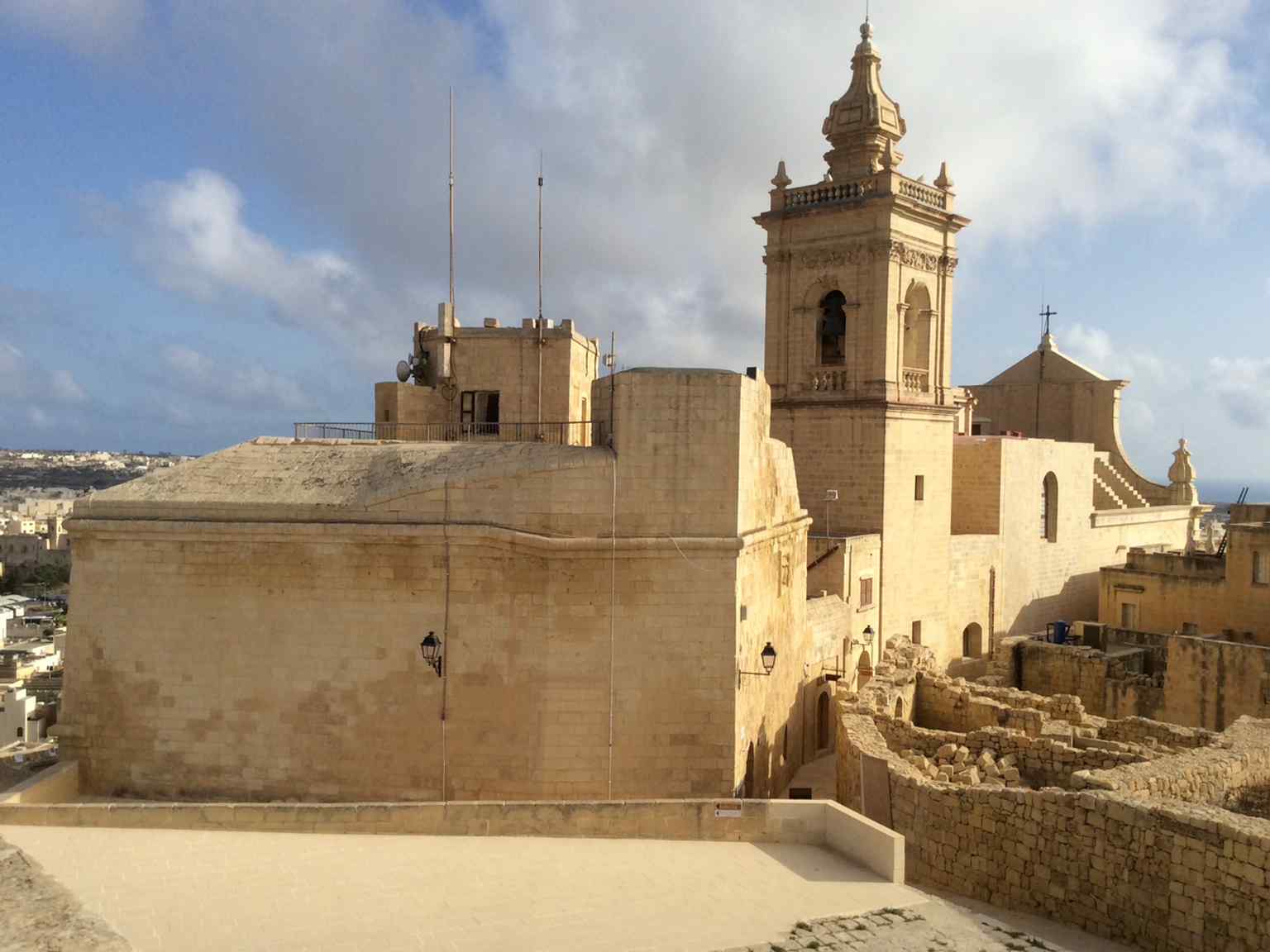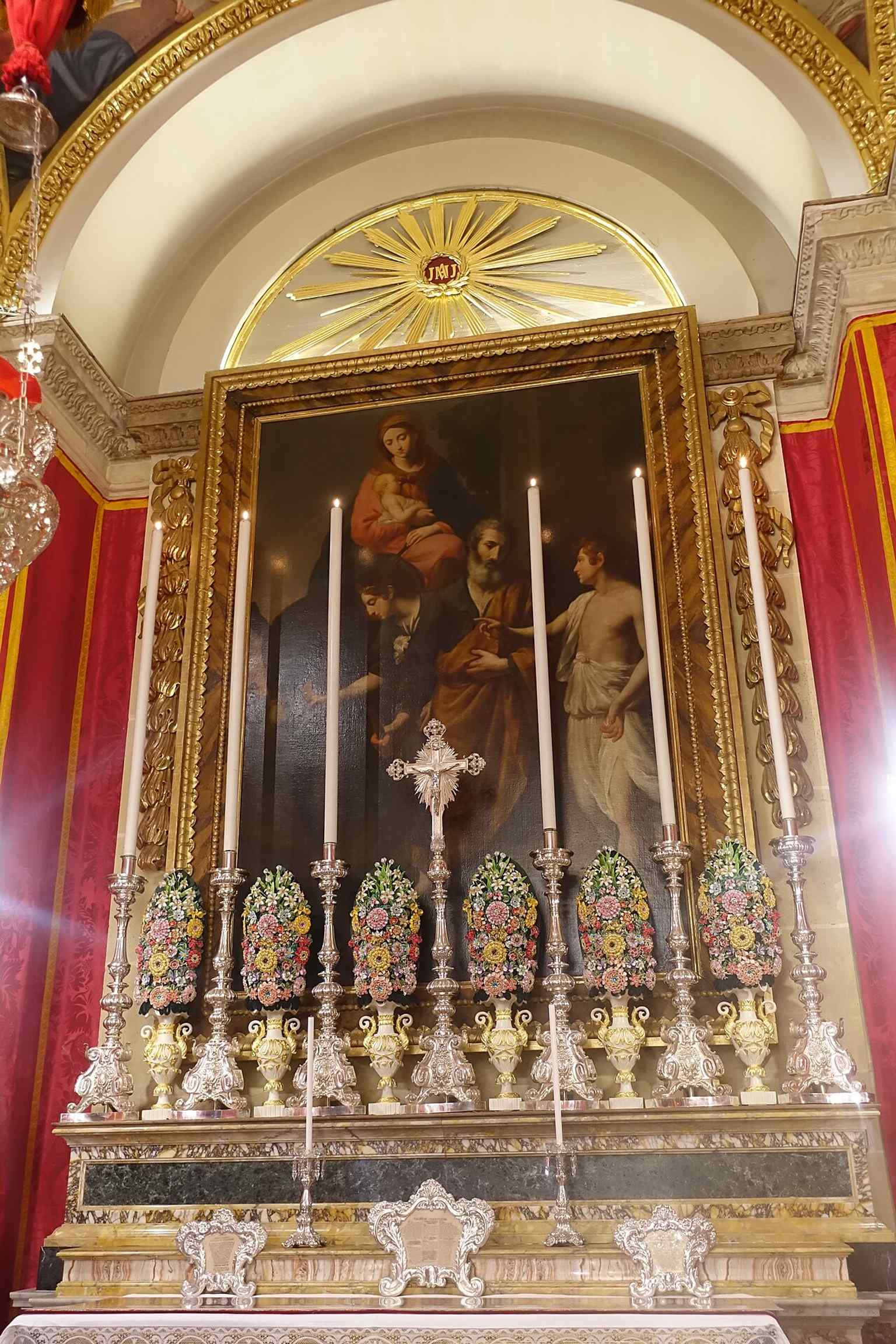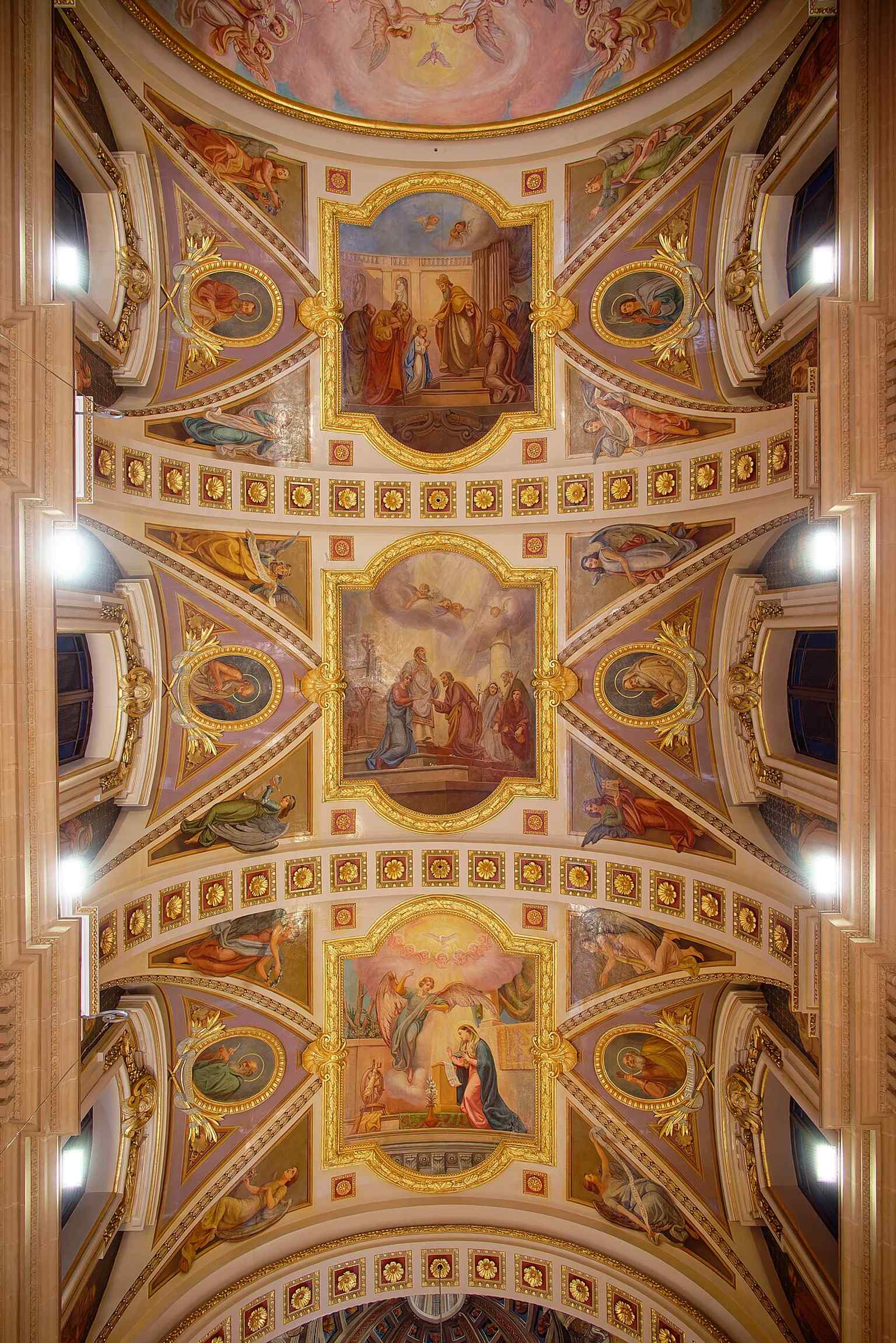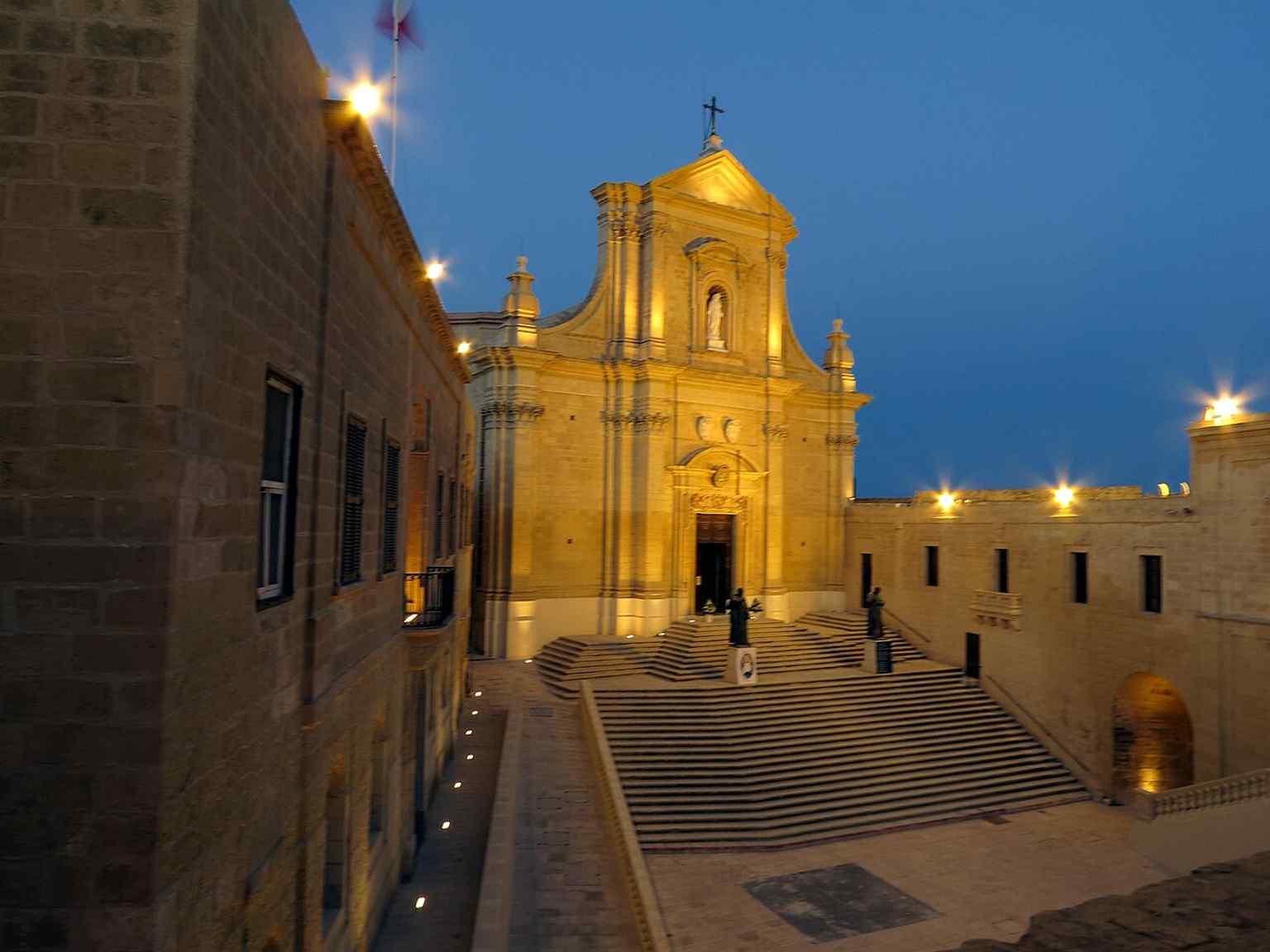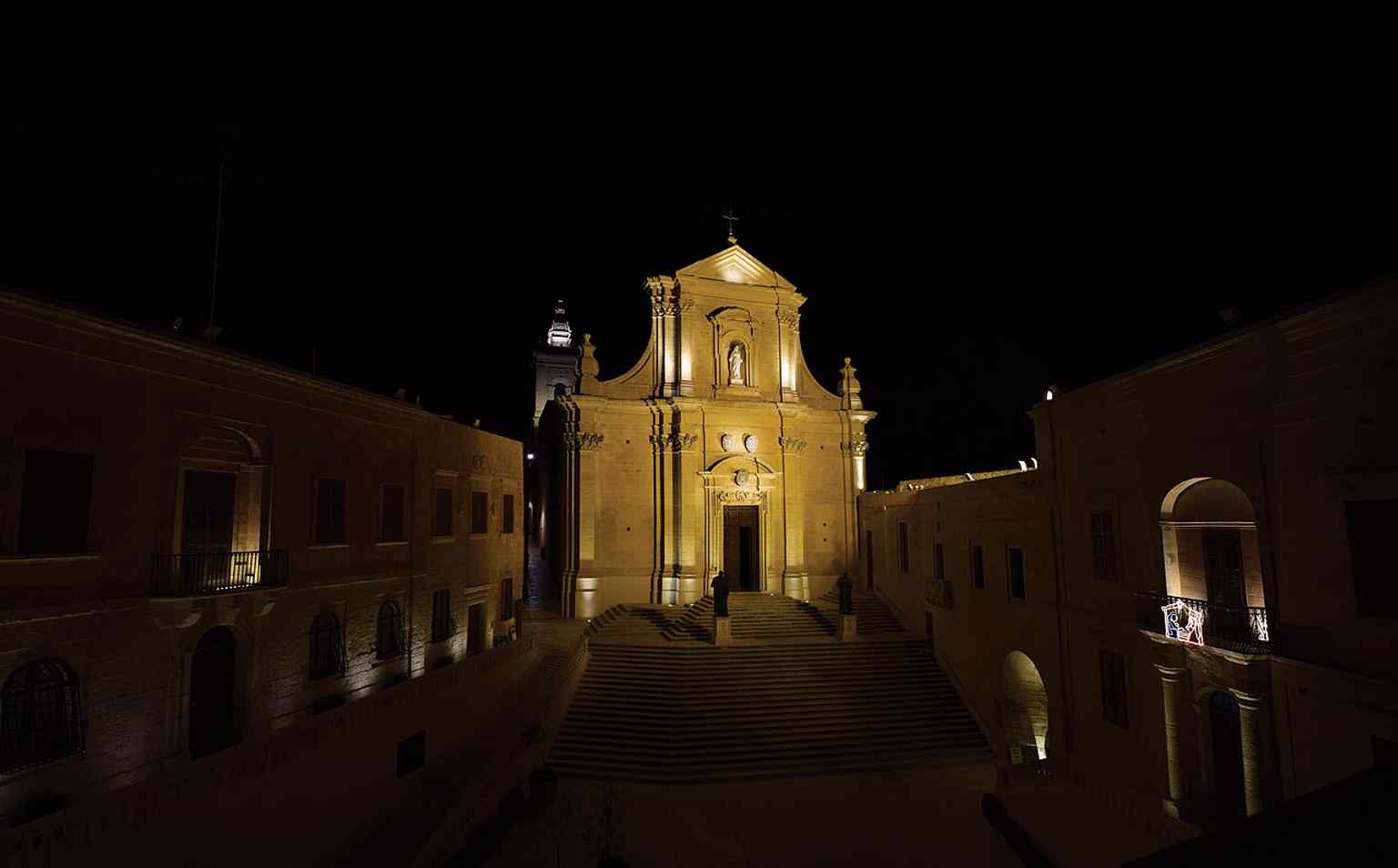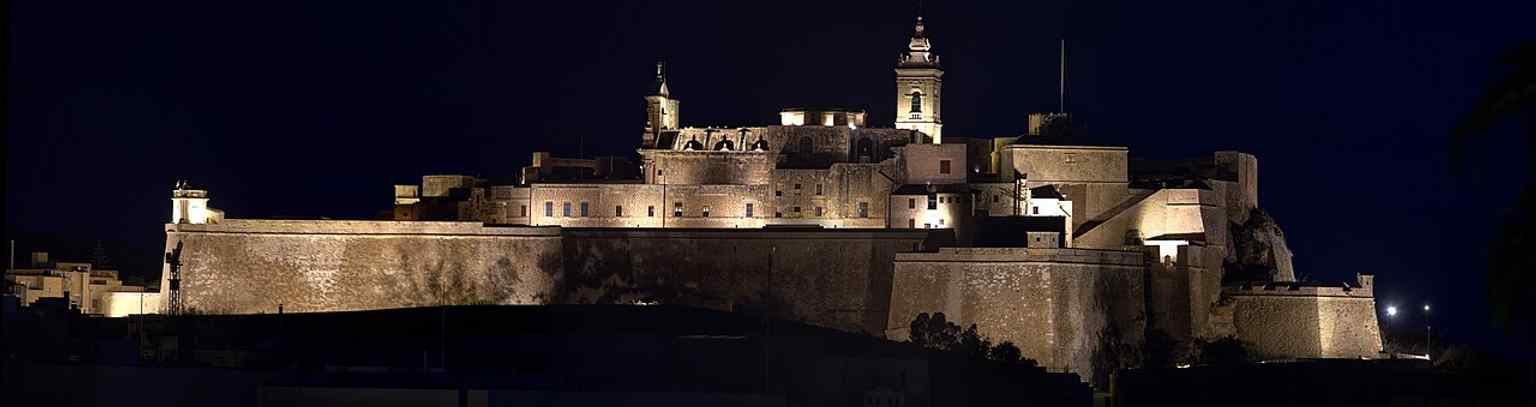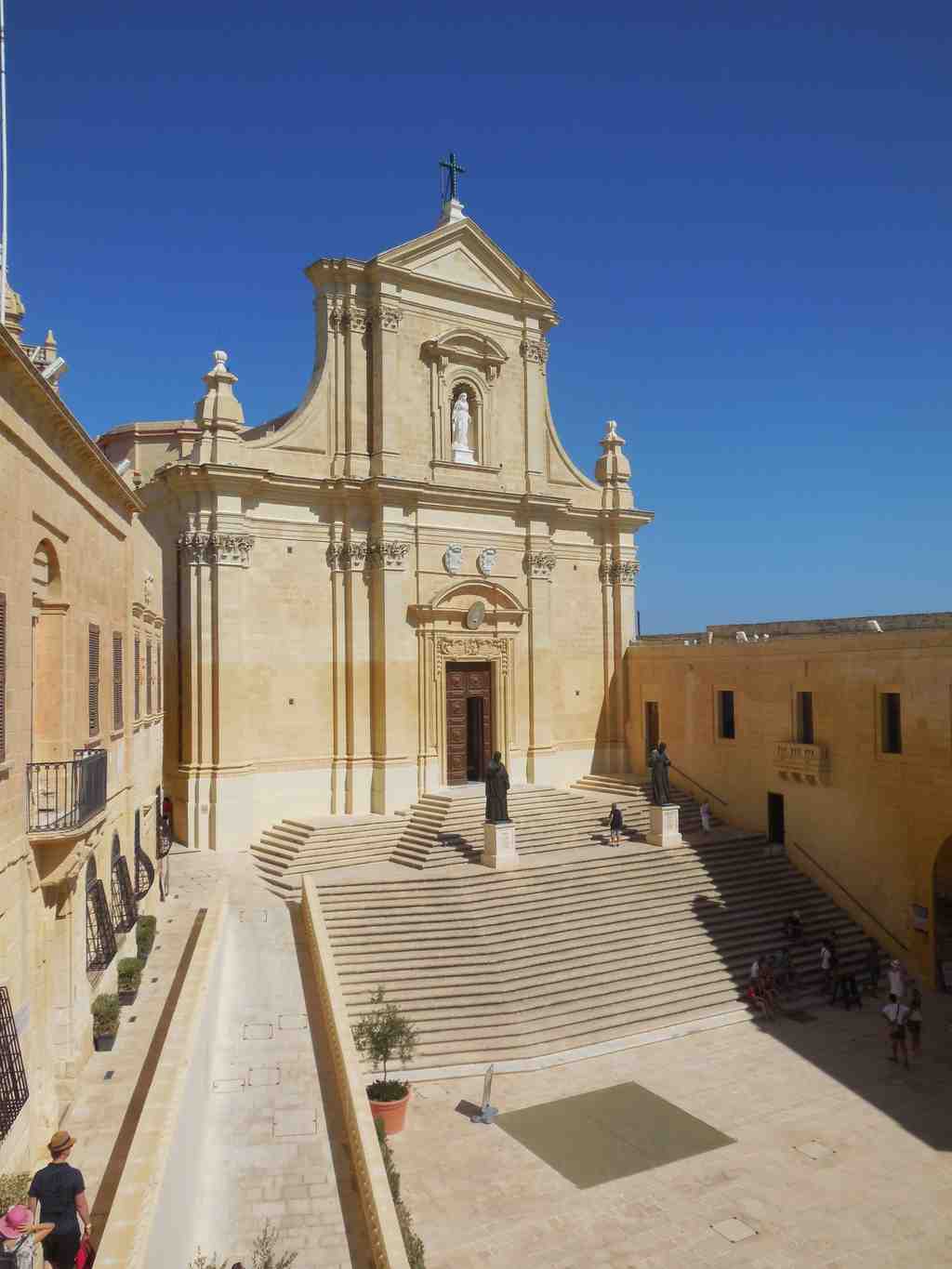
The honey-colored stone cathedral rises in a crisp Baroque front, with a triangular pediment, tall pilasters, and a bell tower tucked to one side inside the Citadel walls.
This is the point where Victoria’s layers stop being a theory and become a fact under your feet. The cathedral honors the Assumption of Mary, and since eighteen sixty-four it has served as the seat of Gozo’s bishop. But its story does not begin with a cathedral... or even with a church.
Long before this façade appeared, this hill held Roman sacred foundations, probably a temple to Juno. Later Christians claimed the site for the Virgin Mary, though archaeology has made that old neat conversion story a bit messier, which is usually how real history behaves. In fact, locals love this detail: when builders laid the foundation stone in sixteen ninety-seven, they exposed the base of the Roman temple itself. So the birth of the Baroque cathedral doubled as an archaeological dig.
If a cathedral stands on older holy ground, does that make the place feel more continuous... or more complicated?
The medieval parish here shows up in records by twelve ninety-nine. It grew, it suffered, and it kept going. Ottoman raiders sacked it in fifteen fifty-one; the church reopened by September fifteen fifty-four. Then the earthquake of sixteen ninety-three damaged it badly enough that rebuilding became unavoidable.
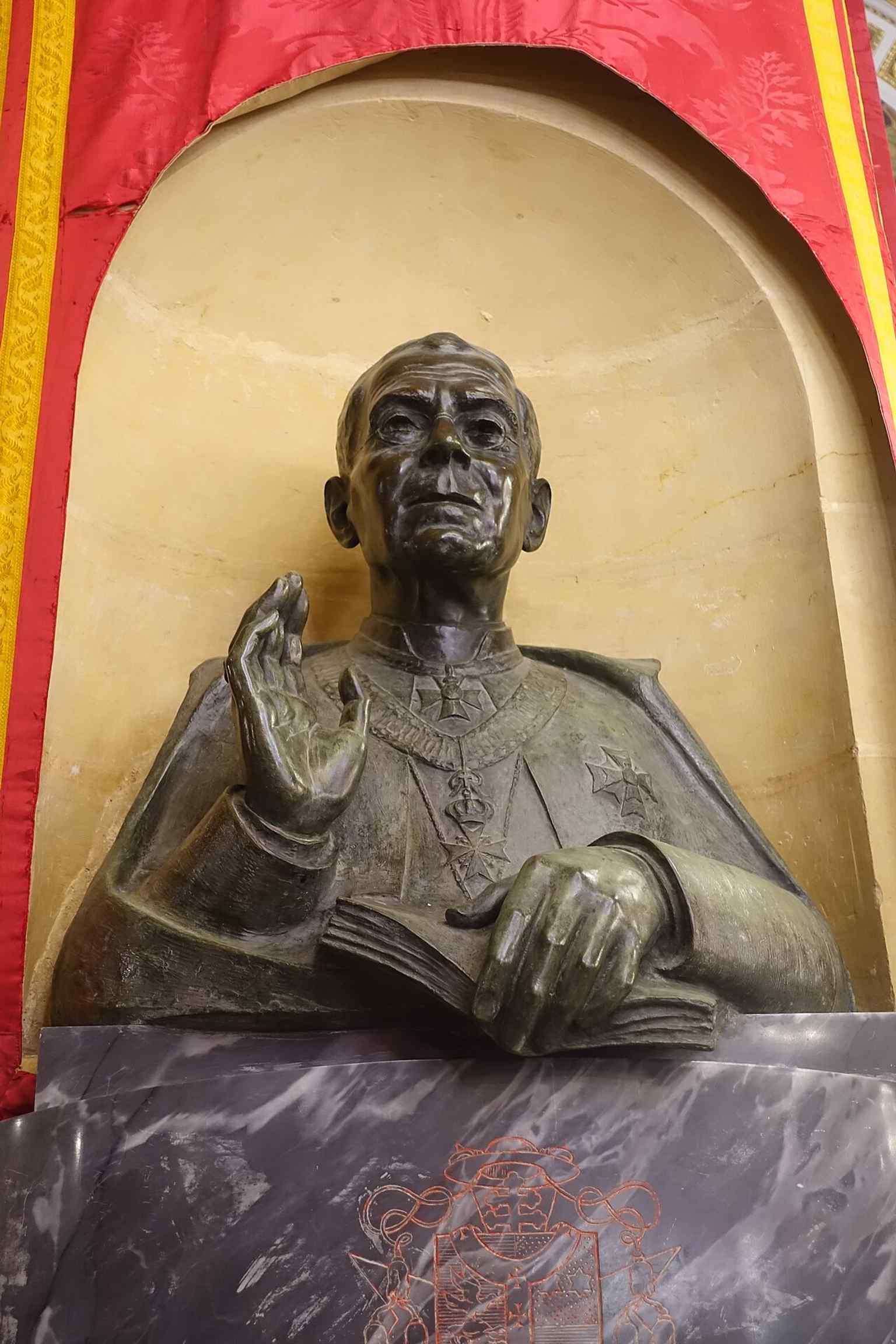
One man drove that effort: Archpriest Dun Karlu Magri. He secured approval, set aside funds, bought neighboring property, and brought in Lorenzo Gafà, Malta’s great Baroque architect. Magri died in the same grim year as the earthquake, so his successor, Dun Nikol Natal Cassia-Magri, carried the project forward, helped by the noble benefactor Felice Axac. They inaugurated this church in seventeen eleven, and Bishop Giacomo Cañaves consecrated it in seventeen sixteen to the Virgin Mary and also to Saint Ursula, Gozo’s patron. For all the strength of parish life below in Saint George’s, this hilltop church kept the older claim to seniority.
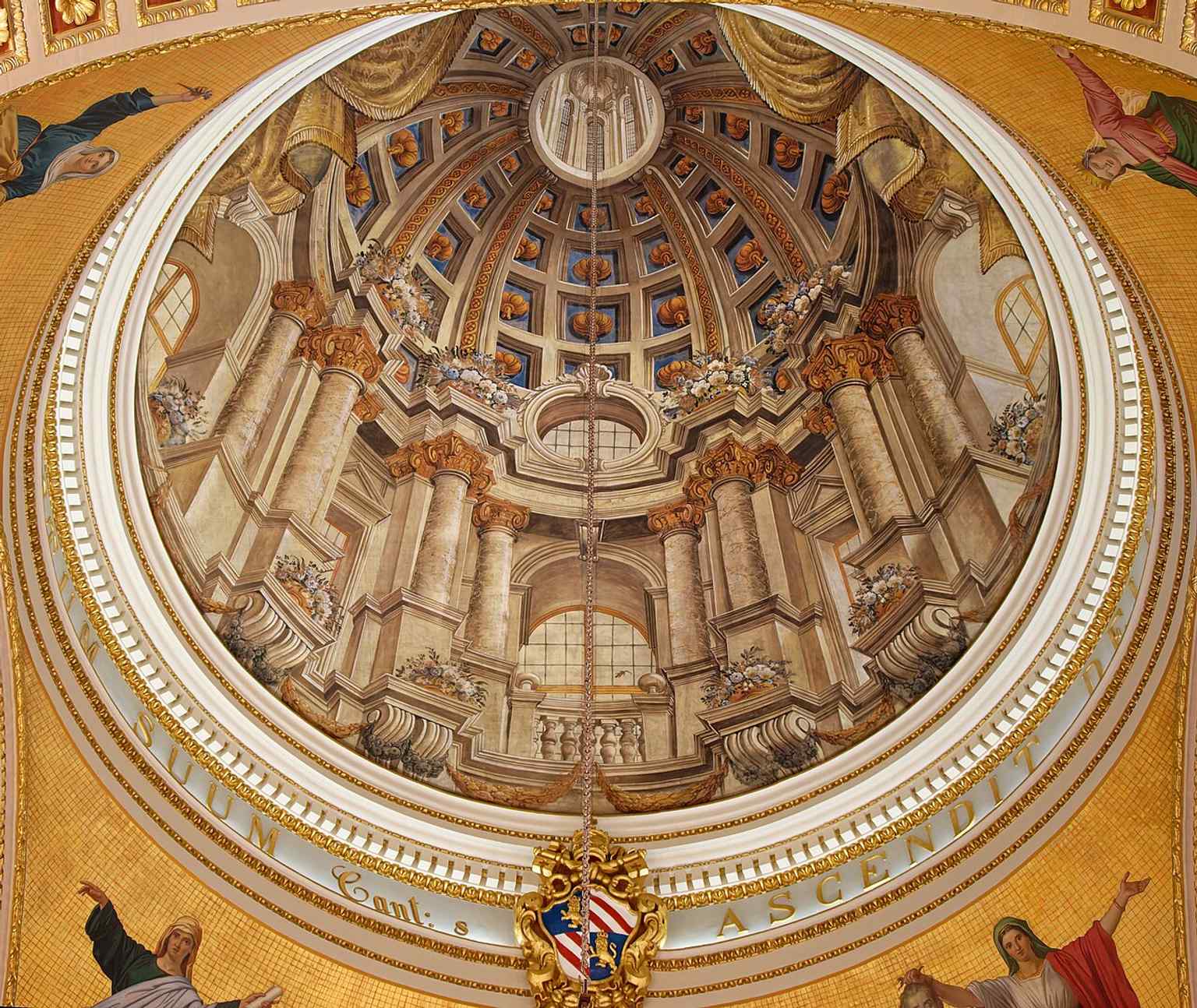
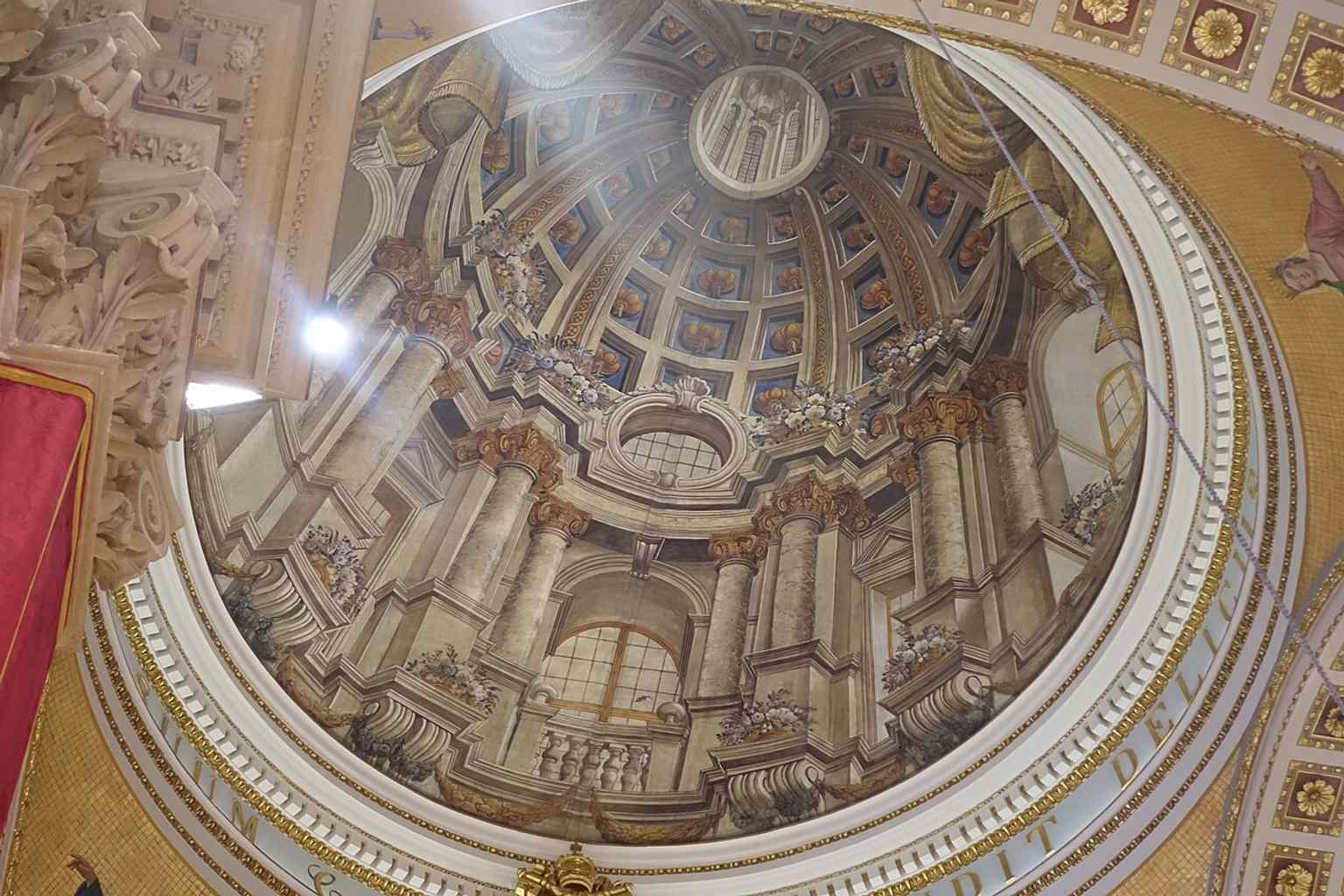
If you check the image on your screen, you can see the interior trick that made the cathedral famous. There is no real masonry dome. The opening exists, but a painted canvas installed in seventeen thirty-nine creates the illusion of one, because a true dome would have risen too high inside the Citadel bastions. Very Baroque, really: if you cannot build the heavens, paint them persuasively.
And the ground still argues back. In the early two thousands, work beneath the sacristy exposed a Roman wall, ancient floors, coins, and broken pottery from different eras... proof that this place never belonged to just one century.
So here you are, standing before a church that is also a Roman footprint, a medieval parish memory, a Marian landmark, and a post-disaster act of stubborn rebuilding. Now we leave bishops and bastions for domestic life nearby, at Gran Castello Historic House, about a minute away. If you want to return and go inside, the cathedral usually opens Monday through Saturday and stays closed on Sunday.