
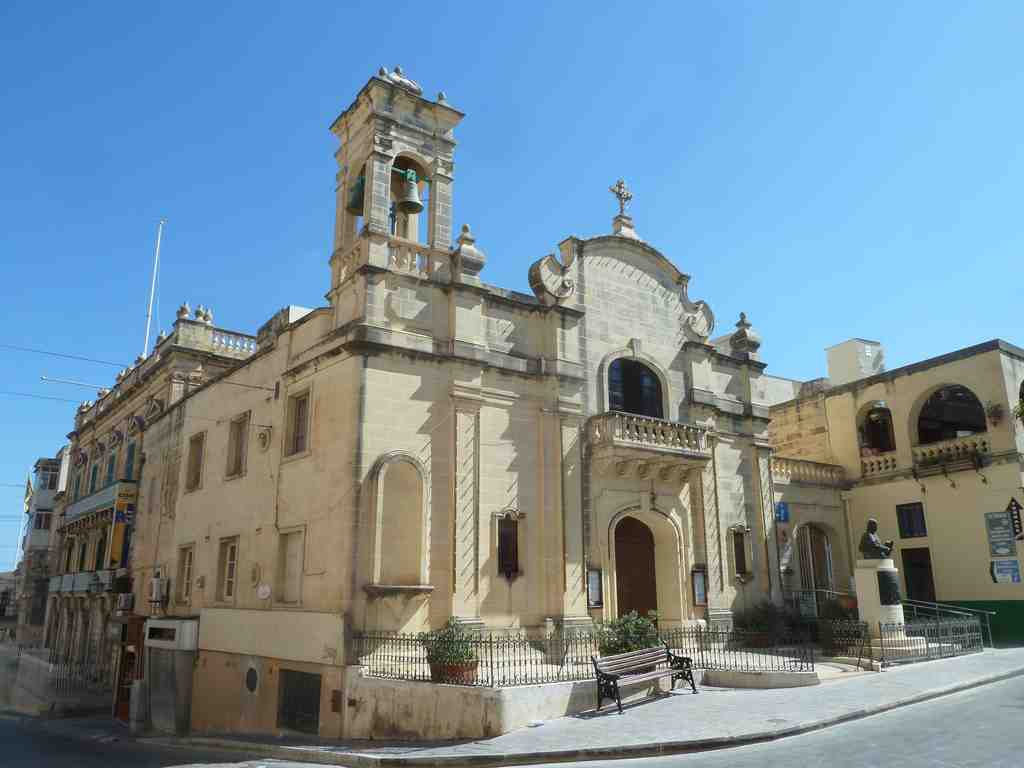
On your right is a compact limestone church with a plain baroque front, an arched doorway, and a small bell-cote rising above the facade.
St James stands right in Independence Square, where prayer and public life have long shared the same patch of stone. This is the kind of place where people came to hear Mass, settle errands, meet neighbors, and watch processions pass through the town’s civic heart. In Victoria, religion did not tuck itself neatly indoors... it spilled into the square, and the square answered back.
The church goes back at least to the sixteen hundreds, and inquisitor Pietro Dusina recorded it in fifteen seventy-five, along with two attached chapels, one for the Holy Cross and one for Saint Mark. At that stage, it even served the eastern part of Gozo during the night hours, back when the island had only two main parishes: Saint George and the Assumption, today’s cathedral. That raid damaged this church badly enough that later leaders had to start again. Bishop Balaguer deconsecrated it in sixteen fifty-seven, Grand Master Ramon Despuig ordered a new one, and that rebuilding reached completion in seventeen forty. Even then, the story did not settle down. The present church is mostly twentieth century, though its sanctuary still preserves eighteenth-century fabric, and structural damage forced another partial demolition and rebuild in nineteen seventy-nine. This place has made a career out of survival.
There is a quieter claim to fame here too. Future Archbishop Joseph Mercieca was ordained in this church, not the cathedral, on the eighth of March... though published accounts cannot agree whether that was nineteen fifty-one or nineteen fifty-two. That tiny disagreement is oddly revealing: even recent sacred memory can blur at the edges. One account says he stood here alongside Saver Calleja and Anton Bajada.
And there is a harder layer. In two thousand and eight, a former altar boy sued, alleging that Father Anthony Mercieca had abused him here in the bell tower decades earlier. So St James is not only a place of ceremony; it also carries pain.
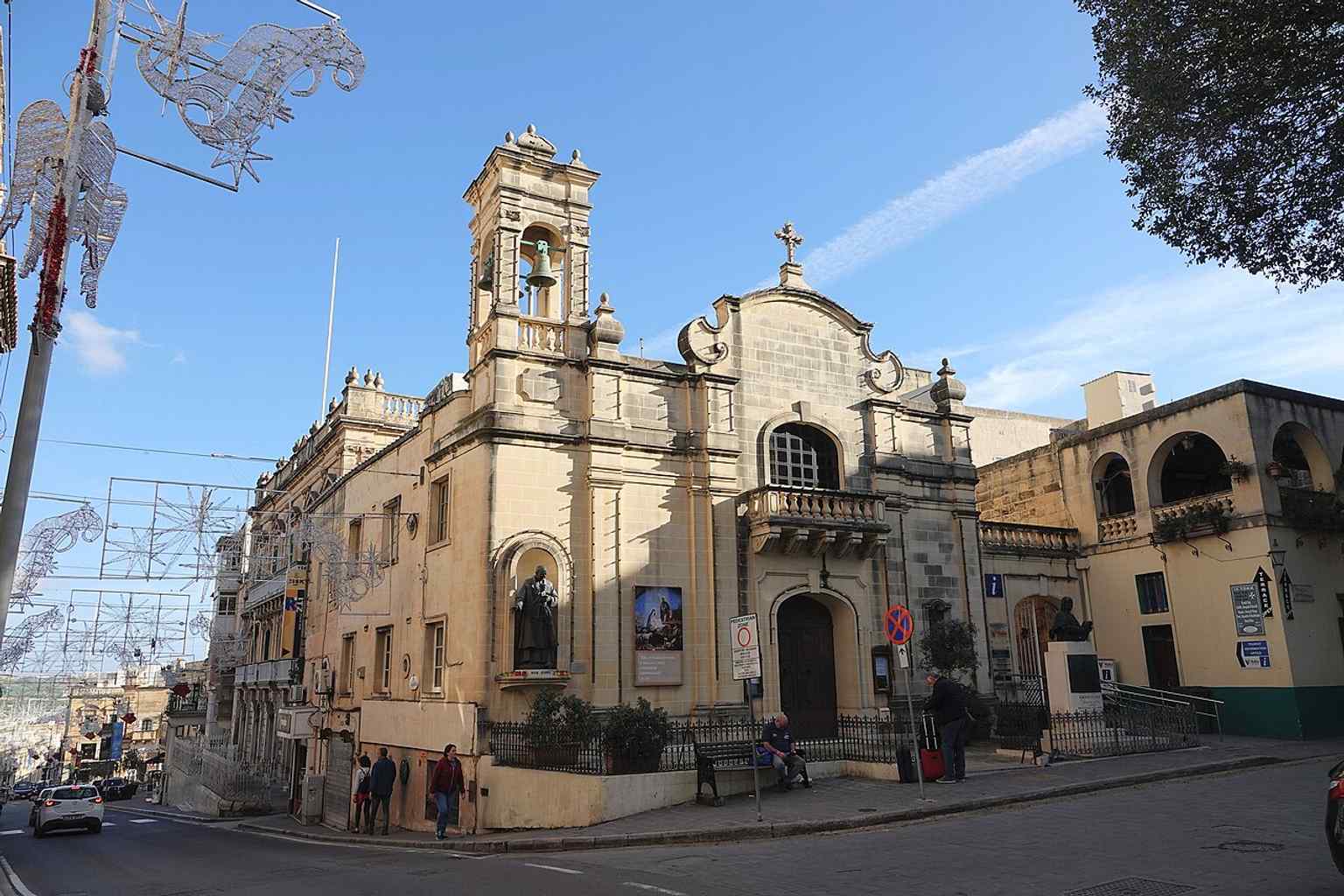
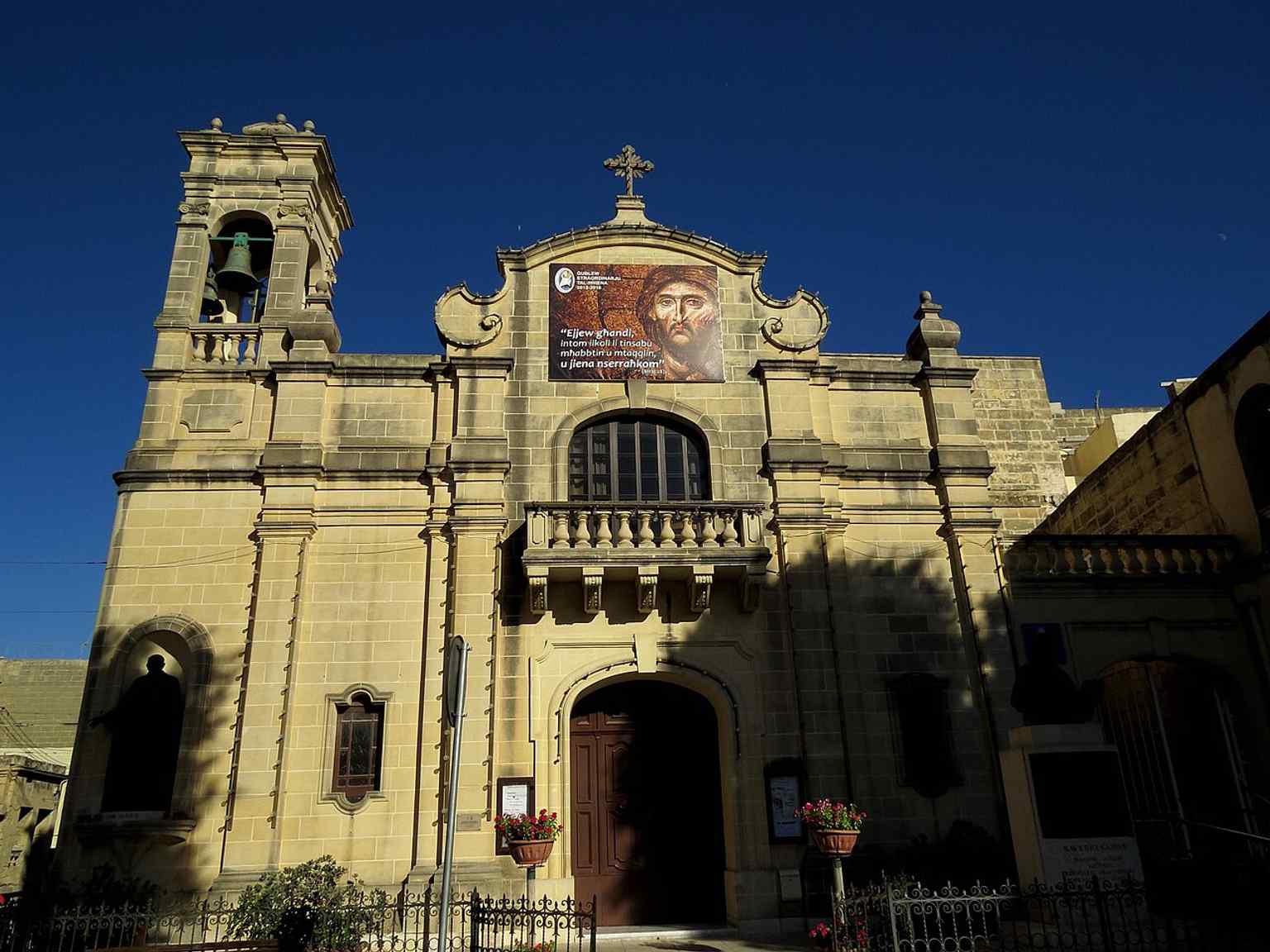
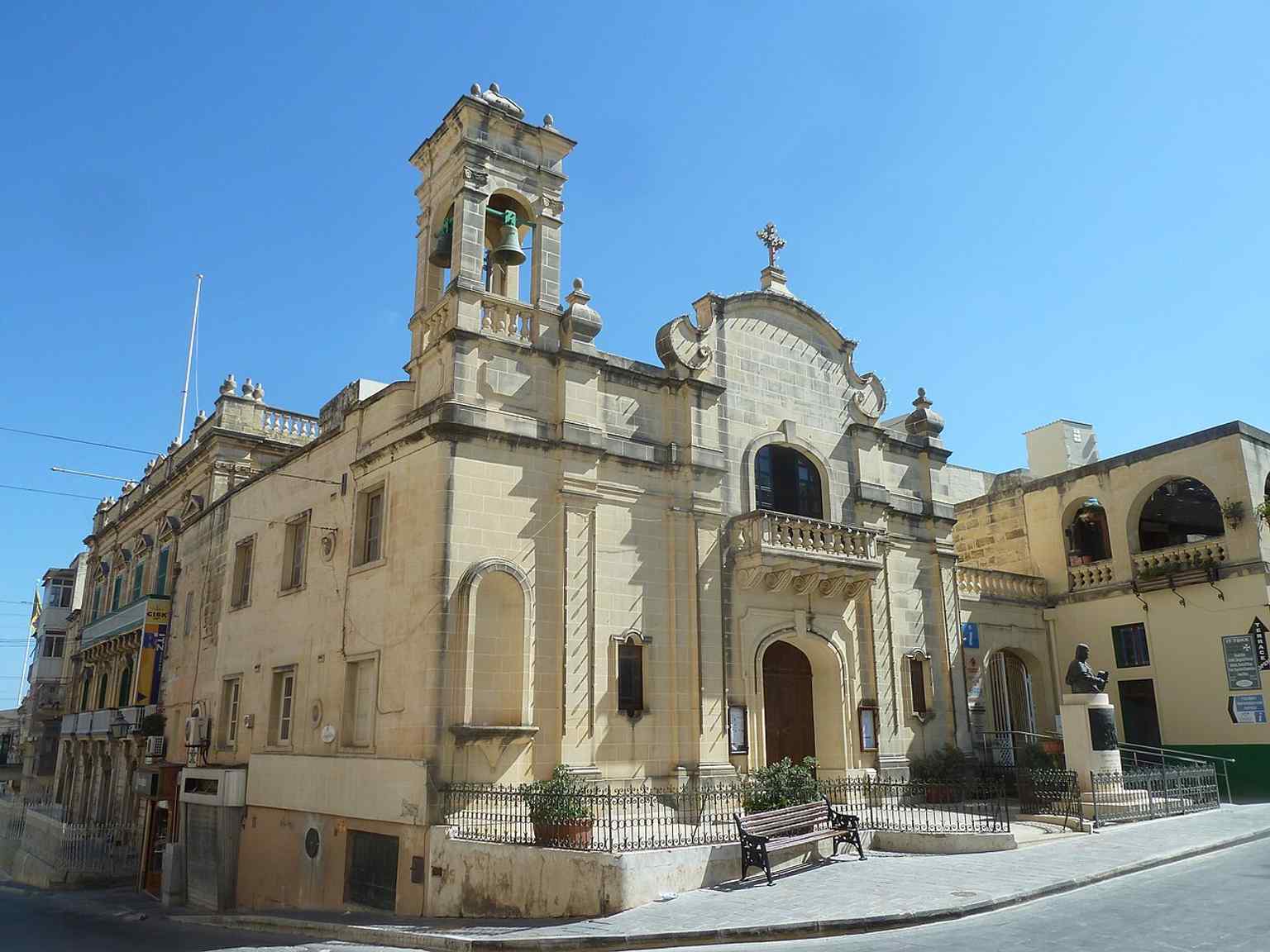
If you check the image on your screen, the modest exterior makes all that history feel almost improbable. Inside, the church keeps a seventeen forty-two altarpiece of Saint James, and its best-loved treasure is the statue of Our Lady of Sorrows, brought from Munich in eighteen seventy-nine and still carried through Victoria before Good Friday.
Now lift your thoughts uphill, toward the Citadel, where busy town life gives way to much older layers... and in about five minutes, the Gozo Museum of Archaeology starts peeling them back. If you want to return later, the church is generally open daily from seven in the morning until seven thirty in the evening.





%2C%20Malta.01.jpg)

