
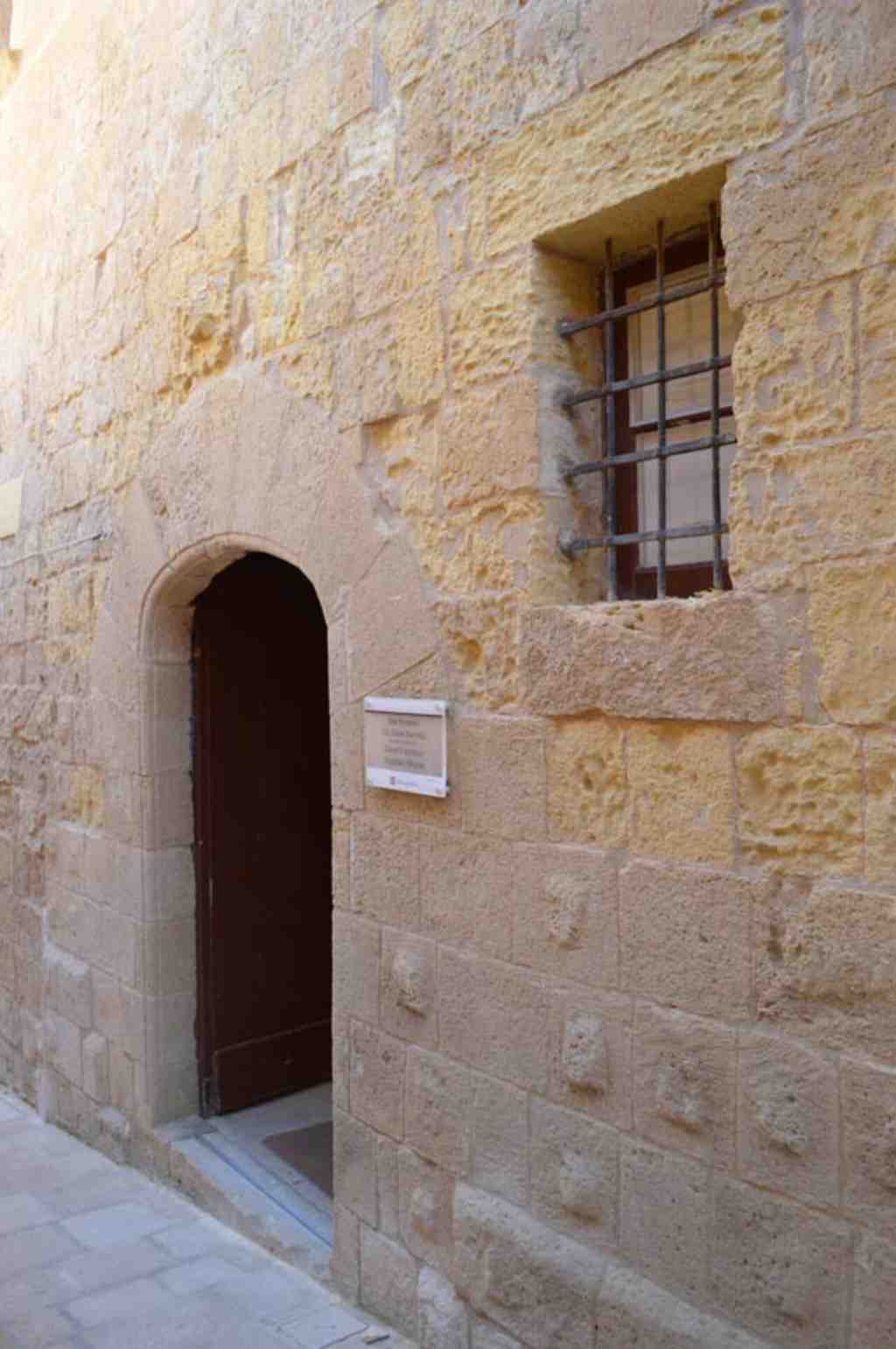
On your left stands a pale limestone cluster of town houses with straight façades, small rectangular windows, and a delicate baroque doorway that gives away its more refined past.
This is the Gran Castello Historic House, once called the Folklore Museum, and it quietly corrects a habit cities encourage... the habit of remembering bishops, councils, and grand façades while forgetting who scrubbed pots, spun cotton, gave birth, and tucked children into bed. Domestic memory of ordinary Gozitans matters here. Rooms, tools, and daily routines are a kind of archive too.
Heritage Malta traces these houses back to the late fifteenth century. Over time, owners kept changing, walls shifted, additions crept in, and the place adapted like the rest of Victoria. In the nineteen thirties, Sir Harry Luke, the British governor of Malta, stepped in and pushed for restoration, helping save the complex. Not exactly glamorous work, but then survival rarely is. Buildings, like people, often stay alive by finding a new use.
And useful it became in a very different way. After that rescue, the place served for rearing livestock and poultry before the Maltese government secured it and reopened it in nineteen eighty-three as a museum. If you glance at the image in the app, you can catch that layered character in the façade itself.
Now, picture what sits behind these walls: an eighteenth-century household rebuilt room by room... a main bedroom, a child’s bedroom, a birth room, a dining room, a scullery, meaning the working room for washing and food prep, and servants’ quarters. One house even keeps its original kitchen and stone stove, a rare survivor. Notice how tightly work, sleep, birth, and family life would have fit together here; history was not arranged by topic, but by necessity.
The museum also follows cotton through Gozo’s economy, with a cotton gin, spinning wheel, weaving tools, and reminders of lace-making, another patient craft now fading. In two thousand and sixteen, the site took its current name to stress that this was not just a container for folklore, but a real residence for well-to-do Gozitan families.
Still... not every room in the Citadel offered shelter. Some held people in. The Old Prison waits nearby, about two minutes away. If you plan to come back inside here later, it’s usually open Tuesday through Sunday from nine in the morning to five in the afternoon, and closed on Monday.




