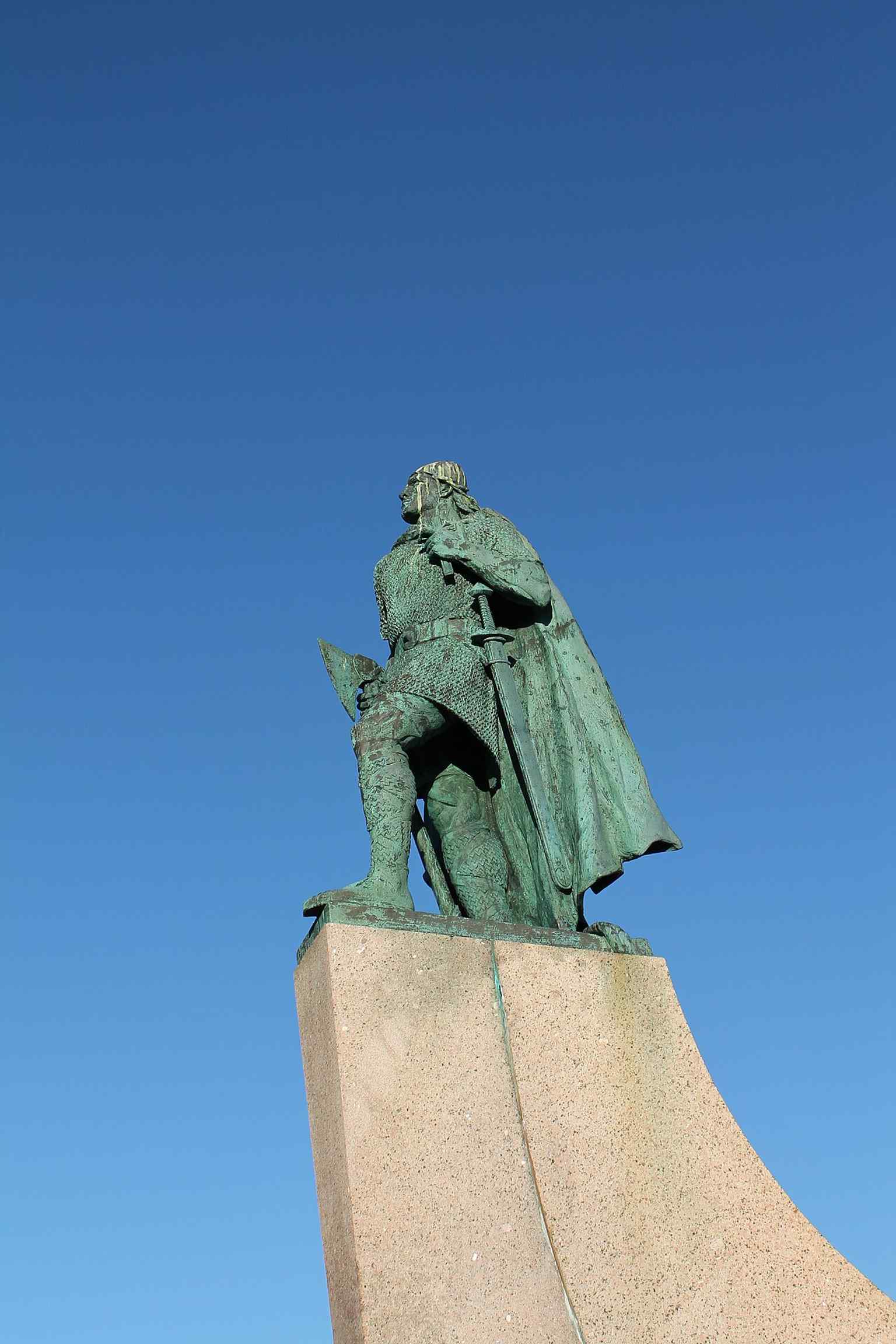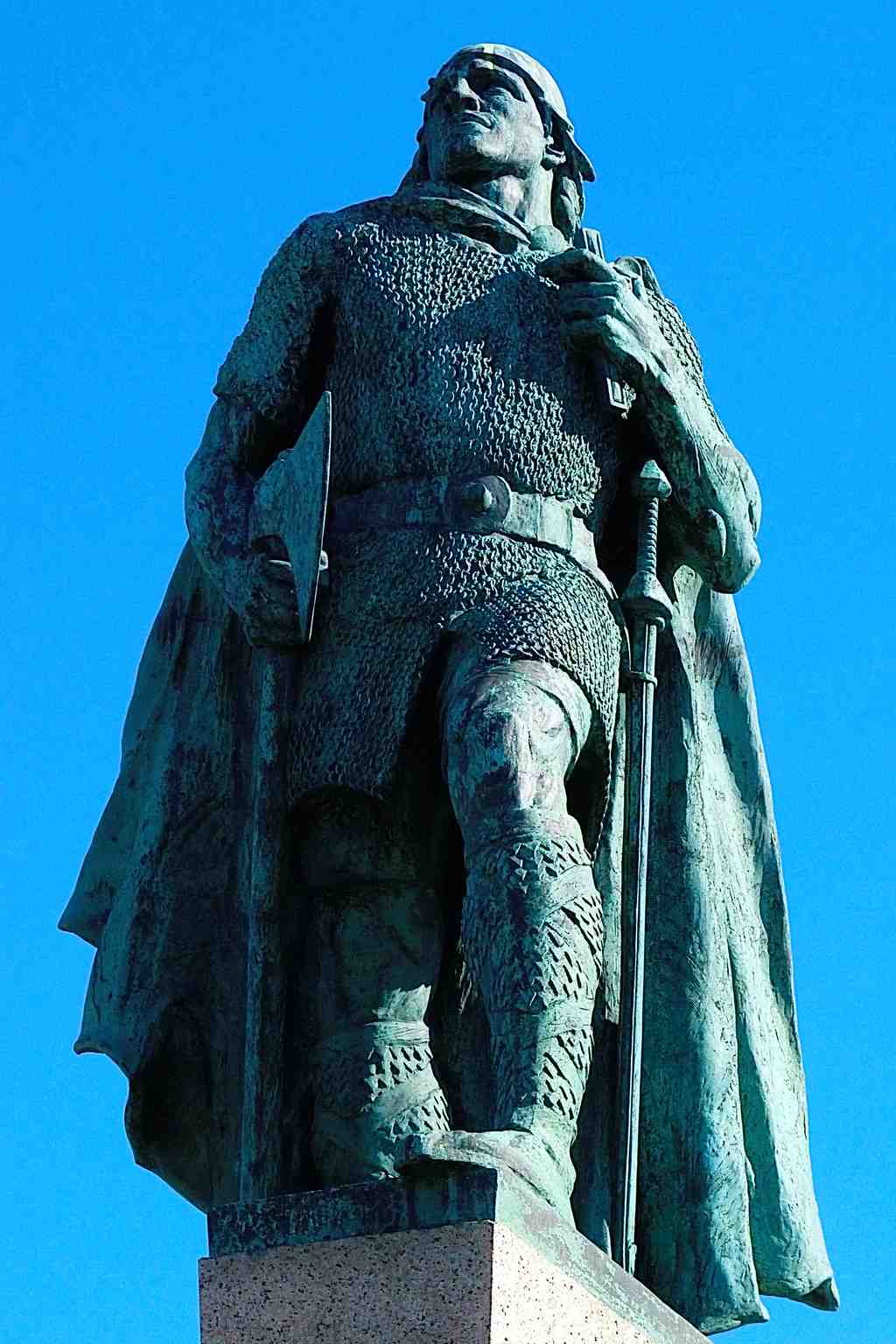
Look for the dark bronze explorer standing high on a red granite pedestal shaped like a Viking ship’s prow, with a long cloak and forward-leaning stance that make him easy to spot.
This is Leifr Eiricsson... Iceland’s bronze answer to the question, “How do you make a Viking look properly legendary?” The sculptor, Alexander Stirling Calder, gave him a heroic stride and set him on this hill so he could overlook Reykjavík like a man still scanning the horizon for the next coastline.
The statue came here as a diplomatic gift. In nineteen thirty, Iceland celebrated one thousand years of Alþingi, the national parliament. To mark that anniversary, the United States Congress passed a resolution on the twenty-first of June, nineteen twenty-nine, ordering a suitable memorial to Leif and presenting it, in effect, from the American people to the people of Iceland. That is a pretty grand birthday card... bronze, ocean-minded, and impossible to misplace.
A federal arts panel in the United States picked the sculptor, and Calder won the job after officials reviewed photographs of proposed designs. He worked through three preliminary sketches and studies before the final statue won approval in January of nineteen thirty-two. Then the whole thing crossed the Atlantic, which feels fitting for a monument to a man famous for crossing the Atlantic.
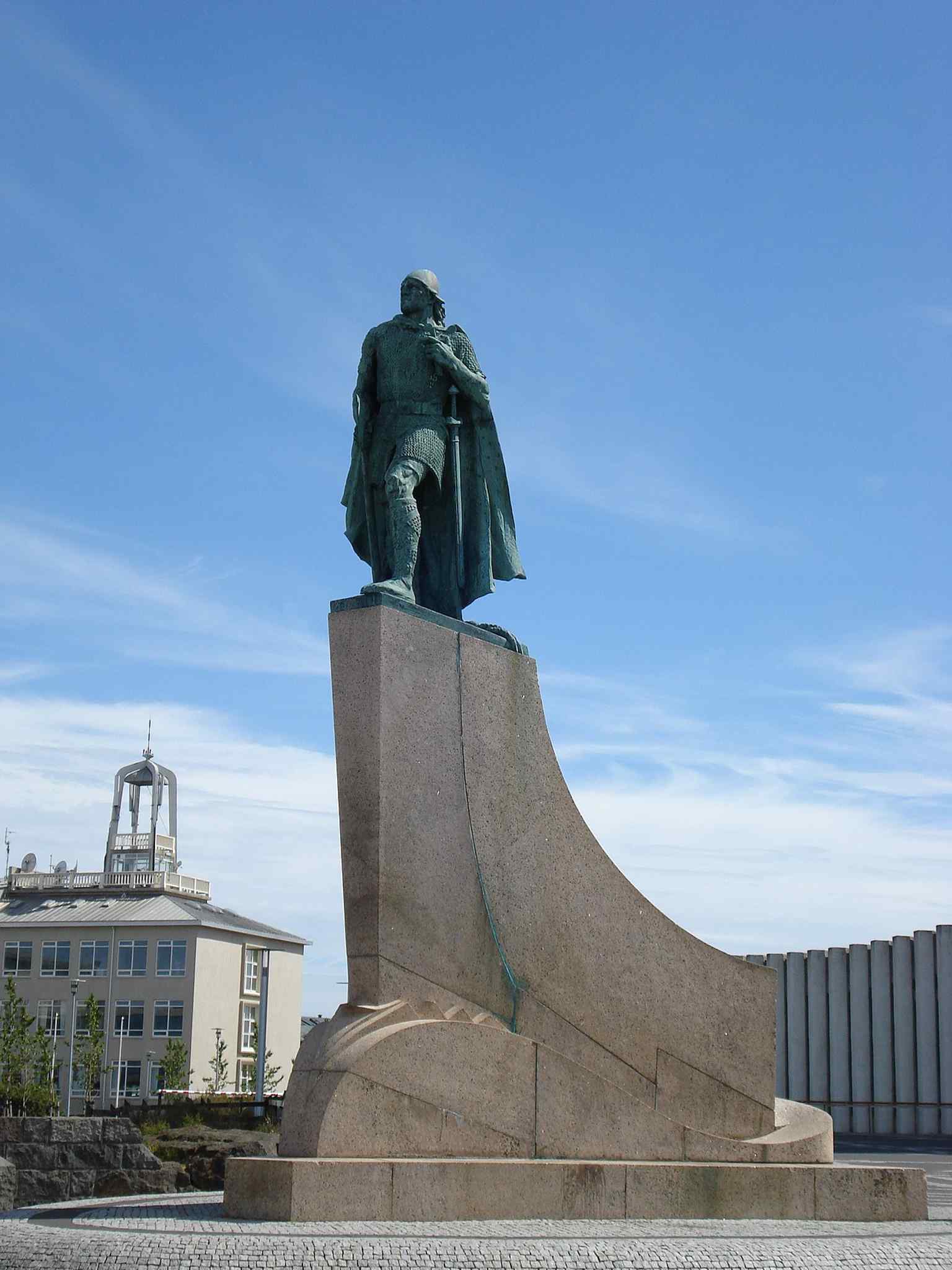
The pedestal matters too. It is not just a block of stone. Calder’s Leif stands on a base shaped like the prow, the pointed front, of a Viking ship. That pedestal rises fifteen feet high and came from Texas red granite, prepared by a company in Brattleboro, Vermont, before it reached Iceland in the fall of nineteen thirty-one. The statue itself went into place on the second of May, nineteen thirty-two, and officials unveiled it here on the seventeenth of July, with Prime Minister Ásgeir Ásgeirsson presiding, alongside speeches from the mayor of Reykjavík, Knud Ziemsen, and the American envoy, Frederick W. B. Coleman.
If you glance at the app, the close-up of the pedestal inscription shows one of the monument’s surprisingly lively little debates: how exactly to spell Leif’s name in a modern form. Different Nordic countries favored different versions, and after consulting an Icelandic-born law professor named Sveinbjörn Johnson, they settled on “Leifr Eiricsson.”
That spelling carried real pride. Many Norwegians, especially Norwegian Americans, claimed Leif as their own. Icelanders read this gift as a friendly American nod that said, no, this explorer belongs in Iceland’s story too. History can be a family reunion with very strong opinions.
And the image stuck. Calder’s Leif became the iconic face of the explorer, turning up on stamps, souvenirs, and even a silver Icelandic coin. Another casting later traveled to the nineteen thirty-nine New York World’s Fair and eventually found a home in Newport News, Virginia, while Calder’s plaster model ended up in the Smithsonian Institution. If you check the bronze close-up on your screen, you can see why the design traveled so well.
So this monument is not just about discovery; it is about memory, ownership, and the way nations introduce themselves with gifts.
When you are ready, continue on at your own pace; Leif keeps watch here day and night.