
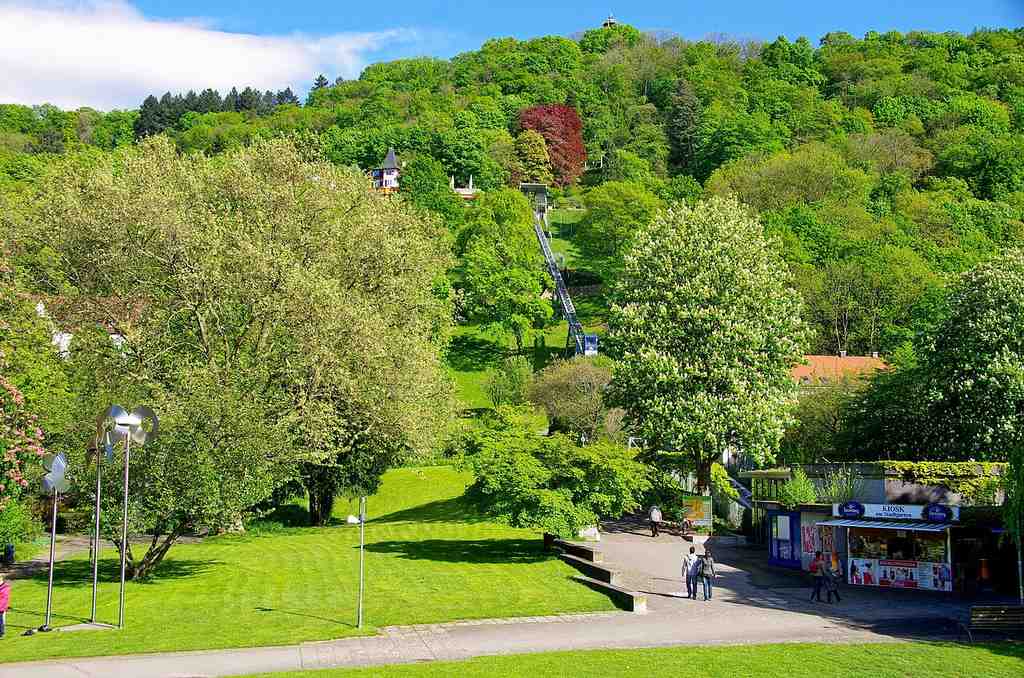
You’re looking for a broad green park with curving paths, a band of mature trees, and the slanted line of the Schlossbergbahn rising up the Schlossberg.
This is a fine place to end, because the Stadtgarten makes Freiburg’s habits plain. The city keeps taking ground that once served power, defense, trade, or display... and teaching it gentler work.
The park began after the Upper Rhine Trade Exhibition of eighteen eighty-seven, which took place nearby on Karlsplatz. That same year, the city hired its gardener, Schmöger, to plan and build this place, and by eighteen eighty-eight it had opened. For a while, right up to nineteen eleven, people even paid admission to come in. Public greenery, apparently, was too refined to be entirely free. Back then the park offered an aquarium, fountains, a music pavilion, a playground, and, in one of history’s stranger side notes, an enclosure for a rhesus monkey named Änne. She later ended up in the Museum of Nature and Humankind, which is not the retirement plan most of us imagine.
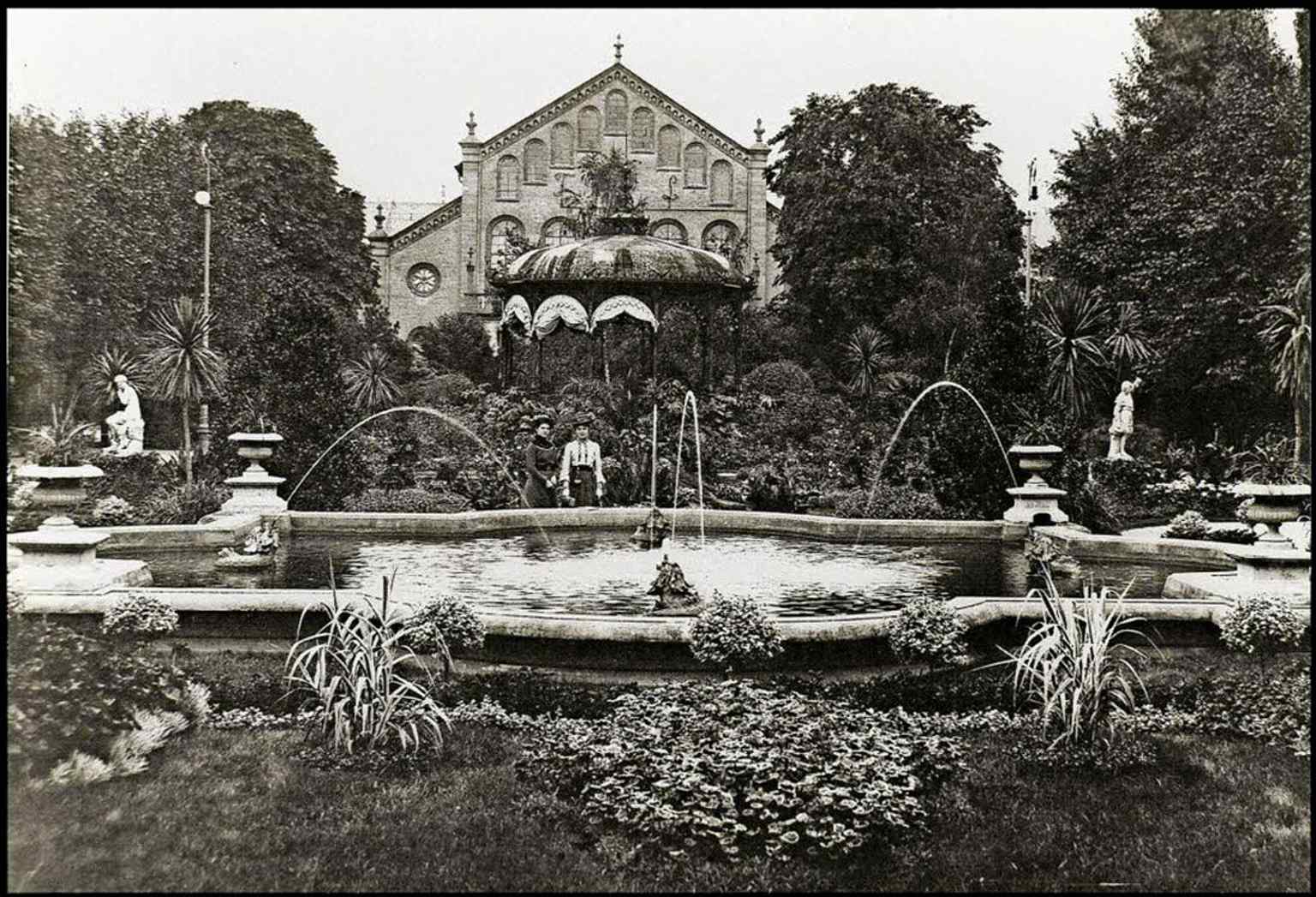
The garden grew in eighteen eighty-nine up the western slope of the Schlossberg as a woodland park. Then history did what history does. After the First World War, care slipped and the grounds had to be redesigned between nineteen twenty and nineteen twenty-four. In the air raid of nineteen forty-four, the park and its concert hall were devastated. Workers started restoring it in nineteen forty-eight by filling bomb craters and clearing paths. By nineteen fifty-two the recovery was complete, and in nineteen fifty-three the garden expanded again onto the site of the old Festhalle, a grand hall that never returned after the bombing. If you glance at the image on your screen, you can see that earlier version of the place, when the hall still stood here like a confident piece of civic furniture.
One of the park’s best statements is the Musikpavillon. In nineteen sixty-nine, Max Scherberger designed its roof as a hyperbolic paraboloid, which is a gloriously technical way of saying a saddle-shaped surface, curving in opposite directions. He assembled that elegant form from straight wooden elements, while Immo Kirsch designed the concrete supports. It was the first roof shell of its kind in the Federal Republic of Germany. Neat trick. In twenty fifteen, inspectors found water inside the roof and declared the structure unsafe, so the stage closed and even the Theatersport festival had to cancel in twenty sixteen when repairs dragged on. Then came a proper comeback in twenty twenty-two, when open-air performances filled the park again. Freiburg, in other words, does not enjoy staying broken.
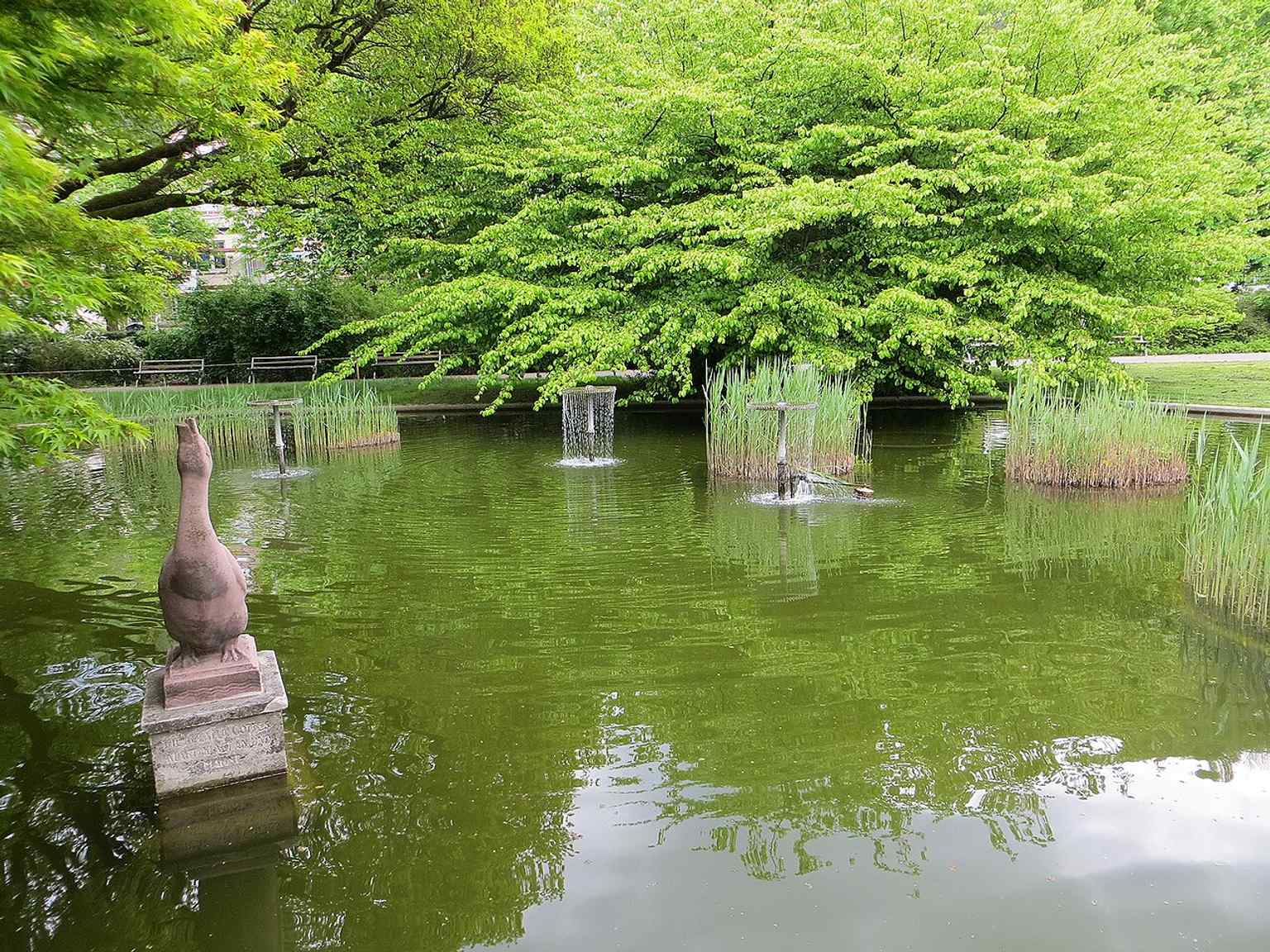
Even memory here gets revised. A duck monument in one of the ponds honors the tale that a duck’s quacking warned people before the bombing; later, the writer Andreas Venzke argued that story had been deliberately shaped to present Freiburg as an innocent victim. So this park does not just preserve memory... it asks you to examine it.
Before you end the tour, pause and notice how the paths, trees, and the climb toward the Schlossberg soften what was once a charged edge of the city.
That may be Freiburg’s quiet genius: not erasing damage, but turning old pressure points into places where ordinary life can gather, rest, argue, play music, and begin again.
If you’re planning to linger at the garden venue here, it generally keeps moderate prices and operates daily from eleven thirty in the morning until ten at night.





%20um%201900.jpg)
.jpg)
