
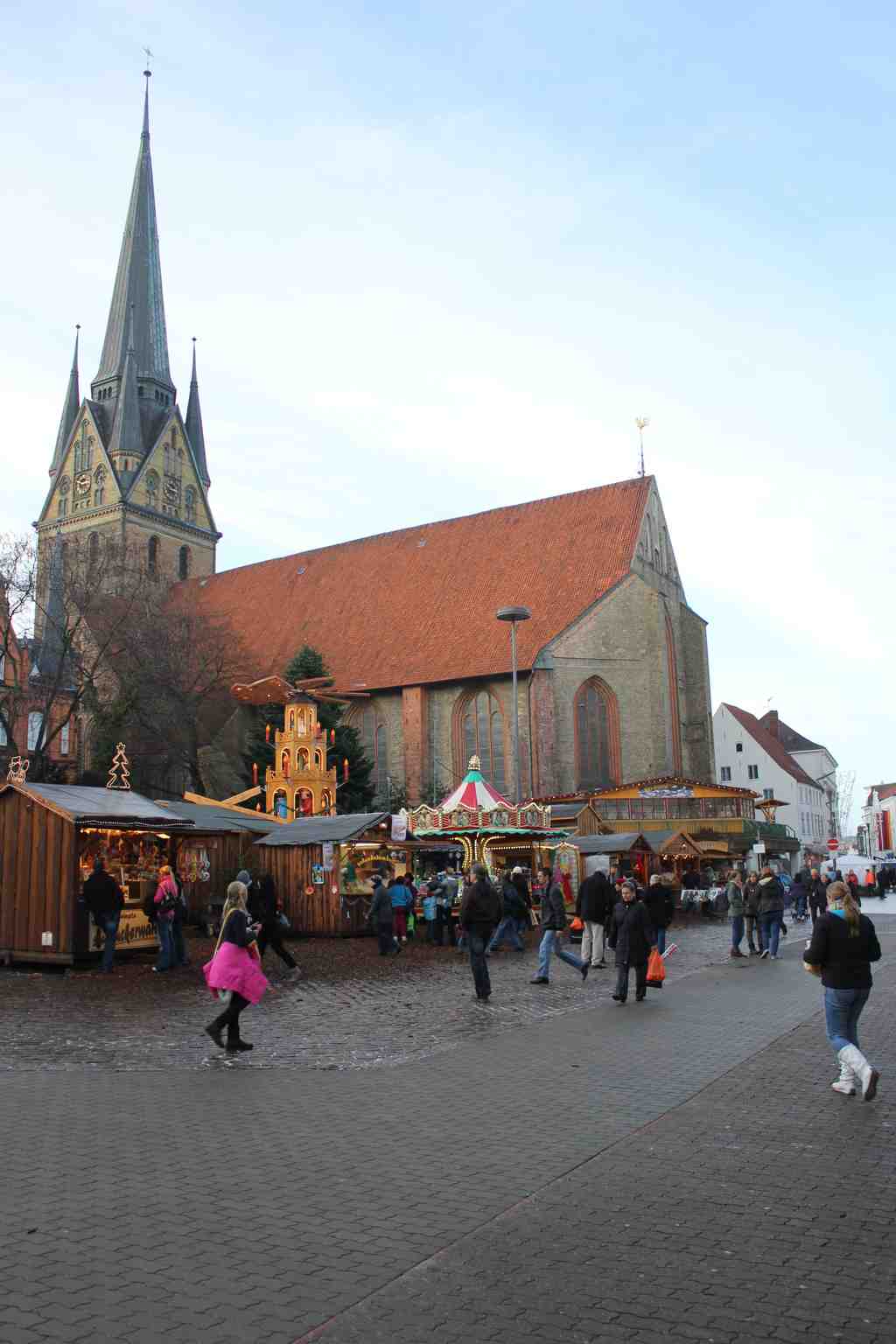
Look for the long red-brick church with broad pointed Gothic windows and a tall square tower that lifts into a narrow neo-Gothic spire.
For a first stop, this one sets the whole machine in motion. Locals used to say the bells of Saint Nikolai did not only call worshippers... they also called “mayor and council.” That tells you a lot about Flensburg. This was never just a place to pray. It stood beside the Südermarkt as part church, part landmark, part public signal tower for a town learning how to organize itself.
Flensburg has long carried a real borderland identity. You can hear it even in the church’s names: Saint Nikolai in German, Nikolaikirken in Danish. In a city shaped by trade, shifting rulers, and close ties across the Danish-German frontier, buildings like this one often served more than one story at once. They belonged to faith, yes, but also to language, law, education, and civic life.
The church you see did not begin in the late fourteen hundreds. Builders started this Gothic hall church around thirteen ninety and kept extending it eastward through the fifteenth century. Builders started this Gothic hall church around thirteen ninety and kept extending it eastward through the fifteenth century. What rises above you now is one of the city’s clearest statements in brick: long, confident, and planted right in the urban grain. The tower reaches about ninety meters, the highest in Flensburg. After lightning destroyed the old Gothic tip in eighteen seventy-eight, the city gave it the neo-Gothic spire you see now. Flensburg, like a good sailor, repairs fast and carries on.
And this spot mattered because of where it stands. The church-market axis is almost impossible to miss here: one step away, people bought fish, cloth, grain, and gossip; here, they listened for judgment, mercy, and news. In a medieval town, those worlds were neighbors, not strangers.
In December of fifteen twenty-six, Saint Nikolai heard the first evangelical sermon in Flensburg. That made this church an early launch point for the Reformation here, when religion stopped being only inherited custom and became an argument with consequences. A sermon in this building could change how people prayed, learned, married, governed, and buried their dead. That is a lot of weight for a few spoken words.
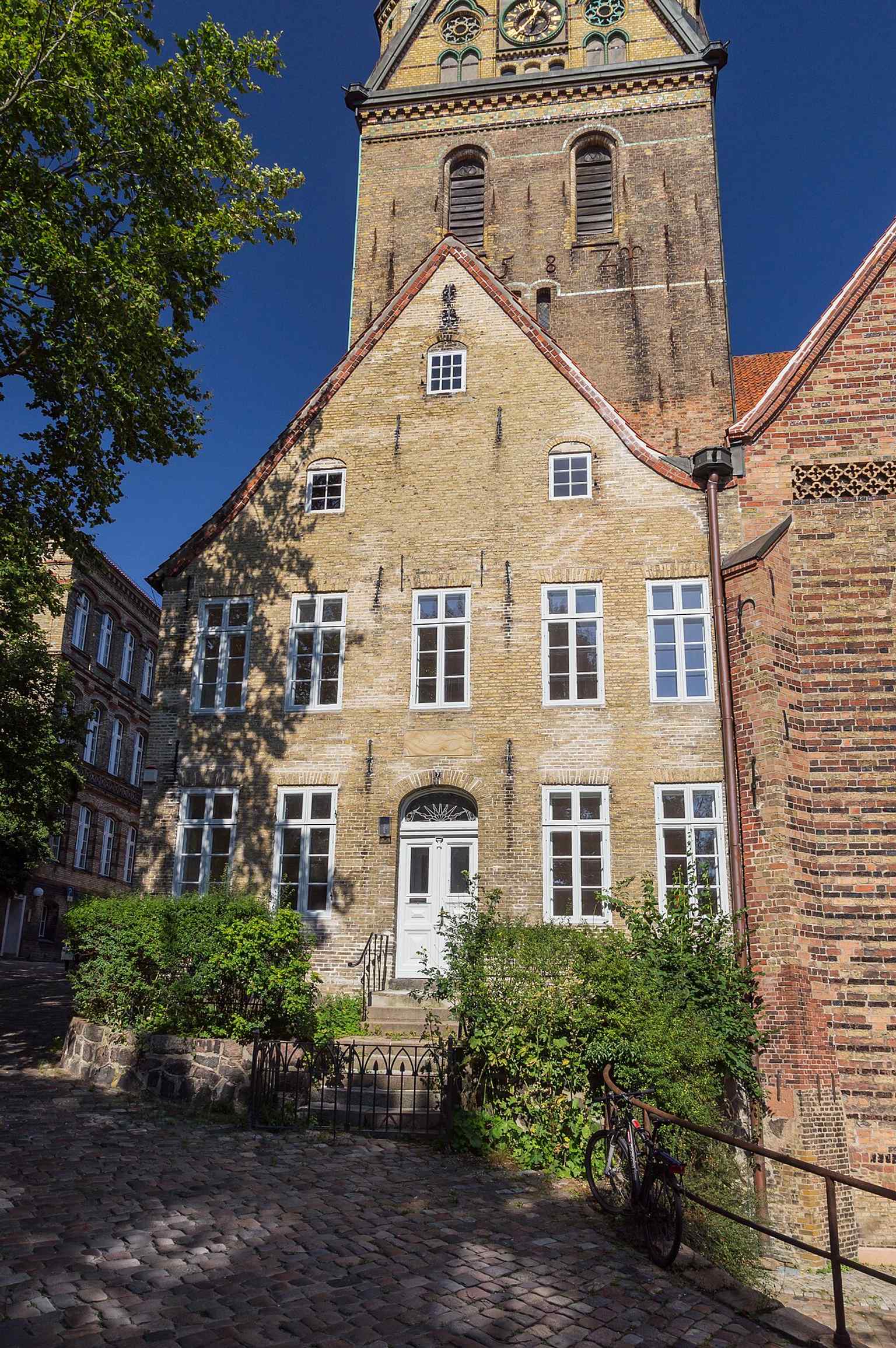
Now take a moment and look at how tightly the church presses against the surrounding streets and buildings. Does it feel tucked into the city... or more like the point from which the city spread outward? If you check the picture in the app, you can see the Organistenhaus snug against the church wall and just how little breathing room old Flensburg gave even its grandest buildings.
One local detail most visitors miss lives not in the tower but in memory. In fifteen eighty, Pastor Sebastian Schröder founded a church library here. A few years later, books that donor Lütke Namens had intended for the Latin school ended up moved here against his own testamentary wishes. So even in a place meant to preserve knowledge, memory could slip, get reassigned, and change hands. That, too, is part of city life.
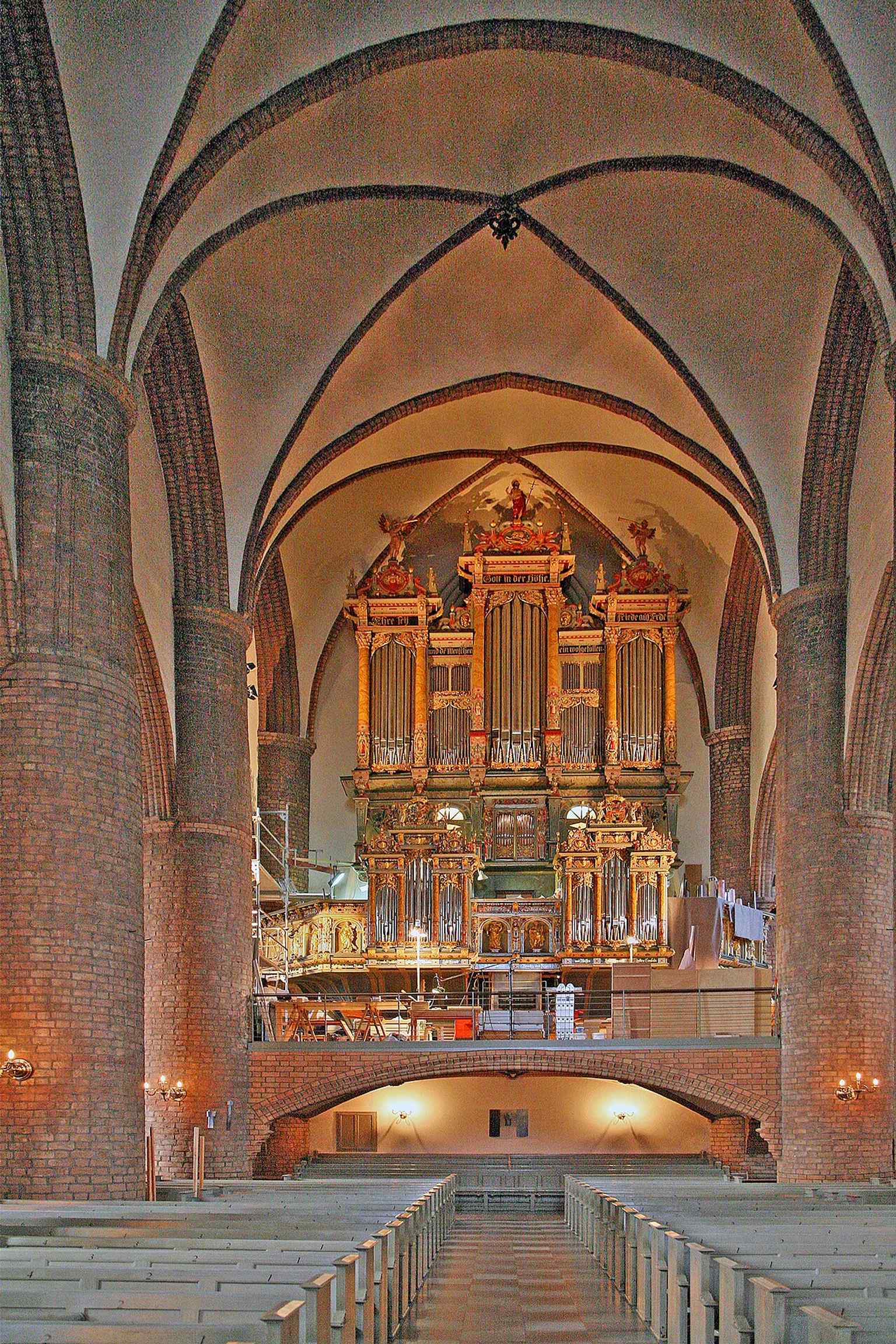
If you look at the app once more, the interior organ image hints at another layer inside: a remarkable double organ, rebuilt in recent decades so the church can speak in both baroque and symphonic voices. Very Flensburg, really... more than one tradition under a single roof.
From these doors, ideas flowed out with the shoppers, magistrates, teachers, and sailors. Belief was one force entering the city here, but never the only one. When you’re ready, head to Red Street, about a four minute walk from here. If you want to step inside later, the church is generally open daily from nine in the morning to six in the evening.






%20-%20Orgel.jpg)