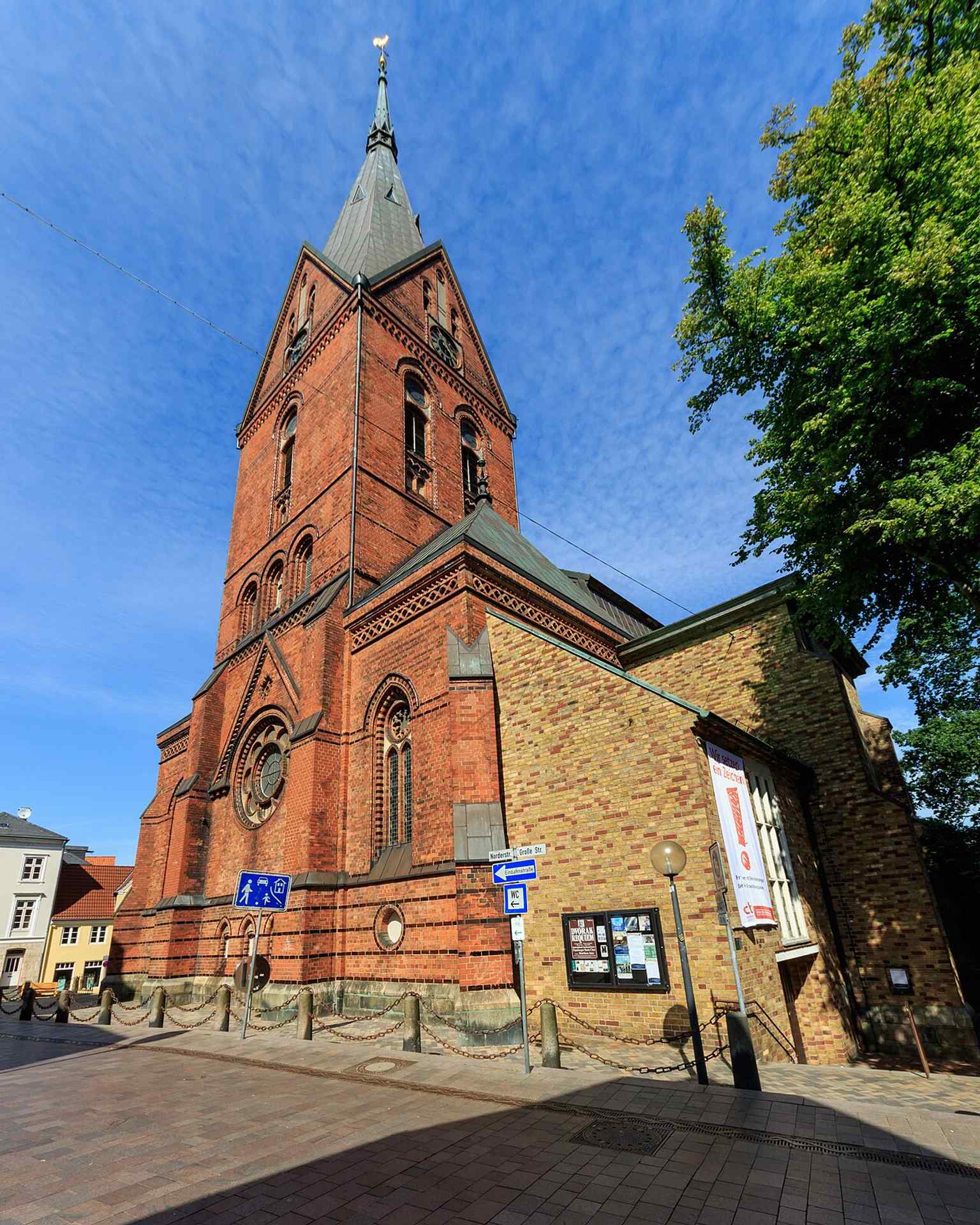
On your left stands a broad red-brick Gothic church with a steep roof and a tall, needle-pointed tower rising from its western end.
St. Mary’s looks calm enough now... but this site entered Flensburg’s story through violence as much as prayer. Before this church, a Romanesque stone church stood here under Danish rule, probably begun in the late twelfth century under King Waldemar the First, though some place it a little later under King Knut the Sixth. Then, in the year twelve forty-eight, a dynastic war tore through Schleswig. King Erik the Fourth fought Duke Abel, his own brother, for control of the duchy, and the earlier church fell in that struggle. So this ground is not just holy ground. It is contested ground.
The church you see rose from that wreckage. Flensburg’s citizens started again in brick, building a Gothic hall church, meaning a wide church where the central space and side aisles stand nearly equal in height. Most visitors assume a place this old must begin with a grand founding legend. Instead, the first solid documentary trace is wonderfully bureaucratic: an indulgence letter from Bishop Tycho of Aarhus, dated the second of May, twelve eighty-four, now kept in the city archive. That little scrap of church paperwork tells us the townspeople had already begun rebuilding. It is a small clue, but around here small clues do heavy lifting.
And notice the geography of power wrapped into that one document. Aarhus is in Denmark. The earlier kings were Danish. Schleswig was disputed. Flensburg sat right in the middle, where allegiance, language, trade, and worship rarely stayed in neat little boxes. This church is one of the clearest reminders that the town’s spiritual life always answered to forces larger than a parish map.
What looks settled from out here is really a stack of revisions. A baroque tower crowned the church in the early seventeen hundreds; later builders replaced it, in the late nineteenth century, with the sharper neo-Gothic spire you see now. Churches age the way port cities do: by adding layers rather than asking permission.
Inside, wealthy merchant families turned devotion into display. Mayor Dietrich Nacke made a fortune from Flensburg’s sea trade and then poured part of it back into this church. In fifteen ninety-eight, he funded the huge high altar, one of the great late Renaissance works in Schleswig-Holstein, and he and his wife Catharina were buried before it. That tells you plenty about the city: money from ships, honor in church, memory fixed in wood and stone.
If you check the image on your screen, look at the Madonna standing in the tower opening, balanced on a crescent moon. Heinrich Ringerink carved her in fifteen eighty-nine. The same master later shaped much of the church’s splendor inside.
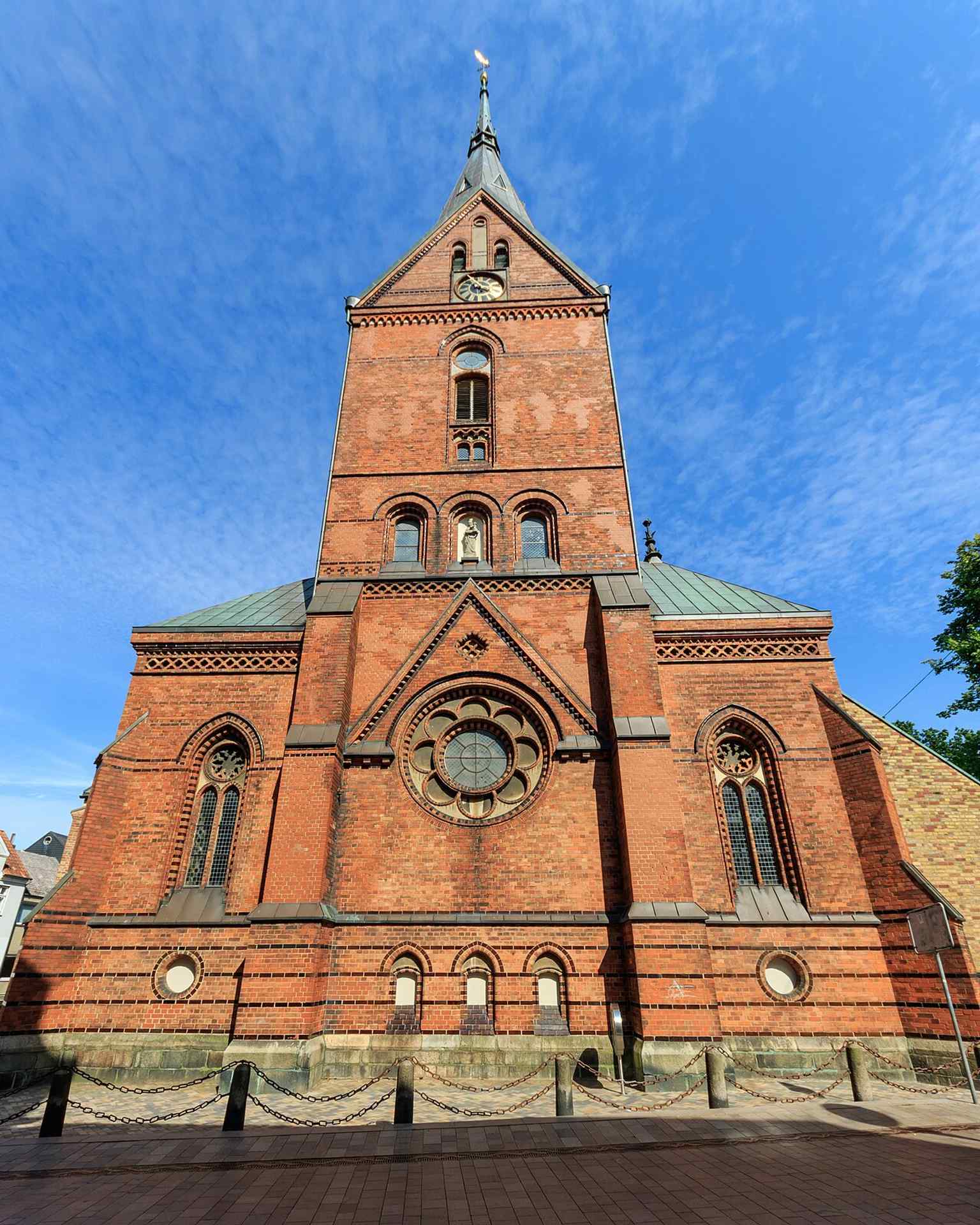
One more scar before we move on: the church survived wartime air raids, but in June nineteen forty-five a munitions explosion at Kielseng in the harbor shattered windows here. Even from a distance, the harbor could still strike this hill.
Now let your thoughts drift downhill toward the waterfront, where merchants, privilege, and shipping rules ran the town’s daily business. Company Gater, about a one-minute walk from here, picks up that story at street level.