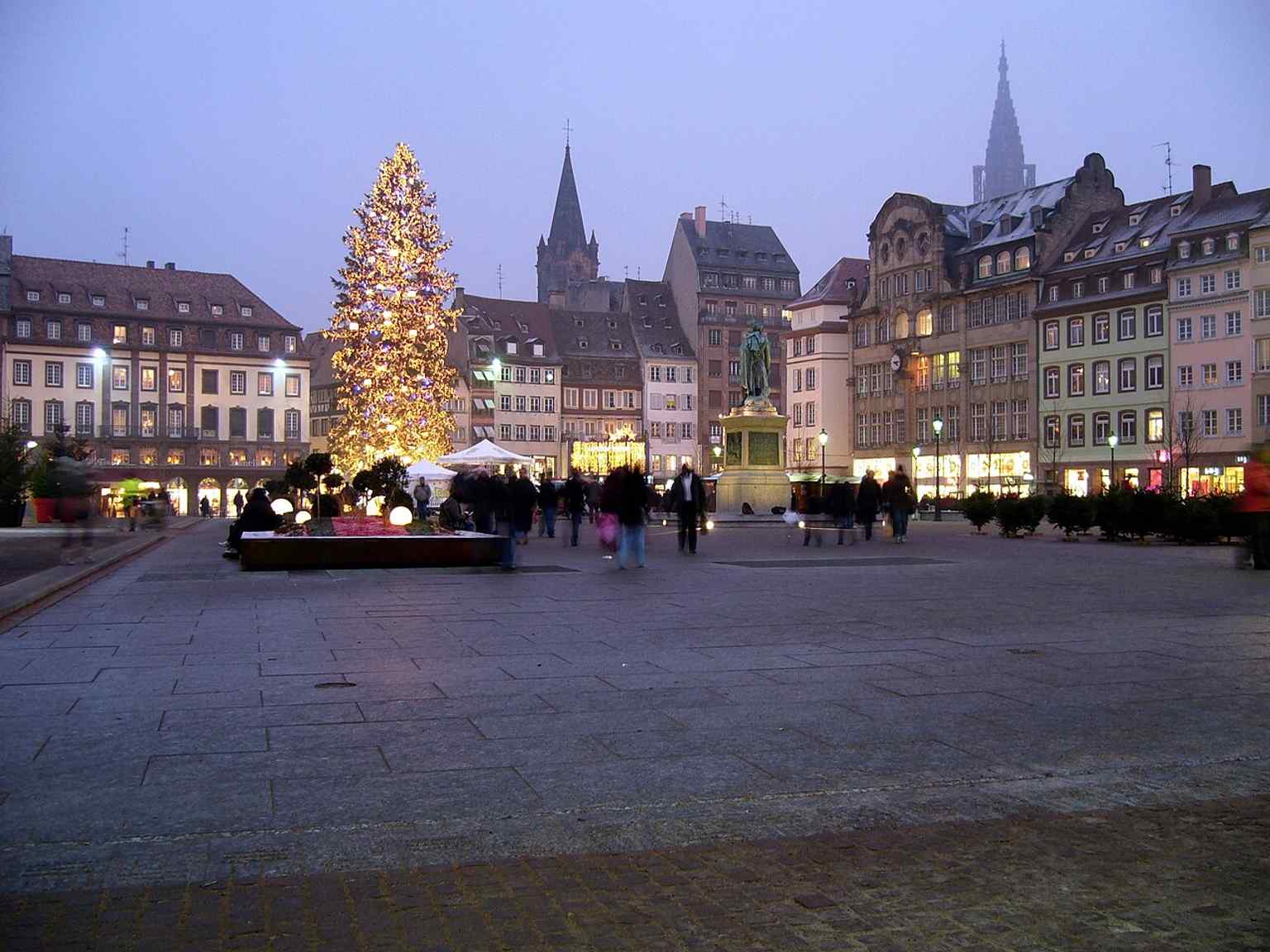
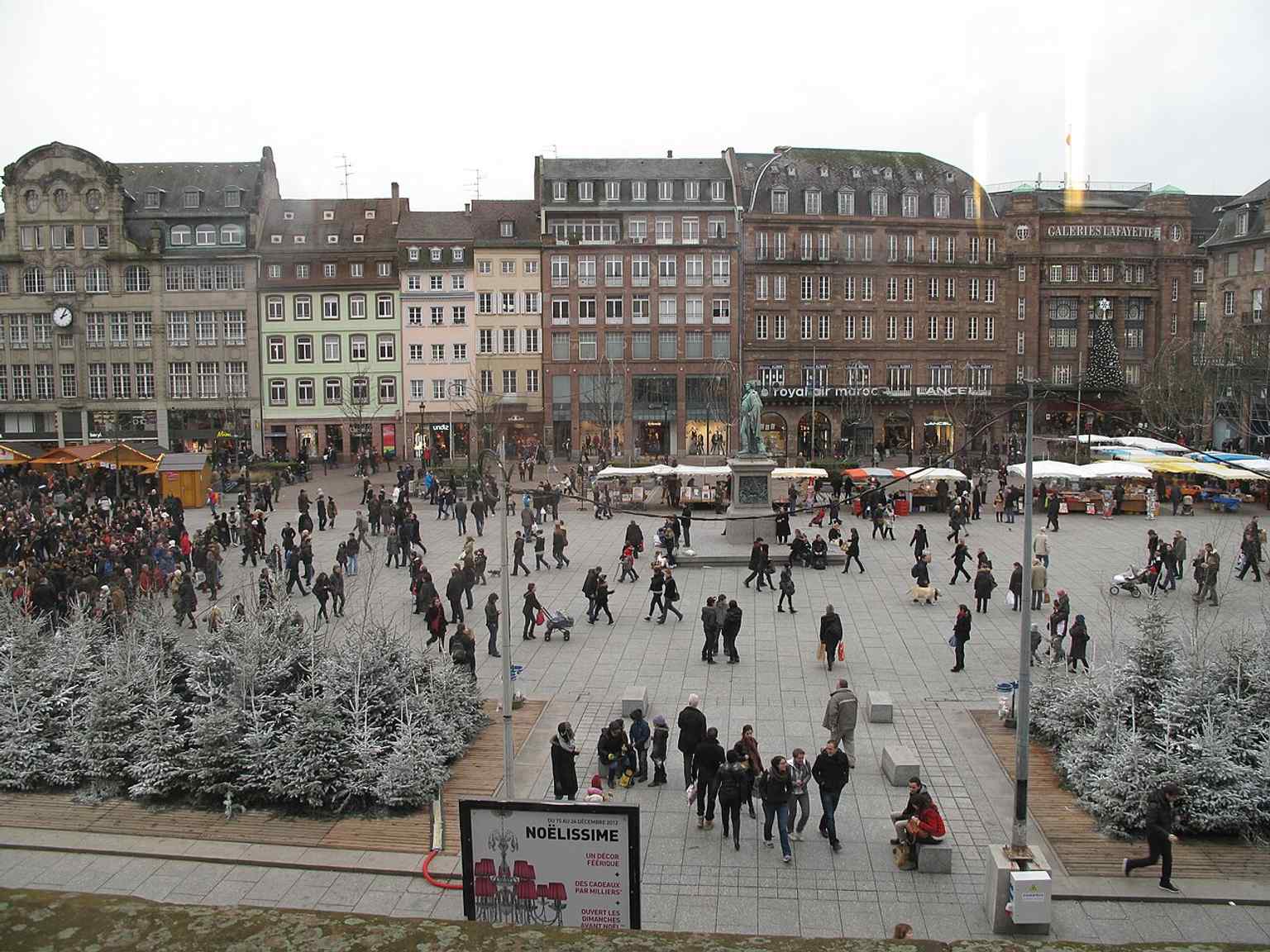
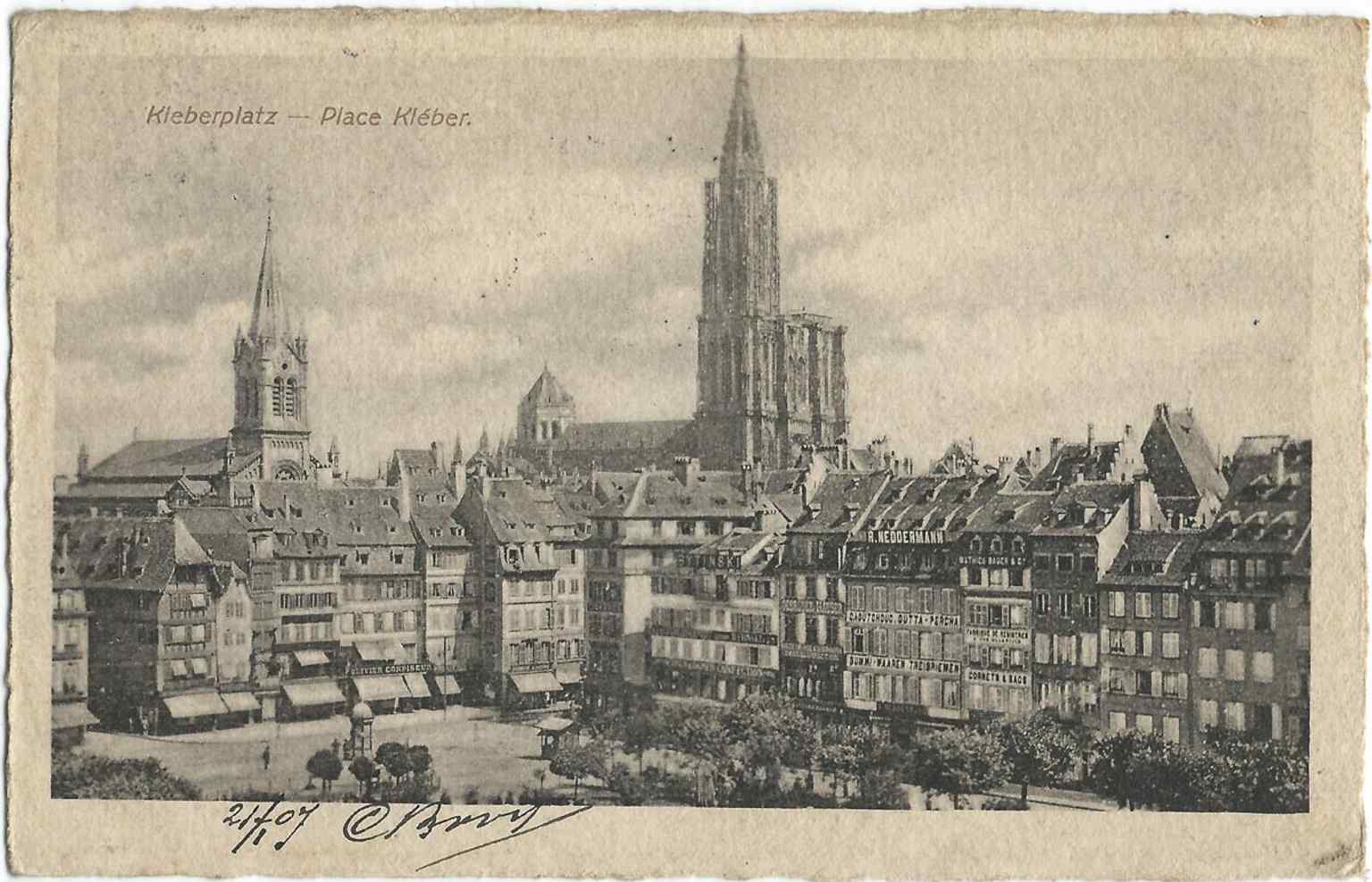
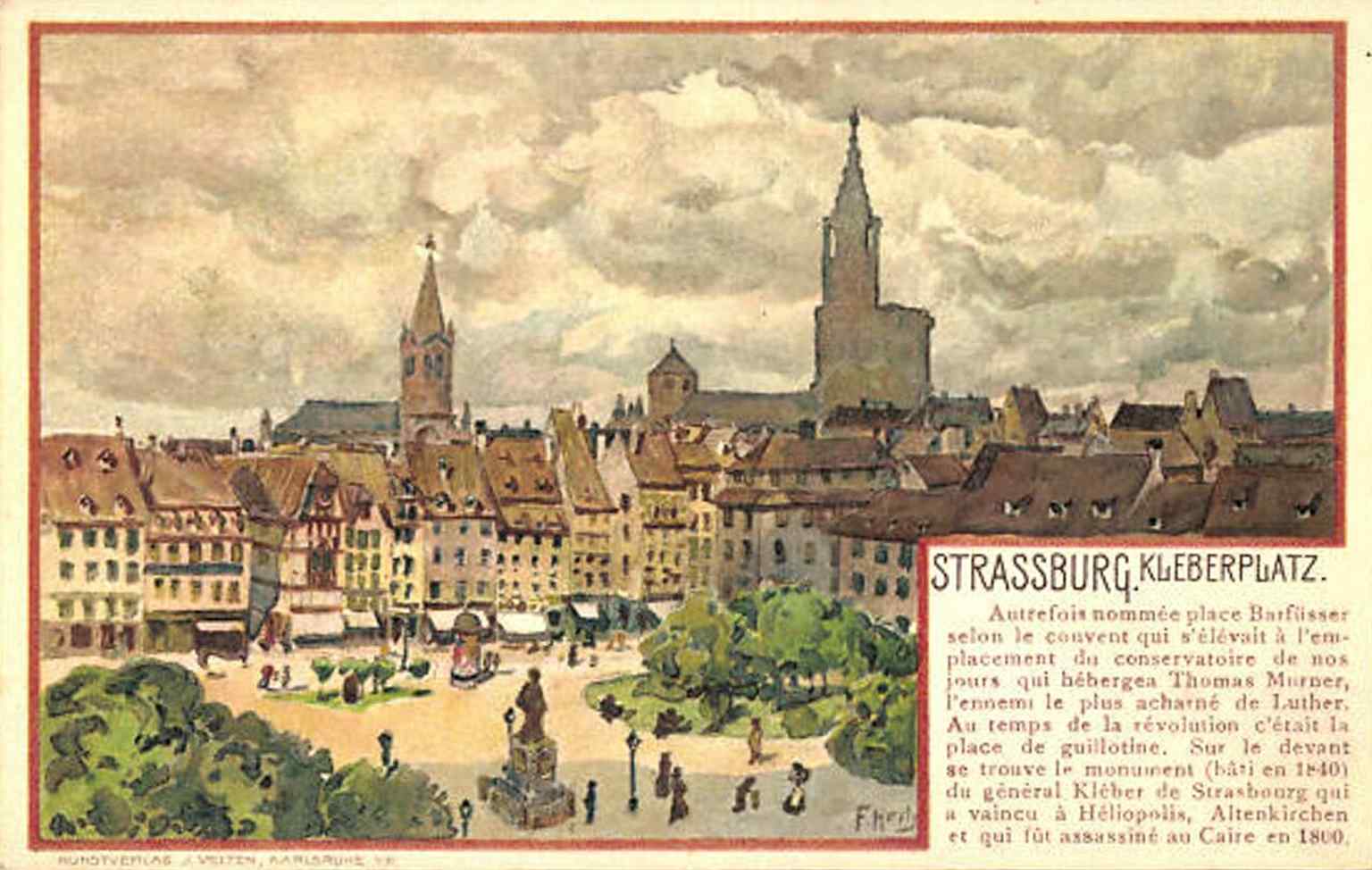
Look for the wide stone square centered on a bronze standing general atop a tall pedestal, with the long pale neoclassical façade of the Aubette stretching along one side.
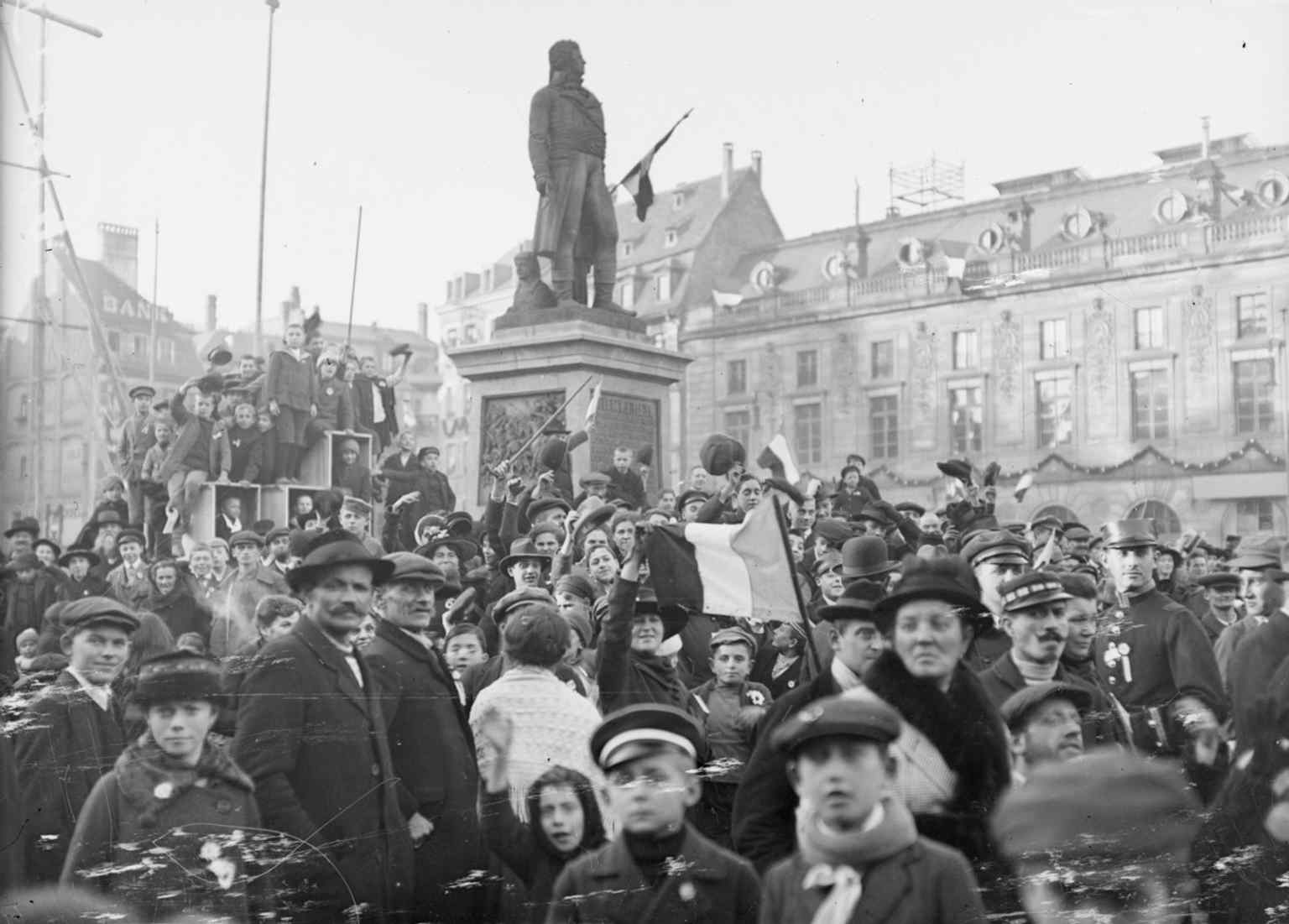
Welcome to Place Kléber, the city’s main square... and a fine place to learn that Strasbourg rarely tells just one story at a time. Right in the middle stands General Jean-Baptiste Kléber, a Strasbourg-born hero of the French Revolutionary Wars. His statue, finished by Philippe Grass in eighteen forty, shows him standing firm with a letter in hand: the British admiral Keith had demanded surrender, and Kléber answered in action instead. There’s an extra twist here. Kléber is not only honored above ground. Since 1838, his coffin has rested in a vault directly under the statue.
His path back here was anything but tidy. In Cairo, in eighteen hundred, a young Syrian student named Soleyman el-Halaby assassinated Kléber. The body was embalmed, sealed in lead and oak, buried, moved, and then quietly kept for years at the Château d’If near Marseille before King Louis the Eighteenth finally allowed Strasbourg to receive him. That is very Strasbourg, if you ask me: even the monument in the middle of the square arrives by way of Egypt, politics, delay, and a long memory.
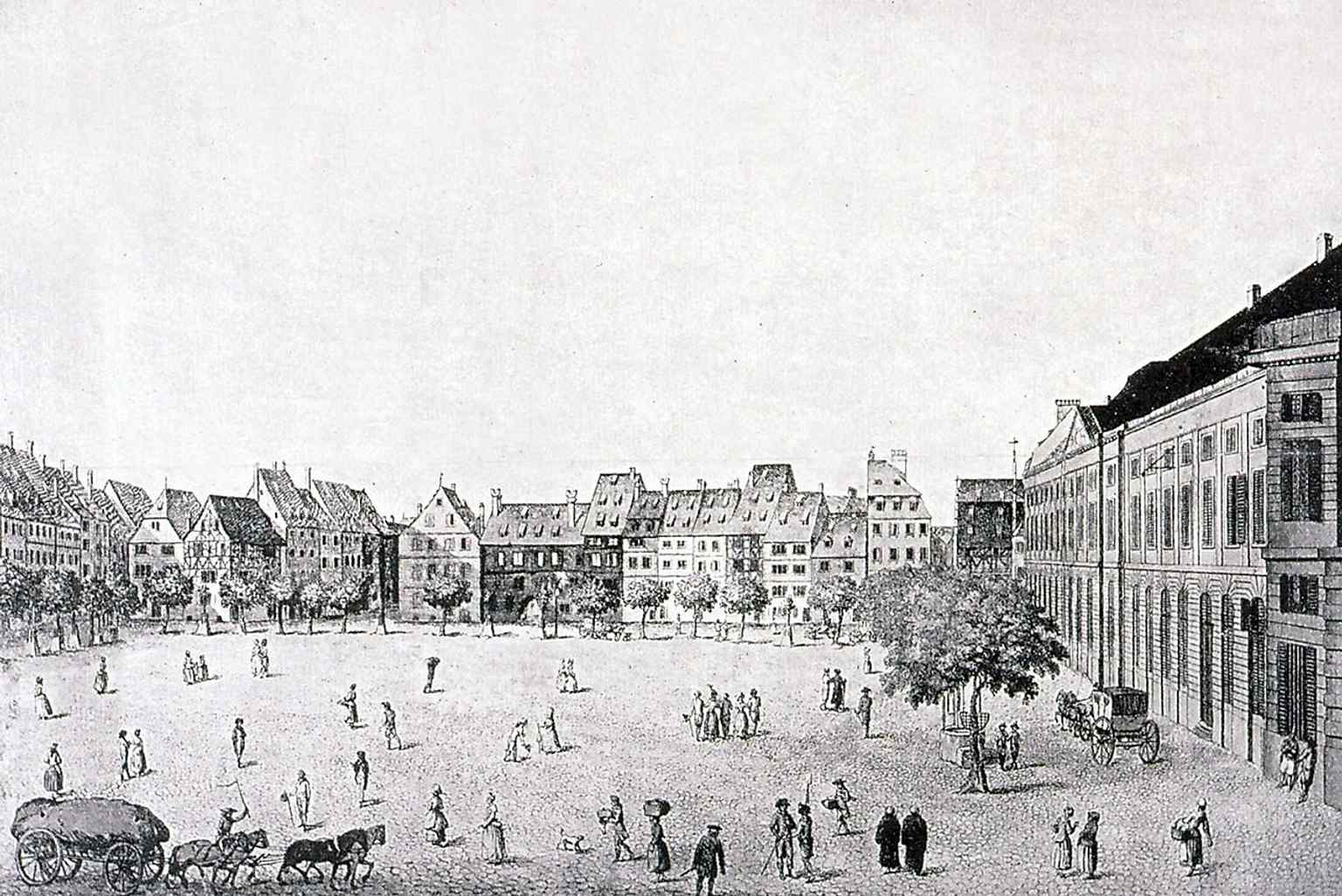
This square kept reinventing itself too. In the eighteenth century, architect Jacques-François Blondel imagined a grand military parade ground here, a modern showpiece for the city. Money ran short, then the Revolution rolled in, and most of the plan stayed on paper. The Aubette is the great survivor of that dream. Built in seventeen seventy-eight as a guardhouse, it took its name from dawn orders given to the garrison there. Later it housed music, then a leisure complex, and even interiors by Theo van Doesburg, Hans Arp, and Sophie Taeuber-Arp that some call the Sistine Chapel of modern art. Not bad for a former military checkpoint.
And the ground itself has older layers. Before Place Kléber, this was Barfüßerplatz, the “barefoot” square, named for a Franciscan convent nearby; in French it was also the Place des Cordeliers, after the rope belts those friars wore. Later it became the place d’Armes, the parade ground. Archaeologists even found a Roman stele here, a carved stone monument to four gods, reminding us that the visible square sits on much deeper footing than its paving suggests.
Its shape kept changing with the city’s needs. It served as the hub of the old tram network, then turned into a surface parking lot with a road slicing through it... not exactly poetic. In nineteen ninety-four and again in two thousand seven, Strasbourg remade it into the broad pedestrian plaza you see now, adding green spaces and long water basins edged in gneiss stone. If you want a quick visual of that change, have a peek at the before-and-after in the app. And if you’d like to see one vanished layer, check the old Maison Rouge on your screen; a grand wilhelminian building once stood here before demolition made way for the later shopping complex.
So here’s a question to carry with you: when a city keeps renaming, rebuilding, and re-centering its main square, what is it trying to hold onto... and what is it trying to outgrow?
If one square can carry Roman memory, a buried general, and an unfinished urban dream, the rest of Strasbourg is only going to get more interesting. When you’re ready, head on to Petite France, about a nine-minute walk from here. Handy thing about this stop: the square is always open.