
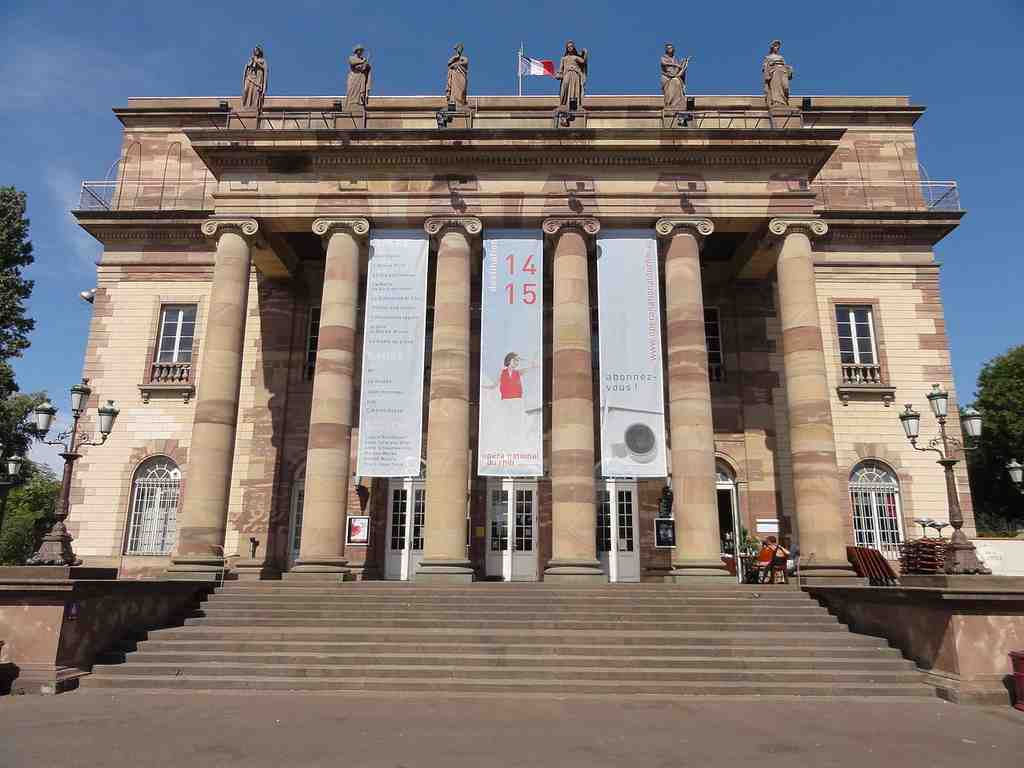
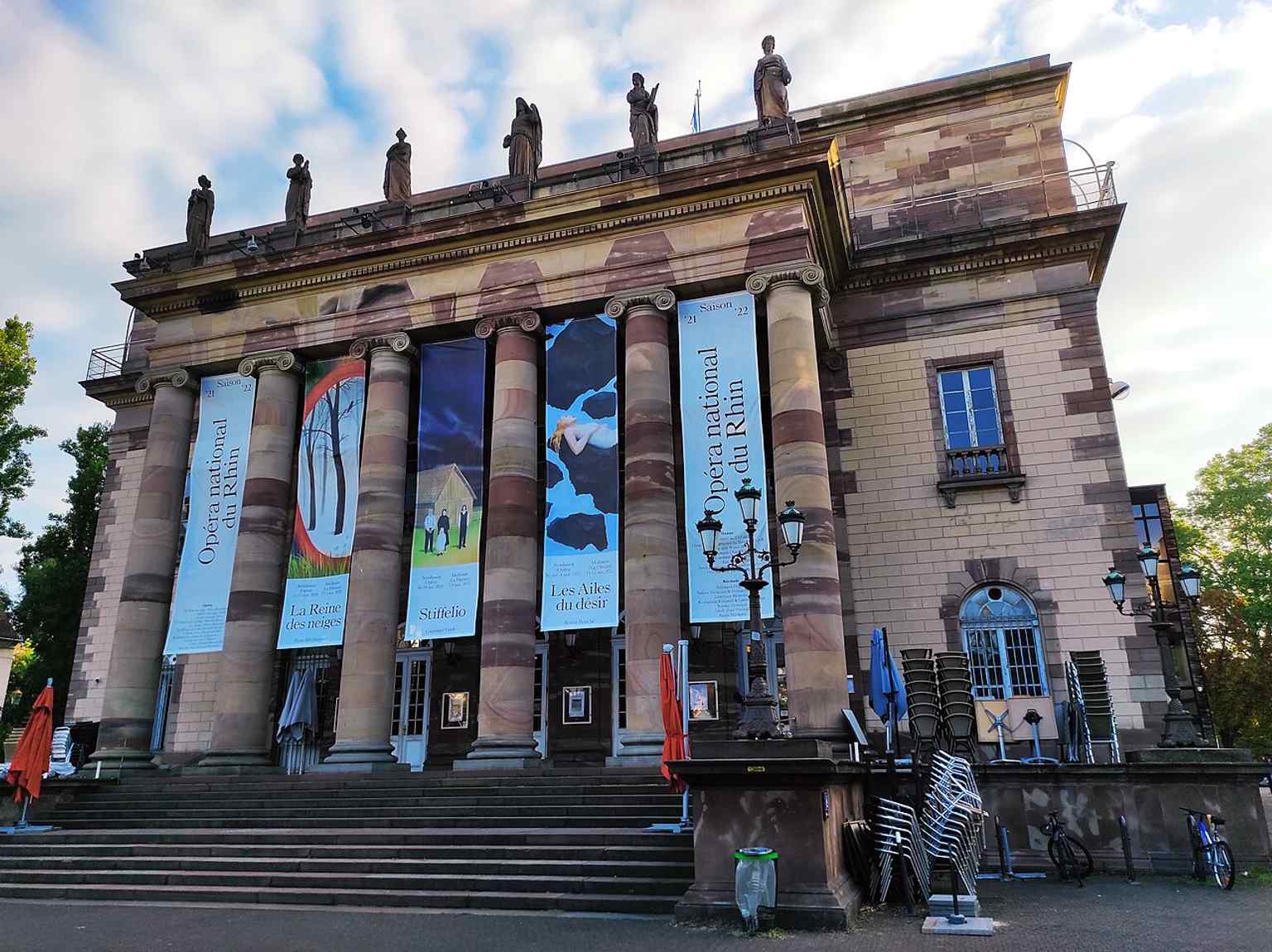
Ahead of you is a pale sandstone theater with a long neoclassical front, a triangular pediment, and statues lined along the roof like a stone chorus waiting for its cue.
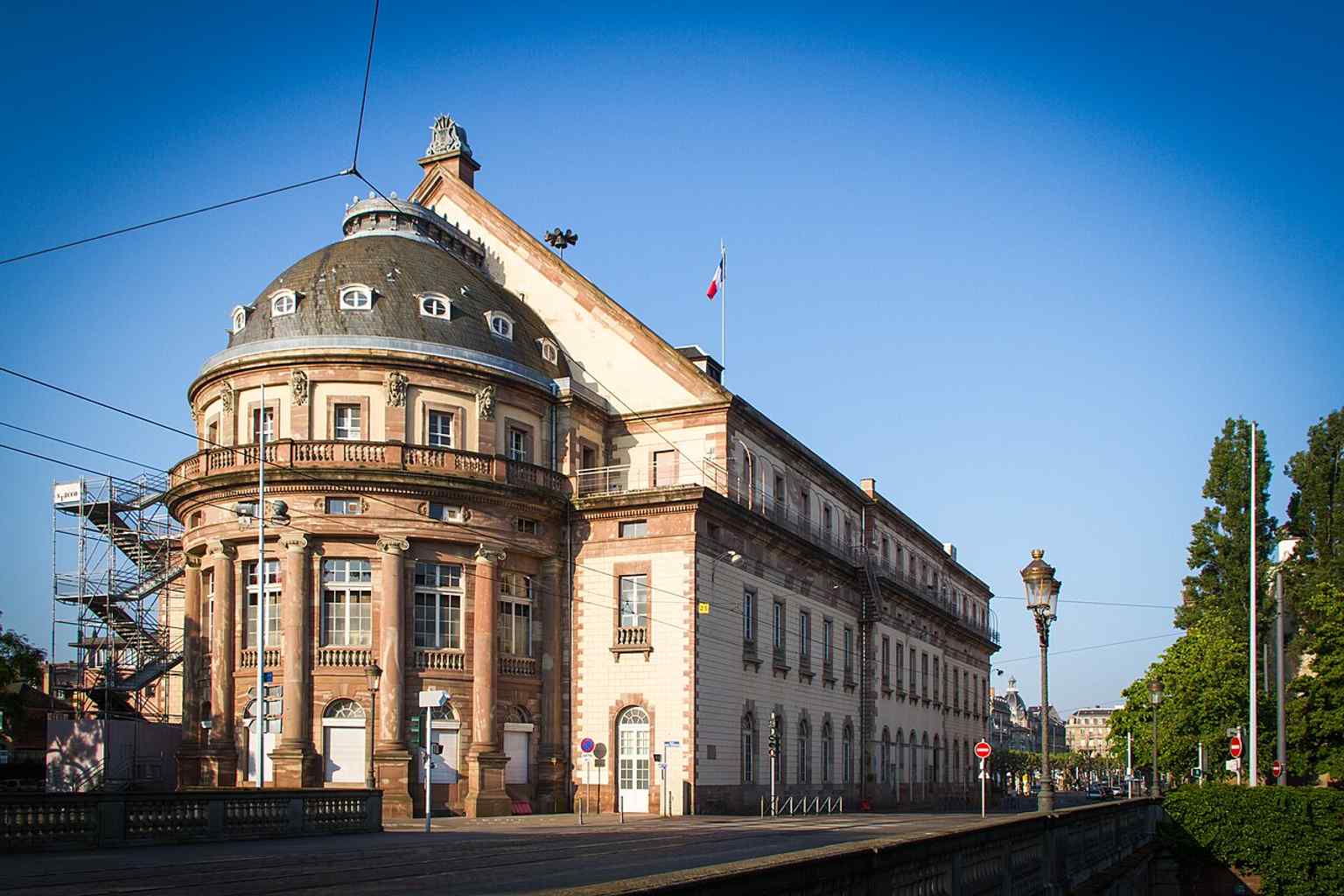
From this angled corner view, you can read the opera house almost like a set piece... grand at the front, practical at the back. After the fire of eighteen hundred destroyed the earlier opera on this square, Strasbourg had to improvise. French plays moved into an old oat store, while German drama shifted to the drapers’ hall, the Poêle des Drapiers. That split tells you a lot: in the nineteenth century, this city did not just lose buildings, it kept losing shared cultural ground and then trying to rebuild it.
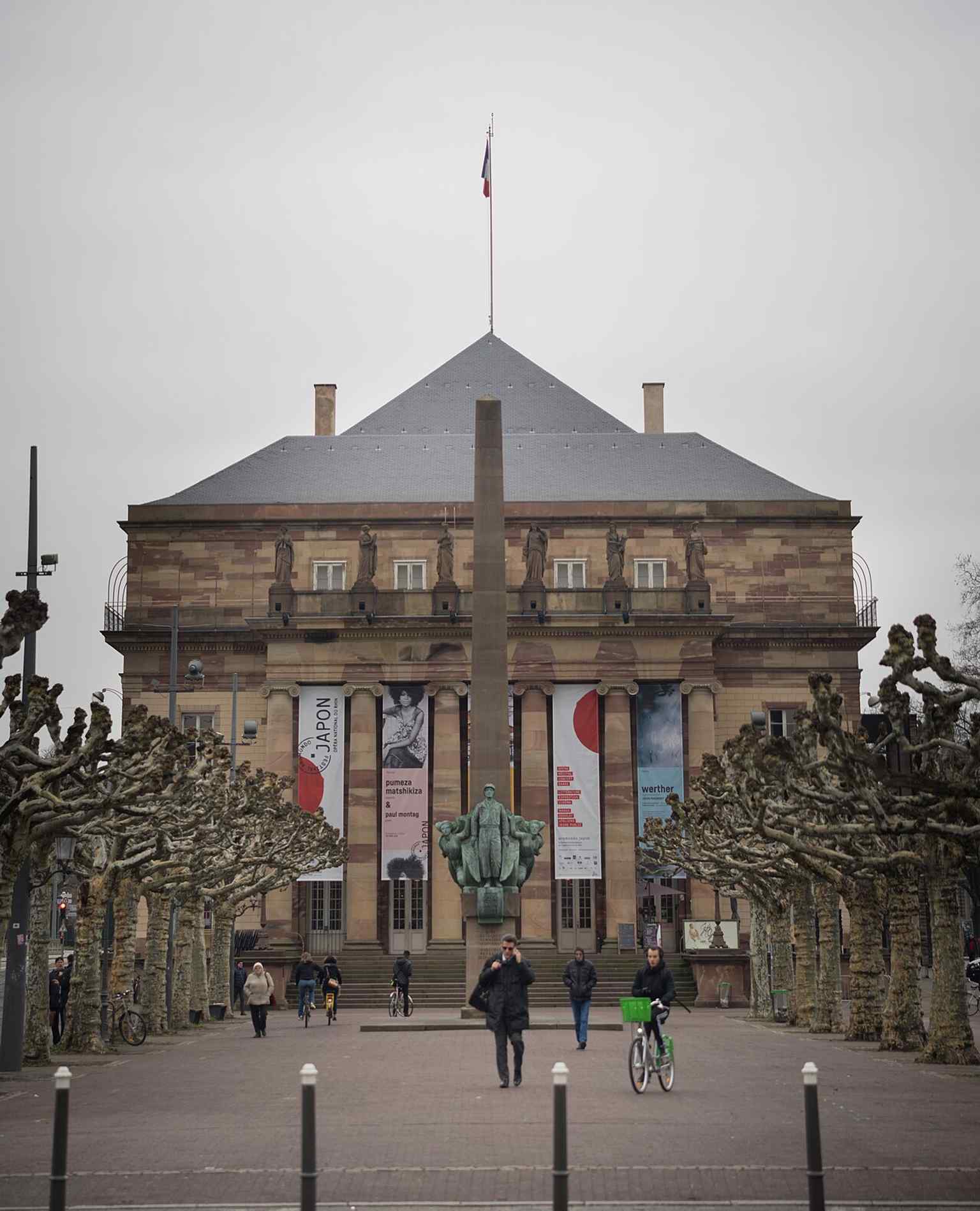
Architect Jean-Nicolas Villot gave Strasbourg its answer. He designed this new municipal theater in a neoclassical style, meaning it borrows the calm authority of ancient Greek and Roman temples. If you glance at your screen, the straight-on façade in image two makes that temple-like front especially clear. The foundation stone went down on the second of December, eighteen oh four, the very day Napoleon crowned himself emperor in Paris. Now that is timing. Culture here was not tucked away; it was staged, publicly, with imperial swagger.
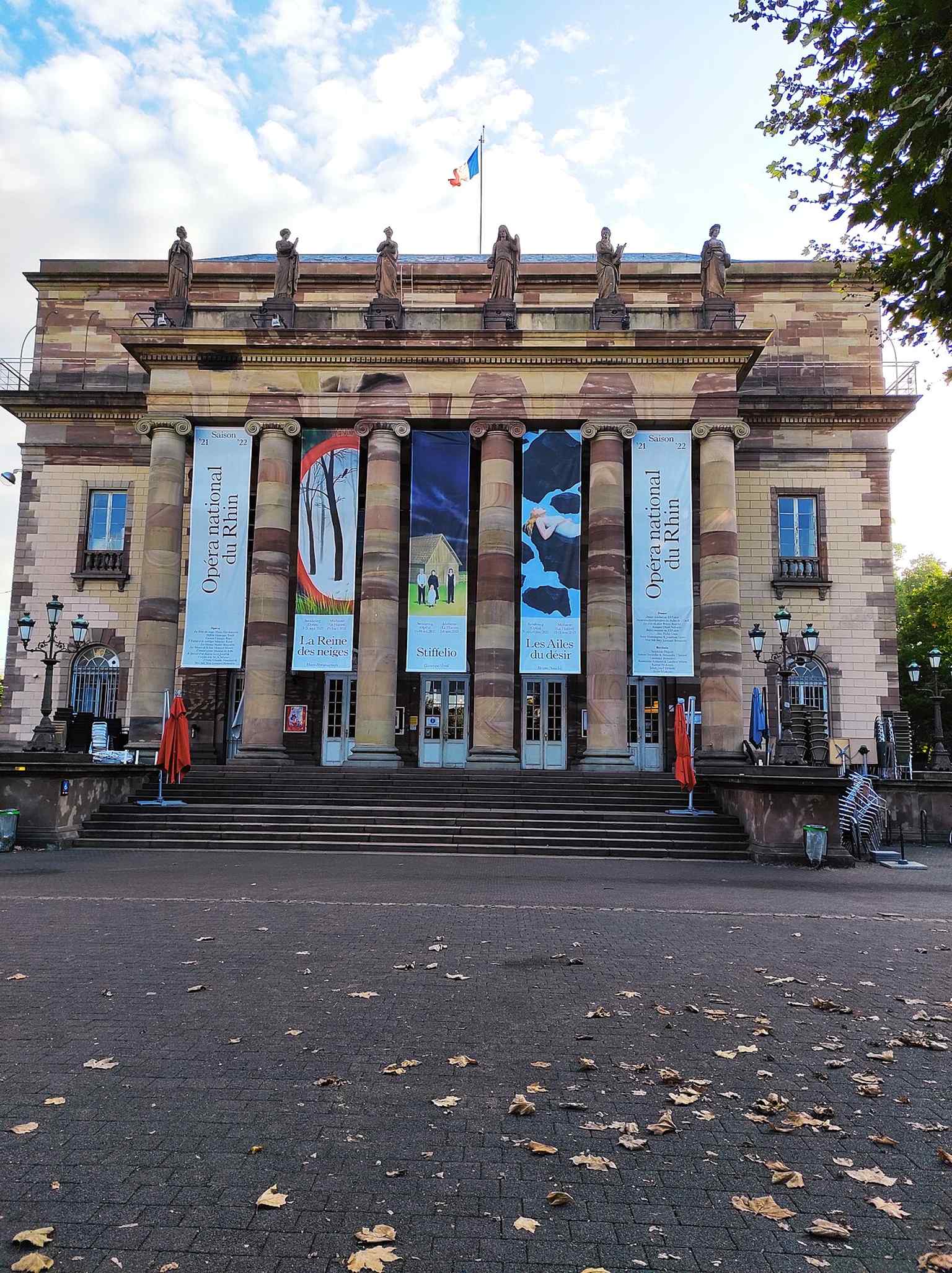
And it cost a small fortune. The city first guessed three hundred thousand francs, and by the opening in eighteen twenty-one, the bill had climbed to about two point one five million francs. Even the muses are expensive. Landolin Ohmacht carved six of them for the façade, one above each column; if you want a closer look, image five shows that sculptural world up close.
Then came the siege of eighteen seventy. Prussian artillery battered the opera and left it burning. Strasbourg rebuilt it faithfully and reopened it in eighteen seventy-three, then added the semicircular rear wing in eighteen eighty-eight for storage and a library, because an opera house is not just glamour... it is also a backstage machine.
Since nineteen seventy-two, this has been the home base of the Opéra national du Rhin. And if this building shows culture dressed for ceremony, the Palais du Rhin will show you power trying to choreograph an entire city. The box office generally opens Monday through Friday from twelve thirty to six thirty, and it is closed on weekends.






.jpg)
.jpg)