AudaTours logoAudaTours

Stop 5 of 17

Odeon of Lyon

Odeon of Lyon
Ancient Odeon of Lyon
Ancient Odeon of LyonPhoto: Pymouss, Wikimedia Commons, CC BY-SA 4.0. Cropped & resized.

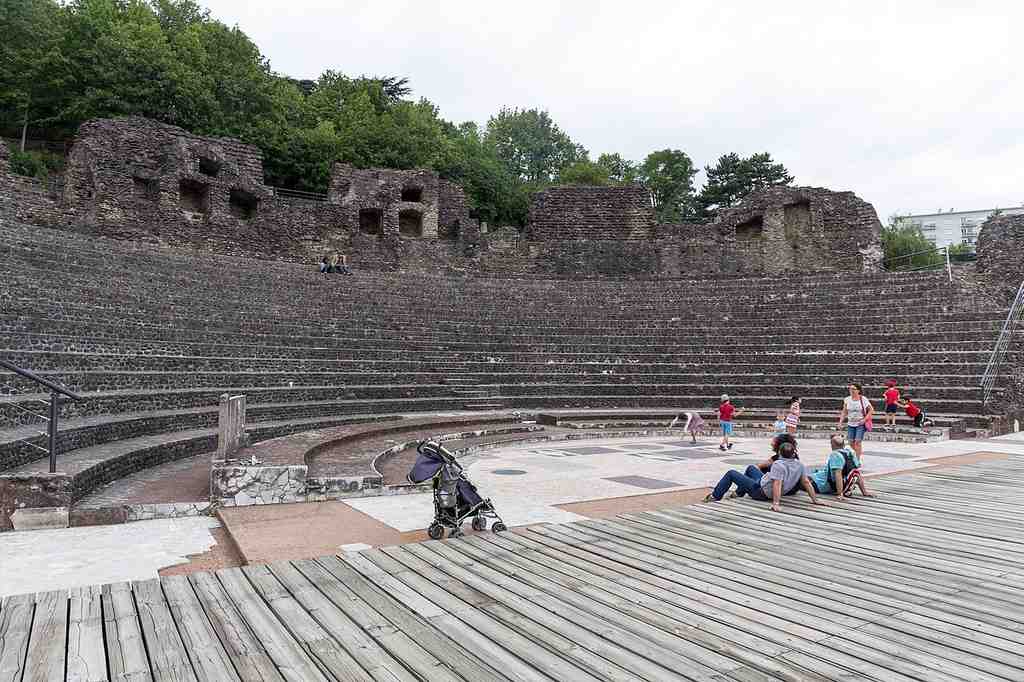
In front of you, a half-circle of pale stone seating rises from the hillside, enclosed by a thick curved wall and anchored by the low, straight line of the old stage.

This is the Ancient Odeon, the more intimate partner in one of Roman Gaul’s rarest pairs. Beside the grand theater, it shows a different register of public life: not the big civic crowd, but a smaller audience of about three thousand, gathered for music, singing, public readings, and perhaps meetings of the city’s leading men. Same hill, same empire... very different guest list.

That pairing matters. A prosperous capital like Lugdunum could afford both a grand stage for the masses and a refined one for polished ears and important robes. Roman culture loved performance, but it also loved hierarchy. You can read that right here in the stone. The orchestra - the curved floor in front of the stage - held low seating for local elites, separated from the main tiers by a white marble barrier. Even entertainment came with reserved seating.

Most visitors miss a lovely little clue in the layout. This odeon does not line up exactly with the larger theater. Its axis turns about seven degrees off. Just a slight tilt, but deliberate. The builders adjusted to the shoulder of the hill and the surrounding streets instead of forcing perfect symmetry. Roman order, yes - but practical Roman order.

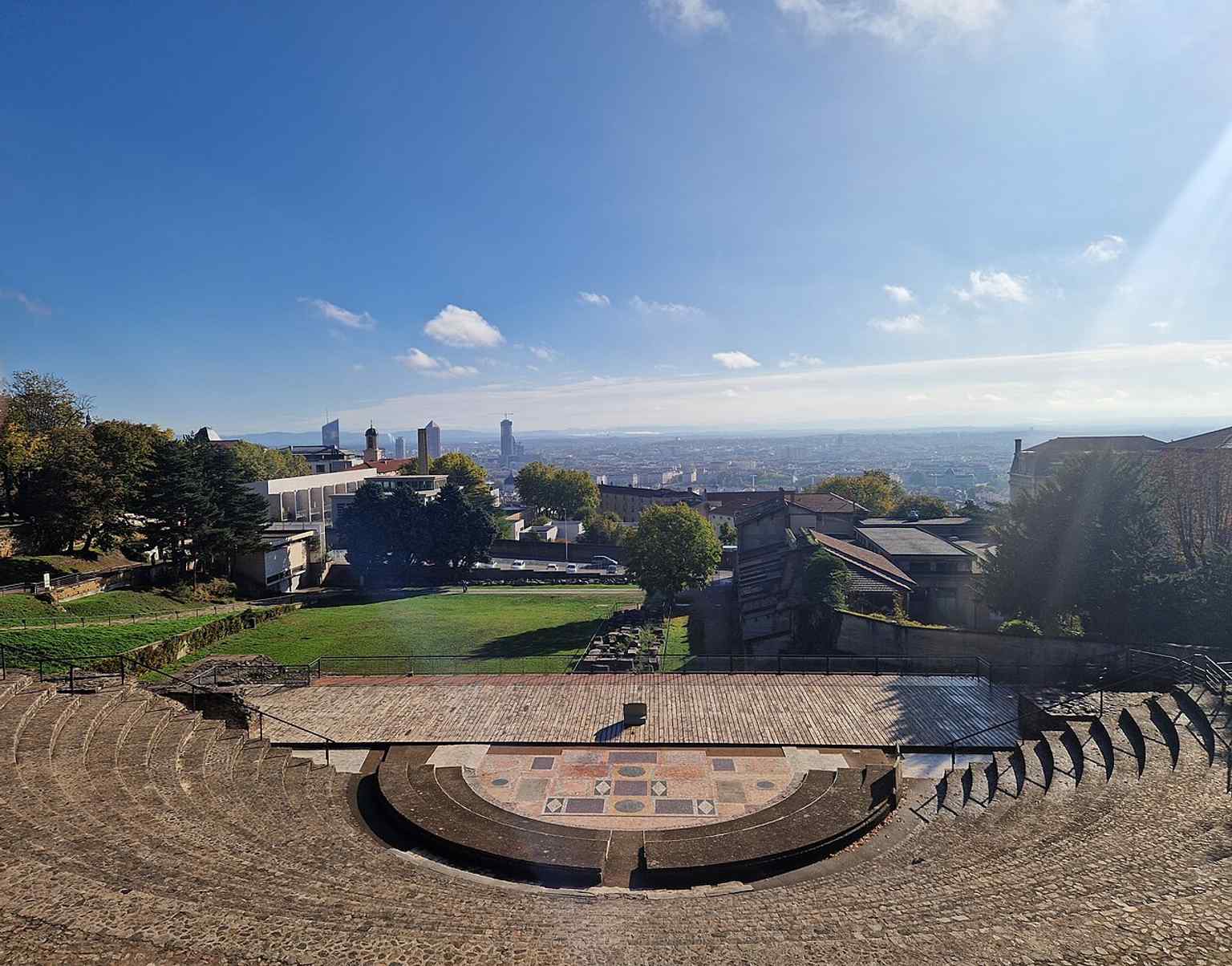
And this was no bare-bones lecture hall. The orchestra floor carried opus sectile - a kind of luxury stone inlay, like a jigsaw made of imported marbles and hard stones. Red porphyry from Egypt, green porphyry from Greece, yellow marble, granite, white and pink stone from Carrara... the sort of floor that quietly says, “Please lower your voice, this room has standards.”

If you glance at the aerial image in the app, you can see how the smaller curve of the odeon nestles beside the larger theater. It is almost like a chamber music hall next to a full symphony house.
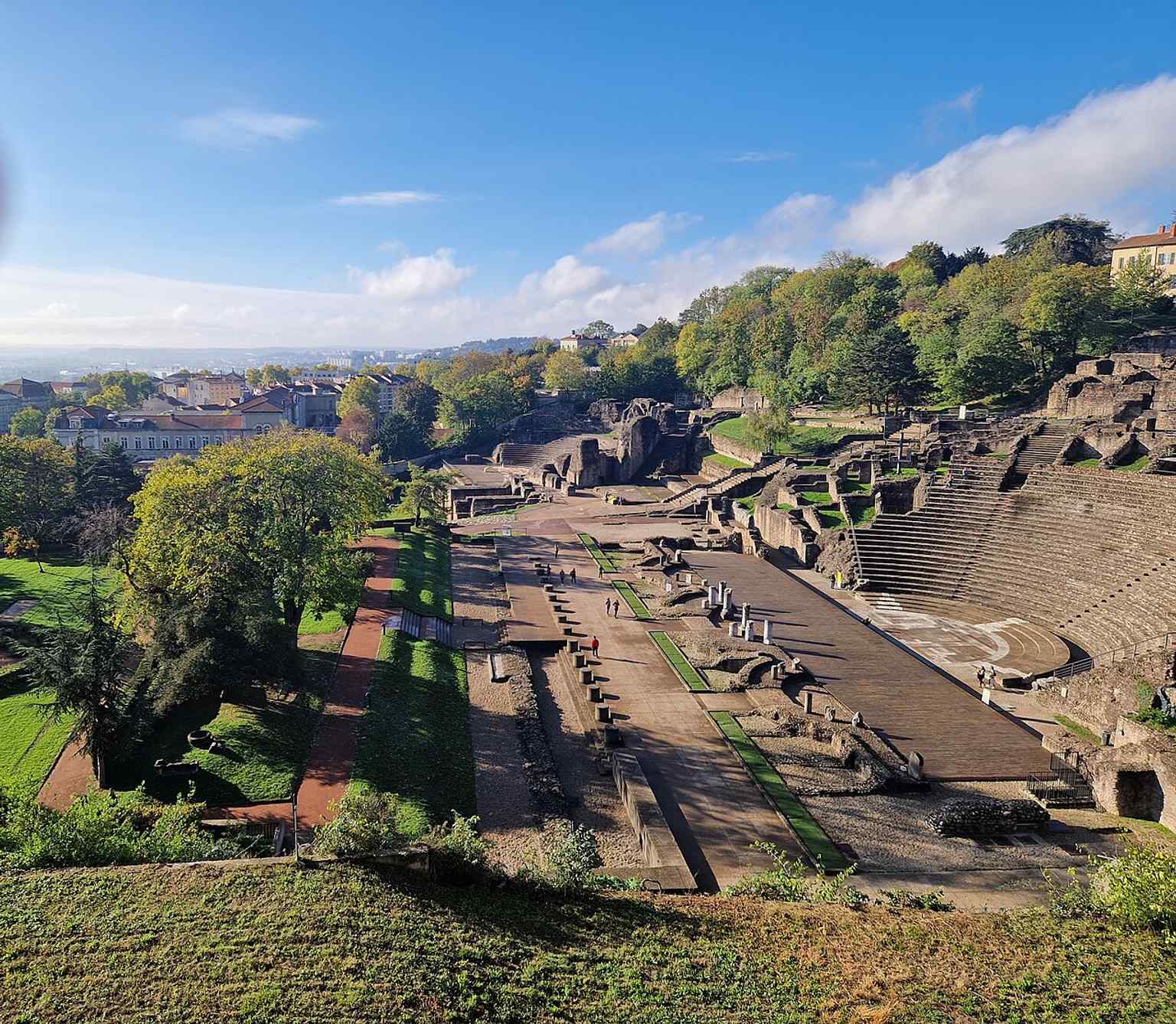
A sweeping view of the Roman theatre and the smaller odeon together — the rare paired monuments that made Fourvière’s ancient entertainment district so exceptional.
A sweeping view of the Roman theatre and the smaller odeon together — the rare paired monuments that made Fourvière’s ancient entertainment district so exceptional.Photo: Chris j wood, Wikimedia Commons, CC BY-SA 4.0. Cropped & resized.

For centuries, though, nobody saw the whole shape. After Roman life ebbed away from Fourvière, people treated these ruins as a quarry. Medieval builders carried off marble and limestone for major projects below, including the cathedral and bridges. Then the hill itself helped hide the damage, burying the lower parts under mud, gravel, and rubble. Only big arcs of masonry stuck out among vineyards.

In fifteen fifty-nine, Gabriel Syméoni, a Florentine humanist, sketched these ruins and correctly guessed they belonged to a Roman theater. Lyon argued with him for generations anyway. Not until the great excavations of the nineteen thirties and beyond did Pierre Wuilleumier and later Amable Audin clear the site properly. Under a stair in nineteen fifty-seven, archaeologists even found a medieval lime kiln - proof that stripped marble from this very monument had been burned down for reuse. A few carved fragments escaped the furnace: little grape-harvesting Cupids from the stage decoration, now preserved in the museum. If you look at the image with the basilica and museum above the ruins, you can see Lyon’s stack of centuries in one glance.
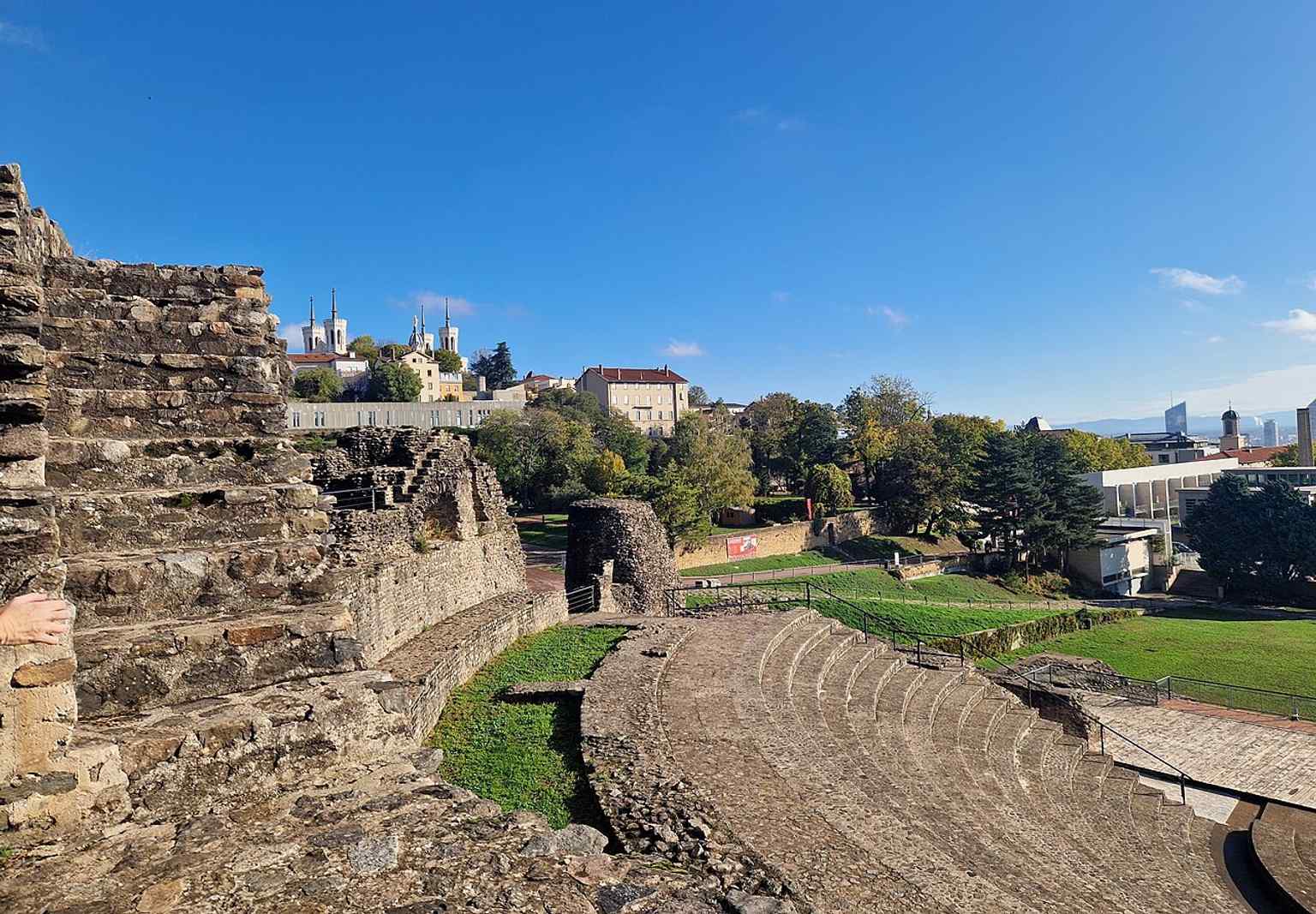
The odeon’s ruins with the basilica and museum above it — a strong sense of how the archaeological park now layers Roman Lyon beneath modern Fourvière.
The odeon’s ruins with the basilica and museum above it — a strong sense of how the archaeological park now layers Roman Lyon beneath modern Fourvière.Photo: Chris j wood, Wikimedia Commons, CC BY-SA 4.0. Cropped & resized.

From here, the story narrows. Monumental Roman seating gives way, downhill, to denser streets and private lives. In about fifteen minutes, the House of the Sieve will show you how the city kept rebuilding itself on top of older bones.

If you want to return and linger, the archaeological park is generally open every day from seven in the morning to seven in the evening.
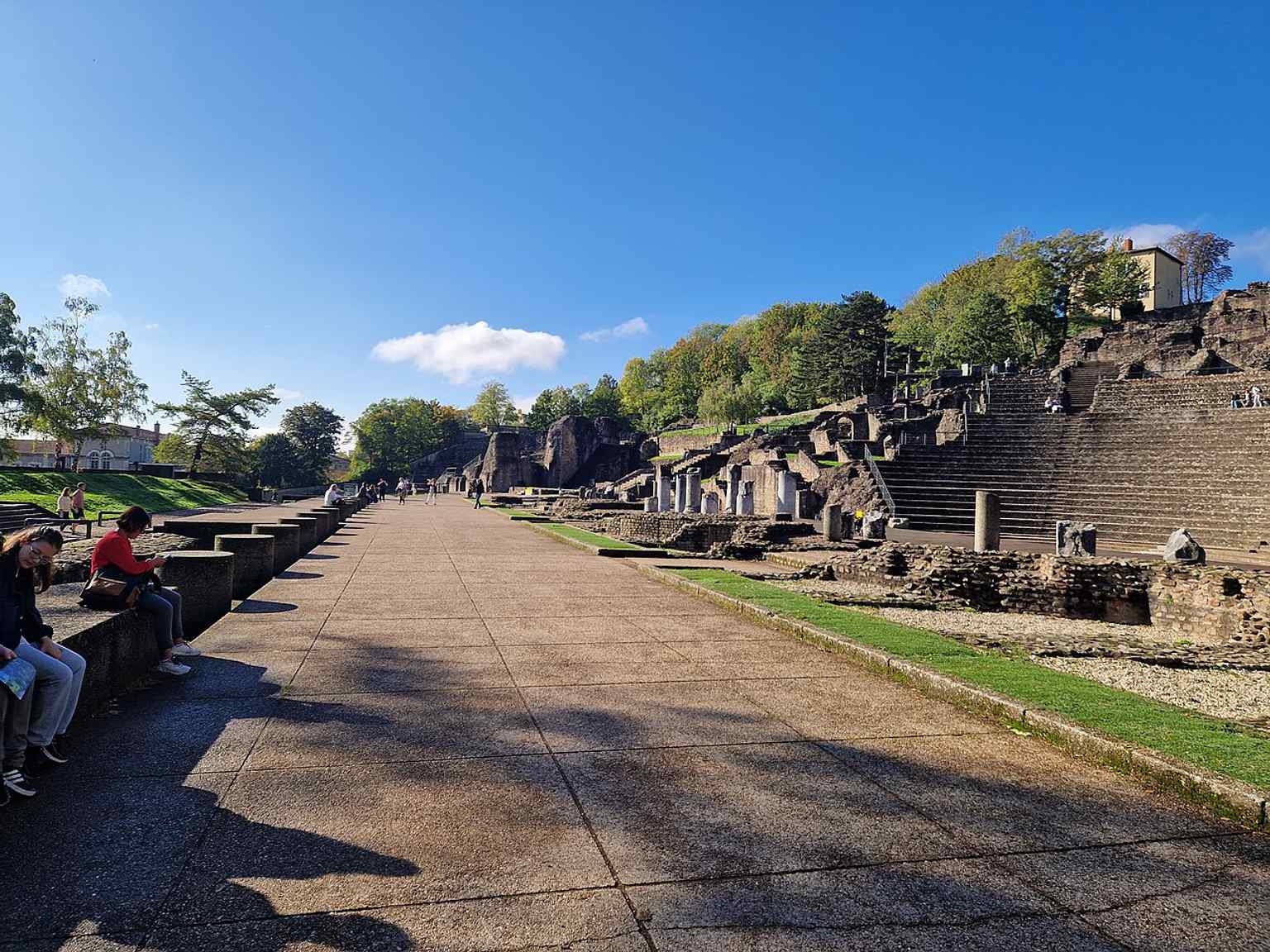
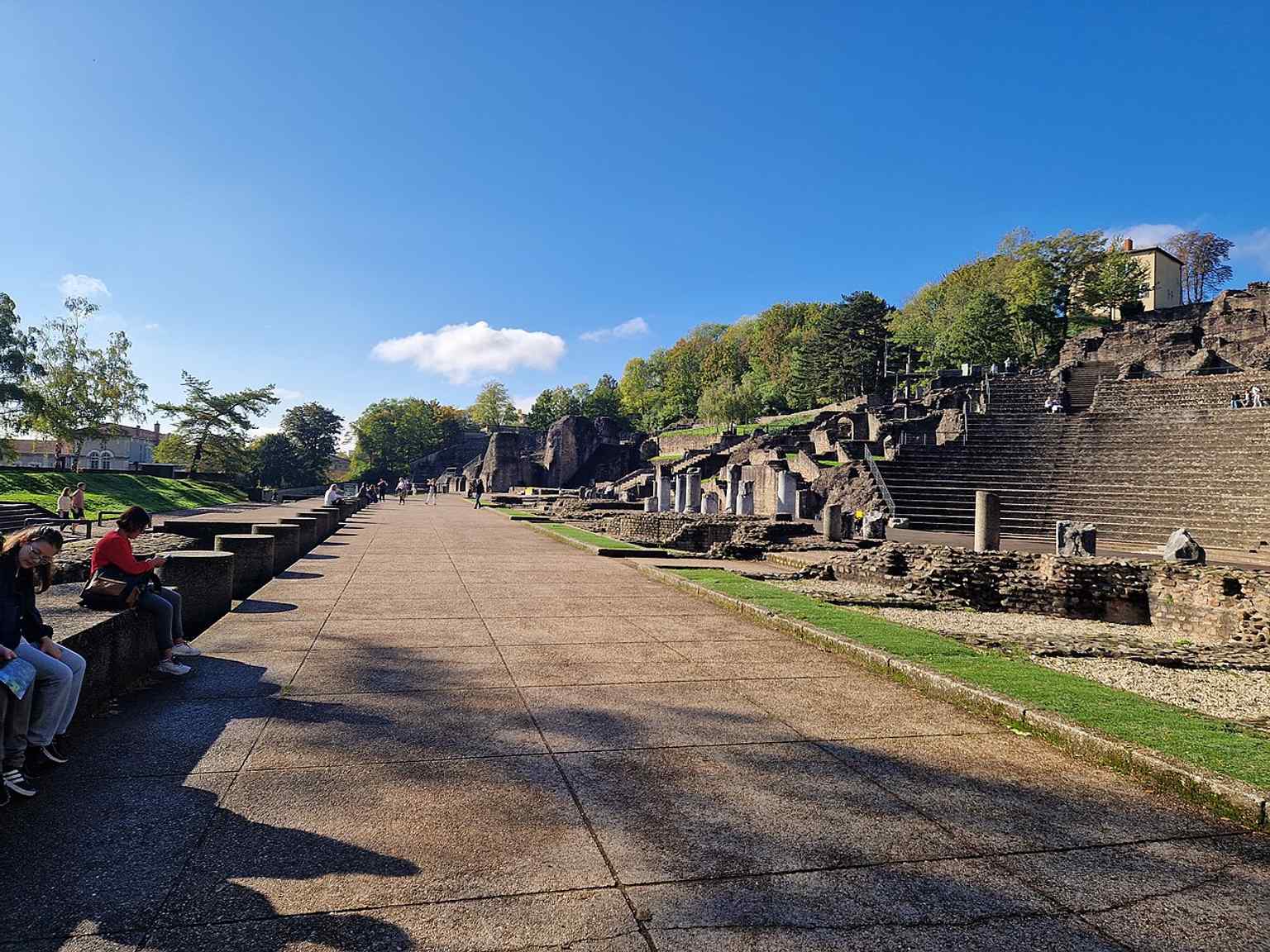
Seen from behind the stage, this angle shows how the odeon sits just beyond the larger theatre on the slope of Fourvière, exactly as the ancient complex was laid out.
Seen from behind the stage, this angle shows how the odeon sits just beyond the larger theatre on the slope of Fourvière, exactly as the ancient complex was laid out.Photo: Chris j wood, Wikimedia Commons, CC BY-SA 4.0. Cropped & resized.
Looking east from the odeon over Lyon, this view conveys the monument’s hilltop setting and why its upper terraces dominated the ancient city.
Looking east from the odeon over Lyon, this view conveys the monument’s hilltop setting and why its upper terraces dominated the ancient city.Photo: Chris j wood, Wikimedia Commons, CC BY-SA 4.0. Cropped & resized.
The rear-stage perspective emphasizes the spatial relationship between the two Roman buildings and the slope that supported their seating tiers.
The rear-stage perspective emphasizes the spatial relationship between the two Roman buildings and the slope that supported their seating tiers.Photo: Chris j wood, Wikimedia Commons, CC BY-SA 4.0. Cropped & resized.
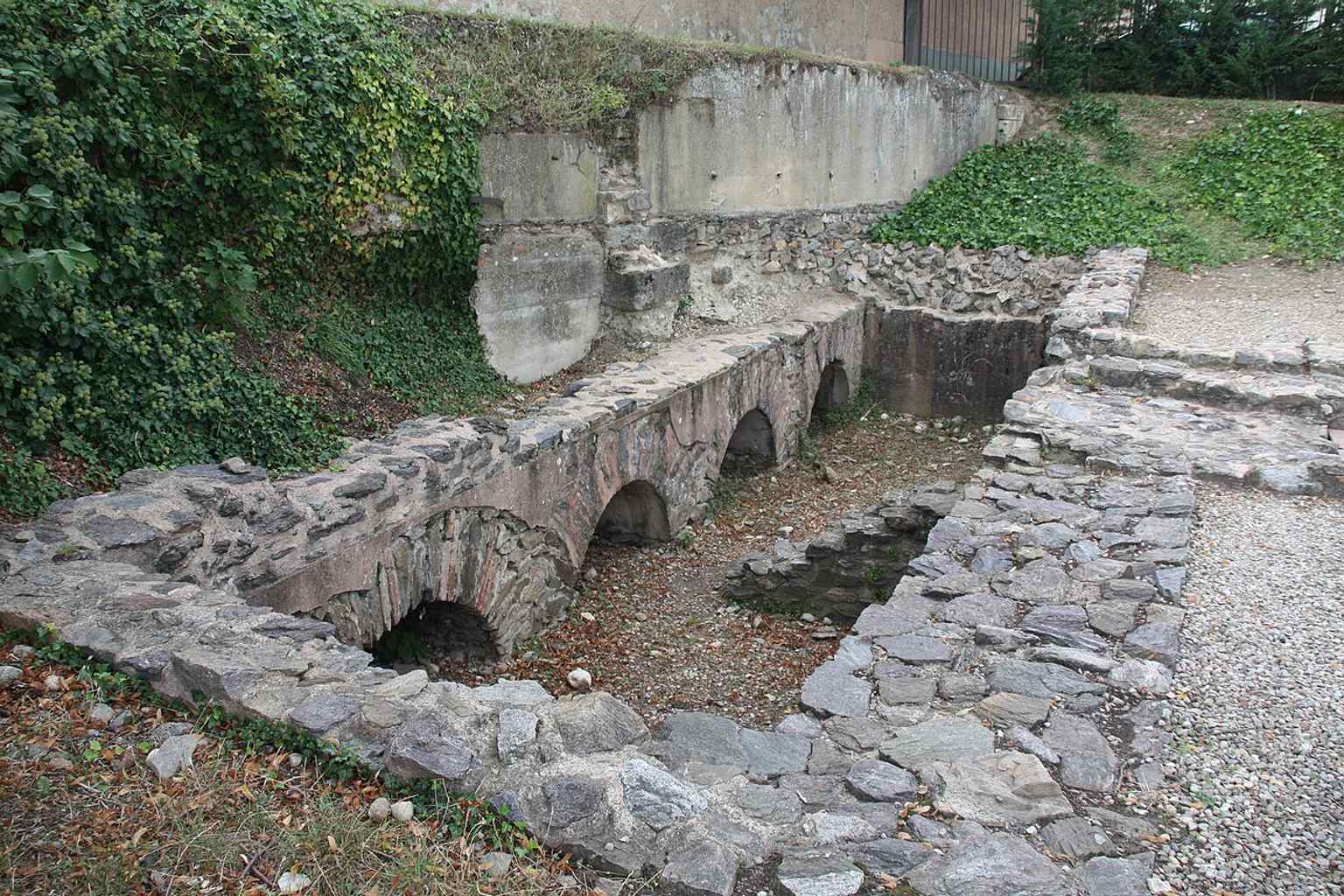
A documented view of the Fourvière archaeological site from the Wiki Loves Monuments series, useful as a contemporary record of the preserved Roman ruins.
A documented view of the Fourvière archaeological site from the Wiki Loves Monuments series, useful as a contemporary record of the preserved Roman ruins.Photo: Otourly, Wikimedia Commons, CC BY-SA 3.0. Cropped & resized.
arrow_back Back to Lyon Audio Tour: Historic Heritage
Loved by travellers

Thousands of tours started.
Plenty of opinions.

4.8 across the App Store and Google Play. Here's a few we keep coming back to.

starstarstarstarstar
This was a solid way to get to know Brighton without feeling like a tourist. The narration had depth and context, but didn't overdo it.
Christoph
Christoph
Brighton Tour
starstarstarstarstar
Started this tour with a croissant in one hand and zero expectations. The app just vibes with you, no pressure, just you, your headphones, and some cool stories.
download Get the app

Pop your headphones in.
Step outside.

Free to download. Tours in every city. Start in 60 seconds — no account, no card.

Download on the App StoreGet it on Google Play
starstarstarstarstar_half
4.8
AudaTours app icon
headphones
~ 4 min until your first tour starts
public
1,000+ cities worldwide
all_inclusive
AudaTours
Unlimited

Every tour. Every city. One subscription.

3097 tours2273 cities138 countries50+ languages