
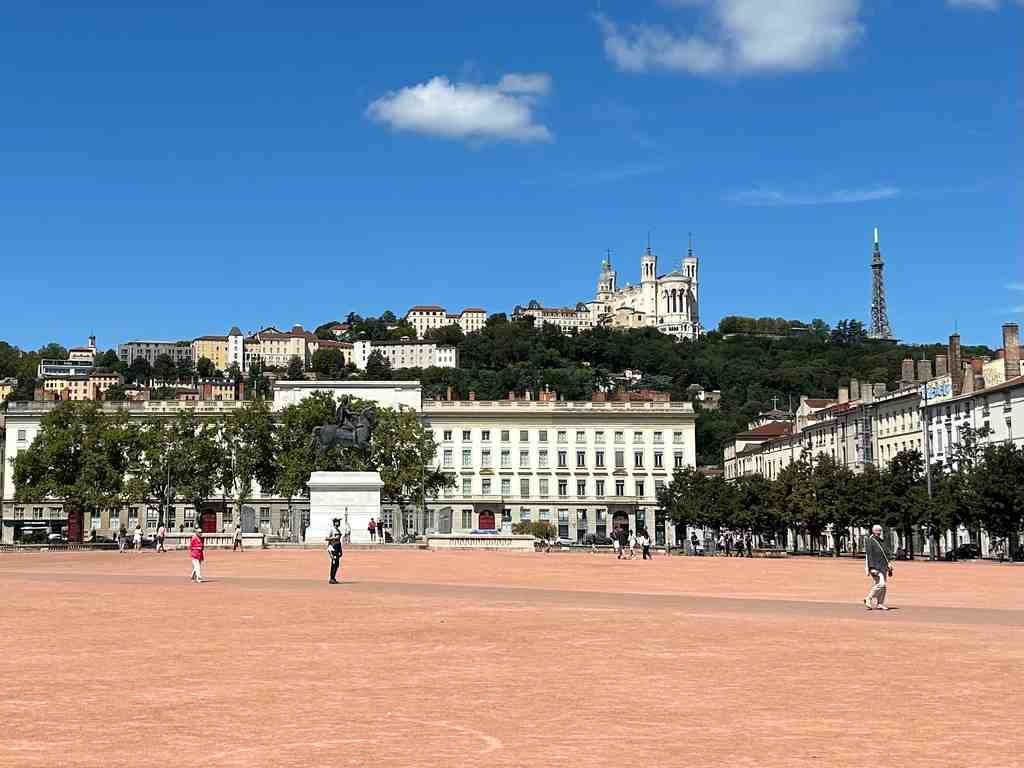
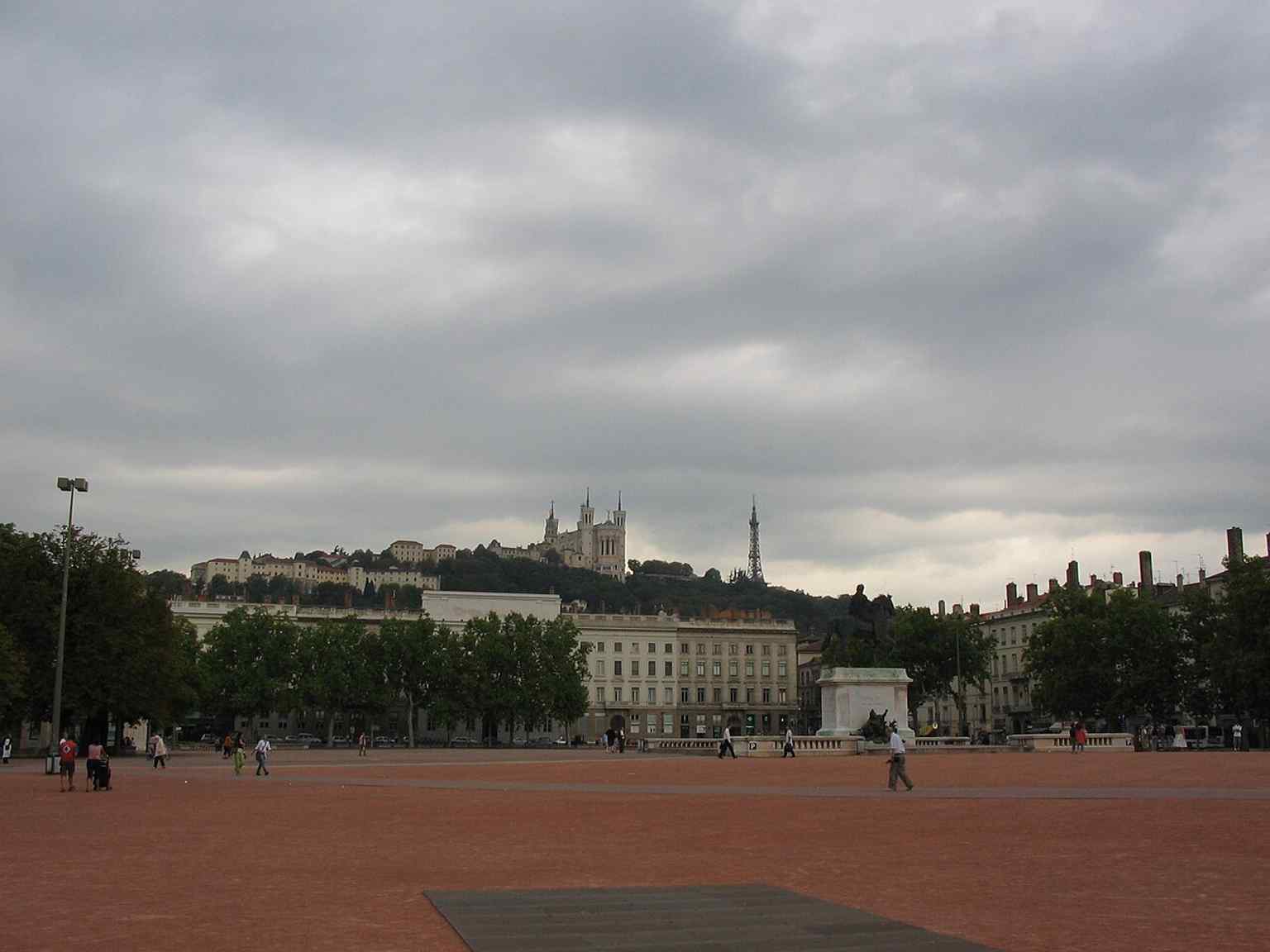
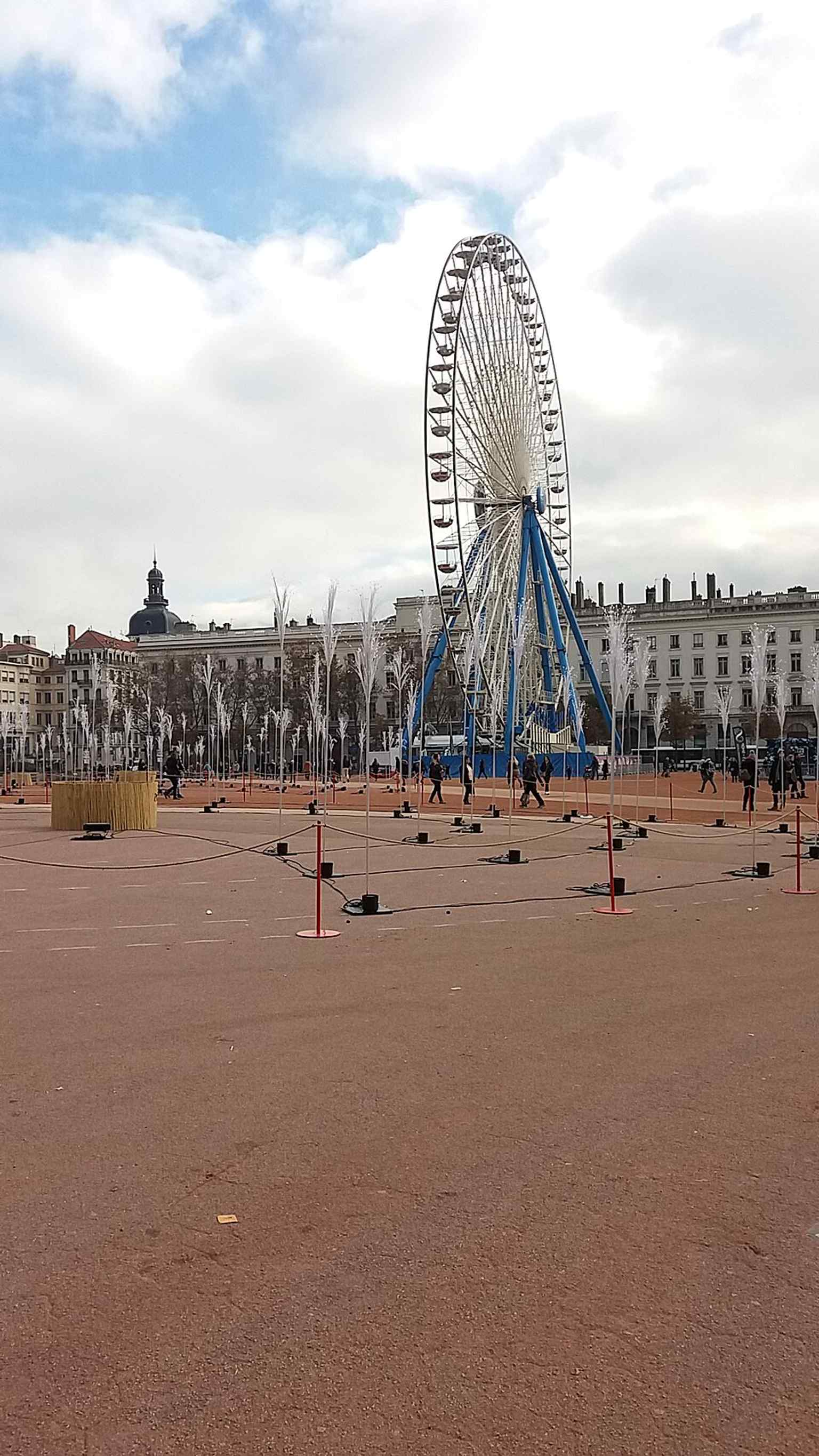
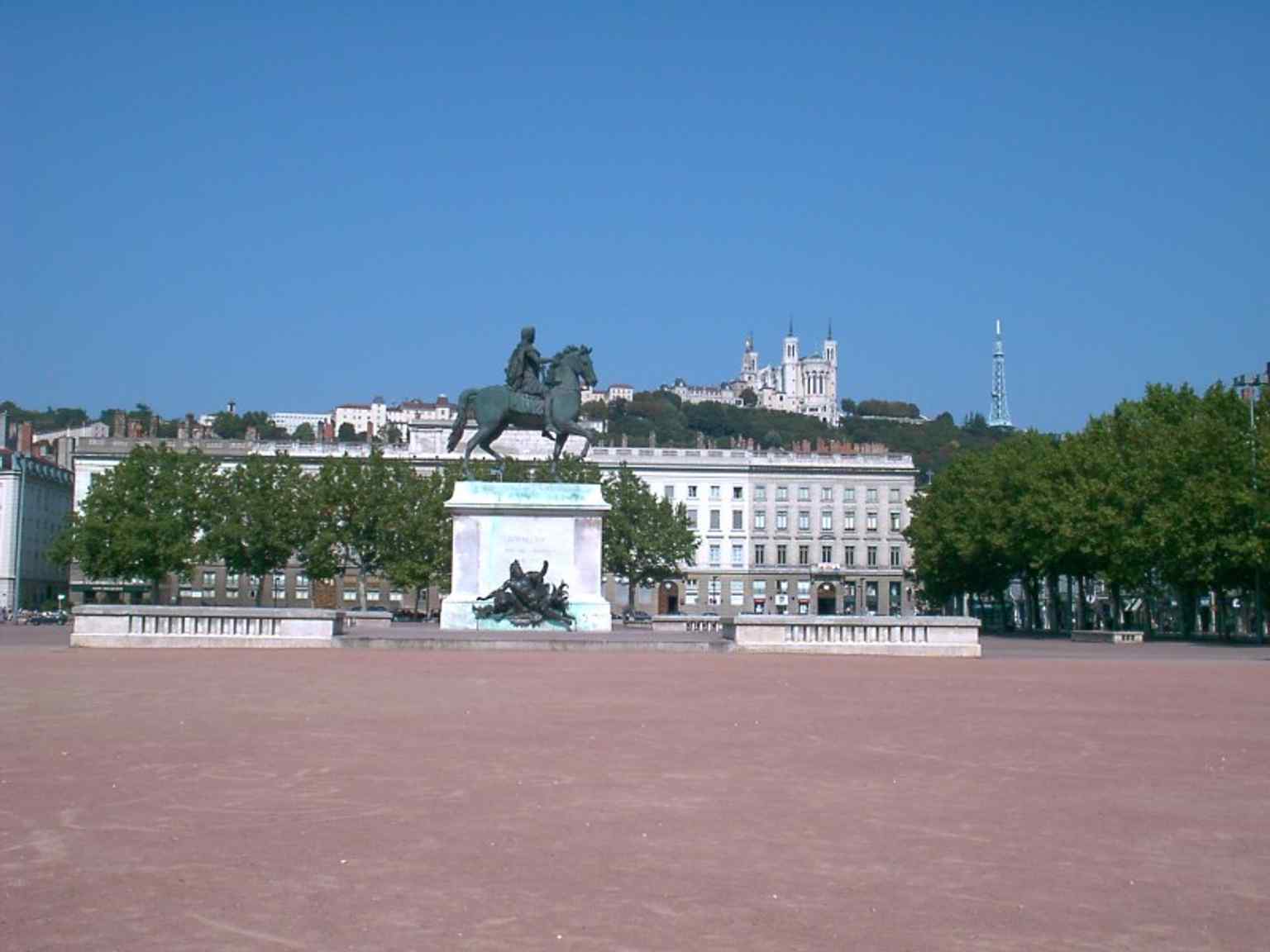
A vast red-orange trapezoid of gritty paving framed by straight pale-stone facades and rows of trees, Place Bellecour is easy to spot by the bronze horseman standing at its center.
This is Bellecour, Lyon’s Zero Point: the place from which the city measures its distances, and in a deeper sense, the spot where Lyon measures itself. After the tighter streets and denser layers we’ve walked through, this open ground feels like the city finally taking a full breath.
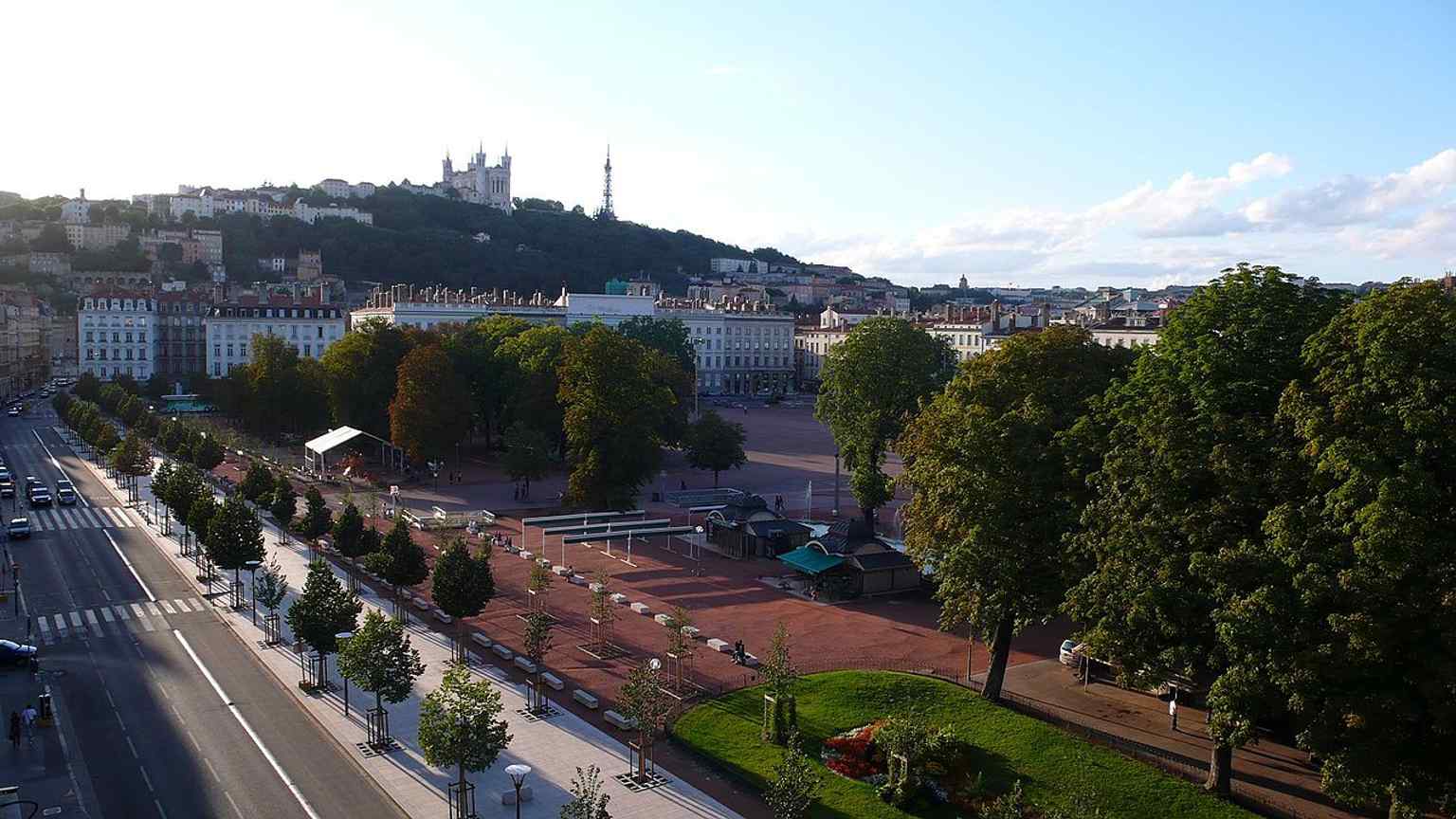
At about sixty-three thousand square meters, Bellecour is Lyon’s largest square and one of the biggest in France. If you glance at the aerial image on your screen, the trapezoid shape becomes wonderfully clear, along with the streets shooting away from it like spokes. From here, major routes run north and south across the Presqu’île, and east-west between the Rhône and the Saône. So yes, this is geography... but it is also ceremony. Lyon leaves this place open on purpose, especially on the northern side, where the emptiness itself becomes a kind of public stage.
That calm took centuries to earn. In Roman times, this was low, unstable ground, more like an island or muddy spit of land, with warehouses for merchants and river boatmen. Floods smashed that world apart. The area turned into an open dump, then slipped back into marshland. In the Middle Ages, the archbishop owned fields here and called them bella curtis, meaning “beautiful garden.” A handsome name for a place that had already been through quite a bit.
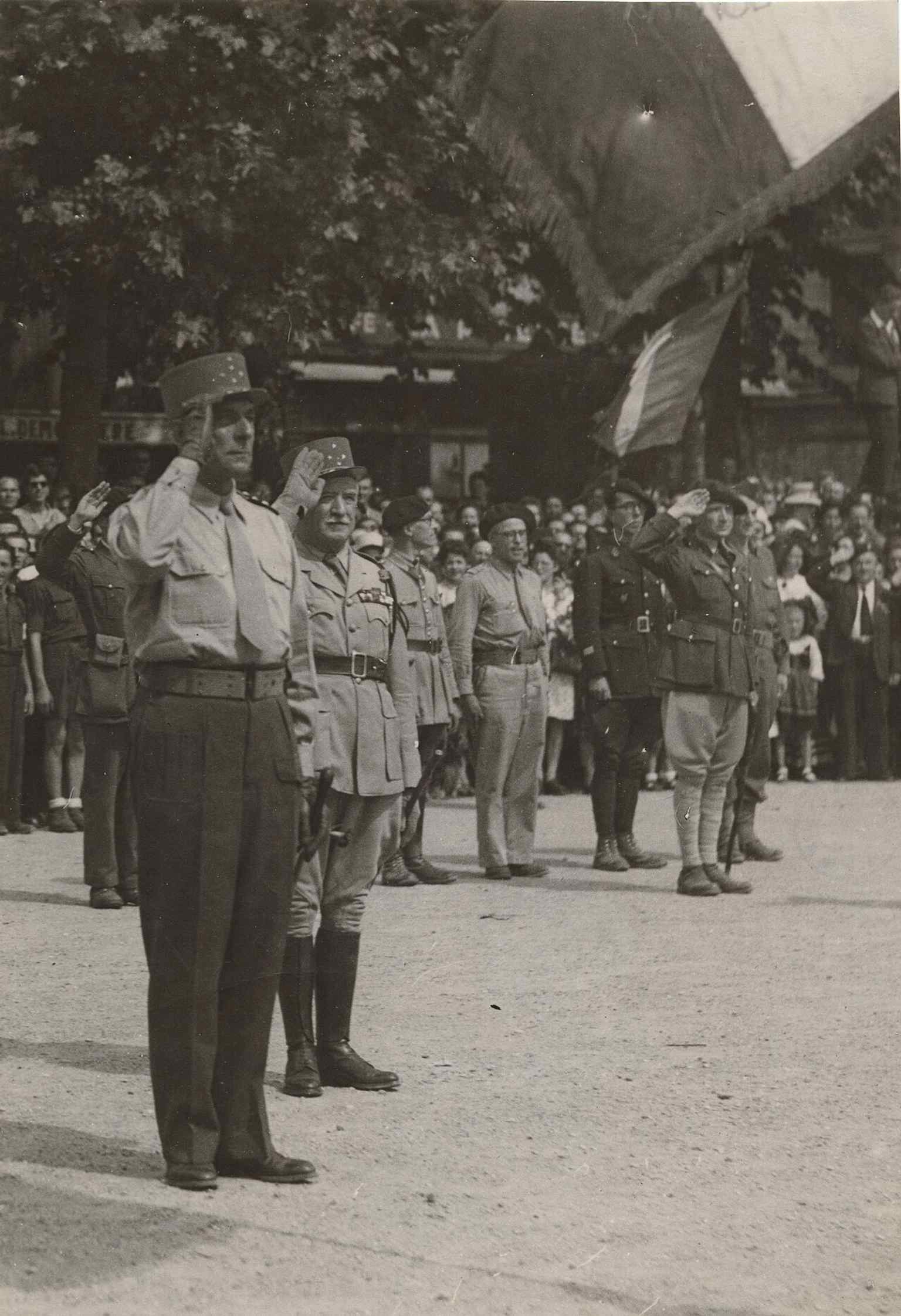
Then politics started repainting the sign. Kings called it Royal Square and Louis-le-Grand. Revolutionaries renamed it Federation, then Equality. Napoleon took his turn too. Later it became Bellecour again, then briefly carried Marshal Pétain’s name during the Second World War, before Liberation restored the old one. This square may look steady, but its identity has been argued over like a family recipe.
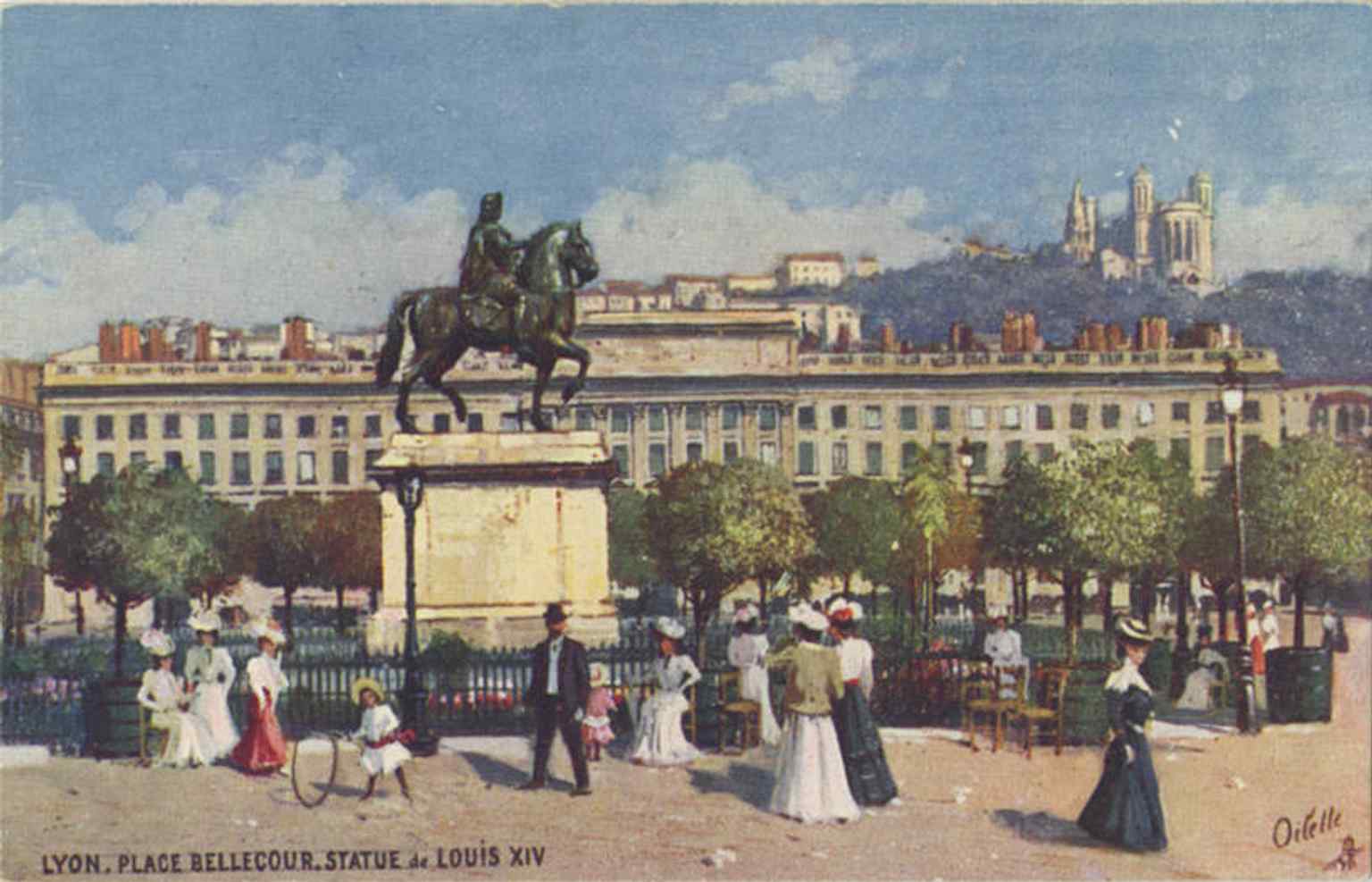
At the center, Louis the Fourteenth rides in bronze, sculpted by François-Frédéric Lemot and hauled here from Paris in eighteen twenty-five by twenty-four horses. No stirrups is not a blunder, by the way; Lemot chose to show the king “in the Roman manner,” riding like an ancient emperor. The earlier statue of Louis had an even stranger fate: it traveled by sea around Gibraltar to reach Lyon, then revolutionaries melted it down into cannon.
Bellecour also holds private grief inside public history. In seventeen ninety-three, a guillotine stood here. One victim was Jean-Jacques Ampère, father of the future physicist André-Marie Ampère. In his last letter, he wrote to his wife, “I die innocent, I forgive my enemies.” That loss marked his son for life. So even here, in Lyon’s grandest open space, the city keeps its human pulse.
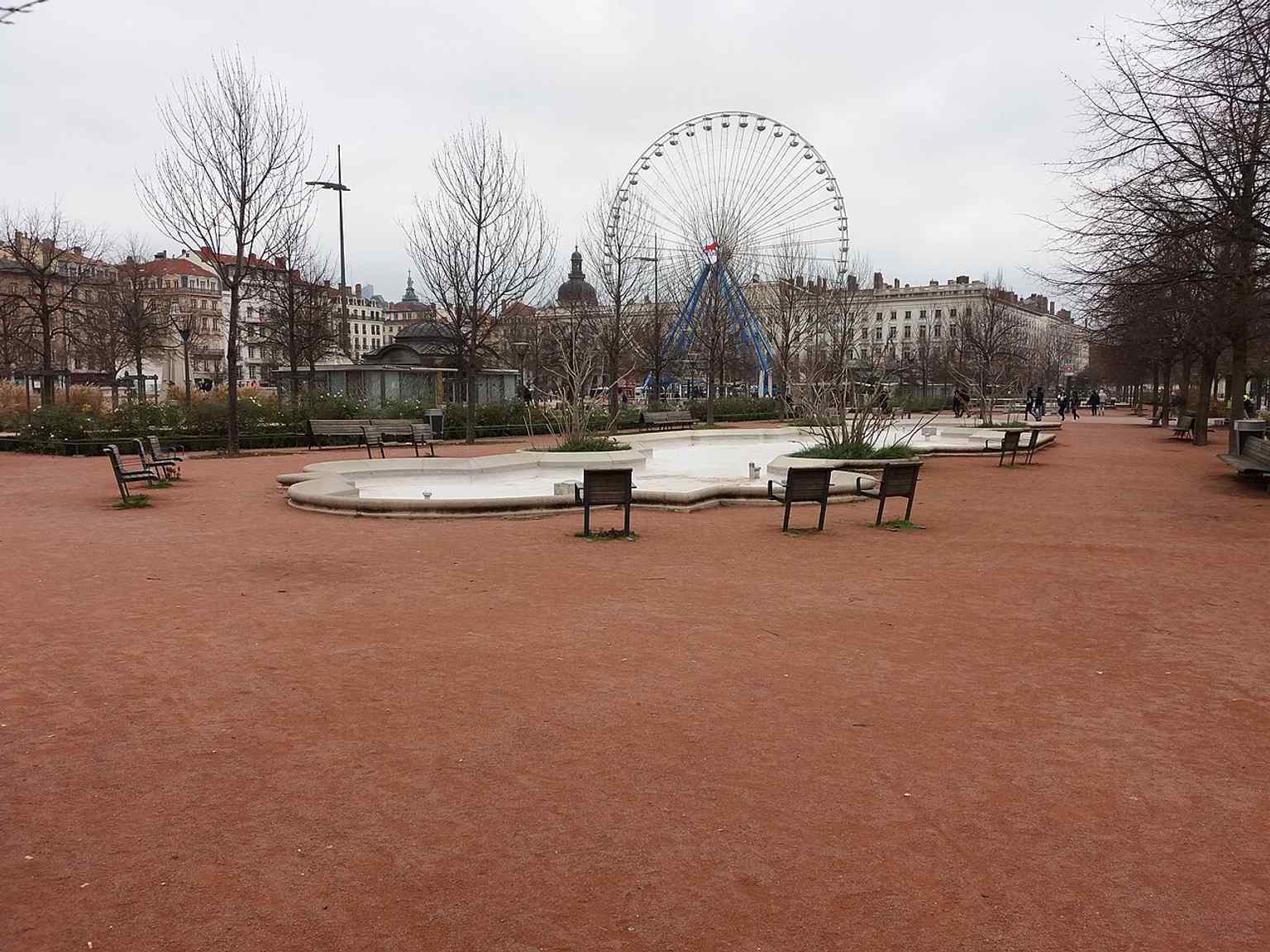
The version around you is largely nineteenth-century: rebuilt facades, tree-lined edges, pavilions, fountains, and that red-orange surface made from decomposed granite hauled in from Beaujolais. If you check the before-and-after image, you can watch Bellecour shift from a barer nineteenth-century expanse into the broad civic room you see now. And because Lyon never stops layering itself, there’s a parking structure and the city’s busiest metro station tucked right under your feet.
When you’re ready, trade this giant outdoor room for a more intimate stage and head toward the Théâtre des Célestins, about five minutes away. And like any proper city living room, Bellecour stays open all day and all night.






-Lyon%2C%20Place%20Bellecour%2C%20Statue%20de%20Louis%20XIV....%20(NBY%20419323).jpg)
