AudaTours logoAudaTours

Stop 6 of 17

House of the Sieve

House of the Sieve
House of the Sieve
House of the SievePhoto: Unknown author, Wikimedia Commons, CC BY-SA 3.0. Cropped & resized.

On your left, look for a pale stone façade with a tall, narrow central portal and, behind it, the famous ochre stair tower that gives this house its warm rose nickname.

This is the Maison du Crible, the House of the Sieve... though most locals know it as the Tour Rose. From the street, it plays a sly little game. At first glance, it looks restrained, almost polite. Then you notice the entrance sits right in the center of the façade. That is the giveaway. Here in Vieux Lyon, most old doorways slip off to one side, modest as a bookkeeper at a wedding. This one steps forward and says, yes, I do matter.

That was exactly the point.

Around fifteen fifty, Martin de Troyes, a senior royal finance official and city officer, likely rebuilt this house as a statement of success. In Renaissance Lyon, merchant elites and civic officers shaped the city as much as nobles did. They built for business, for family, and for reputation... and they packed their ambition into portals, staircases, and courtyards instead of giant public monuments.

If you glance at the image in the app, you can see that centered portal more clearly, along with the house’s present Orthodox parish use. Today, this building shelters the French Orthodox parish, another layer added without wiping away the old one.
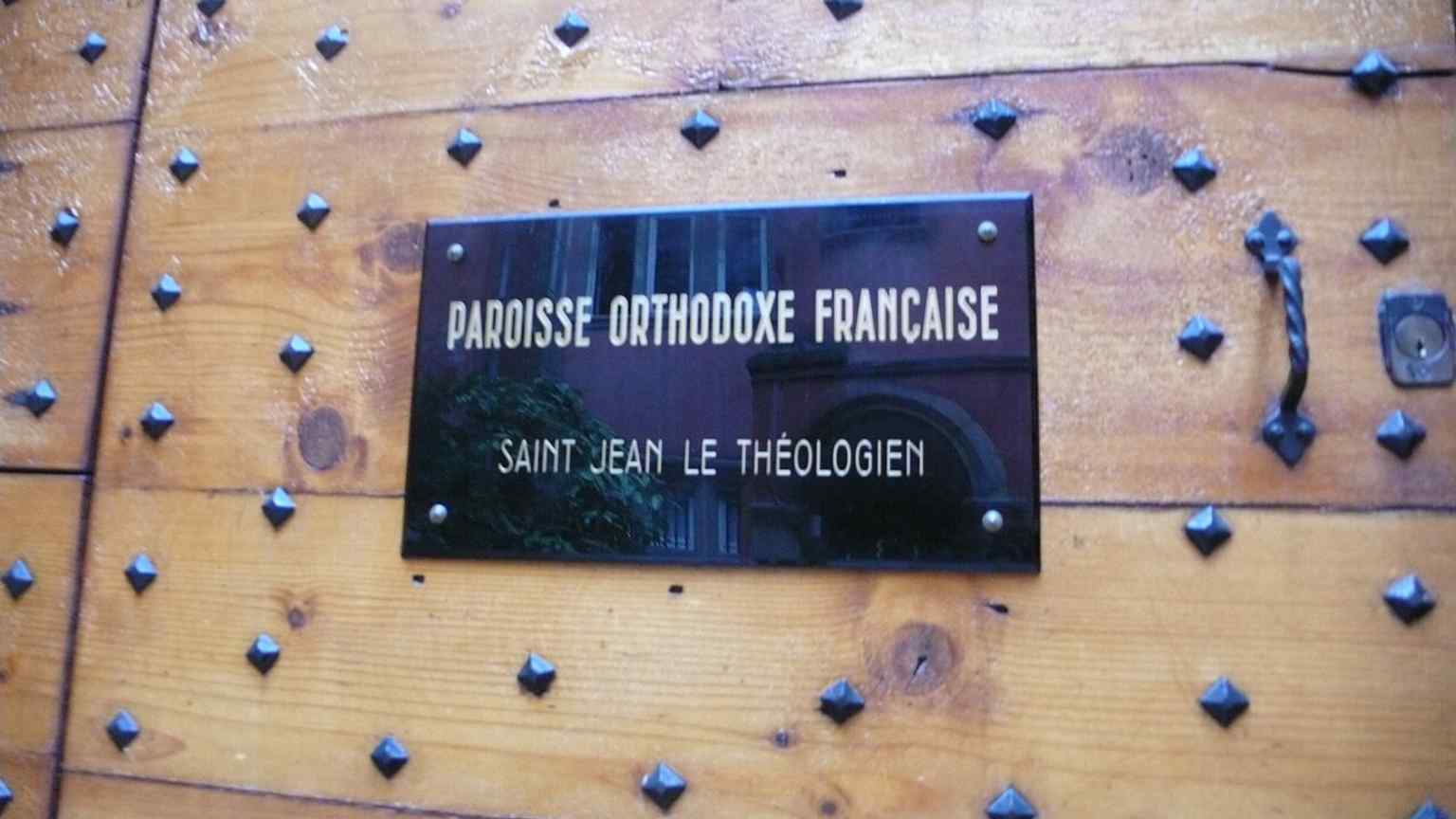
The entrance and Orthodox parish context — this image highlights the house’s present-day use and the centered courtyard portal mentioned in the history.
The entrance and Orthodox parish context — this image highlights the house’s present-day use and the centered courtyard portal mentioned in the history.Photo: Alexmar983, Wikimedia Commons, CC BY-SA 3.0. Cropped & resized.

Scholars often connect the design to Sebastiano Serlio, the Italian architect who lived in Lyon between the mid-fifteen forties and fifteen fifty while publishing his influential architecture books. No one can prove he built this house, but his ideas clearly circulated here. The pediment above the entrance, that triangular crown over the doorway, feels like Lyon trying on Italian polish without losing its local shoes.

And then there is the tower itself. Inside the court, the stair rises like a little piece of theater. If you want the hidden view, check the courtyard image on your screen. That is how the house truly reveals itself: ordinary street front, dramatic inner heart. Very Lyon.
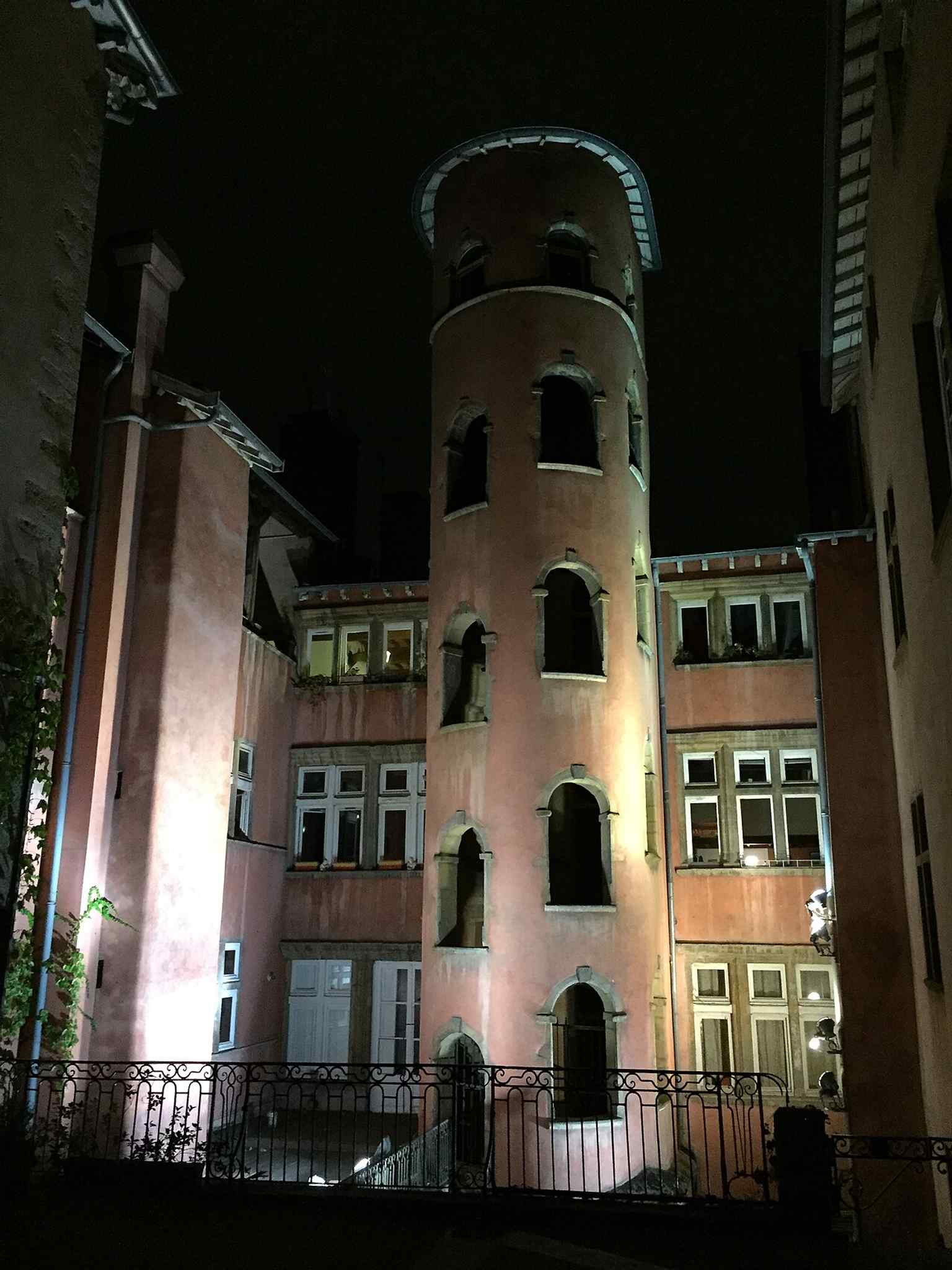
The courtyard and rose tower together — a classic view of the monument hidden behind the ordinary street frontage.
The courtyard and rose tower together — a classic view of the monument hidden behind the ordinary street frontage.Photo: Orble, Wikimedia Commons, CC BY-SA 4.0. Cropped & resized.

King Henry the Fourth even stayed here for a few days in sixteen hundred, when he came to marry Marie de Medici at Saint-Jean Cathedral, just a short distance away. Not bad for a private home on Rue du Bœuf.

The name “Crible,” meaning sieve, remains a small mystery. Some linked it to tax collection, others to an old shop sign. Historians are not buying the romantic legend that a heartbroken young woman leapt from the tower and stained it red with blood. Good story, shaky evidence.

This house sits in a UNESCO-listed historic district, and even its traboule-a passage threading through a building-is recognized. From here, Lyon starts to feel more intimate: less empire, more household strategy. Next, we head toward Saint Paul’s, where trade, learning, and worship braided together in one neighborhood... about seven minutes away.
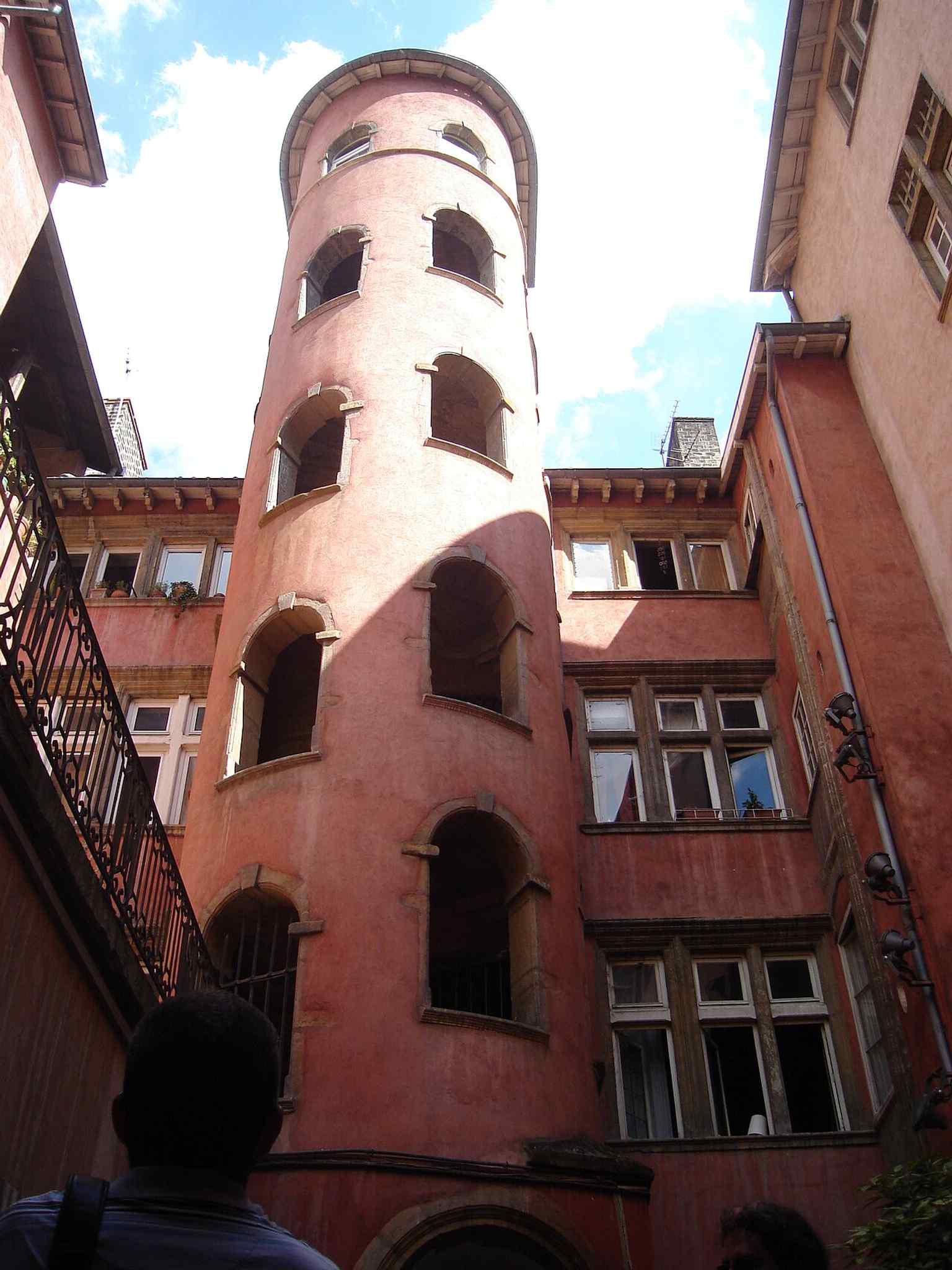
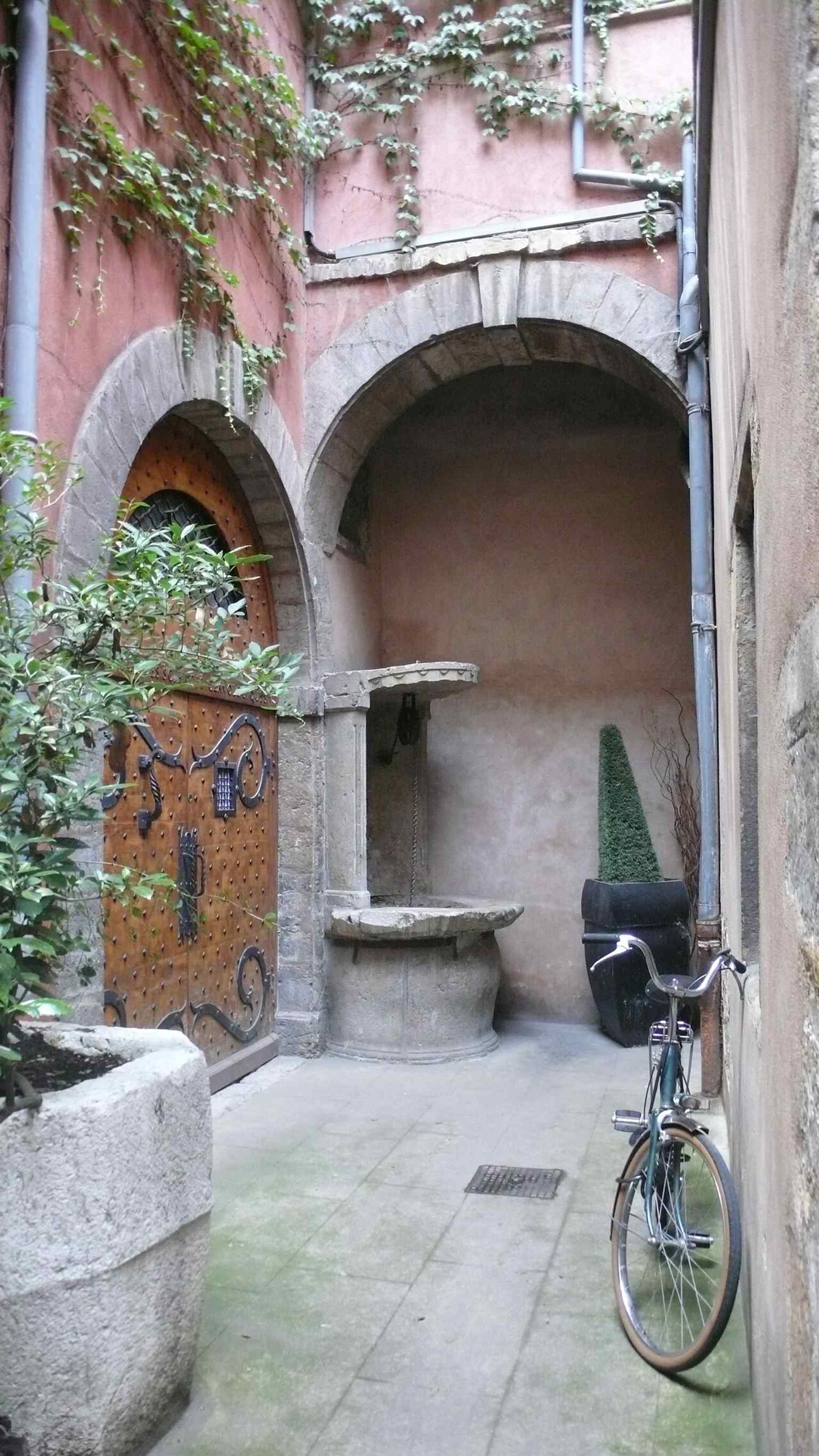
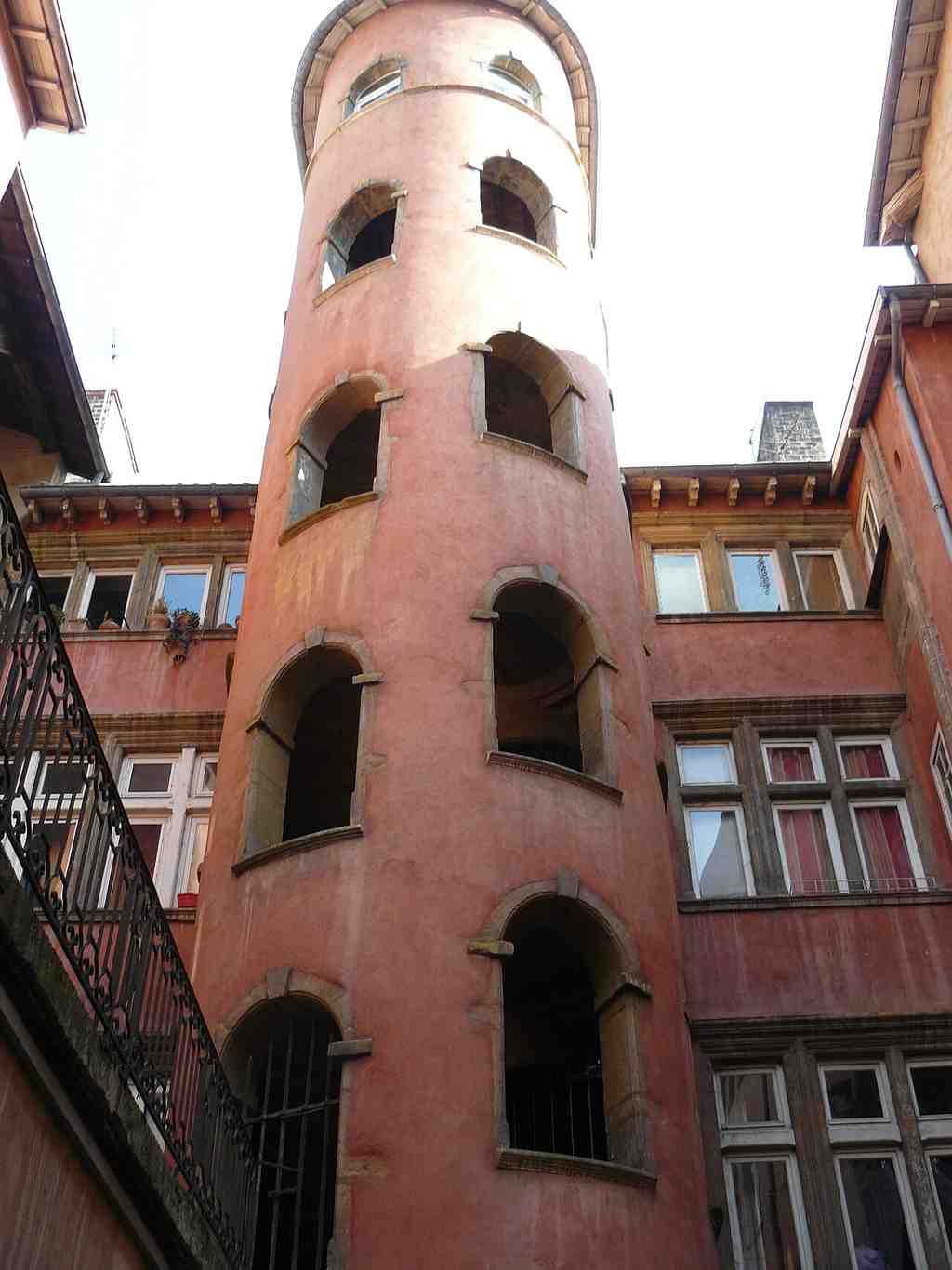
The rose-colored tower on Rue du Bœuf — the landmark’s nickname comes from this striking ocre stair tower in Old Lyon.
The rose-colored tower on Rue du Bœuf — the landmark’s nickname comes from this striking ocre stair tower in Old Lyon.Photo: Gonedelyon, Wikimedia Commons, CC BY-SA 3.0. Cropped & resized.
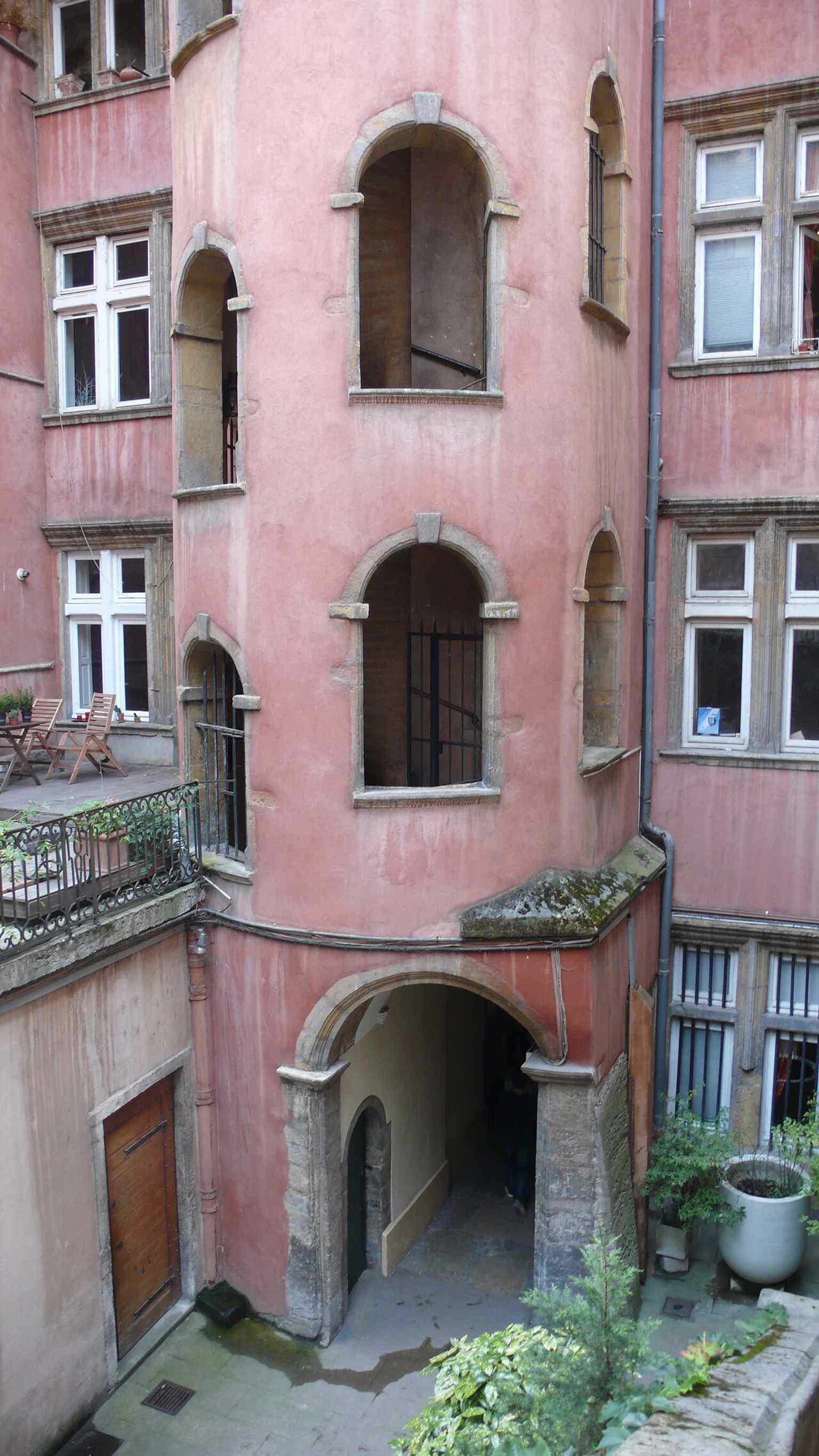
A clear street view of the Maison du Crible at 16 Rue du Bœuf, the historic building where Henry IV is said to have stayed in 1600.
A clear street view of the Maison du Crible at 16 Rue du Bœuf, the historic building where Henry IV is said to have stayed in 1600.Photo: Alexmar983, Wikimedia Commons, CC BY-SA 3.0. Cropped & resized.
Inside the spiral stair tower — the Tour Rose is known for the staircase that gives the house its name.
Inside the spiral stair tower — the Tour Rose is known for the staircase that gives the house its name.Photo: Alexmar983, Wikimedia Commons, CC BY-SA 3.0. Cropped & resized.
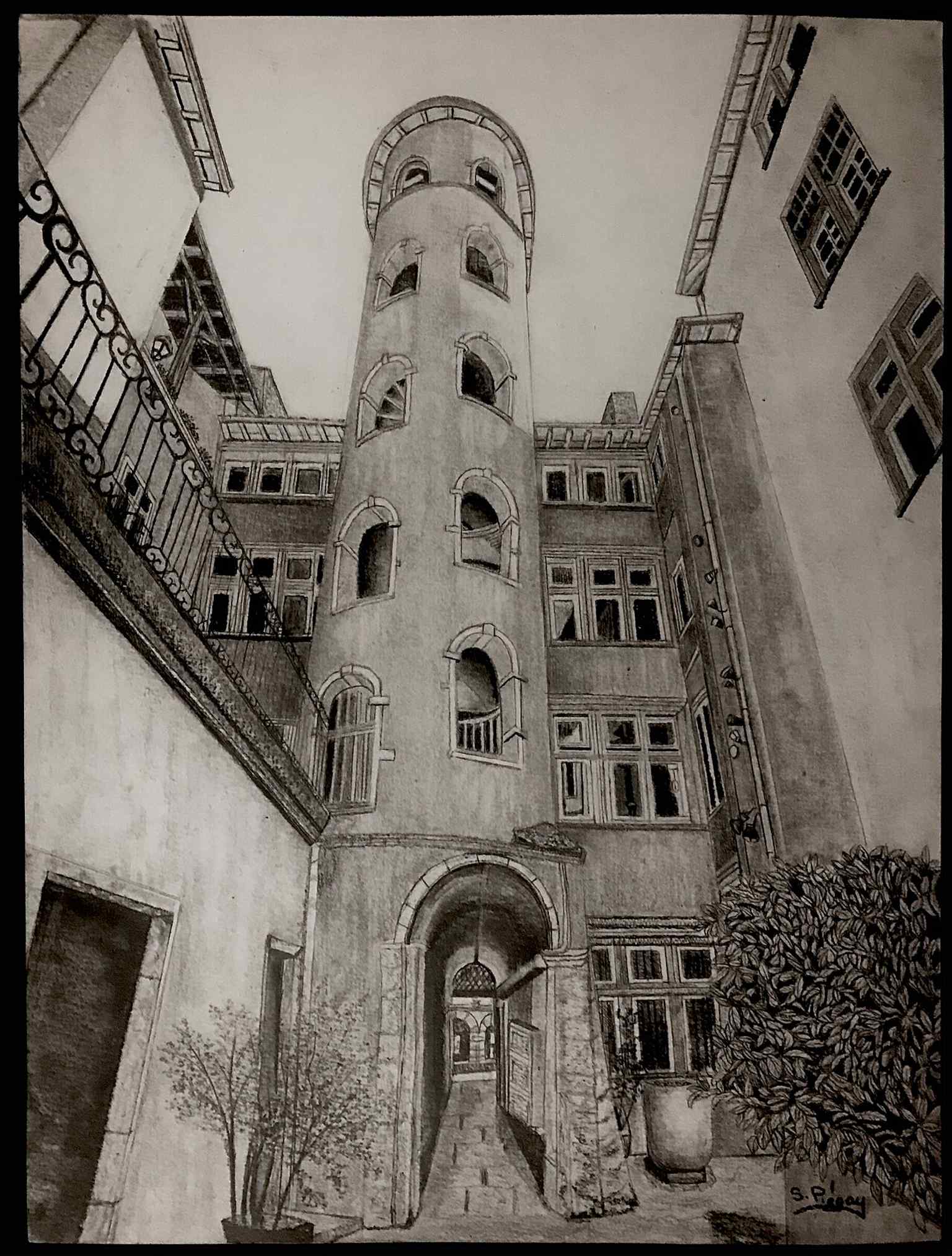
A drawn view from inside the courtyard, showing how the tower is experienced from within the house rather than from the street.
A drawn view from inside the courtyard, showing how the tower is experienced from within the house rather than from the street.Photo: Sandrinepiegay, Wikimedia Commons, CC BY-SA 4.0. Cropped & resized.
arrow_back Back to Lyon Audio Tour: Historic Heritage
Loved by travellers

Thousands of tours started.
Plenty of opinions.

4.8 across the App Store and Google Play. Here's a few we keep coming back to.

starstarstarstarstar
This was a solid way to get to know Brighton without feeling like a tourist. The narration had depth and context, but didn't overdo it.
Christoph
Christoph
Brighton Tour
starstarstarstarstar
Started this tour with a croissant in one hand and zero expectations. The app just vibes with you, no pressure, just you, your headphones, and some cool stories.
download Get the app

Pop your headphones in.
Step outside.

Free to download. Tours in every city. Start in 60 seconds — no account, no card.

Download on the App StoreGet it on Google Play
starstarstarstarstar_half
4.8
AudaTours app icon
headphones
~ 4 min until your first tour starts
public
1,000+ cities worldwide
all_inclusive
AudaTours
Unlimited

Every tour. Every city. One subscription.

3097 tours2273 cities138 countries50+ languages