
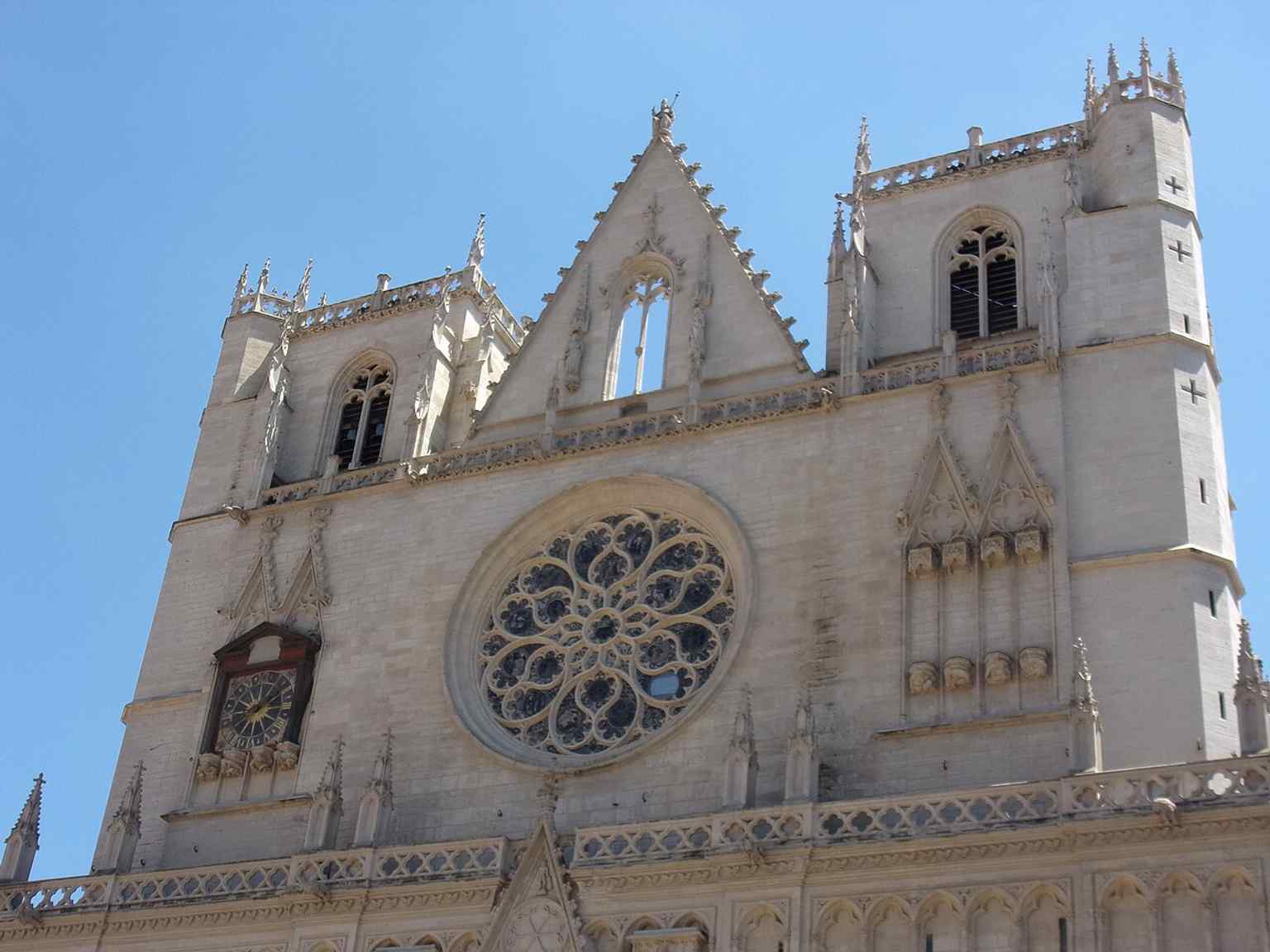
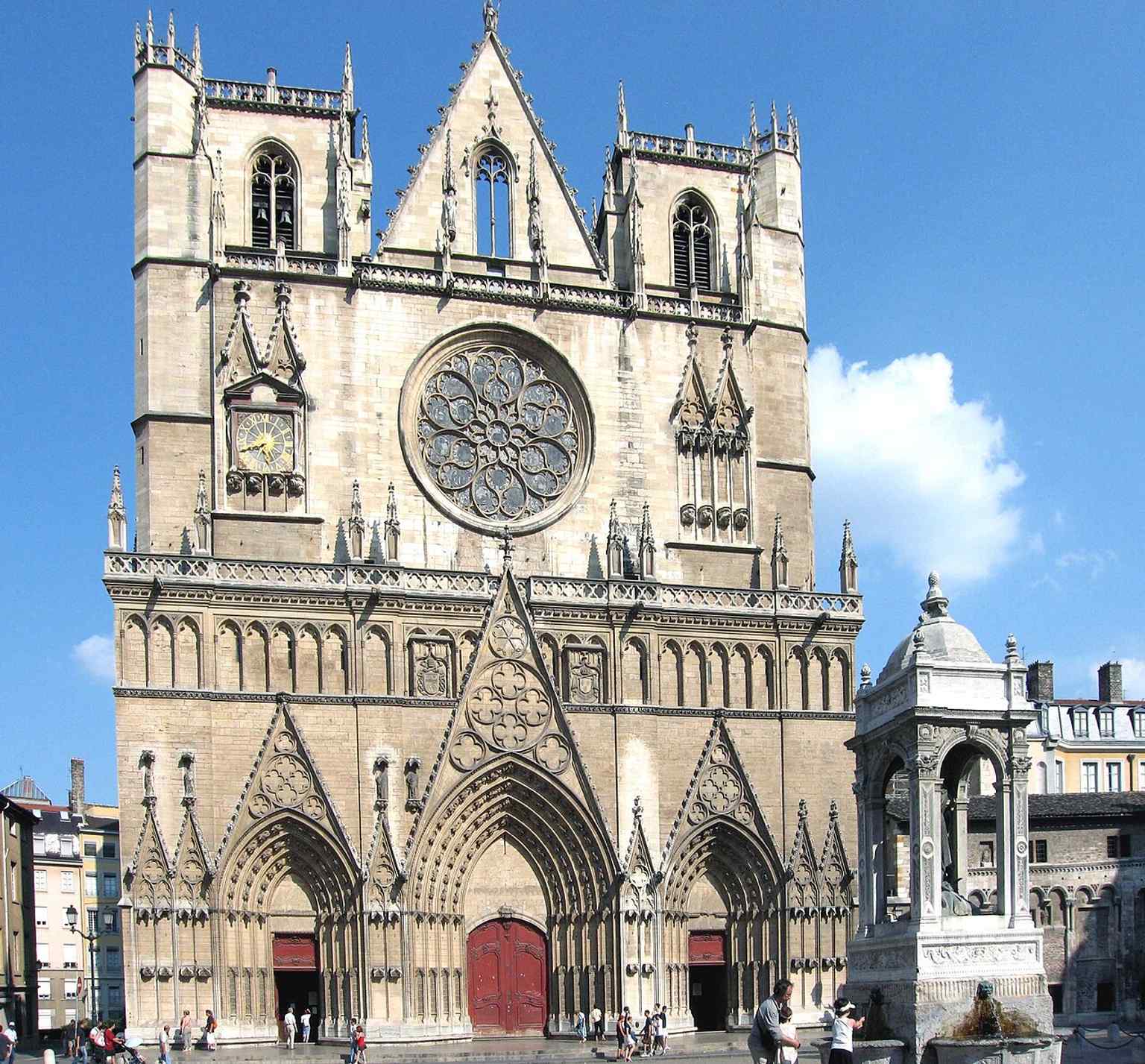
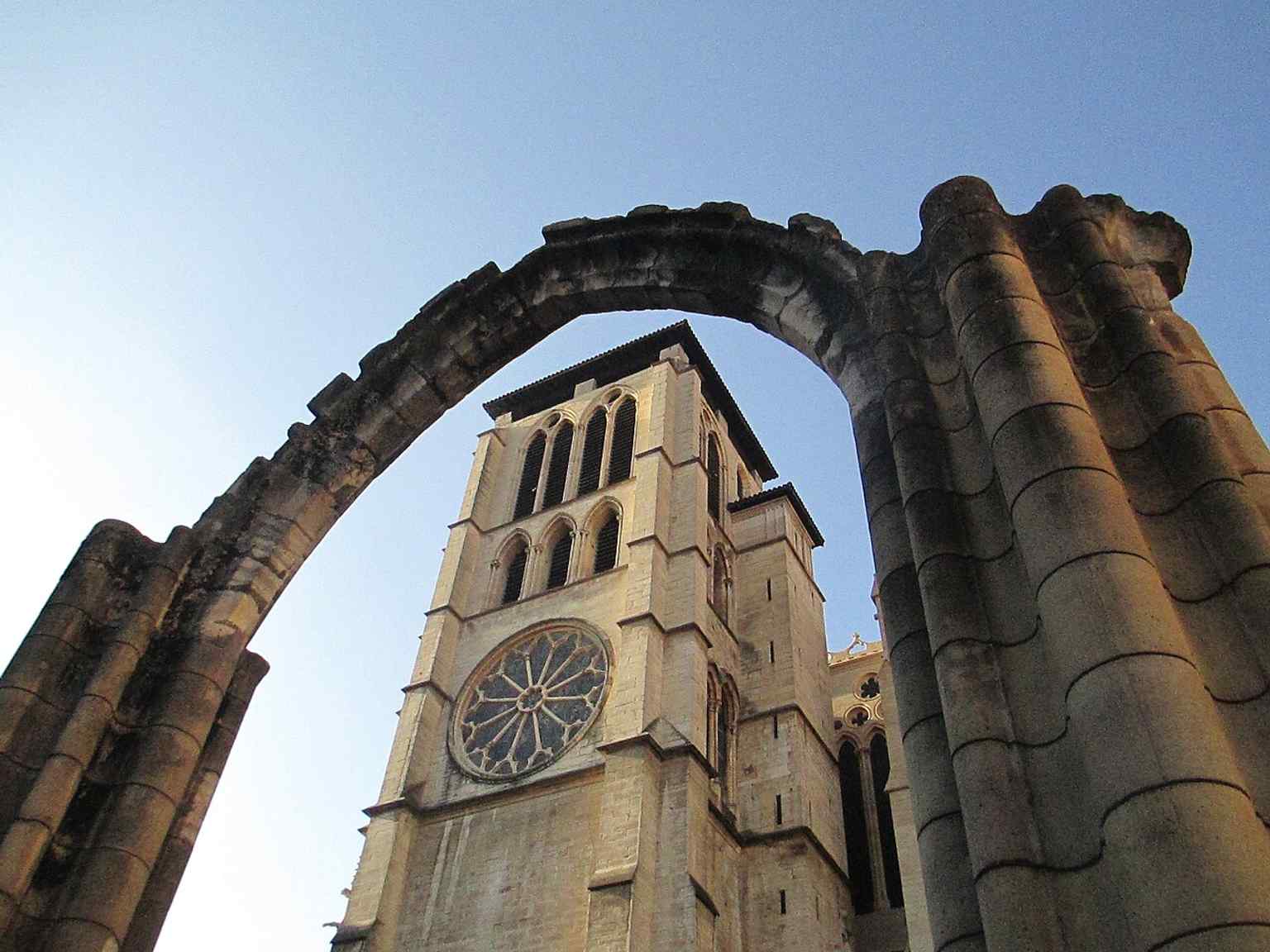
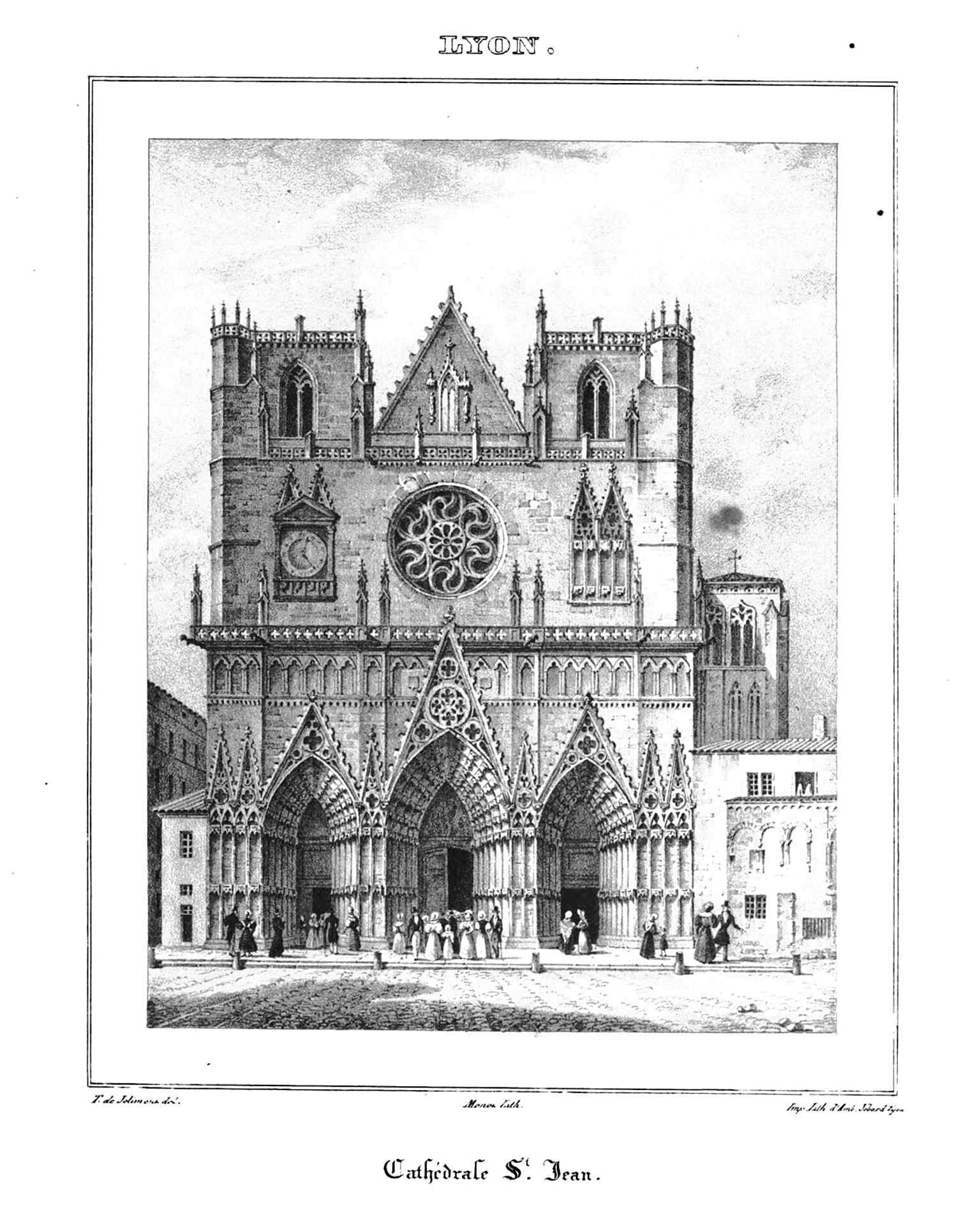
Look for a pale limestone façade with three carved portals, a huge round rose window, and a steep triangular gable rising above the twin towers.
This is Saint-Jean... though locals are carrying an old twist in that name. The first church here honored Saint Stephen, while the baptistery, the building for baptism, honored John the Baptist. Over time, the baptistery’s name quietly took over the whole place. Lyon does that sort of thing well: one layer slips over another, and somehow both remain.
You’re standing before more than a cathedral. This is a primatial church, meaning the archbishop of Lyon held the title “Primate of the Gauls,” first among the old churches of France in honor, if not in daily power. That prestige drew councils, popes, kings, and arguments. Lots of arguments. The merchants of the Presqu’île once pushed the claim that Saint-Nizier, which you saw earlier, was the city’s first cathedral. Saint-Jean’s side answered, in effect, “Nice try.”
The ground under your feet had already been sacred for centuries before this façade rose. Earlier churches stood here, with Saint-Étienne and Sainte-Croix beside them. If you glance at the archaeological garden image on your screen, you can see the ghost of that older church group still hanging around the edges of the story.
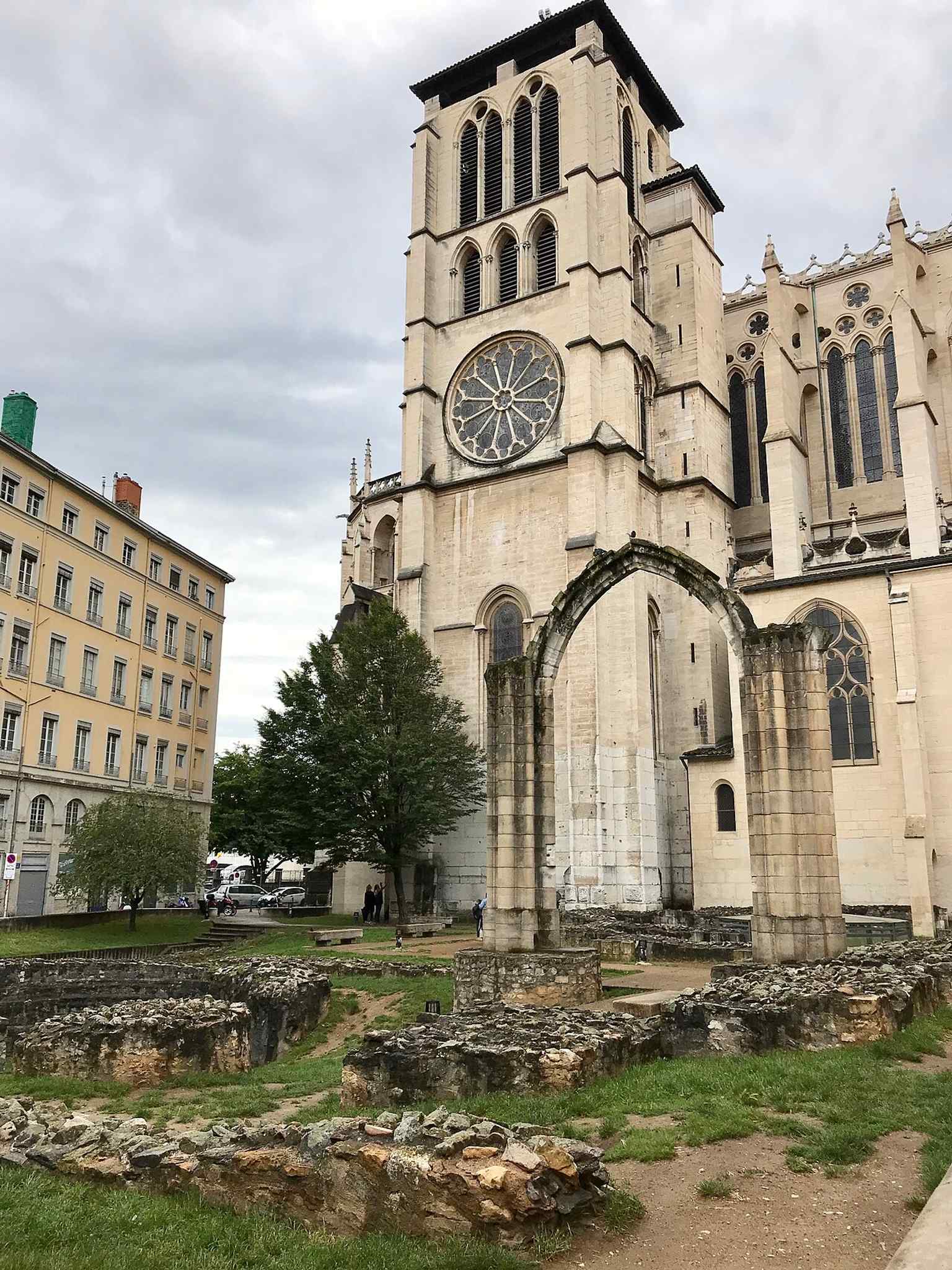
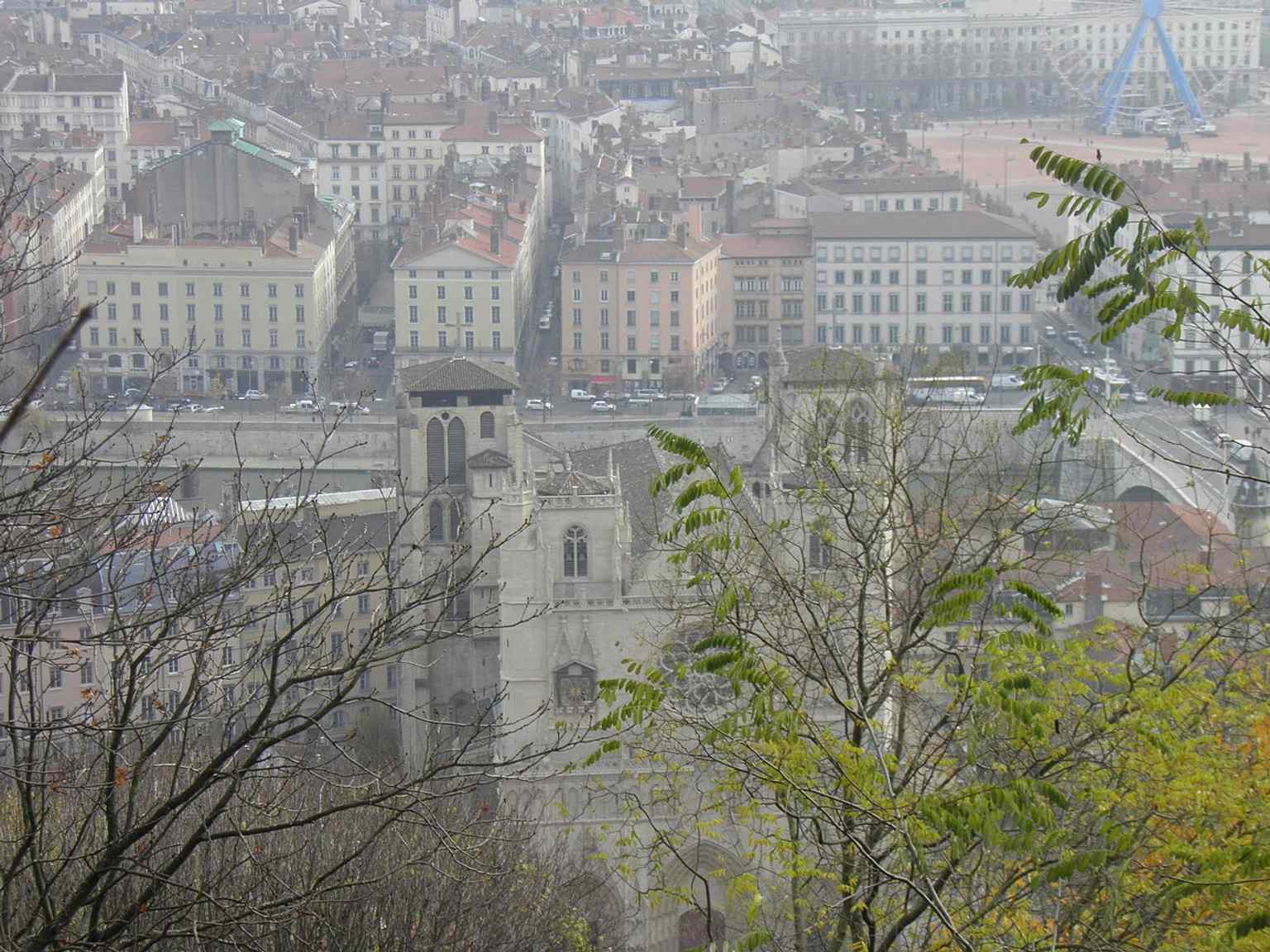
The building you see now took its time, a very Lyon kind of time: from around eleven seventy-five to fourteen eighty. Archbishop Guichard de Pontigny began with a Romanesque plan, heavy and rounded. His successors, Jean Belles-mains and Renaud de Forez, steered it toward Gothic, with higher lines and more light. And they built on a cramped site, squeezed between hill and river. Not exactly the roomy cathedral lot of a northern capital.
Even the stone tells on Lyon. Builders hauled great blocks down from Fourvière, reusing Roman material from the old forum, theater, and odeon. So the ancient city up the hill quite literally helps hold up the medieval church below. That’s not poetry. That’s masonry.
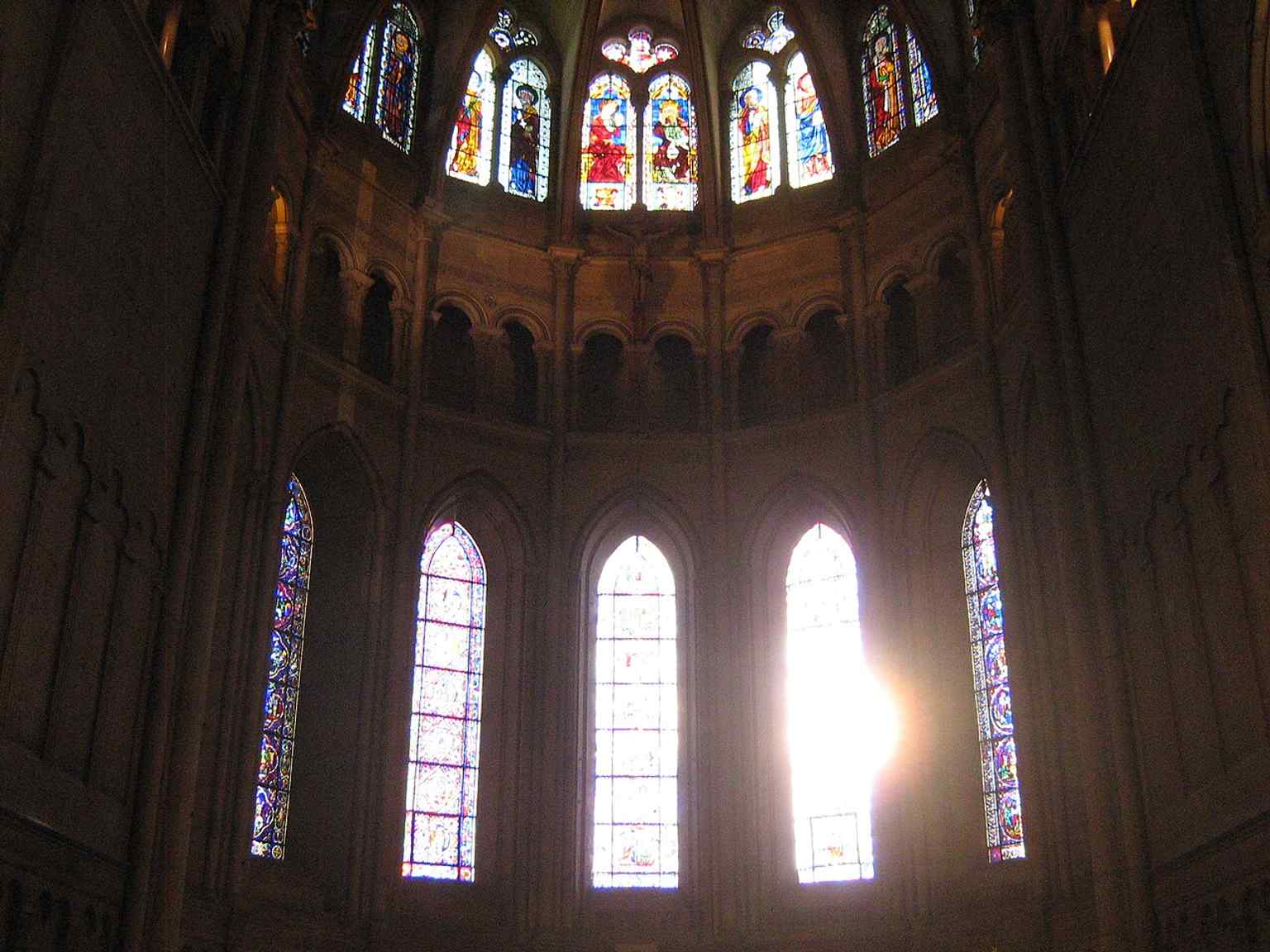
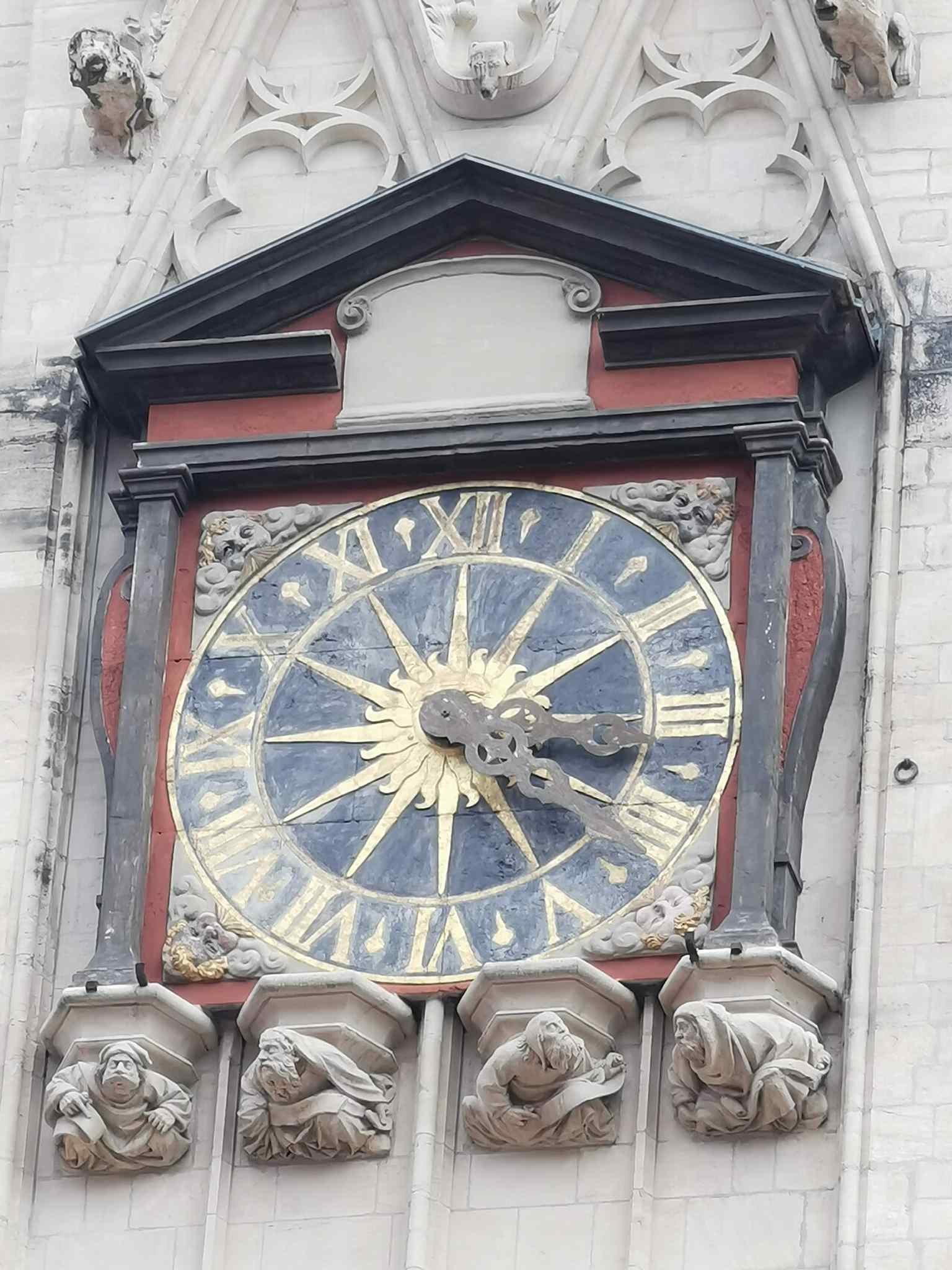
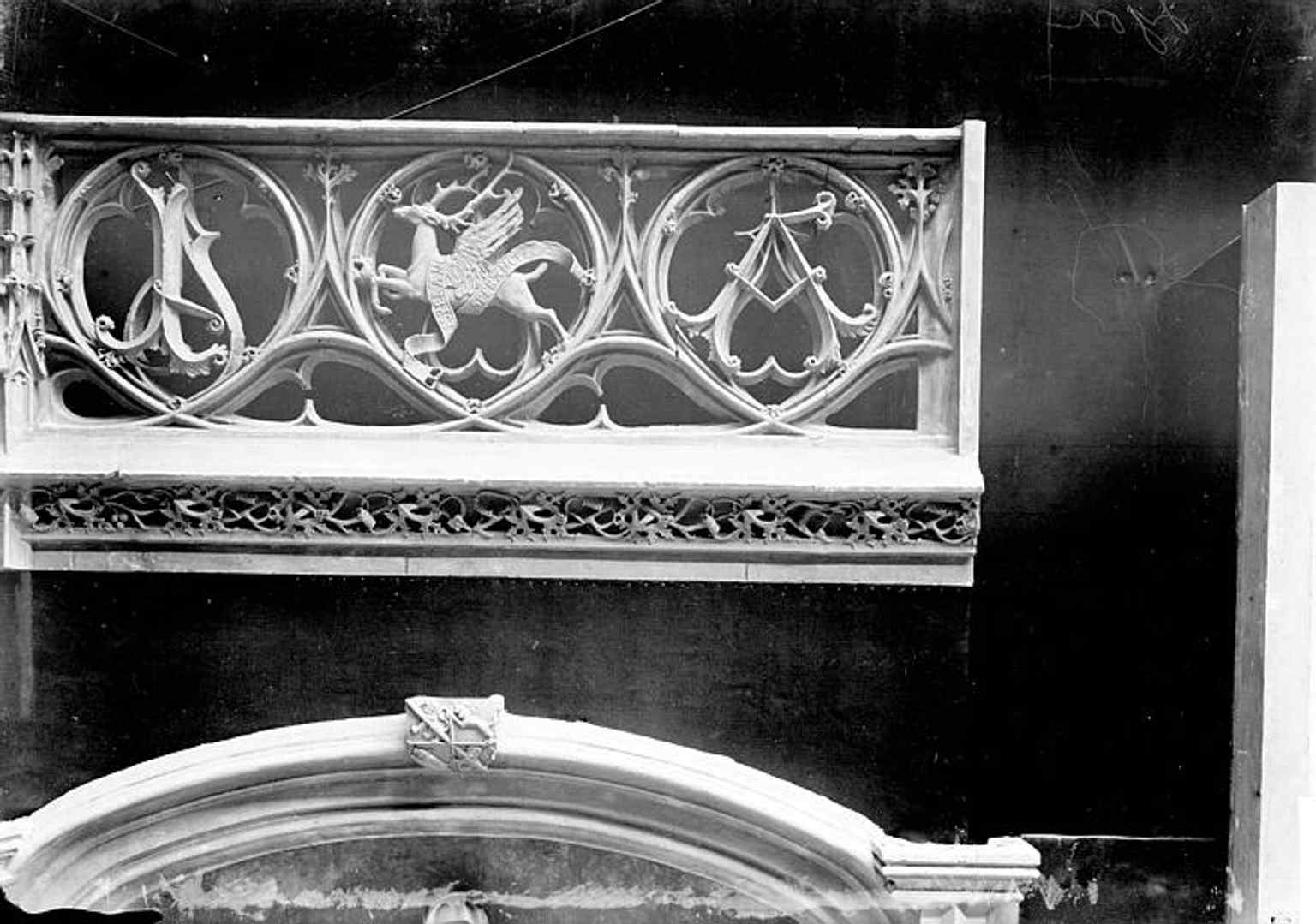
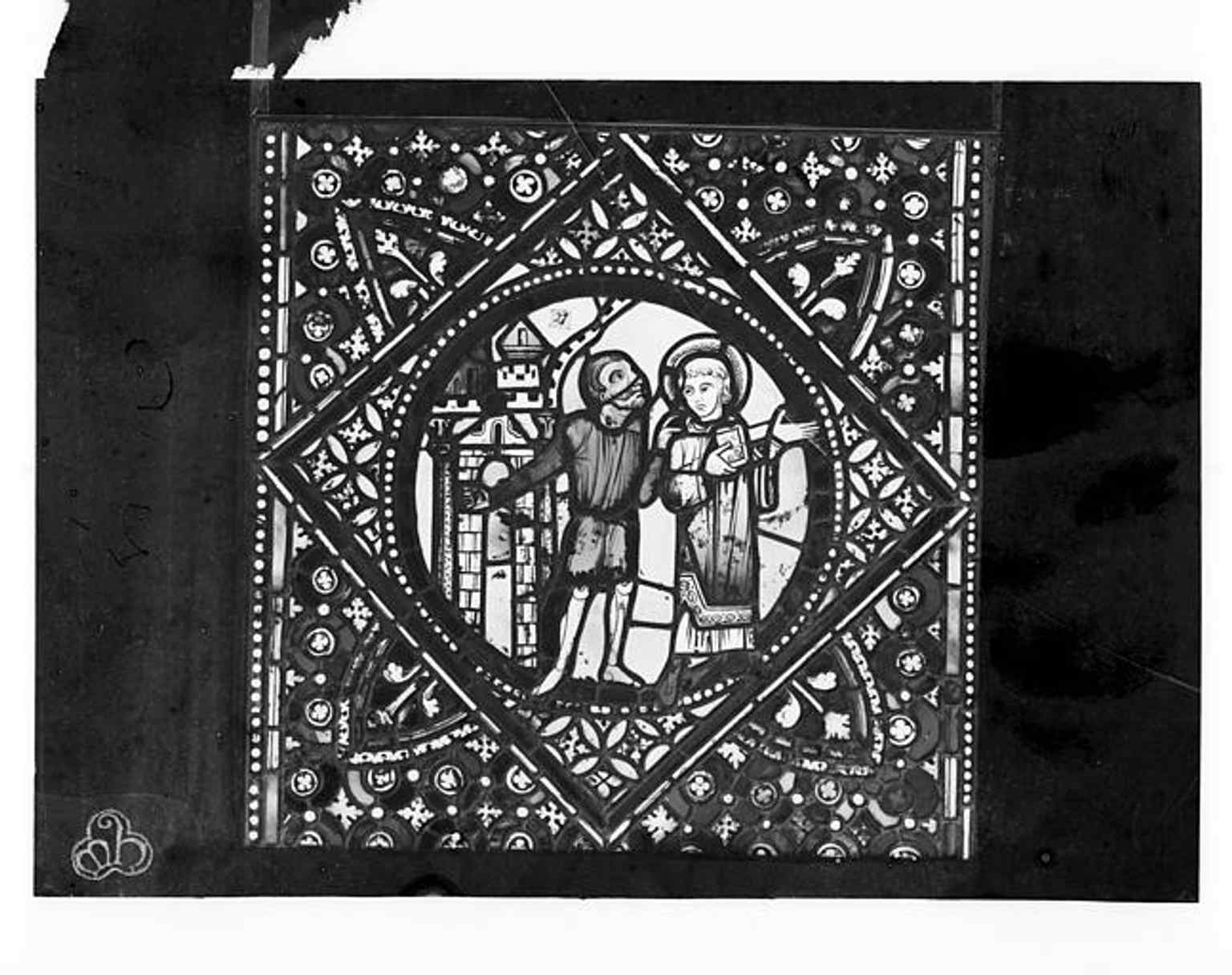
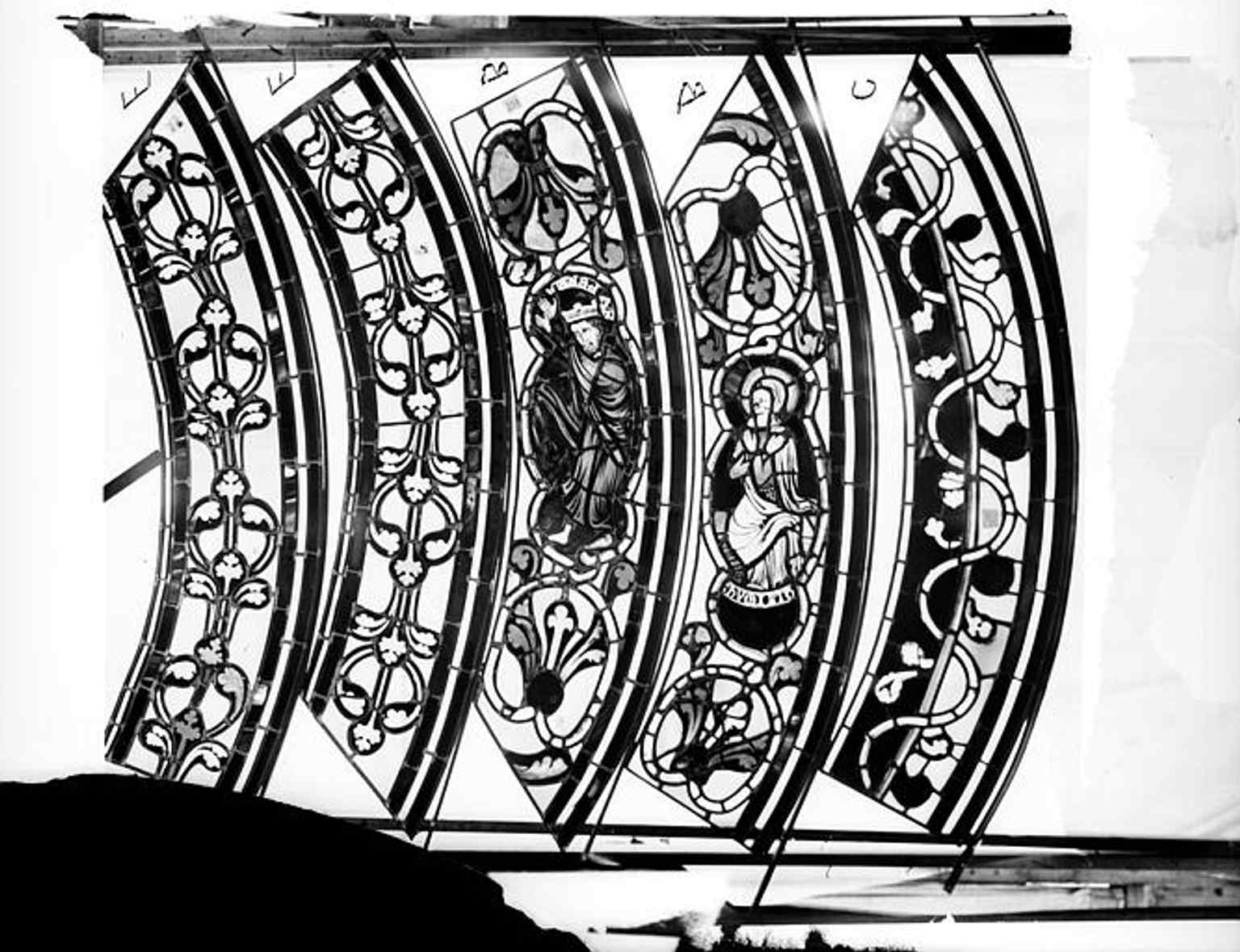
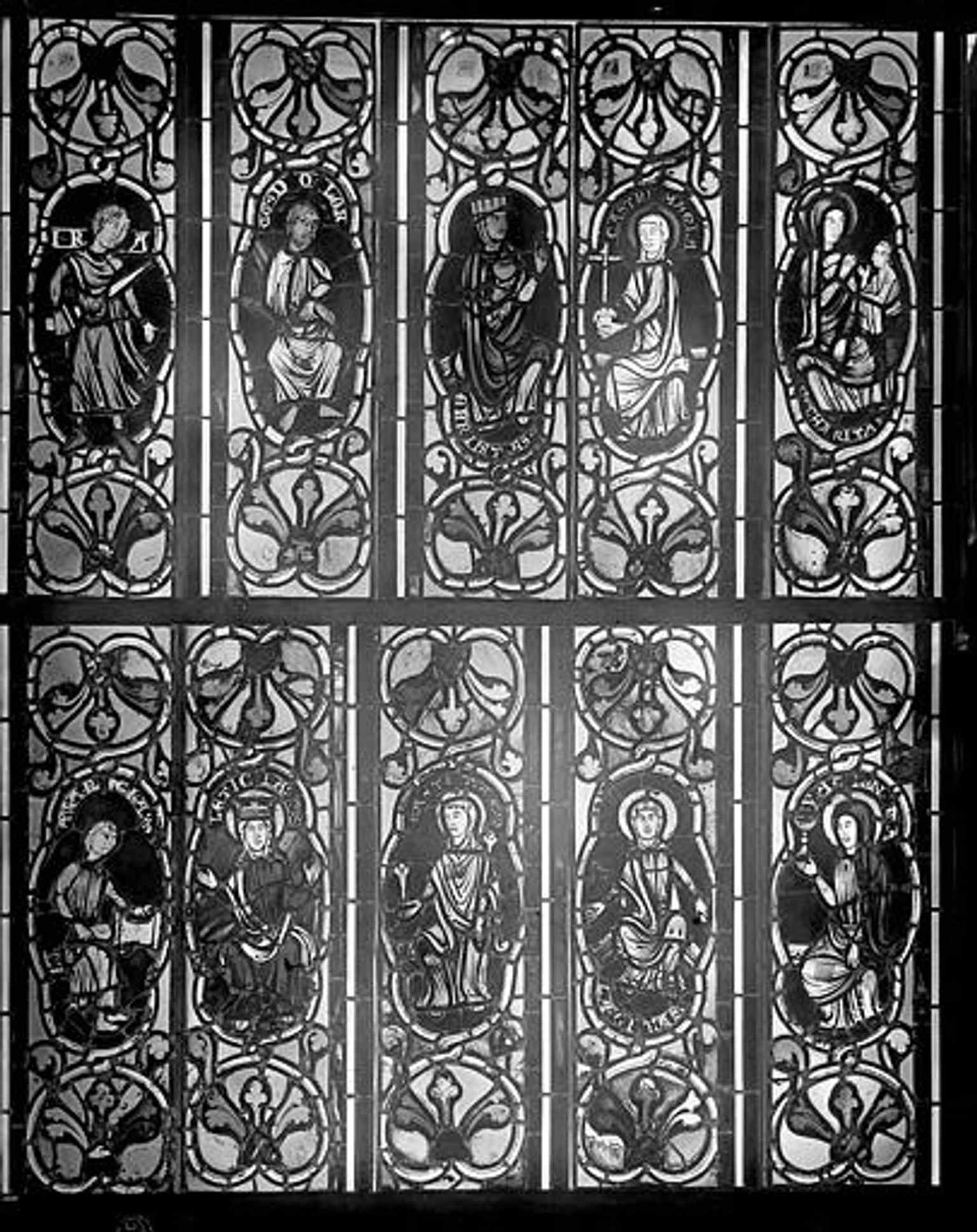
Then came the bruises. In fifteen sixty-two, the troops of the baron des Adrets smashed statues and damaged the clock. The Revolution struck again. The siege of seventeen ninety-three hurt the fabric. In nineteen forty-four, when retreating German forces blew up the nearby bridge, the blast shattered most of the windows. Survival here is part of the architecture.
One person I like to remember is Tony Desjardins, the nineteenth-century architect who looked at this battered church and thought, “Let’s not just patch it... let’s give it the grand Gothic finish it deserved.” He raised the roofline and dreamed of adding spires. Critics pushed back, hard, so not every idea survived. That tug-of-war left its mark too. If you want a quick time jump, check the before-and-after image in the app and line up this front across more than a century of changing square and camera angle.
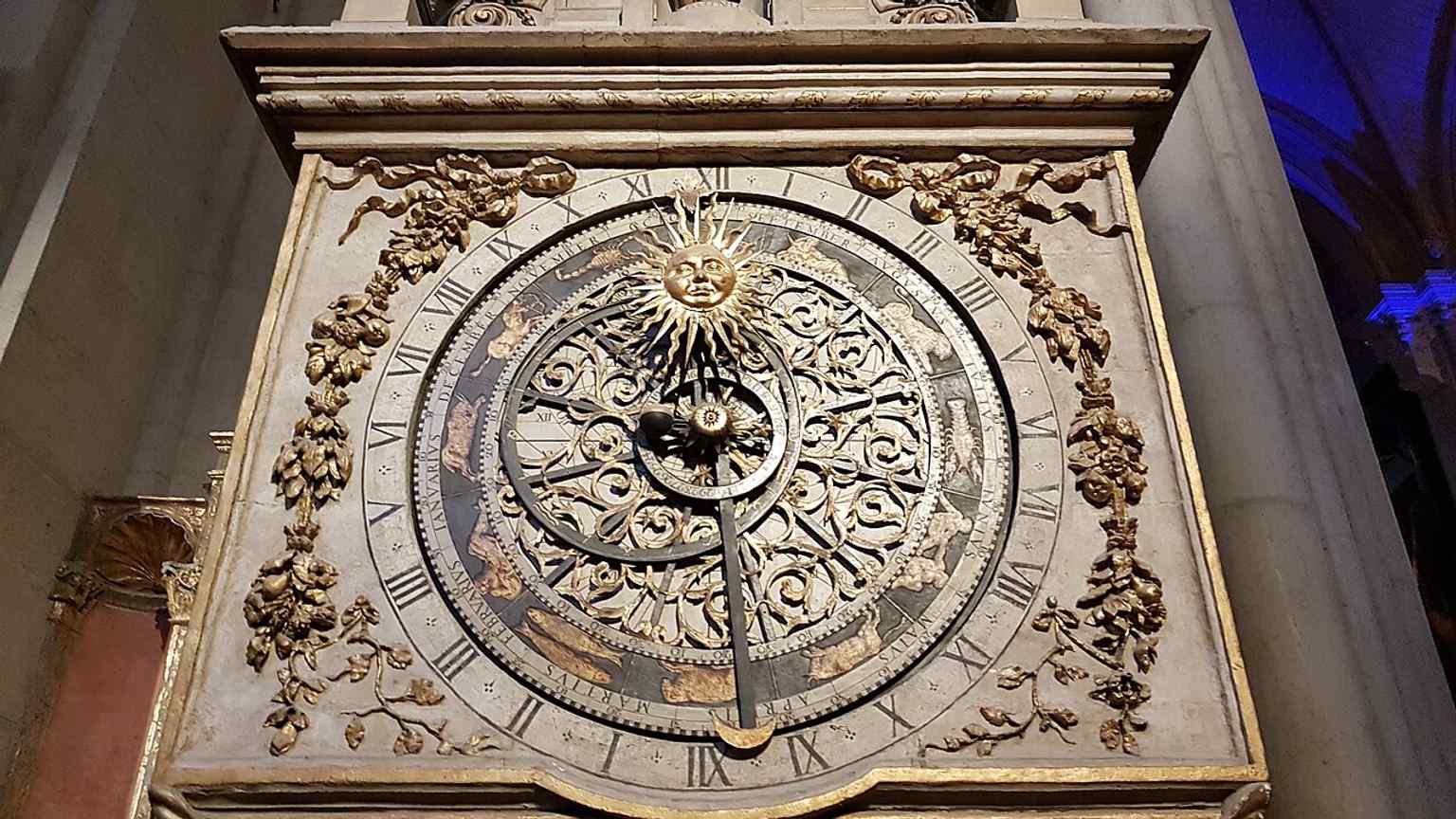
Inside, the astronomical clock still ticks away with saints, angels, and a little mechanical theater. Out here, though, the whole cathedral is the real clock: Roman stone, medieval ambition, broken glass, repaired carvings, and the authority of an old church still speaking into a modern city.
And that may be the best last image for Lyon: not a city frozen in one glorious century, but a city whose stones keep answering one another across time.
If you’d like to go inside after this, Saint-Jean usually opens from two to seven on Monday, from eight-thirty to seven Tuesday through Friday, and until seven-thirty on Saturday and Sunday, with Sunday starting at eight.






.jpg)


.jpg)


