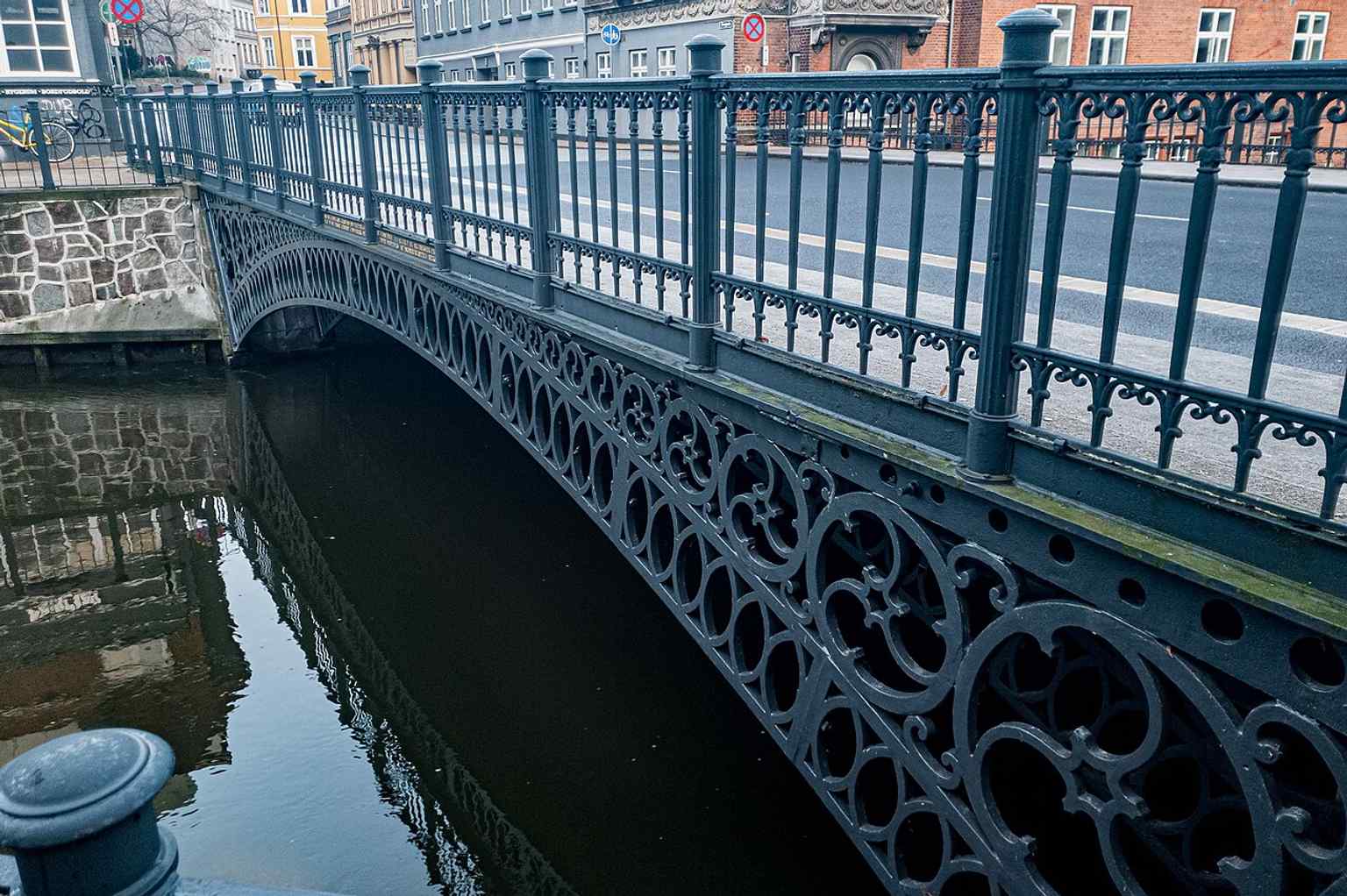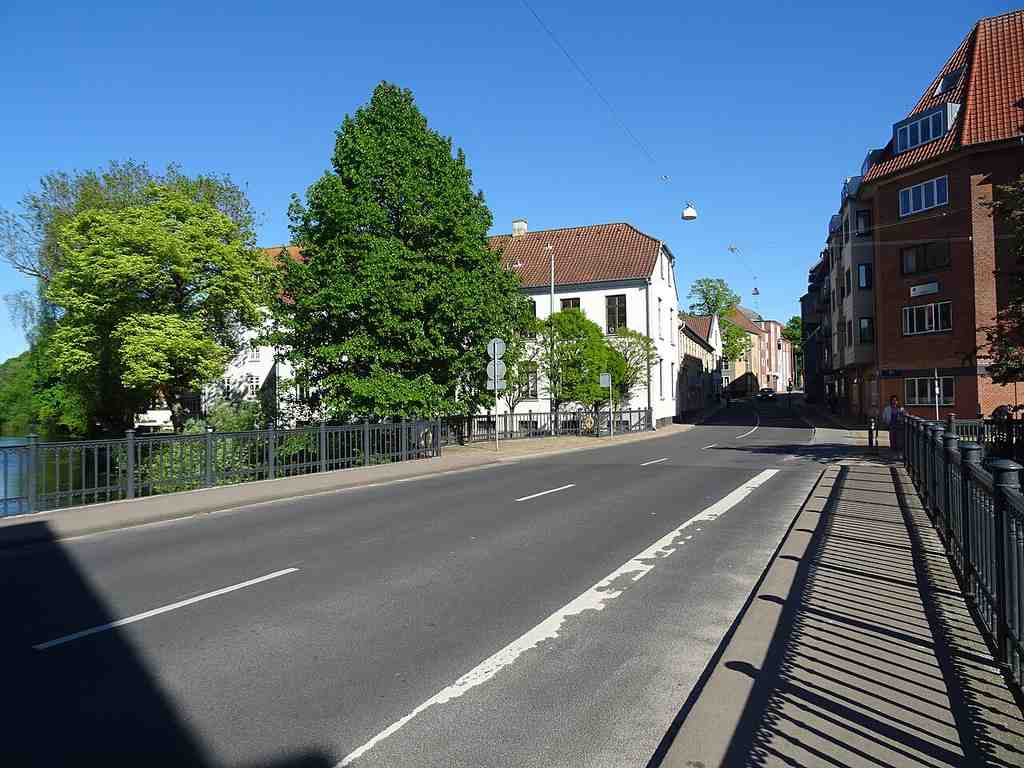
Look for the low bridge with black cast-iron railings, a flat span, and repeating fleur-de-lis panels along the sides.
Frederiksbroen looks polite, but in eighteen forty-four it arrived like a little industrial fanfare. It became Denmark’s first cast-iron road bridge, carrying traffic over the Odense River and proving that civic engineering could be useful and handsome at the same time. M. P. Allerup, the local foundry owner who cast it, trusted his work enough to give the city a ten-year guarantee.
Most visitors never realize an older crossing stood roughly here first: Møglebro, probably raised around the year twelve hundred, a key link on the southern road.
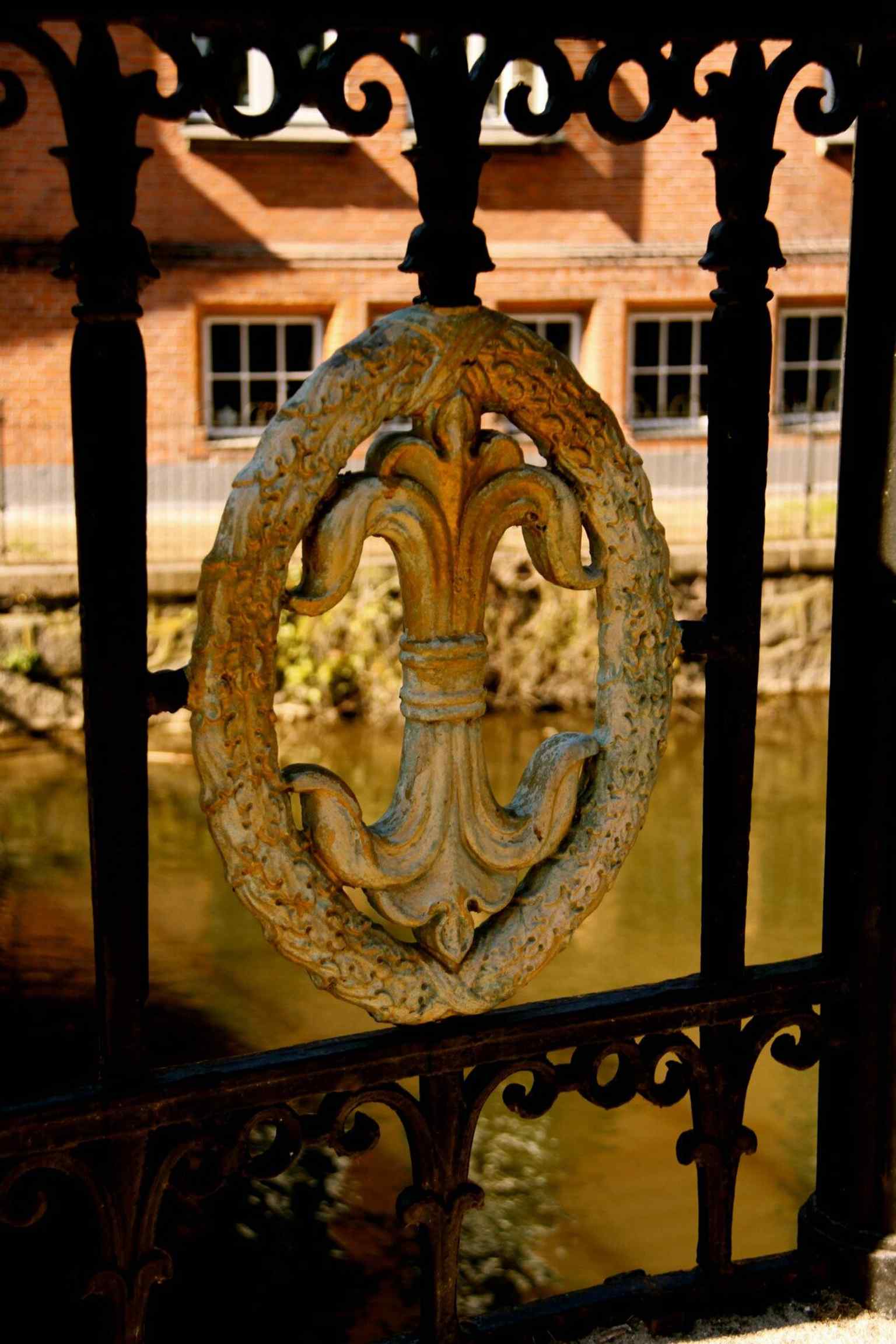
Pause on the railing for a second. See how boldly decorative this working bridge is? If you check the close-up on your screen, you can spot the Odense fleur-de-lis in the ironwork.
The inauguration on the sixth of October, eighteen forty-four, turned into a royal procession. Crown Prince Frederik, later King Frederik the Seventh, and his father, King Christian the Eighth, rode across first, and the street south of the bridge took the name Frederiksgade. That is one way to open a bridge.
Allerup’s story adds a sharper note: he died just four years later, in eighteen forty-eight, while traveling between Odense and Copenhagen, and even his grave marker was cast iron. Today only the railing is original; the deck rests on reinforced concrete. So this bridge, like the City Bridge earlier, changed how Odense moved... only this one did it in iron lace.
Follow the river and the tone turns softer toward Fairy Garden, about six minutes away. Frederiksbroen is open all day, every day.