
Shanghai Audio Tour: A Journey Through Time and Towers
Behind the ornate lions of Shanghai’s Bund, secrets linger in the marble shadows and neon reflections. Here, fortunes were made and lost overnight, and silent witnesses still stand atop roofs weathered by revolution and intrigue. This self-guided audio tour invites you to slip between worlds—exploring both the famous façades and the hidden corners few ever find. Walk at your pace as scandals, rebellions, and whispered alliances come alive right where they happened. What shocking event at the HSBC Building once shattered diplomatic ties on these very stones? Which hidden suite in the Peace Hotel still holds echoes of an unsolved mystery? Why did a notorious warlord flee into the fog along this waterfront late one stormy night? Feel every step pulse with new possibility as Shanghai’s grand stage unfurls its drama before your eyes. The city will never look—or sound—the same again. The secrets are waiting. Start walking into Shanghai’s untold past now.
Tour preview
About this tour
- scheduleDuration 40–60 minsGo at your own pace
- straighten3.3 km walking routeFollow the guided path
- location_on
- wifi_offWorks offlineDownload once, use anywhere
- all_inclusiveLifetime accessReplay anytime, forever
- location_onStarts at Custom House, Shanghai
Stops on this tour
To spot the Custom House, Shanghai, just look for a grand stone building with a towering clock right in the center, rising high above The Bund like an old-fashioned lighthouse-you…Read moreShow less
To spot the Custom House, Shanghai, just look for a grand stone building with a towering clock right in the center, rising high above The Bund like an old-fashioned lighthouse-you can’t miss the clock with its four giant faces! Now, pause a moment and take in this giant-you’re staring at the beating heart of Shanghai’s trade history. Imagine you’re back three hundred years ago-there’s no eight-story marvel before you, just a few customs officials waiting on the muddy riverbank, hoping for ships to appear out of the mist. The Custom House got its start way back in the late 17th century, when the Kangxi Emperor finally said, “Fine, we’ll trade by sea!” If you wanted to bring goods in or out, this is where you’d have to meet the customs officers, no matter how cold, foggy, or busy the river was. But here’s where things get lively-thanks to Shanghai’s booming trade, there was just too much action for one little customs office by the old city walls. Foreign traders wanted easier access, so the customs office was moved to this very spot, which became a flashpoint for all sorts of international intrigue. In the 1800s, rebels stormed and burned the Grand Custom House not once but twice-talk about a rough commute for customs workers! At one point, the British, flexing their colonial muscles, declared this very riverbank “neutral ground” and forcibly booted out the Chinese officials. The Chinese? Resourceful as ever, they set up their offices on gunboats-yes, floating customs! Eventually, foreign powers like Britain, France, and the US got together and basically ran customs themselves, which may have been the world’s least fun committee meeting. The man in charge? Sir Robert Hart, who stayed in power so long his statue stood proudly out front-until, of course, the Japanese occupation in 1943, when it was taken down. Just goes to show, history’s always moving! Now, if you can picture it, the Custom House didn’t always look so solid and imposing. The first new building here looked more like a Chinese fortress with arches and flags, but then they swapped it for a dramatic Gothic one, all sharp angles and towers. That Gothic masterpiece was torn down in the 1920s, and by 1927, the building you see today rose up-solid, strong, and expensive. In fact, at over 4 million taels of silver, it was double the planned budget. Even back then, construction costs soared! Take a closer look at the architecture-notice those four big Doric columns at the main entrance and the classic Greek-inspired look? The east side, facing the river, is eight stories tall and covered in sturdy granite. The west side, peering onto Sichuan Road, is a bit shorter and clad in brown brick. Not only did this become the tallest building on The Bund at the time, but inside, the marble hall and golden mosaics set a glamorous scene. Some families have even called hidden corners of the building home since the 1950s-bet they had the best clock alarm in the city! And speaking of clocks, the real star here is that clock tower. Standing eleven stories high, it watches over all comings and goings on the river. Each of its four faces is more than five meters across, made up of over 100 pieces of glass, and when darkness falls, 72 lamps automatically bring it to life. The clock’s inner workings were inspired by none other than Big Ben in London, and the biggest bell inside weighs a whopping six tons-imagine doing a workout with that thing! For decades, the chimes from these bells filled the city with the Westminster Quarters melody. But during the Cultural Revolution, the music changed to a revolutionary tune, “The East is Red.” Then, in 1986, when Queen Elizabeth II came for tea-well, probably not tea but a state visit-the old melody was played once again. History had more twists though: in 1997, right as Hong Kong was handed back to China, the music was stopped. Now, the chimes and tunes are all played on loudspeakers, since the mechanism can’t actually play “The East is Red”. If you stand still and listen, you might just hear the echoes of all those melodies through the years. So as you look up at this impressive clock, remember-every minute ticking by has centuries of drama, trade, and a bit of international game-playing behind it. The Custom House isn’t just a building; it’s a living piece of Shanghai’s wild ride through history. And trust me, if those walls could talk, they’d spill enough stories to keep you here all night!
Open dedicated page →Look for a grand, pale stone building with tall arched windows, elegant columns, and gold Chinese writing along the very top-right in front of you on the Bund, with a red flag…Read moreShow less
Look for a grand, pale stone building with tall arched windows, elegant columns, and gold Chinese writing along the very top-right in front of you on the Bund, with a red flag flying from its roof. Now that you’ve found the building, let’s imagine it’s the early 1900s. Picture Shanghai’s Bund as a wild mashup of cultures, with ships blowing their horns on the Huangpu River and gentlemen in crisp suits hurrying by. Right in the heart of that excitement sits this striking structure-the Russo-Chinese Bank Building-proudly showing off its Italian Renaissance style, which was completely out of place when it first appeared. Some folks thought it looked as if a piece of Europe had parachuted down into the middle of Shanghai! Built from brick and concrete, and designed by two German architects, Becker and Seel, this was where money and modernity met-literally! It caused such a stir that other foreign powers rushed to copy its elegant curves and stately façade. But this wasn’t just any old bank. Back in 1902, the building was cutting-edge. It boasted its own electric generator (at a time when many people were still using oil lamps), elevators that whisked you between floors, and even hot air pipes for heating. Each desk had two electric fans and two electric lights, so your paperwork would never blow away or be left in the dark. Drama struck in 1917, when the entire Russian Empire went topsy-turvy. Many of the Russo-Chinese Bank’s managers had to run for their lives and ended up in faraway France. The bank didn’t survive for long after that-by 1926 it had gone bankrupt, and China’s own Central Bank took over. Through war, revolution, and endless shuffling of papers, this building has worn many hats: headquarters for the Central Bank, aviation offices, even the Light Industry Bureau. Now, if you listen closely, you might just hear the faint clicking of coins and the whirring of those original fans, echoing through Shanghai’s wild financial history.
Open dedicated page →To spot the Peace Hotel, just look for the tall, grand building right in front of you with a striking, emerald-green pyramid-shaped roof standing proudly above the corner of…Read moreShow less
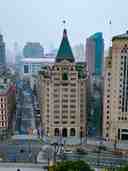
To spot the Peace Hotel, just look for the tall, grand building right in front of you with a striking, emerald-green pyramid-shaped roof standing proudly above the corner of Nanjing East Road and The Bund-it’s hard to miss, with its elegant, historic façade and distinctive copper spire. Now, let’s imagine you standing right here, a gentle breeze rolling in from the Huangpu River, and the Peace Hotel towering above you like a silent storyteller of Shanghai’s glamorous past and bustling present. You’re at the crossroads of legends, glitz, and more than a dash of mystery. This isn’t just any old hotel-oh no, this is where nine countries’ styles blend into one grand address, jazz spills out at night, and guests might spot the ghosts of royalty or Nobel Prize winners in the hallways. If you listen closely, maybe you’ll hear echoes from a jazz trumpet floating through the air, a sound that’s been part of Shanghai nights since the 1980s. Built in 1929, this North Building-the famous Sassoon House-was called “the First Building of the Far East.” It looms 77 meters high, and if you squint up at that green spire, just imagine the secrets it’s seen. Back then, businessmen toasted deals in smoky lounges, and the world’s elite checked into the fabled Cathay Hotel upstairs. Charlie Chaplin even twirled his cane here, playwright Noël Coward scribbled out a play, and the “father of radio,” Marconi, may have fiddled with his Nobel Prize at breakfast. And let’s not forget the hotel’s nine legendary Nation Suites. Each one is styled after a different country, so for one night only, you could drift off in French flair or German grandeur - no passport required! But beware: as luxurious as those rooms are, you might lie awake wondering if someone famous once tossed and turned under the very same velvet duvet. Was it Sun Yat-sen, or one of the many queens and presidents who crossed this threshold? Or was it just a jazz band member sneaking in for a nap between gigs? Oh, and that jazz band isn’t any ordinary band. The Peace Hotel Old Jazz Band is legendary-all members are over 75, living proof that jazz (and maybe noodles) keeps you young! Every night, laughter and brass notes bubble up in the Jazz Bar, where the walls themselves could probably tell you a joke or two, if only you ordered enough drinks. Now, let’s duck across to the South Building, the old Palace Hotel. Built in 1908, it’s a bit shorter but just as storied. With its Renaissance revival style and crisp white tiles separated by red brick stripes, it was once the city’s height of hospitality, housing diplomats and dreamers. After a grand renovation, this part of the Peace Hotel is now the Swatch Art Peace Hotel, turning guest rooms into creative studios for artists from around the world. Makes you wonder-can creativity seep out the windows the way the jazz does? In the main building today, there are 270 luxurious rooms, banquet halls sparkling with laughter and love, and spa treatments to ease away any memory of a missed train or a rainy day on the Bund. Six on-site restaurants mean your only real worry is choosing between dim sum and jazz-or, dare I say, both at once. Of course, the Peace Hotel has hosted so many important events, you might expect a secret meeting behind every potted plant. In 1945, General Marshall took up residence here, no doubt plotting world peace in a plush armchair. In 1998, the famous Wang-Koo summit brought leaders from both sides of the Straits for quiet conversation and, one hopes, some excellent dumplings. And in 2001, when APEC’s leaders came to town, even President Clinton couldn’t resist a meal beneath this roof. Next time you walk past this hotel, remember: you’re not just passing a place to sleep. You’re strolling alongside old movie stars, hearing faint music from glamorous balls past, even catching the excited whisper of a diplomat’s secret. If only these walls could talk! Well, in Shanghai, maybe they do-they just do it to a jazzy beat.
Open dedicated page →
Show 12 more stopsShow fewer stopsexpand_moreexpand_less
 4
4Peace Hotel
Buy tour to unlock all 19 tracksIf you’re standing here on the Bund, look straight ahead for a grand, ten-story building topped with a striking green pyramid roof and a red flag fluttering daringly at its…Read moreShow less
If you’re standing here on the Bund, look straight ahead for a grand, ten-story building topped with a striking green pyramid roof and a red flag fluttering daringly at its peak-welcome to the legendary Peace Hotel. Now, take a deep breath and let’s time travel together, back to the roaring 1920s-jazz was in the air, rickshaws rattled by, and Shanghai was the “Pearl of the Orient.” This towering beauty in front of you, the North Building-or Sassoon House, as it was once called-was dreamed up by Sir Victor Sassoon. Sassoon was a true city legend: a British Sephardic Jew with Iraqi roots, who swapped the quiet life of Harrow School and Cambridge for the raw buzz of Shanghai’s bustling business world. Talk about a career change! When Victor Sassoon snapped up this prime block facing the Huangpu River, he wasn’t planning on blending in. Nope-he wanted a skyscraper that would make everyone else look up, literally. By 1929, the building soared fifty feet above its neighbors. With a reinforced concrete skeleton and a full suit of granite on the outside, it was the first high-rise he ever built-and one of the Eastern Hemisphere’s earliest skyscrapers. Just imagine the scene back then: marble swirling under your feet, elevators whirring like magic, and rooms with indoor plumbing that felt impossibly modern. There were themed “national suites”-picture spending the night surrounded by tatami mats in the Japan Suite, or relaxing among bright Indian rugs and cushions. Even the interiors got in on the action, draped in glitzy art deco glamour. Meanwhile, on the tenth floor penthouse, Sassoon himself kept watch from windows that touched the sky, no doubt feeling like the king of Shanghai. The building’s ground floor buzzed with banks and shops. Over time, even a Citibank branch took up residence-bankers love a bit of art deco too, apparently! But this old hotel isn’t just about luxury-oh, it’s seen some stories. After 1949, the Communists swept in and gave the place a serious career switch, housing Shanghai’s Municipal Government and a dash of intrigue: during the Cultural Revolution, the notorious Gang of Four made it their headquarters. Rumor has it the halls echoed with both secrets and schemes. But the jazz never really stopped. The Old Jazz Band kept the rhythms alive, playing music that weaved right into the building’s bones. They became so legendary, they even inspired a movie, and their music still drifts out some nights from the infamous ground floor bar. If you close your eyes right here, you might just imagine those lively notes floating in the night air-with a view of Pudong sparkling across the river like a box of neon jewels. A little fun: this place was the muse for international novels, like “Shanghai ’37.” Apparently, if walls could talk, they’d have great tips for your next novel-or at least some good gossip over dim sum. Of course, all this style needed a facelift, so the hotel closed for a few years starting in 2007 for a full glow-up. In 2010, it flung its doors open again as the Fairmont Peace Hotel, now boasting 270 rooms and 39 suites, plus a rooftop terrace restaurant where you can stare out at new Shanghai from the perch of history. There’s even a swimming pool and spa out back-just in case you fancy a soak where revolutionaries once whispered plans! And get this: starting May 2025, this old dame’s getting another top-to-toe renovation, destined to be reborn as the ultra-swanky Raffles Peace Hotel Shanghai in 2027. Talk about staying trendy. But don’t let me steer you only to the North Building. Just across Nanjing Road, the South Building waits with its Renaissance-inspired face and a history nearly as dramatic. Born as the Central Hotel in the 1850s, this spot saw Sun Yat-sen rally support after the Xinhai Revolution, survived World War II occupation, and today it’s The Swatch Art Peace Hotel, hosting artists who bring the past alive with every brushstroke, poem, and sculpture. So as you stand here, feel the past beneath your feet and imagine the bustle, the dreams, the deals-and the never-ending jazz. This hotel isn’t just a stone shell; it’s a living chronicle of Shanghai.
Open dedicated page →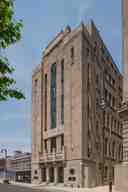 5
5Rockbund Art Museum
Buy tour to unlock all 19 tracksTo spot the Rockbund Art Museum, just look for a tall, art deco building made from light brown bricks with a strong vertical presence and elegant geometric details, right on the…Read moreShow less
To spot the Rockbund Art Museum, just look for a tall, art deco building made from light brown bricks with a strong vertical presence and elegant geometric details, right on the corner ahead of you. Ah, here we are at the Rockbund Art Museum! Take a good look at its striking façade, towering above the quiet street as if it's ready to burst into song-or maybe burst into a modern dance, since this place is all about contemporary art. But the story behind this sharp-looking building is as rich as a chocolate cake at a birthday party, and every bit as layered. Travel back with me to the early 1930s, when Shanghai wasn’t just a city, but a mix of cultures, languages, and a dash of jazzy fun. This building first rose in 1933, right where the Suzhou Creek meets the mighty Huangpu River-an area now called “the Source of the Bund.” Here, in the midst of all those ships and old Shanghai bustle, the Royal Asiatic Society decided to create a hub of knowledge, bringing together a museum, a library, and a lecture hall. If you can imagine the city’s buzz back then-rickshaws clattering along, businessmen in suits tipping their hats, and scholars with stacks of books-it might just feel like you’re on a movie set. People from across the world flocked here-over 7,000 visits a month at its peak!-to marvel at ancient artifacts, natural wonders, and scientific breakthroughs. It was unique in China at the time, not just for its size but for its ambition to blend scholarly research, cultural exchange, and public education. Imagine standing here seventy or eighty years ago, maybe listening in on an excited British explorer talking about a fossil, or catching a whiff of something strange from the natural specimens inside. And what a collection they had: relationships with the British Museum, New York's Metropolitan, and the Musée Guimet in France brought treasures and minds from everywhere. All this made the Royal Asiatic Society building the largest Oriental Studies center in Asia, and a place for anyone-curious local, traveling scholar, or gossip-hunting journalist-to dive into an astonishing collection. If these walls could talk, they’d probably have an accent by now. But every grand stage sees a change of scene. In 1952, the Society closed its doors, leaving behind a treasure trove: over 20,000 natural specimens, more than 6,000 historical artifacts, and at least 14,000 rare books and manuscripts. These precious pieces of history were parceled out to what became the heart of Shanghai’s top museums-the Shanghai Museum, Natural History Museum, and the Bibliotheca Zi-Ka-Wei. You could say the legacy of this building is scattered all across Shanghai like sprinkles from a cinnamon bun-sweetening the whole city. Fast forward to 2005. The district was ready for a new chapter. In came the developers, but instead of flattening the past, they decided to dust it off and showcase it. Enter David Chipperfield, a British architect renowned for his restoration work in places like Berlin. Armed with blueprints and a minimalist touch, he kept the building’s proud Art Deco style and its Chinese touches-sort of like giving it a stylish haircut but not shaving off its character. Now, you see the museum reimagined for the present: glassed-in rooftop terraces, open plazas at ground level, and a stunning skylight linking the upper floors. Inside, everything is fresh, clean, and just waiting for some art to splash a bit of color on it. The galleries don’t keep a permanent collection, so whenever you duck inside, you’re in for a surprise-one day a show from superstar Cai Guo-Qiang, another day, a whimsical work by Zeng Fanzhi. So whether you love art museums, old languages, or just good stories, the Rockbund Art Museum stands as an open invitation from every era of Shanghai’s whirlwind past. And just think: the next time you see a crowd lingering here, maybe they’re not waiting for art at all, but for the end of the tour-so they can run to the rooftop, catch the breeze, and feel like they’ve walked back through nearly a century of Shanghai’s magic.
Open dedicated page →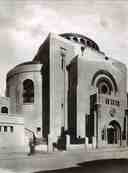 8
8Beth Aharon Synagogue
Buy tour to unlock all 19 tracksTo spot the Beth Aharon Synagogue, look for a grand, light-colored building with tall curves and a striking round dome on top, standing proudly along the roadside just in front of…Read moreShow less
To spot the Beth Aharon Synagogue, look for a grand, light-colored building with tall curves and a striking round dome on top, standing proudly along the roadside just in front of you. Now, let your imagination guide you back to the late 1920s Shanghai, where the streets buzzed with rickshaws and the air was thick with the fragrance of dumplings and adventure. Suddenly, you catch sight of this wondrous building-it looks a bit like a place built to hold secrets and stories, doesn’t it? This is the Beth Aharon Synagogue, lovingly constructed in 1927 by Silas Aaron Hardoon, one of the city’s wealthiest and most generous souls. He built it not just out of love for his father, Aaron, but as a magnificent gift to Shanghai’s Jewish community-think of it as a present that could fit 400 friends inside for singing, praying, and maybe the occasional brisket. The design was the work of Palmer and Turner, famous for the HSBC Building just down the Bund. But the real magic began in the 1940s, during the stormy days of World War II. Imagine the city on edge-maybe you’d hear the faint rolling of a suitcase behind you, young students from Poland arriving after a harrowing escape from the Nazis. Beth Aharon opened its strong doors to these weary travelers, among them the entire Mirrer yeshiva-the only Eastern European yeshiva to make it out of the Holocaust in one piece. For a while, this very spot transformed into a hub of learning and hope. You might hear laughter and debates in Yiddish echoing through the halls. Books flew off the presses in Hebrew, and Shanghai, in this hidden corner of the world, quietly became a powerhouse for Jewish scholarship. Refugee students even became teachers, helping local schools and lighting sparks of knowledge. But peace was fleeting. After the war, revolution swept through China like a gust of wind-suddenly, the synagogue became the headquarters for a government newspaper, and during the Cultural Revolution, its walls echoed not with prayers but with the clatter of factory machines. By 1985, the building was gone, replaced by a towering office block. Yet, as you stand here, give a moment to the silence-imagine the laughter, the tears, and the fierce will to survive that once filled this place. The Beth Aharon Synagogue is gone, but its spirit lingers on, whispering secrets to those curious enough to listen.
Open dedicated page →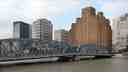 9
9Waibaidu Bridge
Buy tour to unlock all 19 tracksAhead of you is the Waibaidu Bridge, a sturdy silver-gray web of crisscrossed steel stretching gracefully over the water, easy to spot as it connects both banks just in front of…Read moreShow less
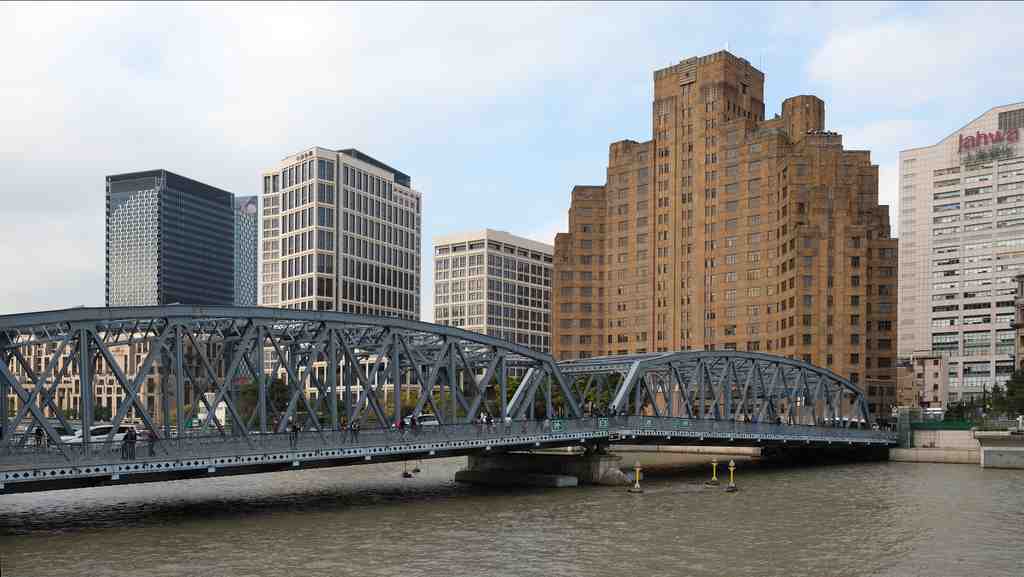
Ahead of you is the Waibaidu Bridge, a sturdy silver-gray web of crisscrossed steel stretching gracefully over the water, easy to spot as it connects both banks just in front of tall, modern buildings-simply look for the arched, industrial lattice right over Suzhou Creek. Now, take a moment to imagine the sounds of busy traffic, the hum of voices, and maybe a distant boat horn -because this bridge has been at the heart of Shanghai’s story for over a century. Welcome to the Waibaidu Bridge, or as it’s sometimes called, the Garden Bridge. You’re looking at the very first all-steel bridge in China and the only camelback truss left standing in the whole country! Let’s step back in time: it all began in 1856, when a wooden bridge built by a British businessman named Charles Wills stretched across this same spot, but crossing it wasn’t free-a toll collected from locals, and that made plenty of people grumble. In fact, locals disliked paying so much there was a boycott, and soon after, angry Cantonese merchants started a rival free ferry service just to prove a point! Don’t worry, that toll didn’t last long. The city replaced the old bridge and axed the fee, leading to the quirky name “Waibaidu”-which, in the local dialect, hints at “crossing for free”-so you can stroll over without fear of getting charged, unless you count dodging selfie sticks. But the bridge you see today, finished in 1907, was a marvel-made of steel from England and assembled with more than 160,000 rivets, many hammered red-hot into place at night, their sparks making the sky glow like fireworks. It weighed almost 1,000 tons and quickly became more than just steel and rivets. This bridge was a silent witness to love, war, disaster, and the everyday crossing of millions. During the 1930s and the Second Sino-Japanese War, Waibaidu Bridge was practically a border between two worlds-on one side, safety; on the other, fear and unrest. Imagine desperate crowds surging across as bombs fell, the echo of hurried footsteps on the wooden planks, rickshaw bells clanging and sharp Japanese commands slicing through the air. At times, the bridge was so packed with fleeing civilians, it seemed to groan under the burden of Shanghai’s wounded spirit. But Waibaidu wasn’t just about drama and tension-it became legendary in local culture. Nicknamed “the Beggars’ Bridge” or “the Bridge of Sighs,” it was a gathering place for the city’s poorest as well as an inspiration for poets, filmmakers, and novelists. Countless tales, romances, and even a few tears have been shed right here. In fact, if bridges could talk, Waibaidu would probably ask for a cup of tea and a good long lie down, given everything it’s seen! Of course, being constantly battered by traffic and time meant the bridge needed regular facelifts. There were repairs big and small-wood replaced with concrete, thorough checks for sinking, rust scraped clean, and a paintjob every now and then to keep it looking handsome. The most dramatic moment came in 2008, when Waibaidu was carefully sliced in two and floated downriver to a shipyard for restoration-like a giant, metallic patient getting open-heart surgery. It came back sturdier than ever, with its original wooden sidewalks lovingly restored and a dazzling LED lighting system, so it’s as much a beauty at night as by day. Today, as you stand here, you’re walking in the footsteps of everyone from refugees and revolutionaries to Hollywood film crews and ordinary dreamers. Whether it’s painted by sunset, ablaze with colored lights, or shimmering in winter mist, the Waibaidu Bridge remains the city’s quiet, unshakeable witness-always ready for the next chapter in Shanghai’s tale. So go ahead, give it a gentle pat as you cross-it’s earned every single one of its rivets! Intrigued by the etymology, in the media or the places nearby? Explore further by joining me in the chat section below.
Open dedicated page →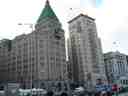 10
10Bank of China Building, Shanghai
Buy tour to unlock all 19 tracksYou’re looking for a tall, stone-clad tower with subtle Art Deco style and a flat top, just to the right of the green-pyramid-roofed Peace Hotel, so keep your eyes peeled straight…Read moreShow less
You’re looking for a tall, stone-clad tower with subtle Art Deco style and a flat top, just to the right of the green-pyramid-roofed Peace Hotel, so keep your eyes peeled straight ahead for a building that looks like it’s standing proud but maybe a little envious of its next-door neighbor’s flashy hat! Ah, welcome to the Bank of China Building-one of the Bund’s giants with a big story (and, honestly, a little height envy). If you listen closely, you might just hear the old walls whispering tales of ambition, rivalry, and the occasional architectural heartbreak. Once upon a Bund evening, this very spot was the site of the raucous German Club, filled with laughter, clinking beer steins, and the kind of gossip that could make even a stone statue raise an eyebrow. But then came World War I, and with the echo of marching boots, the Chinese government took over the German Club as "enemy assets." After the war, the Bank of China swooped in, purchasing the place for what would have been a mountain of silver yuan-630,000 to be exact! By 1928, the Bank of China had had enough of Beijing’s thin air-they moved their headquarters right here to Shanghai’s bustling waterfront. Each year, the Shanghai branch would tuck away a cool half-million yuan, like a squirrel hoarding nuts, waiting for the day they’d build a new headquarters that would show the world: Chinese banks belonged in the big leagues. "We’ve endured. We’ve thrived. Now give us a skyscraper!” they declared. The dream? A soaring, 34-story marvel that would scrape the skies and become the tallest building in the Far East-take that, neighbors! They built the foundations strong enough to support a giant. But then, the plot thickened. Enter Sir Victor Sassoon, owner of the flashy Sassoon House next door (which, by the way, you can spot easily with its green, pointy hat). Sassoon was not a man to be outdone at anything-especially at real estate. He insisted, with the sort of stubbornness only found in the rich and famous, that no building beside his could rise higher than his spire. The British municipal council, always ready with a polite excuse, claimed “Chinese were poor in designing ability” and that the weight would shake neighboring buildings apart. But we know a turf war when we see one! Cut down almost by half, the Bank of China Building was finished just a foot lower than its neighbor. The great dream of Shanghai's highest tower became the story of Shanghai's greatest compromise-but also a tale of determination, because even a “stunted” building could command respect on the world stage. On October 10, 1936, the city buzzed as the foundation stone was laid, and the Shanghai Times covered it in minute detail. Construction moved quickly, but Shanghai’s story is never straightforward. By 1937, with the building nearly done, the Second Sino-Japanese War broke out, and progress slowed to the drip, drip, drip of uncertainty. During these troubled years, the building was commandeered for government banking, and it wasn’t until New Year’s Day of 1946-a whole decade after those first bricks were laid-that the Bank of China finally moved into their long-awaited home. If patience is a virtue, then this must be one of the most virtuous buildings in Shanghai! Now, picture the scene: bankers in crisp suits hustling under the stone eaves, paperwork fluttering, the sounds of typewriters and business deals mixing with the rumble of trams outside. You’re standing at the very center of Shanghai’s see-sawing fortunes, where colonial grandeur, wartime struggle, and Chinese ambition all collided-just one foot shy of greatness, and a world above ordinary. Take your time, soak in the history around you, and say hi to the ghost of Victor Sassoon for me-he’s probably still measuring the roofline.
Open dedicated page →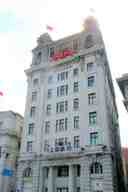 11
11North China Daily News Building
Buy tour to unlock all 19 tracksTo spot the North China Daily News Building, just look up-you’ll see a tall, regal white structure with grand columns, two ornate towers on top, and a bright red ‘AIA’ sign facing…Read moreShow less
To spot the North China Daily News Building, just look up-you’ll see a tall, regal white structure with grand columns, two ornate towers on top, and a bright red ‘AIA’ sign facing you, right in the heart of the Bund. Now, let’s dive into the juicy story of this place! Imagine it’s the bustling 1920s in Shanghai-a city alive with sailors, traders, and a constant flurry of paperboys dodging trolley cars, their arms loaded with the most important news in the East. Standing where you are now, the North China Daily News Building was the skyscraper of the city-yep, really, the tallest around in 1924! The air was thick with the scent of ink and ambition as Shanghai’s very first English-language newspaper decided it needed a new home worthy of its reputation. So, along came the architects Lester, Johnson & Morriss, led by Gordon Morriss-whose brother just happened to own the paper. Talk about family ties getting you places, right? The building quickly became more than just a newspaper office. Inside, you’d find journalists banging away on typewriters, editors shouting “stop the press!” at least once a week, and insurance agents from the American Asiatic Underwriters sealing deals and sipping strong coffee by the Neo-Renaissance windows. On either side of the stone entrance once stood two grand statues of goddesses, silently welcoming everyone who passed beneath their stony gaze-though, spoiler alert, they mysteriously vanished during the Cultural Revolution. Fast forward to the dark times of World War II: the Japanese Empire marched into Shanghai, took over the Bund, and the building found itself home to a different kind of headlines-a Japanese newspaper, the Tairiku Shimpō. If these walls could talk, they’d probably whisper in multiple languages-and maybe drop a few secrets! After the war, hope returned with the North China Daily News reopening its doors. But soon, after 1951 and the founding of the People’s Republic of China, the presses fell quiet, and the building became a government office-no editors, just officials shuffling papers instead of chasing headlines. Restoration came in the 1990s and, with it, a new name: the AIA Building, echoing its insurance roots. Today, this grand old lady has swapped news clippings for insurance policies, but she still stands proud on the Bund-a living story of ambition, survival, and reinvention, all packed into those granite walls and marble arches above you. So next time someone asks where the beating heart of old Shanghai is, you’ll know: it started ticking right here!
Open dedicated page → 12
122014 Chinese New Year's Eve's Eve Shanghai Bund Chen Yi Square stampede incident
Buy tour to unlock all 19 tracksStanding here on the busy street, you’ll spot the historic Chen Yi Square right ahead-just look for the broad set of stone steps leading up to the riverside viewing terrace,…Read moreShow less
Standing here on the busy street, you’ll spot the historic Chen Yi Square right ahead-just look for the broad set of stone steps leading up to the riverside viewing terrace, surrounded by leafy trees and flanked by police cars and crowds-this open plaza sits directly at the heart of the Bund, facing the glittering Huangpu River. Now, let’s travel back to New Year’s Eve of 2014. Picture this: a crisp December night, the sky sparkling with city lights, and you’re one of more than a million people who have packed into the Bund, everyone eager to welcome in the future at Shanghai’s most famous riverside. The excitement is palpable, a living wave of anticipation, laughter, and celebration rippling through the air. But on this night, here at Chen Yi Square and the steep steps leading up to the viewing platform, tragedy waits in the shadows. Traditionally, the Bund would host a breathtaking light show, and the crowd-well beyond what any event planner would recommend, believe me-waited for the familiar flash of lasers and the New Year’s countdown. Only this year, the city decided at the last minute to move the light show half a kilometer away. Word didn’t spread fast enough, and people still flooded the viewing platform, craning their necks for a spectacle that wouldn’t appear. As midnight approached, confusion took over as thousands pressed toward the steps: some wanting a better look, some trying to leave. Now, imagine yourself in that sea of people-elbow to elbow, shoulder to shoulder, barely room to breathe, your sneakers on the very edge of the cold stone steps. Lights swirl above, music and chatter fill your ears, but a nervous energy bubbles below the surface. Suddenly, the crowd seems to lurch; back and forth, a tug-of-war of bodies moving in two opposing tides. Someone calls out, a name lost in the roar. Then, a stumble-one, then more, bodies tumbling down the stairs as the crowd surges-like a domino run no one can stop. It’s chaos. Yelling, confusion, and underfoot, a crush unlike anything you’ve known. In the desperate moments that follow, those lucky enough to stay upright form human walls to hold back the pressure and help the injured. At street level, police and volunteers set up first-aid stations as quickly as you can say “Happy New Year,” desperately trying to save lives wherever they can. Paramedic sirens slice through the night; you feel the ground tremble with the rescue vehicles arriving. In the end, 36 lives are lost and nearly 50 injured, many young, full of dreams-Shanghai’s hopes for a joyous new year shattered in mere minutes. The tragedy led to a huge wave of public grief-flowers carpeted the square for days, and the city’s newspapers scrambled to tell the story, some barely making the deadline, others accused by readers of keeping the headlines small. Even the TV schedule got rearranged; concerts and shows were cancelled. For months afterward, the story dominated both public debate and government meetings. People asked how the city could not have prepared for a crowd three times larger than safe limits-and why so many official warnings and safety barriers were missing in action. Rumors swirled, too-one even claimed that the stampede began when someone threw fake money from a nearby bank window, but police later proved that was just a wild story, nothing to do with the disaster. What really caused the deaths was the lethal tide of people compressed on those narrow steps, a tragic tangle of bad planning and overconfidence. Don’t worry, I’ll lighten the mood now with a friendly reminder: If you ever see a New Year’s Eve countdown with an unexpectedly empty stage, maybe just head for the closest open space and celebrate with a rooftop noodle cup instead! But all jokes aside, the 2014 Chen Yi Square tragedy changed Shanghai forever. Policies toughened, more eyes watched crowd sizes, and for a while, even the ancient lantern festival took a break. If you stand here in the hush of a quiet morning, you might still feel a sense of reverence-for the city’s resilience, and for the people it lost. So as you look around, remember: behind the bright lights and city bustle, the Bund is shaped by both joy and sorrow, always moving forward but never forgetting what happened on this very square, one unforgettable New Year’s Eve. For a more comprehensive understanding of the cause and process, casualty or the investigation results and punishment, engage with me in the chat section below.
Open dedicated page →To spot The Bund, just look straight ahead along the broad riverside promenade-tall, grand European-style buildings with domes and clock towers rise up on your left, stretching…Read moreShow less
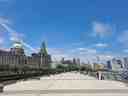
To spot The Bund, just look straight ahead along the broad riverside promenade-tall, grand European-style buildings with domes and clock towers rise up on your left, stretching all the way down the walkway beside the Huangpu River. Alright, stop and take it all in! You’re standing at The Bund, one of the most iconic riverfront boulevards on the planet. Look around-can you see those grand old buildings lining up along Zhongshan Road, with rows of columns, domes, and even a clock tower that’s been keeping time for nearly a hundred years? If the breeze is just right, you might even hear faint echoes of jazz drifting across the water-back in the day, this place really swung! Let’s spin you back to the late 1800s and early 1900s, when this was Shanghai’s neon-lit front porch to the world. Merchants, bankers, and adventurers from Britain, France, America, Russia, Japan, and beyond all set up shop here, each determined to make their mark-and their fortune. Imagine the busy clip-clop of horse carriages, snippets of different languages, and deals brokered in smoky, chandelier-lit clubs while outside, steamers belched smoke from the river. In those days, The Bund was the glittering center of Shanghai’s “International Settlement,” far louder and livelier than you see it today. With more than 50 buildings in a wild mix of styles-Gothic, Baroque, Art Deco, Neoclassical-you can walk the whole strip and feel like you’re globe-trotting through Europe. There’s everything from exclusive clubs where gentlemen once played billiards, to powerful financial headquarters. The HSBC Building was once called the most luxurious between the Suez Canal and the Bering Strait, and right next to it, the Customs House clock still chimes the hours in imitation of London’s Big Ben-talk about keeping up appearances! The name ‘Bund’ actually traveled here all the way from India, where it meant a dyke or river embankment. But the Chinese name, Waitan, means “outer bank,” to separate this sabbath of international wheeling and dealing from the quieter “inner” Old City. Back then, they say, you couldn’t toss a dumpling without hitting a foreign bank or swanky club. The Shanghai Club’s bar was so long, they needed a map to find your gin and tonic! Of course, this slice of history wasn’t always just glitz and parties. By the 1940s, The Bund’s grand banks were running China’s finances, but then came war and revolution-after 1949, many of these booming businesses were swept away, and the government took over the fancy digs. Those parks along the river? Most were lost to road expansion, and statues of colonial-era bigwigs were pulled down. The Bund didn’t just sleep through modern times, though-it watched, and it adapted. Fast-forward to the late 1970s: China’s doors began to open again. Hotels returned, the bars flickered back to life, and all those weathered stone lions witnessed new tides of prosperity. In the 1990s, the city threw itself into a frenzy of repairs and upgrades, including a monster new levee to keep out rising floodwaters. That’s one reason why you’re now strolling ten meters above the old street level-perfect for looking out at Pudong’s futuristic skyline. Not everything was smooth sailing. One New Year’s Eve, tragedy struck near Chen Yi Square, when an unexpectedly huge crowd surged for a better view of the fireworks. Safety measures have been tightened since, but the memory is a sober reminder that history isn’t just stones and statues. Today, The Bund is a happy mashup of old and new. Wannabe tycoons swing by for inspiration, joggers sprint past the same river where traders once haggled for silk and tea, and cruise boats ferry wide-eyed visitors along a stage that’s starred in novels, movies, and even video games. Look across the river-those skyscrapers in Lujiazui didn’t exist a few decades ago. If you get hungry, pop into one of the Bund’s top-notch restaurants, many right inside these historic mansions. So as you stand here, close your eyes for a moment and let the past and present swirl together: the clang of a bell, the whistle of a steamer, the laughter of club-goers, and above it all, a proud clock tower ticking faithfully into the Shanghai night. You’ve just stepped into the living heart of a city that never stops reinventing itself-welcome to The Bund! To delve deeper into the name, layout or the architecture and buildings, simply drop your query in the chat section and I'll provide more information.
Open dedicated page →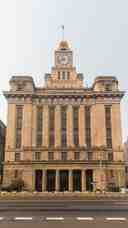 14
14Jiang Customs Building
Buy tour to unlock all 19 tracksLook ahead and you’ll spot the Jiang Customs Building by its tall stone clock tower, crowned with a Chinese flag, and its grand entrance marked by four towering pillars right in…Read moreShow less
Look ahead and you’ll spot the Jiang Customs Building by its tall stone clock tower, crowned with a Chinese flag, and its grand entrance marked by four towering pillars right in the middle of the Bund. Let’s imagine you’re a foreign ship’s captain in the late 1800s, steering through the Huangpu River mist at dawn. You’re tired, your ship’s clock is suspiciously fast-or is it slow? But suddenly, looming through the haze, you see the highest building in Shanghai: the Jiang Customs Building, its clock tower rising like a guardian above all. You steer straight for that stone giant, drawn by the famous chime that every ship around the world trusted to set their watches right. But let’s back up, way back-right to the year 1685! The early Customs House was more of a humble office managing international trade. Flash forward to 1843, after the Treaty of Nanjing, and the Qing government decides, “Right-Shanghai is now a treaty port! Let's build something that won’t collapse when a seagull lands on it.” So the Customs House first went up on this very spot in 1846. What’s almost comical is that the Jiang Customs Building kept reinventing itself. It started off in the 1840s as a series of offices with traditional Chinese roofs and huge flagpoles. Then the French, British, and Americans all wanted in on the fun (and the taxes). By the late 1800s, the Customs Hall morphed into a bizarre mashup: imagine a Western cathedral with lion statues and a spiky lightning rod. Local legend says the contractor, a Pudong-born mason named Yang Sisheng, became the Steve Jobs of 19th-century Shanghai buildings. If bricks had WiFi back then, Yang would have invented it. By the 1920s, though, Shanghai had become a true world city. The Customs building needed a makeover-something worthy of a city obsessed with the future. So, in 1925, the old structure got bulldozed. They shipped in granite all the way from Suzhou. Out came a new style, a bold blend of Greek columns and streamlined modern design. Look up at those four massive columns-Doric style, if you want to get architectural about it. The highlight: that clock tower, rising like a beacon above the granite, visible for miles both day and night. It made this building the tallest on the Bund in the 1920s! Inside, it was lavish, with mosaic floors, grand lobbies, and a ceiling with eight vibrant pictures of historic sailing ships, all assembled from dazzling pieces of colored tile. There were even crystal chandeliers and, in the early days, a water fountain sparkling under the lights. Ten elevators, six staircases, nearly 400 rooms... talk about customs duty! But let’s not forget the clock. When the 1927 tower was finished, everyone in Shanghai stopped in their tracks-literally. The clock, made by top British craftsmen, was Asia’s biggest and the world’s third-largest at the time. Getting all six tons of it up there was the show of the year. Crowds gathered with mouths open as workers hauled the massive clock case up 72 meters-imagine the suspense as the ropes creaked and everyone held their breath, staring up at the sky, wondering if lunch would land on their heads. And here’s the quirky reason for that clock: it wasn’t just a pretty face. In those days, every ship captain and customs official argued about exact time-because in Shanghai, time meant taxes! Whatever the customs clock said, that was the official stopwatch for all shipping business. So, when this clock struck twelve, tariffs and paperwork started fresh. Of course, hearing the famous Westminster chimes meant you also had less time for a nap. This building has weathered wild times. In the days of the Cultural Revolution, energetic Red Guards rushed in, changing the music and even turning the clock face into a sunflower pattern. The bell that once played Westminster chimes shifted to patriotic tunes-even today, sometimes it’s an old revolutionary song, played over modern speakers for a new era. So as you stand on the Bund, listen closely for the echo of that powerful bell. Imagine the ships, the crowds, the bustle of paperwork and cargo on the river docks. The Jiang Customs Building isn’t just stone and steel: it’s the heart that once kept Shanghai ticking, to the very second. And if you’re ever late, well, now you know who to blame!
Open dedicated page →
Frequently asked questions
How do I start the tour?
After purchase, download the AudaTours app and enter your redemption code. The tour will be ready to start immediately - just tap play and follow the GPS-guided route.
Do I need internet during the tour?
No! Download the tour before you start and enjoy it fully offline. Only the chat feature requires internet. We recommend downloading on WiFi to save mobile data.
Is this a guided group tour?
No - this is a self-guided audio tour. You explore independently at your own pace, with audio narration playing through your phone. No tour guide, no group, no schedule.
How long does the tour take?
Most tours take 60–90 minutes to complete, but you control the pace entirely. Pause, skip stops, or take breaks whenever you want.
What if I can't finish the tour today?
No problem! Tours have lifetime access. Pause and resume whenever you like - tomorrow, next week, or next year. Your progress is saved.
What languages are available?
All tours are available in 50+ languages. Select your preferred language when redeeming your code. Note: language cannot be changed after tour generation.
Where do I access the tour after purchase?
Download the free AudaTours app from the App Store or Google Play. Enter your redemption code (sent via email) and the tour will appear in your library, ready to download and start.
If you don't enjoy the tour, we'll refund your purchase. Contact us at [email protected]
Checkout securely with 


