
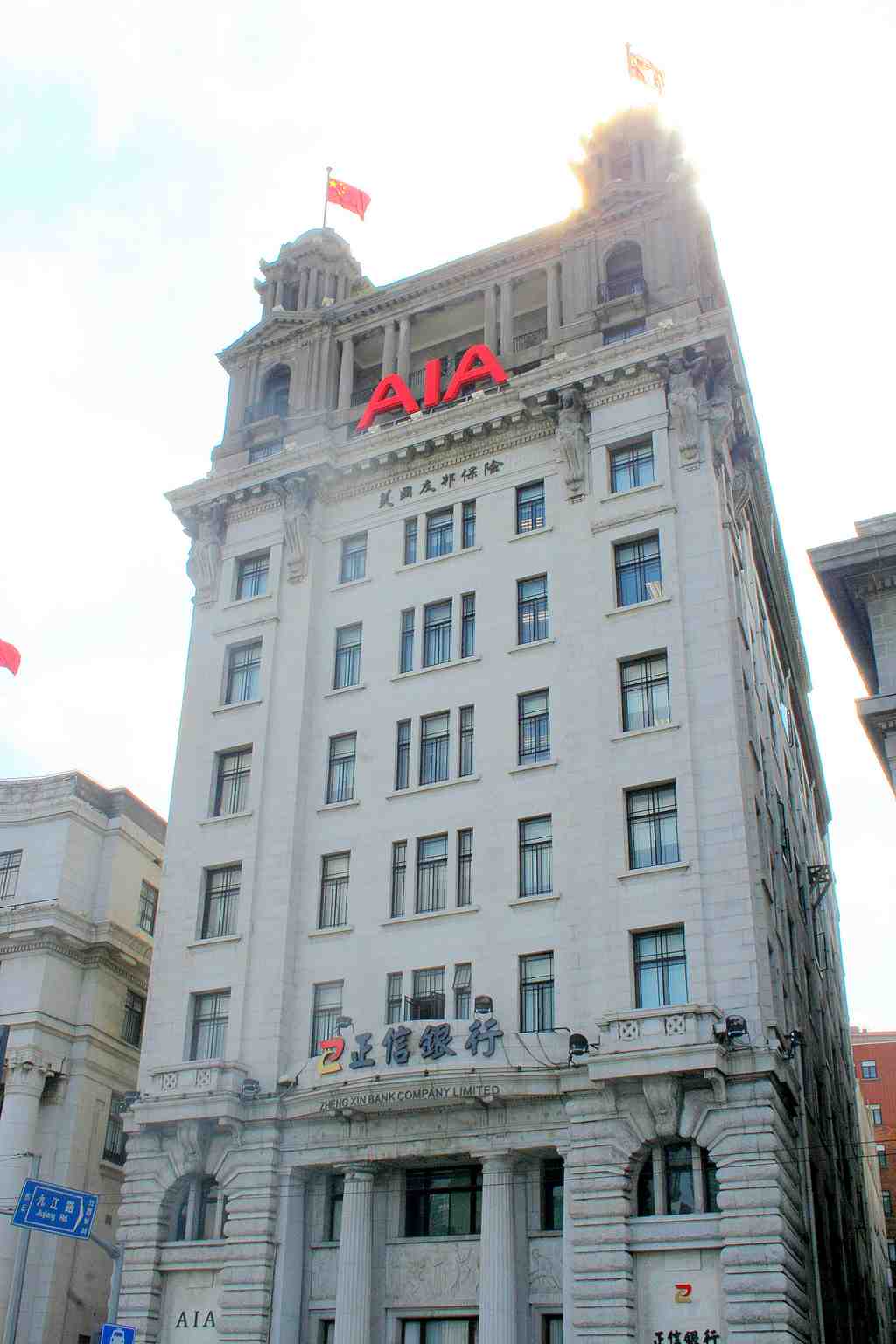
To spot the North China Daily News Building, just look up-you’ll see a tall, regal white structure with grand columns, two ornate towers on top, and a bright red ‘AIA’ sign facing you, right in the heart of the Bund.
Now, let’s dive into the juicy story of this place! Imagine it’s the bustling 1920s in Shanghai-a city alive with sailors, traders, and a constant flurry of paperboys dodging trolley cars, their arms loaded with the most important news in the East. Standing where you are now, the North China Daily News Building was the skyscraper of the city-yep, really, the tallest around in 1924! The air was thick with the scent of ink and ambition as Shanghai’s very first English-language newspaper decided it needed a new home worthy of its reputation. So, along came the architects Lester, Johnson & Morriss, led by Gordon Morriss-whose brother just happened to own the paper. Talk about family ties getting you places, right?
The building quickly became more than just a newspaper office. Inside, you’d find journalists banging away on typewriters, editors shouting “stop the press!” at least once a week, and insurance agents from the American Asiatic Underwriters sealing deals and sipping strong coffee by the Neo-Renaissance windows. On either side of the stone entrance once stood two grand statues of goddesses, silently welcoming everyone who passed beneath their stony gaze-though, spoiler alert, they mysteriously vanished during the Cultural Revolution.
Fast forward to the dark times of World War II: the Japanese Empire marched into Shanghai, took over the Bund, and the building found itself home to a different kind of headlines-a Japanese newspaper, the Tairiku Shimpō. If these walls could talk, they’d probably whisper in multiple languages-and maybe drop a few secrets!
After the war, hope returned with the North China Daily News reopening its doors. But soon, after 1951 and the founding of the People’s Republic of China, the presses fell quiet, and the building became a government office-no editors, just officials shuffling papers instead of chasing headlines.
Restoration came in the 1990s and, with it, a new name: the AIA Building, echoing its insurance roots. Today, this grand old lady has swapped news clippings for insurance policies, but she still stands proud on the Bund-a living story of ambition, survival, and reinvention, all packed into those granite walls and marble arches above you. So next time someone asks where the beating heart of old Shanghai is, you’ll know: it started ticking right here!


