
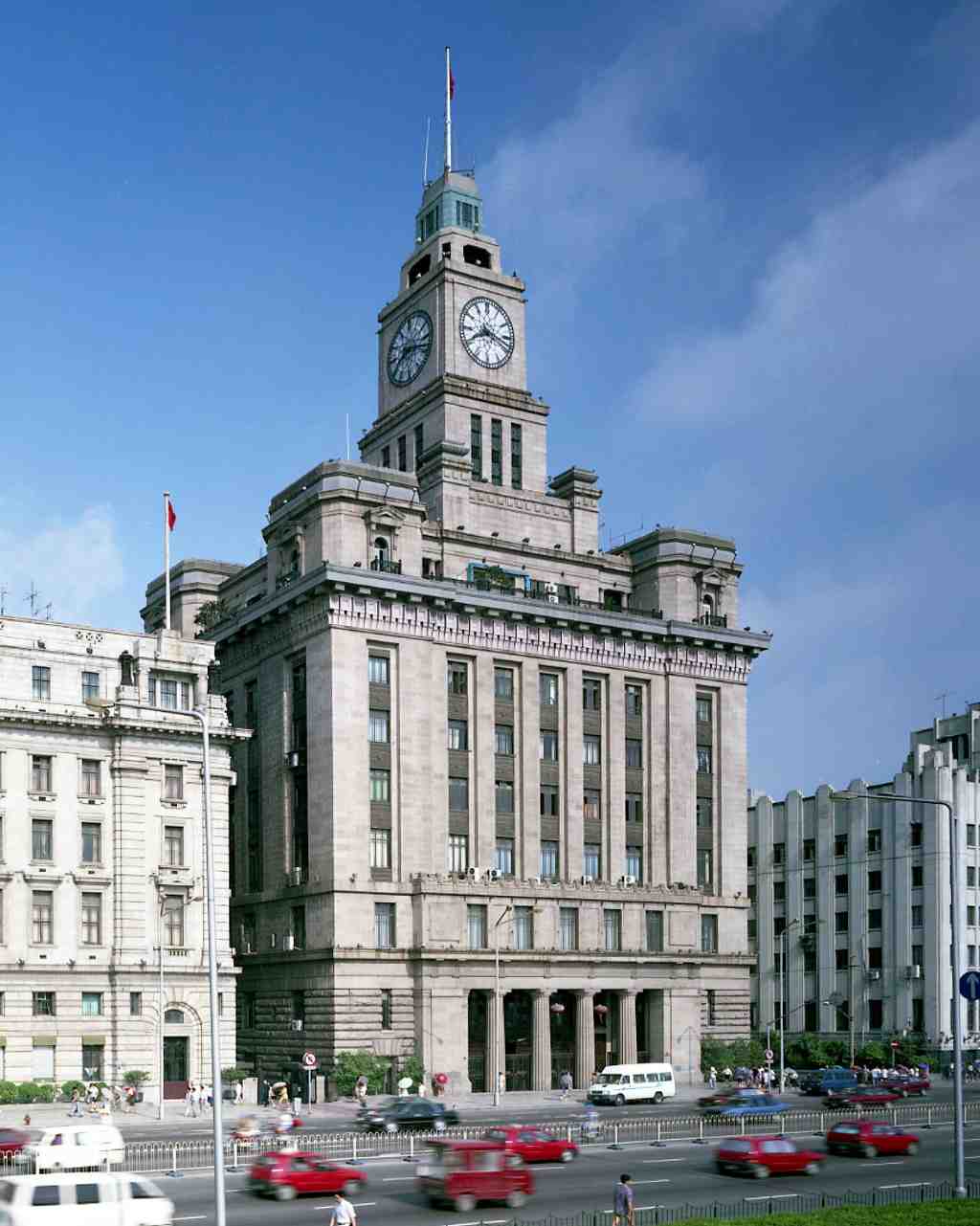
To spot the Custom House, Shanghai, just look for a grand stone building with a towering clock right in the center, rising high above The Bund like an old-fashioned lighthouse-you can’t miss the clock with its four giant faces!
Now, pause a moment and take in this giant-you’re staring at the beating heart of Shanghai’s trade history. Imagine you’re back three hundred years ago-there’s no eight-story marvel before you, just a few customs officials waiting on the muddy riverbank, hoping for ships to appear out of the mist. The Custom House got its start way back in the late 17th century, when the Kangxi Emperor finally said, “Fine, we’ll trade by sea!” If you wanted to bring goods in or out, this is where you’d have to meet the customs officers, no matter how cold, foggy, or busy the river was.
But here’s where things get lively-thanks to Shanghai’s booming trade, there was just too much action for one little customs office by the old city walls. Foreign traders wanted easier access, so the customs office was moved to this very spot, which became a flashpoint for all sorts of international intrigue. In the 1800s, rebels stormed and burned the Grand Custom House not once but twice-talk about a rough commute for customs workers! At one point, the British, flexing their colonial muscles, declared this very riverbank “neutral ground” and forcibly booted out the Chinese officials. The Chinese? Resourceful as ever, they set up their offices on gunboats-yes, floating customs!
Eventually, foreign powers like Britain, France, and the US got together and basically ran customs themselves, which may have been the world’s least fun committee meeting. The man in charge? Sir Robert Hart, who stayed in power so long his statue stood proudly out front-until, of course, the Japanese occupation in 1943, when it was taken down. Just goes to show, history’s always moving!
Now, if you can picture it, the Custom House didn’t always look so solid and imposing. The first new building here looked more like a Chinese fortress with arches and flags, but then they swapped it for a dramatic Gothic one, all sharp angles and towers. That Gothic masterpiece was torn down in the 1920s, and by 1927, the building you see today rose up-solid, strong, and expensive. In fact, at over 4 million taels of silver, it was double the planned budget. Even back then, construction costs soared!
Take a closer look at the architecture-notice those four big Doric columns at the main entrance and the classic Greek-inspired look? The east side, facing the river, is eight stories tall and covered in sturdy granite. The west side, peering onto Sichuan Road, is a bit shorter and clad in brown brick. Not only did this become the tallest building on The Bund at the time, but inside, the marble hall and golden mosaics set a glamorous scene. Some families have even called hidden corners of the building home since the 1950s-bet they had the best clock alarm in the city!
And speaking of clocks, the real star here is that clock tower. Standing eleven stories high, it watches over all comings and goings on the river. Each of its four faces is more than five meters across, made up of over 100 pieces of glass, and when darkness falls, 72 lamps automatically bring it to life. The clock’s inner workings were inspired by none other than Big Ben in London, and the biggest bell inside weighs a whopping six tons-imagine doing a workout with that thing!
For decades, the chimes from these bells filled the city with the Westminster Quarters melody. But during the Cultural Revolution, the music changed to a revolutionary tune, “The East is Red.” Then, in 1986, when Queen Elizabeth II came for tea-well, probably not tea but a state visit-the old melody was played once again. History had more twists though: in 1997, right as Hong Kong was handed back to China, the music was stopped. Now, the chimes and tunes are all played on loudspeakers, since the mechanism can’t actually play “The East is Red”. If you stand still and listen, you might just hear the echoes of all those melodies through the years.
So as you look up at this impressive clock, remember-every minute ticking by has centuries of drama, trade, and a bit of international game-playing behind it. The Custom House isn’t just a building; it’s a living piece of Shanghai’s wild ride through history. And trust me, if those walls could talk, they’d spill enough stories to keep you here all night!


