
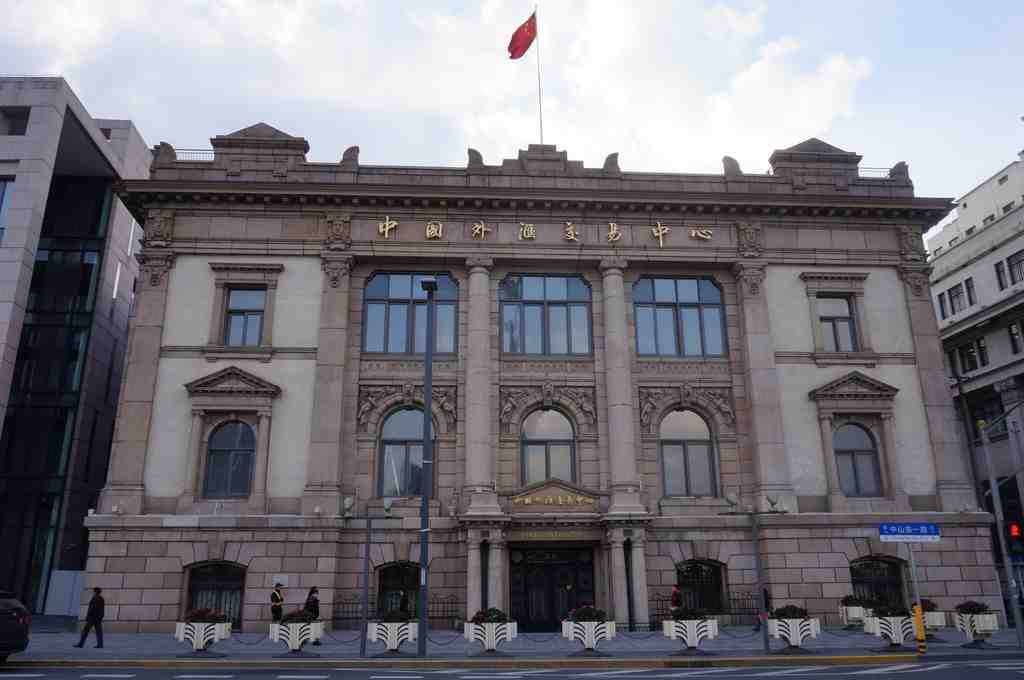
Look for a grand, pale stone building with tall arched windows, elegant columns, and gold Chinese writing along the very top-right in front of you on the Bund, with a red flag flying from its roof.
Now that you’ve found the building, let’s imagine it’s the early 1900s. Picture Shanghai’s Bund as a wild mashup of cultures, with ships blowing their horns on the Huangpu River and gentlemen in crisp suits hurrying by. Right in the heart of that excitement sits this striking structure-the Russo-Chinese Bank Building-proudly showing off its Italian Renaissance style, which was completely out of place when it first appeared. Some folks thought it looked as if a piece of Europe had parachuted down into the middle of Shanghai! Built from brick and concrete, and designed by two German architects, Becker and Seel, this was where money and modernity met-literally! It caused such a stir that other foreign powers rushed to copy its elegant curves and stately façade.
But this wasn’t just any old bank. Back in 1902, the building was cutting-edge. It boasted its own electric generator (at a time when many people were still using oil lamps), elevators that whisked you between floors, and even hot air pipes for heating. Each desk had two electric fans and two electric lights, so your paperwork would never blow away or be left in the dark.
Drama struck in 1917, when the entire Russian Empire went topsy-turvy. Many of the Russo-Chinese Bank’s managers had to run for their lives and ended up in faraway France. The bank didn’t survive for long after that-by 1926 it had gone bankrupt, and China’s own Central Bank took over. Through war, revolution, and endless shuffling of papers, this building has worn many hats: headquarters for the Central Bank, aviation offices, even the Light Industry Bureau. Now, if you listen closely, you might just hear the faint clicking of coins and the whirring of those original fans, echoing through Shanghai’s wild financial history.


