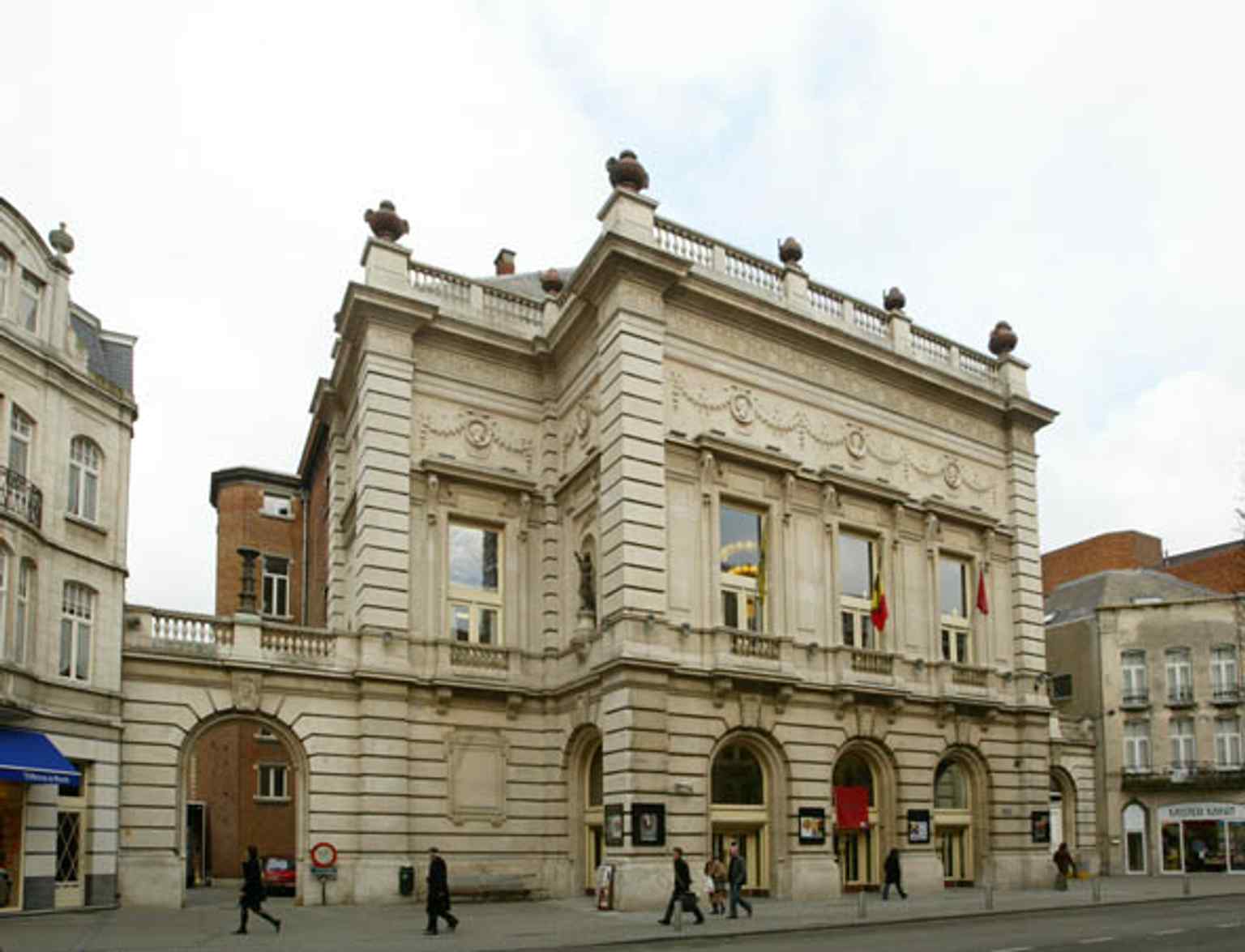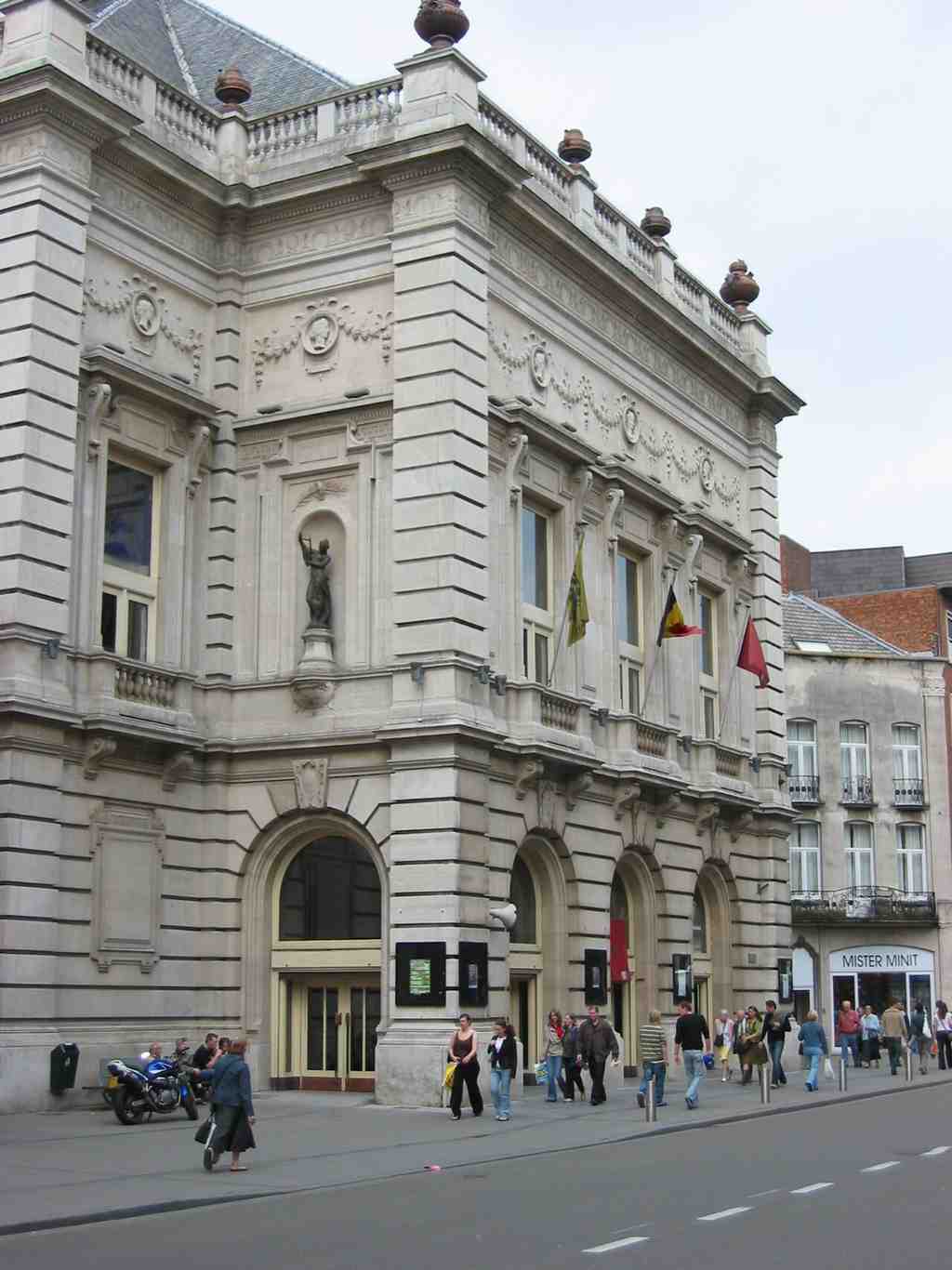
On your left stands a broad stone-and-brick theatre façade, rectangular and perfectly symmetrical, with a projecting central section and a roofline balustrade topped by restored copper urns.
Leuven has long treated public life like a performance. Knowledge stands in grand libraries, art hangs in careful frames, and here society itself bought a ticket, took a seat, and made sure the right people were watching.
This theatre began with a little urban reshuffling and a little ego, which is usually how cities get interesting. In eighteen sixty-three, the city asked architect Edward Lavergne to replace Leuven’s beloved Frascati hall after the new avenue cut through the old site. Lavergne answered with something unapologetically grand: a monumental concert and theatre building, opened in eighteen sixty-seven, with a foyer and an auditorium for around one thousand people. Inside, he arranged the traditional layers of a theatre like a social diagram: orchestra pit below, then parquet and parterre, then balconies and honor boxes. Same performance for everyone... but not the same view.
And that foyer quickly became one of Leuven’s most prestigious ballrooms. Only the city’s leading citizens got through those doors. At dances, debutantes arrived under the sharp supervision of their parents and, according to local memory, looked for a suitable Leuven student to marry. Education and courtship have always made a suspiciously efficient team in this town.
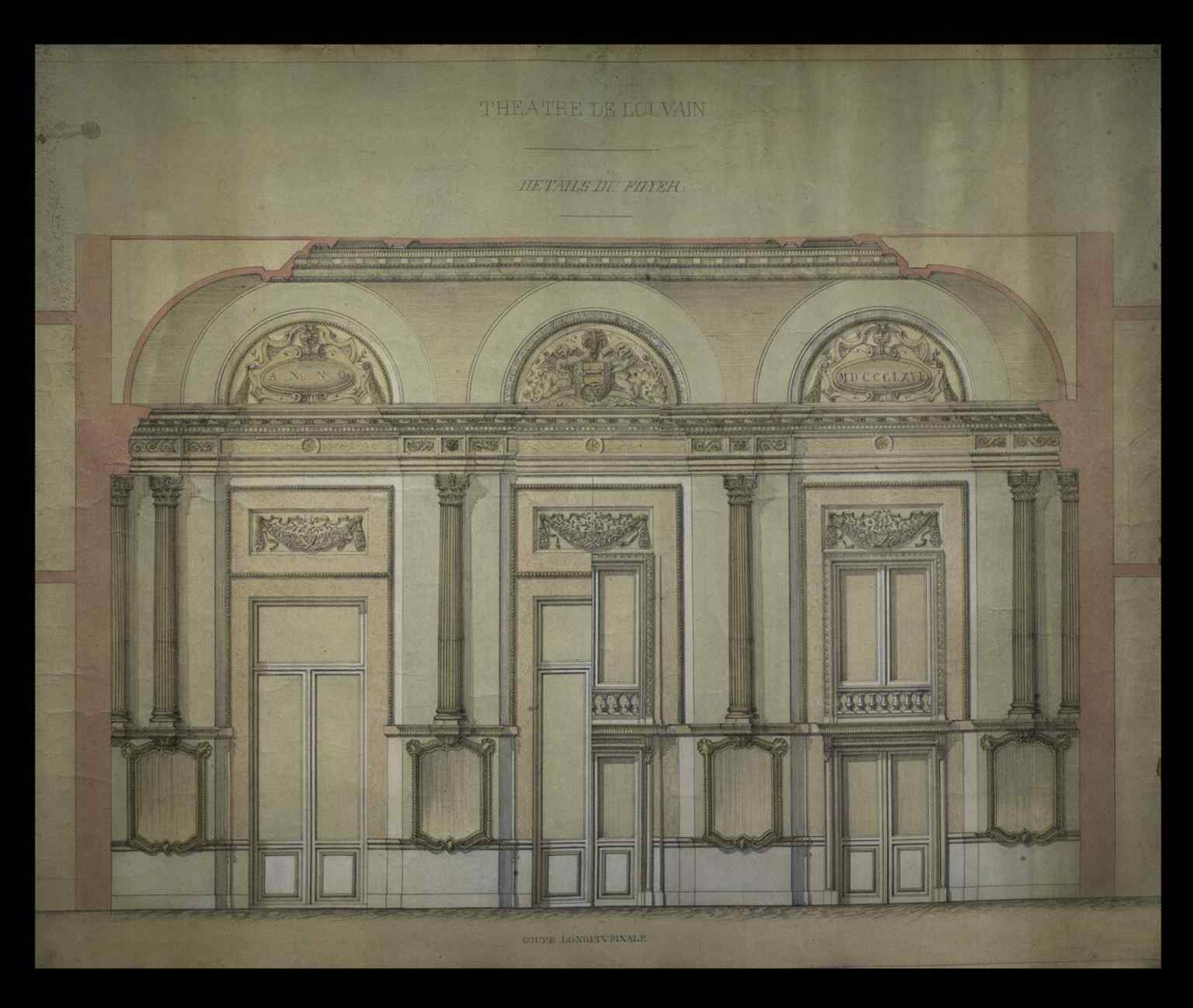
If you glance at the drawing in the app, you can see how early that ambition was baked in: this was never meant to be a modest hall, but a place where a city could admire itself in formal wear.
Then came nineteen fourteen. During the destruction that ravaged Leuven, fire tore through this theatre too. The interior burned almost completely; mainly the outer walls and the horseshoe-shaped walls of the hall remained. That surviving horseshoe matters. It held the memory of the room, like a rib cage after the breath is gone.
Leuven rebuilt, because that is one of its habits. Architect Alban Chambon finished the structural shell in nineteen thirty-one, and then Jules Van den Hende won the competition to remake the interior. He did not work alone. He gathered artists into a true total work: Geo Verbanck designed five copper bas-reliefs - shallow sculpted panels - above the entrance doors; Maurice Langaskens painted heroic and musical scenes in the foyer; Omer Dierickx traced dance through the ages; and Constant Montald gave the great dome twelve floating figures, plus a stage frieze with Apollo, the Muses, and Orpheus mourning Eurydice. High culture, yes... but with enough myth and drama to remind you that learning also likes costumes.
The rebuilt theatre opened ceremonially in March of nineteen thirty-eight and counted among the most modern in Belgium. Builders chose concrete and steel in key places instead of wood, making it safer after the fire. War struck again in nineteen forty-four and nineteen forty-five, but the roof structure held well enough for architect Louis Mispelter to repair it in nineteen fifty-two. Later restorations protected the paintings, renewed the exterior, and kept the building in active use.
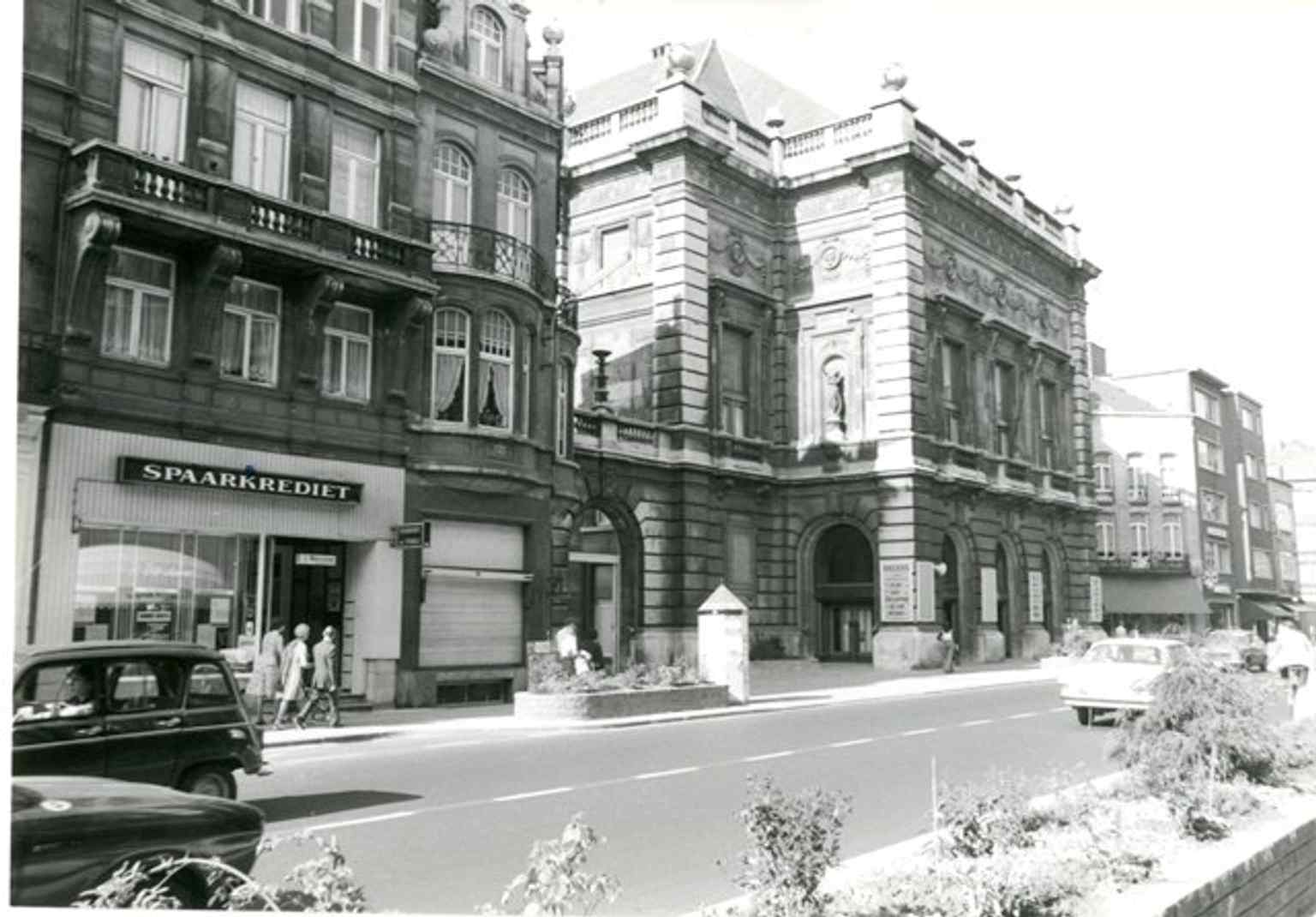
If you check the historic façade photo on your screen, you can see how firmly this rebuilt theatre reclaimed its place on the avenue. Much like the museum nearby makes art visible, this building turned culture into a public ritual of seeing and being seen.
And that is a fine Leuven lesson: even wisdom may arrive dressed for the occasion. In about three minutes, we’ll meet someone who makes that joke in bronze - Fonske.