
Barcelona Audio Tour: Historische Hoogtepunten
Onder de schitterende boulevards van Barcelona fluistert nog steeds een middeleeuwse Joodse wijk in steen, en een operagebouw bewaart de hitte van rellen in haar muren. Dit is een zelfgeleide audiotour die slingert van de Oude Synagoge naar Liceu en Gaudí's Palau Güell, waarbij opstanden, schandalen, politieke strijd en vergeten hoekjes worden onthuld waar de meeste bezoekers straal voorbij lopen. Wat gebeurde er toen de woede overspoelde op La Rambla en de stad verandering eiste vlak voor Liceu? Welke verborgen tekens nabij de Oude Synagoge wijzen op levens die zijn uitgewist, maar nog niet helemaal verdwenen zijn? Waarom verbergt Palau Güell een vreemd specifiek detail dat alleen onder een bepaalde hoek en op een bepaald uur verschijnt? Beweeg door schaduwrijke steegjes naar vergulde hallen, langs geheimen in ijzerwerk en echo's op pleinen. Verwacht spanning, ontdekking en het gevoel dat Barcelona op zijn plek valt. Druk op play en laat de stad spreken van onder de oppervlakte.
Tourvoorbeeld
Over deze tour
- scheduleDuur 120–140 minsGa op je eigen tempo
- straighten4.9 km wandelrouteVolg het geleide pad
- location_on
- wifi_offWerkt offlineEén keer downloaden, overal gebruiken
- all_inclusiveLevenslange toegangOp elk moment opnieuw afspelen, voor altijd
- location_onStart bij Plaça de Catalunya
Stops op deze tour
lock_open 3 gratis previews · 15 ontgrendelen met aankoop
Kijk even omhoog naar die hoge, puntige boog van smeedijzer. Je ziet ronde panelen met geel en blauw glas-in-lood, en in het midden hangt een sierlijk wapenschild met de woorden:…Meer lezenToon minder
Open eigen pagina →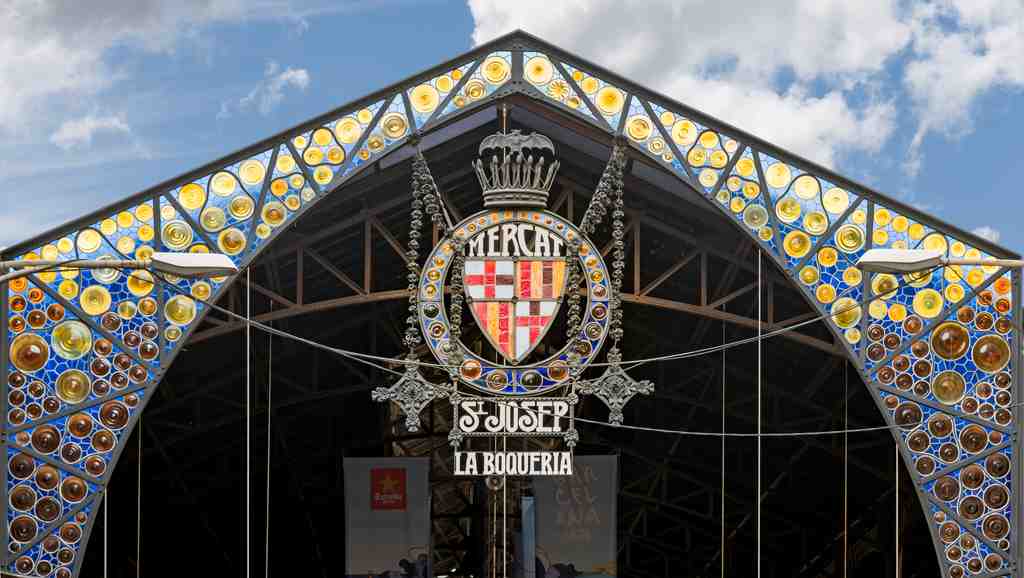
La BoqueriaPhoto: Didier Descouens, Wikimedia Commons, CC BY-SA 4.0. Cropped & resized. Veel van deze kramen worden al meer dan honderdvijftig jaar door precies dezelfde families gerund. Maar zelfs in haar gouden tijdperk van moderne gastronomie heeft de markt haar gevoel voor dramatiek nooit helemaal verloren. Neem Ramón Cabau, een lokale apotheker die dandy werd en hielp de Catalaanse keuken populair te maken. Met zijn onberispelijke pakken en een snor die bijna de zwaartekracht tartte, was hij hier een geliefde dagelijkse verschijning. Toen, op een ochtend in 1987, groette hij nonchalant zijn favoriete verkopers, pakte een glas water en pleegde zelfmoord door een cyanidepil in te slikken, midden in de drukke gangpaden. Het verlies dompelde de markt in een rouwperiode die jaren duurde.
De markt gaat door en absorbeert elke tragedie en triomf in de dagelijkse routine. Overigens zijn de kramen geopend van maandag tot en met zaterdag van 08:00 tot 20:30 uur, en op zondag gesloten.
Laten we verder gaan. Loop verder de Rambla af naar het grote operagebouw, en we treffen elkaar weer bij het Liceu.
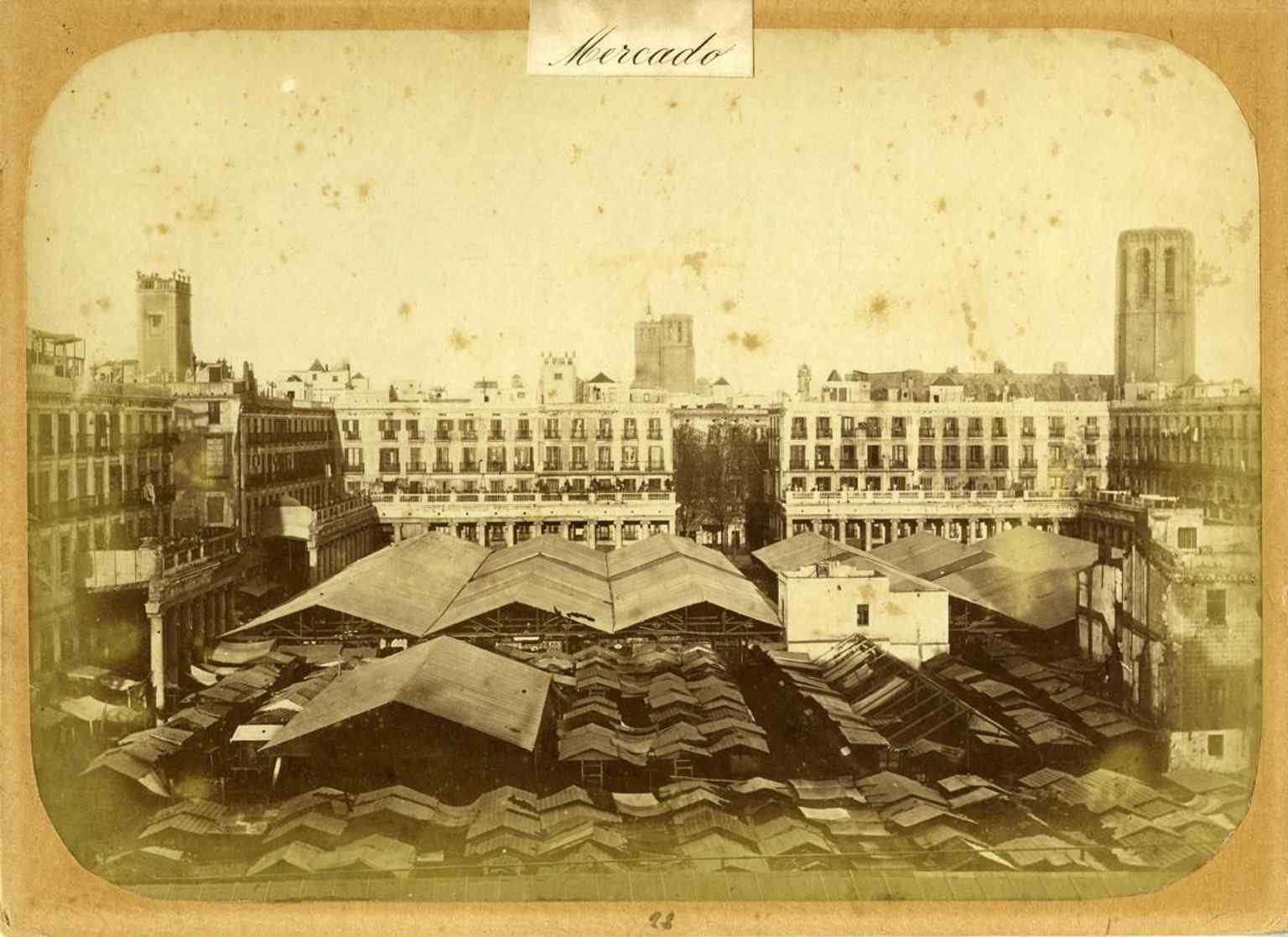
Een blik op La Boqueria uit 1874, dat begon als een openluchtmarkt buiten de stadsmuren, wat verkopers hielp om stadsbelastingen te ontwijken.
De metalen dakconstructie van La Boqueria, ingehuldigd in 1914, die beschutting biedt aan de vele levendige kramen.Photo: Joan Martí Centellas, Wikimedia Commons, Public domain. Cropped & resized. 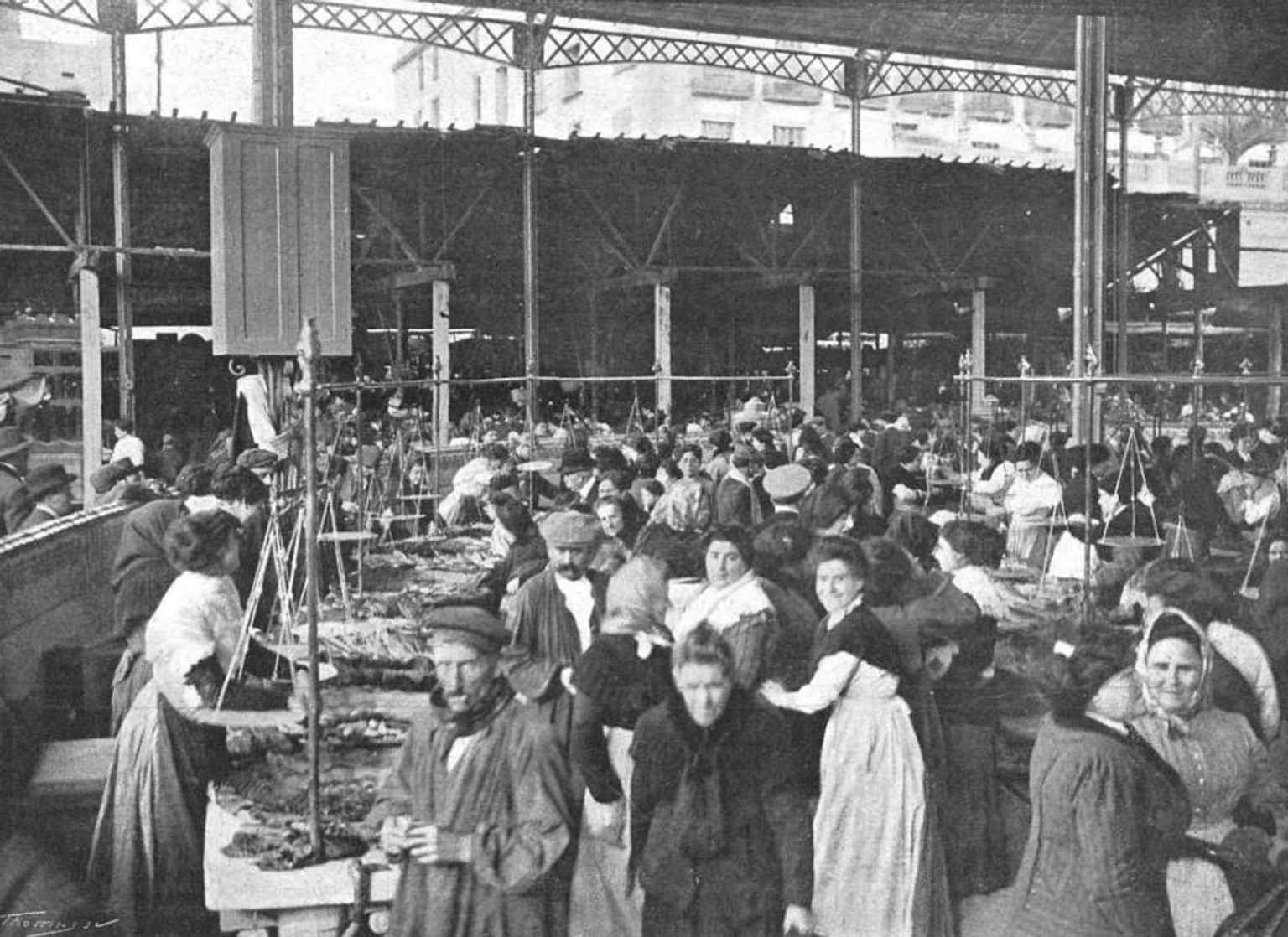
Een slagerskraam die doet denken aan de omstreden herkomst van de naam 'Boquería', mogelijk afgeleid van 'boc' (bok), verwijzend naar de vroege verkoop van geitenvlees.Photo: Frederic Ballell i Maymí, Wikimedia Commons, Public domain. Cropped & resized. 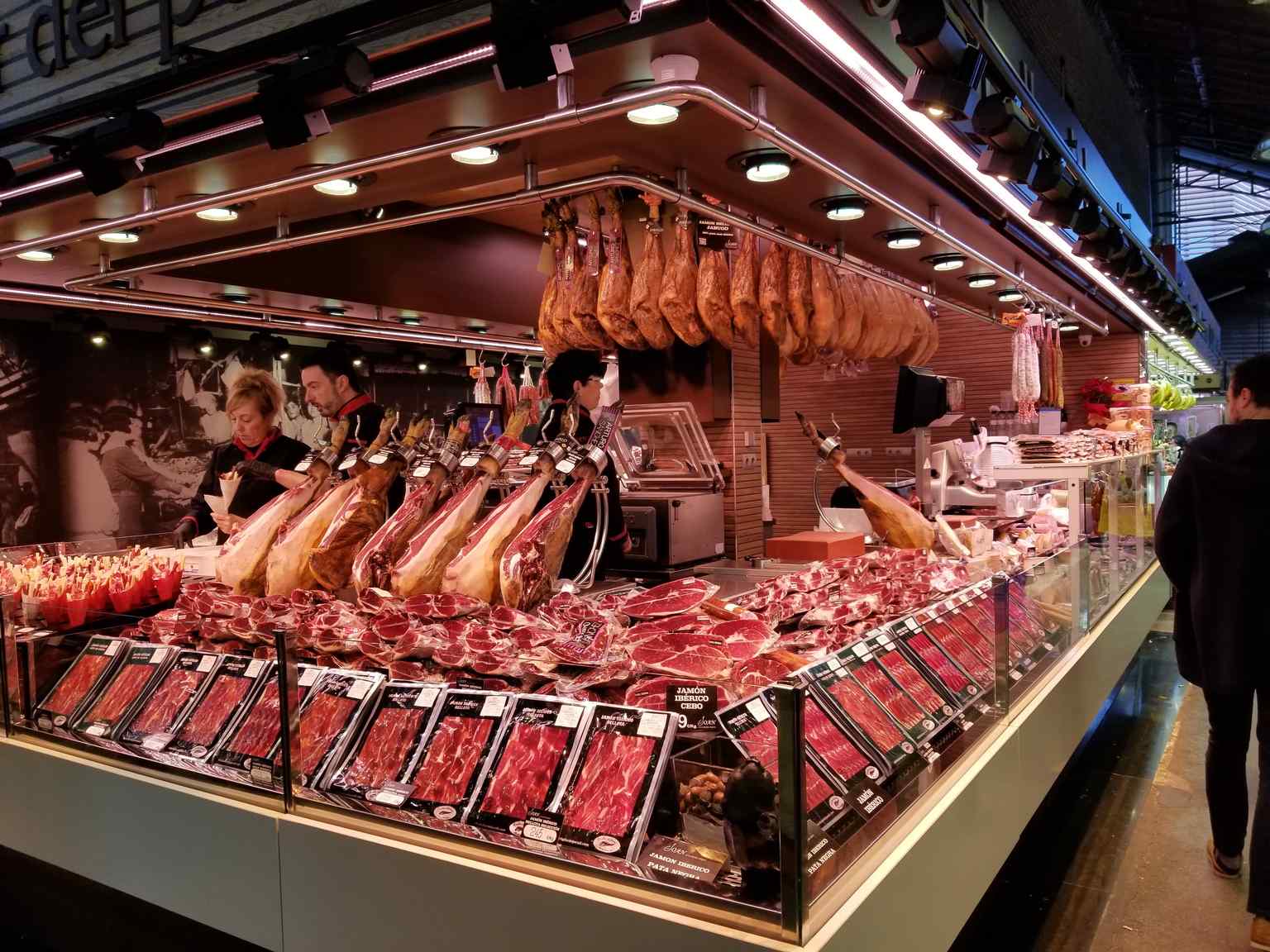
A butcher's stall reminiscent of the market's debated origin name, 'Boquería,' possibly derived from 'boc' (male goat), referring to early sales of goat meat.Photo: DuckWrangler97, Wikimedia Commons, CC BY-SA 4.0. Cropped & resized. 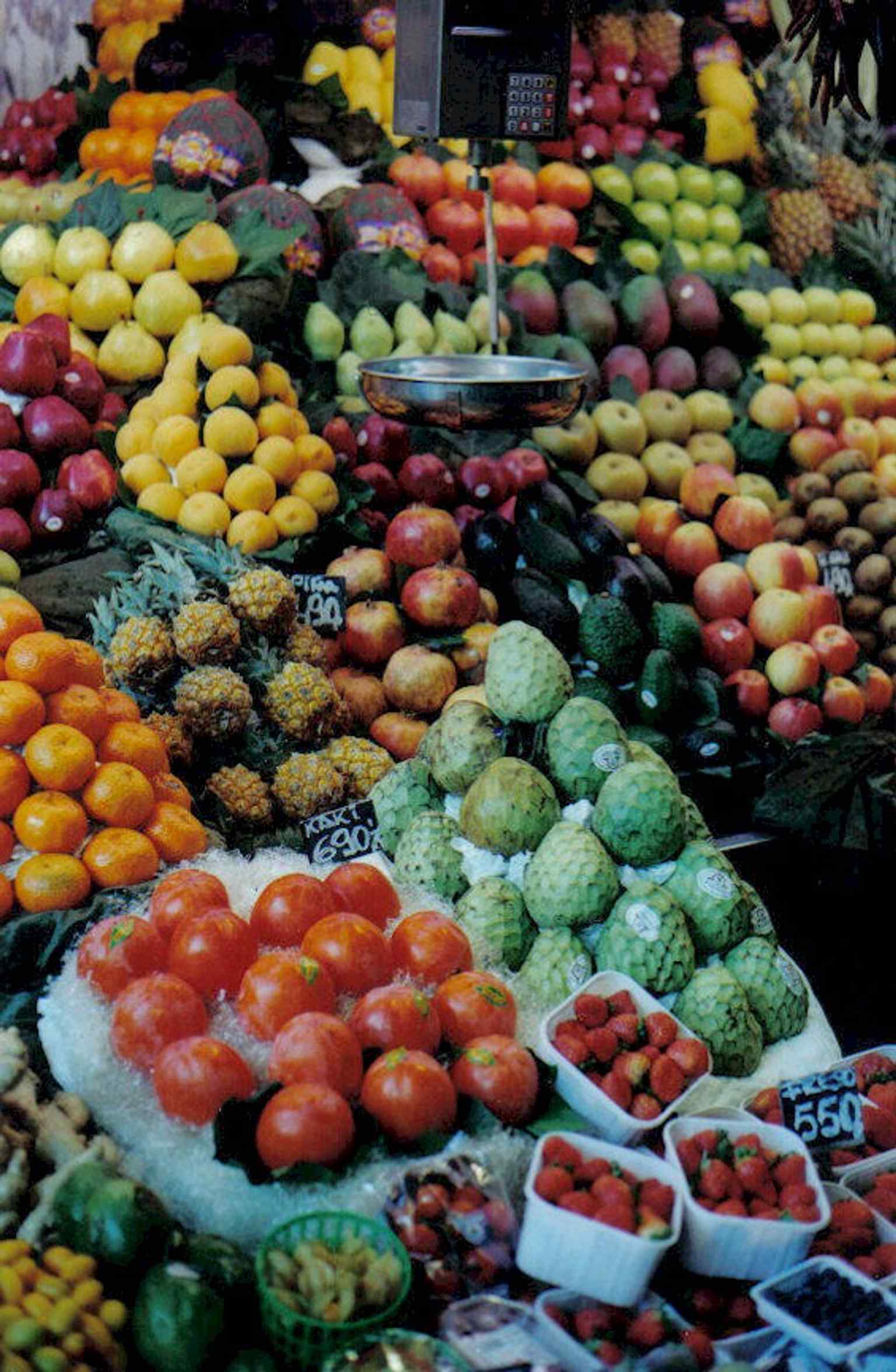
A vibrant greengrocer stall, exemplifying the deep family history of La Boqueria, where some stalls have been passed down through generations for over 150 years.Photo: Jruizalvarez, Wikimedia Commons, CC BY-SA 4.0. Cropped & resized. Kijk even naar links. Je ziet dat grote, zandkleurige gebouw met in het midden drie opvallende boogramen, bovenaan een rond klokfront, en helemaal bovenop zo’n groen dakornament…Meer lezenToon minder
Open eigen pagina →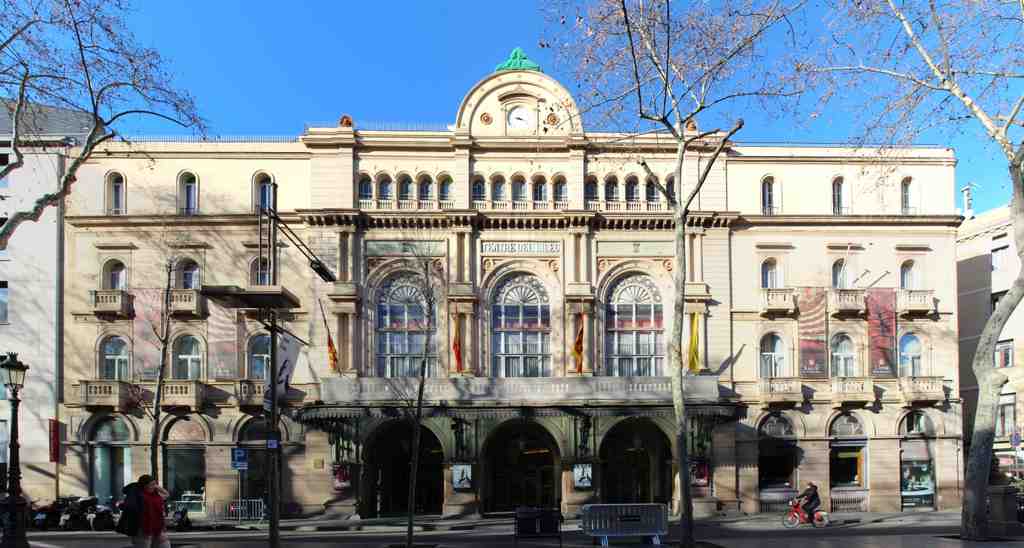
LiceuPhoto: Chabe01, Wikimedia Commons, CC BY-SA 4.0. Cropped & resized. Look to your left and you will spot a grand, tan stone building defined by three prominent arched windows in the center, a rounded clock pediment at the top, and a distinctive green roof ornament crowning the structure. This is the Gran Teatre del Liceu, Barcelona's oldest active theater, and frankly, it is a miracle it is still standing. If buildings have nine lives, this opera house has used up quite a few of them.
When it was built in 1847, it was funded by private citizens rather than a monarchy, which is why you will not find a royal box inside. But they built it right on top of a former convent. According to local lore, the displaced religious figures left behind a curse, dooming the theater to repeatedly burn down. Looking at its history, you might start to believe it.
The first devastating fire hit in 1861, leaving only the facade and a few halls intact. They rebuilt it. Then, during the opening night in 1893, an anarchist threw two bombs from the upper gallery down into the stalls, the main ground floor seating area. Twenty people were killed. The death toll would have been worse, but one bomb miraculously failed to detonate because its fall was broken by a victim. The theater rebuilt again, leaving the seats of the victims conspicuously empty for years as a memorial. Some staff even say they still hear phantom singing and whispers near those private boxes.
But the curse was not finished. In 1994, a workman's blowtorch sparked a fire that raged completely out of control. Huge balls of fire shot into the air, incinerating the instruments in the orchestra pit. Crowds stood weeping in the street, including the famed Catalan soprano Montserrat Caballé, who considered the Liceu her second home.
Yet again, the city refused to let the music die. They rebuilt it, merging the surviving historical architecture with state-of-the-art technology. You can see how the energy outside the theater has evolved over the years in the app's before and after image. Over a century later, La Rambla remains a bustling thoroughfare past the iconic Gran Teatre del Liceu, capturing the shift from early 20th-century pedestrians to modern-day tourists.
My absolute favorite moment of modern resilience happened here in 2020. To mark the end of the strict pandemic lockdown, the Liceu reopened not for humans, but for an audience of 2,292 house plants. A string quartet played Puccini to a sea of green leaves, and afterward, the plants were donated to local healthcare workers. That is the essence of this place, an institution forever caught in a dance between honoring its tragic history and embracing wild, forward-thinking reinvention.
If you want to look inside, the theater is usually open to visitors Monday through Saturday until seven, though it closes at two on Saturdays and is entirely closed on Sundays. For now, we are going to keep moving. Just ahead, look for the narrow street leading off La Rambla, which will take us to our next stop, Palau Güell, about a three-minute walk away.
Toon 15 stops meerToon minder stopsexpand_moreexpand_less
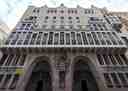
Kijk even naar dat monumentale, lichtgekleurde stenen gebouw. Beneden zie je twee enorme parabolische bogen, gevuld met fijn smeedijzerwerk, met daartussen een opvallend ijzeren…Meer lezenToon minder
Open eigen pagina →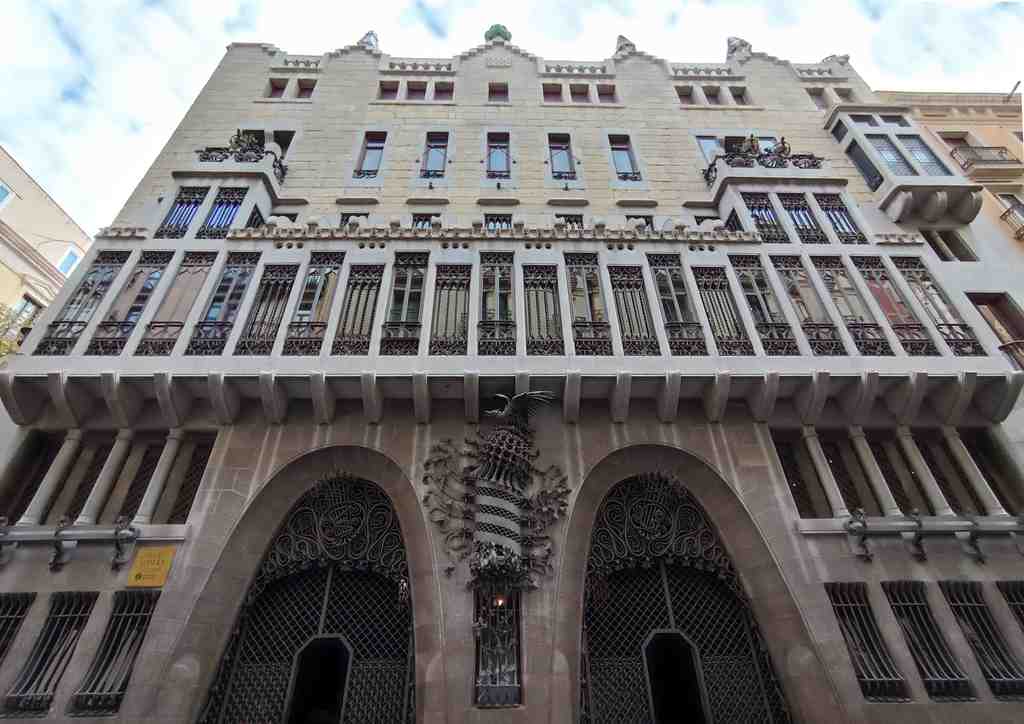
Palau GüellPhoto: Canaan, Wikimedia Commons, CC BY-SA 4.0. Cropped & resized. Look for a monumental pale stone building dominated by two massive parabolic arches on the ground floor, filled with intricate ironwork and separated by a striking wrought-iron crest.
This is Palau Güell. It was the first major commission for a young, relatively unknown architect named Antoni Gaudi.
Built between 1886 and 1890, this palace belongs to Gaudi's orientalist phase, drawing heavy inspiration from the geometric patterns and elaborate tile work of Near Eastern and Islamic art. It marked the dawn of Catalan Modernism, a regional artistic movement that rejected strict, classical architecture in favor of bold, highly decorative, and often nature-inspired designs. Gaudi poured his absolute soul into this project, coming up with twenty-five different solutions just for the facade you see here.
But the immense wealth that paid for this architectural masterpiece had a deeply troubling origin, as the patron's father, Joan Güell, built his initial fortune in Cuba through the illegal transatlantic slave trade. That dark money laid the foundation for the family's massive industrial empire back in Barcelona.
It is a heavy thing to stand before such brilliance and know exactly what bought it. Eusebio Güell, the son who inherited that fortune and commissioned this palace, wanted a home that would project his absolute power. Just look at those immense entrance doors with their iron mesh. They were designed with those towering parabolic shapes, which are tall curves similar to the path of a tossed object, specifically so that high-society guests could ride their horse-drawn carriages straight into the ground floor. If you look closely, the ironwork at the top of the doors cleverly hides two twisting snakes that form the letters E and G, for Eusebio Güell.
The influence of that dark wealth even bent the city's rules. The municipal architect originally rejected Gaudi's design because the solid stone facade violated city ordinances, which strictly required lighter iron and glass structures for these types of viewing galleries. But Güell simply pulled a few political strings in the local government, and the city magically approved the heavy stone construction anyway. The elite truly wrote their own rules, pushing their bold visions of the future forward while standing on the silent ghosts of the past.
The palace is open Tuesday through Sunday from ten in the morning to eight in the evening, if you ever want to explore the stunning central dome and the wildly colorful chimneys on the roof. For now, let us head back toward the heart of the Gothic Quarter, as our next stop, Plaça Reial, is just a short two-minute walk away.
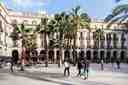
Kijk even goed naar dit rechthoekige plein, met die rustige, uniforme gevels van licht natuursteen. Onderaan loopt een doorlopende arcade: een rij bogen waar je onderdoor kunt…Meer lezenToon minder
Open eigen pagina →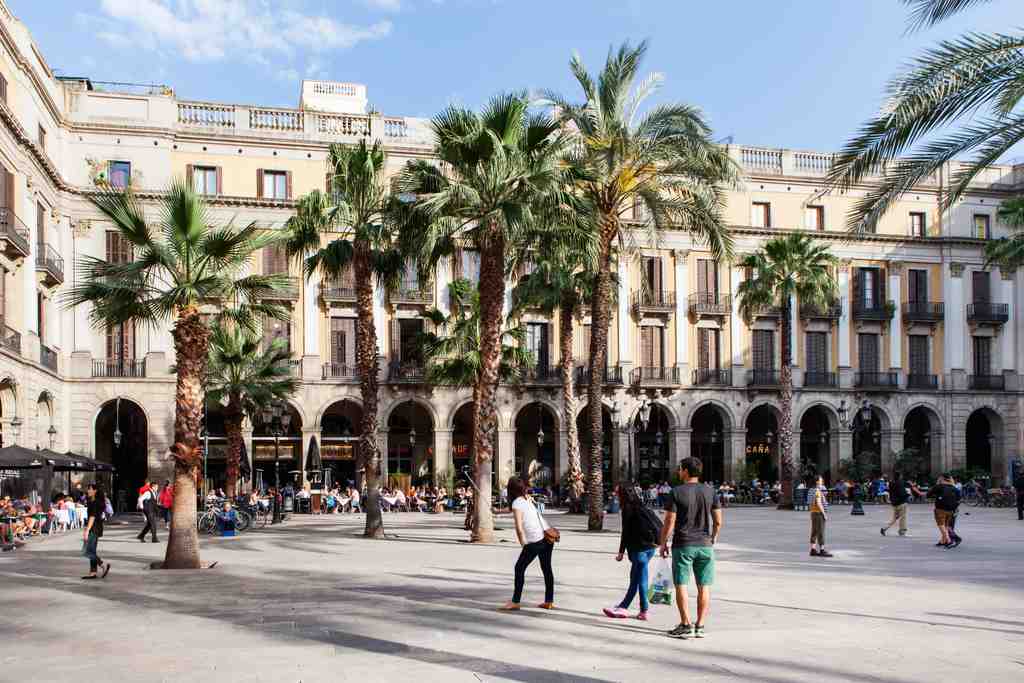
Plaça ReialPhoto: Paux127, Wikimedia Commons, CC BY-SA 4.0. Cropped & resized. Tegen de twintigste eeuw bood het elegante uiterlijk van het plein onderdak aan enkele heerlijk excentrieke figuren. In 1919 opende hier een gerenommeerde taxidermiewinkel, gespecialiseerd in het prepareren en opzetten van dieren. Het trok iedereen aan, van Hollywoodster Ava Gardner tot koning Alfonso XIII, die de poot van zijn lievelingspaard liet prepareren. Natuurlijk was Salvador Dalí een fan. In 1960 poseerde de surrealistische schilder hier midden op het plein bovenop een opgezette Javaanse neushoorn, waarbij hij de verhuizers twintig duros betaalde, ongeveer vijftig dollar van nu, voor hun moeite. Naar verluidt liep hij ook naar buiten met een gorillaskelet waar hij nooit voor heeft betaald.
Voordat we vertrekken, let op de uitgebreide ijzeren lantaarnpalen. Kijk goed naar de kronkelende slangen en de gevleugelde helm van Mercurius. Dat was een van de allereerste gemeentelijke opdrachten die in 1879 aan een jonge Antoni Gaudí werd gegeven.
Ondanks alle pogingen tot koninklijke waardigheid, heeft Plaça Reial altijd de voorkeur gegeven aan de rebellen, de kunstenaars en de verschoppelingen die het als hun eigen plek opeisten. Laten we dieper de labyrintische straten van de Gotische wijk ingaan, op weg naar de grote middeleeuwse muren van Santa Maria del Pi.
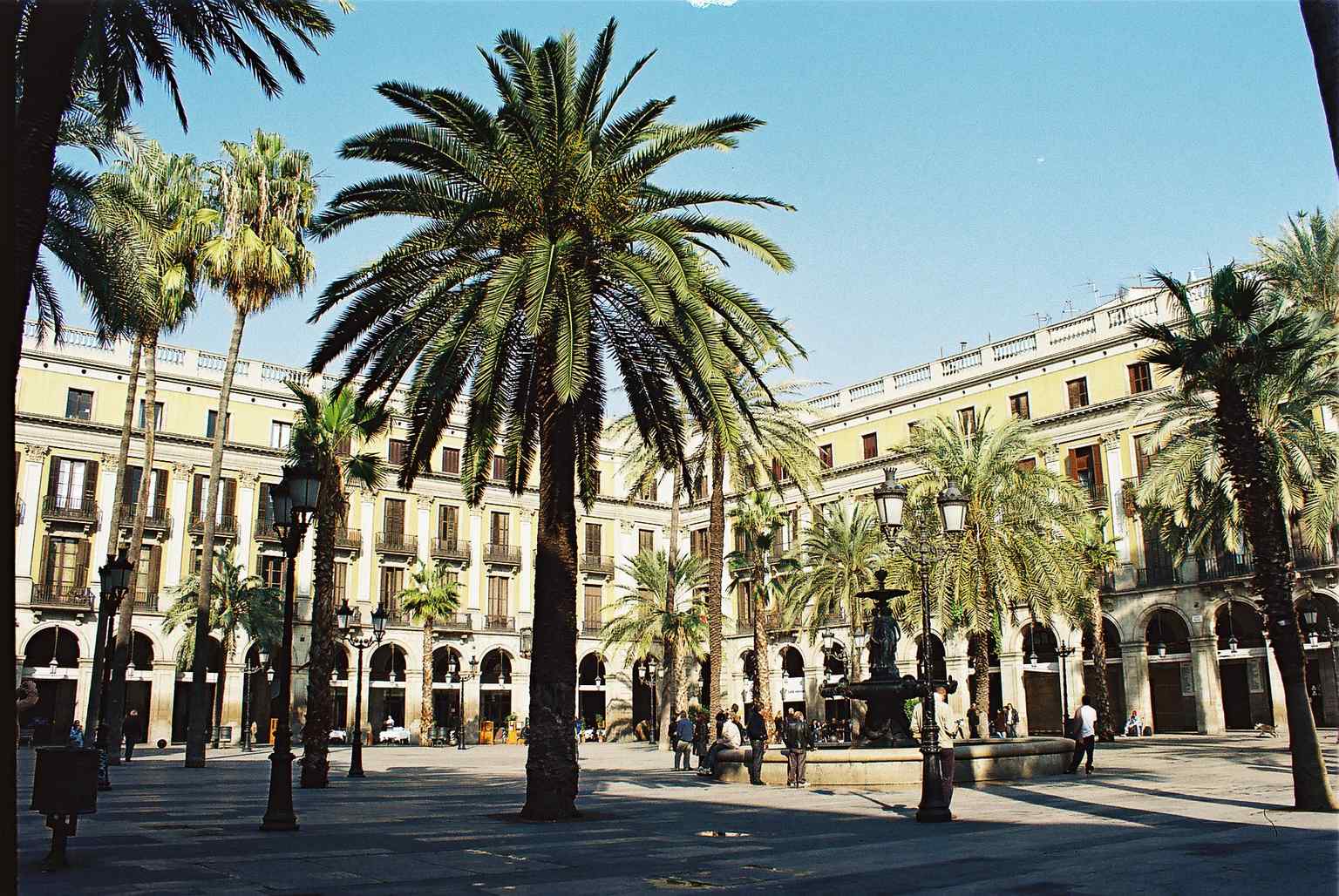
Observeer de neoklassieke architectuur van de gebouwen op het Plaça Reial, ontworpen door Francisco Daniel Molina, met galerijen met portieken op de begane grond en Korinthische pilasters op de bovenverdiepingen.Photo: Ralf Roletschek, Wikimedia Commons, CC BY-SA 3.0. Cropped & resized. Een blik op Plaça Reial uit 1893, waarop het plein te zien is enkele decennia na de bouw en rond de tijd van de politieke onrust aan het eind van de 19e eeuw, waaronder een anarchistische bomaanslag in 1892.
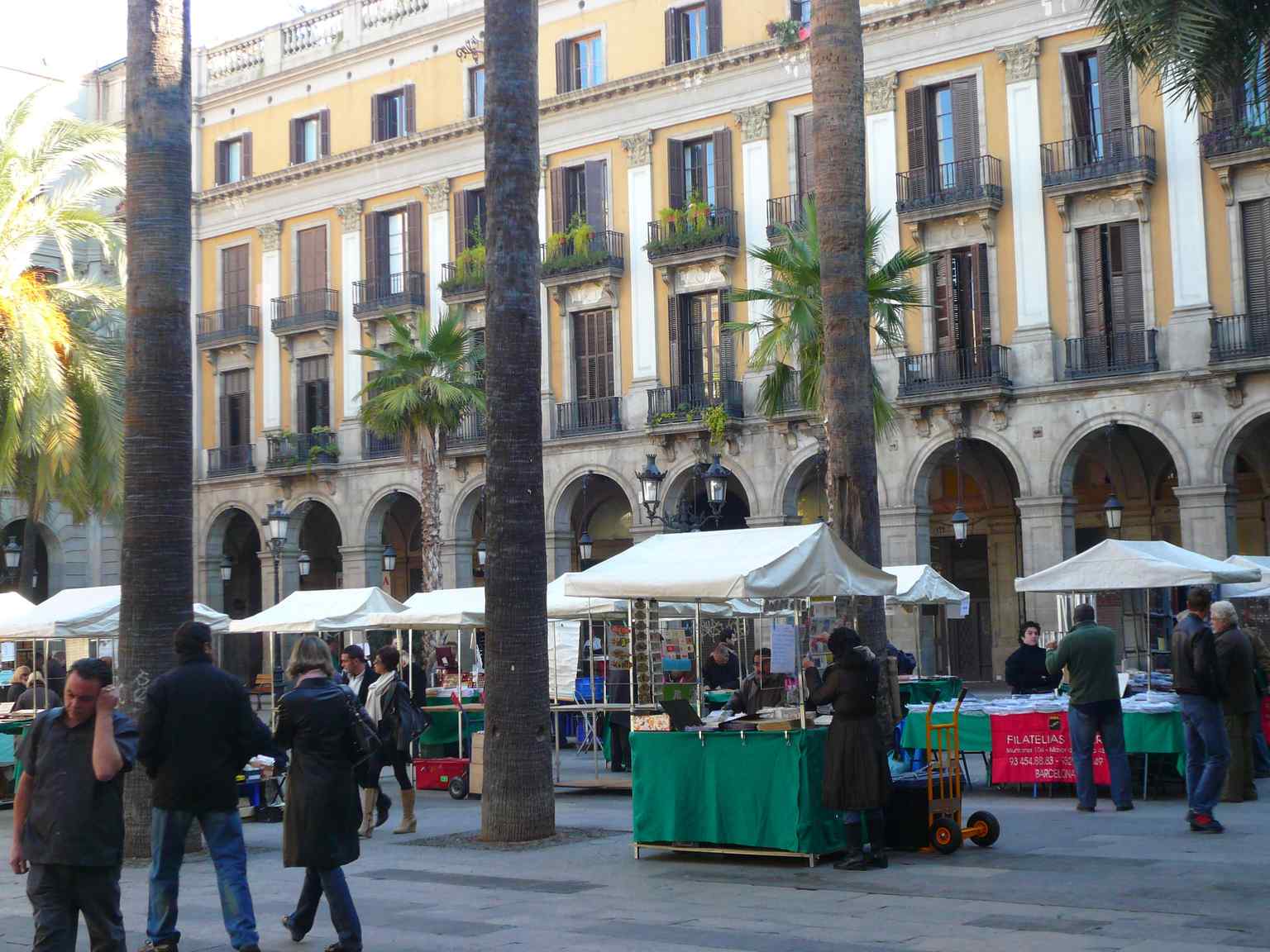
Observe the neoclassical architecture of the Plaça Reial's buildings, designed by Francisco Daniel Molina, featuring ground-floor porticoed galleries and Corinthian pilasters on the upper levels.Photo: Pere prlpz, Wikimedia Commons, CC BY-SA 3.0. Cropped & resized. 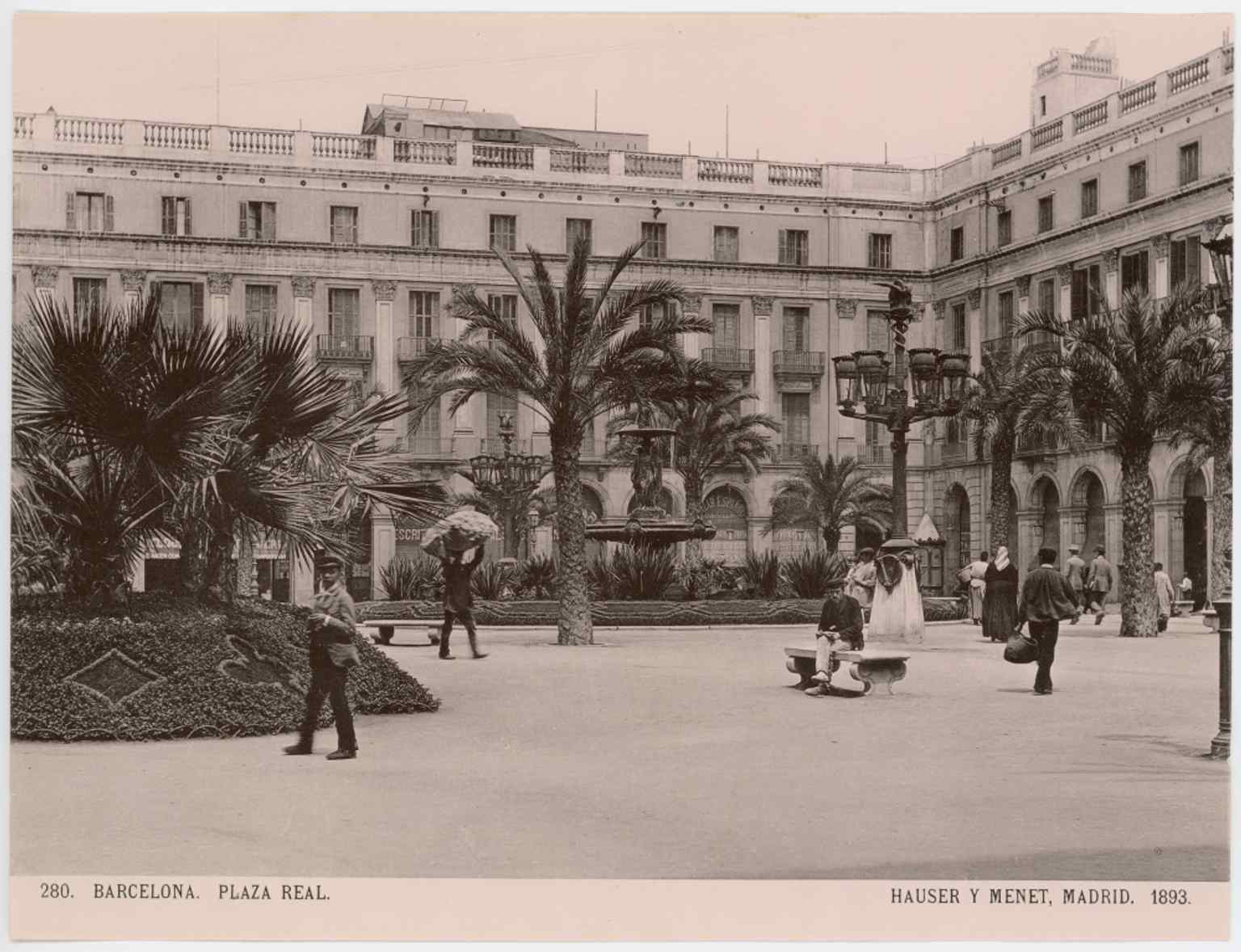
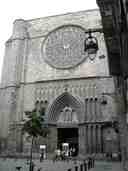
A view of Plaça Reial from 1893, capturing the square decades after its construction and around the time of the late 19th-century political unrest, including an anarchist bombing in 1892.Photo: SMU Libraries Digital Collections, Wikimedia Commons, No restrictions. Cropped & resized. Kijk even naar links: daar staat Santa Maria del Pi. Een flinke, vlakke stenen gevel, bijna streng van eenvoud… en dan dat enorme ronde roosvenster met twaalf “armen” erboven.…Meer lezenToon minder
Open eigen pagina →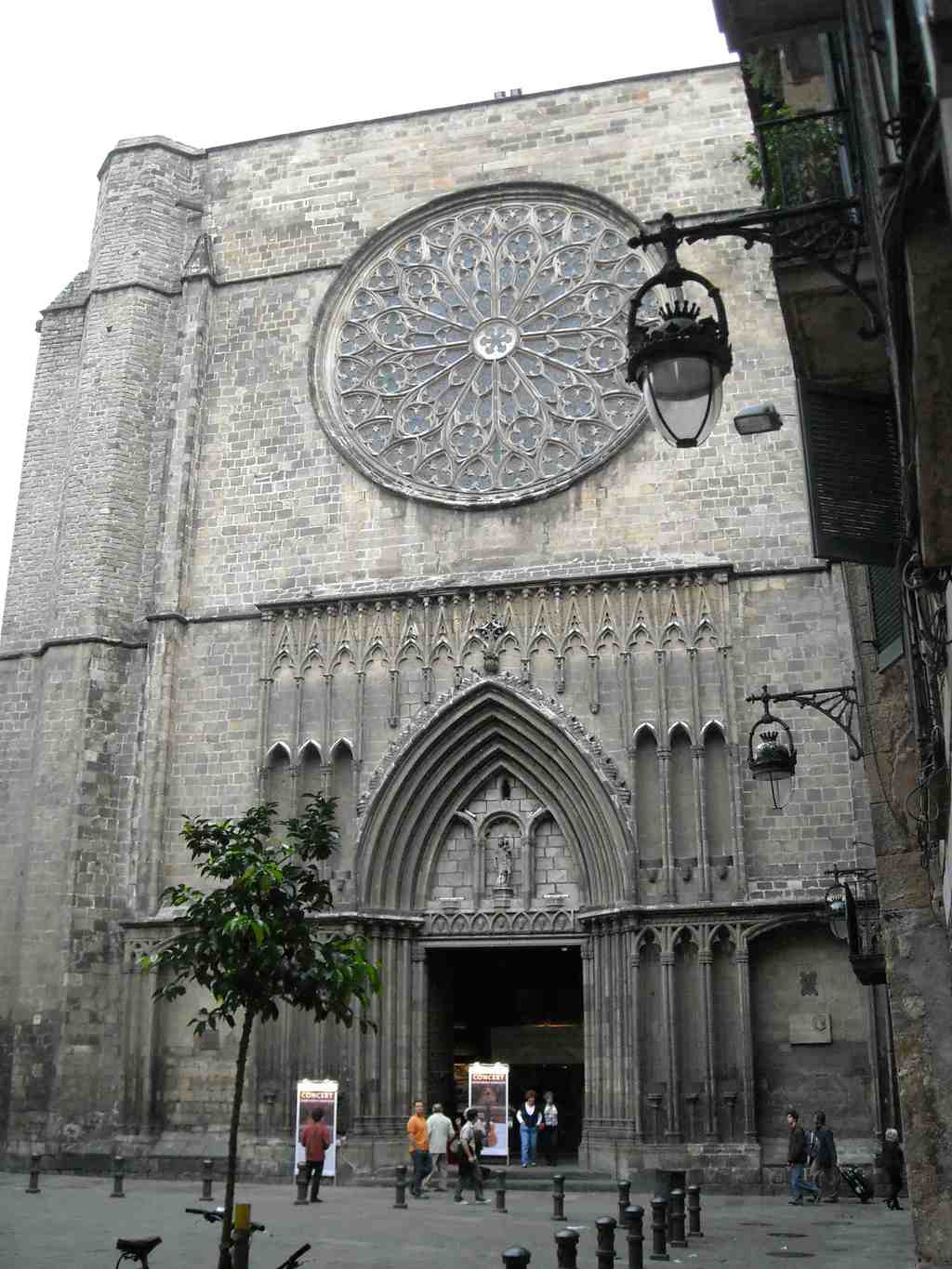
Santa Maria del PiPhoto: Cruccone, Wikimedia Commons, CC BY-SA 3.0 ES. Cropped & resized. Notice Santa Maria del Pi on your left, with its massive facade of flat stone defined by its enormous, twelve-armed circular rose window sitting squarely above a pointed, deeply recessed archway.
The name translates to Saint Mary of the Pine. According to local lore, a wooden image of the Virgin Mary was once found hidden deep inside the heart of a pine tree. To honor this, the community planted a pine right out front. It became a living anchor, a piece of ancient earth holding its ground as the stone city built up and expanded around it.
In the year fifteen sixty-eight, a specific pine was planted that grew as tall as the surrounding rooftops. It survived centuries of urban expansion, only to meet its end in eighteen oh two when a soldier inexplicably stabbed its trunk with his bayonet. The tree died, but the locals simply planted another. They have kept replanting it ever since. That insistence on keeping a green, living monument in a paved square is a quiet rebellion, ensuring old traditions survive even as the modern world encroaches.
The basilica itself knows all about survival. In nineteen thirty-six, at the dawn of the Spanish Civil War, anti-clerical militias set the building on fire. The heat was so intense it collapsed the vaulted ceilings, the curved stone arches supporting the roof, and shattered that magnificent rose window, sending thousands of glass shards raining down onto the square. Yet, as the political forces of tomorrow threatened to completely erase the past, ordinary neighbors rushed into the smoke. They ignored the valuable metals, instead grabbing the parish archives. They hid twelfth-century paper documents in their own homes, protecting the historical memory of their community from the fires of upheaval.
There are older, darker memories woven into these stones, too. Look up toward the top of that towering, eight-sided bell tower. Its construction in the fifteenth century was such a monumental challenge that rumors naturally blamed the supernatural. Legend says the master builder struck a deal with the devil, promising his soul in exchange for completing the tower. The devil would collect his due the moment the architect set foot on the one-hundredth step of the spiral staircase. The architect simply outsmarted him by stopping his work on the stairs at step ninety-nine, focusing on the rest of the church until he died peacefully of old age. When his successor finally added the hundredth step, the devil was so enraged at being cheated that he stomped his foot, leaving a deep hoofprint in the stone. It drew so many curious onlookers that nineteenth-century church authorities eventually had to patch it with cement just to stop the spectacle.
This basilica is a quiet sanctuary where old mysticism still pushes back against a purely rational world. If you want to step inside, the church is open daily, though Sunday hours are a bit shorter. For now, let us head just around the corner to seek out an aristocratic residence, making the short walk over to Palau Maldà.
Kijk even naar het stenen gebouw links van je. Het is vrij strak en rechthoekig, met keurige rijen smeedijzeren balkonnetjes. En dan die grote, gevormde stenen boog rond de…Meer lezenToon minder
Open eigen pagina →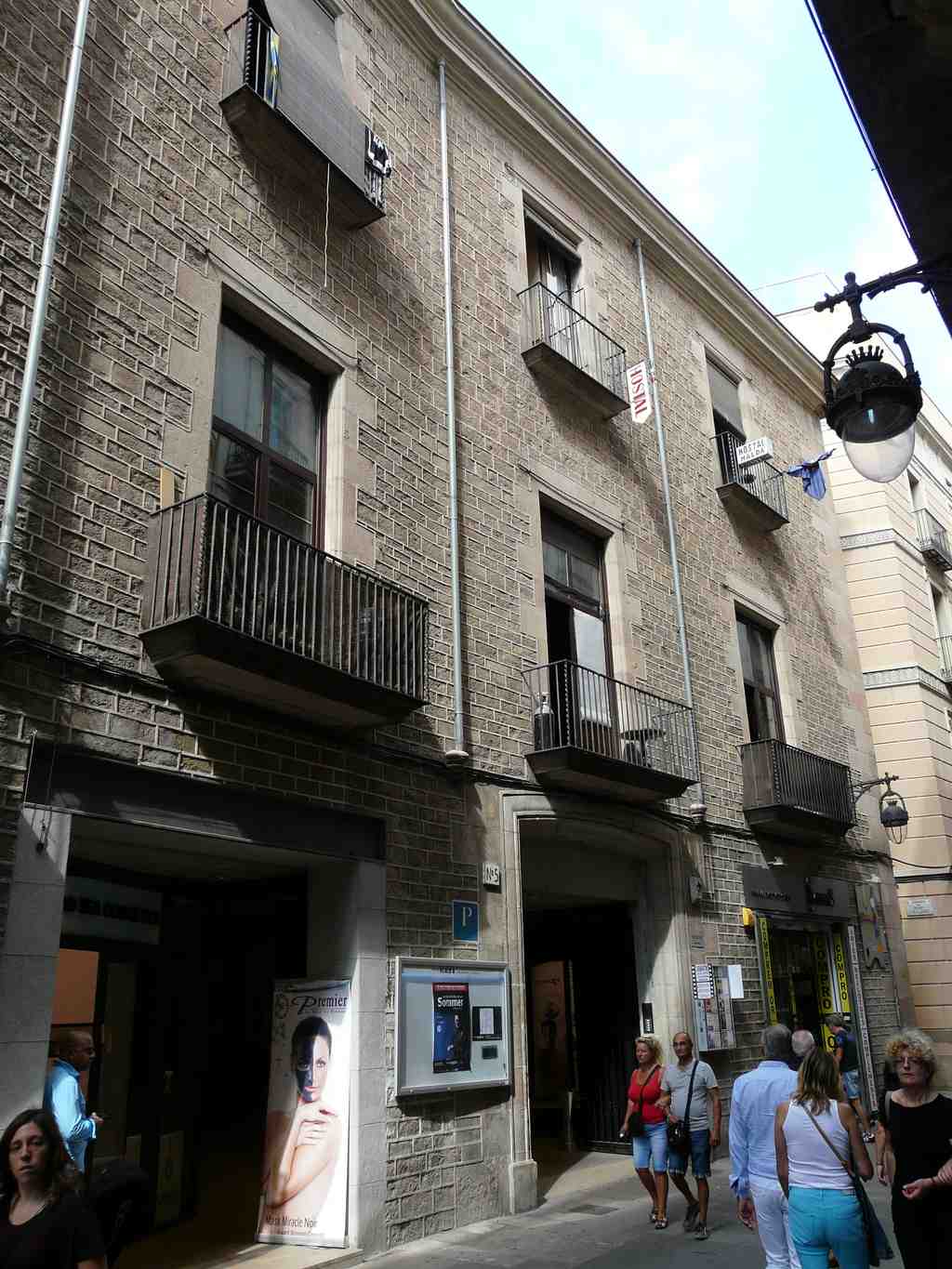
Palau MaldàPhoto: pere prlpz, Wikimedia Commons, CC BY-SA 3.0. Cropped & resized. In de achttiende eeuw behoorde dit paleis toe aan Rafael de Amat, de eerste baron van Maldà. Rafael was een excentrieke aristocraat wiens belangrijkste levenswerk een vijftigdelig persoonlijk dagboek was. Hij was geobsedeerd door wat hij de zoete ledigheid van zijn leven noemde. Verre van een groot intellectueel schreef de baron uitsluitend voor zijn eigen plezier, waarbij hij zijn pagina's vulde met gedetailleerde, bijna obsessieve verslagen van zijn extravagante maaltijden. Hij verdedigde fel zijn recht om gewoon goed te eten en nog beter te drinken, en hij weigerde pertinent om in het Castiliaans Spaans te schrijven, wat hij afdeed als de taal van de belastinginner.
Maar die comfortabele, frivole aristocratische bubbel knapte in 1808. Toen de Fransen binnenvielen tijdens de Onafhankelijkheidsoorlog, werd de bange baron gedwongen zijn geliefde paleis te ontvluchten. Hij bracht zijn laatste jaren door als een rijke voortvluchtige, dwalend van stad naar stad, terwijl hij woedend in zijn dagboek schreef over hoeveel hij zijn gezellige leven hier miste.
Sinds die tijd heeft dit gebouw voortdurend geprobeerd een nieuwe toekomst voor zichzelf uit te vinden, om vervolgens weer te worden teruggehaald door de geschiedenis. Tegen 1942 was de familie verhuisd en werden de begane grond en de tuinen omgevormd tot de Galerías Maldà. Dit waren met glas overdekte winkelgangen naar het model van de Parijse passages. Ze waren een enorm succes. Er was zelfs gedurende meer dan zeventig jaar een geliefd poppenziekenhuis gevestigd, waar speelgoedchirurgen porseleinen ogen repareerden en stoffen ledematen hechtten.
Boven werden de voormalige privéconcertzalen van de baron uiteindelijk een theater. Bekijk de tweede afbeelding in uw app om de binnentrap te zien die naar die bewuste speelruimte leidt. Maar die muren herbergen een dieper geheim. Tijdens de Spaanse Burgeroorlog in de jaren dertig, terwijl kerken in de hele stad werden aangevallen, fungeerde een van de kleine theaterzalen van het paleis in het geheim als een Baskische katholieke kapel. Het bleef veilig open voor aanbidding, vlak onder de neus van iedereen. Tientallen jaren later, toen de bioscoop van het gebouw in 2006 werd gerenoveerd, deden arbeiders een verrassende ontdekking. Direct achter het filmscherm verborgen zat een grote hornacina, een decoratieve nis in de muur, die ooit religieuze beelden bevatte voor die geheime oorlogsgemeente.
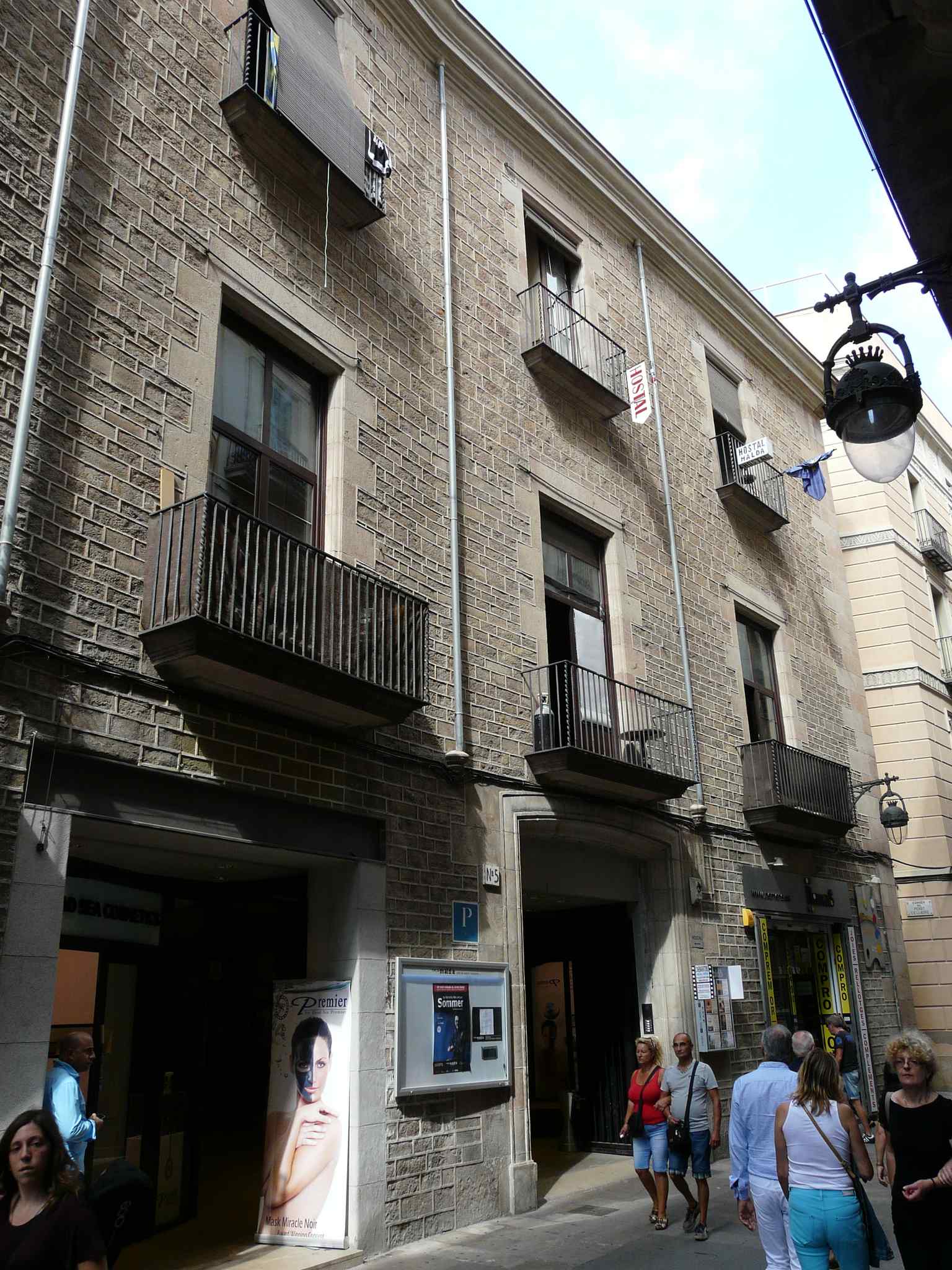
De hoofdgevel van Palau Maldà aan de Carrer del Pi, met de grote stenen boog die dienst doet als ingang naar de historische Galerías Maldà, oorspronkelijk de stallen van het paleis.Photo: pere prlpz, Wikimedia Commons, CC BY-SA 3.0. Cropped & resized. Back in the eighteenth century, this palace belonged to Rafael de Amat, the first Baron of Maldà. Rafael was an eccentric aristocrat whose main life's work was a fifty-volume personal diary. He was obsessed with what he called the sweet idleness of his life. Far from being a grand intellectual, the Baron wrote entirely for his own amusement, filling his pages with detailed, almost obsessive accounts of his extravagant meals. He fiercely defended his right to just eat well and drink better, and he absolutely refused to write in Castilian Spanish, which he dismissed as the language of the tax collector.
But that comfortable, frivolous aristocratic bubble popped in 1808. When the French invaded during the War of Independence, the terrified Baron was forced to flee his beloved palace. He spent his final years as a wealthy fugitive, wandering from town to town, furiously writing in his diary about how much he missed his cozy life back here.
Since then, this building has constantly tried to invent a new future for itself, only to be pulled back by its history. By 1942, the family had moved out, and the ground floor and gardens were transformed into the Galerías Maldà. These were glass-covered shopping corridors modeled after Parisian arcades. They were a massive hit. They even housed a beloved doll hospital for over seventy years, where toy surgeons would repair porcelain eyes and stitch up cloth limbs.
Upstairs, the Baron's former private concert halls eventually became a theater. Take a look at the second image on your app to see the interior staircase leading up to that very performance space. But those walls hold a deeper secret. During the Spanish Civil War in the 1930s, while churches across the city were being attacked, one of the palace's small theater rooms secretly functioned as a Basque Catholic chapel. It remained safely open for worship right under everyone's noses. Decades later, when the building's cinema was being renovated in 2006, workers made a surprising discovery. Hidden directly behind the movie screen was a large hornacina, a decorative recessed niche in the wall, that once held religious figures for that secret wartime congregation.
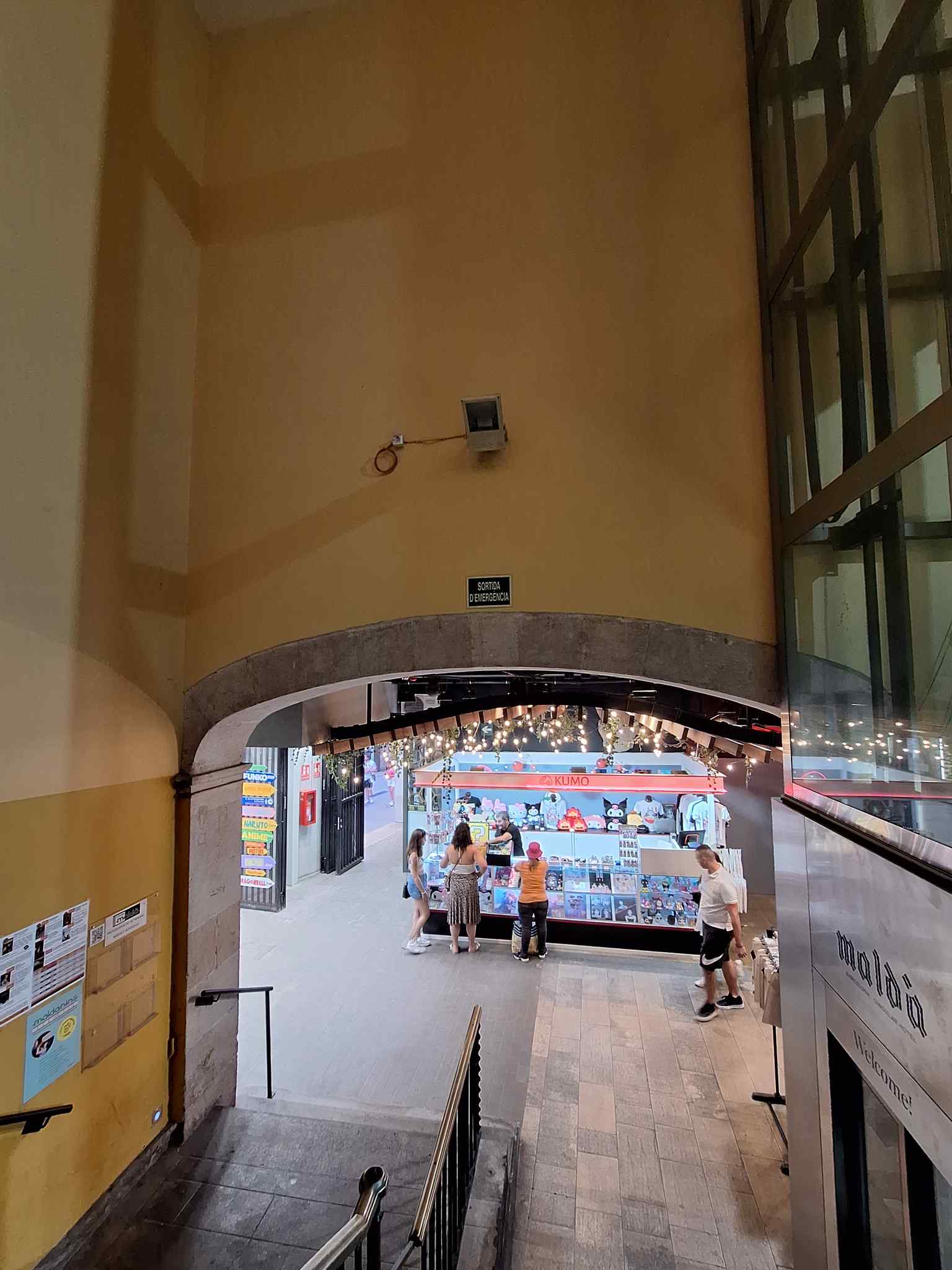
The staircase leading to the Teatre Maldà, a space within the palace once used for private concerts by the Baron of Maldá and officially inaugurated as a theater in 1996.Photo: Pere López Brosa, Wikimedia Commons, CC BY-SA 4.0. Cropped & resized. As for the shopping galleries below, they slowly turned into a ghost town by the 1980s. A sudden burst of modern progress arrived in 2017 when a massive Harry Potter store opened, briefly transforming the crumbling corridors into a booming hub for fantasy and pop culture fans. But the magic did not last. By late 2024, almost all the new themed shops abruptly closed their doors, leaving the historic corridors mostly empty once again.
It seems this palace is always caught in a tug of war between its grand visions of the future and the quiet echoes of its past. Let us leave this fading aristocratic playground behind and head toward an entirely different kind of survival. We are taking a five-minute walk over to our next stop, the Ancient Synagogue.
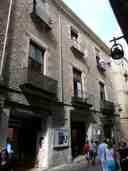
Richt je blik even naar links, op die strenge, rechthoekige gevel van gladde, zandkleurige steen. In het midden zit een grote boogdeur, en precies daarboven een balkon dat nogal…Meer lezenToon minder
Open eigen pagina →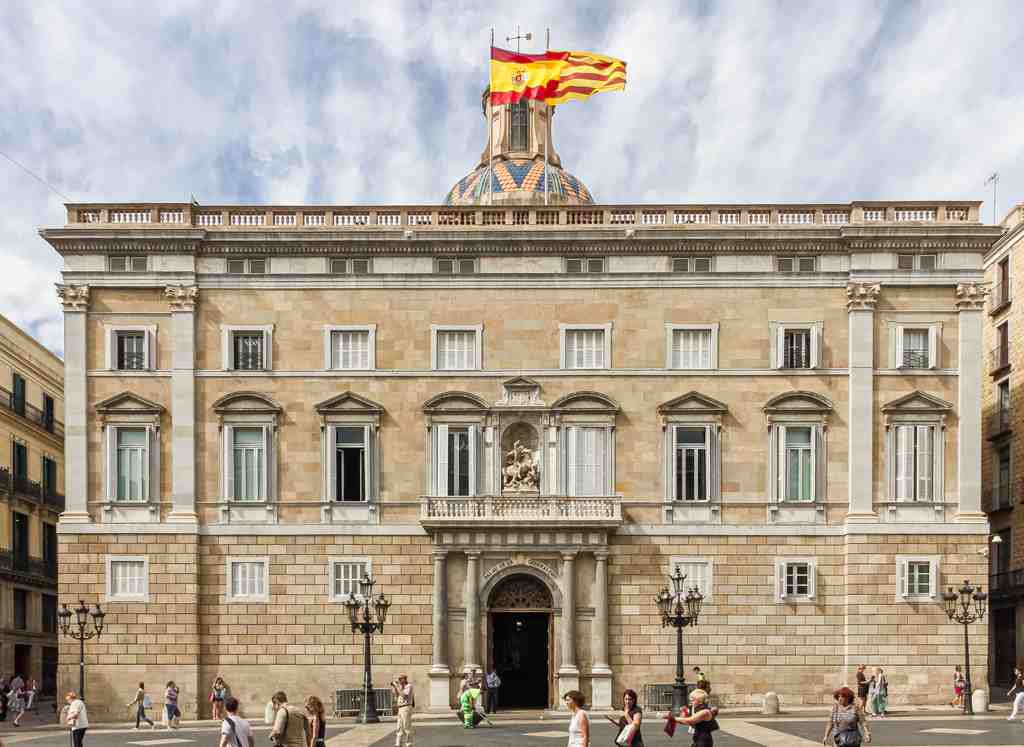
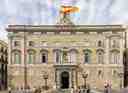
Paleis van de GeneralitatPhoto: AndriySadivskyy, Wikimedia Commons, CC BY-SA 3.0 ES. Cropped & resized. Turn your attention left to the imposing rectangular facade built from smooth, tan stone blocks, anchored by a large central arched doorway and a prominent balcony right above it. Notice the sculpted statue of a knight on horseback nestled into the niche above that balcony.
That knight is Saint George, the patron saint of Catalonia, watching over the Palace of the Generalitat. This is the historic seat of the Catalan government. It is actually one of the very few medieval buildings in Europe that still serves as the headquarters for the exact same institution that built it.
The roots of this government stretch deep into the Middle Ages. Back in 1282, the Catalan courts formed, and by 1359, they created a permanent commission to collect taxes. That humble tax board eventually evolved into the Generalitat, essentially taking on the role of an executive branch of government.
But this palace did not spring up from empty land. It was built directly over a tragic piece of the buried ancient city we explored earlier. These properties originally belonged to the prosperous Jewish Quarter. In 1391, a brutal pogrom... a targeted, violent riot... wiped out the neighborhood. Nine years later, the government purchased the vacant houses, paving over the lost community to build a new center of power.
Take a close look at the four plain stone columns flanking the main entrance door. When the architect designed this Renaissance facade in 1596, he did not carve those columns. He imported them. They are actually almost two thousand years old, carved from granite near the legendary city of Troy. The Romans originally brought them to Spain to build a massive temple. Centuries later, they were salvaged and shipped here to frame this doorway. It is a perfect metaphor for this place. Ancient foundations propping up new political ambitions.
Now, direct your attention to the balcony right above the door. Over the last century, that small ledge has been the stage for profound triumph and devastating tragedy. In 1931, Francesc Macià stepped onto it to boldly declare a Catalan Republic. Three years later, his successor, Lluís Companys, proclaimed a Catalan State from that exact spot. That second declaration provoked a furious response from the central government in Madrid. Artillery shells bombarded this very palace. Following a night of heavy fighting, the Catalan government surrendered, waving a white flag from the balcony. Companys was arrested, and later became the only democratically elected president in European history to be executed in office by the Franco dictatorship.
Yet, the institution survived its ghosts. In 1977, after thirty eight years in exile and the fall of the dictatorship, President Josep Tarradellas returned to Barcelona. He stepped out onto that same balcony, looked down at a massive, euphoric crowd, and shouted... Citizens of Catalonia, I am here.
The Generalitat remains a powerful symbol of endurance. Now, turn your back to the palace and look directly across the plaza. We are heading to its royal counterpart, the Royal Palace, which is just a three minute walk away.
Rechts van je zie je een enorm complex van lichtgekleurde stenen muren. Een brede trap loopt omhoog naar boogvormige ingangen, en daarboven domineert een hoge, rechthoekige toren…Meer lezenToon minder
Open eigen pagina →Deze stenen zijn getuige geweest van heel wat bloedvergieten. In december 1492 liep koning Ferdinand de Katholieke de trappen buiten af toen een boer hem van achteren aanviel met een breedzwaard. De koning werd alleen gered door de dikke gouden ketting van een ereorde om zijn nek, die het zwaard net genoeg afboog om een dodelijke klap te veranderen in een diepe schouderwond. De aanvaller beweerde dat de Heilige Geest hem had opgedragen toe te slaan, en zijn straf was meedogenloos. Hij werd naakt in een kar door de stad gevoerd, gemarteld en levend in stukken gehakt door de beul en de woedende menigte.
Vanwege die wond was Ferdinand nog aan het herstellen in een rustig klooster buiten de stad toen Christoffel Columbus terugkeerde uit Amerika. Dus ondanks de beroemde romantische schilderijen die tonen hoe Columbus goud en papegaaien presenteert aan de vorsten in de grote gotische zaal van dit paleis, vond de legendarische ontmoeting in werkelijkheid kilometers verderop plaats. De geschiedenis geeft altijd de voorkeur aan het weidser decor.
Toen de koninklijke macht uiteindelijk uit Barcelona vertrok, braken er donkerder hoofdstukken aan. De Spaanse Inquisitie trok erin en veranderde de weelderige leeuwentuinen in grimmige cellen. Later, in de achttiende eeuw, nam een nonnenklooster de grote middeleeuwse zaal over. Om de ruimte te moderniseren, bouwden ze een volledig nieuwe barokke kerk midden in de gotische muren, waarbij het verleden werd weggestuct.
Dat bleef zo tot 1936. Tijdens de onrust van de Spaanse Burgeroorlog begonnen arbeiders de kerk te ontmantelen en deden ze een verbluffende ontdekking. Achter het pleisterwerk en de bakstenen waren de majestueuze veertiende-eeuwse stenen bogen van de middeleeuwse zaal perfect intact. De begraven oude stad had zich in het volle zicht verborgen gehouden, per ongeluk twee eeuwen lang beschermd door de muren die bedoeld waren om haar te vervangen.
Tegenwoordig is een deel van die historische tuin van de Inquisitie omgevormd tot een fascinerend onderkomen voor een enorme collectie excentrieke historische voorwerpen. Het complex is de meeste dagen geopend van 10:00 tot 20:00 uur, hoewel het op zondag gesloten is. Laten we een korte wandeling maken, slechts een minuutje verderop, naar het eigenzinnige Frederic Marès Museum.
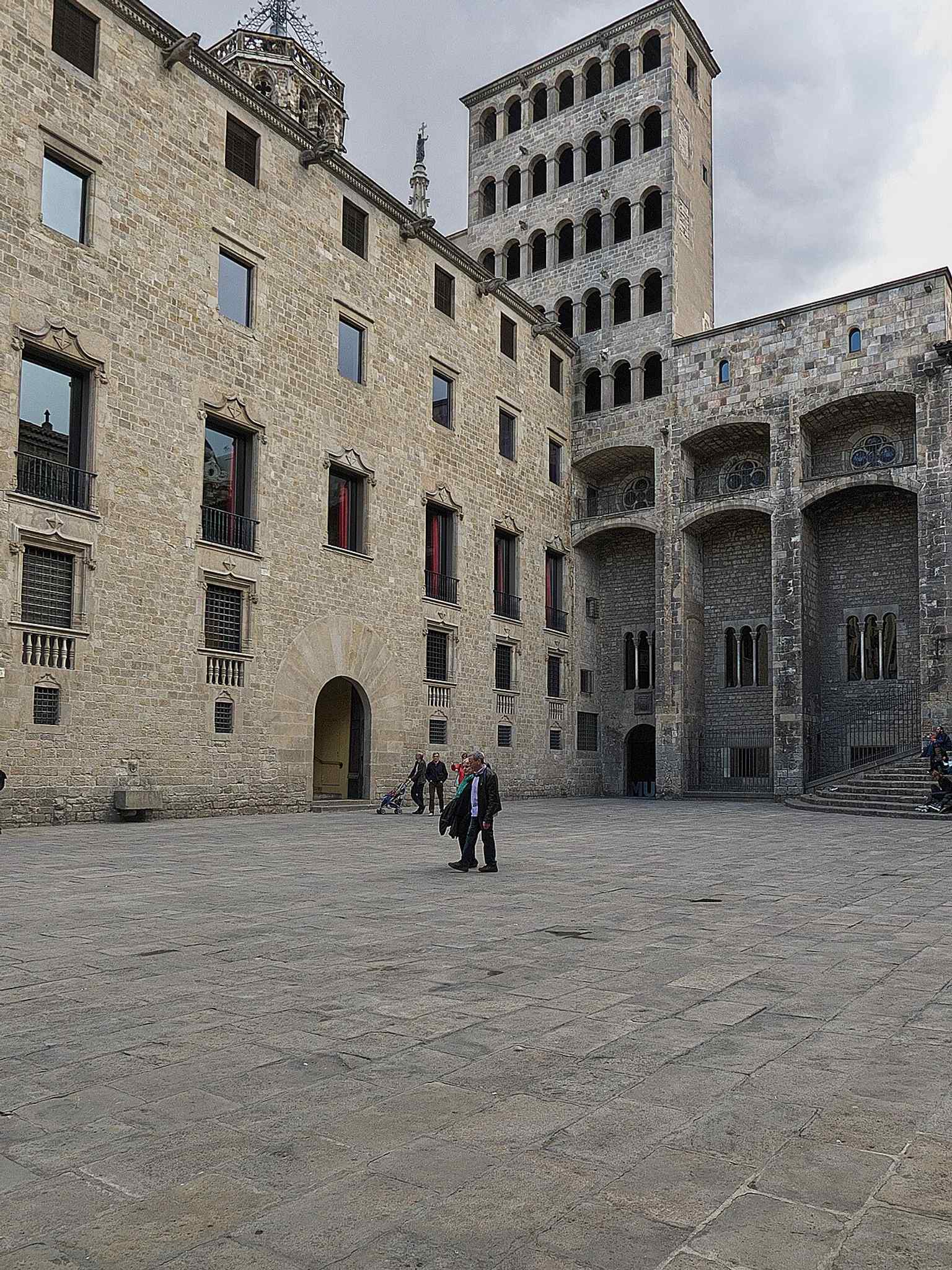
The King Martin's Watchtower, added in 1555, was the last major addition to the Royal Palace, originally serving defensive, observation, and ostentatious purposes.Photo: José Luis Filpo Cabana, Wikimedia Commons, CC BY 3.0. Cropped & resized. These stones have witnessed their share of blood. In December 1492, King Ferdinand the Catholic was walking down the very steps outside when a peasant attacked him from behind with a broadsword. The king was saved only by the thick gold chain of an honorary order around his neck, which deflected the blade just enough to turn a fatal blow into a deep shoulder wound. The attacker claimed the Holy Spirit told him to strike, and his punishment was absolute. He was paraded naked through the city in a cart, tortured, and dismantled alive by the executioner and the furious crowd.
Because of that wound, Ferdinand was still recovering in a quiet monastery outside the city when Christopher Columbus returned from the Americas. So despite the famous romantic paintings showing Columbus presenting gold and parrots to the monarchs in the grand gothic hall of this palace, the legendary meeting actually happened miles away. History always prefers the grander stage.
As royal power eventually shifted away from Barcelona, darker chapters took hold. The Spanish Inquisition moved in, turning the lush lion gardens into grim holding cells. Later, in the seventeen hundreds, a convent of nuns took over the grand medieval hall. To modernize the space, they built a completely new Baroque church right inside the gothic walls, plastering over the past.
It remained that way until 1936. During the upheaval of the Spanish Civil War, workers began dismantling the church and made a stunning discovery. Behind the plaster and brick, the majestic fourteenth century stone arches of the medieval hall were perfectly intact. The buried ancient city had been hiding in plain sight, accidentally protected for two centuries by the very walls meant to replace it.
Today, a piece of that historic Inquisition garden space has been transformed into a fascinating home for a massive collection of eccentric historical objects. The complex is open most days from 10 AM to 8 PM, though it closes on Sundays. Let us take a short walk just a minute away to the quirky Frederic Marès Museum.
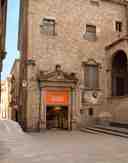
Rechts voor je staat een hoog, hoekig stenen gebouw, met een klassieke ingang: twee stenen zuilen dragen een driehoekige gevel boven een boogdeur... Je kijkt naar het Frederic…Meer lezenToon minder
Open eigen pagina →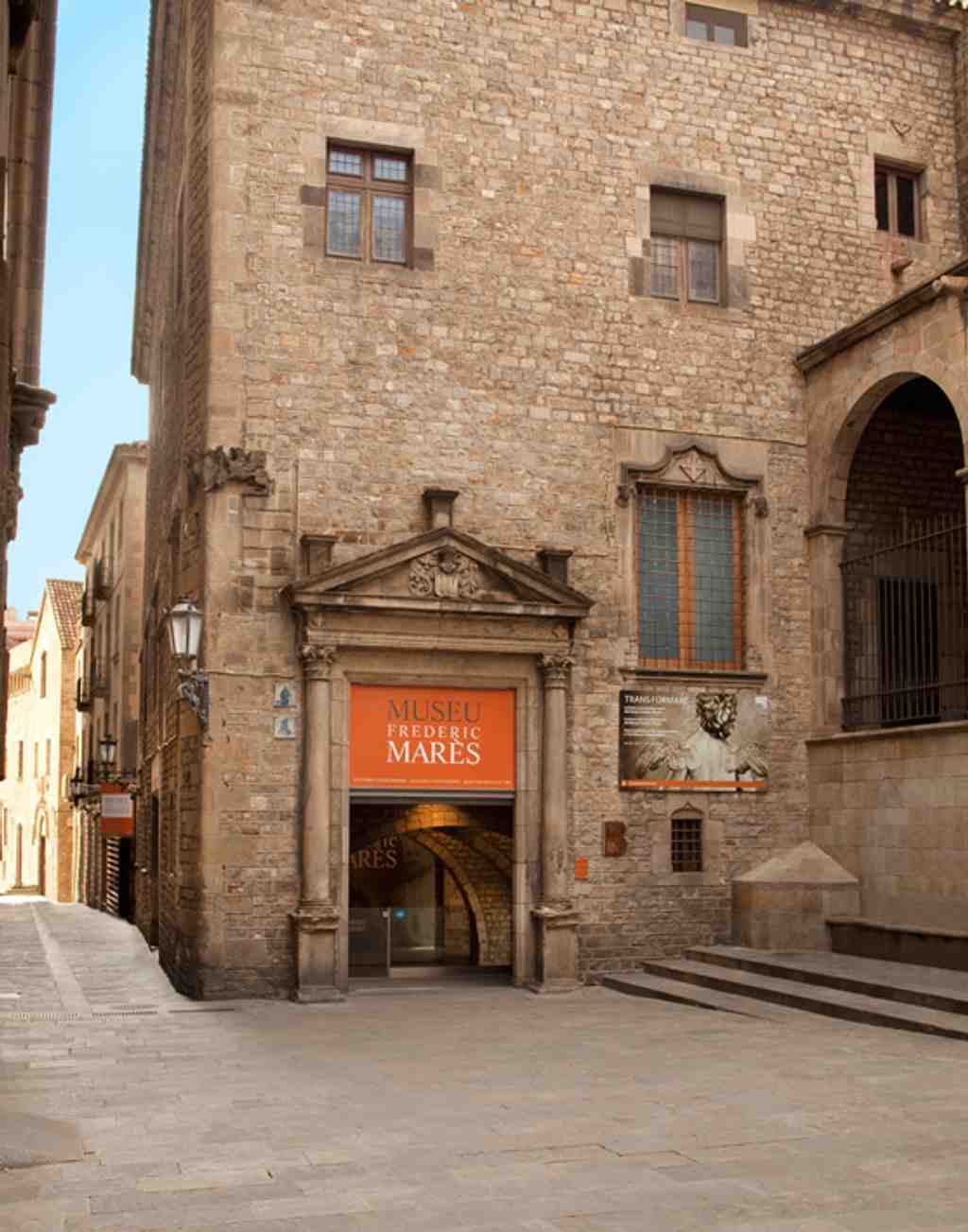
Museu Frederic MarèsPhoto: Foto:Guillem F-H, Wikimedia Commons, CC BY-SA 3.0. Cropped & resized. Ahead on the right sits a tall, blocky stone building featuring a classical doorway where two stone columns support a triangular pediment over an arched entrance.
This is the Frederic Marès Museum. Meet Frederic Marès... a sculptor by trade, but an obsessive accumulator of history by nature. His drive to anchor the fleeting past in physical objects started when he was just four years old, carefully saving chocolate wrappers and colorful bits of paper. By the time he was an old man, that childhood habit had ballooned into an astonishing hoard of over fifty thousand items. Before this museum existed, his own house on Mallorca Street had become a chaotic labyrinth where priceless medieval carvings were stacked alongside early printed books and ticking clocks.
Inside, the Collector's Cabinet reveals a deeply intimate, eccentric catalog of human existence. It holds thousands of everyday artifacts... pipes, walking sticks, pocket watches. But the female room contains something a bit more unusual. You will find intricate jewelry and decorative pictures woven entirely out of human hair. This was a nineteenth century mourning tradition, crafting keepsakes from the locks of deceased loved ones. Step into the photography room, and you will find an unsettling collection of post-mortem portraits. Families would dress their recently deceased relatives, posing them as if they were merely sleeping, desperate for one final visual memory. It shows just how fiercely people fought to hold onto what was slipping away as the modern era marched forward.
Marès himself was a complex figure navigating a shifting society. During the Spanish Civil War, he actively rescued religious art from churches being looted or burned by revolutionary committees. He saw himself as a cultural savior. Yet, critical historians point out that the turbulent post-war era allowed wealthy collectors like him to acquire displaced masterpieces for almost nothing, sparking modern legal battles over the rightful ownership of these stolen treasures.
Even his own art was subjected to the push and pull of changing political tides. During the Republic, Marès sculpted a nude female figure called Victory. After the war, the new Franco regime decided to repurpose his statue to celebrate their own triumph. However, the strict national-catholic dictatorship found the statue's bare chest entirely too scandalous. They actually forced Marès to alter his own sculpture to cover her up.
Ironically, despite complying with the conservative dictatorship, Marès earned the nickname the hippie in his later years, simply because he wore his hair unusually long for an eighty year old man in that era.
If you want to explore his vast collections, the museum is open Tuesday through Saturday from 10 AM to 7 PM, and Sundays from 11 AM to 8 PM, remaining closed on Mondays. For now, let your eyes drift toward the towering structure nearby, and we will take a short walk over to the Barcelona Cathedral.
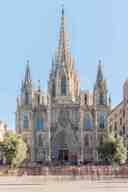
Kijk eens omhoog naar die hoge, lichtgekleurde gevel: een centrale spits die de lucht in prikt, puntige bogen, en rijen standbeelden die langs de verticale lijnen de wacht lijken…Meer lezenToon minder
Open eigen pagina →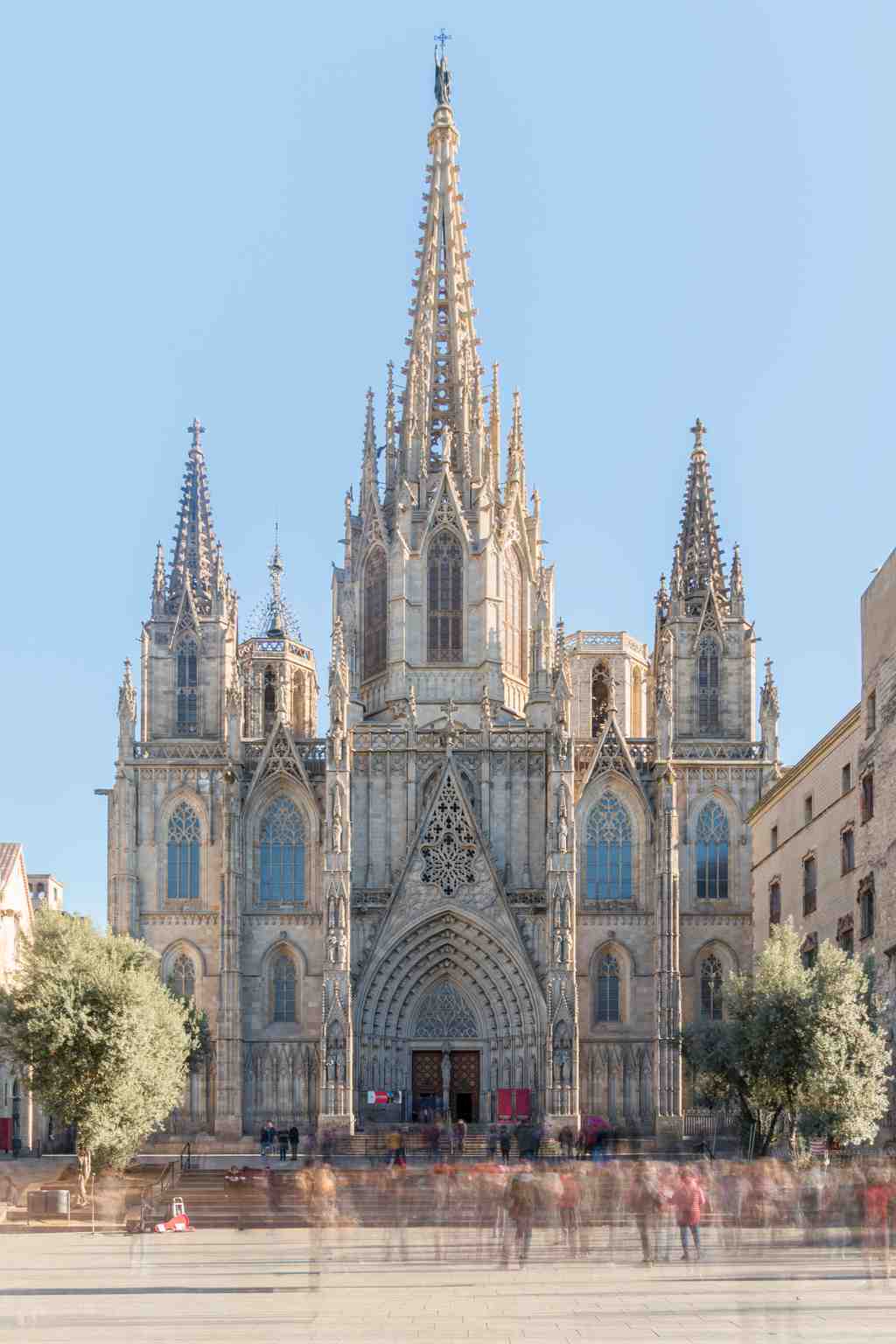
Kathedraal van BarcelonaPhoto: Fernando, Wikimedia Commons, CC BY-SA 4.0. Cropped & resized. Tijdens de Spaanse Burgeroorlog in 1936 ging dit hele oude bouwwerk bijna in vlammen op. Gewapende anarchisten kwamen om het plat te branden, maar een anarchistische dichter overtuigde de menigte ervan dat de architectuur aan het volk toebehoorde. Dat beroep op moderne idealen, gecombineerd met een wild gerucht dat vijfduizend zwaarbewapende priesters zich in de labyrintische crypten schuilhielden, redde het gebouw.
De kathedraal is dagelijks geopend voor bezoek, hoewel de openingstijden op zondagmiddag iets korter zijn. Laten we nu wegwandelen van deze gotische majesteit en ons begeven naar de levendige kramen van de Santa Caterina-markt, op ongeveer vijf minuten lopen.
During the Spanish Civil War in 1936, this entire ancient structure nearly vanished into ash. Armed anarchists arrived to burn it down, but an anarchist poet convinced the mob that the architecture belonged to the people. That appeal to modern ideals, combined with a wild rumor that five thousand heavily armed priests were hiding in the labyrinthine crypts, saved the building.
The cathedral is open daily for visits, though the hours are slightly shorter on Sunday afternoons. Let us walk away from this Gothic majesty now and head toward the vibrant stalls of the Santa Caterina Market, about a five-minute walk away.
Kijk even naar het gebouw rechts van je: een rij klassieke, witte stenen bogen… en daarboven een enorme, moderne golf van een dak, gedragen door van die gedraaide metalen…Meer lezenToon minder
Open eigen pagina →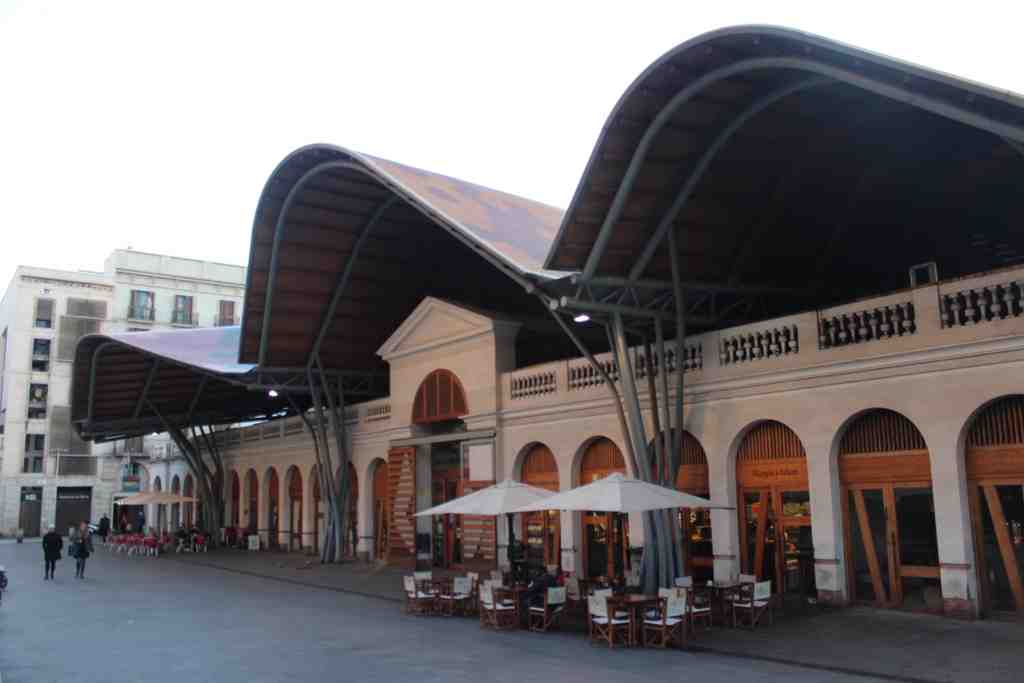
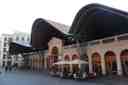
Santa Caterina-marktPhoto: Albert Prat, Wikimedia Commons, CC BY-SA 4.0. Cropped & resized. Notice the building on your right, where a row of traditional white stone arches is dramatically overshadowed by a massive modern wavy roof supported by twisting metal pillars.
This is the Santa Caterina Market, the oldest covered market in the city. But to understand this place, we have to look past that striking roof and dig into the ashes underneath it. You see, this spot was originally a thirteenth-century Dominican convent. That came to a violent end during the same wave of anti-clerical riots in 1835 that we heard about earlier. An angry mob stormed the convent and set it ablaze. The monks fled for their lives as centuries of history, including a massive library, went up in smoke. The city government, practicing a policy of state confiscation, decided not to rebuild. Instead, they cleared the ruined cloisters and built the neoclassical market you see the bones of today.
For a long time, this place was the gritty heart of neighborhood survival. During the harsh years following the Spanish Civil War, marked by extreme rationing, these stalls and the narrow alleys around them became an epicenter for the black market. Underneath the counters, desperate locals and cunning smugglers traded basic food items at astronomical prices, just trying to outlast the economic collapse.
Fast forward to 1997, and the city decided it was time for an upgrade. They brought in a husband and wife architectural team, Enric Miralles and Benedetta Tagliabue, who designed that incredible undulating roof. It is covered in a massive mosaic of over four thousand square meters, using a technique called trencadis, where broken ceramic shards are pieced together to form patterns. The colors represent the vibrant fruits and vegetables sold inside. But it is not just pretty. Those complex parabolic curves act as a natural ventilation system, pulling hot air up and out so the market stays cool without heavy air conditioning.
But pushing into the future is rarely simple, especially when the foundations of your new vision are built on literal ruins. When the construction crews started digging, they hit a massive archaeological jackpot... uncovering the medieval convent foundations, a Roman necropolis, and a Bronze Age settlement. Four thousand years of history were sitting right under the produce aisle. The city mandated that the ruins be preserved, which triggered a logistical nightmare and delayed the grand opening by four long years. The stall owners had to survive in a temporary tent outside, and sadly, many family businesses did not make it.
The project also suffered a profound personal tragedy. In the year 2000, Enric Miralles was diagnosed with a brain tumor and passed away at just forty-five. His wife, Benedetta, had to finish the monumental task alone. When she finally opened the doors in 2005, the market became not just a marvel of modern urban life, but a vibrant tribute to her late husband.
Feel free to step inside if they are open... the market operates Monday through Saturday, though it is closed on Sundays. Next, we are heading toward a true jewel of Catalan music, the Palau de la Musica Catalana, which is just a five-minute walk away.
Kijk even naar je scherm en stel je het kloppende hart van dit gebouw voor: een concertzaal met grote bogen bekleed met keramische tegels, een imposant pijporgel dat het houten…Meer lezenToon minder
Open eigen pagina →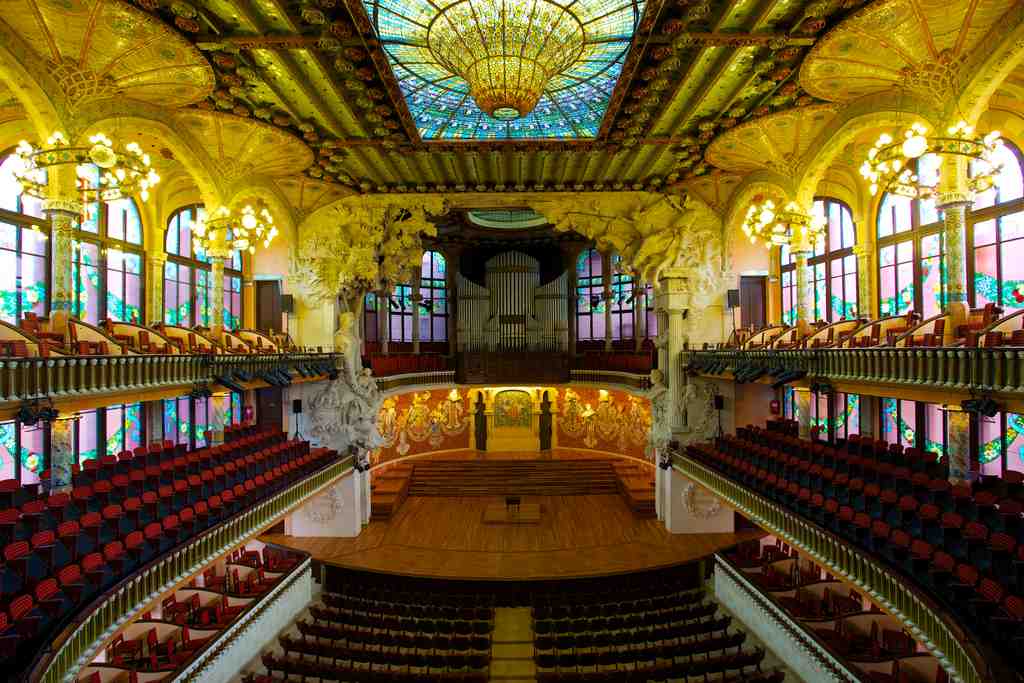
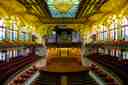
Palau de la Música CatalanaPhoto: Jiuguang Wang, Wikimedia Commons, CC BY-SA 3.0 ES. Cropped & resized. Look closely at your screen to picture the heart of this landmark, a breathtaking space defined by sweeping ceramic-tiled arches, a majestic pipe organ framing the wooden stage, and a spectacular inverted stained-glass dome radiating from the ceiling.
You are standing outside the Palau de la Música Catalana, an absolute masterpiece of Catalan Modernism. Designed by the visionary architect Lluís Domènech i Montaner and built between 1905 and 1908, this building was conceived as the headquarters for a beloved local choral society.
Domènech i Montaner was famously stubborn about his art. He wanted to build a gleaming beacon for his culture, refusing to cut corners even on a side of the building that faced a narrow, hidden alley. He insisted on premium red brick and intricately sculpted pillars where barely anyone would see them. This uncompromising dedication caused the budget to balloon from 450,000 pesetas to over 900,000, an amount roughly equivalent to around four million dollars today. The choral society struggled deeply to cover the costs, but their sacrifice gave the city a crown jewel.
The interior is so overwhelmingly beautiful that visitors sometimes suffer from Stendhal syndrome. That is a genuine psychological condition where exposure to intense, magnificent art causes rapid heartbeat and dizziness. The massive stained-glass skylight weighs several tons and drops down like a glowing, multicolored sun... bathing the audience in an explosion of light.
This grand hall has often served as a battleground between the heavy shadows of history and a fierce desire for cultural survival. In 1960, during a brutal dictatorship, authorities banned the singing of a traditional Catalan anthem here. But when the concert began, the audience boldly rose to their feet and sang it anyway. A young doctor was arrested and tortured simply for his role in the protest, yet that defiant song echoed far beyond these walls, sparking a political awakening in the region.
Decades later, the building faced a very different kind of threat. In 2009, a massive corruption scandal was exposed. Corrupt managers had siphoned millions of euros from the institution, even using public funds to throw lavish private weddings right inside the historic concert hall. It was an audacious betrayal.
Yet the community refused to let their beloved sanctuary fall to ruin. When the majestic pipe organ fell silent after decades of decay, everyday citizens and local businesses banded together to sponsor individual pipes, fully funding its intricate restoration. No matter what dark moments have tested this place, the music, and the people's vision for a brighter future, have always pushed forward into the light.
Let us keep that enduring spirit in mind as we move onward toward a true monument of resistance, the Rafael Casanova Monument, which is just a seven minute walk away.
Kijk even naar links: je ziet een hoge stenen sokkel, versierd met gebeeldhouwde vrouwenfiguren, met bovenop een donkere bronzen man die een hoge vlag vasthoudt... September…Meer lezenToon minder
Open eigen pagina →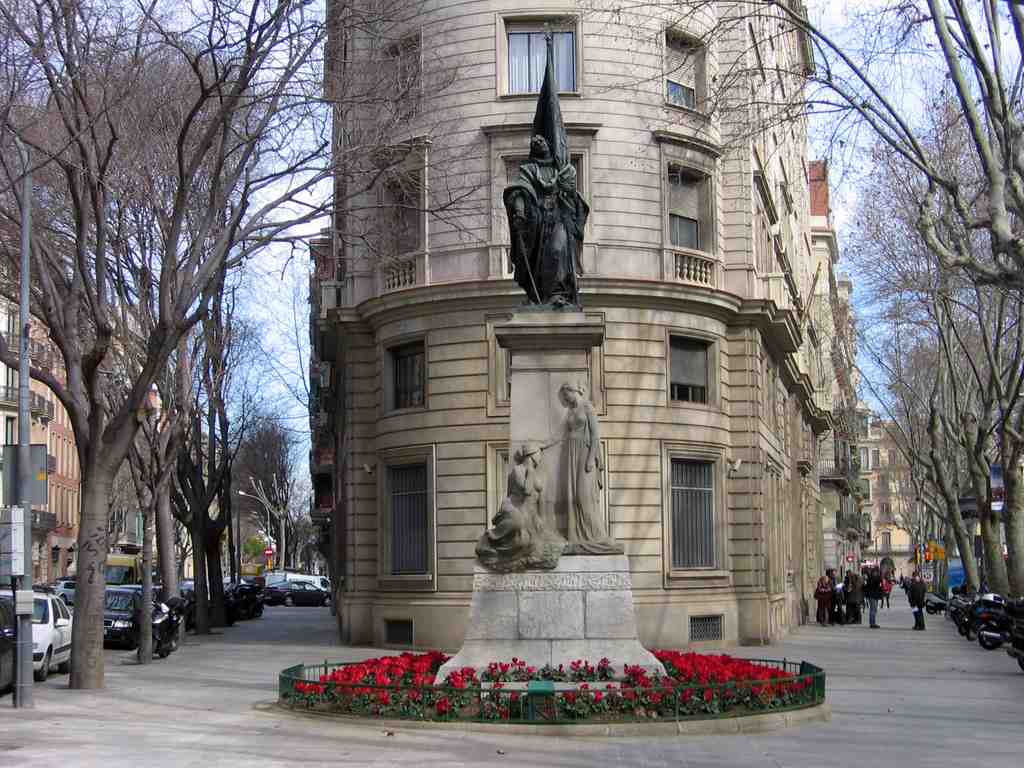
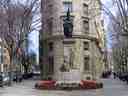
Monument voor Rafael CasanovaPhoto: Canaan, Wikimedia Commons, CC BY-SA 3.0. Cropped & resized. Kijk naar de hoge stenen sokkel aan uw linkerhand, versierd met gebeeldhouwde vrouwenfiguren, met daarbovenop een donker bronzen standbeeld van een man die een hoge vlag vasthoudt.
In september 1714 onderging Barcelona een catastrofale belegering door Bourbon-troepen, en precies hier op deze plek hield eerste minister Rafael Casanova stand. Terwijl de verdediging van de stad instortte, greep hij de vlag van de Heilige Eulalia en verzamelde een militie van uitgeputte burgers, om vervolgens in zijn dij te worden geschoten terwijl de stad viel.
Bekijk de detailfoto in uw app. Merk op hoe de beeldhouwer, Rossend Nobas, geen triomfantelijke overwinnaar heeft gebeeldhouwd, maar een kwetsbare man die van pijn op zijn zwaard leunt. En die vlag die hij vasthoudt? De banier van de Heilige Eulalia, de mede-patroonheilige van de stad, was een heilig relikwie dat alleen tevoorschijn werd gehaald op momenten van extreem gevaar voor het voortbestaan van de stad.
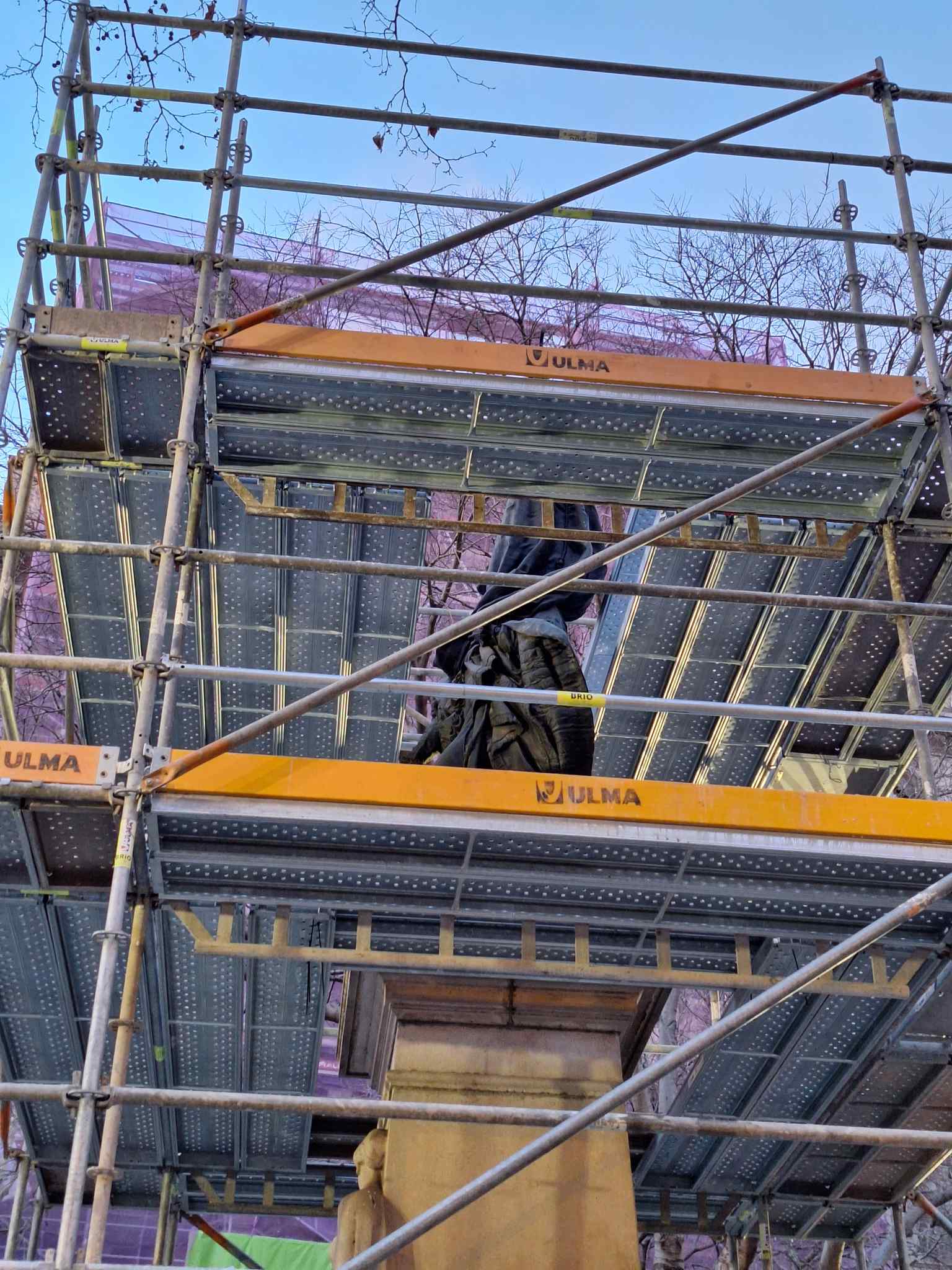
Deze afbeelding uit 1908 uit "La Ilustració Catalana" toont een vroege hulde tijdens de Diada de Cataluña en illustreert hoe bloemenoffers bij het monument een krachtig symbool werden van de Catalaanse identiteit.Photo: Pere López Brosa, Wikimedia Commons, CC BY-SA 4.0. Cropped & resized. Casanova actually survived. He was smuggled into a hospital, disguised himself as a friar, and lived out his days under a fake name until he was quietly pardoned years later. But the memory of his stand became a powerful phantom that later authorities tried desperately to erase.
In 1939, the new authoritarian regime ordered this statue to be melted down into raw bronze to wipe the slate clean. But in a quiet act of rebellion, the city's own mayor secretly ignored the order. He had the bronze figure carefully dismantled and hidden away in a dusty warehouse on Wellington Street.
For nearly forty years, this fallen hero sat in the dark, a relic of a painful past waiting out the tide of history while visions of a modernized city took shape above him. He was finally brought back into the light in 1977 during Spain's transition to democracy. If you want to see how this space has evolved over the century, check out the before and after slider on your screen. It shows a massive memorial gathering right here in 1908, compared to recent careful restoration efforts. It is a testament to how the deepest wounds of history are carried forward, quietly wrestling with the push toward tomorrow.
As you look up at him, consider what you would do if your city was surrounded and falling... Would you stand your ground?
Since it is a public space, this monument is open twenty-four hours a day. Now, let's walk toward the grand entryway of the modern era, as we make our way to the Arc de Triomf.
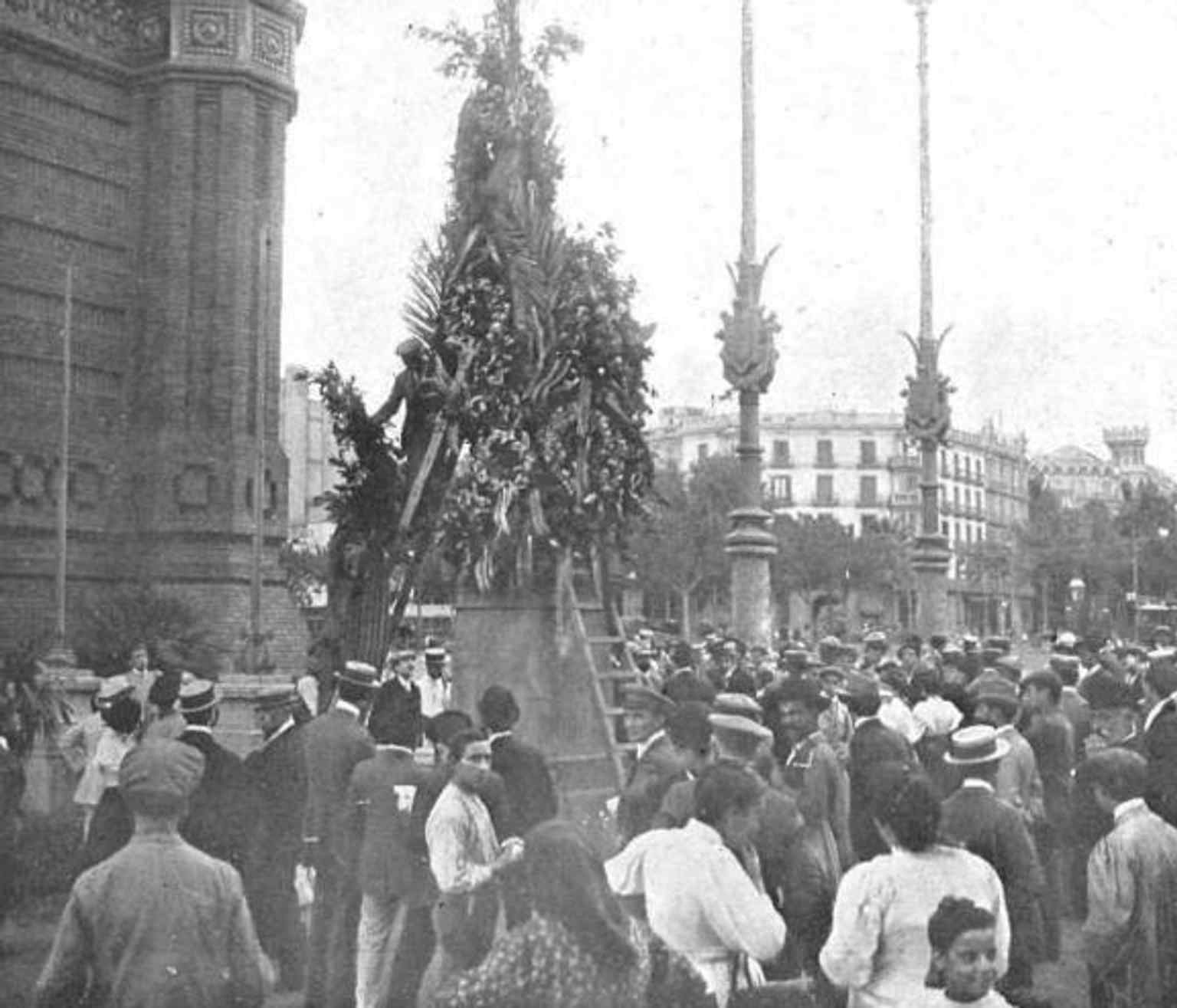
This 1908 image from "La Ilustració Catalana" shows an early Diada de Cataluña tribute, illustrating how floral offerings at the monument became a potent symbol of Catalan identity.Photo: Frederic Ballell i Maymí, Wikimedia Commons, Public domain. Cropped & resized. Recht voor je staat ’ie: een enorme boog van opvallend rood baksteen, met fijne witte stenen reliëfs erboven en aan de zijkanten van die slanke, decoratieve hoektorentjes... En…Meer lezenToon minder
Open eigen pagina →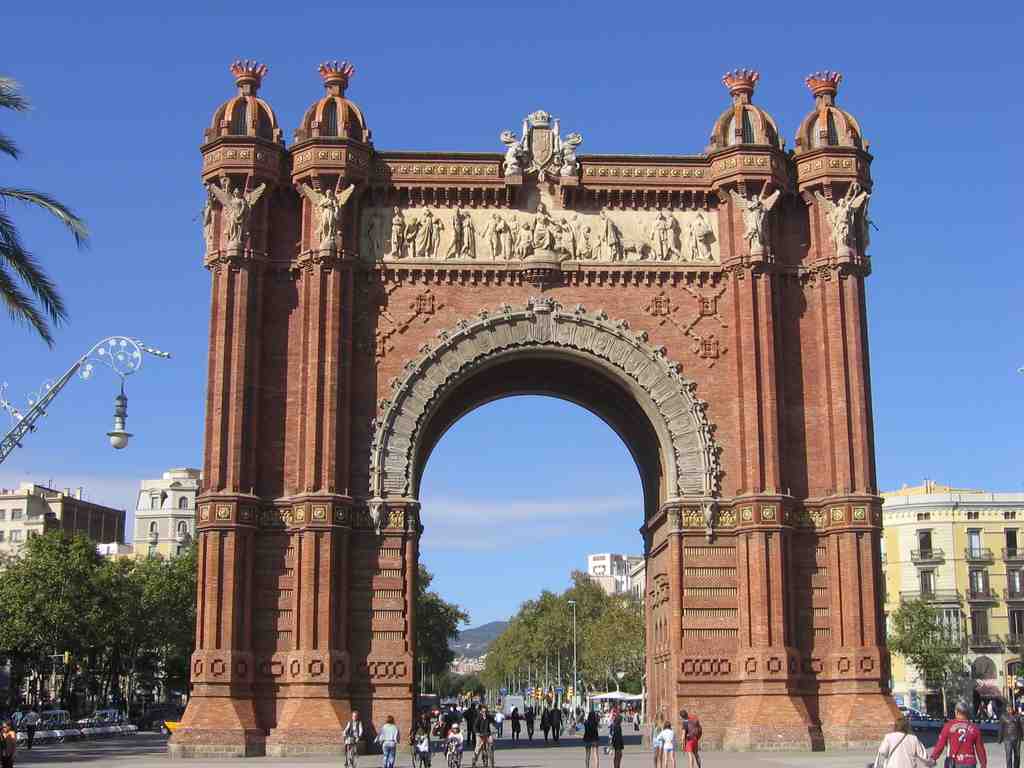
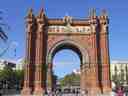
Arc de TriomfPhoto: Canaan, Wikimedia Commons, CC BY-SA 3.0. Cropped & resized. Straight ahead stands a massive arch made of striking red brick, crowned with intricate white stone friezes and flanked by tall, decorative corner towers.
Unlike the cold marble monuments scattered across Europe that were built to celebrate military conquests and bloody battlefield victories, this gateway was designed to honor a purely civic triumph. It was built as the grand, welcoming entrance for the 1888 Universal Exposition. The 1888 Universal Exposition was a massive global fair that forced the city to modernize rapidly, serving as a glittering stage to show off Barcelona's soaring industrial might to the rest of the world. It fit perfectly into the progressive spirit of Cerda's Ensanche Plan, which was actively pulling Barcelona out of its cramped medieval history and into a bold, expansive new era.
The design of this arch perfectly captures the friction of that changing world. You might hear a very persistent urban legend that a French engineer named Gustave Eiffel actually pitched his famous iron tower for this exact spot, and the city rejected it for being a monstrous, expensive eyesore. While historians have completely debunked that myth, the story survives because it illustrates the real architectural anxiety of the time. It highlights the cultural tug of war between cold, ultra-modern iron structures and the warm, historically rooted brickwork that ultimately won out here.
The architect, Josep Vilaseca, designed this in the neo-Mudejar style, a revival architectural movement that blended traditional Moorish and European elements. Using exposed red brick instead of noble stone was also a brilliant economic move. The arch cost a mere one hundred and fifty four thousand pesetas to build, which equates to just a few thousand dollars today. But more importantly, the humble material connected this grand monument directly to the local working class and the booming regional brick industry.
If you look closely at the columns, you will spot stone bats carved into the structure. The bat was the emblem of King James the First of Aragon, and became a powerful symbol of good fortune in Catalan design.
Yet, the wide avenue leading up to the arch hides a darker tale of how the past is often forcibly erased by new visions of the future. The promenade used to be lined with eight grand bronze statues of Catalan heroes. During the turbulent years of the Spanish Civil War, most were yanked from their pedestals. Then, in 1950, authorities melted down five of those historic bronzes to forge a giant religious statue of the Virgin Mary for a local basilica. The old secular heroes were quite literally consumed to build the new regime's cultural vision. Luckily, as with the monument to Rafael Casanova, one statue was secretly hidden in a dark warehouse, surviving the ideological purge before finally being rescued.
This magnificent gateway is open twenty four hours a day, standing as a permanent welcome to anyone who wanders by. Let us pass straight through the arch now and follow the wide promenade toward the park, where the Castle of the Three Dragons is just a six minute walk away.
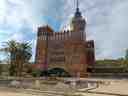
Aan je rechterhand zie je een stoer, vierkant fort van zichtbaar rode baksteen, met kantelen langs de rand. En kijk even naar die hoek: een rijk versierde toren die net iets té…Meer lezenToon minder
Open eigen pagina →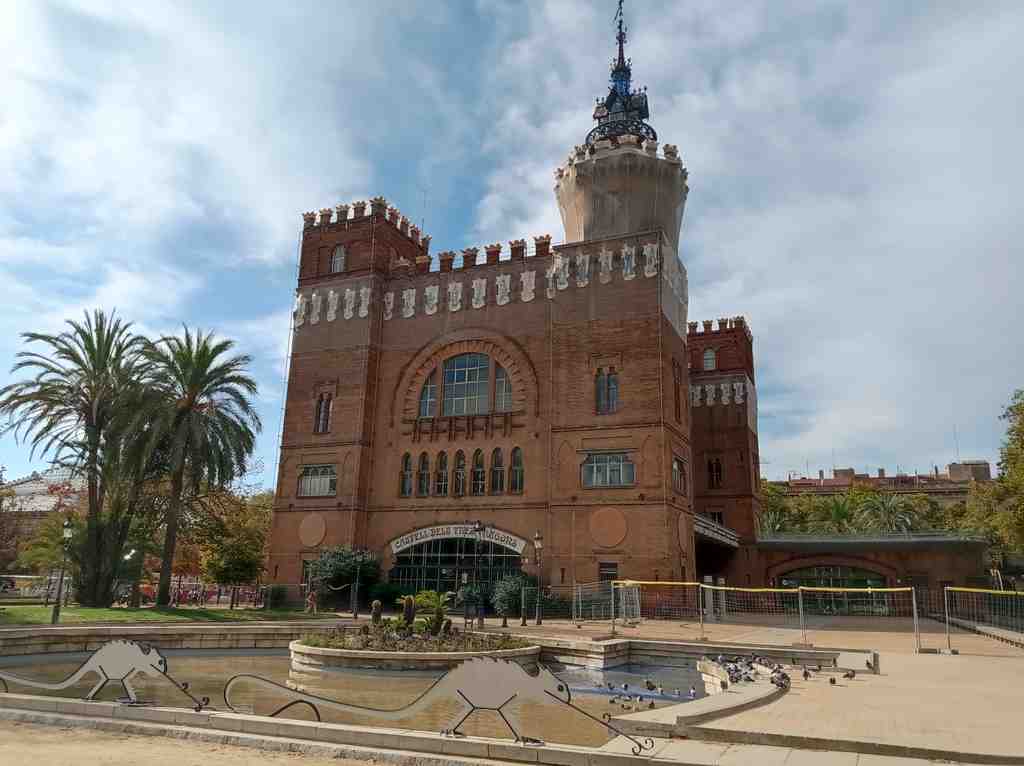
Kasteel van de Drie DrakenPhoto: Canaan, Wikimedia Commons, CC BY-SA 4.0. Cropped & resized. Na de tentoonstelling werd dit kasteel gespaard, terwijl andere enorme paviljoens snel werden afgebroken. De architect keerde uiteindelijk terug naar zijn onvoltooide meesterwerk en veranderde het in een bruisende, bohemien werkplaats. Hij verzamelde smeden, glasblozers en mozaïekmakers om te experimenteren. Ze wilden vergeten middeleeuwse ambachten uit de geschiedenis terughalen en laten samensmelten met moderne industriële materialen zoals ruw ijzer. Die specifieke spanning, het terugkijken naar traditionele ambachten als brandstof voor een visionaire toekomst, legde de praktische basis voor het Catalaans modernisme. Natuurlijk werpt een gebouw dat zo oud is ook zware schaduwen. Tijdens de Spaanse Burgeroorlog vernietigden fascistische bommenwerpers het kolossale glas-in-loodraam van het kasteel, een meesterwerk dat het interieur ooit met licht overspoelde. In de grimmige naoorlogse jaren werd de ruimte omgevormd tot een liefdadigheidsrestaurant. De enorme, luchtige kamers die oorspronkelijk waren ontworpen voor de internationale bourgeoisie om van fijne likeuren te nippen, werden plotseling gevuld met verarmde burgers die in de rij stonden voor overlevingsrantsoenen. Laten we onze wandeling voortzetten, dieper de bomen in. Over enkele minuten lopen we volledig het Parc de la Ciutadella in.
After the exposition, while other massive pavilions were quickly demolished, this castle was spared. The architect eventually returned to his unfinished masterpiece and transformed it into an energetic, bohemian workshop. He gathered blacksmiths, glassmakers, and mosaicists to experiment. They wanted to pull forgotten medieval crafts out of history and collide them with modern industrial materials like raw iron. That specific tension, looking backward to traditional crafts to fuel a visionary future, laid the practical groundwork for Catalan Modernism.
Of course, a building this old carries some heavy shadows. During the Spanish Civil War, fascist bombers destroyed the castle's colossal stained-glass window, a masterpiece that once flooded the interior with light. In the grim post-war years, the space was turned into a charity dining hall. The massive, airy rooms originally designed for the international bourgeoisie to sip fine liqueurs were suddenly filled with impoverished citizens lining up for survival rations.
Let's continue our walk deeper into the trees. We will transition fully into Ciutadella Park in just a few minutes.
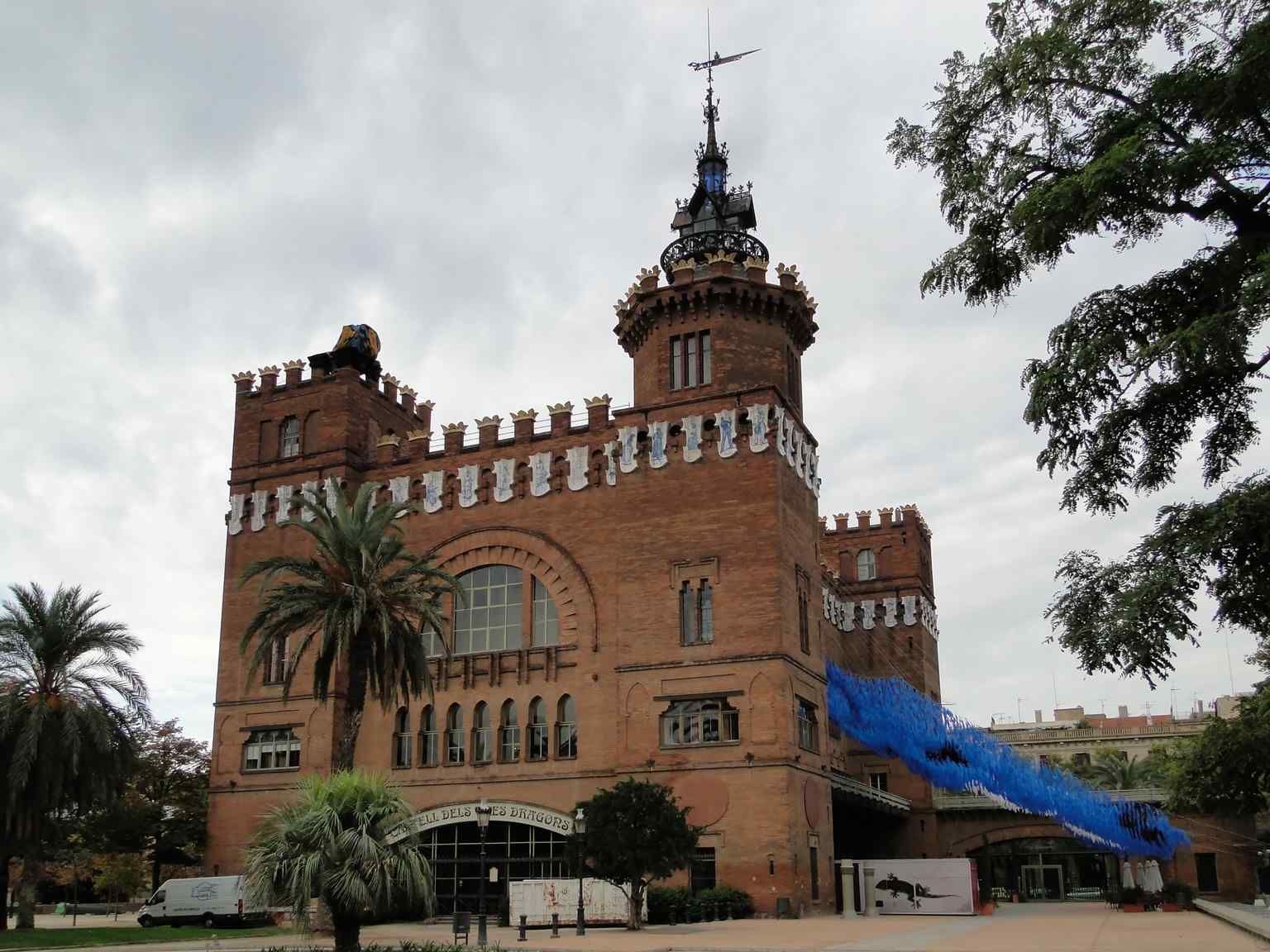
This view captures the striking modernist architecture of the Castle of the Three Dragons, built with visible brick and iron, featuring battlements and a castle-like design.Photo: Bernard Gagnon, Wikimedia Commons, CC BY-SA 3.0. Cropped & resized.
Veelgestelde vragen
Hoe begin ik de tour?
Download na aankoop de AudaTours-app en voer je inwisselcode in. De tour is direct klaar om te starten – tik gewoon op afspelen en volg de GPS-geleide route.
Heb ik internet nodig tijdens de tour?
Nee! Download de tour voordat je begint en geniet er volledig offline van. Alleen de chatfunctie vereist internet. We raden aan om te downloaden via wifi om mobiele data te besparen.
Is dit een groepsrondleiding met gids?
Nee - dit is een audiotour met eigen gids. Je verkent zelfstandig op je eigen tempo, met audiovertelling via je telefoon. Geen tourguide, geen groep, geen schema.
Hoe lang duurt de tour?
De meeste tours duren 60-90 minuten, maar jij bepaalt het tempo volledig. Pauzeer, sla stops over of neem pauzes wanneer je wilt.
Wat als ik de tour vandaag niet kan afmaken?
Geen probleem! Tours hebben levenslange toegang. Pauzeer en hervat wanneer je wilt – morgen, volgende week of volgend jaar. Je voortgang wordt opgeslagen.
Welke talen zijn beschikbaar?
Alle tours zijn beschikbaar in meer dan 50 talen. Selecteer je voorkeurstaal bij het inwisselen van je code. Let op: de taal kan niet worden gewijzigd na het genereren van de tour.
Waar vind ik de tour na aankoop?
Download de gratis AudaTours-app uit de App Store of Google Play. Voer je inwisselcode in (verzonden per e-mail) en de tour verschijnt in je bibliotheek, klaar om te downloaden en te starten.
Als je niet tevreden bent met de tour, betalen we je aankoop terug. Neem contact met ons op via [email protected]
Veilig afrekenen met 





.jpg)


