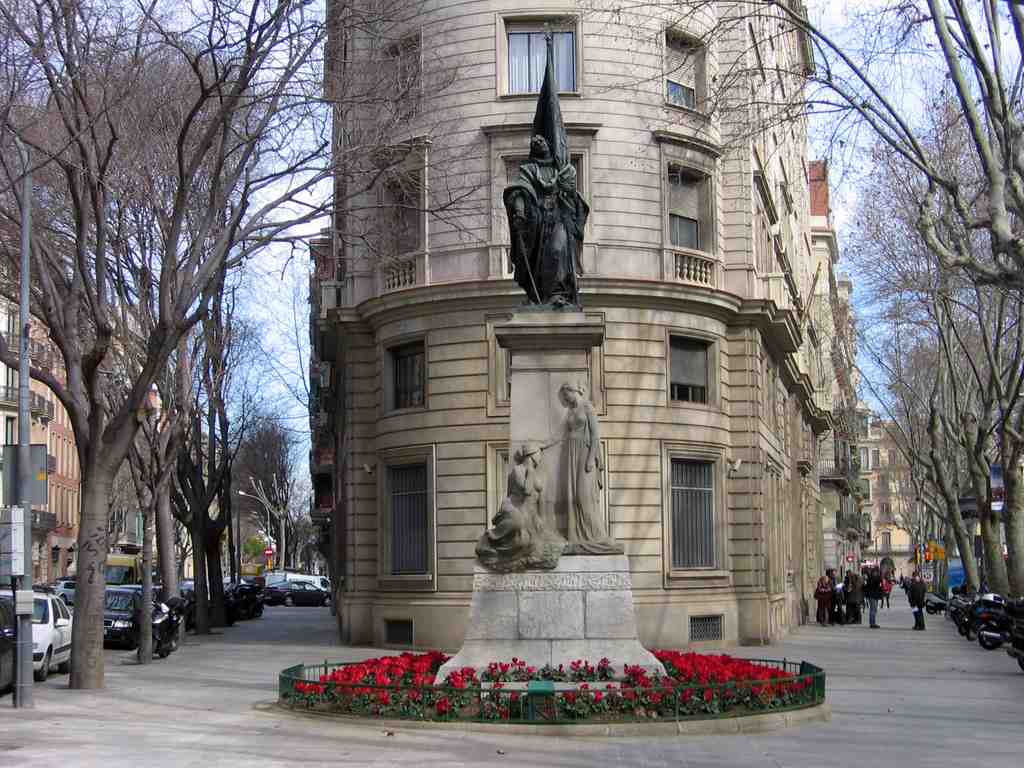
Kijk naar de hoge stenen sokkel aan uw linkerhand, versierd met gebeeldhouwde vrouwenfiguren, met daarbovenop een donker bronzen standbeeld van een man die een hoge vlag vasthoudt.
In september 1714 onderging Barcelona een catastrofale belegering door Bourbon-troepen, en precies hier op deze plek hield eerste minister Rafael Casanova stand. Terwijl de verdediging van de stad instortte, greep hij de vlag van de Heilige Eulalia en verzamelde een militie van uitgeputte burgers, om vervolgens in zijn dij te worden geschoten terwijl de stad viel.
Bekijk de detailfoto in uw app. Merk op hoe de beeldhouwer, Rossend Nobas, geen triomfantelijke overwinnaar heeft gebeeldhouwd, maar een kwetsbare man die van pijn op zijn zwaard leunt. En die vlag die hij vasthoudt? De banier van de Heilige Eulalia, de mede-patroonheilige van de stad, was een heilig relikwie dat alleen tevoorschijn werd gehaald op momenten van extreem gevaar voor het voortbestaan van de stad.
Casanova actually survived. He was smuggled into a hospital, disguised himself as a friar, and lived out his days under a fake name until he was quietly pardoned years later. But the memory of his stand became a powerful phantom that later authorities tried desperately to erase.
In 1939, the new authoritarian regime ordered this statue to be melted down into raw bronze to wipe the slate clean. But in a quiet act of rebellion, the city's own mayor secretly ignored the order. He had the bronze figure carefully dismantled and hidden away in a dusty warehouse on Wellington Street.
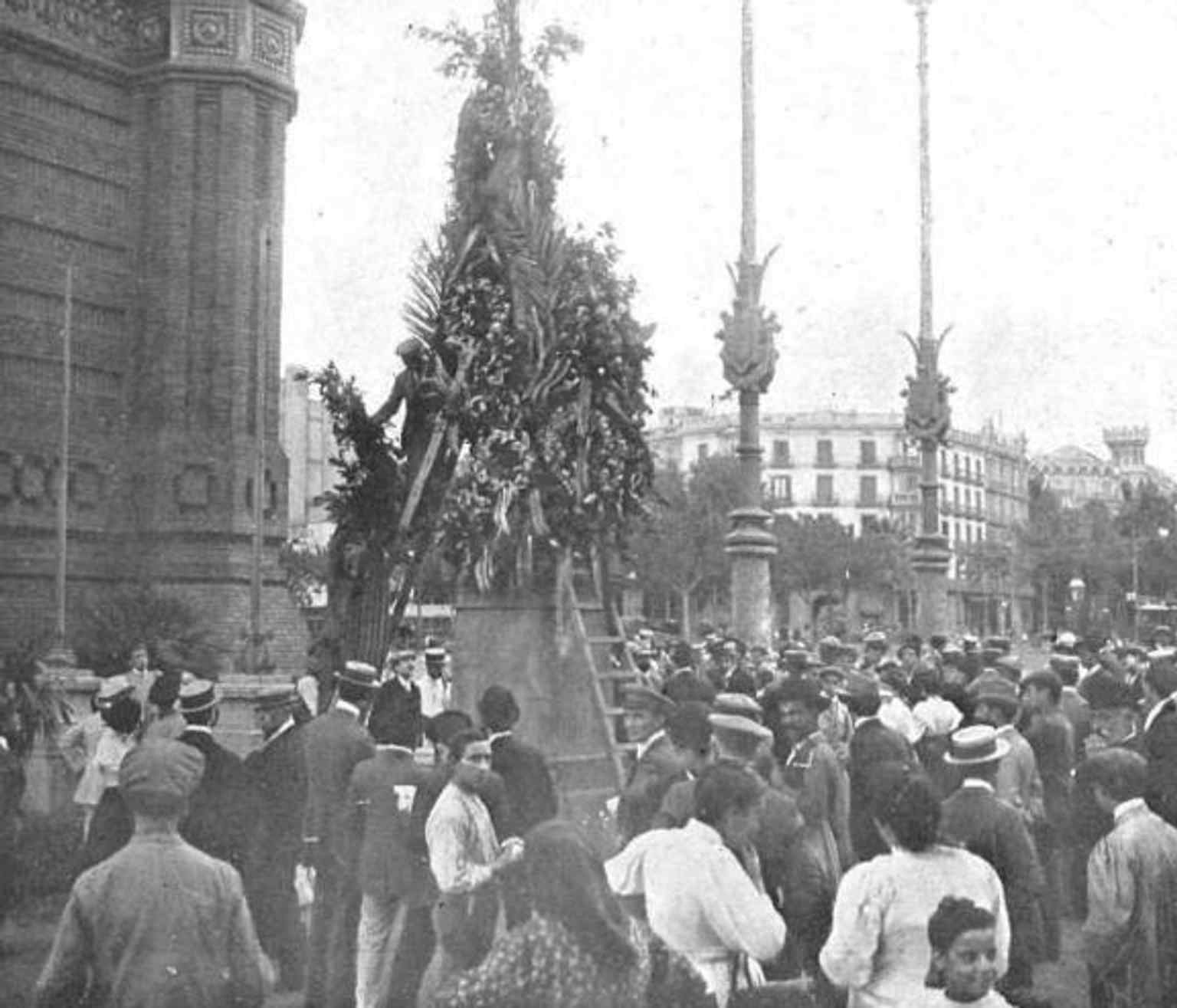
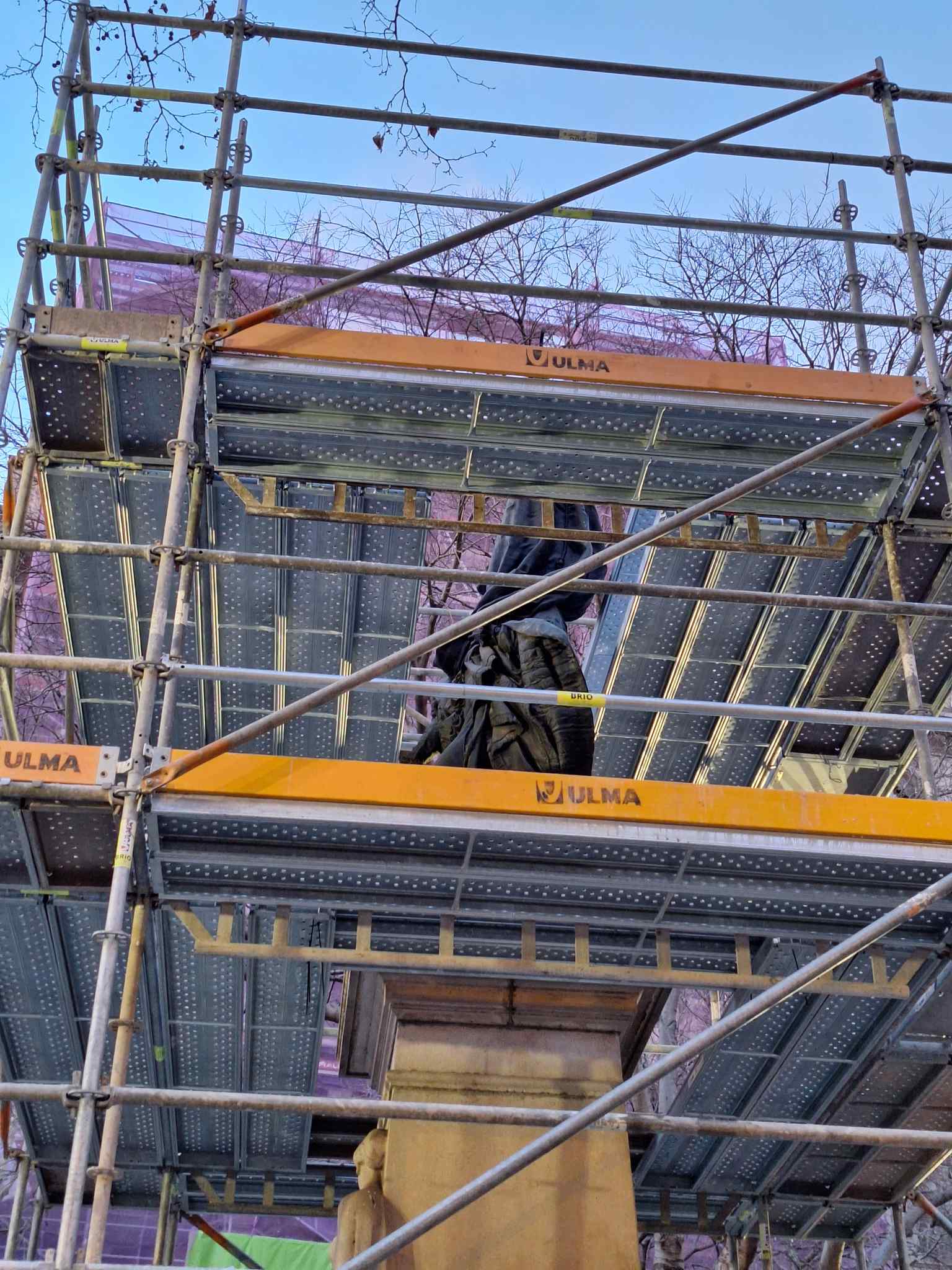
For nearly forty years, this fallen hero sat in the dark, a relic of a painful past waiting out the tide of history while visions of a modernized city took shape above him. He was finally brought back into the light in 1977 during Spain's transition to democracy. If you want to see how this space has evolved over the century, check out the before and after slider on your screen. It shows a massive memorial gathering right here in 1908, compared to recent careful restoration efforts. It is a testament to how the deepest wounds of history are carried forward, quietly wrestling with the push toward tomorrow.
As you look up at him, consider what you would do if your city was surrounded and falling... Would you stand your ground?
Since it is a public space, this monument is open twenty-four hours a day. Now, let's walk toward the grand entryway of the modern era, as we make our way to the Arc de Triomf.