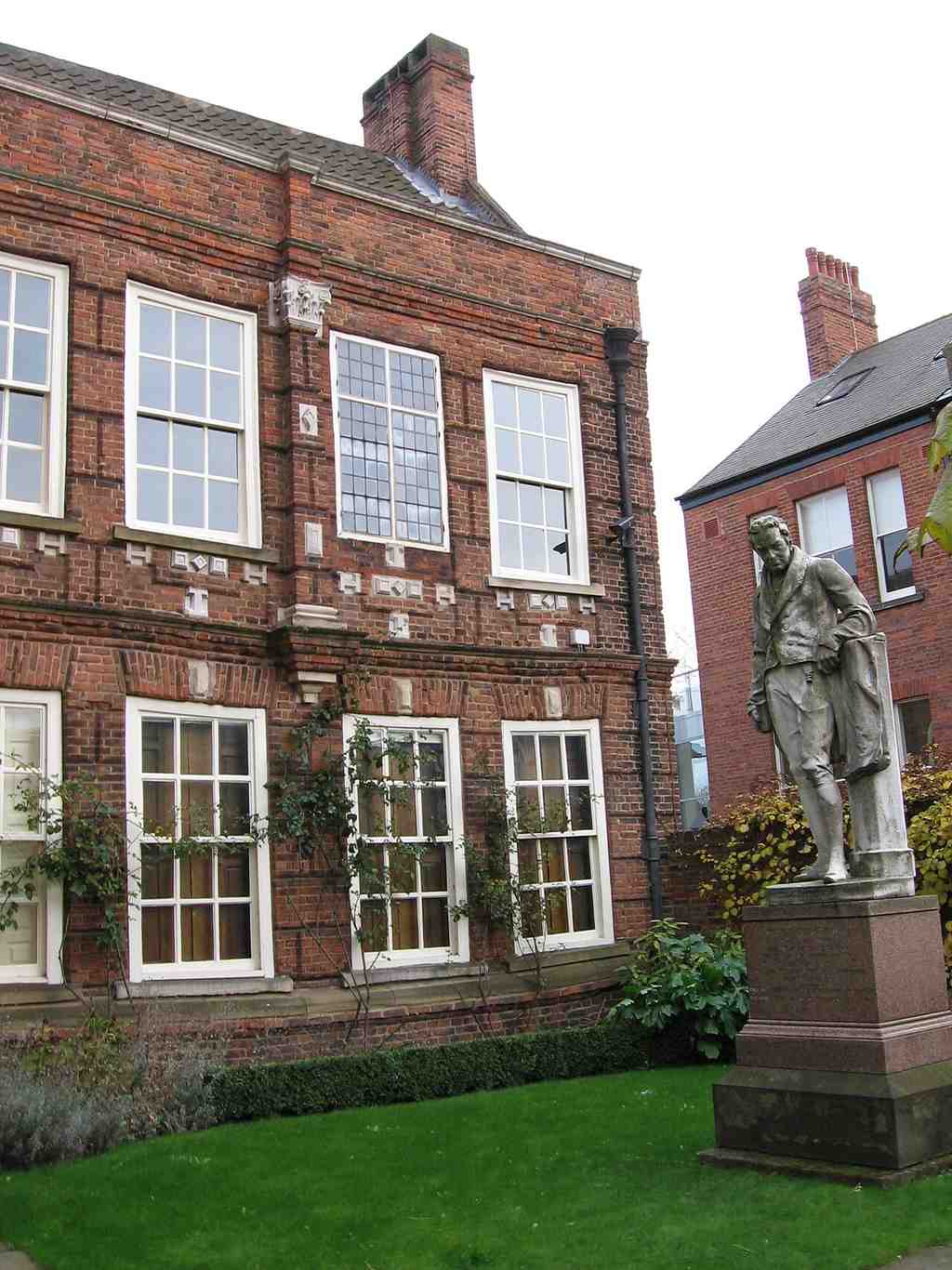
Hull's skyline belongs to the merchants. The streets between the docks, the river and the Minster belong to a different city — the medieval craftsmen who laid the earliest brick Gothic church in England course by course, the seafarers' brotherhood men who built almshouses for the wrecked and widowed, the whaling captains whose Arctic log-books became science, the trawlermen's wives who stood on a dock in January and refused to let another crew sail without a radio operator, the dock labourers who shifted a city's worth of trade by hand across the quays, and the abolition campaigner born in a High Street merchant house who spent thirty years dismantling a trade his own city had profited from. Heritage Open Days 2026 theme is 'Everyday Histories': the unsung and the missing from the picture. This tour names them.
Hull Minster, Minster Yard, Kingston upon Hullから開始
このツアーのスポット
location_on
1
lock
Hull MinsterThe largest parish church in England by floor area and one of the earliest examples of medieval brickwork in the country. The transepts and lower tower were built between roughly the early 14th century and the nave completed in the early 15th century, all in English-bond brick worked by craftsmen whose names appear in no surviving record. The merchant guilds who paid for the work got the glory; the bricklayers who laid it did not.
location_on
2
lock
Queen's GardensA tall Doric column topped by a statue of the abolitionist William Wilberforce, moved to its current position in Queen's Gardens in 1935. The gardens themselves are laid out on the filled-in hull of Queen's Dock, Hull's first enclosed wet dock, which operated from 1778 until its closure in the early 20th century. The dock workers who worked the quays around this basin for over a century and a half are almost invisible in the written record; their monument is the grass itself.
location_on
3
lock
Hull Maritime MuseumMaritime museum in Kingston upon Hull, England
location_on
4
lock
Hull Trinity HouseA guild founded in 1369 as a religious brotherhood, now a Grade I listed complex on Trinity House Lane. In 1457 the guild absorbed the Shipmans Guild, acquiring its seafarers' mutual-aid function: supporting mariners and their families 'impoverished by some misfortune relating to seafaring.' It is still operating as a charity for seafarers and their families, and still running the school for mariners it established in the 18th century.
location_on
5
lock
Land of Green GingerA narrow medieval lane running off Whitefriargate in Hull's Old Town, whose name has never been satisfactorily explained — the leading theory is that it refers to the storage or trade of green (undried) ginger here between roughly the 17th and 18th centuries. The world's smallest window, formerly the gatekeeper's peephole for the George Hotel, looks onto the lane from the south side.
location_on
6
lock
Ye Olde White HarteOne of Hull's oldest licensed premises on Silver Street in the Old Town, with a timber-framed core dating from the mid-to-late 17th century. Victorian tradition attached a 'Plotting Parlour' legend to the upstairs room, connecting it to the Civil War, but Hull History Centre's 2024 research confirms the building post-dates 1642 and the Plotting Parlour story is a Victorian invention. The pub's genuine history is working-class: a licensed alehouse with named landlords recorded from the 18th century, serving dockside trades.