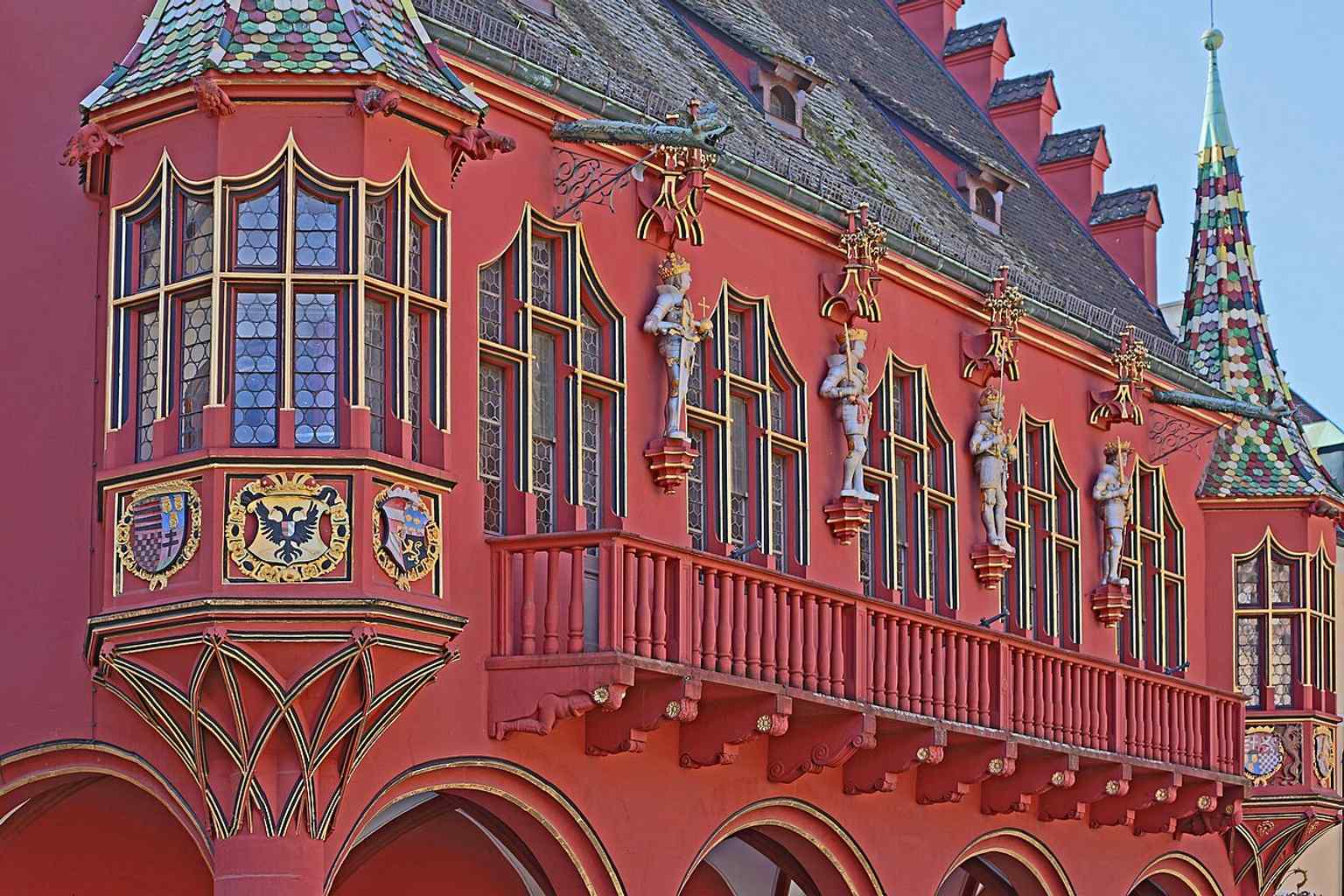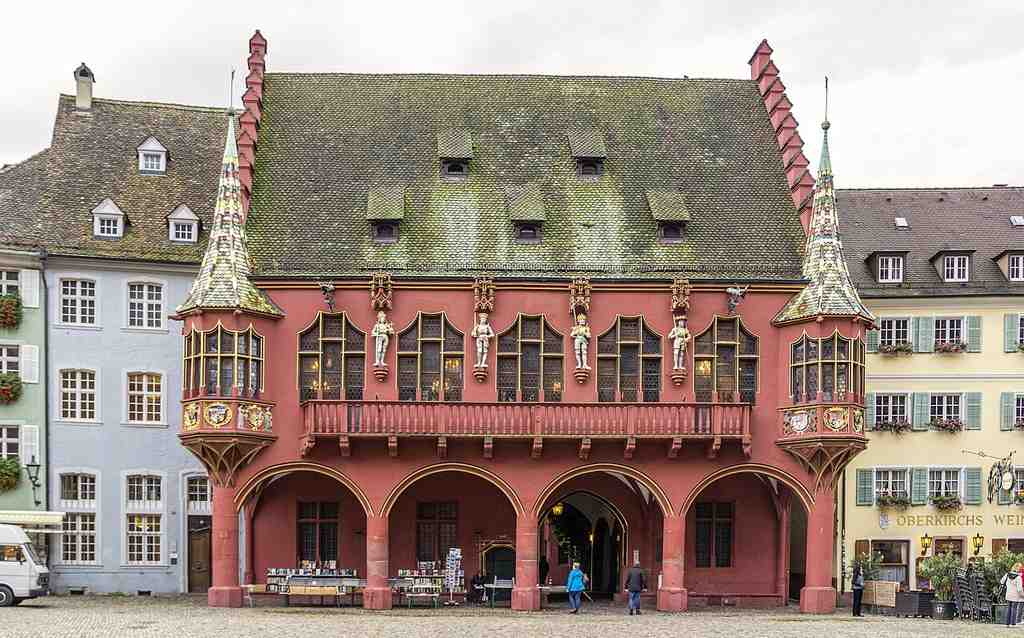
Et pourtant, Fribourg ne s'est pas arrêtée à l'utilité. Elle a mis en scène l'autorité. Le sculpteur Hans Sixt de Staufen a sculpté les souverains des Habsbourg sur la façade entre quinze cent trente et quinze cent trente et un environ: Maximilien Ier, Philippe le Beau, Charles Quint et Ferdinand Ier. Leurs statues se dressent au-dessus de la place comme une approbation dynastique apposée sur un bureau de douane. Si vous agrandissez l'image de détail, cette baie d'angle est remplie d'héraldique, y compris l'aigle impérial et les terres des Habsbourg. En d'autres termes, l'achat et la vente ici se déroulaient sous un rappel très délibéré de qui revendiquait le pouvoir.
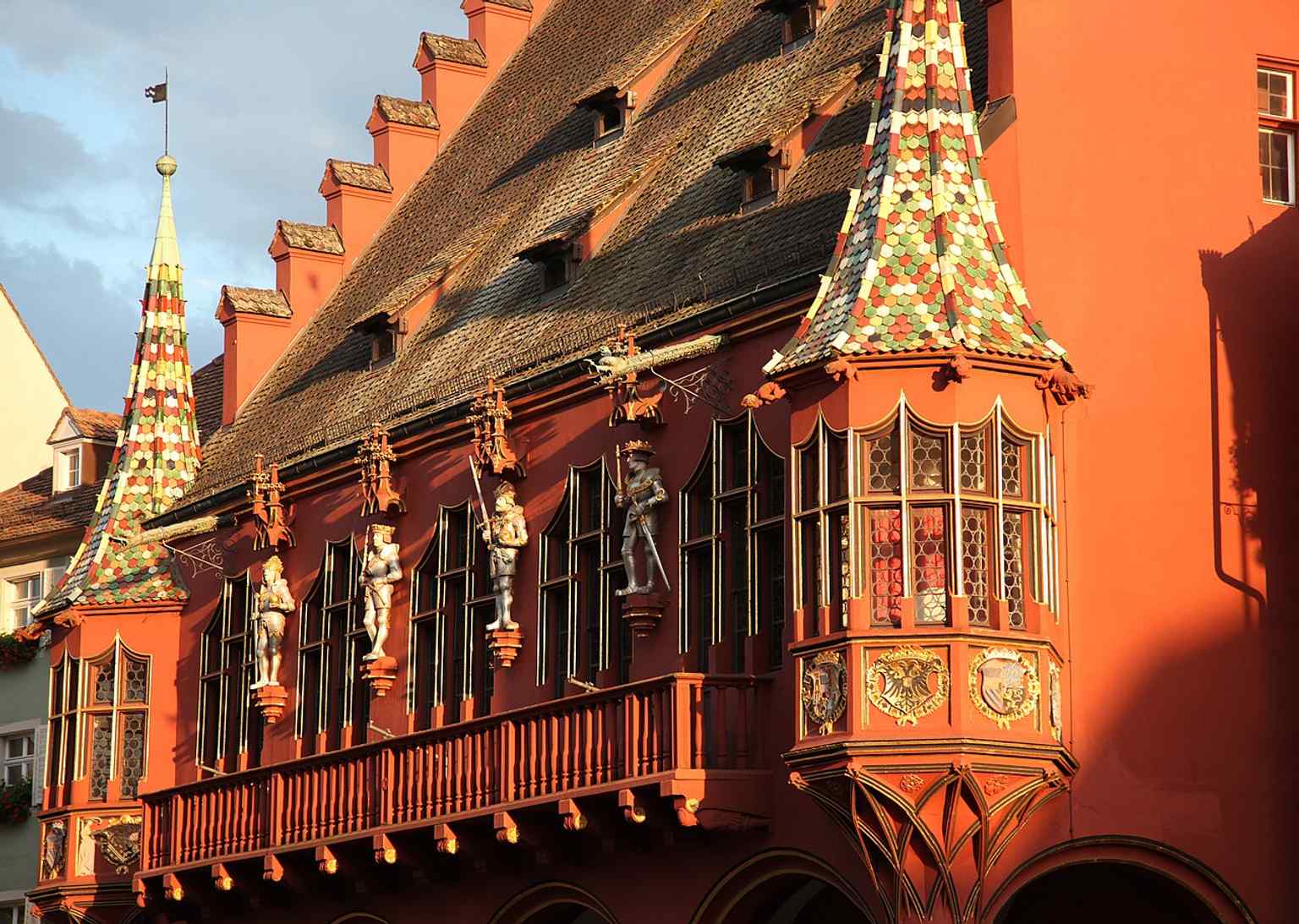
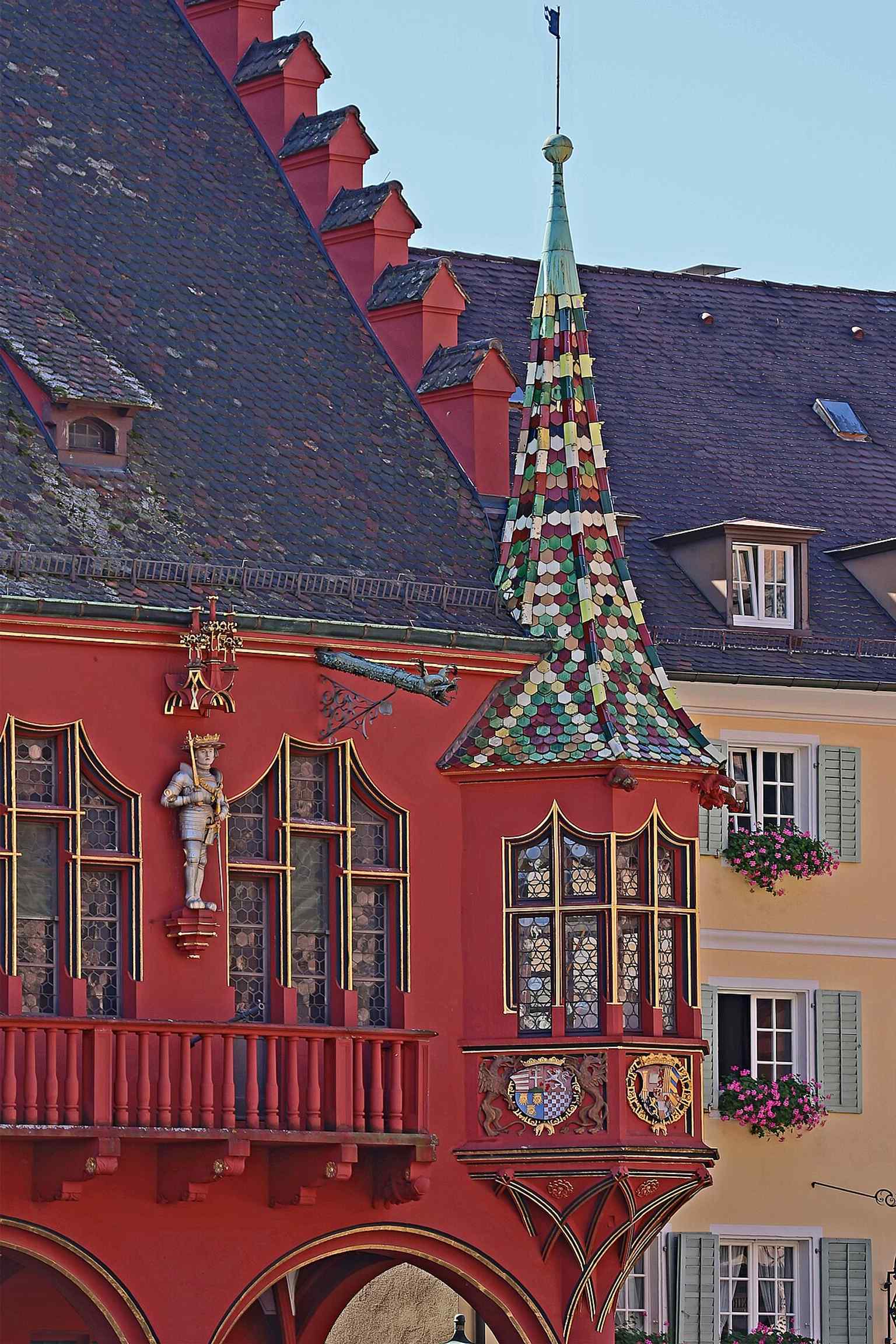
Inside, things became even more theatrical. The whole upper floor formed a great hall opening toward the market through late Gothic windows. But here is the detail locals like to point out: the famous Kaisersaal, the “Emperor’s Hall,” does not owe its name to those sixteenth-century Habsburg figures. It got that name in eighteen seventy-six, when Freiburg hosted a banquet here for Kaiser Wilhelm the First during the celebrations for the Victory Monument. So the room that looks ancient and imperial earned its title from a comparatively late piece of civic stagecraft. Neat trick.
The building kept changing roles without losing its sense of ceremony. Simon Göser repainted the façade in eighteen fourteen. A heavy nineteenth-century makeover came and went. Then city architect Karl Gruber restored the older look in the nineteen twenties and added the Blue Salon for municipal meetings. After the Second World War, the same complex even served as the parliament building of Baden. So this was never just a pretty shell. It was a working engine that repeatedly learned new lines.
From civic wealth and public display, we head next to a former monastery where sacred architecture found another life as a museum... the Augustinian Museum is about a two-minute walk from here.