AudaTours logoAudaTours

Visite Audio d'Anvers : Cathédrales, Légendes et Trésors Intemporels Dévoilés

Guide audio14 arrêts

Une seule flèche a jadis sauvé Anvers de la destruction totale. Dans cette ville de saints dorés et d'ombres silencieuses, chaque pierre cache une histoire. Partez pour une visite audio autoguidée serpentant à travers le cœur historique d'Anvers. Faufilez-vous dans des chapelles silencieuses et des recoins secrets que la plupart des voyageurs ne trouvent jamais. Ce parcours révèle les drames cachés qui palpitent sous la surface polie de la ville. Qui a comploté pour voler un chef-d'œuvre sacré au sein de l'imposante Cathédrale Notre-Dame ? Quelle cloche fantôme sonne à Saint-Paul lorsque le brouillard s'enroule autour de ses statues baroques ? Et pourquoi une histoire d'amour interdite a-t-elle éclaté en scandale dans un jardin de cloître que si peu de gens voient ? Suivez les pas révolutionnaires et les confessions murmurées à travers la lumière changeante du soleil et les rues anciennes. À chaque pas, voyez Anvers avec de nouveaux yeux : audacieuse, mystérieuse, électrique des échos de l'histoire. Prêt à percer les secrets d'Anvers ? Commencez à marcher et écoutez attentivement.

Aperçu du tour

map

À propos de ce tour

  • schedule
    Durée 80–100 minsAllez à votre propre rythme
  • straighten
    Parcours à pied de 3.2 kmSuivez le sentier guidé
  • location_on
    EmplacementAnvers, Belgique
  • wifi_off
    Fonctionne hors ligneTéléchargez une fois, utilisez n'importe où
  • all_inclusive
    Accès à vieRéécoutez n'importe quand, pour toujours
  • location_on
    Commence à Boerentoren

Arrêts de ce tour
lock_open 3 aperçus gratuits · 11 à débloquer à l'achat

  1. Look for the pale stone tower rising in stepped Art Deco layers, with strong vertical ribs and a dark marble-framed entrance at its base. This is the Boerentoren, completed in…Lire plusAfficher moins

    Look for the pale stone tower rising in stepped Art Deco layers, with strong vertical ribs and a dark marble-framed entrance at its base.

    This is the Boerentoren, completed in nineteen thirty-one: often described as one of Europe’s first skyscrapers, and for a time the tallest tower building on the continent. Only Antwerp’s Cathedral stood higher. That alone tells you something about the city’s confidence. Antwerp did not merely want another office block here. It wanted a statement at the end of the Meir, a kind of urban full stop.

    The story begins with destruction. In nineteen fourteen, during the German siege of Antwerp, the houses on this block were blasted into ruins. What stood here afterwards was a wound in the middle of the city. In nineteen nineteen, the city launched a competition to remake the area, and in the nineteen twenties Mayor Frans Van Cauwelaert pushed for something bold, especially with a world exhibition on the horizon. The city sold this plot in nineteen twenty-eight for seven point two million Belgian francs, roughly about three million euros in today’s money, to the Algemeene Bankvereeniging, a bank tied to the Belgian farmers’ movement.

    That connection gave the tower its nickname. People called it the Boerentoren, the Farmers’ Tower, first with a wink and later with a sharper edge. In nineteen thirty-four, the Middenkredietkas, linked to that same network, collapsed after pouring money into rescuing the bank behind this project. The shortfall reached nine hundred and thirty million Belgian francs, an immense sum, and many savers waited in stages for twenty-eight years to recover what they could. Antwerp has always been very good at turning financial scandal into memorable architecture.

    Still, the building itself was astonishing. Three architects shaped it: Emiel Van Averbeke advised the city, Jan Vanhoenacker led the work, and Jos Smolderen helped define the interiors and façade, and may well have drawn the original concept. Builders began in February of nineteen twenty-nine with a huge excavation and a thick concrete foundation slab, two metres deep under the tower. Then the German firm Demag raised a steel skeleton with hundreds of thousands of rivets and bolts. Around that frame came millions of Boomse bricks and a skin of pale stone. If you want a better sense of that upward thrust, the close view in the app captures it nicely. And this was never meant to be just a bank. Inside, there were shops, a brasserie called the Torenkelder, a fashionable tearoom designed as a Chinese salon, offices, and above all apartments. A real vertical city. On the twenty-fourth floor, the public could ride up to a panorama room and look over Antwerp for a small fee of three francs. Above that sat a giant copper water tank holding two hundred and thirty cubic metres, ready to supply the building and help fight fire if needed.

    An oblique ground-level view from the base, emphasizing the tower’s height and the strong vertical lines of its Art Deco design.
    An oblique ground-level view from the base, emphasizing the tower’s height and the strong vertical lines of its Art Deco design.Photo: acediscovery, Wikimedia Commons, CC BY 4.0. Cropped & resized.

    If you like, take a glance at the before-and-after image in the app; it shows how the street below changed across decades while the tower kept its commanding pose. The tower changed too. It became more fully a bank building in the nineteen seventies, gained a reworked top, and earned protected monument status in nineteen eighty-one. More recently, new owners began a vast renovation, with asbestos removal, cultural plans, and even talk of displaying a Tyrannosaurus rex skeleton inside once the work is done. Rather wonderfully Antwerp thinks on that scale.

    So here, at the very first stop, you are standing before a building that turned rubble into ambition. When you are ready, continue on and let the old city gather around this modern giant.

    An early postcard of Boerentoren from around 1930, capturing the building just before completion in 1931.
    An early postcard of Boerentoren from around 1930, capturing the building just before completion in 1931.Photo: unknown, published in the 1930s, Wikimedia Commons, Public domain. Cropped & resized.
    A clear full-height view of the Boerentoren in 2011, showing its stepped Art Deco silhouette in the Antwerp skyline.
    A clear full-height view of the Boerentoren in 2011, showing its stepped Art Deco silhouette in the Antwerp skyline.Photo: Wim Bladt, Wikimedia Commons, CC BY-SA 3.0. Cropped & resized.
    A straightforward daytime view of the tower from 2013, useful for showing the building’s original monumental form.
    A straightforward daytime view of the tower from 2013, useful for showing the building’s original monumental form.Photo: Johan Bakker, Wikimedia Commons, CC BY-SA 3.0. Cropped & resized.
    A base-level perspective that makes the Boerentoren feel imposing, echoing its fame as Europe’s first skyscraper.
    A base-level perspective that makes the Boerentoren feel imposing, echoing its fame as Europe’s first skyscraper.Photo: acediscovery, Wikimedia Commons, CC BY 4.0. Cropped & resized.
    Seen from the Meir in 2016, the tower still anchors the end of Antwerp’s main shopping street, just as planners intended.
    Seen from the Meir in 2016, the tower still anchors the end of Antwerp’s main shopping street, just as planners intended.Photo: Vasyatka1, Wikimedia Commons, CC BY-SA 4.0. Cropped & resized.
    A panorama of Antwerp with the Boerentoren on the horizon, contrasting it with the cathedral and the rest of the city skyline.
    A panorama of Antwerp with the Boerentoren on the horizon, contrasting it with the cathedral and the rest of the city skyline.Photo: Acediscovery, Wikimedia Commons, CC BY 4.0. Cropped & resized.
    Boerentoren at night, showing the tower’s modern city presence more than 90 years after it was completed.
    Boerentoren at night, showing the tower’s modern city presence more than 90 years after it was completed.Photo: Edison McCullen, Wikimedia Commons, CC BY 4.0. Cropped & resized.
    Ouvrir la page dédiée →
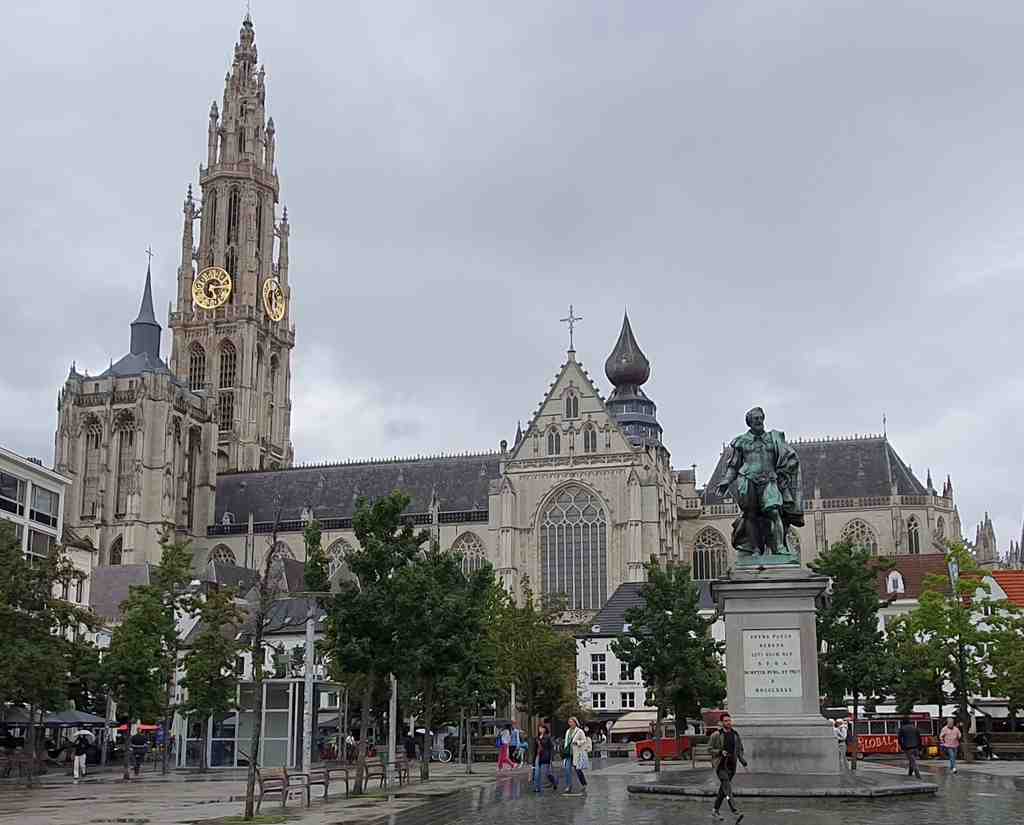
  2. Look for a broad stone-paved square with a dark bronze statue on a tall pedestal at its centre, edged by orderly trees and enclosed by grand historic facades. For all its…Lire plusAfficher moins
    Green place
    Green placePhoto: Rolf Kranz, Wikimedia Commons, CC BY-SA 4.0. Cropped & resized.

    Look for a broad stone-paved square with a dark bronze statue on a tall pedestal at its centre, edged by orderly trees and enclosed by grand historic facades.

    For all its openness, this square began as something much more intimate. From at least the thirteenth century, this ground beside the Cathedral of Our Lady served as Antwerp’s cemetery, especially for people too poor to afford burial inside the church itself. It was known as the Groenkerkhof, the Green Churchyard, and for centuries the dead lay here at the very heart of city life, with trade, prayer, gossip and grief all pressing in around them.

    Then the rules changed. In seventeen eighty-four, Emperor Joseph the Second forbade burials inside city walls. Antwerp shifted its cemeteries elsewhere, and a few years later the French state seized this churchyard. In seventeen ninety-nine, workers pulled down the walls around it. By eighteen oh three, they had begun turning sacred ground into a public square called Place de l’Egalité, the Square of Equality. They even demolished houses along the Schoenmarkt side and planted three rows of linden trees, giving the place a deliberately modern, revolutionary order. In eighteen oh five, the prefect Charles d’Herbouville formally opened it again under a new name: Place Bonaparte, in honour of Napoleon. Revolutionary ideals, as ever, proved rather flexible.

    The French had imagined a monument to Liberty here. Later, after a municipal official named François Roché was killed inside the cathedral in seventeen ninety-seven during fierce arguments over the churchyard’s seizure, people proposed a memorial to him instead. That never happened either. In the end, Antwerp chose a different figure to command the square: Peter Paul Rubens.

    The sculptor Willem Geefs designed the Rubens monument in eighteen forty, and the city unveiled it in eighteen forty-three. It stands close to the former tomb of Bishop Karel d’Espinoza, and it replaced an older cross that had marked the churchyard’s centre since the first of November, seventeen thirty-nine. So even this proud statue of the city’s great painter stands on ground layered with older meanings.

    If you fancy it, have a quick look at the before-and-after image; it shows how the square shifted from the greener openness of the eighteen nineties into a busier paved plaza, while Rubens still keeps his place almost unchanged. Around the edges, the buildings continue the story. The cathedral is the grandest presence, of course, but several surrounding facades are protected as monuments too. The former Grand Bazar building, now a hotel, recalls the square’s commercial life; in eighteen eighty-five the French entrepreneur Adolphe Kileman opened his department store there, and by nineteen fifty-nine it even gained one of Belgium’s earliest supermarkets. Nearby, the Karbonkelhuis, also called the Diamond House, dates from around fifteen twenty and counts among Antwerp’s earliest homes in Renaissance style.

    Groenplaats also became a transport stage. Hire carriages gathered here from eighteen thirty-nine to meet rail travellers. In eighteen seventy-three, the horse tram, splendidly nicknamed the American Iron Road, began carrying passengers from here to the Wilrijk Gate. After the nearby stock exchange burned in eighteen fifty-eight, the city even installed a temporary wooden exchange building on this square for about a decade: not elegant, perhaps, but undeniably useful.

    Groenplaats is a fine Antwerp habit: it keeps changing, yet never quite forgets what stood here before. When you’re ready, carry on to the next stop and let the city reveal another of its old disguises.

    Groenplaats around 1890, with Rubens’ statue in the foreground and the Cathedral of Our Lady behind it — a classic view of the square’s historic heart.
    Groenplaats around 1890, with Rubens’ statue in the foreground and the Cathedral of Our Lady behind it — a classic view of the square’s historic heart.Photo: Detroit Publishing Co., Wikimedia Commons, Public domain. Cropped & resized.
    A 1857 print of the temporary Antwerp stock exchange on the Groenplaats, a reminder of how the square was used for emergency civic functions after the 1858 fire.
    A 1857 print of the temporary Antwerp stock exchange on the Groenplaats, a reminder of how the square was used for emergency civic functions after the 1858 fire.Photo: Unknown, Wikimedia Commons, CC0. Cropped & resized.
    A rare wartime scene on the Groenplaats, with a V-1 on display and the cathedral in the background — showing how the square has long been a stage for major public events.
    A rare wartime scene on the Groenplaats, with a V-1 on display and the cathedral in the background — showing how the square has long been a stage for major public events.Photo: Jan B.H.A. Vervloedt (photo) Ad Meskens (scan), Wikimedia Commons, CC BY-SA 3.0. Cropped & resized.
    The open square with Rubens’ statue and the cathedral — the key landmark pairing that defines the Groenplaats today.
    The open square with Rubens’ statue and the cathedral — the key landmark pairing that defines the Groenplaats today.Photo: Wouter Hagens, Wikimedia Commons, CC BY-SA 3.0. Cropped & resized.
    A north-side detail of the Groenplaats near the cathedral, showing the built edge of the square where historic facades line the open space.
    A north-side detail of the Groenplaats near the cathedral, showing the built edge of the square where historic facades line the open space.Photo: Karlunun, Wikimedia Commons, CC BY-SA 4.0. Cropped & resized.
    Autumn on the Groenplaats, with the cathedral nearby and the square’s tree-lined character still clearly visible.
    Autumn on the Groenplaats, with the cathedral nearby and the square’s tree-lined character still clearly visible.Photo: Smiley.toerist, Wikimedia Commons, CC BY-SA 4.0. Cropped & resized.
    Another broad view of the Groenplaats, useful for showing the open pedestrian space in the center of Antwerp.
    Another broad view of the Groenplaats, useful for showing the open pedestrian space in the center of Antwerp.Photo: Smiley.toerist, Wikimedia Commons, CC BY-SA 4.0. Cropped & resized.
    The former Grand Bazar building, now the Hilton on Groenplaats 31, representing the square’s historic commercial architecture.
    The former Grand Bazar building, now the Hilton on Groenplaats 31, representing the square’s historic commercial architecture.Photo: Ludvig14, Wikimedia Commons, CC BY-SA 4.0. Cropped & resized.
    Ouvrir la page dédiée →
  3. On your right, look for a long brick-and-stone townhouse facade with tall rectangular windows and a carved arched doorway, the sober front of a house that once hid one of Europe’s…Lire plusAfficher moins
    Plantin–Moretus Museum
    Plantin–Moretus MuseumPhoto: Meltwaterfalls, Wikimedia Commons, Public domain. Cropped & resized.

    On your right, look for a long brick-and-stone townhouse facade with tall rectangular windows and a carved arched doorway, the sober front of a house that once hid one of Europe’s greatest printing workshops.

    This is the Plantin Moretus Museum, and what makes it remarkable is wonderfully simple: it is not a museum about printing placed in some modern shell, but the actual home and business where books were designed, set, inked, pressed, sold, argued over, and carefully preserved.

    Christophe Plantin founded the press here in the sixteenth century and turned Antwerp into one of the great capitals of the printed word. He bought type from the finest makers in Paris and printed works for scholars, doctors, mapmakers, and churchmen. Plantin belonged to the world of humanism, a movement that prized languages, learning, and the close study of texts. His boldest project was the Plantin Polyglot Bible, a “polyglot” book printed in many languages, with Hebrew, Aramaic, Greek, and Syriac set side by side. It was one of the most difficult printing jobs of the age.

    The urgency behind that Bible was personal. In fifteen sixty-two, Spanish authorities investigated his press for printing a Calvinist work, in other words a Protestant text they saw as dangerous. Plantin fled to Paris. While he was away, three of his skilled workers were arrested, and his equipment was auctioned off to pay supposed creditors, who turned out to be friends quietly protecting his property. To clear his name, Plantin offered King Philip the Second that vast Bible project. The king promised twenty-one thousand two hundred florins, an immense subsidy worth roughly several million euros in modern terms, and ordered thirteen copies on parchment. Then, with a certain royal predictability, he failed to pay the full amount, and Plantin carried the financial strain himself.

    After Plantin died, his son-in-law Jan Moretus continued the business, and the family did something very rare: they refused to throw away old tools when fashions changed. Because of that stubborn loyalty, the Industrial Revolution largely passed this place by. If you glance at the image on your phone, the printing room still holds two of the oldest surviving printing presses in the world, dating from around sixteen hundred, in a workshop that looks much as it did four centuries ago.

    This was also a house of formidable women. Martina Plantin took over after Jan Moretus died and steered the company through the Eighty Years’ War. Anna Goos rescued the business when its biggest Spanish client stopped paying by taking charge of the books and sending her son to Spain to force a settlement. Anna Maria de Neuf later reduced working hours for employees, a strikingly humane decision for her time.

    There was culture here as well as commerce. Balthasar Moretus grew up as a friend of Peter Paul Rubens, and Rubens painted members of the family, including Christophe Plantin holding a compass, a nod to the firm’s emblem, the Golden Compass.

    Rubens’s dramatic painting from the museum collection, part of the family’s close artistic links to Peter Paul Rubens.
    Rubens’s dramatic painting from the museum collection, part of the family’s close artistic links to Peter Paul Rubens.Photo: James Ensor, Wikimedia Commons, CC0. Cropped & resized.

    The house survived another danger in the winter of nineteen forty-four, when a V-two rocket hit the square opposite and damaged the building. Even so, the archive endured, and that is why UNESCO, the United Nations Educational, Scientific and Cultural Organization, later recognised both the site and its records as world treasures.

    If you want to go inside later, the museum is open from ten to five Tuesday through Sunday, and closed on Monday.

    Plantin turned print into power, and this house still carries the quiet confidence of that achievement. When you are ready, continue on toward the next stop and let Antwerp tell you what happened after the books left the press.

    The museum’s street-facing exterior in Antwerp — this is the UNESCO-listed former Plantin press and home of the printing family.
    The museum’s street-facing exterior in Antwerp — this is the UNESCO-listed former Plantin press and home of the printing family.Photo: Ludvig14, Wikimedia Commons, CC BY-SA 4.0. Cropped & resized.
    The UNESCO plaque by the entrance, marking the museum’s World Heritage status since 2005.
    The UNESCO plaque by the entrance, marking the museum’s World Heritage status since 2005.Photo: CEphoto, Uwe Aranas, Wikimedia Commons, CC BY-SA 3.0. Cropped & resized.
    A clear view of the museum’s exterior and heritage signage, useful for orienting visitors at the site.
    A clear view of the museum’s exterior and heritage signage, useful for orienting visitors at the site.Photo: FrDr, Wikimedia Commons, CC BY-SA 4.0. Cropped & resized.
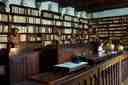
    The museum library, reflecting the family’s role as scholars as well as printers and preserving centuries of printed knowledge.
    The museum library, reflecting the family’s role as scholars as well as printers and preserving centuries of printed knowledge.Photo: The original uploader was Meltwaterfalls at English Wikipedia., Wikimedia Commons, Public domain. Cropped & resized.
    A James Ensor painting from the museum collection, showing that the Plantin–Moretus holdings extend beyond printing to major Belgian art.
    A James Ensor painting from the museum collection, showing that the Plantin–Moretus holdings extend beyond printing to major Belgian art.Photo: James Ensor, Wikimedia Commons, CC0. Cropped & resized.
    A 1939 scholarly gathering at the museum, underlining its long life as a research center for historians of printing.
    A 1939 scholarly gathering at the museum, underlining its long life as a research center for historians of printing.Photo: Fotograaf: Gazet van Antwerpen (1891 - ), Wikimedia Commons, CC0. Cropped & resized.
    Ouvrir la page dédiée →
Afficher 11 arrêts de plusAfficher moins d'arrêtsexpand_moreexpand_less
  1. Look for the narrow pale stone façade with tall rectangular windows and a simple entrance marked by the museum’s own name. Museum De Reede is a rather unusual creature in…Lire plusAfficher moins
    Museum De Reede
    Museum De ReedePhoto: Nolde16, Wikimedia Commons, CC BY-SA 4.0. Cropped & resized.

    Look for the narrow pale stone façade with tall rectangular windows and a simple entrance marked by the museum’s own name.

    Museum De Reede is a rather unusual creature in Antwerp: a private museum that keeps a gallery’s modest scale, yet thinks like a serious museum. Dutch collector Harry Rutten opened it in twenty seventeen, after a life spent not in art schools but in shipping and oil trading. He collected, as he put it, simply what moved him or troubled him. That instinct led him to graphic art, work on paper that many museums own in abundance but show only rarely, because prints and drawings are delicate and spend much of their lives in storage.

    Rutten tested the waters first. In two thousand and six, parts of his collection travelled to the Charlier Museum in Brussels, to the Museum of Contemporary Art in Seoul, and to the Haugar Vestfold Art Museum in Tønsberg, Norway. Together, those exhibitions drew around one hundred thousand visitors. That success convinced him the collection deserved a permanent home. He also preferred independence; after poor experiences with loans, donations, and museum management, he chose to open his own museum instead.

    Inside, the focus is strikingly clear. The collection centres on Francisco Goya, Edvard Munch, and Félicien Rops: thirty-two lithographs by Munch, thirty-seven etchings by Rops, and an astonishing one hundred and forty etchings by Goya. An etching, by the way, is a print made from a metal plate that an artist bites with acid and then inks. Goya’s great series appear here, including Los Caprichos, Los Disparates, Tauromaquia, and Los Desastres de la Guerra, his blunt, unsparing vision of war’s cruelty. Across all three artists runs the same thread: human weakness, human fate, and a sharp, often uncomfortable critique of society.

    Antwerp suits this museum beautifully, because this city has a long printmaking tradition, from Plantin and Moretus to the famous meeting in fifteen twenty-one between Albrecht Dürer and Lucas van Leyden, when the two masters exchanged etched plates like scholars trading ideas.

    If you want to go in later, it usually opens from eleven in the morning to five in the afternoon on Friday, Saturday, Sunday, and Monday, and stays closed from Tuesday to Thursday.

    This is a small museum with a surprisingly fierce soul. When you are ready, continue on toward Saint Walburga’s Church.

    Ouvrir la page dédiée →
  2. This landmark appears as a pale stone outline in the paving, long and church-shaped, with a simple memorial marker recalling Saint Walburga on the old Burcht site. If this place…Lire plusAfficher moins
    St. Walburga's Church
    St. Walburga's ChurchPhoto: Jan-Baptist Vrients, Wikimedia Commons, Public domain. Cropped & resized.

    This landmark appears as a pale stone outline in the paving, long and church-shaped, with a simple memorial marker recalling Saint Walburga on the old Burcht site.

    If this place feels a little ghostly, that is because Saint Walburga’s Church no longer stands. Yet for many centuries, this was one of Antwerp’s oldest sacred sites. Its story begins astonishingly early, in the year seven hundred and twenty-seven, when people raised a first chapel inside the ring-shaped fortification on the right bank of the Scheldt, a little north of today’s Steenplein. In eight hundred and thirty-six, Norse raiders destroyed it.

    Then the place revived. In the middle of the tenth century, Emperor Otto the First, known as Otto the Great, ordered a fortress here beside the river. At its heart he placed a new church and dedicated it to Saint Walburga, an English-born abbess much loved in medieval Europe. That is when the church gained the name it kept.

    The building did not stand still for long. Around twelve fifty, the Benedictine monks of Affligem rebuilt it for a third time. In fourteen seventy-eight, the church became a parish church, meaning it gained its own baptismal font and the right to bury the dead. Around fifteen hundred, the master builder Domien de Waghemakere enlarged it again, making it bigger and grander.

    Then came the church’s most famous commission. In sixteen oh nine, the churchwardens asked Peter Paul Rubens for a great altarpiece. He answered with The Elevation of the Cross, a vast triptych, a painting made of three hinged panels, installed on the high altar in sixteen ten. When the church authorities replaced the wooden high altar in the seventeen thirties with a new one designed by Willem Ignatius Kerrickx, parts of Rubens’s work no longer fit and they removed smaller sections. In seventeen ninety-four, French occupiers carried the triptych off to Paris. Later, Antwerp recovered it, and today you can see it in the Cathedral of Our Lady.

    The church itself fared far worse. In seventeen ninety-eight, during the French suppression of churches and monasteries, officials closed it and turned it into a storehouse. The choir, the eastern part around the altar, survived a little longer, with a covered passage beneath it leading toward Het Steen. But in eighteen sixteen, the Dutch government sold the church for demolition, and by eighteen seventeen it had gone. Even the last remains disappeared after a fire in the nearby De Gans warehouses.

    So here, memory does the work that stone no longer can. When you are ready, continue on toward Het Steen, where the old fortress story still has walls to tell it.

    Ouvrir la page dédiée →
  3. On your left, look for a compact fortress of pale stone, with squat turrets and a tall arched gateway marked by a tiny carved figure above the entrance. This is Het Steen, the…Lire plusAfficher moins
    The Steen
    The SteenPhoto: -wuppertaler, Wikimedia Commons, CC BY 4.0. Cropped & resized.

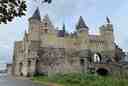
    On your left, look for a compact fortress of pale stone, with squat turrets and a tall arched gateway marked by a tiny carved figure above the entrance.

    This is Het Steen, the oldest preserved building in Antwerp. It began life between twelve hundred and twelve twenty-five as the gatehouse of the city’s fortified enclosure on the right bank of the Scheldt. What you see now is only a fragment of that older stronghold, less than five percent of the original complex. Inside those lost walls stood a court, a church, storehouses, houses, and the working life of a river city protecting itself.

    Around fifteen twenty, during the time of Charles the Fifth, builders reshaped the gatehouse so thoroughly that people started calling it s-Heeren Steen, the Lord’s Stone. In fifteen forty-nine, Charles gave it to the city. But for most of its long life, this was no grand civic salon. From thirteen oh three until eighteen twenty-three, Antwerp used it as a prison. Some deaths here were public, others were not. Between fifteen fifty-seven and fifteen sixty-five, authorities secretly drowned religious reformers here, a grim reminder that river cities can be merciless as well as prosperous.

    Its purpose kept changing. In eighteen twenty-three, officials turned it into a home for disabled soldiers. The state reclaimed it, sold it to a timber merchant a year later, and then the city bought it back in eighteen forty-two before the story slipped away entirely. In eighteen sixty-two, the historian Pieter Génard argued that Antwerp should place its antiquities museum here. The city agreed, architect Kennes restored the building, and the museum opened in eighteen sixty-four.

    Then came the great surgery on the riverfront. In the eighteen eighties, Antwerp widened the Scheldt and straightened the quays. Most of the old fortress disappeared, and only this cluster around the original gatehouse survived under the simple name Het Steen. Soon after, builders added a new wing in neo-Gothic, a nineteenth-century revival of medieval style. If you'd like a comparison, the image in the app shows rather neatly how the old maritime museum frontage gave way to today’s riverfront version with the modern extension beside it. That modern chapter stirred debate, naturally. Architects from noAarchitecten redesigned Het Steen as Antwerp’s visitor centre, which opened in twenty twenty-one. Inside are information desks, tickets, exhibitions, a city shop, a resting place overlooking the Scheldt, and The Antwerp Story, a multimedia route through eleven rooms. The building even picked up a heritage prize in twenty twenty-two. Under the roofs, by the way, designers tucked in nesting places for swifts, and the birds took to them almost at once.

    Now, do glance above the main arch. That small figure is Semini, an old fertility symbol whose more explicit anatomy Jesuits removed in the seventeenth century. Near the entrance stands Lange Wapper, the legendary Antwerp giant, placed here in nineteen sixty-three. If you want a clearer look at him, there’s a good detail shot on your screen. If you plan to go inside, the visitor centre opens daily from ten in the morning until six in the evening.

    The entrance ramp with the Lange Wapper statue — folklore says this giant once lived at Het Steen, and the statue has stood here since 1963.
    The entrance ramp with the Lange Wapper statue — folklore says this giant once lived at Het Steen, and the statue has stood here since 1963.Photo: Tania Dey, Wikimedia Commons, CC BY-SA 3.0. Cropped & resized.

    Het Steen has guarded Antwerp in one form or another for more than eight centuries. When you are ready, continue on toward Museum Vleeshuis, where the city tells a rather different story through music and craft.

    The rear façade of Het Steen beside the Scheldt — this medieval fortress began as Antwerp’s gatehouse around 1200–1225.
    The rear façade of Het Steen beside the Scheldt — this medieval fortress began as Antwerp’s gatehouse around 1200–1225.Photo: G.Lanting, Wikimedia Commons, CC BY 3.0. Cropped & resized.
    A clear view of Het Steen’s historic riverside exterior, now restored as Antwerp’s tourist welcome center since 2021.
    A clear view of Het Steen’s historic riverside exterior, now restored as Antwerp’s tourist welcome center since 2021.Photo: Lou Salomé, Wikimedia Commons, CC BY-SA 3.0. Cropped & resized.
    Plaques on the back of Het Steen, including tributes to the 1944 liberation of Antwerp, showing how the building carries layers of memory.
    Plaques on the back of Het Steen, including tributes to the 1944 liberation of Antwerp, showing how the building carries layers of memory.Photo: Tania Dey, Wikimedia Commons, CC BY-SA 3.0. Cropped & resized.
    An early 20th-century view of Het Steen when it housed the National Maritime Museum, before the modern restoration and visitor-center conversion.
    An early 20th-century view of Het Steen when it housed the National Maritime Museum, before the modern restoration and visitor-center conversion.Photo: René Desclée, (°Tournai 1868 - †Tournai 1953). Voir Base AUTOR : base biographique. → http://www2.culture.gouv.fr/public/mistral/autor_fr?ACTION=CHERCHER&FIELD_98=REF&VALUE_98=AW00110 → https://mediatheque-patrimoine.culture.gouv.fr/collection/objet/rene-desclee-1868-1953, Wikimedia Commons, Public domain. Cropped & resized.
    Het Steen seen from across the Scheldt on Linkeroever — a good overview of its position on Antwerp’s waterfront and Steenplein.
    Het Steen seen from across the Scheldt on Linkeroever — a good overview of its position on Antwerp’s waterfront and Steenplein.Photo: Ludvig14, Wikimedia Commons, CC BY-SA 4.0. Cropped & resized.
    Ouvrir la page dédiée →
  4. On your left, look for a long late-Gothic hall of red brick striped with white sandstone, rising beneath a steep roof, with a façade so boldly banded it is almost impossible to…Lire plusAfficher moins
    Museum Vleeshuis
    Museum VleeshuisPhoto: Timothy De Paepe, Wikimedia Commons, CC BY-SA 4.0. Cropped & resized.

    On your left, look for a long late-Gothic hall of red brick striped with white sandstone, rising beneath a steep roof, with a façade so boldly banded it is almost impossible to mistake.

    This is the Vleeshuis, one of Antwerp’s most distinctive old working buildings, and it began with something far less refined than music: meat. In the Middle Ages, the city created covered market halls so traders could work under one roof, and the first Vleeshuis appeared near Het Steen around the year twelve fifty, built for the sale of slaughtered animals. By the turn of the seventeenth century, Antwerp had outgrown it, and neglect had left the old hall shabby besides.

    So the butchers’ guild made an ambitious decision. They moved slightly north, closer to the cattle market, where animals were slaughtered and cut up, and they commissioned Herman de Waghemakere to design a new hall. He gave them this formidable building between fifteen oh one and fifteen oh four. It could serve sixty-two butchers. Meat stayed cool in the cellar. The great ground floor held the shops. At the back stood a chapel, because even a trade of knives and carcasses made room for devotion. Upstairs came meeting rooms and a kitchen, and higher still, under the roof, whole levels of storage.

    That mixture of practicality and ceremony still clings to the walls. This was a workplace, certainly, but it was also a statement. The butchers did not build a shed. They built a palace for their profession.

    After the French occupation in seventeen ninety-five abolished the guilds, the building lost its original purpose and drifted into use as a storehouse. Then, after eighteen thirty, it acquired a second life. Artists moved in. Nicaise de Keyser, Gustave Wappers, Willem Geefs, Théodore Schaepkens: painters and sculptors worked here where butchers once sold meat. Around eighteen forty, a theatre society even staged operas and plays inside. It is one of those marvellous Antwerp stories in which a commercial hall quietly turns into a cultural engine.

    If you like, take a quick look at the comparison image in the app; the striped Gothic façade stays stubbornly itself, even as the street around it changes completely. In the early nineteen hundreds, architect Alexis van Mechelen led a major restoration, and in nineteen thirteen the building opened as a museum. At first it held a broad collection: metalwork, ceramics, glass, weapons, wood carving, architectural fragments, even Egyptian and prehistoric finds. Then, from nineteen sixty-seven onward, curator Jeannine Lambrechts-Douillez pushed the musical instruments into the foreground, helped by a major long-term loan from Antwerp’s Royal Conservatory.

    That changed everything. Since two thousand and six, the museum has focused on eight hundred years of musical life in Antwerp and the Low Countries. It cared for harpsichords by the great Ruckers family, a Joannes Couchet virginal, a Dulcken harpsichord, old bells, organs, and even a giant bass recorder. Some instruments were not merely displayed but played. On your phone, you can see the Calvary group connected to the building’s old Bloedberg setting, a sculpted scene of Christ, Mary, and John that adds a surprising note of devotion to this former butchers’ hall. Few buildings in Antwerp carry the city’s trade, art, faith, and music so gracefully in one body.

    Close-up of the Calvary scene, linking the building to its devotional artwork and the historic Bloedberg setting.
    Close-up of the Calvary scene, linking the building to its devotional artwork and the historic Bloedberg setting.Photo: Vlaamse Gemeenschap, Wikimedia Commons, CC BY 4.0. Cropped & resized.

    When you are ready, carry on and let the old market streets lead you outward again.

    Another strong exterior angle of the monument, useful for showing the building’s massing and medieval character in the narrow street setting.
    Another strong exterior angle of the monument, useful for showing the building’s massing and medieval character in the narrow street setting.Photo: Ludvig14, Wikimedia Commons, CC BY-SA 4.0. Cropped & resized.
    Front view of the former Butchers’ Hall, the 16th-century guild house that later became Museum Vleeshuis.
    Front view of the former Butchers’ Hall, the 16th-century guild house that later became Museum Vleeshuis.Photo: Qwertzu111111, Wikimedia Commons, CC BY-SA 4.0. Cropped & resized.
    An 1886 drawing of the Vleeshuis, useful for the story of later 19th-century changes and the building’s long public life.
    An 1886 drawing of the Vleeshuis, useful for the story of later 19th-century changes and the building’s long public life.Photo: Vlaamse Gemeenschap, Wikimedia Commons, CC BY 4.0. Cropped & resized.
    A later exterior photograph that captures the Vleeshuis as a restored museum building in the city center.
    A later exterior photograph that captures the Vleeshuis as a restored museum building in the city center.Photo: Vlaamse Gemeenschap, Wikimedia Commons, CC BY 4.0. Cropped & resized.
    Ouvrir la page dédiée →
  5. Look for the long pale stone façade with its low row of arches, tall window bays framed by columns, and the ornate central tower-like section stepping upward above the roof. This…Lire plusAfficher moins
    Antwerp City Hall
    Antwerp City HallPhoto: Klaus with K, Wikimedia Commons, CC BY-SA 3.0. Cropped & resized.

    Look for the long pale stone façade with its low row of arches, tall window bays framed by columns, and the ornate central tower-like section stepping upward above the roof.

    This is Antwerp City Hall, standing on the west side of the Grote Markt like a declaration in stone. The city magistrates commissioned it in the mid-sixteenth century: they raised it between fifteen sixty-one and fifteen sixty-five, when Antwerp had become one of the busiest trading ports in northern Europe and wanted a town hall grand enough to match its wealth. At first, the city expected a vast Gothic hall, the older northern style with pointed forms and medieval drama. Then history intervened. In fifteen forty-two, the warlord Maarten van Rossum threatened Antwerp, and the city grabbed the stone and timber meant for the new hall and sent them to strengthen the walls instead. By the time peace and money returned, Gothic fashion had faded. So Cornelis Floris de Vriendt and his collaborators gave Antwerp something daringly new: a Renaissance front that mixed Flemish solidity with Italian balance.

    You can read that mixture directly on the façade. The ground floor is rusticated stone, meaning the blocks are cut to look rough and powerful, and those arches once sheltered little shops. Above, Doric and then Ionic columns - two classical Greek-inspired orders, one sturdy, one more elegant - divide the large mullioned windows, the windows split by slender vertical bars. If you glance at the details on your screen, you can see how richly carved the coats of arms and ornament are. Those heraldic shields proclaim the powers shaping the city: Brabant, the Spanish Habsburg rulers, and Antwerp itself.

    A close look at the façade details reveals the carved coats of arms and classical ornament that reflect Flemish and Italian Renaissance influence.
    A close look at the façade details reveals the carved coats of arms and classical ornament that reflect Flemish and Italian Renaissance influence.Photo: LBM1948, Wikimedia Commons, CC BY-SA 4.0. Cropped & resized.

    At the centre, above the roofline, stand Justice, Prudence, and the Virgin Mary. Mary has a story of her own. The original figure there was not Mary at all, but Silvius Brabo, Antwerp’s legendary giant-slayer. After the Spanish reconquest in fifteen eighty-five, the Jesuits pushed to remove secular symbols from the square, and in fifteen eighty-seven Brabo came down. Mary took his place. Brabo only returned much later, not to the façade, but to the fountain just ahead of you.

    For all its grandeur, this building also reflects the hard edge of civic power. While the new hall was being planned and built, the council ordered secret executions of Anabaptists - a Protestant group treated as heretics - drowning them in the cellars of the nearby Steen prison so they would not become public martyrs at the stake. It is a grim reminder that fine architecture and moral confidence do not always keep good company.

    And then came catastrophe. In fifteen seventy-six, mutinous Spanish troops stormed Antwerp in the Spanish Fury. A merchant named Jan van der Meulen wrote anxious letters to his brother in Cologne as danger closed in; his brother later marked the final one: received on the seventh of November, when the Spanish Fury took place. Jan did not survive. Count Otto the Fourth van Eberstein tried to defend the city, fled, and drowned in the Scheldt. The troops torched this hall, destroyed the archives, and left only the blackened outer walls. Antwerp restored it three years later. If you look at one of the interior photographs in the app, you can see how nineteenth-century restorers later gave the rooms their grand official decoration.

    An interior room in City Hall shows the richly decorated 19th-century restoration layer added long after the original 16th-century shell was rebuilt.
    An interior room in City Hall shows the richly decorated 19th-century restoration layer added long after the original 16th-century shell was rebuilt.Photo: Johan Bakker, Wikimedia Commons, CC BY-SA 4.0. Cropped & resized.

    If you want to go inside another time, City Hall usually opens on weekdays from half past eight to half past five and closes on Saturdays and Sundays.

    This façade is both a civic trophy and a witness to Antwerp’s fiercest moments.

    When you are ready, continue on to the Brabo Fountain, where legend takes the square for itself.

    A sweeping view of the Grote Markt shows City Hall anchoring Antwerp’s busy market square, where the city once displayed its new Renaissance ambitions.
    A sweeping view of the Grote Markt shows City Hall anchoring Antwerp’s busy market square, where the city once displayed its new Renaissance ambitions.Photo: LBM1948, Wikimedia Commons, CC BY-SA 4.0. Cropped & resized.
    The main façade with flags captures the building’s ornate Renaissance front, including the central tower that replaced older Gothic plans.
    The main façade with flags captures the building’s ornate Renaissance front, including the central tower that replaced older Gothic plans.Photo: LBM1948, Wikimedia Commons, CC BY-SA 4.0. Cropped & resized.
    This façade detail highlights the rich sculptural program on the City Hall, including the symbolic figures placed above the main stories.
    This façade detail highlights the rich sculptural program on the City Hall, including the symbolic figures placed above the main stories.Photo: Julien Bertrand, Wikimedia Commons, Public domain. Cropped & resized.
    A detailed interior view from 2005 captures the ornate restored spaces that now mask the building’s once-open Renaissance courtyard.
    A detailed interior view from 2005 captures the ornate restored spaces that now mask the building’s once-open Renaissance courtyard.Photo: Szilas, Wikimedia Commons, CC BY-SA 4.0. Cropped & resized.
    This interior detail helps tell the story of the late-19th-century renovation campaign that transformed the building’s official rooms.
    This interior detail helps tell the story of the late-19th-century renovation campaign that transformed the building’s official rooms.Photo: Szilas, Wikimedia Commons, CC BY-SA 4.0. Cropped & resized.
    Scaffolding during the 2018 restoration documents the Schoon Verdiep conservation work that returned the City Hall to public attention.
    Scaffolding during the 2018 restoration documents the Schoon Verdiep conservation work that returned the City Hall to public attention.Photo: Bert76, Wikimedia Commons, CC BY-SA 4.0. Cropped & resized.
    Another restoration-stage view shows the City Hall wrapped in scaffolding, evidence of the major 2018–2020 repair campaign.
    Another restoration-stage view shows the City Hall wrapped in scaffolding, evidence of the major 2018–2020 repair campaign.Photo: Bert76, Wikimedia Commons, CC BY-SA 4.0. Cropped & resized.
    Snow softens the Renaissance façade, offering a moody seasonal view of one of Antwerp’s most recognizable UNESCO-listed landmarks.
    Snow softens the Renaissance façade, offering a moody seasonal view of one of Antwerp’s most recognizable UNESCO-listed landmarks.Photo: agracier - NO VIEWS, Wikimedia Commons, CC BY-SA 3.0. Cropped & resized.
    A historical print pairs the City Hall with Brabo Fountain, linking the building to Antwerp’s long civic memory and square-centered identity.
    A historical print pairs the City Hall with Brabo Fountain, linking the building to Antwerp’s long civic memory and square-centered identity.Photo: José Luís Ávila Silveira/Pedro Noronha e Costa (Arquivo de Villa Maria), Wikimedia Commons, Public domain. Cropped & resized.
    The carved coat-of-arms reliefs on the façade reflect the political powers that shaped Antwerp’s history, from Brabant to the Spanish Habsburgs.
    The carved coat-of-arms reliefs on the façade reflect the political powers that shaped Antwerp’s history, from Brabant to the Spanish Habsburgs.Photo: Jules Grandgagnage, Wikimedia Commons, CC BY-SA 3.0. Cropped & resized.
    Ouvrir la page dédiée →
  6. On your left, look for a dark bronze figure poised above a jagged stone mound, one arm flung outward over mermaids and a severed hand. This is the Brabo Fountain, unveiled in…Lire plusAfficher moins
    Brabo Fountain
    Brabo FountainPhoto: Ludvig14, Wikimedia Commons, CC BY-SA 4.0. Cropped & resized.

    On your left, look for a dark bronze figure poised above a jagged stone mound, one arm flung outward over mermaids and a severed hand.

    This is the Brabo Fountain, unveiled in eighteen eighty-seven in the middle of the Grote Markt, right before the City Hall. It tells Antwerp’s favourite origin story with absolutely no restraint. According to the legend, a giant named Druon Antigoon controlled the Scheldt nearby and demanded a toll from boatmen. If they refused, he cut off their hand and threw it into the river. Then along came Silvius Brabo, a young Roman soldier, who killed the giant, cut off his hand in return, and hurled it away.

    Jef Lambeaux, the sculptor, chose the most dramatic instant possible: not the fight, not the victory, but the throw itself. Brabo balances high above you, almost airborne. Beneath him, Lambeaux piles up a whole unruly world: the giant’s naked, decapitated body, mermaids leaning into one another, and sea creatures including a turtle, a dragon, a sea lion and fish. The mermaids lift a little fortress with three towers, a nod to Antwerp’s coat of arms. And the fountain’s water plays its own grim part, spouting from the giant’s severed wrist as if the wound were still fresh. It is myth turned into civic theatre.

    If you compare the old and new images in the app, you can see that in nineteen thirteen the square felt more like a formal civic stage, while today it has become the polished postcard heart of the city, with Brabo still firmly in command. There is a lovely layer of politics under all this legend. Before Brabo arrived, this exact spot held a series of Liberty Trees, planted from the seventeen nineties onward during the French revolutionary occupation. They symbolised freedom from Austrian rule. By eighteen eighty-two, the last tree had withered. Antwerp then made a rather telling choice: instead of replacing one more imported political symbol, the city planted its own folklore here in bronze and stone. A local myth took over from a revolutionary emblem.

    Lambeaux first showed a plaster model in eighteen eighty-three, and public enthusiasm helped secure the commission. A bequest from August Nottebohm helped pay for it, and the Brussels foundry called the Compagnie des Bronzes cast the final figures. Lambeaux spent nearly three years on the monument, and you can feel that effort in its energy. He loved motion, muscle and provocation; later, critics would attack one of his works as a “marble brothel.” Here, that same physical force is already visible, though perhaps dressed a little more respectably for the town square.

    One more local wrinkle: Brabo seems to throw the hand toward the city, not toward the river. That was deliberate. If the sculptor had aimed him at the Scheldt, he might have seemed to turn his back on the City Hall, or worse, to fling the hand straight at it. No one wanted that particular misunderstanding.

    Locals still link Antwerp’s name to hand werpen, “to throw a hand,” though historians suspect the real name may come from older words for a wharf or raised river ground. Legend, naturally, has proved far more memorable, and you will find the hand everywhere in Antwerp, even in the little hand-shaped chocolates and biscuits sold across the city.

    As a public monument in the square, you can visit the fountain at any hour.

    Brabo turns a bloody legend into the city’s proud signature.

    When you are ready, continue on toward the Cathedral of Our Lady.

    A clear modern view of the Brabo Fountain beside Antwerp City Hall, showing how the statue faces the square rather than the Scheldt.
    A clear modern view of the Brabo Fountain beside Antwerp City Hall, showing how the statue faces the square rather than the Scheldt.Photo: APK, Wikimedia Commons, CC BY-SA 4.0. Cropped & resized.
    The fountain with the Stadhuis behind it—an iconic composition on the Grote Markt where Brabo throws the giant’s hand toward the city.
    The fountain with the Stadhuis behind it—an iconic composition on the Grote Markt where Brabo throws the giant’s hand toward the city.Photo: Tania Dey, Wikimedia Commons, CC BY-SA 3.0. Cropped & resized.
    A wider corner view of the Town Hall and Brabo Fountain, useful for placing the monument in the heart of Antwerp’s main square.
    A wider corner view of the Town Hall and Brabo Fountain, useful for placing the monument in the heart of Antwerp’s main square.Photo: LBM1948, Wikimedia Commons, CC BY-SA 4.0. Cropped & resized.
    A closer look at the fountain group, including the rocky base and sculpted figures that support Brabo’s dramatic pose.
    A closer look at the fountain group, including the rocky base and sculpted figures that support Brabo’s dramatic pose.Photo: Zairon, Wikimedia Commons, CC BY-SA 4.0. Cropped & resized.
    This detailed view shows the full sculptural story: mermaids, sea creatures, the fallen giant, and Brabo above them.
    This detailed view shows the full sculptural story: mermaids, sea creatures, the fallen giant, and Brabo above them.Photo: MarcVermeirsch, Wikimedia Commons, CC BY-SA 3.0. Cropped & resized.
    The fountain at night in Antwerp’s main square, showing how the monument anchors the Grote Markt after dark.
    The fountain at night in Antwerp’s main square, showing how the monument anchors the Grote Markt after dark.Photo: I would appreciate being notified if you use my work outside Wikimedia. More of my work can be found in my personal gallery., Wikimedia Commons, CC BY 3.0. Cropped & resized.
    Ouvrir la page dédiée →
  7. Ahead of you stands a vast pale-stone Gothic church with a pointed, arcaded façade, one lace-like spire soaring high above it, and a second tower that ends abruptly in an…Lire plusAfficher moins
    Cathedral of Our Lady
    Cathedral of Our LadyPhoto: Yair Haklai, Wikimedia Commons, CC BY-SA 4.0. Cropped & resized.

    Ahead of you stands a vast pale-stone Gothic church with a pointed, arcaded façade, one lace-like spire soaring high above it, and a second tower that ends abruptly in an unfinished stump.

    This is the Cathedral of Our Lady, the grandest Gothic church in Belgium, and it carries its history right on its face. Builders began work in thirteen fifty-two, under Jan and Pieter Appelmans, and by fifteen twenty-one they had created something astonishingly large: seven aisles, a central hall rising like a stone forest, and a north tower that climbs to one hundred and twenty-three metres above Antwerp. Its belfry is now protected by U-N-E-S-C-O, the United Nations Educational, Scientific and Cultural Organization. Even emperors fell for it. Charles the Fifth said the spire ought to be kept under glass, and Napoleon compared it to Mechlin lace.

    But the odd beauty here lies in what never happened. The cathedral was meant to have two equal towers. Then, in the early sixteenth century, city leaders grew ambitious and planned an even larger choir, the eastern part of the church where the clergy sing the liturgy. They held back the south tower to make room. Then disaster intervened. Fire tore through the church in fifteen thirty-three, destroying fifty-seven altars. The mayor, Lancelot the Second of Ursel, helped save the building itself, and suffered serious injuries doing it. After that came religious upheaval, the rise of Protestant rule, and economic decline. Construction paused, and that “pause” never ended. So the south tower still stops short, frozen in mid-intention.

    This church survived more than incompletion. In fifteen sixty-six, during the Iconoclasm, the wave of religious image-breaking, attackers smashed images and furnishings so violently that one witness said the cathedral looked like hell, lit by more than ten thousand torches. French revolutionaries later plundered it and even considered demolishing it. German soldiers looted it again in nineteen fourteen. Yet each time, Antwerp pulled it back from the brink. During the Second World War, volunteers even used the tower as a lookout for incoming V-one and V-two rockets.

    Inside, the cathedral shelters Rubens at full power: The Raising of the Cross, The Descent from the Cross, The Assumption of the Virgin, and more. If you glance at the app, you can see The Raising of the Cross, all strain, muscle, and movement, exactly the sort of drama this building seems to contain in its bones. Just outside the entrance, there is also a wrought-iron wellhead tied to one of Antwerp’s favourite legends. It says, in effect, “Love made the blacksmith a painter.” The story claims Quinten Matsys gave up the forge, mastered painting, and won the woman he loved. A tidy moral, and rather convenient for a city that admires both craft and ambition.

    Rubens’ The Raising of the Cross, one of the cathedral’s most famous masterpieces and a key reason visitors come here.
    Rubens’ The Raising of the Cross, one of the cathedral’s most famous masterpieces and a key reason visitors come here.Photo: Tania Dey, Wikimedia Commons, CC BY-SA 3.0. Cropped & resized.

    If you like, have a peek at the image in the app; it neatly shows how this tower shifted from part of an ordinary skyline to Antwerp’s unmistakable vertical signature. If you plan to step inside later, the cathedral generally opens from ten to five on weekdays, from ten to three on Saturday, and from one to five on Sunday.

    So this cathedral stands not as a perfect monument, but as a magnificent survivor. When you are ready, continue on and let Antwerp show you what learning and memory look like in stone.

    The cathedral’s soaring 123-meter tower—one half of an unfinished pair that was never completed after the 16th-century fire.
    The cathedral’s soaring 123-meter tower—one half of an unfinished pair that was never completed after the 16th-century fire.Photo: Tania Dey, Wikimedia Commons, CC BY-SA 3.0. Cropped & resized.
    A classic view of the tower rising above Antwerp’s Grote Markt, showing how the cathedral dominates the city skyline.
    A classic view of the tower rising above Antwerp’s Grote Markt, showing how the cathedral dominates the city skyline.Photo: LBM1948, Wikimedia Commons, CC BY-SA 4.0. Cropped & resized.
    A full-frontal view of the cathedral exterior, ideal for showing the vast Gothic façade and asymmetrical silhouette.
    A full-frontal view of the cathedral exterior, ideal for showing the vast Gothic façade and asymmetrical silhouette.Photo: Ludvig14, Wikimedia Commons, CC BY-SA 4.0. Cropped & resized.
    Seen from Groenplaats, this view places the cathedral in the heart of Antwerp’s old city center.
    Seen from Groenplaats, this view places the cathedral in the heart of Antwerp’s old city center.Photo: Jean Housen, Wikimedia Commons, CC BY-SA 4.0. Cropped & resized.
    An old print of the cathedral tower, offering a historic view of Antwerp’s landmark long before modern photography.
    An old print of the cathedral tower, offering a historic view of Antwerp’s landmark long before modern photography.Photo: Wenceslaus Hollar, Wikimedia Commons, CC0. Cropped & resized.
    The main nave stretches deep into the cathedral, reflecting its scale as Belgium’s largest Gothic church.
    The main nave stretches deep into the cathedral, reflecting its scale as Belgium’s largest Gothic church.Photo: Ludvig14, Wikimedia Commons, CC BY-SA 4.0. Cropped & resized.
    The choir area, where Antwerp’s musical tradition developed and singers like Ockeghem once served.
    The choir area, where Antwerp’s musical tradition developed and singers like Ockeghem once served.Photo: Ludvig14, Wikimedia Commons, CC BY-SA 4.0. Cropped & resized.
    Michel van der Voort’s dramatic wooden pulpit turns the sermon itself into sculpture, with Adam, Eve, and the serpent carved into the base.
    Michel van der Voort’s dramatic wooden pulpit turns the sermon itself into sculpture, with Adam, Eve, and the serpent carved into the base.Photo: Ludvig14, Wikimedia Commons, CC BY-SA 4.0. Cropped & resized.
    One of the cathedral’s stained-glass windows, part of the rich interior light that fills the Gothic nave.
    One of the cathedral’s stained-glass windows, part of the rich interior light that fills the Gothic nave.Photo: Ludvig14, Wikimedia Commons, CC BY-SA 4.0. Cropped & resized.
    A model of the cathedral inside the church, showing its unfinished ambition and monumental footprint.
    A model of the cathedral inside the church, showing its unfinished ambition and monumental footprint.Photo: Ludvig14, Wikimedia Commons, CC BY-SA 4.0. Cropped & resized.
    The entrance to the cathedral, where visitors can find the famous wrought-iron wellhead tied to the Quinten Matsys legend.
    The entrance to the cathedral, where visitors can find the famous wrought-iron wellhead tied to the Quinten Matsys legend.Photo: APK, Wikimedia Commons, CC BY-SA 4.0. Cropped & resized.
    The cathedral at night, when the tower still stands out as Antwerp’s best-known Gothic silhouette.
    The cathedral at night, when the tower still stands out as Antwerp’s best-known Gothic silhouette.Photo: Qwertzu111111, Wikimedia Commons, CC BY-SA 4.0. Cropped & resized.
    Ouvrir la page dédiée →
  8. On your right, look for the long pale-stone façade with tall rectangular windows and an ornate Baroque gable marking the old Sodaliteit building. This is the Hendrik Conscience…Lire plusAfficher moins
    Hendrik Conscience Heritage Library
    Hendrik Conscience Heritage LibraryPhoto: Paul Hermans, Wikimedia Commons, CC0. Cropped & resized.

    On your right, look for the long pale-stone façade with tall rectangular windows and an ornate Baroque gable marking the old Sodaliteit building.

    This is the Hendrik Conscience Heritage Library, Antwerp’s great house of memory. It takes its name from the Flemish writer Hendrik Conscience, whose statue stands before the entrance, but the institution itself reaches much further back, all the way to fourteen eighty-one. That year, a city lawyer named Willem Pauwels left Antwerp forty-one books in his will. It sounds modest now, but for a city administration, that was a serious working library.

    Then came catastrophe. In fifteen seventy-six, during the Spanish Fury, mutinous Spanish troops tore through Antwerp and the Town Hall burned. Every one of those original forty-one books vanished. The library had to begin again from nothing. Its survival depended on gifts, and none mattered more than those from Christoffel Plantin and his successors, who sent copies of books from their presses to rebuild the collection. It is a pleasing Antwerp pattern, really: printers, scholars, merchants and citizens all conspiring to keep words alive.

    The library wandered for centuries. It lived in the Town Hall, then in the seminary after the city library merged with the chapter library in the early seventeenth century, then even in the upper gallery of the Handelsbeurs, where neglect and theft took their toll. At one point the books ended up in the Town Hall’s old “Pestkamer” - the room where magistrates once met doctors to discuss plague measures. Not the most romantic address for literature, but better than oblivion.

    The real turning point came in the nineteenth century. Librarian Frans-Hendrik Mertens reorganised the collection, printed a proper catalogue, and built one of the great collections of Dutch literature. In eighteen sixty-five, Antwerp made a sharp distinction: one library for popular borrowing, another for preservation. This became the preservation library, meaning the books come here to stay. If a book or magazine enters the collection, it is usually kept for good.

    The building in front of you joined that story in eighteen eighty-three. Before that, this was the Sodaliteit, a seventeenth-century Jesuit meeting house for religious brotherhoods. After the Jesuit order was suppressed, the place led a rather more worldly life as a café and dance hall. Then the city bought it, rebuilt it, moved the library in, renamed the square for Hendrik Conscience, and unveiled his statue outside. If you glance at your screen, image one shows that square and statue together, exactly the civic theatre Antwerp wanted at the opening. Inside, the treasure most people dream about is the Nottebohmzaal, named for the benefactor Oscar Nottebohm. On your phone, image nine shows its grand interior. That room holds some of the library’s showpieces: an Egyptian-style cabinet built for a monumental book on Egypt, and the great Blaeu globes, among the only examples of their size in Belgium.

    The library square with the bronze Hendrik Conscience statue at its center, echoing the 1883 opening and the square’s renaming in his honor.
    The library square with the bronze Hendrik Conscience statue at its center, echoing the 1883 opening and the square’s renaming in his honor.Photo: Karin Borghouts, Wikimedia Commons, CC BY-SA 4.0. Cropped & resized.

    Today the library holds more than a million volumes. It does not lend them out; readers consult them here. Its strengths include Dutch literature, Flemish history, books printed before eighteen thirty, and “Antverpiensia” - anything deeply tied to Antwerp. It even preserves underground resistance newspapers from the Second World War and, more recently, the Missal of Berchem, written around eleven forty, the oldest known book in Antwerp with its original wooden binding still intact.

    If you plan to return, the library usually opens Monday to Thursday from ten to six, Friday from ten to four, and closes on Saturday and Sunday.

    This place proves that a city can lose its books and still refuse to lose its memory.

    When you are ready, continue on toward Saint Charles Borromeo’s Church, where Antwerp’s learning and faith meet again in stone.

    A clear street-level view of the heritage library’s historic façade, the former Sodality building that became Antwerp’s conservation library.
    A clear street-level view of the heritage library’s historic façade, the former Sodality building that became Antwerp’s conservation library.Photo: Missmarettaphotography, Wikimedia Commons, CC BY-SA 4.0. Cropped & resized.
    A wide, high-resolution exterior showing the full library complex, useful for placing the building on Hendrik Conscienceplein.
    A wide, high-resolution exterior showing the full library complex, useful for placing the building on Hendrik Conscienceplein.Photo: Romaine, Wikimedia Commons, CC0. Cropped & resized.
    Another broad exterior angle of the same landmark, highlighting the ornate historic architecture of the former Jesuit complex.
    Another broad exterior angle of the same landmark, highlighting the ornate historic architecture of the former Jesuit complex.Photo: Romaine, Wikimedia Commons, CC0. Cropped & resized.
    Hendrik Conscience’s statue in front of the entrance, a reminder that the library takes its name from the Flemish writer.
    Hendrik Conscience’s statue in front of the entrance, a reminder that the library takes its name from the Flemish writer.Photo: Saeidpourbabak, Wikimedia Commons, CC BY-SA 4.0. Cropped & resized.
    The library seen from the side, showing the long historic building mass of the old Sodality turned heritage library.
    The library seen from the side, showing the long historic building mass of the old Sodality turned heritage library.Photo: Joel.clippeleyr, Wikimedia Commons, CC BY-SA 4.0. Cropped & resized.
    The main reading room, where visitors consult the collection on site because the heritage library does not lend books out.
    The main reading room, where visitors consult the collection on site because the heritage library does not lend books out.Photo: Joel.clippeleyr, Wikimedia Commons, CC BY-SA 4.0. Cropped & resized.
    A smaller interior view of the reading room, evoking the quiet public consultation space that opened to citizens in the 19th century.
    A smaller interior view of the reading room, evoking the quiet public consultation space that opened to citizens in the 19th century.Photo: Lotgov, Wikimedia Commons, CC BY-SA 4.0. Cropped & resized.
    The Nottebohmzaal, the former upper reading room now used for exhibitions and home to some of the library’s prized treasures.
    The Nottebohmzaal, the former upper reading room now used for exhibitions and home to some of the library’s prized treasures.Photo: FrDr, Wikimedia Commons, CC BY-SA 4.0. Cropped & resized.
    Another view of the Nottebohmzaal, a dramatic historic room above the old stacks in the Sodality building.
    Another view of the Nottebohmzaal, a dramatic historic room above the old stacks in the Sodality building.Photo: FrDr, Wikimedia Commons, CC BY-SA 4.0. Cropped & resized.
    The Nottebohmzaal in 2024, showing how the heritage library combines preservation, display, and research in one historic space.
    The Nottebohmzaal in 2024, showing how the heritage library combines preservation, display, and research in one historic space.Photo: Paul Hermans, Wikimedia Commons, CC0. Cropped & resized.
    Rows of books inside the heritage library, matching its role as Antwerp’s conservation library with more than a million volumes.
    Rows of books inside the heritage library, matching its role as Antwerp’s conservation library with more than a million volumes.Photo: Sander Smits, Wikimedia Commons, CC BY-SA 4.0. Cropped & resized.
    Ouvrir la page dédiée →
  9. On your right stands a pale stone Baroque facade in tall stacked tiers, shaped with curling scrolls and a central pediment, and lifted by statues high above the lower roof behind…Lire plusAfficher moins
    St. Charles Borromeo's Church
    St. Charles Borromeo's ChurchPhoto: Rolf Kranz, Wikimedia Commons, CC BY-SA 4.0. Cropped & resized.

    On your right stands a pale stone Baroque facade in tall stacked tiers, shaped with curling scrolls and a central pediment, and lifted by statues high above the lower roof behind it.

    This is Saint Charles Borromeo's Church, once the Jesuits' great statement piece in Antwerp. Two men from that order shaped it: François d'Aguilon, a mathematician and rector, drew the first plans, and Pieter Huyssens, trained in Italy, carried them through between sixteen fifteen and sixteen twenty-one. Their partnership was not entirely peaceful. Rome disliked d'Aguilon's early designs, and after his death Huyssens took command and gave the church its confident, theatrical Baroque character.

    That style mattered. This church belongs to the Counter-Reformation, the Catholic Church's answer to Protestant reform, when beauty, drama and grandeur were meant to move the heart as much as the mind. The front takes its cue from the Gesù in Rome, the Jesuits' mother church, and it plays a clever trick: the facade rises about eight metres higher than the church behind it, so the building appears even more commanding from the square.

    Its identity changed with history. First it honoured Mary, then Ignatius of Loyola, founder of the Jesuits. After rulers suppressed the Jesuit order in seventeen seventy-three, the church took the name of Charles Borromeo, the archbishop of Milan. Since eighteen oh three, it has served as a parish church.

    Inside, it once dazzled people so completely that they called it the marble temple, even the eighth wonder of the world. Rubens contributed paintings and sculpture here, and his workshop filled the side aisles with thirty-nine ceiling paintings. Then, on the eighteenth of July, seventeen eighteen, lightning struck. Fire tore through the interior and destroyed almost all of that splendour. Jan Pieter van Baurscheit the Elder rebuilt the church more soberly, though the apse and Lady Chapel still hint at the old extravagance.

    For a quick comparison, the image shows the square changing enormously from nineteen seventy to now, while this facade remains the unquestioned star. One marvel still survives inside: a seventeenth-century pulley system behind the high altar that still swaps the giant altar painting by hand three times a year. If you glance at your screen, the altar image shows the sort of stagecraft they built into the church itself. Three paintings still rotate there: The Raising of the Cross by Gerard Seghers, The Coronation of Mary by Cornelis Schut, and Our Lady of Mount Carmel by Gustaaf Wappers.

    The high altar area, where an 18th-century mechanism still swaps the altarpiece several times a year.
    The high altar area, where an 18th-century mechanism still swaps the altarpiece several times a year.Photo: Hoebele, Wikimedia Commons, CC BY-SA 4.0. Cropped & resized.

    And there is one final Jesuit twist: the church connects to the Antwerp Ruien, the old covered waterways below, probably as a practical maintenance passage, though people naturally prefer to imagine an escape route.

    If you'd like to visit later, it usually opens daily from about ten to half past twelve and again from two to five, with shorter hours on Sundays.

    For all its losses, this church still knows exactly how to command a square.

    When you're ready, continue on for the next stop.

    A crisp wide view of the Baroque western facade, inspired by the Gesù in Rome and famously towering above the church itself.
    A crisp wide view of the Baroque western facade, inspired by the Gesù in Rome and famously towering above the church itself.Photo: Quahadi, Wikimedia Commons, CC BY-SA 4.0. Cropped & resized.
    The church’s western front in Antwerp’s historic centre, a key example of Counter-Reformation Baroque grandeur.
    The church’s western front in Antwerp’s historic centre, a key example of Counter-Reformation Baroque grandeur.Photo: Rolf Kranz, Wikimedia Commons, CC BY-SA 4.0. Cropped & resized.
    The church seen from Hendrik Conscienceplein, where Jesuits built above the old city channels they needed to cover over.
    The church seen from Hendrik Conscienceplein, where Jesuits built above the old city channels they needed to cover over.Photo: Hoebele, Wikimedia Commons, CC BY-SA 4.0. Cropped & resized.
    A bright nave view that shows how the rebuilt interior still carries the church’s Baroque atmosphere after the 1718 fire.
    A bright nave view that shows how the rebuilt interior still carries the church’s Baroque atmosphere after the 1718 fire.Photo: Hoebele, Wikimedia Commons, CC BY-SA 4.0. Cropped & resized.
    The decorated ceiling recalls the lost Rubens cycle that once made this interior famous as a “marble temple.”
    The decorated ceiling recalls the lost Rubens cycle that once made this interior famous as a “marble temple.”Photo: Hoebele, Wikimedia Commons, CC BY-SA 4.0. Cropped & resized.
    An altar-focused view that fits the church’s rich artistic history, including works by Peter Paul Rubens and later Baroque painters.
    An altar-focused view that fits the church’s rich artistic history, including works by Peter Paul Rubens and later Baroque painters.Photo: Hoebele, Wikimedia Commons, CC BY-SA 4.0. Cropped & resized.
    Another interior angle that helps show the basilica layout with side aisles and galleries above them.
    Another interior angle that helps show the basilica layout with side aisles and galleries above them.Photo: Hoebele, Wikimedia Commons, CC BY-SA 4.0. Cropped & resized.
    A close look at a church door, evoking the hidden layers of access that connect the building to the Antwerp Ruien below.
    A close look at a church door, evoking the hidden layers of access that connect the building to the Antwerp Ruien below.Photo: John Samuel, Wikimedia Commons, CC BY-SA 4.0. Cropped & resized.
    A later interior view that complements the older heritage photos and shows the church still in active parish use.
    A later interior view that complements the older heritage photos and shows the church still in active parish use.Photo: Paul Hermans, Wikimedia Commons, CC BY-SA 4.0. Cropped & resized.
    A large, detailed facade shot that captures the church’s imposing scale and ornate Baroque decoration.
    A large, detailed facade shot that captures the church’s imposing scale and ornate Baroque decoration.Photo: Ludvig14, Wikimedia Commons, CC BY-SA 4.0. Cropped & resized.
    Ouvrir la page dédiée →
  10. In front of you stands a long church of pale sandstone and brick, its stern Gothic body ending in a more dramatic Baroque tower top, with an angled portal that marks the corner…Lire plusAfficher moins
    St. Paul's Church, Antwerp
    St. Paul's Church, AntwerpPhoto: bert76, Wikimedia Commons, CC BY-SA 3.0. Cropped & resized.

    In front of you stands a long church of pale sandstone and brick, its stern Gothic body ending in a more dramatic Baroque tower top, with an angled portal that marks the corner like a carefully staged entrance.

    St. Paul’s belongs to Antwerp’s old river quarter, a district once filled with sailors, traders, and the practical noise of a working port. The Dominicans settled here early, and in twelve seventy-six Albertus Magnus himself consecrated their first small church. It did not stay comfortable for long. When the Scheldt changed course, flooding threatened the site, so the Dominican prior, A. van Leent, chose higher ground beside it and began again. The new church likely followed designs by Domien de Waghemakere, who also helped shape the Cathedral of Our Lady. By fifteen seventy-one, the Dominicans had their new church complete and dedicated.

    Then Antwerp’s faith and politics turned violent. In fifteen seventy-eight, when Calvinists took power in the city, they expelled the Dominicans and stripped this church and monastery. They turned the main hall into a Calvinist prayer space, demolished parts of the crossing arms and choir, and even used part of the monastery as a cannon foundry. During Farnese’s siege in fifteen eighty-four, defenders of Antwerp took rubble from St. Paul’s damaged church and packed it into fire ships meant to destroy the bridge he had thrown across the Scheldt. It is a rather brutal image, really: sacred stone reused as the ballast of war.

    After Antwerp fell in fifteen eighty-five, the Dominicans returned and rebuilt with uncommon determination. Much of what made St. Paul’s famous came after that recovery. Inside, the church became a feast of Flemish Baroque art and sculpture, with works by Rubens, Van Dyck, and Jordaens, and splendid furniture by Antwerp masters. If you glance at the interior image on your screen, you can see how the calm Gothic shell gives way to a richly theatrical interior. Even from out here, you can read that layered history in the architecture. The exterior remains largely Gothic, plain and restrained, as churches for preaching friars often were, while the tower received its Baroque crown after a fire in sixteen seventy-nine. The portal on the corner dates from seventeen thirty-four, and above it Jan Claudius de Cock carved Our Lady of the Rosary handing the rosary to Saint Dominic and Catherine of Siena.

    A broad interior view that captures the church’s richly decorated Baroque nave, one of the best examples of Flemish Baroque church design in Antwerp.
    A broad interior view that captures the church’s richly decorated Baroque nave, one of the best examples of Flemish Baroque church design in Antwerp.Photo: Smiley.toerist, Wikimedia Commons, CC BY-SA 4.0. Cropped & resized.

    And there is one more marvel here, though you must imagine it from the side: the Calvary beside the church, an outdoor sculptural court with sixty-three life-size statues and nine reliefs, arranged in a theatrical ascent toward Christ on the cross. It turns devotion into a kind of sacred stage set.

    This church has survived occupation, looting, bombardment, and another devastating fire in nineteen sixty-eight, which destroyed the roof and the top of the tower and left much of the monastery in ruins. If you fancy it, have a look at the before-and-after image in the app; it shows how completely the area around the church has changed while the restored building still commands the scene. If you want to go inside, the church usually opens daily from two until five in the afternoon.

    St. Paul’s feels less like a single monument than a hard-won memory, patiently rebuilt again and again. When you are ready, continue on to the Preachers’ monastery, where the Dominican story takes its next quiet turn.

    A high, wide view of St. Paul’s Church in Antwerp with the Scheldt in the background — a reminder of the church’s riverside setting near the old port and sailors’ district.
    A high, wide view of St. Paul’s Church in Antwerp with the Scheldt in the background — a reminder of the church’s riverside setting near the old port and sailors’ district.Photo: Ad Meskens, Wikimedia Commons, CC BY-SA 3.0. Cropped & resized.
    A strong full exterior view of the church on Veemarkt, showing the Gothic body and the later Baroque tower top that was finished after the 1679 fire.
    A strong full exterior view of the church on Veemarkt, showing the Gothic body and the later Baroque tower top that was finished after the 1679 fire.Photo: Stemgée, Daan, Wikimedia Commons, CC BY 4.0. Cropped & resized.
    An 1847 reconstruction drawing of the façade, based on its appearance before the 1679 fire — useful for showing how the exterior changed over time.
    An 1847 reconstruction drawing of the façade, based on its appearance before the 1679 fire — useful for showing how the exterior changed over time.Photo: Jozef Linnig, Wikimedia Commons, Public domain. Cropped & resized.
    Another interior perspective, helping show the scale of the nave and the ornate Baroque setting that followed the church’s post-Reformation rebuilding.
    Another interior perspective, helping show the scale of the nave and the ornate Baroque setting that followed the church’s post-Reformation rebuilding.Photo: Smiley.toerist, Wikimedia Commons, CC BY-SA 4.0. Cropped & resized.
    An interior photo showing the church’s dense Baroque decoration, where sculpture, altars and church furniture create a highly unified visual effect.
    An interior photo showing the church’s dense Baroque decoration, where sculpture, altars and church furniture create a highly unified visual effect.Photo: Johan Bakker, Wikimedia Commons, CC BY-SA 4.0. Cropped & resized.
    Another interior detail from St. Paul’s Church, useful for the chapels and sculpted furnishings that make the church famous.
    Another interior detail from St. Paul’s Church, useful for the chapels and sculpted furnishings that make the church famous.Photo: Johan Bakker, Wikimedia Commons, CC BY-SA 4.0. Cropped & resized.
    A side portal view of St. Paul’s Church, highlighting one of the less grand but historically important entrances to the Dominican church complex.
    A side portal view of St. Paul’s Church, highlighting one of the less grand but historically important entrances to the Dominican church complex.Photo: Ludvig14, Wikimedia Commons, CC BY-SA 4.0. Cropped & resized.
    Ouvrir la page dédiée →
  11. On your left, look for the long red-brick façade with tall rectangular windows and a sober arched entrance, a restrained monastic front that gives little away from the…Lire plusAfficher moins
    Preachers' monastery
    Preachers' monasteryPhoto: Lucas Vorsterman, Wikimedia Commons, Public domain. Cropped & resized.

    On your left, look for the long red-brick façade with tall rectangular windows and a sober arched entrance, a restrained monastic front that gives little away from the street.

    This is the Predikherenklooster, the Preachers’ Monastery, better known as the Dominican monastery of Saint Paul. What survives here is the domestic half of the world that also gave Antwerp its Saint Paul’s Church. From the thirteenth century until seventeen ninety-seven, this was a vast religious estate, stretching across several streets, and home to roughly seventeen hundred Dominican friars. The Dominicans called themselves the Order of Preachers, men meant to teach, argue, persuade, and, when necessary, defend the faith with words rather than swords.

    They arrived in Antwerp in twelve forty-three, after Duke Henry the Second of Brabant brought them from Strasbourg. His successor, Henry the Third, and a canon named Hugo Nose gave them land near a place called the Dries. Around twelve sixty-nine, the friars began their first church, and in twelve seventy-six the great scholar and bishop Albertus Magnus consecrated it. Even then, the friars had a knack for stirring strong feelings. Local clergy quarrelled with them over burial rights, because burial meant income and influence. In twelve ninety-nine, Pope Boniface the Eighth stepped in and allowed the Dominicans to bury people in their own church, provided a quarter of the funeral dues still went to the parish priest.

    But this monastery did far more than pray. From the fifteenth into the sixteenth century, part of the complex, the Predikherenpand, became one of Antwerp’s liveliest trading spaces. Merchants unrolled costly tapestries across the great hall, and jewellers, goldsmiths, silversmiths, and painters showed their wares here. For a time, this place worked almost like a modern exchange. The city fathers, naturally, wanted that profitable trade under their own control, and in the end they forced the merchants to move elsewhere.

    The friars rebuilt boldly too. Their old church flooded at spring tide, so in fifteen seventeen they began a new one on higher ground. Philip the Second attended services there while it still rose stone by stone. Then came the shocks of the age: iconoclasts wrecked altars in fifteen sixty-six, Calvinists seized part of the monastery in fifteen seventy-eight, expelled the friars a year later, turned the church into a Protestant prayer hall, and used part of the convent as a cannon foundry. After Antwerp fell in fifteen eighty-five, the Dominicans returned and patiently rebuilt.

    One prior stands out: Michael Ophovius, a formidable preacher and friend of Rubens. Rubens even used his diplomatic connections to help free Ophovius after imprisonment in The Hague. Around sixteen seventeen, Rubens, Jan Brueghel the Elder, and Hendrik van Balen helped buy Caravaggio’s Madonna of the Rosary for the church, though Emperor Joseph the Second later carried it off to Vienna.

    This place knew plague as well. In sixteen seventy-eight, the “Haestige Ziekte,” a fast and deadly epidemic, killed twenty-six friars in just three months. And in the old cemetery, the Dominicans buried repentant criminals and converted heretics, souls who died on the edge of respectable society but still sought mercy.

    Then came the French Revolution. In seventeen ninety-six, about sixty soldiers drove out the last fifty-three friars. Prior Cornelius Peltiers made a hard, deeply unpopular choice. He accepted French compensation vouchers and even took the revolutionary oath of hatred against monarchy, because that gave him the means to buy back the monastery, church, and garden at public sale in seventeen ninety-seven for three hundred and twenty thousand francs, a sum worth several million euros today. Many called it betrayal. He called it survival, and because of that decision, this place escaped the wrecking ball.

    The story did not end there. A school moved into the former monastery in the early twentieth century. Then, in nineteen sixty-eight, fire tore through the complex and left much of it in ruins. In response, a human chain formed outside: neighbours, students, firefighters, and even women from the nearby sailors’ district passed masterpieces by Rubens, Van Dyck, and Jordaens to safety, hand to hand. It is a rather Antwerp ending, practical, unruly, and oddly noble.

    If you plan to visit another time, it is usually closed on Mondays, open later on Tuesdays and Thursdays, and keeps shorter hours at the weekend.

    Ouvrir la page dédiée →

Foire aux questions

Comment commencer le tour ?

Après l'achat, téléchargez l'application AudaTours et entrez votre code de réduction. Le tour sera prêt à commencer immédiatement - il suffit d'appuyer sur lecture et de suivre l'itinéraire guidé par GPS.

Ai-je besoin d'Internet pendant le tour ?

Non ! Téléchargez le tour avant de commencer et profitez-en pleinement hors ligne. Seule la fonction de chat nécessite Internet. Nous recommandons de télécharger en WiFi pour économiser vos données mobiles.

S'agit-il d'une visite de groupe guidée ?

Non - il s'agit d'un audioguide en autonomie. Vous explorez indépendamment à votre propre rythme, avec une narration audio diffusée par votre téléphone. Pas de guide, pas de groupe, pas d'horaire.

Combien de temps dure le tour ?

La plupart des tours durent entre 60 et 90 minutes, mais vous contrôlez totalement le rythme. Faites des pauses, sautez des arrêts ou arrêtez-vous quand vous le voulez.

Et si je ne peux pas finir le tour aujourd'hui ?

Pas de problème ! Les tours disposent d'un accès à vie. Faites une pause et reprenez quand vous le souhaitez - demain, la semaine prochaine ou l'année prochaine. Votre progression est sauvegardée.

Quelles sont les langues disponibles ?

Tous les tours sont disponibles dans plus de 50 langues. Sélectionnez votre langue préférée lors de l'utilisation de votre code. Note : la langue ne peut pas être changée après la génération du tour.

Où accéder au tour après l'achat ?

Téléchargez l'application gratuite AudaTours sur l'App Store ou Google Play. Entrez votre code de réduction (envoyé par e-mail) et le tour apparaîtra dans votre bibliothèque, prêt à être téléchargé et commencé.

verified_user
Satisfaction garantie

Si vous n'appréciez pas le tour, nous vous rembourserons votre achat. Contactez-nous à [email protected]

Paiement sécurisé avec

Apple PayGoogle PayVisaMastercardPayPal
Adoré par les voyageurs du monde entier

Des milliers de tours commencés.
Plein d'avis.

4,8 sur l'App Store et Google Play. En voici quelques-uns qu'on adore relire.

starstarstarstarstar
C'était un bon moyen de découvrir Brighton sans se sentir comme un touriste. La narration était profonde et contextuelle, sans en faire trop.
starstarstarstarstar
J'ai commencé ce tour avec un croissant dans une main et zéro attente. L'application vibre tout simplement avec vous, pas de pression, juste vous, vos écouteurs et quelques histoires sympas.
download Télécharger l'appli

Mets tes écouteurs.
Sors te promener.

Gratuit à télécharger. Des tours dans chaque ville. Commence en 60 secondes — sans compte, sans carte.

Download on the App StoreGet it on Google Play
starstarstarstarstar_half
4.8
AudaTours app icon
headphones
~ 4 min avant ton premier tour
public
1 000+ villes dans le monde
all_inclusive
AudaTours
Unlimited

Chaque visite. Chaque ville. Un abonnement.

3323 tours2270 villes139 pays50+ langues