
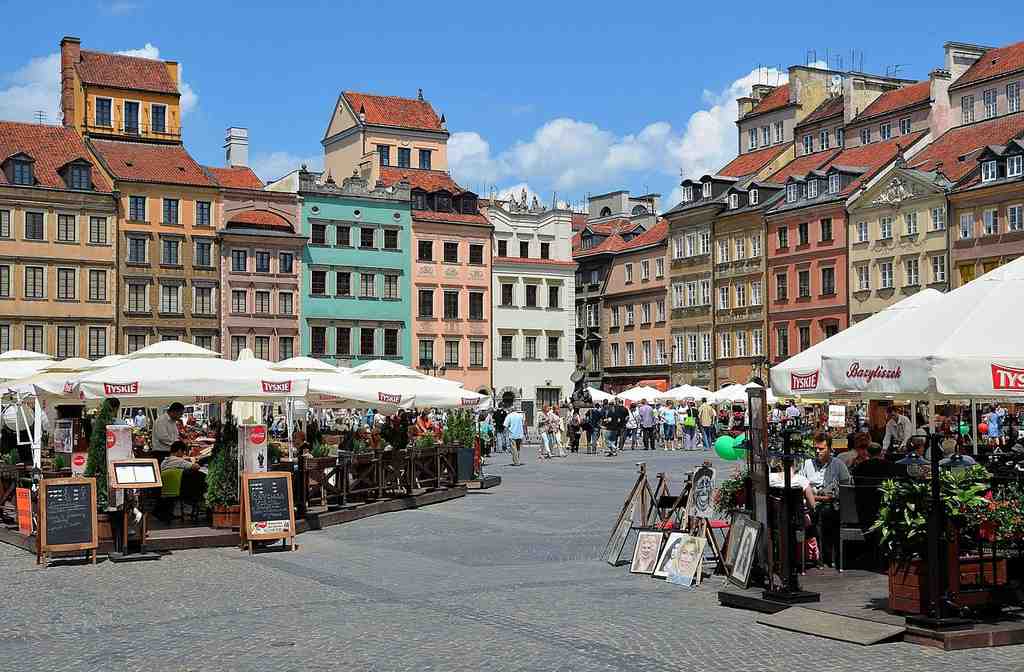
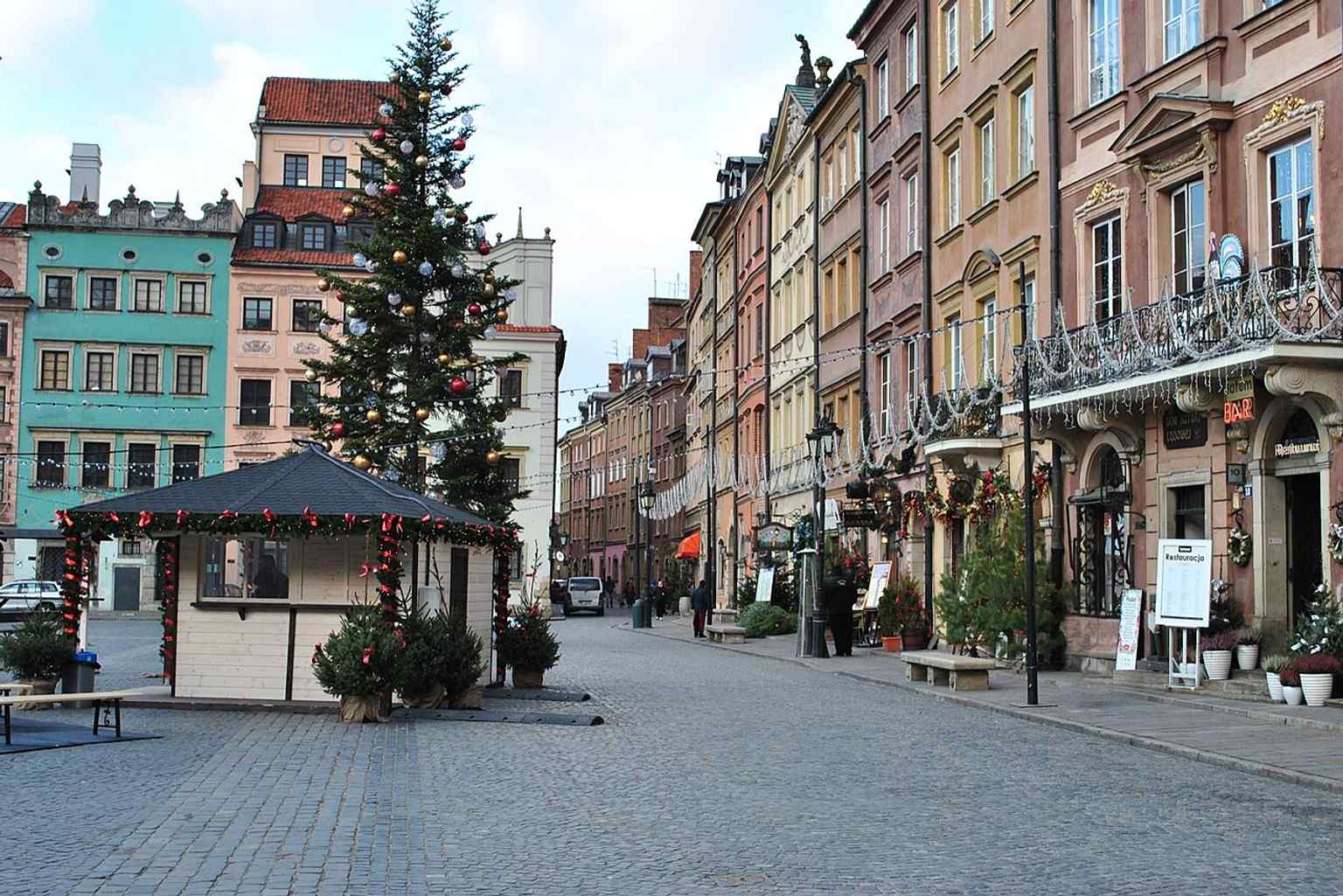
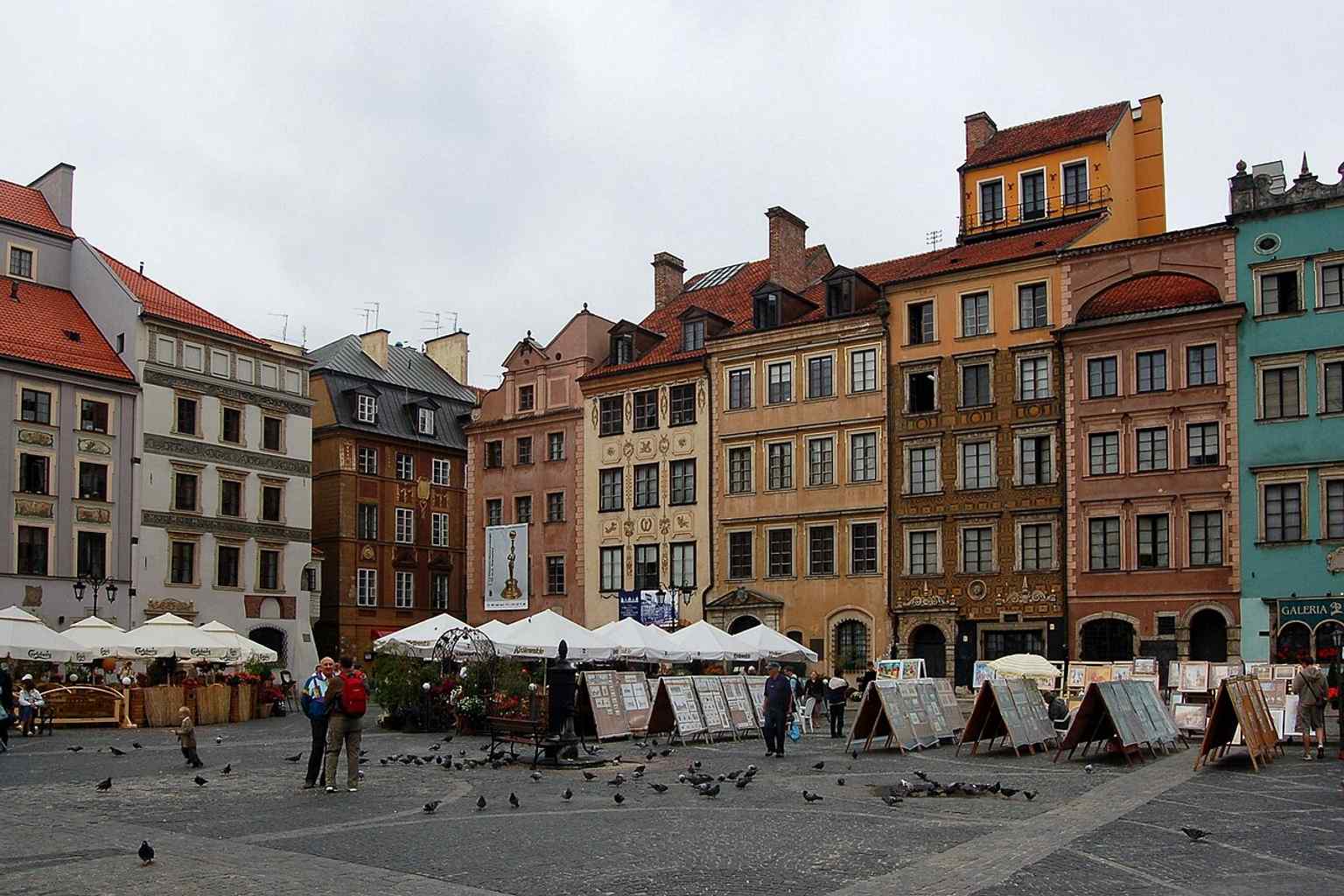
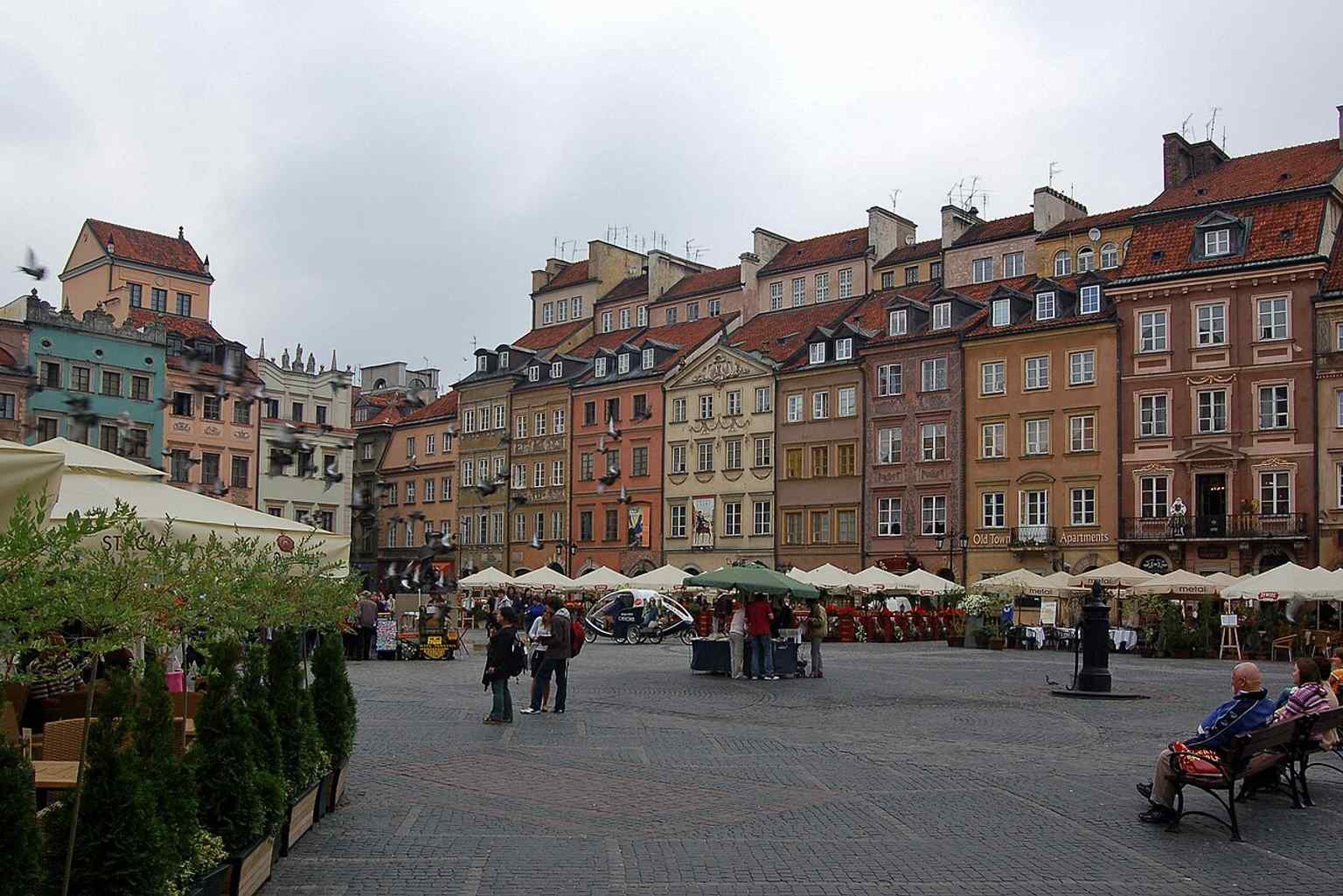
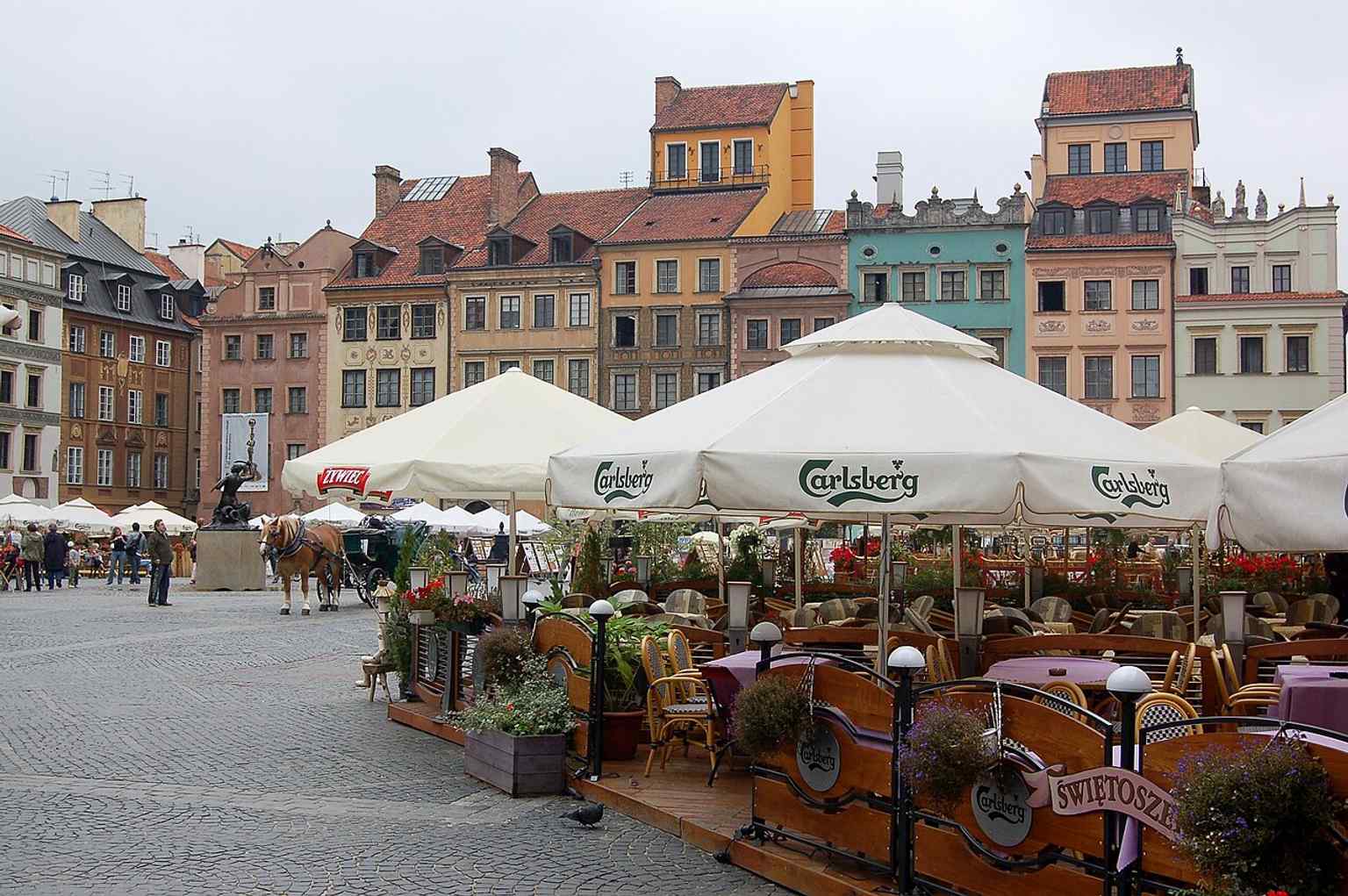
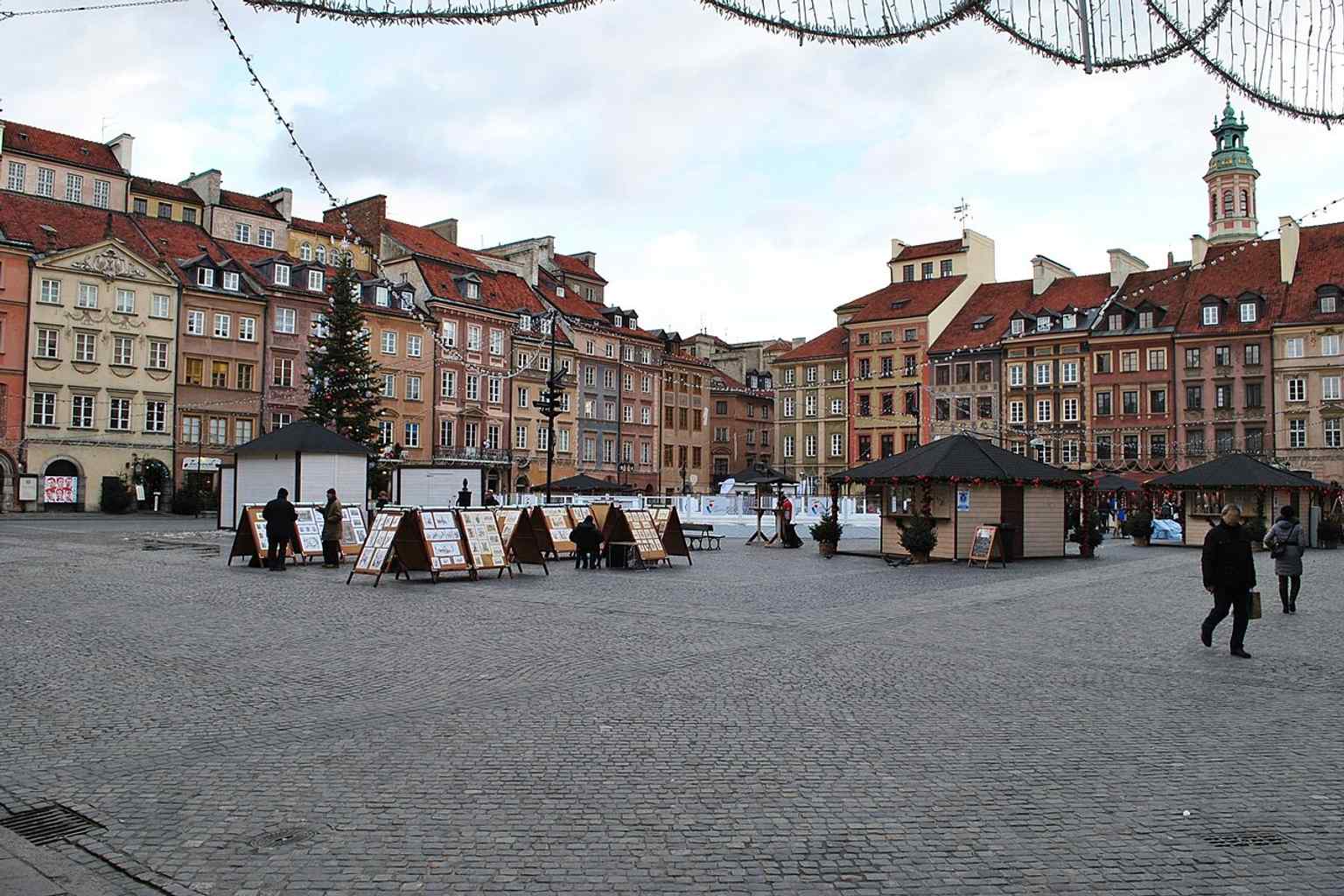
Später änderte der Platz seine Funktion. Das alte Rathaus wurde achtzehnhundertsiebzehn abgerissen. Der Markt selbst zog Anfang des zwanzigsten Jahrhunderts um, und Arbeiter verlegten geometrisches Kopfsteinpflaster über die offene Fläche. Dann, im Jahr achtzehnhundertfünfundfünfzig, fügten Ingenieure einen Brunnen hinzu, der an Henryk Marconis modernes Wassersystem angeschlossen war und von der von Konstanty Hegel geschaffenen Seejungfrau gekrönt wurde. Die Figur, die Sie jetzt sehen, hat eine ziemliche Reise hinter sich. Restauratoren zählten mehr als fünfzig Kugel- und Splittereinschläge auf ihrer Oberfläche. Warschau bewahrt wie immer die Narben und das Symbol im selben Rahmen. Wenn Sie einen umfassenderen Eindruck des Platzes als Ganzes haben möchten, werfen Sie einen kurzen Blick auf die Gesamtansicht auf Ihrem Bildschirm.
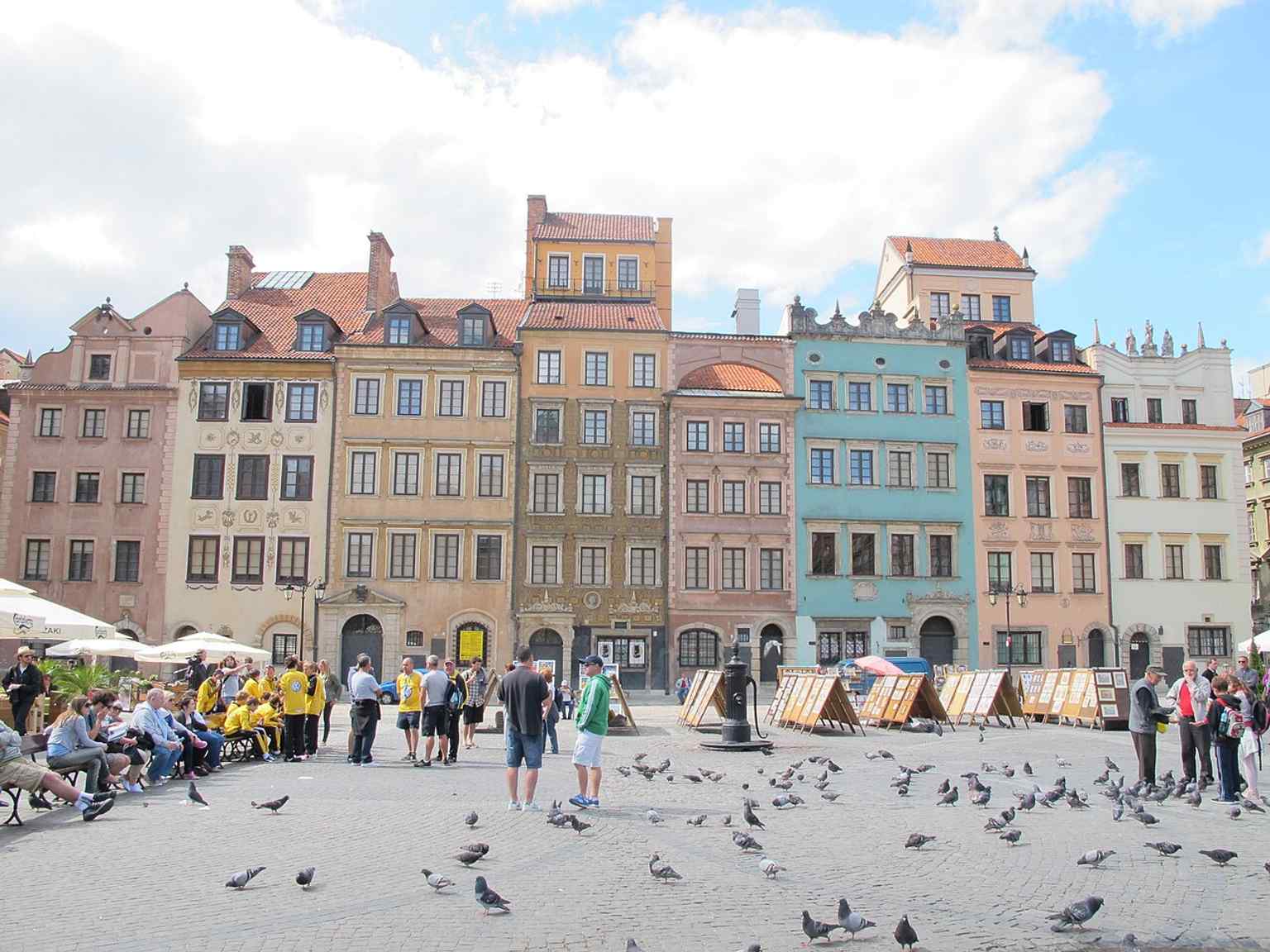
Later, the square changed jobs. The old town hall came down in eighteen seventeen. The market itself moved away in the early twentieth century, and workers laid geometric cobbles across the open space. Then in eighteen fifty-five, engineers added a fountain tied to Henryk Marconi’s modern water system, topped by the Mermaid sculpted by Konstanty Hegel. The figure you see now has had quite a journey. Conservators counted more than fifty bullet and shrapnel marks on her surface. Warsaw, as ever, keeps the scars and the symbol in the same frame. If you want a wider sense of the square as a whole, take a quick peek at the broad view on your screen.
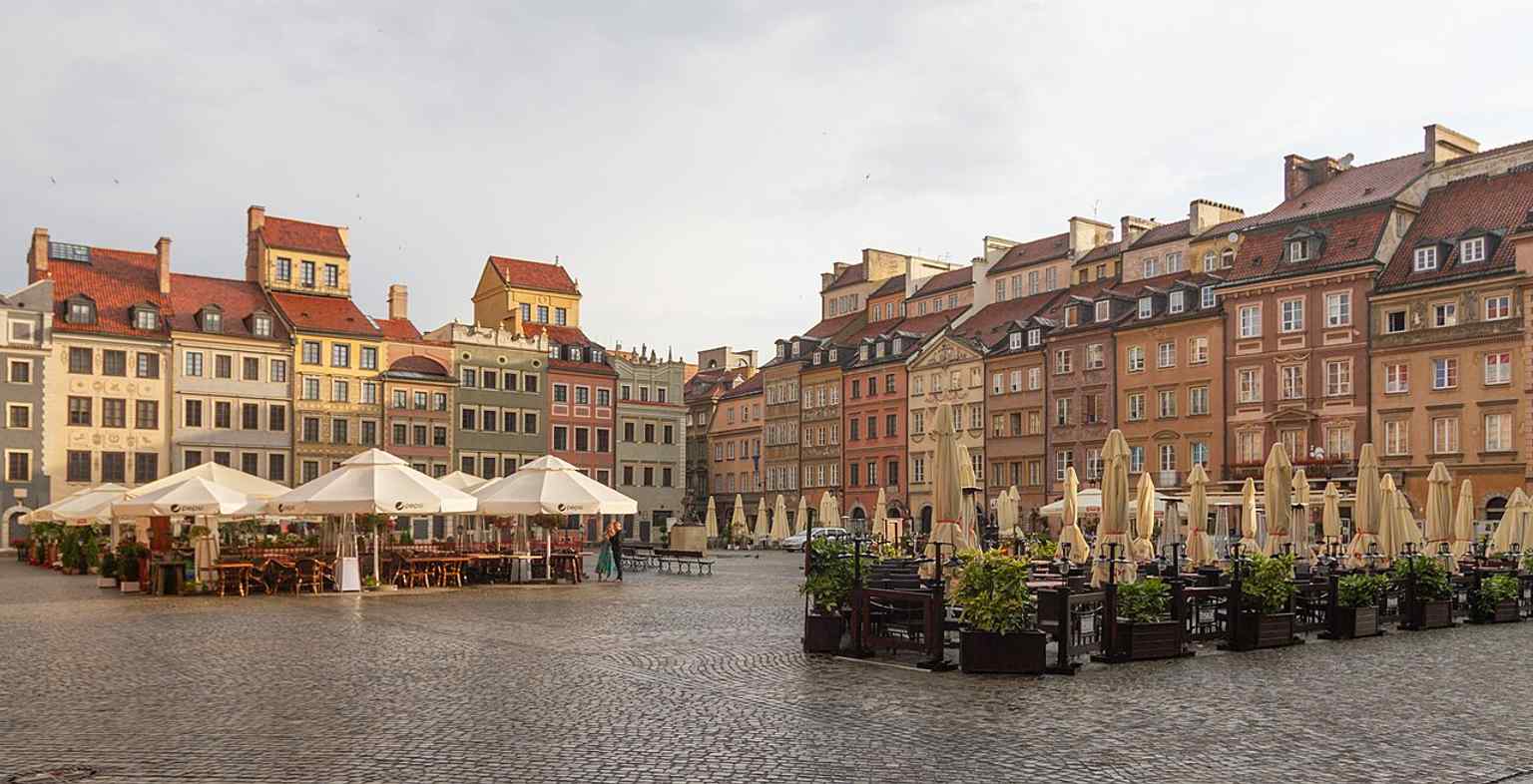
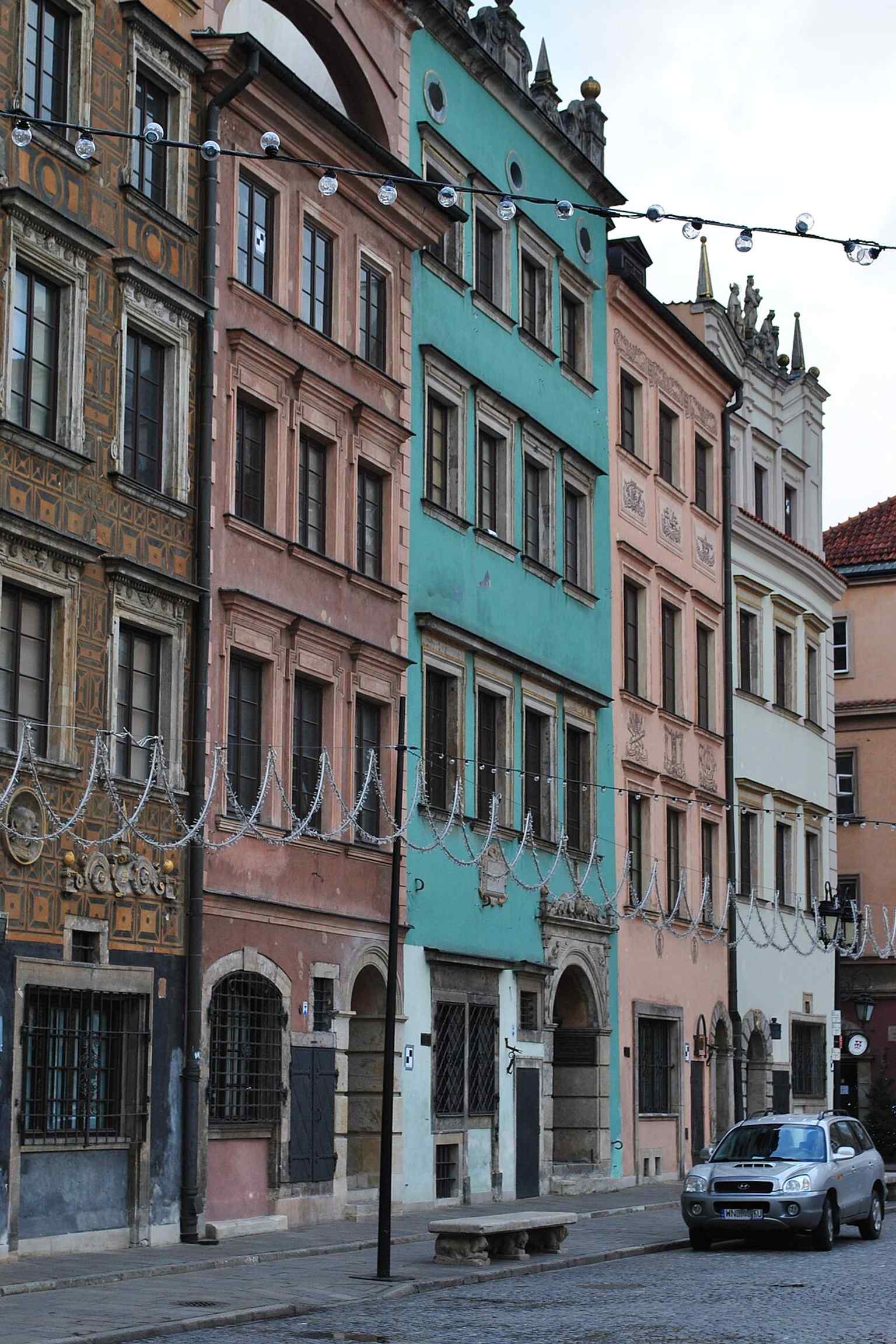
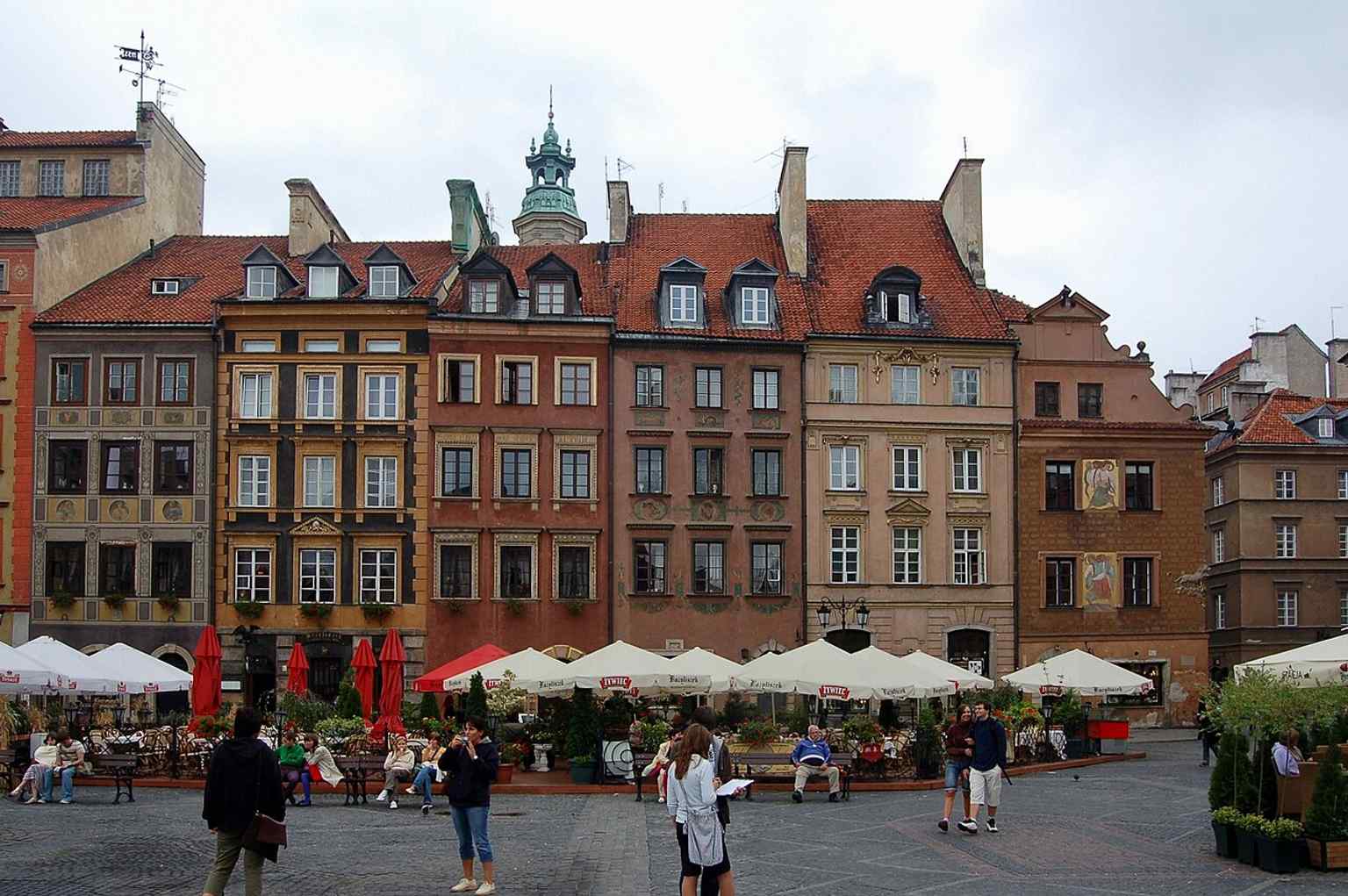
During the Warsaw Uprising, most of these houses were destroyed. After the war, the damage was so complete that reconstruction here became something almost unheard of: not patching ruins, but rebuilding a historic city with salvaged portals, painted walls, and memory as a set of working plans. Between nineteen forty-nine and nineteen fifty-three, teams carefully brought the square back, and the Dekert side became the home of today’s Museum of Warsaw.
So here is the question I’ll leave you with... if a square is rebuilt after near-total ruin, does it become less real, or more real, once generations return and fill it again with footsteps, voices, and ordinary life?
That may be the secret of this place. A city’s heart does not survive by standing still. It survives when people come back and use it again. From here, the Barbican is about a two-minute walk ahead. And if you plan to linger later, the square is generally accessible every day from eight in the morning until ten at night.






.jpg)
.jpg)
.jpg)
.jpg)
.jpg)
.jpg)
.jpg)

.jpg)