
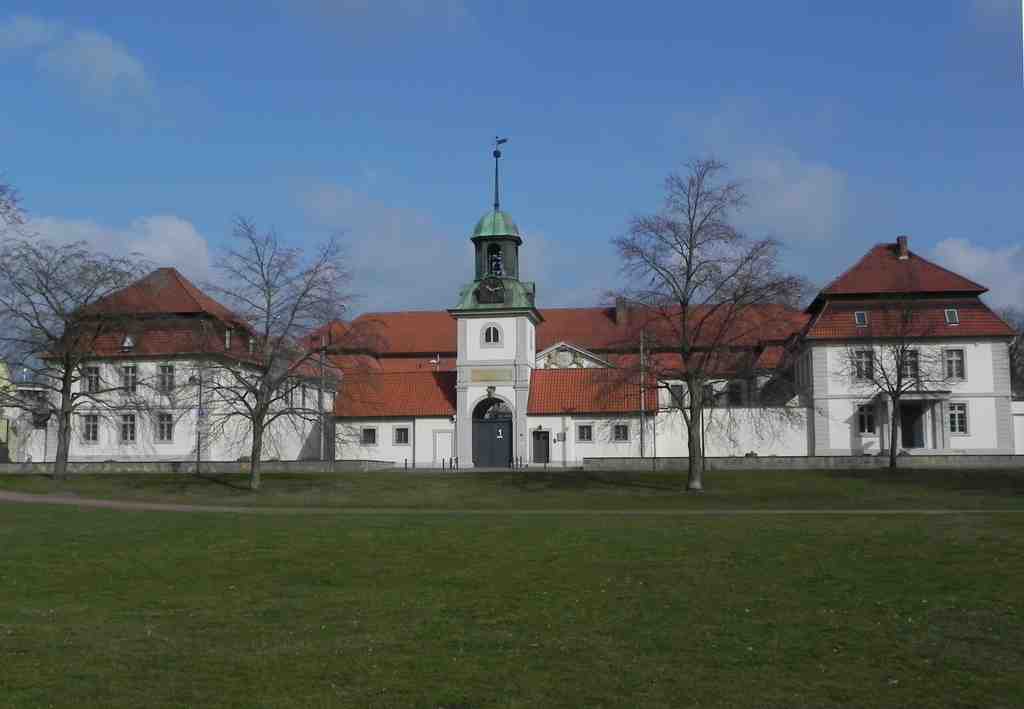
Blicken Sie geradeaus auf diesen symmetrischen, weißen Gebäudekomplex mit seinen steilen roten Ziegeldächern und dem zentralen Uhrenturm, der von einer grünen Kupferkuppel gekrönt wird. Dies ist die Justizvollzugsanstalt Celle, und ob Sie es glauben oder nicht, Sie stehen vor dem ältesten noch in Betrieb befindlichen Gefängnis Deutschlands. Wenn Sie auf Ihren Bildschirm schauen, sehen Sie eine tolle Aufnahme der klassischen Außenfassade.
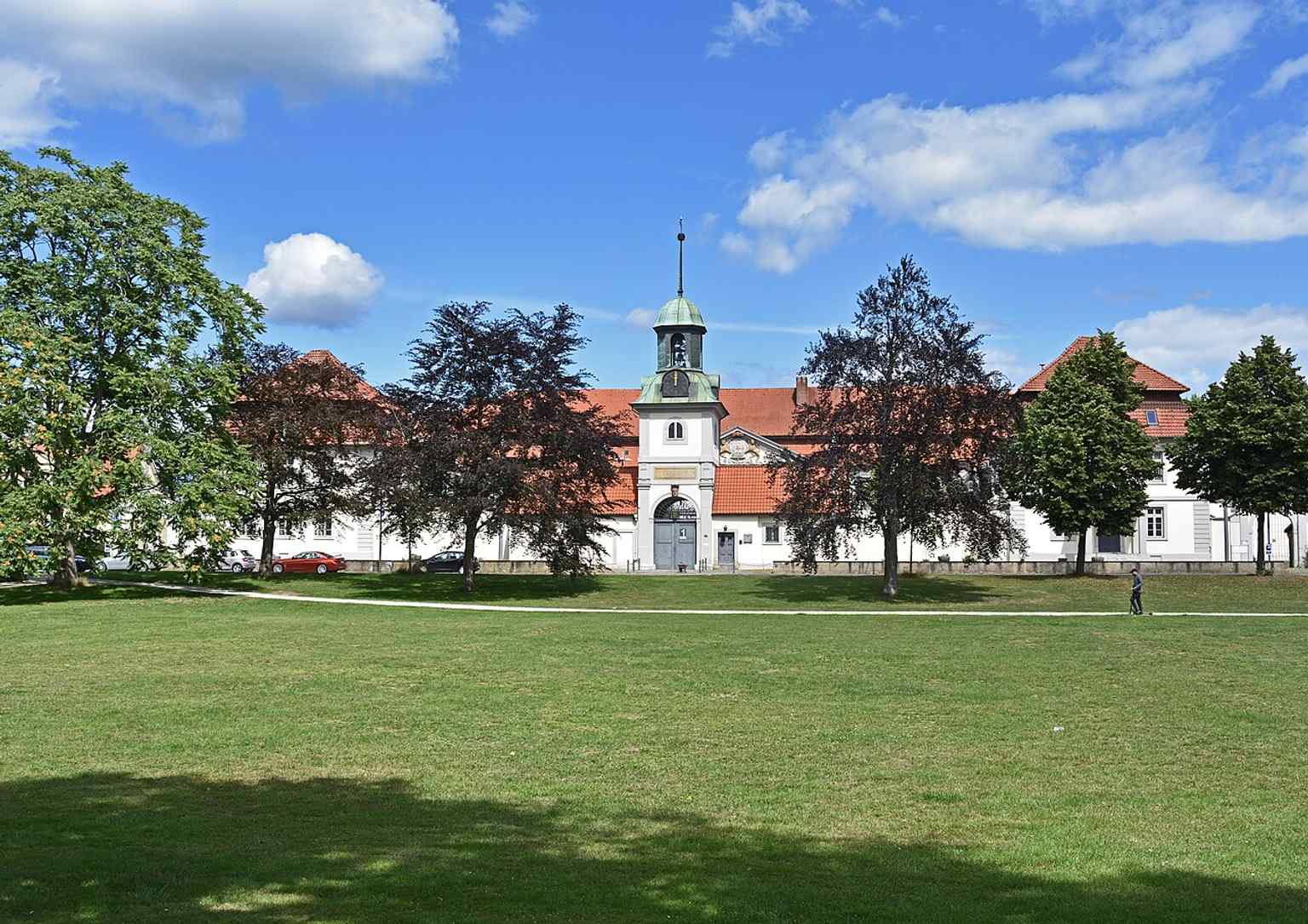
Built back between 1710 and 1724, this place started as a combination of a workhouse, a penitentiary, and an asylum. The original concept was actually inspired by a Dutch idea to rehabilitate inmates rather than just lock them away and throw away the key. But do not let the elegant French-style architecture fool you. Over the centuries, this place has seen the full spectrum of criminal justice.
In the 1920s, a progressive director named Fritz Kleist tried to make things more humane by adding gymnastics, radio access, and a library. The locals actually mocked the idea, sarcastically calling the prison Cafe Kleist.
But the history here takes some incredibly dark turns. During the Nazi era, political prisoners were held here, and as World War Two came to a close, terrible overcrowding and brutal conditions led to the deaths of over two hundred inmates. Because of the chaos of the time, they were buried right on the prison grounds.
Fast forward to the 1970s, and this facility became a modern fortress. A new high-security wing was built specifically to house members of the Red Army Faction, a militant left-wing extremist group that operated in West Germany. Things got so intense that in 1978, German intelligence actually staged a fake bombing right here. They blew a hole in the prison wall, hoping to blame the extremists and use the chaos to sneak an undercover informant into the group. The wild stunt completely backfired and turned into a massive political scandal known as the Celle Hole.
And speaking of wild, the escape attempts from this place sound like they were pulled straight out of an action movie. In 1984, two inmates used homemade guns to take a guard hostage, demanding a getaway BMW and 300,000 D-Mark, the former German currency. They got away, but police had secretly slipped a tracking device into the car and caught them the very next day. In 1991, four prisoners went even further, strapping homemade explosive collars to the necks of three guards. They managed to flee with two million D-Mark before being captured after a shootout a few days later. Then in 1996, a dangerous inmate took a prison social worker hostage at knife-point. The prison director, a courageous woman named Katharina Bennefeld-Kersten, actually offered herself up as a replacement hostage, taking the social worker's place until the man finally surrendered hours later.
Despite its turbulent past, the prison remains active today, holding maximum-security inmates serving long sentences. Just as a quick tip if you need their offices, the administration is open from eight in the morning Monday through Saturday, but they are closed on Sundays. It is a striking monument with a deeply layered story. Whenever you are ready to leave this heavy history behind, we can head to our next stop.





