
Washington Audio Tour: A Capitol Journey through Politics, Art, and Memory
Beyond the White House gates, Washington’s secrets simmer—where polished corridors once echoed with defiance and brushstrokes at the Corcoran Gallery concealed whispered scandals. This self-guided audio tour invites you to unlock a capital full of untold stories. Explore iconic sites as hidden dramas emerge from behind every monument and marble pillar. Venture where most visitors barely scratch the surface. What crisis nearly unseated an American president inside the Oval Office itself? Which clandestine artist left traces in the Corcoran Gallery that curators still debate today? How did a single misplaced letter change the course of political history in this city? Stride through Washington’s epicenters of power and art. Trace footsteps of rebels, visionaries, and those forever entwined with its pulse. Every street hides an enigma. With each new landmark, discover how intrigue and ambition shaped the city’s soul. Begin now and step inside a side of Washington even its monuments struggle to reveal.
Tour preview
About this tour
- scheduleDuration 130–150 minsGo at your own pace
- straighten6.2 km walking routeFollow the guided path
- location_onLocationWashington, United States
- wifi_offWorks offlineDownload once, use anywhere
- all_inclusiveLifetime accessReplay anytime, forever
- location_onStarts at White House
Stops on this tour
lock_open 3 free previews · 12 unlock with purchase
To spot this landmark, look for the massive building of painted white sandstone, anchored by a central triangular portico with tall columns and a flat, balustraded roofline that…Read moreShow less
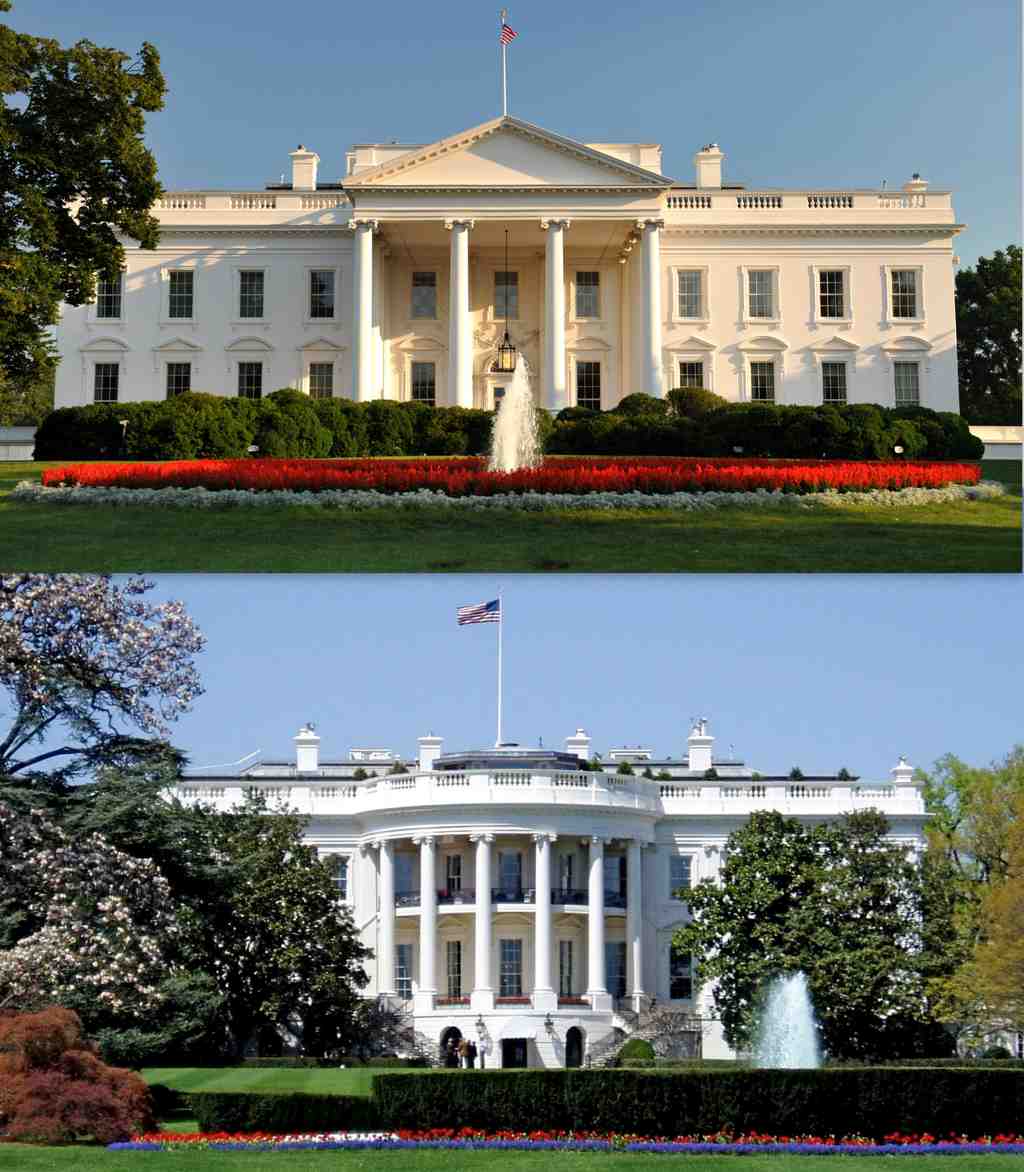
To spot this landmark, look for the massive building of painted white sandstone, anchored by a central triangular portico with tall columns and a flat, balustraded roofline that hides the top floor. From where you are standing, this building projects absolute permanence. Look at the rhythm of those windows and the heavy, pale Aquia Creek sandstone. That is the Neoclassical style at work. The architects, starting with James Hoban, didn't just want a pretty house; they wanted to project ancient stability. They borrowed the visual language of Greek and Roman democracy-the symmetry, the heavy stone, the grand columns-to convince the world that this new, experimental government was here to stay. It is a brilliant piece of theater. A pristine stage set designed to make you believe the authority inside is as solid as the rock outside. But if you were to peer behind that stone curtain, you would find that the inside has been burned, gutted, and rearranged more times than a Broadway set. The first time the curtain fell was in 1814. During the War of 1812, British troops marched right into the dining room. They found a feast set for President Madison, ate the food, drank the wine, and then set the place on fire. Which I suppose is one way to critique the menu. Only these exterior walls survived, and even they were charred black. They rebuilt it, but the drama inside didn't stop. By the late nineteenth century, the "Executive Mansion," as it was called then, was bursting at the seams. Imagine trying to run a country while living in a crowded boarding house. You had the President's family upstairs and the entire executive staff working downstairs. The public could just wander in. In 1837, Andrew Jackson invited the public to eat a fourteen-hundred-pound wheel of cheddar cheese in the entrance hall. The crowd devoured it in two hours, but the smell... well, the smell soaked into the curtains and stayed for months. It became clear that the President didn't just need a home; he needed an office. This brings us to the West Wing. We tend to think of it as the historic seat of power, but it was actually a desperate solution to overcrowding. In 1902, Theodore Roosevelt simply couldn't work with his six noisy children running around, so he built a temporary office structure to the side. That "temporary" fix evolved into the global command center we recognize today. But the biggest illusion of this building is its structure. By 1948, the house was literally falling down. The wooden beams, weakened by the 1814 fire and decades of cutting holes for pipes and wires, were snapping. President Truman had to move out. They didn't just renovate; they hollowed it out. They drove a bulldozer through the front door, dismantled every room, and built a modern steel skyscraper inside the empty shell of these stone walls. The interior cost nearly six million dollars at the time-which is over seventy million today. So, when you look at the White House, you are looking at an eighteenth-century skin wrapped around a twentieth-century steel skeleton. It is a perfect metaphor for the presidency itself: a traditional face on the outside, masking a complex, modern machine on the inside. Now, let’s walk toward that "temporary" office I mentioned. It is just a short walk to the most famous room in the world.
Open dedicated page →Look for the curved white wall projecting from the southeast corner of the West Wing, marked by three tall windows and a distinct bow shape that breaks the building's flat…Read moreShow less
Look for the curved white wall projecting from the southeast corner of the West Wing, marked by three tall windows and a distinct bow shape that breaks the building's flat lines. It is strange to think that for the first century of the presidency, this room did not exist. The Oval Office feels inevitable now, like a temple of democracy, but it is actually a relatively modern stage set designed for a specific actor. The current office was the idea of Franklin D. Roosevelt in nineteen thirty-four. FDR, who used a wheelchair, found the previous workspace in the center of the building too cramped and difficult to navigate. He hired architect Eric Gugler to shift the whole operation to this corner, expanding the footprint and giving himself direct access to the Residence. He designed a room where he could hold court from behind a desk, minimizing the need to stand. That architectural dominance became a tool for his successors. The room is designed to intimidate. Lyndon B. Johnson, a towering man at six-foot-four, mastered this. He unleashed the famous Johnson Treatment here, leaning over visitors to invade their personal space, bullying and flattering them into submission. He even kept the bathroom door open while using the facilities, continuing conversations with aides just to show he had absolutely nothing to hide. But the room has ears. In nineteen seventy-one, Richard Nixon ordered the Secret Service to install a voice-activated taping system. Seven microphones were hidden in the room, including two in the wall sconces by the fireplace. Nixon wanted an accurate historical record of his brilliance. Instead, the system captured the President discussing the Watergate cover-up. The invisible machinery he installed to preserve his legacy became the very thing that destroyed it. The layout itself invites trouble. There is a private study and a windowless hallway just off the main room. That secluded corridor, hidden from the sightlines of the open doors, became the primary setting for the clandestine encounters between Bill Clinton and Monica Lewinsky. The architecture of privacy, meant for sensitive state matters, ended up fueling a constitutional crisis. Even the furniture keeps secrets. The massive Resolute Desk, which you have likely seen in photographs, has a panel on the front bearing the presidential seal. That was not part of the original Victorian design. FDR requested it to conceal his heavy leg braces from visitors sitting across from him. He passed away before it was installed, but the panel remained, eventually serving as a hiding spot for John F. Kennedy Junior in those iconic photos of him peeking out from under his father's desk. For all its security, the illusion of safety here is fragile. In nineteen seventy-four, a stolen Army helicopter actually landed on the South Lawn, just one hundred and fifty feet from these windows. The pilot was a mechanic named Robert Preston who had failed flight training and just wanted to prove his skills. He hovered near the Washington Monument before setting down right in the President's backyard. The President may be the face of the nation, but the sheer volume of work requires an army of staff. Let’s head toward the massive, fortress-like building just to the west, which houses the thousands of people who make the executive branch run.
Open dedicated page →Look to your right at that colossal fortress of gray granite, instantly recognizable by its hundreds of tiered columns and the steep, green-tiled mansard roof capping the top. If…Read moreShow less
Look to your right at that colossal fortress of gray granite, instantly recognizable by its hundreds of tiered columns and the steep, green-tiled mansard roof capping the top. If the White House is the polished face of the presidency, this... this is the engine room. It represents the Machine-the sheer, overwhelming scale of the bureaucracy required to actually run a country. Originally called the State, War, and Navy Building, it was completed in 1888 to house three entire cabinet departments. Today, those agencies would fill half the city, but back then, the entire executive machinery of the United States fit right here, behind these four-and-a-half-foot thick walls. The style is French Second Empire, a lavish, tiered look borrowed from Paris that clashes aggressively with the polite white marble of the rest of D.C. At the time, critics absolutely loathed it. Mark Twain called it the ugliest building in America. President Harry Truman later called it a monstrosity, though he eventually saved it from demolition, arguing that its history was worth more than its aesthetics. It cost just over ten million dollars to build in the 1880s-which is roughly three hundred million dollars today. The interior is just as intense. It was designed with fireproof cast-iron elements, including doorknobs cast with specific patterns to tell you which department you were entering-an anchor for the Navy, or a shield for War. But the real stories happen behind those doors. This building is where the massive gears of influence turn. Richard Nixon actually preferred working here over the Oval Office. He had a hideaway in Room 180, where he felt more at ease. He even drilled a hole through the top of Theodore Roosevelt’s old desk to hide his phone cables. But that sanctuary became a trap; it was actually here, in this private hideaway, that the system captured the 'Smoking Gun' tape that ended his presidency. Decades earlier, on December 7, 1941, this building witnessed a different kind of tension. Secretary of State Cordell Hull was in his office here when Japanese diplomats arrived for a meeting. Hull already knew about the attack on Pearl Harbor thanks to intercepted messages. He refused to let them sit, screamed that their diplomatic note was crowded with infamous falsehoods, and kicked them out without a handshake. It also hides simpler secrets. Deep in the basement, there is a two-lane bowling alley originally installed for Harry Truman. Staffers still use it to blow off steam, wearing mismatched rental shoes beneath the seat of global power. But the machine often consumes its creators. The architect, Alfred B. Mullett, dedicated years to this granite giant. He sued the government for a standard architect’s fee of five percent, expecting to be a wealthy man. The courts ruled against him, saying his government salary was enough. Destitute and feeling betrayed by the country he built monuments for, Mullett took his own life in 1890. Security guards still report seeing his spirit roaming the corridors, perhaps checking for cracks in the stone. Let’s leave the heavy machinery of state behind us. We are going to head toward the cultural institutions that sit just outside these iron gates. Walk with me.
Open dedicated page →
Show 12 more stopsShow fewer stopsexpand_moreexpand_less
On your left stands a palatial structure defined by its white marble facade, a low-pitched red tile roof, and a grand entrance featuring three tall arches flanked by…Read moreShow less
On your left stands a palatial structure defined by its white marble facade, a low-pitched red tile roof, and a grand entrance featuring three tall arches flanked by torches. This is the House of the Americas, the headquarters of the Organization of American States. It is a fascinating study in good intentions and complex realities. Back in the early twentieth century, the steel magnate Andrew Carnegie donated seven hundred and fifty thousand dollars to build this place. In today's economy, that is a donation north of twenty million dollars. Carnegie was a fervent pacifist, and he envisioned this site as a "Peace Palace," a neutral ground where nations could resolve their disputes with words rather than weapons. The architects, Albert Kelsey and Paul Cret, designed the building to physically blend the aesthetic traditions of North and South America. You can see that intention most clearly if you could step inside. The heart of the building is a central patio designed to resemble a colonial Spanish courtyard. But here is where the invisible gears come into play. In 1910, they installed a sliding glass roof over that patio, driven by an electric motor. The newspapers of the day marveled at this "curious Yankee machine." It was a technological feat that allowed a tropical garden to thrive year-round, safe from the local climate. President William Howard Taft even planted a "Peace Tree" there during the dedication-a fig tree accompanied by rubber, cacao, and coffee plants. It was a perfect, climate-controlled Eden, maintained by hidden gears and American engineering. Of course, the political climate has been harder to control than the temperature in the atrium. The OAS was founded to promote cooperation among its thirty-two member states, but it often finds itself caught between diplomacy and dominance. In 1965, during the Dominican Civil War, the OAS created an international peacekeeping force. While it oversaw elections, many Latin American nations viewed it as merely providing diplomatic cover for United States military actions, sparking accusations of "Yankee imperialism." However, the organization has had its triumphs. In 1969, it successfully halted the "Soccer War" between El Salvador and Honduras-a conflict sparked by land disputes but ignited by World Cup qualifying matches-after just one hundred hours of fighting. But perhaps the most touching story here lies hidden underground. Beneath the gardens, a tunnel connects the main building to an annex. Its walls are covered by a five-hundred-and-twenty-five-foot mural called "Roots of Peace," painted in 1960 by Uruguayan artist Carlos Páez Vilaró. It depicts themes of unity and cooperation. Years after finishing this masterpiece, Vilaró became famous for a different reason. His son was one of the survivors of the 1972 Andes flight disaster, where a rugby team survived for seventy-two days in the frozen mountains. Vilaró never gave up looking for his son, even when the search was called off. That mural, painted long before the crash, now feels like a testament to that same stubborn, enduring hope. It is a reminder that the bonds between people often outlast the treaties between governments. Now, let us walk about four minutes ahead to the United States Department of the Interior.
Open dedicated page →On your left rises a monolithic block of gray limestone, characterized by a severe, repetitive grid of rectangular windows and a flat, unadorned roofline that stretches down the…Read moreShow less
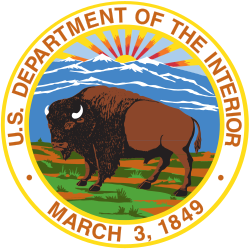
On your left rises a monolithic block of gray limestone, characterized by a severe, repetitive grid of rectangular windows and a flat, unadorned roofline that stretches down the entire city block. This is the United States Department of the Interior. It is a massive, bureaucratic fortress, and honestly, the name is a bit confusing. In most countries, the "Interior Ministry" handles the police or internal security. But here in Washington, they call this the "Department of Everything Else." Over the years, this agency has been responsible for a truly bizarre collection of duties, from running the patent office to overseeing the colonization of freed slaves in Haiti. But its real power lies in the dirt itself. This department manages one-fifth of the land in the United States. That is five hundred million acres of surface land, almost five hundred dams, and hundreds of national parks. If you have ever stood in Yosemite or stared at the Grand Canyon, you were standing on turf managed from right here on C Street. The building itself is a perfect example of the architecture of authority. It was the very first federal building authorized by the administration of Franklin D. Roosevelt. It was a massive project built during the Great Depression, overseen by Secretary Harold Ickes. People called Ickes the "Old Curmudgeon." He was a prickly, frugal man who personally approved every detail of this structure. He hated the fancy, ornamental style of older government buildings, so he insisted on this stripped-down, utilitarian look. But he did allow himself one modern luxury... central air conditioning. This was the first large federal building to have it, mostly because Ickes didn't want to sweat while he was running the country’s resources. Inside, Ickes tried to humanize the stone. He commissioned massive murals to turn the hallways into a gallery of American resilience, depicting conservation and industry. He wanted the art to inspire the workforce, to remind the thousands of clerks that they were part of a grand machine of progress. But a machine this big has plenty of rusty gears. Back in the 1920s, the department was the center of the Teapot Dome scandal. Secretary Albert Fall accepted four hundred thousand dollars in bribes-which is roughly seven million dollars today-from oil tycoons to secretly lease them Navy oil reserves. Fall used the cash to spruce up his ranch in New Mexico, but he ended up becoming the first cabinet member to go to prison. It hasn't all been corruption, though. Ickes used his authority here to make a stand for civil rights. When the Daughters of the American Revolution banned the Black singer Marian Anderson from performing at Constitution Hall in 1939, Ickes arranged for her to sing at the Lincoln Memorial instead. He introduced her to a crowd of seventy-five thousand people, saying, "Genius knows no color line." The history here is volatile. In November 1972, a caravan of Native American activists arrived in Washington to protest broken treaties. They occupied the Bureau of Indian Affairs building nearby. Tensions got so high that police snipers were actually positioned on the roof of this building, looking down at the protesters. It ended peacefully, but it was a stark reminder of the friction between the federal government and the people it claims to protect. Today, the seal on the door features a bison, standing against a sunburst. It represents the American West, captured and administered within these limestone walls. But land is just one asset. We are now going to walk about twelve minutes to see how the world manages actual money. Let’s head toward the International Monetary Fund.
Open dedicated page →On your left rises a colossal structure of pale limestone and glass, distinguished by its heavy, repetitive grid of windows and a sheer, blocky shape that retreats from the street…Read moreShow less
On your left rises a colossal structure of pale limestone and glass, distinguished by its heavy, repetitive grid of windows and a sheer, blocky shape that retreats from the street behind a perimeter of bollards. This is the physical home of the invisible hand. We often speak of the global economy as an abstract concept, a force of nature that moves markets and sets prices. But here, at the International Monetary Fund, or IMF, that force has an address. It has a board of directors. And it has a vault. The building itself, known as HQ1, is a massive brutalist structure designed by the architect Moshe Safdie. Brutalism is a style that favors raw materials and imposing geometric shapes, often projecting a sense of unyielding permanence. This place is frequently described as a fortress, and looking at the heavy security and limited public access, you can see why. It was designed to project stability, to say to the world that the money is safe. Inside, there is a soaring twelve-story atrium where economists from over one hundred and ninety nations mix and mingle, but from where you stand, it feels impenetrable. A citadel of finance. The IMF was born out of the chaos of World War II. In 1944, delegates met at a hotel in Bretton Woods, New Hampshire, to rebuild the shattered global economy. There was a clash of titans. The British economist John Maynard Keynes wanted a cooperative fund to help nations in crisis... a safety net. The American delegate, Harry Dexter White, wanted something stricter, more like a bank that ensured debts were paid on time. The American view won out. But there is a twist to that story. Decades later, declassified files confirmed that Harry Dexter White, the architect of this capitalist fortress, was actually a covert source for Soviet intelligence. He was building the Western financial order while secretly passing documents to Moscow. Today, the IMF acts as a lender of last resort. When a country runs out of money, the IMF opens its checkbook. But that help comes with conditions. They call it structural adjustment... a polite term for forcing countries to cut spending and sell off state assets to pay their bills. This has made the Fund a target for protests and a symbol of cold, technocratic authority. In 1998, during the Asian Financial Crisis, a single photograph captured this dynamic perfectly. It showed the IMF Managing Director, Michel Camdessus, standing with his arms crossed, looming over the President of Indonesia, Suharto. The President was hunched over a desk, signing a bailout agreement that humiliated his government. To the West, it looked like a contract. To the Global South, it looked like a colonial governor dictating terms to a subject. Even the leaders of this fortress are not immune to the chaotic forces of human nature. In 2011, Managing Director Dominique Strauss-Kahn was pulled off a plane in New York and paraded in handcuffs after a scandal involving a hotel housekeeper. His predecessor, Rodrigo Rato, was later imprisoned in Spain for embezzlement. The people who demand austerity and discipline from the world are, it seems, just as fallible as the rest of us. Deep within its accounts, the Fund holds nearly three thousand metric tons of gold, one of the largest hoards on earth. It sits there as a silent, glittering backstop against global ruin. Let’s continue our walk. We are heading toward the headquarters of American business lobbying, the United States Chamber of Commerce, about a nine-minute walk from here.
Open dedicated page →To your right stands a commanding limestone building with a temple-like facade and a row of giant columns that seem to stare directly across Lafayette Square. This is the United…Read moreShow less
To your right stands a commanding limestone building with a temple-like facade and a row of giant columns that seem to stare directly across Lafayette Square. This is the United States Chamber of Commerce. If the White House, just across the park, is where political power lives, this is where economic power comes to... negotiate. It was President William Howard Taft who set this up in 1912. He felt the government needed a single, authoritative voice for business to balance against the growing labor movement. Interestingly, the spark for this massive American organization actually came from a visit by Japanese business magnate Eiichi Shibusawa, who showed American merchants the power of national coordination. But before the lobbyists arrived, this land held a different kind of history. It was the home of Senator Daniel Webster. Working in that house was Paul Jennings, a man formerly enslaved by President James Madison. Webster had purchased Jennings’ freedom for one hundred and twenty dollars-about four thousand dollars today-and Jennings was working off the debt. In 1848, while serving Webster dinner, Jennings was secretly helping plan the Pearl escape. It was a daring attempt by seventy-seven enslaved people to sail to freedom. The ship was captured, and the escape failed, but Jennings’ hidden resistance right under the nose of power is a story that lingers here. By the 1920s, the Chamber hired Cass Gilbert-the same architect who designed the Supreme Court-to build this headquarters. It looks like a government building, and that is entirely the point. It projects permanence. Today, this is the largest lobbying group in the country. And when I say large, I mean colossal. Lobbying is the business of influencing government decisions, and for years, the Chamber has outspent every other organization in Washington. Under the late Tom Donohue, who ran the place for decades with what he called "Irish toughness," it transformed from a trade association into a political machine. They play hardball. In 2009, when the EPA tried to regulate greenhouse gases, a senior Chamber official threatened to hold the "Scopes monkey trial of the 21st century"-referencing the famous 1925 court case that put evolution on trial-to challenge climate science. That aggressive stance didn't go over well. High-profile members like Apple and Pacific Gas and Electric quit the Chamber in protest. But the Chamber held its ground, pouring millions into elections to ensure their interests were protected. They eventually claimed victory when the climate bill died in the Senate. It is a place where the deal is always on the table, and the machinery of influence never stops humming. Decisions made in buildings like this ripple out, often determining where funding goes and who gets sent to fight. Let's walk toward the United States Department of Veterans Affairs, about five minutes away, to see the agency that deals with the human cost of those national decisions.
Open dedicated page →On your left rises a massive, curved wall of white limestone, featuring strict rows of identical rectangular windows stacked above a heavy dark granite base. This is the…Read moreShow less
On your left rises a massive, curved wall of white limestone, featuring strict rows of identical rectangular windows stacked above a heavy dark granite base. This is the headquarters of the Department of Veterans Affairs. It represents one of the most sacred obligations of the federal government, based on a promise made by Abraham Lincoln to care for him who shall have borne the battle. But if you look past the noble inscriptions, the history of this agency reveals how quickly the machinery of government can turn against the very people it was built to serve. The agency’s troubles began almost immediately. In nineteen twenty-one, President Warren G. Harding appointed his acquaintance, Charles Forbes, to lead the newly created Veterans’ Bureau. It was a choice that proved catastrophic. Forbes saw the bureau not as a public service, but as a personal bank account. He embezzled approximately two million dollars-which is over thirty million dollars today-through kickbacks on hospital construction contracts and the illicit sale of medical supplies. While Forbes was lining his pockets, he was simultaneously rejecting thousands of legitimate disability claims from wounded soldiers. The corruption was so brazen that it eventually consumed him. As investigators closed in, his legal counsel committed suicide. When President Harding finally learned the extent of the betrayal, the veneer of presidential decorum vanished. Harding reportedly grabbed Forbes by the throat in the White House, shaking him and shouting, quote, You double-crossing bastard. Forbes went to prison, but the tension between veterans and the state was only just beginning. In nineteen thirty-two, during the depths of the Great Depression, the invisible machinery of influence turned violent. Over seventeen thousand unemployed World War One veterans marched on Washington, demanding early payment of service bonuses. They set up a shantytown known as Hooverville on the Anacostia Flats. Instead of listening, President Herbert Hoover ordered the U.S. Army to clear the camps. It is a dark irony that the man leading the troops against the veterans was General Douglas MacArthur. His soldiers used tear gas and bayonets to disperse the men they had once served alongside, burning their shelters to the ground. The sight of the American military attacking its own impoverished veterans shocked the nation. That tragedy paved the way for the GI Bill in nineteen forty-four, but the struggle for recognition continued. For decades, the VA denied claims related to Agent Orange, a toxic herbicide used in Vietnam. It took until nineteen ninety-one for the government to finally codify a list of presumptive conditions, meaning illnesses the VA automatically assumes are service-connected. Even in the modern era, the sheer size of the bureaucracy can be deadly. In two thousand fourteen, a scandal broke in Phoenix, Arizona, where veterans died while waiting for care. Investigations revealed that staff had created secret waiting lists to hide the delays, proving that the system was prioritizing metrics over lives. Yet, despite the scandals, the agency remains a lifeline. During national emergencies, like the COVID pandemic or hurricane responses in Puerto Rico, the VA activates its Fourth Mission, opening its doors to care for civilians when the rest of the healthcare system collapses. It is a complex legacy of high ideals and human failure. Let us leave this heavy history behind. We are going to walk toward the oldest departmental building in Washington, the Department of the Treasury. It is an eight-minute walk from here
Open dedicated page →On your right stands a colossal fortress of grey granite, distinguished by a relentless row of tall Ionic columns and a massive triangular pediment capping the south wing to…Read moreShow less
On your right stands a colossal fortress of grey granite, distinguished by a relentless row of tall Ionic columns and a massive triangular pediment capping the south wing to create a temple-like facade. This serves as the headquarters for the United States Department of the Treasury. It is a fittingly heavy home for the weight of the nation's economy. The department’s origins go back to Alexander Hamilton, appointed in 1789, who took on the impossible task of building a financial system from scratch and turning a chaotic mess of state debts into a functioning federal economy. But while the institution is solid, the building itself was born from disaster. The first treasury structure on this site was burned to the ground by British troops in 1814. Its replacement didn't fare much better. In 1833, it was destroyed by arson. A man named Richard H. White set the blaze, hoping to destroy incriminating pension records inside. It worked a little too well, taking the whole building with it. When it came time to rebuild, President Andrew Jackson grew largely impatient with the committee’s delays in selecting a site. According to legend, Jackson eventually stormed out of the White House, jammed his cane into the turf, and shouted, "Right here is where I want the cornerstone!" He got his way, but his impulsive location permanently blocked the direct line of sight between the White House and the U.S. Capitol, a visual interruption that remains to this day. The drama continued inside these walls during the Civil War. Secretary Salmon P. Chase was tasked with financing the Union war effort, leading to the creation of the first federal paper currency, known as "greenbacks." Chase was... a man of significant ego. When designing the new one-dollar bill, he chose to place his own portrait on it rather than George Washington's. He reasoned that if his face was in every voter's pocket, he would be a shoo-in for the presidency. The tactic failed to win him the White House, though his face did stay on the bill for years. The war also forced a social revolution within the department. With men leaving for the front lines, Treasurer Francis Spinner hired women to trim the new currency sheets with scissors. These "Treasury Girls" proved faster and more accurate than the men they replaced. Despite their efficiency, they were paid only six hundred dollars a year-which is roughly twenty-one thousand dollars today-while the men earned double that amount. By 1865, the department faced a new crisis. Counterfeiting was so rampant that nearly half the money in circulation was fake. To combat this, the Secret Service was established right here as a bureau of the Treasury. In a terrible twist of irony, the legislation creating the agency was reportedly on Abraham Lincoln's desk the very day he was assassinated. For decades, the Secret Service focused solely on financial crimes like counterfeiting; they didn't take on the role of presidential protection until 1901. Before we move on, consider that this building was also the site of the "Black Friday" gold scandal of 1869. Financiers Jay Gould and Jim Fisk tried to corner the gold market, driving prices sky-high. President Grant had to order the Treasury to flood the market with four million dollars in government gold-worth over eighty-five million today-to break their grip. The price crashed in minutes, bankrupting speculators instantly. Let’s leave the high finance behind for a moment. Please walk forward into the large open paved space of Freedom Plaza just ahead. I will meet you there.
Open dedicated page →To your right stands the Herbert C. Hoover Building, a colossal fortress of gray Indiana limestone spanning three city blocks, defined by its endless regiment of Doric columns and…Read moreShow less
To your right stands the Herbert C. Hoover Building, a colossal fortress of gray Indiana limestone spanning three city blocks, defined by its endless regiment of Doric columns and a distinct red tile roof that caps the sheer magnitude of the structure. The ground beneath this massive stone footprint wasn't always so solid. Before the architects drafted their plans for this anchor of the Federal Triangle, this site was the bed of Tiber Creek, a free-flowing tributary where local legends claimed pirates once hid their loot. By the early twentieth century, however, it had become a swampy mess of mud and mosquitoes. To build a palace of commerce on top of a bog, engineers had to drive thirteen thousand five hundred reinforced concrete piles into the earth, creating a subterranean forest just to hold the building steady. It seems fitting that a building requiring such a struggle to stay upright would have an equally unstable start in life. Construction began in the late nineteen-twenties, intended to be a "Temple of Commerce" symbolizing the dignity and authority of the federal government. President Herbert Hoover himself laid the cornerstone in 1929, using the same silver trowel George Washington had used for the Capitol. But there was a bitter irony in the timing. As the walls rose, the nation’s economy collapsed. By the time the doors opened in 1932, this opulent edifice-which cost more than the Louisiana Purchase-was completed just as thousands of unemployed veterans were marching on Washington and shantytowns, grimly nicknamed "Hoovervilles," were spreading across the country. The atmosphere inside wasn't much lighter. The building is so vast, with corridors stretching a thousand feet, that it feels like a city unto itself. In the nineteen-thirties, that city included some unexpected residents in the basement. The Bureau of Fisheries operated the National Aquarium down there-the first free public aquarium in the United States. But the staff’s favorite exhibit was a tank containing three live alligators. The employees, terrified of losing their livelihoods during the Depression, bestowed upon these predators the dark, affectionate names of "Pay Cut," "Furlough," and "Dismissal." Those alligators were a living symbol of the precariousness of the era, lurking beneath the polished floors of authority. But this building was designed to consolidate more than just wildlife; it was built to centralize the data of an entire nation. In 1951, the basement hosted a different kind of beast: the UNIVAC I, the first commercial computer in the United States. This room-sized behemoth, filled with thousands of glowing vacuum tubes, marked the government's transition from paper punch cards to the digital age. It was here that the machine famously predicted Dwight D. Eisenhower’s landslide victory in the 1952 election with only a fraction of the votes counted-a result so mathematically precise that human pundits initially refused to believe it. From the limestone columns outside to the digital brains in the basement, this structure was designed to project stability and control, even when the world outside was anything but stable. Now, lift your gaze from this heavy block of government authority and look toward the sky. You should see the tip of the city's tallest structure piercing the clouds. Let’s head toward the Washington Monument, just a short walk away.
Open dedicated page →Look to your left at the colossal white marble obelisk, a tapered four-sided pillar that reveals its history through a distinct change in color about one-third of the way…Read moreShow less
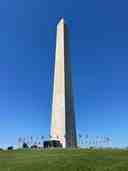
Look to your left at the colossal white marble obelisk, a tapered four-sided pillar that reveals its history through a distinct change in color about one-third of the way up. This is the Washington Monument. It is five hundred and fifty-five feet of sheer, vertical ambition. Originally, the architect Robert Mills wanted something much louder. He envisioned a six-hundred-foot pillar rising from a circular Greek temple base, complete with statues of thirty heroes and a massive sculpture of George Washington driving a chariot. Subtle, right? But the price tag was one million dollars... which is over thirty million today. That proved too rich for Congress, so the Army Corps of Engineers stripped the plan back to a bare obelisk, relying on ancient Egyptian proportions for structural stability. Now, look closely at that shift in the stone’s color. It happens about one-third of the way up the shaft. That line is the physical scar of a bizarre political scandal. In 1854, a group called the Know-Nothings... a secretive, anti-immigrant, anti-Catholic political faction... seized control of the monument society. Pope Pius the Ninth had donated a block of marble to the project. The Know-Nothings were so offended by this foreign influence that they stole the so-called Pope's Stone and threw it into the Potomac River. The public reaction went about as you would expect. Donors were alienated, and funding evaporated. For twenty-two years, the monument sat as a one-hundred-fifty-six-foot unfinished stump. During the Civil War, these grounds weren't a manicured park; they were a slaughterhouse and cattle yard for the Union Army, earning the site the nickname the Beef Depot. The writer Mark Twain looked at the abandoned project and ridiculed it as a hollow, over-sized chimney. When they finally started building again in 1876, the original quarry was unavailable. They had to use a slightly different shade of marble, and that mismatch is still staring you in the face today. The construction itself relied on a far more hidden workforce. While paid masons did the skilled work, historical records indicate that the grueling labor of hauling those massive stones in the early days was likely done by enslaved people. It creates a heavy, complicated foundation for a symbol of liberty. At the very top, there is a tiny, one-hundred-ounce pyramid made of solid aluminum. In 1884, aluminum was a rare, space-age metal, costing as much as silver. It was the ultimate display of technological novelty. Today, we use it for soda cans. But that capstone is still up there, acting as a lightning rod. Even the ground around you hides a few tricks. Notice the low stone wall nearby? That is a ha-ha wall-a landscape feature designed to create a security barrier without blocking the view. It is necessary protection. In 2011, a rare earthquake cracked the stone structure, forcing engineers... dubbed Spider-Men by the press... to rappel down the face and fix over one-hundred-fifty fractures. It is a monument that looks eternal from a distance, but up close, it is a patchwork of political feuds, stolen stones, and shifting geology. Let’s continue our walk. Head toward the large memorial at the far end of the Reflecting Pool. It is about a seven-minute walk to our next stop, the World War II Memorial.
Open dedicated page →Before you lies a vast sunken plaza ringed by fifty-six tall granite pillars and anchored at each end by a towering triumphal arch. This is the World War II Memorial. It feels...…Read moreShow less
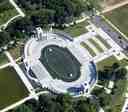
Before you lies a vast sunken plaza ringed by fifty-six tall granite pillars and anchored at each end by a towering triumphal arch. This is the World War II Memorial. It feels... heavy, doesn't it? When Austrian-American architect Friedrich St. Florian designed this, he intended it to be a classical shrine to democracy. But when the plans were revealed, the reception was complicated. Critics called the design "bombastic" and "authoritarian," arguing that its imposing granite and bronze wreaths felt uncomfortably similar to the style of the very regimes the Allies had fought against. They complained it interrupted the historic, open view between the Washington Monument and the Lincoln Memorial, essentially muscling its way into the most sacred corridor of the capital. But strip away the architectural debates, and you find the human heart of the design. St. Florian wasn't just thinking about abstract columns. He grew up in Austria and was a young boy when American troops arrived to liberate his town from Nazi control. He famously remembered a G.I. kicking open his classroom door. He ran home shouting that school was out, and his mother corrected him, saying, "No, the war is over." That memory of liberation is what built this place. If you look to the west side, you’ll see the Freedom Wall. It is covered in four thousand and forty-eight gold stars. Each star represents one hundred American lives. A foundry worker named Dave Jackman, who cast these stars, recalled seeing buckets of them moving through the factory and feeling overwhelmed by the sheer magnitude of the loss. That is the true price of the power we have been discussing on this tour. It is strange to think this massive complex began with a simple fish fry in Ohio. In 1987, a rural letter carrier and veteran named Roger Durbin cornered his Congresswoman, Marcy Kaptur. She pointed out the famous Iwo Jima statue as a tribute to the war, but Durbin, a former tank mechanic, shot back, "That's for the Marines. What about the rest of us?" He refused to let it go. It took seventeen years of lobbying and fundraising to get this built. Tragically, Durbin died of pancreatic cancer just before the groundbreaking. At the dedication, his empty chair was draped with his jacket, a silent witness to the long struggle for recognition. We have seen a lot of grand structures today. We have seen the institutions that project authority and the buildings that house the gears of government. But I want you to look for one small, hidden detail here that captures the spirit of the citizenry better than any pillar. Walk toward the service gates tucked behind the triumphal arches. Hidden in the shadows of the alcoves, there is an engraving. It is not an eagle or a laurel wreath. It is a cartoon. A bald man with a long nose peering over a wall, captioned with the phrase "Kilroy was here." Kilroy was the ultimate inside joke of the war. Soldiers drew him on bathroom walls, on crates of ammunition, and even on captured enemy bunkers. He was a symbol that no matter how dark the situation, or how far from home they were, an American had been there. He was watching. The architects included these hidden engravings as a secret nod to the humor that sustained the troops. And that seems like the right place to leave you. We have walked past the White House, the banks, and the massive departments that run the state. We have seen the architecture of power. But here, scratched into the stone, is a reminder of who actually bears the weight of it all. Not the institutions. But the people. The Kilroys. The Roger Durbins. You. Thank you for walking with me.
Open dedicated page →




Frequently asked questions
How do I start the tour?
After purchase, download the AudaTours app and enter your redemption code. The tour will be ready to start immediately - just tap play and follow the GPS-guided route.
Do I need internet during the tour?
No! Download the tour before you start and enjoy it fully offline. Only the chat feature requires internet. We recommend downloading on WiFi to save mobile data.
Is this a guided group tour?
No - this is a self-guided audio tour. You explore independently at your own pace, with audio narration playing through your phone. No tour guide, no group, no schedule.
How long does the tour take?
Most tours take 60–90 minutes to complete, but you control the pace entirely. Pause, skip stops, or take breaks whenever you want.
What if I can't finish the tour today?
No problem! Tours have lifetime access. Pause and resume whenever you like - tomorrow, next week, or next year. Your progress is saved.
What languages are available?
All tours are available in 50+ languages. Select your preferred language when redeeming your code. Note: language cannot be changed after tour generation.
Where do I access the tour after purchase?
Download the free AudaTours app from the App Store or Google Play. Enter your redemption code (sent via email) and the tour will appear in your library, ready to download and start.
If you don't enjoy the tour, we'll refund your purchase. Contact us at [email protected]
Checkout securely with 




