
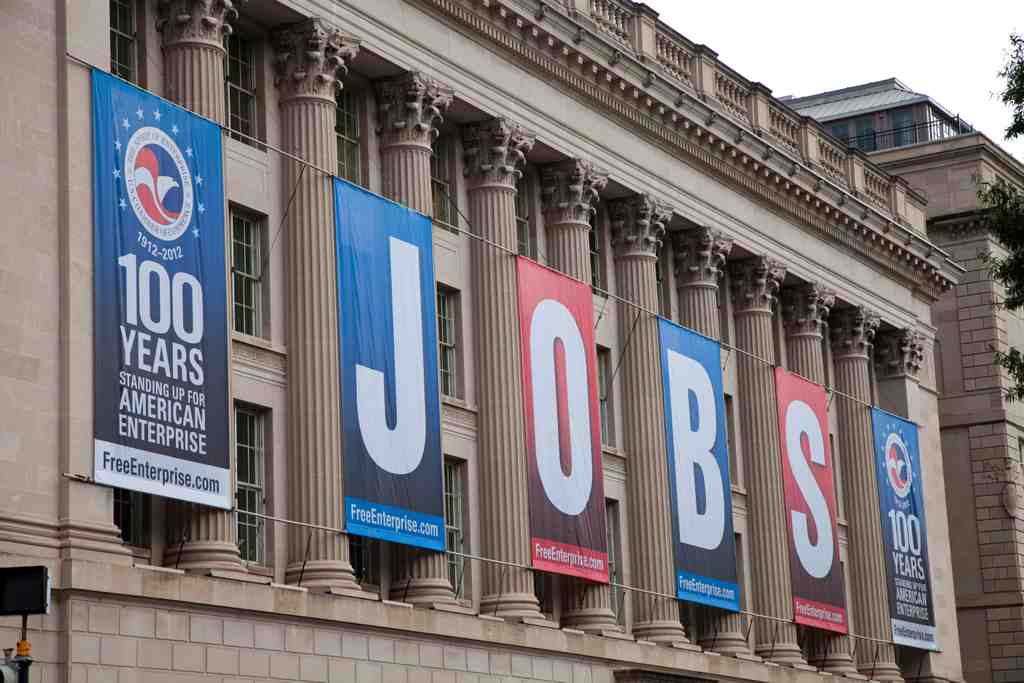
To your right stands a commanding limestone building with a temple-like facade and a row of giant columns that seem to stare directly across Lafayette Square.
This is the United States Chamber of Commerce. If the White House, just across the park, is where political power lives, this is where economic power comes to... negotiate. It was President William Howard Taft who set this up in 1912. He felt the government needed a single, authoritative voice for business to balance against the growing labor movement. Interestingly, the spark for this massive American organization actually came from a visit by Japanese business magnate Eiichi Shibusawa, who showed American merchants the power of national coordination.
But before the lobbyists arrived, this land held a different kind of history. It was the home of Senator Daniel Webster. Working in that house was Paul Jennings, a man formerly enslaved by President James Madison. Webster had purchased Jennings’ freedom for one hundred and twenty dollars-about four thousand dollars today-and Jennings was working off the debt. In 1848, while serving Webster dinner, Jennings was secretly helping plan the Pearl escape. It was a daring attempt by seventy-seven enslaved people to sail to freedom. The ship was captured, and the escape failed, but Jennings’ hidden resistance right under the nose of power is a story that lingers here.
By the 1920s, the Chamber hired Cass Gilbert-the same architect who designed the Supreme Court-to build this headquarters. It looks like a government building, and that is entirely the point. It projects permanence.
Today, this is the largest lobbying group in the country. And when I say large, I mean colossal. Lobbying is the business of influencing government decisions, and for years, the Chamber has outspent every other organization in Washington. Under the late Tom Donohue, who ran the place for decades with what he called "Irish toughness," it transformed from a trade association into a political machine.
They play hardball. In 2009, when the EPA tried to regulate greenhouse gases, a senior Chamber official threatened to hold the "Scopes monkey trial of the 21st century"-referencing the famous 1925 court case that put evolution on trial-to challenge climate science. That aggressive stance didn't go over well. High-profile members like Apple and Pacific Gas and Electric quit the Chamber in protest. But the Chamber held its ground, pouring millions into elections to ensure their interests were protected. They eventually claimed victory when the climate bill died in the Senate.
It is a place where the deal is always on the table, and the machinery of influence never stops humming.
Decisions made in buildings like this ripple out, often determining where funding goes and who gets sent to fight. Let's walk toward the United States Department of Veterans Affairs, about five minutes away, to see the agency that deals with the human cost of those national decisions.




