
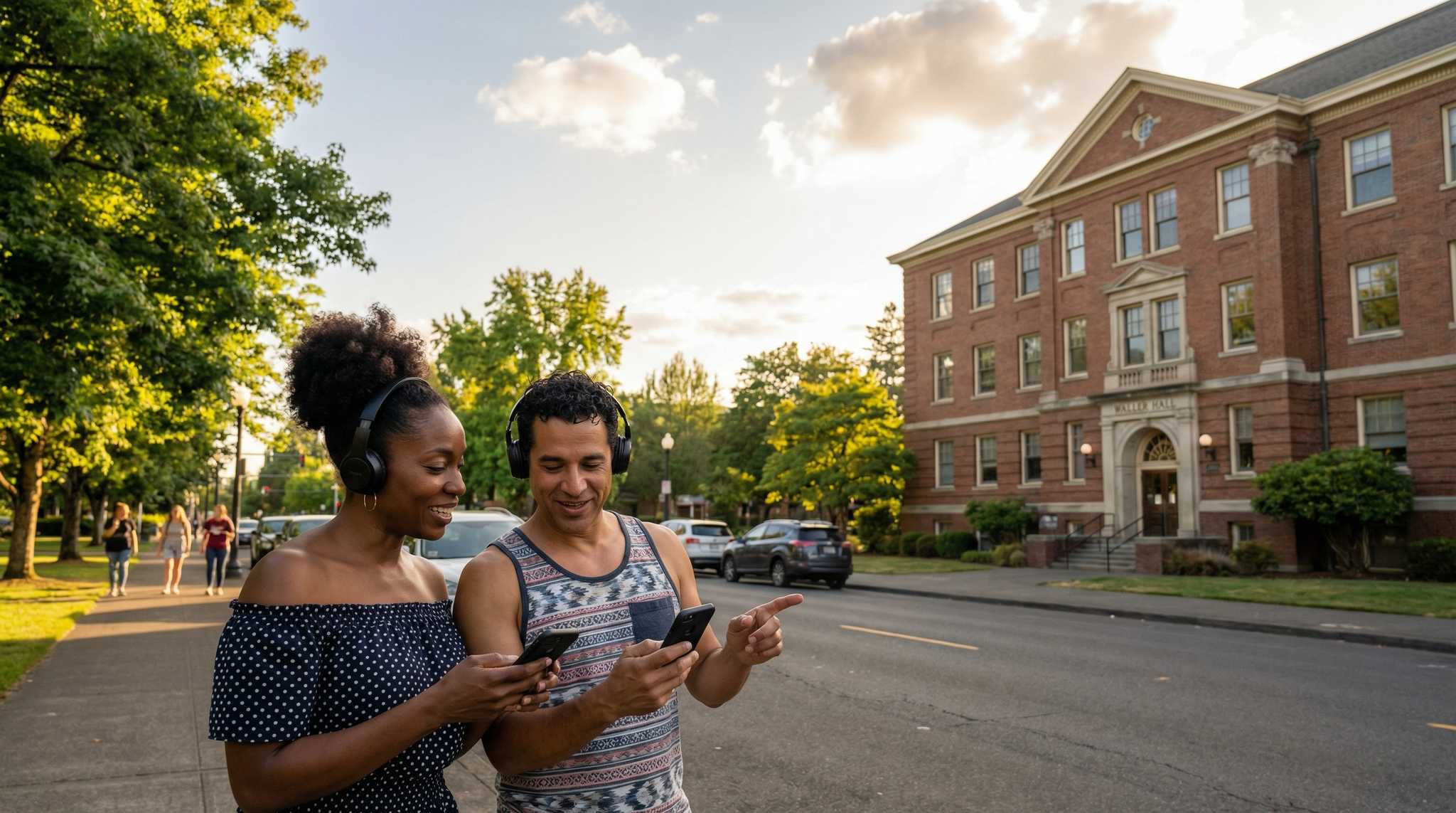
Salem Audio Tour: Echoes of Law, Lore, and Learning
Heavy footsteps echo down marble halls as gavel strikes once rippled through the very heart of Salem. Behind imposing facades and tranquil gardens, a city’s secrets wait—buried just beneath the surface. On this self-guided audio tour, feel Salem come alive through lost rebellions, artistic revolutions, and moments of political drama that shaped Oregon’s destiny. Trace hidden stories winding between the Oregon Supreme Court, the Hallie Ford Museum of Art, the State Capitol, and beyond. Why did flames once threaten to rewrite Oregon’s history overnight? Which piece in the museum haunted its artist for decades? And what peculiar courtroom quarrel changed local law forever? Move under tree-lined avenues and corridors of power, letting legends and scandalous whispers slip into the daylight. Every stop reveals layers rarely seen by passing tourists. Salem’s untold tales are waiting. Press play and discover the truth behind the marble and the masterpiece.
Tour preview
About this tour
- scheduleDuration 40–60 minsGo at your own pace
- straighten2.8 km walking routeFollow the guided path
- location_onLocationSalem, United States
- wifi_offWorks offlineDownload once, use anywhere
- all_inclusiveLifetime accessReplay anytime, forever
- location_onStarts at Willamette Heritage Center
Stops on this tour
Our protagonist here is Thomas Lister Kay, a man who began his life as a humble weaver in Yorkshire before migrating to Oregon in 1862 and transforming himself into an ambitious…Read moreShow less
Our protagonist here is Thomas Lister Kay, a man who began his life as a humble weaver in Yorkshire before migrating to Oregon in 1862 and transforming himself into an ambitious mill founder. It turns out knowing how to actually weave is rather useful when you want to build a textile empire. In 1889, Kay opened this mill thanks to a twenty thousand dollar pledge from locals, which equals about six hundred fifty thousand dollars in today's money. But his success was built on the backs of a workforce enduring an absolutely brutal grind. Fifty laborers, including men, women, and children as young as eleven, trudged through grueling sixty-hour work weeks. They survived ten-hour shifts, six days a week, surrounded by deafening, heavy machinery and thick, choking wool dust. But exhaustion was not the only hazard, because wooden mills of this era lived under the constant, terrifying threat of fire. In November 1895, the inevitable happened, and the original structure caught a spark, burning completely to the ground. It was the sort of devastating, total loss that would send most rational business owners into early retirement. Instead, the local community rallied once more, raising another twenty-five thousand dollars, roughly nine hundred thousand dollars today, to ensure the mill was rebuilt. Kay had learned his lesson. He hired architect W.D. Pugh to design a new, fire-resistant brick structure right on top of the ashes. He even installed one of Oregon's very first fire-suppression sprinkler systems, an incredibly forward-thinking bit of engineering for 1896. By that November, this supposedly doomed operation was back to manufacturing the first worsted wool cloth west of the Mississippi River. Worsted wool, in case you are wondering, is a high-quality, tightly spun yarn that makes fabric remarkably smooth and durable. Much like Mr. Kay himself.
Open dedicated page →In the 1850s, the very concept of Oregon's capital was a restless, wandering institution. The territorial legislature actually passed a bill in 1855 to move the seat of government…Read moreShow less
In the 1850s, the very concept of Oregon's capital was a restless, wandering institution. The territorial legislature actually passed a bill in 1855 to move the seat of government south to Corvallis, and they even convened there briefly. But the governor strongly objected, the federal government intervened, and the politicians were dragged right back to Salem. Almost immediately after they returned, the nearly finished statehouse burned to the ground in a widely suspected arson, setting off years of bitter political bickering over where Oregon's headquarters truly belonged. As you might be noticing, the constant threat of fire continually forced Salem to reinvent its skyline, replacing old timber and unreinforced masonry with increasingly ambitious designs. As we discussed at the Supreme Court, the ultimate disaster struck decades later in 1935. The state's second capitol building caught fire in the basement. Due to a major design flaw, the building's hollow structural columns acted like giant chimneys, sucking the flames rapidly upward into the magnificent copper dome until the intense heat caused the entire roof to collapse. This brilliant white, two point five million dollar structure you are looking at, which is about fifty-four million dollars in today's money, was the direct result of that 1935 blaze. Instead of building another traditional domed replica, the architects chose a striking Art Deco design. Art Deco is an architectural style popular in the 1930s that focuses on sleek, streamlined geometry and stripped-down modern ornamentation rather than fussy classical details. If you tap the image in your app, you can slide between how this looked in 1919 and today to see quite a transformation. When it was first unveiled, the public was less than thrilled with the modern look. That cylindrical structure on the roof, known in architecture as a cupola, was relentlessly mocked. Critics called it a giant paint can, or worse, a squirrel cage, claiming it lacked the majesty of a traditional dome. Even the golden Oregon Pioneer statue on top faced local ridicule because real loggers thought his axe looked puny. But over the decades, this unconventional fortress of marble has become a beloved, disaster-hardened symbol of the state.
Open dedicated page →
Show 12 more stopsShow fewer stopsexpand_moreexpand_less
 4
4Gatke Hall
Buy tour to unlock all 19 tracksThis was originally Salem's first dedicated post office, constructed back in 1903. The man behind it was James Knox Taylor, the Supervising Architect of the United States…Read moreShow less
This was originally Salem's first dedicated post office, constructed back in 1903. The man behind it was James Knox Taylor, the Supervising Architect of the United States Treasury. Taylor oversaw hundreds of federal buildings across the country, and he designed this heavy Beaux Arts structure, a highly decorative, classical architectural style known for its grand, theatrical details, with a massive steel and brick frame just to support the sheer weight of its thick Ashland sandstone exterior. Now, buildings made of steel, brick, and solid stone generally tend to stay exactly where you put them. But Salem has a habit of endlessly uprooting its monuments. Earlier, we saw the State Capitol, an institution that shifted its political weight around through fires and relocations. Gatke Hall, however, shifted its literal, crushing physical weight right down the road. In 1938, to make way for a new federal building downtown, this enormous stone structure was lifted entirely intact, placed on a complex series of rollers, and painfully nudged down State Street. It was a monumental engineering marvel for its era. The painstakingly slow journey took six whole months to complete. Imagine the agonizing progress of dragging thousands of tons of delicate masonry, inch by inch, without cracking a single window or splitting the stone. I complain when I have to help a friend move a sofa. They eventually parked the building right here, on a lot that had sat tragically vacant since 1871. That was the year the university's original wooden, three-story building, which had started as a manual labor school, burned down to ashes. Gatke Hall filled that empty historical scar perfectly, stepping in to serve as Willamette University's College of Law. In 1952, the building absorbed another piece of Salem's discarded history. A ten-foot-tall, nine-hundred-pound statue of Lady Justice was salvaged from the tower of a demolished Marion County Courthouse. She was hauled into the foyer of Gatke Hall, where she greeted law students for forty years until she, too, was packed up and relocated across campus. It seems everything connected to this structure involves careful transplantation. Even the building's namesake, Robert Moulton Gatke, loved to alter the landscape. He was a political science professor and a passionate horticulturist who personally planted many of the giant sequoias and rhododendrons that decorate the campus. Gatke Hall has even hosted some modern, albeit brief, airborne departures. In February 2007, a twenty-year-old man trying to evade the police suddenly leaped out of one of these second-story windows. He miraculously survived the plunge, only to be promptly arrested by state police in a neighboring building. A truly terrible escape plan.
Open dedicated page →Ford was not just a wealthy benefactor writing checks from a distance. After moving to Salem, she enrolled here as a non-traditional student in her seventies and eighties, taking…Read moreShow less
Ford was not just a wealthy benefactor writing checks from a distance. After moving to Salem, she enrolled here as a non-traditional student in her seventies and eighties, taking art classes under noted painter Carl Hall. She forged a deep bond with the university, and just months before she passed away in two thousand and seven, she provided that massive gift, covering half of the sixteen million dollar cost to build Ford Hall. When Willamette University hired Hennebery Eddy Architects, they demanded a design that respected the land. The architects adopted a one hundred year building philosophy, an engineering concept focused on immense durability and minimizing waste. In a brilliant bit of ambitious rebirth, the trees that had to be removed from this footprint were not thrown away. Instead, the construction team milled them and brought them right back inside. That site-harvested timber was crafted into the standing trim, mechanical grilles, and custom furniture you see throughout the building, literally forging the new structure from the landscape it displaced. The engineering behind this place is genuinely fascinating. It earned a LEED Gold certification, which is an international standard proving a building is highly energy efficient. One of its cleverest tricks is a displacement ventilation heating system. Instead of blasting hot air down from the ceiling like a giant hair dryer, the system gently releases air at low velocity from floor level vents, allowing it to rise naturally as it warms. Combine that with a twenty six point eight kilowatt solar panel array on the roof and copper cladding chosen for its recycled content, and this hall consumes fifty eight percent less energy than standard codes require. Of course, building a green utopia is rarely entirely peaceful. The project's harmonious image took a hit when the Pacific Northwest Regional Council of Carpenters set up a picket line outside. They were protesting the use of a subcontractor who did not meet area wage standards. So you had intense labor friction on the lawn while an environmental masterpiece went up behind the gates. Despite the pickets, Hoffman Construction finished the forty two thousand square foot building in just fourteen months to open for the two thousand and nine academic year. Inside, the architecture forces interaction, featuring collaborative spaces called hearths where computer science, mathematics, and digital art students mix.
Open dedicated page →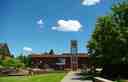 7
7Mark O. Hatfield Library
Buy tour to unlock all 19 tracksYou see, getting this institution's book collection into a permanent, fireproof home was a test of endurance that took over a century. Willamette's original library was…Read moreShow less
You see, getting this institution's book collection into a permanent, fireproof home was a test of endurance that took over a century. Willamette's original library was established in 1844, just two years after the school was founded. In those early years, it was housed on the third floor of Waller Hall. By 1909, the school had painstakingly amassed a collection of six thousand books valued at thirty five hundred dollars, which translates to roughly one hundred and fifteen thousand dollars today. It was a modest but hard won academic treasure. Then came the evening of December seventeenth, 1919. The threat of fire, a destructive force that repeatedly displaced Salem's institutions, struck the university again, this time targeting its precious books. A massive blaze completely gutted Waller Hall. This was actually the second major fire to strike the five story building, completely destroying its inside along with its distinctive Mansard roof. If you are not familiar with the term, a Mansard roof is a style of architecture featuring four sides with two slopes each, the lower slope being much steeper than the upper. The building's square tower collapsed entirely. The flames consumed the space where the university's books were kept, leaving the library homeless. But the story of this campus is defined by a refusal to stay in the ashes. Fortunately, the strong outer brick walls of Waller Hall, which were made from clay dug right here on campus decades earlier, somehow remained standing. The university rebuilt the interior, and the library was resiliently resurrected on the second floor just one year later. As the decades passed and the collection expanded past sixteen thousand volumes, the library outgrew its rebuilt space. The books were moved to a dedicated concrete building in 1938. Finally, in 1986, this permanent modern facility was constructed. Today, this two story building houses nearly four hundred thousand volumes. The architecture itself is a testament to transparency and permanence, featuring clear glass facades on the north and south sides. That sixty one foot clock tower you see features strips of bent glass woven together, running down to an eighteen ton concrete base. The library is named in honor of Mark O. Hatfield, a 1943 graduate who later served as Oregon's governor and a United States Senator.
Open dedicated page →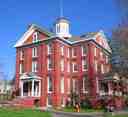 9
9Waller Hall
Buy tour to unlock all 19 tracksBack in the 1850s, the university desperately needed space because their original building was quite literally falling apart. Enter Reverend Alvin F. Waller, a relentless…Read moreShow less
Back in the 1850s, the university desperately needed space because their original building was quite literally falling apart. Enter Reverend Alvin F. Waller, a relentless Methodist missionary who spearheaded a massive fundraising campaign. To construct this Renaissance style structure, an architectural design known for its classical Roman symmetry and proportion, the builders ordered half a million bricks. In a very clever bit of pioneer engineering, they fired all those bricks right here on campus, using the clay excavated to create the building's basement. The total cost came to forty thousand dollars, which is roughly eight hundred thousand dollars today. At five stories high, it dominated the sparsely settled landscape. It housed classrooms, a library, and chapels, while the attic served as makeshift housing for male students. But maintaining a wooden-framed, brick-clad building in the nineteenth century was a risky business. As we mentioned at the library, Waller Hall caught fire twice. The first time was in September 1891, just eight days into the fall term. Crowds of Salem residents gathered in their nineteenth-century attire to watch smoke billow from the roof, while a meager collection of salvaged chairs sat scattered on the lawn below. The top two floors and the roof were utterly destroyed. The university's strict new president, George Whitaker, was bizarrely unfazed. He proudly reported to the board that the inferno caused a mere two and a half hours of delay to school work. His biggest complaint was the expense of bailing rainwater out of the roofless building. They rebuilt the hall, but the threat of fire was far from over. As we know, in December 1919, that second blaze broke out. This time, the devastation was exacerbated by brutal weather. A massive storm had dumped twenty two inches of snow, and temperatures had plummeted to six degrees below zero. Firefighters arrived only to find their hoses and the city hydrants frozen completely solid. They were forced to stand by helplessly as flames completely consumed the interior. And yet, the building still stands. Gutted not once, but twice, those original campus-fired exterior brick walls refused to fall. The university simply raised more money, completely rebuilt the interior for a second time, and restored the original cupola design. Today, the hall houses administrative offices and a beautiful chapel featuring a custom pipe organ. The building is generally open Monday through Friday from eight in the morning until five in the evening if you want to take a peek inside.
Open dedicated page →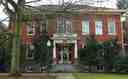 10
10Art Building
Buy tour to unlock all 19 tracksIt says Art now, but this building has a rather gruesome, and frankly scandalous, past. Built in 1905, this Beaux Arts structure, which is a monumental and classical architectural…Read moreShow less
It says Art now, but this building has a rather gruesome, and frankly scandalous, past. Built in 1905, this Beaux Arts structure, which is a monumental and classical architectural style, was originally the Willamette University College of Medicine. It was designed specifically for the grim realities of medical education. Those large floor to ceiling windows were meant to flood dissection tables with natural light. The walls hid a specialized ventilation system to extract the odors of the anatomy labs, and a central shaft used a pulley system to hoist cadavers from the basement up to the third floor. As we have explored Salem today, we have seen wandering institutions forced to move by devastating fires or logistical nightmares. But this medical school moved because of sheer scandal. In 1910, a landmark study of medical education known as the Flexner Report evaluated programs across North America. It delivered a scathing verdict on Willamette, ranking the medical program as a severely deficient Class C institution because it lacked adequate clinical facilities. Facing intense public pressure, the university trustees essentially threw in the towel. In 1913, they merged the program with a Portland institution, abandoning this cutting edge building just eight years after dedicating it. If you tap the image in your app, you can slide between how this spot looked in 1877 and today, quite a transformation. Following the medical school's humiliating exit, the space became a revolving door for the law school, the science department, and finally the College of Music. Over the decades, the building suffered from severe neglect. By 1970, the upper floors were condemned. The danger became undeniable when a fifty pound window frame ripped out of the wall and plummeted straight down onto a piano. It miraculously missed a student who was practicing there at the time. Following that near disaster, the university launched a massive renovation, stabilizing the floors and moving the art department here in 1976. A later three and a half million dollar remodel added a modern wing and restored those massive windows. The beautiful, luminous quality originally intended to illuminate cadavers now helps students mix oil paints. Unsurprisingly, the building's grisly origins have left a few lingering residents. Students still report hearing the dragging footsteps of a ghostly young girl in the upper halls. Another local legend claims a thief broke in to steal artifacts, only to plunge to his death from the third floor while fleeing police. His restless spirit is now blamed whenever art supplies mysteriously move around the studios.
Open dedicated page →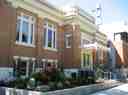 11
11Oregon Civic Justice Center
Buy tour to unlock all 19 tracksThis handsome Beaux Arts structure, an architectural style characterized by formal symmetry and decorative stone accents, stands today out of sheer, unadulterated spite. Back in…Read moreShow less
This handsome Beaux Arts structure, an architectural style characterized by formal symmetry and decorative stone accents, stands today out of sheer, unadulterated spite. Back in 1903, the Salem Woman's Club started a public library with a grand total of fifty books. By 1909, they had raised funds and purchased this very plot of land to build a permanent home. Naturally, the Salem City Council decided to take charge. Without consulting the women, the city applied for and secured a grant of fourteen thousand dollars, which is about four hundred and fifty thousand dollars today, from the Carnegie Foundation. Andrew Carnegie was a wealthy industrialist who funded the construction of free public libraries across the globe. The city thought they had won. They were wrong. In the ultimate act of women shaping the city's future, the club refused to be sidelined. Since they held the deed to the land, they went straight over the city's head and contacted the Carnegie Foundation directly to halt the funding. It was a brilliant, ruthless power move. Not only did they force the city to negotiate, but a local cultural leader named Lulu Bush lobbied Carnegie to nearly double the grant to twenty seven thousand five hundred dollars, roughly eight hundred and fifty thousand dollars today. The women got their grand structure on their own terms. If you tap the historic image in your app, you can slide between how this looked in 1922 and today, which is quite a transformation. When it opened in 1912, the building featured a look-out basement, an architectural trick where the lower level is only partially submerged so full-sized windows can let natural light flood into the reading rooms. But structures in this town rarely get to sit still. By 1971, the library had outgrown the space. The adjacent Young Women's Christian Association bought the building for one hundred and fifty thousand dollars, or about 1.1 million today. They made some drastic physical changes, completely upending the quiet academic atmosphere by bolting a massive swimming pool annex onto the side. For over three decades, the hushed silence of reading rooms was replaced by the humid, echoing splashes of a busy aquatic center. But the cycle of reinvention turned again. In 2003, Willamette University bought the property. They demolished the swimming pool, restored the original layout, and resurrected the space into a modern hub for their College of Law. When it was rededicated in 2008, Supreme Court Justice Ruth Bader Ginsburg came to speak. During her visit, the diminutive justice joked about how often she used to be confused with Sandra Day O'Connor, noting she actually missed the mix-ups because it meant she was no longer the only woman on the bench.
Open dedicated page →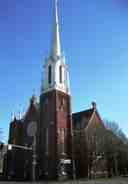 13
13Salem First United Methodist Church
Buy tour to unlock all 19 tracksTo understand how this imposing sanctuary got here, we have to look back to the early missionaries who arrived by sea on the Lausanne, which we touched on earlier. The founding…Read moreShow less
To understand how this imposing sanctuary got here, we have to look back to the early missionaries who arrived by sea on the Lausanne, which we touched on earlier. The founding missionary, Jason Lee, originally set up his mission headquarters right on the banks of the Willamette River. Nature, however, had other plans. Devastating floods repeatedly washed through their settlement, forcing Lee to pack up and seek the safety of higher ground. He relocated operations here to the Chemeketa Plain, effectively planting the seed for the city of Salem out of sheer geographic necessity. By eighteen fifty-three, the growing congregation built their first dedicated structure, a modest wooden frame building on this very corner. But Salem has a habit of refusing to let its buildings rest in peace. When it came time to build the massive brick structure you see today, they did not just tear down the old wooden church. Instead, they hoisted it up and moved it to a nearby lot on Liberty Street. That humble pioneer church went on to have a strange, wandering afterlife, serving a series of entirely secular purposes for decades while the congregation moved on to grander ambitions. And those ambitions were certainly grand. In the eighteen seventies, the church commissioned a celebrated Chicago architect to design a majestic Gothic Revival building. Gothic Revival is an architectural style defined by soaring vertical lines and sharp, pointed arches designed to draw the eye toward heaven. The architect delivered a stunning plan with an estimated price tag of fifty thousand dollars, which is roughly one point five million dollars today. The building committee took one look at that number and refused. They capped the budget at thirty thousand dollars, or about nine hundred thousand today. How did they achieve this massive discount? Through a very literal compromise. They took the architect's exact blueprints and simply reduced the scale of the entire building by one-eighth to save on materials. It is a remarkably blunt engineering solution to a financial problem. Even scaled down, the Panic of eighteen seventy-three nearly derailed them. When the congregation gathered for the formal dedication in eighteen seventy-eight, the grand building was nowhere near finished. The massive arched windows were just boarded over with cheap wood to block the wind, and the iconic spire had not even been built yet. This habit of extreme patience extended to their music, too. In nineteen fifty-three, they installed a massive pipe organ but could not afford all the parts. It was installed with what organ builders call prepared stops, which are essentially empty slots on the control console reserved for pipes that have not been purchased yet. For forty-seven years, the organ played with a mathematically incomplete voice until the missing pipes were finally bought in the year two thousand. If you want to look inside, the building is open on weekdays until four, though they close at twelve thirty on Fridays and are entirely closed on weekends.
Open dedicated page →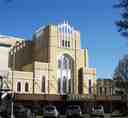 14
14Elsinore Theatre
Buy tour to unlock all 19 tracksThis is what happens when a Portland attorney with a taste for drama decides to build a medieval castle in downtown Salem. That attorney was George Guthrie, and in the 1920s, he…Read moreShow less
This is what happens when a Portland attorney with a taste for drama decides to build a medieval castle in downtown Salem. That attorney was George Guthrie, and in the 1920s, he set out to build the finest entertainment venue between Portland and San Francisco. He hired architects to design the space in a Tudor Gothic style. For the unfamiliar, Tudor Gothic is an architectural revival of late medieval English manors, characterized by heavy masonry and steep arches, and Guthrie specifically wanted to recreate the castle from Shakespeare's play Hamlet. The lobby was designed to look like an English great hall with a starry night ceiling, and the stained glass above the doors was crafted from glass salvaged from a German cathedral bombed during World War I. But building a grand dream comes with a steep price. Guthrie initially budgeted 100,000 dollars, but construction costs violently ballooned to over 250,000 dollars, which is roughly 4.3 million dollars today. Local gossips were absolutely convinced Guthrie was driving himself straight into bankruptcy to finish his masterpiece. Despite the crippling financial anxiety behind the scenes, opening night in May 1926 was a triumph. A capacity crowd packed the nearly thirteen hundred seats to watch a silent film while the song Finlandia echoed from a massive Mighty Wurlitzer theater organ. But as we have learned on this tour, Salem's landmarks rarely sit peacefully, and the Elsinore soon faced its own eras of ruin. In 1962, the massive Columbus Day storm battered the city with ninety mile per hour winds, shredding the theater's iconic vertical blade sign and leaving the facade bare for decades. That same year, Guthrie's son removed the original Wurlitzer organ, sparking a bizarre odyssey where the instrument was housed in a barn, hauled around on tractor trailers, and eventually dismantled and sold for scraps. By 1980, the theater had degraded into a second-run cinema and was slated for the wrecking ball. Yet, much like the rescued fine art we saw championed by Mark Sponenburgh at the museum earlier, the people of Salem refused to let a cultural treasure vanish. A grassroots committee fought tooth and nail to buy and restore the venue. Local enthusiasts even installed a massive twenty-six rank pipe organ to replace the lost original. The community's stubborn ambition culminated recently in August 2025, when a towering twenty-three foot illuminated replica of the original blade sign was finally restored to the facade. Of course, the theater might still belong to its anxious creator. Performers frequently report seeing Guthrie's ghost watching rehearsals from the empty seats, or blame his spirit when stage props mysteriously move. If you want to look for him yourself, the lobby is generally open to peek into Monday through Friday from 9 AM to 2 PM.
Open dedicated page →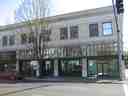 15
15Pacific Building
Buy tour to unlock all 19 tracksThis is the Pacific Building, originally the retail wing of the Bligh Building, constructed in 1926. It was commissioned by Frank Bligh, an ambitious thirty-four-year-old taking…Read moreShow less
This is the Pacific Building, originally the retail wing of the Bligh Building, constructed in 1926. It was commissioned by Frank Bligh, an ambitious thirty-four-year-old taking over from his father, T.G. Bligh. The elder Bligh was a Canadian immigrant who arrived in Salem practically penniless in 1910 and built an entertainment empire. He opened the city's first ten-cent movie house, charging an admission fee that would be about three dollars today. But his run was cut short. He was arrested in a 1917 bootlegging raid where agents dramatically seized a grand total of seven cases of beer, and he later died in a 1924 car accident. Frank built this massive complex as a monument to his father's legacy. It covered a quarter of a block, featuring twelve storefronts, thirty-five offices, and the colossal Capitol Theater with twelve hundred seats. The theater was built for vaudeville, a popular form of live stage entertainment featuring a dizzying variety of unconnected musical, acrobatic, and comedy acts. On opening night, Frank waived the admission fee. Ten thousand people squeezed through to gawk at the Florentine-style interior, characterized by heavy, ornate Italian Renaissance architectural details. It even featured soundproof, glass-enclosed crying rooms so patrons could manage fussy infants without missing the show. The theater's crown jewel was its brilliantly lit, stained-glass marquee, shaped exactly like the dome of the second Oregon State Capitol. When the actual State Capitol burned to the ground in 1935, this theater's marquee became a glowing, accidental memorial to the lost landmark until it was finally modernized in 1952. Tap the image on your screen to see a historic photo from 1934, revealing that magnificent marquee for yourself. Like so many grand stages, the theater eventually lost its audience, converting to movies before closing in 1990 and facing the wrecking ball in 2000 because of structural decay. It is just a parking lot now. But pieces survived. Its prized Wurlitzer pipe organ embarked on a bizarre journey to a Seattle ice rink in 1941, before ultimately being broken down and mixed with parts from a Portland theater to create a massive franken-organ in a private Washington home. The Bligh family name suffered a similar dismantling. Their nearby Bligh Hotel devolved into a low-rent boarding house that tragically burned in 1975, taking the lives of residents Arnold Stover and August Cico. Frank had smartly sold this retail wing to the family behind the Pendleton Woolen Mills empire in 1927, shielding it from the Great Depression and leaving the Pacific Building as the last dignified survivor of the Bligh legacy.
Open dedicated page →
Frequently asked questions
How do I start the tour?
After purchase, download the AudaTours app and enter your redemption code. The tour will be ready to start immediately - just tap play and follow the GPS-guided route.
Do I need internet during the tour?
No! Download the tour before you start and enjoy it fully offline. Only the chat feature requires internet. We recommend downloading on WiFi to save mobile data.
Is this a guided group tour?
No - this is a self-guided audio tour. You explore independently at your own pace, with audio narration playing through your phone. No tour guide, no group, no schedule.
How long does the tour take?
Most tours take 60–90 minutes to complete, but you control the pace entirely. Pause, skip stops, or take breaks whenever you want.
What if I can't finish the tour today?
No problem! Tours have lifetime access. Pause and resume whenever you like - tomorrow, next week, or next year. Your progress is saved.
What languages are available?
All tours are available in 50+ languages. Select your preferred language when redeeming your code. Note: language cannot be changed after tour generation.
Where do I access the tour after purchase?
Download the free AudaTours app from the App Store or Google Play. Enter your redemption code (sent via email) and the tour will appear in your library, ready to download and start.
If you don't enjoy the tour, we'll refund your purchase. Contact us at [email protected]
Checkout securely with 


